COPPER

A PS Audio Publication

Issue 177 • Free Online Magazine

Issue 177 Twisted Systems

The Revolver Remix Project: Producer Giles Martin Talks to Jay Jay French

The Revolver Remix Project: Producer Giles Martin Talks to Jay Jay French

Jay Jay’s review of the Revolver remixes appeared in Issue 175. Producer/engineer Giles Martin, the son of original Beatles producer George Martin, speaks with Jay Jay here. 

Jay Jay French: You started your mixing career by creating the Love mixes (the soundtrack album for the Cirque du Soleil Las Vegas show) and moved up to do Sgt. Pepper’s Lonely Hearts Club Band, the “White Album” [The Beatles], Abbey Road and Let it Be. Each album was produced with ever-more sophisticated recording techniques by your father. Now, with Revolver, you are, in a sense, going backwards in terms of the source material. What were the technical challenges you faced this time?

Giles Martin: With Revolver the band had recorded all the music on one track, [with] two tracks of vocal overdubs, and one track of guitar or piano. If I just had this to work from I wouldn’t have been able to remix the album. First of all, they didn’t bounce tracks from one tape to another back then. Keep in mind that stereo was still not the main source, it was still a novelty. The technological discoveries and innovations we made during the Get Back [remixing] sessions with [director] Peter Jackson made the capture and isolation of individual instruments, vocals, etc. possible. This allowed us to pick out and separate all the instruments, drum parts and vocals, which [then] gave us the ability to mix.

[Giles also explained how they could capture and break down every sound as if they had multitrack recordings with all the parts isolated.]
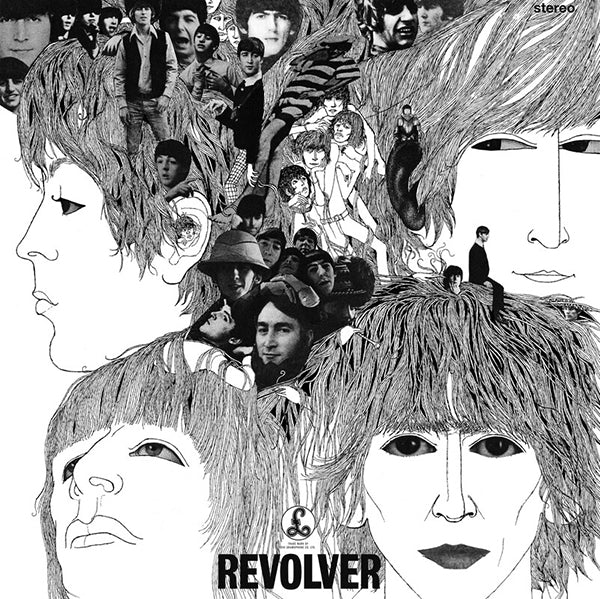
 

The Beatles, Revolver, album cover. © Apple Corps Ltd.

The Beatles, Revolver, album cover. © Apple Corps Ltd.


JJ:  Where do you place Revolver, given its recent ascension by critics to Number One as the best of all Beatles albums?

GM: I feel Revolver is the band’s most ambitious album.

They went from being this four-headed, suit-wearing beast, to where they were, in a sense, saying goodbye to the screaming girls era of “She Loves You,” “I Want To Hold Your Hand” and “Can’t Buy Me Love” and embracing their individualism, and that’s why you have an album that sounds like eight different bands playing!

I also think that Rubber Soul was their farewell to the Mersey beat era. There was a confidence and swagger that occurred from Revolver onward.

JJ: The evolution of the song “Yellow Submarine” is astonishing. According to the Geoff Emerick book [Here, There and Everywhere: My Life Recording the Beatles], your dad was away the day the final version was recorded and it sounded like there was a party actually happening there. Is that true?

GM: God bless Geoff, I grew up with him, but a lot of what he says in his book is not true. My dad was there – all those extra sounds, noises and sound effects were added by just the band.

He also said that “Blackbird” was recorded outside [in a recording studio outside of Abbey Road Studios – Ed.], which it wasn’t, and that the recording of “A Day in The Life” was an edit, which it wasn’t, so I’m not sure about his memory exactly.


Giles Martin. Courtesy of Alex Lake.

Giles Martin. Courtesy of Alex Lake.


JJ: How were the backwards guitar tracks recorded?

GM: You worked out the notes on a piano, recorded it, and played it back in reverse first to see what worked. Then you had the guitar play the parts and played those recordings backwards. This way you hear where you want the notes to fall.

JJ: Has the evolution of home hi-fi and its ability to get the customer closer to what the producer/engineer actually hears at the mixing desk affected how you now produce the music?

GM: Yes. If you think about it, the speakers that were used 56 years ago to listen back in the studio are not the same as what we have now. That changes the way we have to do the mixes as well.

It was amazing how the originals sounded. Now we have to mix for people with air pods (earphones) as well as audiophiles. Young people, older fans, audiophiles – we try to please everyone.

It is crazy when some audiophile home systems cost more than my studio. Some people spend more money on cables than [I spent on] my speaker system in my [studio] room.


JJ: What were the main mics used at that time?

GM: Mostly Neumanns and AKGs. These mics were developed during the Second World War and are still at Abbey Road today, and they are still the best mics in the world.

JJ: It must be noted that the engineers at the time were all really good and knew what to do. Your thoughts?

GM: All the great gear in the world isn’t going to make a mediocre band or musician sound better.

People are looking for the magic of why the Beatles sounded the way they sounded. Was it Geoff Emerick, was it my dad (George Martin), the Neumann microphones, the J37 1-inch 4-track tape machine, the Fairchild 660 compressor?

It’s easy to record a really good artist. It’s the fact that they [the Beatles] were just really good.

They just sounded really good!
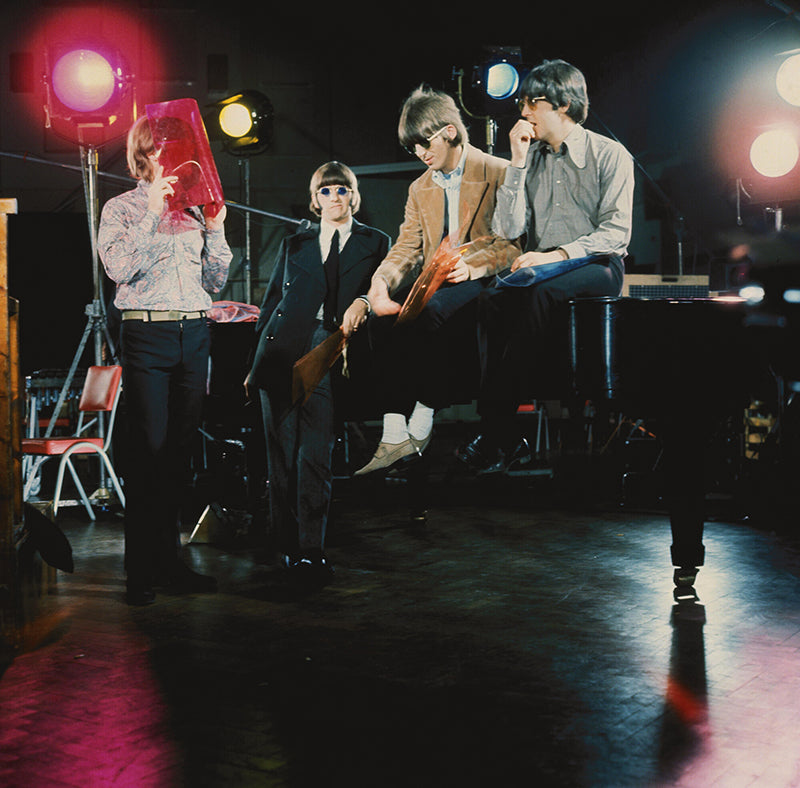
 

The Beatles in Abbey Road Studios during filming of the "Paperback Writer" and "Rain" promotional films, May 19, 1966. © Apple Corps Ltd.

The Beatles in Abbey Road Studios during filming of the “Paperback Writer” and “Rain” promotional films, May 19, 1966. © Apple Corps Ltd.


This interview originally appeared in Goldmine magazine and is used here with permission, slightly edited from the original.

Header image of Giles Martin courtesy of Alex Lake.

More from Issue 177

View All Articles in Issue 177

Search Copper Magazine

#231 Piano Prodigy Jude Kofie Releases His Debut Album On Octave Records by Frank Doris Jun 01, 2026 #231 Underappreciated Artists, Part Two: City Boy by Rich Isaacs Jun 01, 2026 #231 Music and the Art of Creation: Talking With Saxophonist Rob Scheps by Joe Caplan Jun 01, 2026 #231 How to Play in a Rock Band, 24: Further Adventures at the 2026 Montauk Music Festival by Frank Doris Jun 01, 2026 #231 Courtney Barnett: Creature of Habit by Wayne Robins Jun 01, 2026 #231 Angine de Poitrine: Interstellar Guitar Rock Saviors Headed for Late-Night TV Pop Stardom? by Mark Lepage Jun 01, 2026 #231 My Impressions of AXPONA 2026, Part One by Frank Doris Jun 01, 2026 #231 2026 La Jolla Concours d'Elegance: Another Aesthetic Feast by B. Jan Montana Jun 01, 2026 #231 Country Music Icon Jo Dee Messina’s Bridges: A New Beginning by Ray Chelstowski Jun 01, 2026 #231 The Luxury Dispatch Hosts a Video Podcast With Ken Kessler by Ken Kessler Jun 01, 2026 #231 The Vinyl Beat: Tracking in the Motor City by Rudy Radelic Jun 01, 2026 #231 Lots of Fun With DSP: The Ferrum Audio WANDLA DAC and Its Tube Mode by Frank Doris Jun 01, 2026 #231 From The Audiophile's Guide: Digital Source Components and Streaming Audio by Paul McGowan Jun 01, 2026 #231 Onkyo’s Monster M-510 power amplifier by The Staff at Just Audio Jun 01, 2026 #231 PS Audio in the News by PS Audio Staff Jun 01, 2026 #231 Naming Convention by Peter Xeni Jun 01, 2026 #231 Les Invisibles by Frank Doris Jun 01, 2026 #231 Wildlife Scene by James Schrimpf Jun 01, 2026 #230 Camaraderie by B. Jan Montana May 04, 2026 #230 AXPONA 2026: A Family Gathering by Paul McGowan May 04, 2026 #230 Pianist Ryan Benthall Explores Jazz Realms and Far Beyond With Divine Sky by Frank Doris May 04, 2026 #230 The Vinyl Beat in AXPONA-Land by Rudy Radelic May 04, 2026 #230 Teddy Thompson’s Musical Growth Deepens With Never Be the Same by Ray Chelstowski May 04, 2026 #230 More Fun in the Sun: Florida Audio Expo, Part Two by Frank Doris May 04, 2026 #230 CanJam NYC 2026 Show Report: Heady Sound, Part Two by Frank Doris and Harris Fogel May 04, 2026 #230 Sonic Youth On Murray Street by Wayne Robins May 04, 2026 #230 Graffeo Coffee: A Symphony of Sensory Experience by Joe Caplan May 04, 2026 #230 The Saul Authority: The Story of Hi-Fi Pioneer Saul Marantz by Olivier Meunier-Plante May 04, 2026 #230 How to Play in a Rock Band, 23: Encounters With Famous Musicians, Part Two by Frank Doris May 04, 2026 #230 An Outlier in the Rack: A Vintage BIC Beam Box by The Staff at Just Audio May 04, 2026 #230 PS Audio in the News by PS Audio Staff May 04, 2026 #230 A Cautionary Tale by Rich Isaacs May 04, 2026 #230 Reel-to-Reel Roots, Part 33 (Revised): Ken Kessler Reports On the 2026 (British) AudioJumble by Ken Kessler May 04, 2026 #230 Text Messaging by Frank Doris May 04, 2026 #230 The Audiophile Rat Race by Peter Xeni May 04, 2026 #230 On the Rocks by Rich Isaacs May 04, 2026 #229 The Earliest Stars of Country Music, Part Three by Jeff Weiner Apr 06, 2026 #229 The Healing Power of Music and Sound at the Omega Institute by Joe Caplan Apr 06, 2026 #229 CanJam NYC 2026 Show Report: Heady Sound, Part One by Frank Doris Apr 06, 2026 #229 Florida Audio Expo 2026: Warming Up to High-End Audio, Part One by Frank Doris Apr 06, 2026 #229 Quick Takes: Anne Bisson, Sam Morrison, The Velvet Underground, and the Stooges by Frank Doris Apr 06, 2026 #229 The Vinyl Beat: New Arrivals, and Old Audio Show Demo Scores to Settle by Rudy Radelic Apr 06, 2026 #229 Harvard Gets a High-End Audio Education by Frank Doris Apr 06, 2026 #229 No Country for Old Knees by B. Jan Montana Apr 06, 2026 #229 How To Play in A Rock Band, 22: Encounters With Famous Musicians, Part 1 by Frank Doris Apr 06, 2026 #229 The Soulful Grooves of Guinea-Bissau by Steve Kindig Apr 06, 2026 #229 Four-Hand Piano Performance at Its Finest by Stephan Haberthür Apr 06, 2026

The Revolver Remix Project: Producer Giles Martin Talks to Jay Jay French

The Revolver Remix Project: Producer Giles Martin Talks to Jay Jay French

Jay Jay’s review of the Revolver remixes appeared in Issue 175. Producer/engineer Giles Martin, the son of original Beatles producer George Martin, speaks with Jay Jay here. 

Jay Jay French: You started your mixing career by creating the Love mixes (the soundtrack album for the Cirque du Soleil Las Vegas show) and moved up to do Sgt. Pepper’s Lonely Hearts Club Band, the “White Album” [The Beatles], Abbey Road and Let it Be. Each album was produced with ever-more sophisticated recording techniques by your father. Now, with Revolver, you are, in a sense, going backwards in terms of the source material. What were the technical challenges you faced this time?

Giles Martin: With Revolver the band had recorded all the music on one track, [with] two tracks of vocal overdubs, and one track of guitar or piano. If I just had this to work from I wouldn’t have been able to remix the album. First of all, they didn’t bounce tracks from one tape to another back then. Keep in mind that stereo was still not the main source, it was still a novelty. The technological discoveries and innovations we made during the Get Back [remixing] sessions with [director] Peter Jackson made the capture and isolation of individual instruments, vocals, etc. possible. This allowed us to pick out and separate all the instruments, drum parts and vocals, which [then] gave us the ability to mix.

[Giles also explained how they could capture and break down every sound as if they had multitrack recordings with all the parts isolated.]


The Beatles, Revolver, album cover. © Apple Corps Ltd.

The Beatles, Revolver, album cover. © Apple Corps Ltd.


JJ:  Where do you place Revolver, given its recent ascension by critics to Number One as the best of all Beatles albums?

GM: I feel Revolver is the band’s most ambitious album.

They went from being this four-headed, suit-wearing beast, to where they were, in a sense, saying goodbye to the screaming girls era of “She Loves You,” “I Want To Hold Your Hand” and “Can’t Buy Me Love” and embracing their individualism, and that’s why you have an album that sounds like eight different bands playing!

I also think that Rubber Soul was their farewell to the Mersey beat era. There was a confidence and swagger that occurred from Revolver onward.

JJ: The evolution of the song “Yellow Submarine” is astonishing. According to the Geoff Emerick book [Here, There and Everywhere: My Life Recording the Beatles], your dad was away the day the final version was recorded and it sounded like there was a party actually happening there. Is that true?

GM: God bless Geoff, I grew up with him, but a lot of what he says in his book is not true. My dad was there – all those extra sounds, noises and sound effects were added by just the band.

He also said that “Blackbird” was recorded outside [in a recording studio outside of Abbey Road Studios – Ed.], which it wasn’t, and that the recording of “A Day in The Life” was an edit, which it wasn’t, so I’m not sure about his memory exactly.


Giles Martin. Courtesy of Alex Lake.

Giles Martin. Courtesy of Alex Lake.


JJ: How were the backwards guitar tracks recorded?

GM: You worked out the notes on a piano, recorded it, and played it back in reverse first to see what worked. Then you had the guitar play the parts and played those recordings backwards. This way you hear where you want the notes to fall.

JJ: Has the evolution of home hi-fi and its ability to get the customer closer to what the producer/engineer actually hears at the mixing desk affected how you now produce the music?

GM: Yes. If you think about it, the speakers that were used 56 years ago to listen back in the studio are not the same as what we have now. That changes the way we have to do the mixes as well.

It was amazing how the originals sounded. Now we have to mix for people with air pods (earphones) as well as audiophiles. Young people, older fans, audiophiles – we try to please everyone.

It is crazy when some audiophile home systems cost more than my studio. Some people spend more money on cables than [I spent on] my speaker system in my [studio] room.


JJ: What were the main mics used at that time?

GM: Mostly Neumanns and AKGs. These mics were developed during the Second World War and are still at Abbey Road today, and they are still the best mics in the world.

JJ: It must be noted that the engineers at the time were all really good and knew what to do. Your thoughts?

GM: All the great gear in the world isn’t going to make a mediocre band or musician sound better.

People are looking for the magic of why the Beatles sounded the way they sounded. Was it Geoff Emerick, was it my dad (George Martin), the Neumann microphones, the J37 1-inch 4-track tape machine, the Fairchild 660 compressor?

It’s easy to record a really good artist. It’s the fact that they [the Beatles] were just really good.

They just sounded really good!


The Beatles in Abbey Road Studios during filming of the "Paperback Writer" and "Rain" promotional films, May 19, 1966. © Apple Corps Ltd.

The Beatles in Abbey Road Studios during filming of the “Paperback Writer” and “Rain” promotional films, May 19, 1966. © Apple Corps Ltd.


This interview originally appeared in Goldmine magazine and is used here with permission, slightly edited from the original.

Header image of Giles Martin courtesy of Alex Lake.

0 comments

Leave a comment

0 Comments

Your avatar

Loading comments...

🗑️ Delete Comment

Enter moderator password to delete this comment:

✏️ Edit Comment

Enter your email to verify ownership: