COPPER

A PS Audio Publication

Issue 177 • Free Online Magazine

Issue 177 Trading Eights

Diana Krall: Finding the Perfect Song

Diana Krall: Finding the Perfect Song

Everybody sings the standards. That’s why they’re called standards. But it takes a special touch to give well-worn songs a unique sparkle. No doubt about it, singer and pianist Diana Krall has the knack. And listeners appreciate it: no artist has spent more time on the jazz charts than she has. Her albums, particularly Live in Paris, are also prized by audiophiles for their sound quality.

Born 1964 in British Columbia, Canada, Krall was the daughter of two amateur musicians who got her started on piano at the age of four. Jazz called to her early, and by high school she was performing around town with her own band. After three years at Berklee College of Music in Boston, she moved to Los Angeles and immersed herself in the jazz scene there.

Although she recorded her first album in California in 1992, she returned to Canada to have it mixed and released on Justin Time Records. She went on to make a name for herself as a connoisseur of the standard repertoire, working with impressive names like bassist Christian McBride and arranger Johnny Mandel. She also toured and recorded with Tony Bennett.

A change in her personal life in 2003 coincided with a shift in her creative life: she married singer/songwriter Elvis Costello and started writing songs with him. She’s also a gifted producer, often collaborating with Tommy LiPuma both on her own projects and on Barbara Streisand’s 2009 album, Love is the Answer. LiPuma died in 2017, and Krall’s most recent solo album comprises unreleased tracks they worked on together over the years.

Krall has recorded in styles ranging from bossa nova to music from the Prohibition era, always overlaying each track with her unique touch and selling the lyrics with her craggy alto voice, credibly expressive yet never overdramatic.

Enjoy these eight great tracks by Diana Krall.

  1. Track: “Do Nothin’ Till You Hear from Me”
    Album: Stepping Out
    Label: Justin Time
    Year: 1993

On the advice of bassist Ray Brown, Krall started studying jazz piano with Jimmy Rowles while living in Los Angeles. As Brown put it in his liner notes for this debut album, the choice of teachers “paid off tremendously.”

On Stepping Out, Krall proves that she possesses the basic skill set necessary to be a great jazz musician: outstanding taste in tunes, the ability to attract and work with first-rate collaborators (here, bassist John Clayton and drummer Jeff Hamilton), and vocal and piano technique that speaks for itself in an unadorned acoustic setting. A case in point is her performance of Duke Ellington’s “Do Nothin’ Till You Hear from Me.”


  1. Track: “Baby Baby All the Time”
    Album: All for You: A Dedication to the Nat King Cole Trio
    Label: Impulse!
    Year: 1996

Krall was nominated for a Grammy Award for her third album, All for You, the second to be produced by Tommy LiPuma. One can imagine how Nat King Cole would inspire Krall. Like her, he was a gifted pianist and singer with a completely original sound even when playing well-known tunes.

She plays here as part of a trio – Russell Malone on guitar, Paul Keller on bass. The small-group context works best for Krall’s conversational style of expressing the lyrics; she always sounds like she’s in a bar with a good friend, talking with gusto and humor about something that’s happened to her. “Baby Baby All the Time” shows how her intimate style is the polar opposite of the standard, smooth “crooner” approach.


  1. Track: “Devil May Care”
    Album: When I Look in Your Eyes
    Label: Verve
    Year: 1999

Krall won the first of her two Grammy awards for When I Look in Your Eyes, which was also her first record for the legendary Verve label.

Johnny Mandel provided the big band arrangements for more than half the album, but a few of the tracks are small-group renditions using the Diana Krall Trio (Russell Malone, guitar; Ben Wolfe, bass). “Devil May Care” is a sly number by bebop composer Bob Dorough, best known for writing songs for the Schoolhouse Rock! TV series.


  1. Track: “Fly Me to the Moon”
    Album: Live in Paris
    Label: Verve
    Year: 2002

Krall received her second Grammy Award for Live in Paris, which was her first live album and one of the best-selling live jazz albums ever. She also released an accompanying DVD version of concert footage from the 2001 performances at the Olympia Hall that form the basis of this record.

She’s accompanied by about a dozen instrumentalists – plus an orchestral contingent on a couple of tracks. But the highlights, as always, are the tunes arranged for small group. Her usual cohorts Hamilton and Clayton, plus guitarist Anthony Wilson, join her for “Fly Me to the Moon,” an especially good example of Krall’s graceful, fluid piano chops.


  1. Track: “The Girl in the Other Room”
    Album: The Girl in the Other Room
    Label: Verve
    Year: 2004

Krall married Elvis Costello in 2003, and The Girl in the Other Room is a sort of wedding album. Working with her husband, Krall was willing for the first time to record her own songs. She described the process as her composing the music first and then explaining to Costello what she wanted in the lyrics, which he then polished. The track list also includes songs by Tom Waits and Joni Mitchell.

It’s not exactly a jazz album, but it’s certainly informed by Krall’s profound identification with jazz and blues. The title song, by Krall and Costello, has a mood reminiscent of the wistfulness of Billie Holiday mixed with the observational songwriting of Regina Spektor.


  1. Track: “Little Girl Blue”
    Album: From This Moment On
    Label: Verve
    Year: 2006

For the album From This Moment On, Krall returned to the standard repertoire that knows so well. Every time she makes an album like this, it seems like she has found the 10 or 12 songs best suited to her. And then she comes up with another dozen perfect songs for the next album. This one has some real gems, like “Willow Weep for Me” and “Isn’t This a Lovely Day,” not to mention the European bonus track, “The Boulevard of Broken Dreams.”

But, perhaps because of its simplicity, Krall’s singing and playing of Rodgers and Hart’s “Little Girl Blue” is particularly effective. John Clayton plays the melancholy solo line on a bowed upright bass.


  1. Track: “Feels Like Home”
    Album: Wallflower
    Label: Verve
    Year: 2015

David Foster, famed for his work with the band Chicago and many others, applied his decades of experience to produce the album Wallflower. The choice was germane to this particular collection of songs, covers of a wide variety of pop and rock hits. Unlike on her 2004 collaboration with Costello, Krall truly manages to separate herself from her jazz roots.

However, this is not to say that she ever sounds like any song’s original artist. “Feels Like Home,” first recorded by Linda Ronstadt, was written by Randy Newman. Krall performs it as a quiet, understated duet with 1980s rock star Bryan Adams.


  1. Track: “Fascinating Rhythm”
    Album: Love Is Here to Stay
    Label: Verve/Columbia
    Year: 2018

Tony Bennett is well known for his many duet projects. One of the last – we must sadly acknowledge that his years of recording and performing are over – was Love Is Here to Stay. He and Krall tackled the standards repertoire that is their shared comfort zone, specifically the music of George and Ira Gershwin.

It’s inspiring to hear these two masters weave their distinctive styles into a blend that works so well, even through the complexities of a song like “Fascinating Rhythm.”


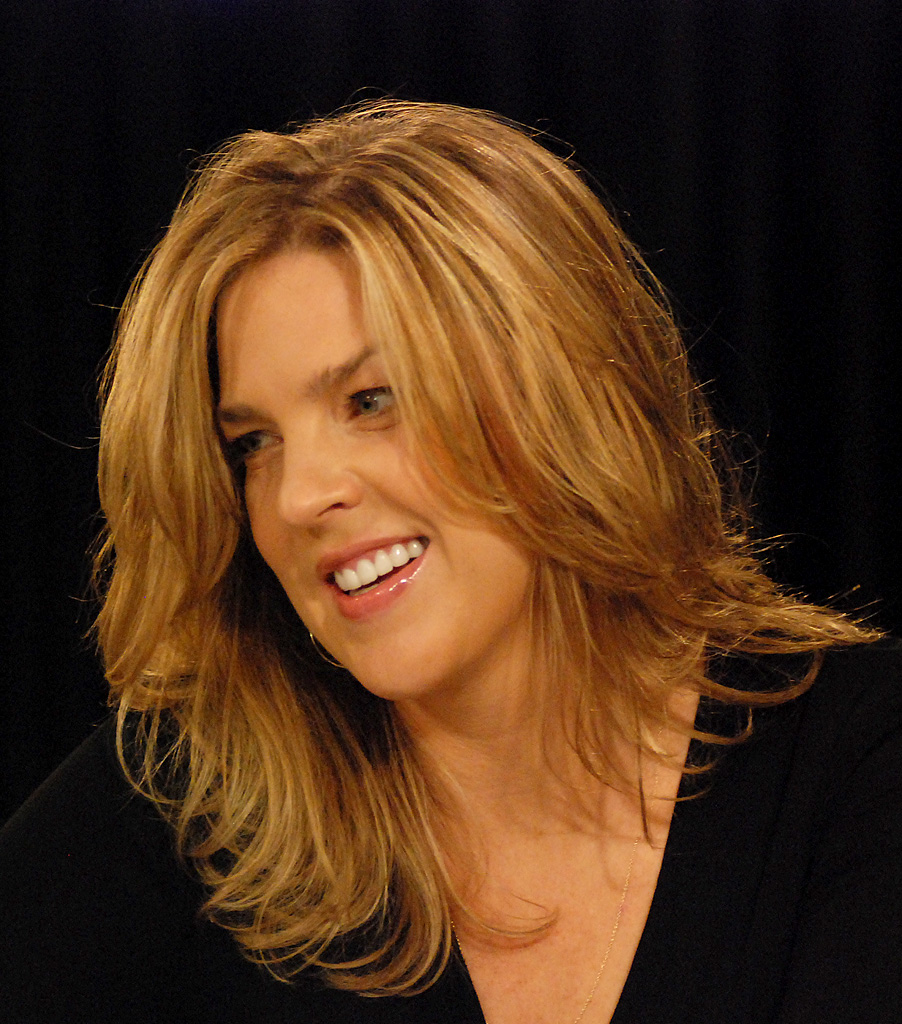
Header image courtesy of Wikimedia Commons/Chris Govias.

More from Issue 177

View All Articles in Issue 177

Search Copper Magazine

#234 A Life in High-End Audio: The Roy Hall Interview, Part One by Frank Doris Sep 07, 2026 #234 Jason Greenlaw Offers His Personal Perspective on Jazz Guitar in Vantage Point by Frank Doris Sep 07, 2026 #234 Transcendent Phoenix: Lucina Yue Brings the Ancient Konghou Into Modern Times by Frank Doris Sep 07, 2026 #234 We Must All Follow Our Bliss by B. Jan Montana Sep 07, 2026 #234 How to Play in a Rock Band, 27: Leveling Up by Frank Doris Sep 07, 2026 #234 Ross Valory: Traveling Into New Musical Territory With All of the Above by Ray Chelstowski Sep 07, 2026 #234 Singer/Songwriter John David Schrader: On the Need to Create by Joe Caplan Sep 07, 2026 #234 The People Who Make Audio Happen: More From T.H.E. Show SoCal 2026 by Harris Fogel Sep 07, 2026 #234 The Vinyl Beat Digs Into the Gadget Box by Rudy Radelic Sep 07, 2026 #234 The Rolling Stones: Foreign Tongues Spoken Loud by Wayne Robins Sep 07, 2026 #234 Musical Moments by Rich Isaacs Sep 07, 2026 #234 Rags for Solo Piano and a Dog: David Chesky's Ragtime Music for the Modern Age by Frankly Speaking Sep 07, 2026 #234 HIGH END 2026, Vienna: Here to Stay by Carsten Barnbeck Sep 07, 2026 #234 From The Audiophile’s Guide: The Two Main Types of Loudpeakers – Box and Panel by Paul McGowan Sep 07, 2026 #234 Letting it Slide by Frank Doris Sep 07, 2026 #234 PS Audio in the News by PS Audio Staff Sep 07, 2026 #234 Long Playing by Peter Xeni Sep 07, 2026 #234 La Mer by B. Jan Montana Sep 07, 2026 #233 A Report From The Total Hi-Fi Experience Show SoCal 2026 by B. Jan Montana Aug 03, 2026 #233 Bluegrass Meets Country, Folk, Jazz and More in All That We Carried by The Squid City Slingers by Frank Doris Aug 03, 2026 #233 Corey Glover and One Tribe Nation: A Variegated Musical Collective by Ray Chelstowski Aug 03, 2026 #233 Excursions with Clive: The Late Clive Davis, A Personal History by Wayne Robins Aug 03, 2026 #233 AI, Art, and Music: A Conversation With Synthography Art by Joe Caplan Aug 03, 2026 #233 New American Symphonies: A Rediscovered Gem and a Vital Contemporary Work by Frank Doris Aug 03, 2026 #233 The Vinyl Beat: Genesis, the Dave Clark Five, Antonio Carlos Jobim and More by Rudy Radelic Aug 03, 2026 #233 How to Play in a Rock Band, 26: When It's Time to Record Your Music by Frank Doris Aug 03, 2026 #233 More From T.H.E. Show 2026, and the People Who Made it Happen by Harris Fogel Aug 03, 2026 #233 Underappreciated Artists, Part Three: Icehouse by Rich Isaacs Aug 03, 2026 #233 The Surprisingly Rich and Varied Music of Somalia by Steve Kindig Aug 03, 2026 #233 A Remarkable Discographic Legacy: The LP Recordings of the Basel Symphony Orchestra by Stephan Haberthür Aug 03, 2026 #233 From The Audiophile’s Guide: The Importance of Loudspeakers by Paul McGowan Aug 03, 2026 #233 From Swimming Pool to New Listening Room: A Conversation with Norman Varney of AV RoomService by Gilles Laferrière Aug 03, 2026 #233 PS Audio in the News by PS Audio Staff Aug 03, 2026 #233 Audio Jewelry by Peter Xeni Aug 03, 2026 #233 Enrich Your Life by Frank Doris Aug 03, 2026 #233 The Searcher by James Schrimpf Aug 03, 2026 #232 What came first: Art or Music? A Conversation With Artist Jose Acosta by Joe Caplan Jul 06, 2026 #232 Blow By Blow: The Jeff Beck Story: An Insightful Book About a Guitar Icon by Ray Chelstowski Jul 06, 2026 #232 Creed Over Camaraderie? by B. Jan Montana Jul 06, 2026 #232 Chronicles of a Sound Pilgrim at the 2026 Montreal Audiofest by Hugues Morin Jul 06, 2026 #232 The Vinyl Beat: Summer Grooves by Rudy Radelic Jul 06, 2026 #232 Hibbing Hillbilly Dylan's Acoustic Rock by Wayne Robins Jul 06, 2026 #232 Quad Quads and Plasmatronics Tweeters: An Extraordinary System Comes to Life by Frank Doris Jul 06, 2026 #232 In Praise of Live Music, Once Again by Ted Shafran Jul 06, 2026 #232 Allnic Audio’s L-9000 Preamplifier: Design and Engineering Innovation by Howard Kneller Jul 06, 2026 #232 “Best Of” Lists and Rage Bait: Enough Already by Frank Doris Jul 06, 2026 #232 Quick Takes: Bud Shank, Paulo Almeida, Jakob Dreyer, Tim Eriksen and Peter Irvine by Frank Doris Jul 06, 2026

Diana Krall: Finding the Perfect Song

Diana Krall: Finding the Perfect Song

Everybody sings the standards. That’s why they’re called standards. But it takes a special touch to give well-worn songs a unique sparkle. No doubt about it, singer and pianist Diana Krall has the knack. And listeners appreciate it: no artist has spent more time on the jazz charts than she has. Her albums, particularly Live in Paris, are also prized by audiophiles for their sound quality.

Born 1964 in British Columbia, Canada, Krall was the daughter of two amateur musicians who got her started on piano at the age of four. Jazz called to her early, and by high school she was performing around town with her own band. After three years at Berklee College of Music in Boston, she moved to Los Angeles and immersed herself in the jazz scene there.

Although she recorded her first album in California in 1992, she returned to Canada to have it mixed and released on Justin Time Records. She went on to make a name for herself as a connoisseur of the standard repertoire, working with impressive names like bassist Christian McBride and arranger Johnny Mandel. She also toured and recorded with Tony Bennett.

A change in her personal life in 2003 coincided with a shift in her creative life: she married singer/songwriter Elvis Costello and started writing songs with him. She’s also a gifted producer, often collaborating with Tommy LiPuma both on her own projects and on Barbara Streisand’s 2009 album, Love is the Answer. LiPuma died in 2017, and Krall’s most recent solo album comprises unreleased tracks they worked on together over the years.

Krall has recorded in styles ranging from bossa nova to music from the Prohibition era, always overlaying each track with her unique touch and selling the lyrics with her craggy alto voice, credibly expressive yet never overdramatic.

Enjoy these eight great tracks by Diana Krall.

  1. Track: “Do Nothin’ Till You Hear from Me”
    Album: Stepping Out
    Label: Justin Time
    Year: 1993

On the advice of bassist Ray Brown, Krall started studying jazz piano with Jimmy Rowles while living in Los Angeles. As Brown put it in his liner notes for this debut album, the choice of teachers “paid off tremendously.”

On Stepping Out, Krall proves that she possesses the basic skill set necessary to be a great jazz musician: outstanding taste in tunes, the ability to attract and work with first-rate collaborators (here, bassist John Clayton and drummer Jeff Hamilton), and vocal and piano technique that speaks for itself in an unadorned acoustic setting. A case in point is her performance of Duke Ellington’s “Do Nothin’ Till You Hear from Me.”


  1. Track: “Baby Baby All the Time”
    Album: All for You: A Dedication to the Nat King Cole Trio
    Label: Impulse!
    Year: 1996

Krall was nominated for a Grammy Award for her third album, All for You, the second to be produced by Tommy LiPuma. One can imagine how Nat King Cole would inspire Krall. Like her, he was a gifted pianist and singer with a completely original sound even when playing well-known tunes.

She plays here as part of a trio – Russell Malone on guitar, Paul Keller on bass. The small-group context works best for Krall’s conversational style of expressing the lyrics; she always sounds like she’s in a bar with a good friend, talking with gusto and humor about something that’s happened to her. “Baby Baby All the Time” shows how her intimate style is the polar opposite of the standard, smooth “crooner” approach.


  1. Track: “Devil May Care”
    Album: When I Look in Your Eyes
    Label: Verve
    Year: 1999

Krall won the first of her two Grammy awards for When I Look in Your Eyes, which was also her first record for the legendary Verve label.

Johnny Mandel provided the big band arrangements for more than half the album, but a few of the tracks are small-group renditions using the Diana Krall Trio (Russell Malone, guitar; Ben Wolfe, bass). “Devil May Care” is a sly number by bebop composer Bob Dorough, best known for writing songs for the Schoolhouse Rock! TV series.


  1. Track: “Fly Me to the Moon”
    Album: Live in Paris
    Label: Verve
    Year: 2002

Krall received her second Grammy Award for Live in Paris, which was her first live album and one of the best-selling live jazz albums ever. She also released an accompanying DVD version of concert footage from the 2001 performances at the Olympia Hall that form the basis of this record.

She’s accompanied by about a dozen instrumentalists – plus an orchestral contingent on a couple of tracks. But the highlights, as always, are the tunes arranged for small group. Her usual cohorts Hamilton and Clayton, plus guitarist Anthony Wilson, join her for “Fly Me to the Moon,” an especially good example of Krall’s graceful, fluid piano chops.


  1. Track: “The Girl in the Other Room”
    Album: The Girl in the Other Room
    Label: Verve
    Year: 2004

Krall married Elvis Costello in 2003, and The Girl in the Other Room is a sort of wedding album. Working with her husband, Krall was willing for the first time to record her own songs. She described the process as her composing the music first and then explaining to Costello what she wanted in the lyrics, which he then polished. The track list also includes songs by Tom Waits and Joni Mitchell.

It’s not exactly a jazz album, but it’s certainly informed by Krall’s profound identification with jazz and blues. The title song, by Krall and Costello, has a mood reminiscent of the wistfulness of Billie Holiday mixed with the observational songwriting of Regina Spektor.


  1. Track: “Little Girl Blue”
    Album: From This Moment On
    Label: Verve
    Year: 2006

For the album From This Moment On, Krall returned to the standard repertoire that knows so well. Every time she makes an album like this, it seems like she has found the 10 or 12 songs best suited to her. And then she comes up with another dozen perfect songs for the next album. This one has some real gems, like “Willow Weep for Me” and “Isn’t This a Lovely Day,” not to mention the European bonus track, “The Boulevard of Broken Dreams.”

But, perhaps because of its simplicity, Krall’s singing and playing of Rodgers and Hart’s “Little Girl Blue” is particularly effective. John Clayton plays the melancholy solo line on a bowed upright bass.


  1. Track: “Feels Like Home”
    Album: Wallflower
    Label: Verve
    Year: 2015

David Foster, famed for his work with the band Chicago and many others, applied his decades of experience to produce the album Wallflower. The choice was germane to this particular collection of songs, covers of a wide variety of pop and rock hits. Unlike on her 2004 collaboration with Costello, Krall truly manages to separate herself from her jazz roots.

However, this is not to say that she ever sounds like any song’s original artist. “Feels Like Home,” first recorded by Linda Ronstadt, was written by Randy Newman. Krall performs it as a quiet, understated duet with 1980s rock star Bryan Adams.


  1. Track: “Fascinating Rhythm”
    Album: Love Is Here to Stay
    Label: Verve/Columbia
    Year: 2018

Tony Bennett is well known for his many duet projects. One of the last – we must sadly acknowledge that his years of recording and performing are over – was Love Is Here to Stay. He and Krall tackled the standards repertoire that is their shared comfort zone, specifically the music of George and Ira Gershwin.

It’s inspiring to hear these two masters weave their distinctive styles into a blend that works so well, even through the complexities of a song like “Fascinating Rhythm.”


Header image courtesy of Wikimedia Commons/Chris Govias.
0 comments

Leave a comment

0 Comments

Your avatar

Loading comments...

🗑️ Delete Comment

Enter moderator password to delete this comment:

✏️ Edit Comment

Enter your email to verify ownership: