COPPER

A PS Audio Publication

Issue 72 • Free Online Magazine

Issue 72 IN MY ROOM

5400 Hours of Fun

5400 Hours of Fun

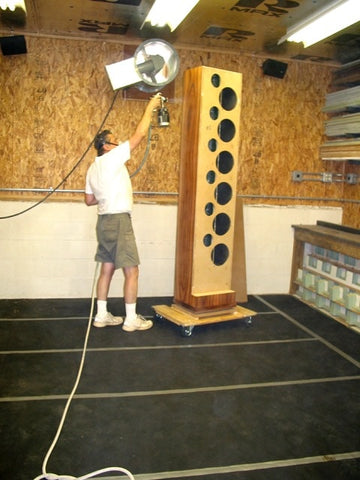
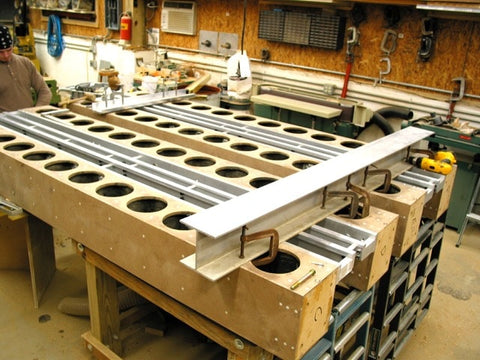
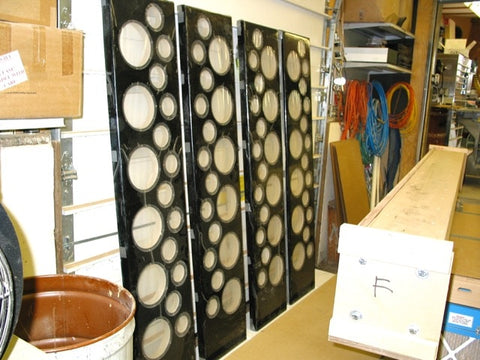
[Ken Fritz has abilities and ambition that put most of us to shame. Ken decided to build his own speakers—and the listening room for them. As you’ll see, he did everything in a big way. Having  produced tooling for the cast polymer baffle for the Thiel CS5, Ken says, ” I thought I’d cast baffles for this system also.” As one would. ;->

The scope of the work required to build both speakers and room will take at least two articles to convey—maybe three. Meanwhile: take a look, and be amazed. —-Ed.]

Building loudspeakers has always been a hobby. Back in my high school days, 1956 and on, I built a pair of ElectroVoice Patricians which I used for 25 years—and I still have all the drivers. After hearing an Infinity Quantum Line Source at Stereo Exchange, I realized Line Arrays were the way to go. Since then, I’ve built three iterations of line sources until I finally decided upon the system I now have.

Before embarking on the project, I spoke at a CES show with Igor Levitsky, who did design work for Bohlender Graebener. I asked him if I was making a mistake in design, and was relieved when he told me I was on the right track, and furthermore,  suggested the crossover points for the BG  RD50 drivers I chose to use. I also asked for a personal meeting with speaker designers Joe D’Appolito and Vance Dickason, together. I was concerned that my choice of drivers wouldn’t integrate properly; luckily, both were more than familiar with my choices and told me I couldn’t have made better ones. They did tell me, however, that I’d need to sit at least 16 feet from the speakers so that the cylindrical waveforms would integrate properly. In the finished room, the listening position is 26 feet from the speakers.

I used 16 15-inch metal cone drivers, sourced from Krell, from 60Hz on down. They were built for me by Thilo Stompler, who suggested using a surround with an Xmax of 2 inches rather than the 3 1/4-inch surrounds they used for Krell. Dan D’Agostino was gracious enough to allow me to purchase them directly from TC Sounds. I also used: 24 7-inch ScanSpeak kevlar cone mid-bass drivers per channel, going from 60Hz to 200Hz; four BG RD50 drivers from 200Hz up to 6500Hz; 40 Panasonic EAS-10TH 400A leaf tweeters from 6500Hz up, 30 tweeters to the front and 10 to the rear, out of phase from the front, for a dipolar pattern.

The surround speakers use six 8-inch ScanSpeak Revelator bass drivers up to 500Hz, six 3 1/2-inch ScanSpeak Revelator mids up to 3500Hz, and six ScanSpeak Revelator dome tweeters from 3500Hz on up.

The electronics are from Krell: five KBX active crossovers, three FPB 600s, four FPB 300s, and one EVO 403. I’m using four Crest Audio 6500 watt stereo amps to drive the 16 bass drivers, as they require that amount of power to perform properly.

Before finishing the room, I had Acoustics First, a Richmond company that specializes in room design for commercial projects, come out and do ETF measurements of the room. They then had Owens Corning manufacture 4ft x 5ft sound panels, according to their patented algorithm, that I integrated throughout the walls in the room.

I must say that the help and suggestions I got from well-known industry experts were instrumental in the success of my project.

[In the next issue of Copper, we’ll go more into the fine points of Ken’s amazing speaker project—Ed.]

More from Issue 72

View All Articles in Issue 72

Search Copper Magazine

#233 A Report From The Total Hi-Fi Experience Show SoCal 2026 by B. Jan Montana Aug 03, 2026 #233 Bluegrass Meets Country, Folk, Jazz and More in All That We Carried by The Squid City Slingers by Frank Doris Aug 03, 2026 #233 Corey Glover and One Tribe Nation: A Variegated Musical Collective by Ray Chelstowski Aug 03, 2026 #233 Excursions with Clive: The Late Clive Davis, A Personal History by Wayne Robins Aug 03, 2026 #233 AI, Art, and Music: A Conversation With Synthography Art by Joe Caplan Aug 03, 2026 #233 New American Symphonies: A Rediscovered Gem and a Vital Contemporary Work by Frank Doris Aug 03, 2026 #233 The Vinyl Beat: Genesis, the Dave Clark Five, Antonio Carlos Jobim and More by Rudy Radelic Aug 03, 2026 #233 How to Play in a Rock Band, 26: When It's Time to Record Your Music by Frank Doris Aug 03, 2026 #233 More From T.H.E. Show 2026, and the People Who Made it Happen by Harris Fogel Aug 03, 2026 #233 Underappreciated Artists, Part Three: Icehouse by Rich Isaacs Aug 03, 2026 #233 The Surprisingly Rich and Varied Music of Somalia by Steve Kindig Aug 03, 2026 #233 A Remarkable Discographic Legacy: The LP Recordings of the Basel Symphony Orchestra by Stephan Haberthür Aug 03, 2026 #233 From The Audiophile’s Guide: The Importance of Loudspeakers by Paul McGowan Aug 03, 2026 #233 From Swimming Pool to New Listening Room: A Conversation with Norman Varney of AV RoomService by Gilles Laferrière Aug 03, 2026 #233 PS Audio in the News by PS Audio Staff Aug 03, 2026 #233 Audio Jewelry by Peter Xeni Aug 03, 2026 #233 Enrich Your Life by Frank Doris Aug 03, 2026 #233 The Searcher by James Schrimpf Aug 03, 2026 #232 What came first: Art or Music? A Conversation With Artist Jose Acosta by Joe Caplan Jul 06, 2026 #232 Blow By Blow: The Jeff Beck Story: An Insightful Book About a Guitar Icon by Ray Chelstowski Jul 06, 2026 #232 Creed Over Camaraderie? by B. Jan Montana Jul 06, 2026 #232 Chronicles of a Sound Pilgrim at the 2026 Montreal Audiofest by Hugues Morin Jul 06, 2026 #232 The Vinyl Beat: Summer Grooves by Rudy Radelic Jul 06, 2026 #232 Hibbing Hillbilly Dylan's Acoustic Rock by Wayne Robins Jul 06, 2026 #232 Quad Quads and Plasmatronics Tweeters: An Extraordinary System Comes to Life by Frank Doris Jul 06, 2026 #232 In Praise of Live Music, Once Again by Ted Shafran Jul 06, 2026 #232 Allnic Audio’s L-9000 Preamplifier: Design and Engineering Innovation by Howard Kneller Jul 06, 2026 #232 “Best Of” Lists and Rage Bait: Enough Already by Frank Doris Jul 06, 2026 #232 Quick Takes: Bud Shank, Paulo Almeida, Jakob Dreyer, Tim Eriksen and Peter Irvine by Frank Doris Jul 06, 2026 #232 My Impressions of AXPONA 2026, Part 2 by Frank Doris Jul 06, 2026 #232 How to Play in a Rock Band, 25: Encounters With Famous Musicians, Part Three by Frank Doris Jul 06, 2026 #232 Budgets, and Systems From Small to Outrageous by Paul McGowan Jul 06, 2026 #232 PS Audio in the News by PS Audio Staff Jul 06, 2026 #232 Hand It Over by Frank Doris Jul 06, 2026 #232 Difference of Opinion by Peter Xeni Jul 06, 2026 #232 Wabi-sabi Tree by James Schrimpf Jul 06, 2026 #231 Piano Prodigy Jude Kofie Releases His Debut Album On Octave Records by Frank Doris Jun 01, 2026 #231 Underappreciated Artists, Part Two: City Boy by Rich Isaacs Jun 01, 2026 #231 Music and the Art of Creation: Talking With Saxophonist Rob Scheps by Joe Caplan Jun 01, 2026 #231 How to Play in a Rock Band, 24: Further Adventures at the 2026 Montauk Music Festival by Frank Doris Jun 01, 2026 #231 Courtney Barnett: Creature of Habit by Wayne Robins Jun 01, 2026 #231 Angine de Poitrine: Interstellar Guitar Rock Saviors Headed for Late-Night TV Pop Stardom? by Mark Lepage Jun 01, 2026 #231 My Impressions of AXPONA 2026, Part One by Frank Doris Jun 01, 2026 #231 2026 La Jolla Concours d'Elegance: Another Aesthetic Feast by B. Jan Montana Jun 01, 2026 #231 Country Music Icon Jo Dee Messina’s Bridges: A New Beginning by Ray Chelstowski Jun 01, 2026 #231 The Luxury Dispatch Hosts a Video Podcast With Ken Kessler by Ken Kessler Jun 01, 2026 #231 The Vinyl Beat: Tracking in the Motor City by Rudy Radelic Jun 01, 2026

5400 Hours of Fun

5400 Hours of Fun

[Ken Fritz has abilities and ambition that put most of us to shame. Ken decided to build his own speakers—and the listening room for them. As you’ll see, he did everything in a big way. Having  produced tooling for the cast polymer baffle for the Thiel CS5, Ken says, ” I thought I’d cast baffles for this system also.” As one would. ;->

The scope of the work required to build both speakers and room will take at least two articles to convey—maybe three. Meanwhile: take a look, and be amazed. —-Ed.]

Building loudspeakers has always been a hobby. Back in my high school days, 1956 and on, I built a pair of ElectroVoice Patricians which I used for 25 years—and I still have all the drivers. After hearing an Infinity Quantum Line Source at Stereo Exchange, I realized Line Arrays were the way to go. Since then, I’ve built three iterations of line sources until I finally decided upon the system I now have.

Before embarking on the project, I spoke at a CES show with Igor Levitsky, who did design work for Bohlender Graebener. I asked him if I was making a mistake in design, and was relieved when he told me I was on the right track, and furthermore,  suggested the crossover points for the BG  RD50 drivers I chose to use. I also asked for a personal meeting with speaker designers Joe D’Appolito and Vance Dickason, together. I was concerned that my choice of drivers wouldn’t integrate properly; luckily, both were more than familiar with my choices and told me I couldn’t have made better ones. They did tell me, however, that I’d need to sit at least 16 feet from the speakers so that the cylindrical waveforms would integrate properly. In the finished room, the listening position is 26 feet from the speakers.

I used 16 15-inch metal cone drivers, sourced from Krell, from 60Hz on down. They were built for me by Thilo Stompler, who suggested using a surround with an Xmax of 2 inches rather than the 3 1/4-inch surrounds they used for Krell. Dan D’Agostino was gracious enough to allow me to purchase them directly from TC Sounds. I also used: 24 7-inch ScanSpeak kevlar cone mid-bass drivers per channel, going from 60Hz to 200Hz; four BG RD50 drivers from 200Hz up to 6500Hz; 40 Panasonic EAS-10TH 400A leaf tweeters from 6500Hz up, 30 tweeters to the front and 10 to the rear, out of phase from the front, for a dipolar pattern.

The surround speakers use six 8-inch ScanSpeak Revelator bass drivers up to 500Hz, six 3 1/2-inch ScanSpeak Revelator mids up to 3500Hz, and six ScanSpeak Revelator dome tweeters from 3500Hz on up.

The electronics are from Krell: five KBX active crossovers, three FPB 600s, four FPB 300s, and one EVO 403. I’m using four Crest Audio 6500 watt stereo amps to drive the 16 bass drivers, as they require that amount of power to perform properly.

Before finishing the room, I had Acoustics First, a Richmond company that specializes in room design for commercial projects, come out and do ETF measurements of the room. They then had Owens Corning manufacture 4ft x 5ft sound panels, according to their patented algorithm, that I integrated throughout the walls in the room.

I must say that the help and suggestions I got from well-known industry experts were instrumental in the success of my project.

[In the next issue of Copper, we’ll go more into the fine points of Ken’s amazing speaker project—Ed.]

0 comments

Leave a comment

0 Comments

Your avatar

Loading comments...

🗑️ Delete Comment

Enter moderator password to delete this comment:

✏️ Edit Comment

Enter your email to verify ownership: