COPPER

A PS Audio Publication

Issue 169 • Free Online Magazine

Issue 169 Revolutions Per Minute

Around the World In 80 Lathes, Part 19

Around the World In 80 Lathes, Part 19

Those among our readers with an interest in photography will certainly be familiar with Rollei, a company that started in 1920 in Braunschweig, Germany, manufacturing optics and photographic equipment. Even earlier, in 1869, Ernst Leitz founded Ernst Leitz Wetzlar, in Wetzlar, Germany, manufacturing optical instruments, microscopes and Leica rangefinder cameras. Even prior to that, Fritz Wiktor Hasselblad started Hasselblad in 1841, in Gothenburg, Sweden. Just a few years later, Carl Zeiss launched his own company in 1846 in Jena, Germany. George Eastman founded the Eastman Kodak Company in 1888, in Rochester, New York. Sherman Fairchild started the Fairchild Aerial Camera Corporation in 1920 (the same year that Rollei was founded in Germany) and the Fairchild Camera and Instrument Corporation in 1927, in Delaware.
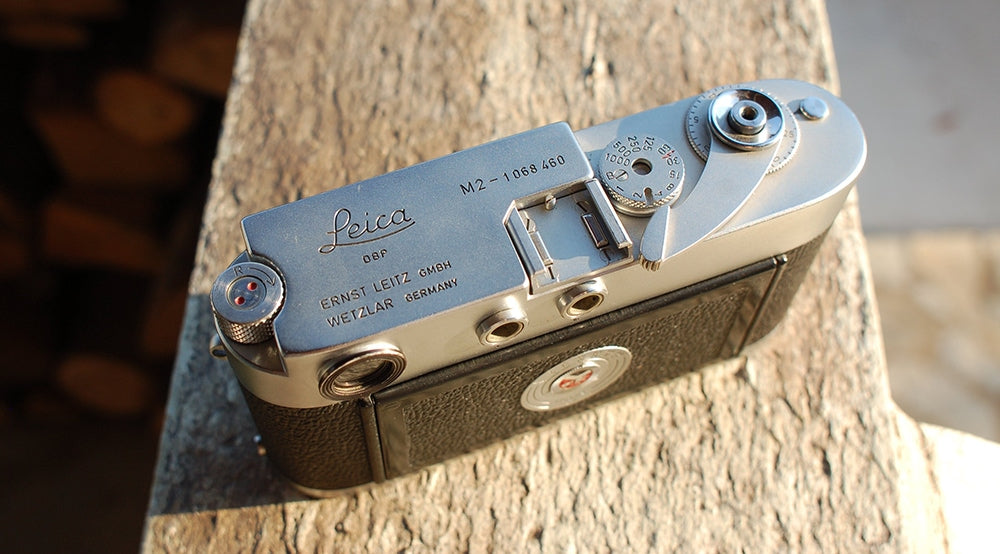
 

Leica M2 rangefinder camera for 35 mm film, manufactured by Ernst Leitz GmbH in 1963 in Wetzlar, Germany. Courtesy of Agnew Analog Reference Instruments.

Leica M2 rangefinder camera for 35 mm film, manufactured by Ernst Leitz GmbH in 1963 in Wetzlar, Germany. Courtesy of Agnew Analog Reference Instruments.


Interestingly, it was the Fairchild Aerial Camera Corporation of New York that started manufacturing disk recording lathes in the early 1930s, an example of which was covered in Issue 164, a direction which was to be continued by the Fairchild Recording Equipment Corporation, founded in 1931 in Whitestone, New York. The result was a range of disk recording lathes, cutter heads (including one of the first stereophonic cutter heads, incorporating a miniature radar within the head to detect stylus motion, all powered by vacuum tube electronics) and recording electronics, such as the legendary Fairchild 670 compressor, designed by Rein Narma, along with the 660 (the mono version of the 670), in the 1950s.

Returning to photography, the lenses produced by the aforementioned companies were of outstanding quality, never failing to impress, even nowadays. By the end of World War II, these companies had considerable expertise in manufacturing very solid, high-quality products, that were already established in their markets. However, the end of WWII saw competition trying to establish a foothold right on the home turf of these giants. Not only was this a rather ambitious move, but it has also proven a highly successful one! Nikon, Canon, Pentax, Minolta, Mamiya, Bronica, and other manufacturers of photographic equipment quickly established themselves in the Western world. What they had in common was that they were all from Japan. Some of these companies produced lenses that could directly compete with the very best of the Western manufacturers, such as the Nikkor camera and enlarger lenses, or the Mamiya-Sekor series of lenses. They won over a substantial portion of the consumer market and many professional photographers were using them during the film era, but also after the market went digital, where Japan entirely dominated the market worldwide.
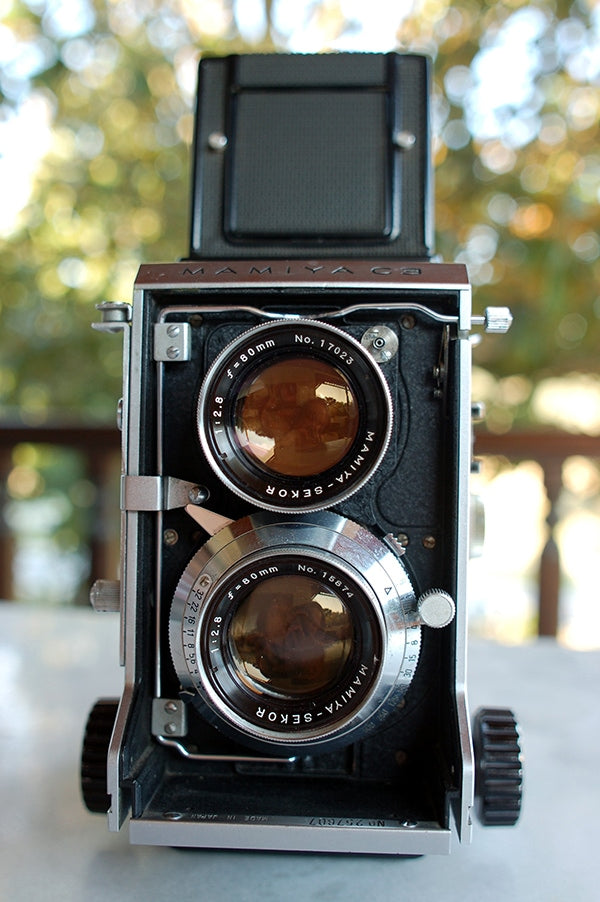
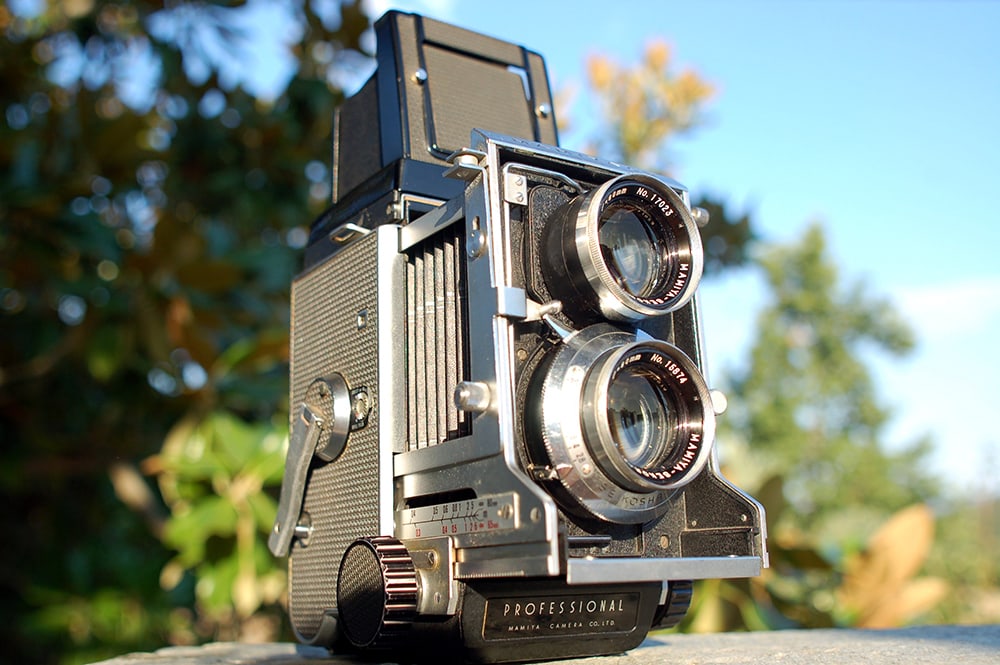
 

Mamiya C3.


Above images: Mamiya C3 Professional twin-lens reflex (TLR) camera with waist-level viewfinder, for medium-format film (120) in 6x6 frame size. It was manufactured in Japan in the 1960s. It's fitted with a Mamiya-Sekor 80 mm lens assembly with a leaf shutter built into the lens. Courtesy of Agnew Analog Reference Instruments.

Above images: Mamiya C3 Professional twin-lens reflex (TLR) camera with waist-level viewfinder, for medium-format film (120) in 6×6 frame size. It was manufactured in Japan in the 1960s. It’s fitted with a Mamiya-Sekor 80 mm lens assembly with a leaf shutter built into the lens. Courtesy of Agnew Analog Reference Instruments.


Nikon in particular had a long history. It was established in 1917 as Nippon Kogaku, in what was then the Empire of Japan. However, it was not until after the end of WWII that they became consumer- and export-oriented. Prior to that, their focus was on optics for industrial and military use, for the domestic market in Japan. When Japan started exporting photographic equipment, Nippon Kogaku often manufactured and supplied the lenses for the other Japanese manufacturers, such as Canon. Canon itself started as the Precision Optical Instruments Laboratory in 1933. Pentax originated in 1919 as the Asahi Kogaku Goshi Kaisha. Evidently, it is not that the Japanese manufacturers did not have a long history of invention and innovation. It was simply that they were not export-oriented for several decades.
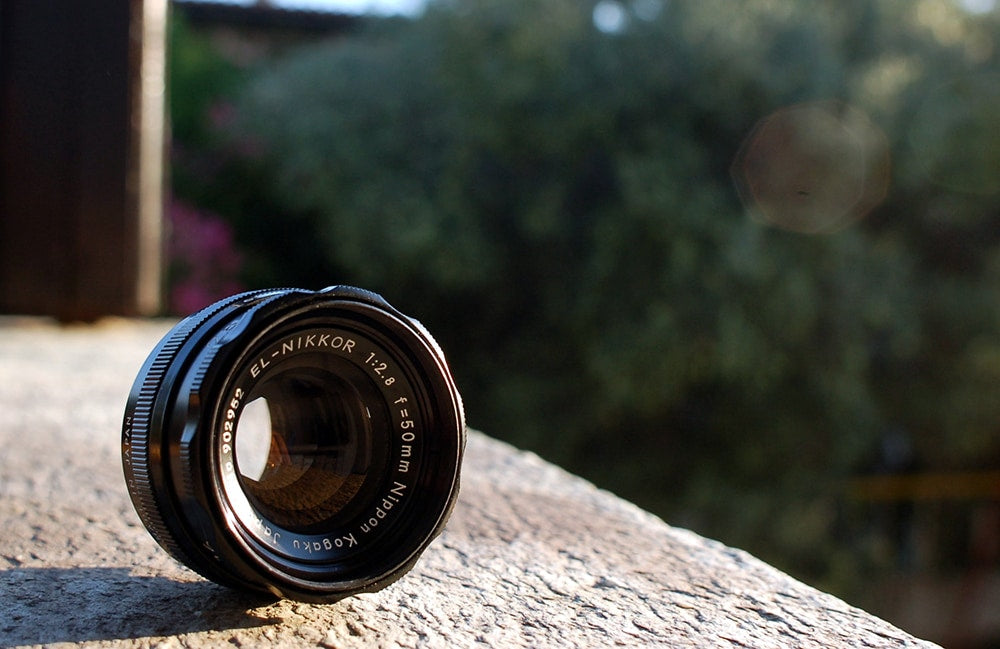
 

A 50 mm Nikkor enlarger lens used for darkroom printing, manufactured in Japan by Nippon Kogaku. Courtesy of Agnew Analog Reference Instruments.

A 50 mm Nikkor enlarger lens used for darkroom printing, manufactured in Japan by Nippon Kogaku. Courtesy of Agnew Analog Reference Instruments.


Many of our readers will remember when Sony, Akai, Pioneer, Kenwood, Luxman, Sansui, Onkyo, Denon, Tascam, Fostex, Nakamichi, and others arrived on the scene, competing with well-established Western manufacturers such as Altec-Lansing, Dynaco, EICO, Fisher, H.H. Scott, Leak, Quad, Telefunken/AEG, Thorens, EMT, Western Electric and others. Japan was a strong player and their products easily won ground in Western markets. Apart from consumer-oriented audio equipment, Japan also pretty much established the “prosumer” market, of products normally encountered in professional audio environments but made smaller, simpler and usually much more attractively priced. Stereophonic and multitrack tape machines from companies such as Tascam and Fostex had quickly found their way into recording studios, broadcasting facilities, and the bedrooms of ambitious musicians and enthusiasts with the means or determination to be able to afford one. Otari took the concept a bit further, introducing a range of widely-respected professional tape machines that were often seen in studios and advertised in the trade publications of the time.
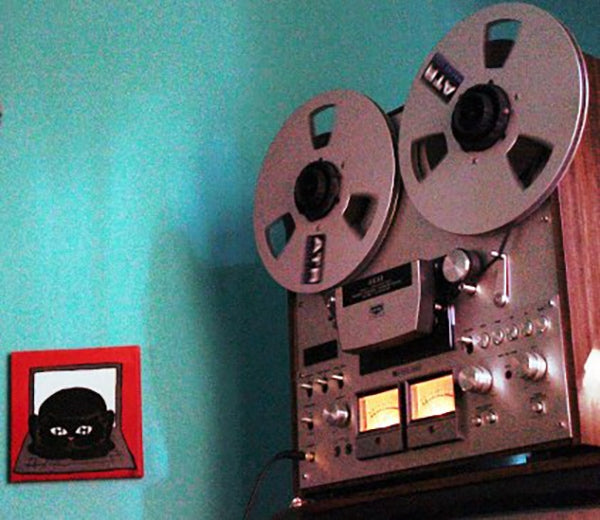
 

Akai GX-630D tape machine, manufactured in Japan in the 1970s. This is the rare high-speed (15/7.5 ips) version, in half-track stereo configuration, Instead of the quarter-track stereo that was the norm for Akai's consumer tape decks. It's fitted with original Akai NAB hub adapters, playing ATR Magnetics tape, with an original painting of Sabine Agnew's "Sabotage Kitten" acrylic on canvas series on the wall next to it. Courtesy of Magnetic Fidelity.

Akai GX-630D tape machine, manufactured in Japan in the 1970s. This is the rare high-speed (15/7.5 ips) version, in half-track stereo configuration, Instead of the quarter-track stereo that was the norm for Akai’s consumer tape decks. It’s fitted with original Akai NAB hub adapters, playing ATR Magnetics tape, with an original painting of Sabine Agnew’s “Sabotage Kitten” acrylic on canvas series on the wall next to it. Courtesy of Magnetic Fidelity.
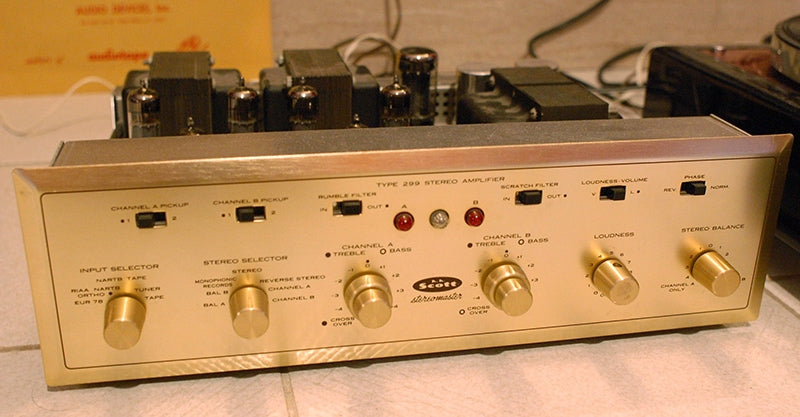
 

An H.H. Scott Type 299 vacuum-tube amplifier, manufactured in 1958 in Maynard, Massachusetts. It was designed by Daniel von Recklinghausen, an MIT graduate who had been employed by H.H. Scott since 1951. The Type 299 was covered in detail in Issues 127and 128. Courtesy of Agnew Analog Reference Instruments.

An H.H. Scott Type 299 vacuum-tube amplifier, manufactured in 1958 in Maynard, Massachusetts. It was designed by Daniel von Recklinghausen, an MIT graduate who had been employed by H.H. Scott since 1951. The Type 299 was covered in detail in Issues 127and 128. Courtesy of Agnew Analog Reference Instruments.


Tascam and Fostex went on to introduce multitrack recorders using cassette tape as the recording medium, a very attractive solution for anyone on a tight budget, which opened up the way to multitrack recording and endless experimentation in home studios and bedrooms. These units often came with a built-in very basic mixing board with microphone and line inputs, as a sort of studio in a box. The quality could not compete with professional recording equipment and wider tape formats, but neither could the price!
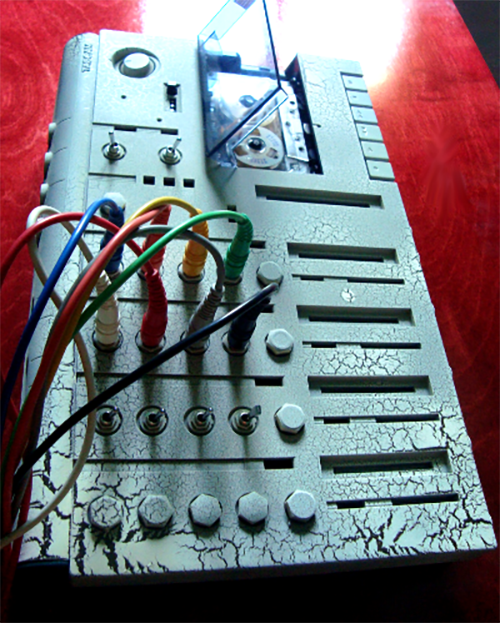
 

Originally a Tascam 414 MK II cassette tape 4-track recorder with a built-in mixing board that served as the author's first multi-track recording device, it was soon discovered that the weakest point was the built-in mixing board electronics. J.I. Agnew gutted it out and replaced it with inputs and outputs for connecting an external mixing console of much higher performance and capabilities. Countless recordings on cassette tape and a variety of odd jobs later, the author was finally able to afford professional recording equipment and the rest, as they say, is history. Courtesy of the author's archive of audio adventures.

Originally a Tascam 414 MK II cassette tape 4-track recorder with a built-in mixing board that served as the author’s first multi-track recording device, it was soon discovered that the weakest point was the built-in mixing board electronics. J.I. Agnew gutted it out and replaced it with inputs and outputs for connecting an external mixing console of much higher performance and capabilities. Countless recordings on cassette tape and a variety of odd jobs later, the author was finally able to afford professional recording equipment and the rest, as they say, is history. Courtesy of the author’s archive of audio adventures.
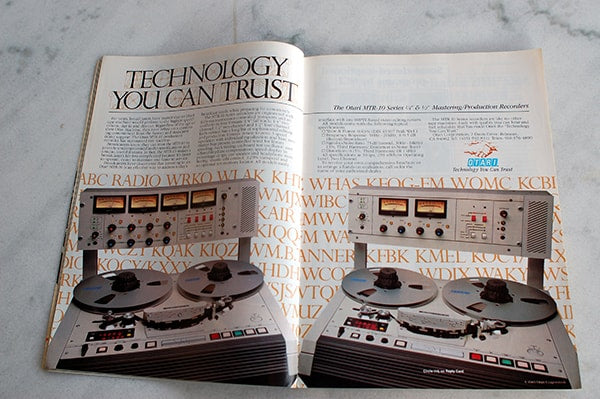
 

A two-page Otari ad, appearing in the May 1983 issue of Broadcast Engineering, extolling the virtues of the MTR-10 tape machines in 1/4-inch and 1/2-inch configurations for broadcasting applications. Courtesy of Agnew Analog Reference Instruments.

A two-page Otari ad, appearing in the May 1983 issue of Broadcast Engineering, extolling the virtues of the MTR-10 tape machines in 1/4-inch and 1/2-inch configurations for broadcasting applications. Courtesy of Agnew Analog Reference Instruments.


Technics introduced a range of sturdy direct-drive turntables oriented towards the broadcasting sector, where they were widely appreciated. The Technics SP-10 and the similar models of that range were often seen in broadcasting studios, having effectively replaced the idler-driven Western counterparts. The SL-1200 established itself in the DJ market and could be found in nightclubs all around the world, earning a reputation for its ability to withstand all kinds of abuse.
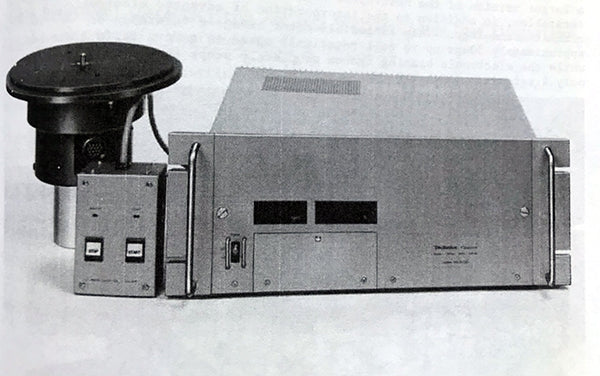
 

Technics SP-02 electronics.


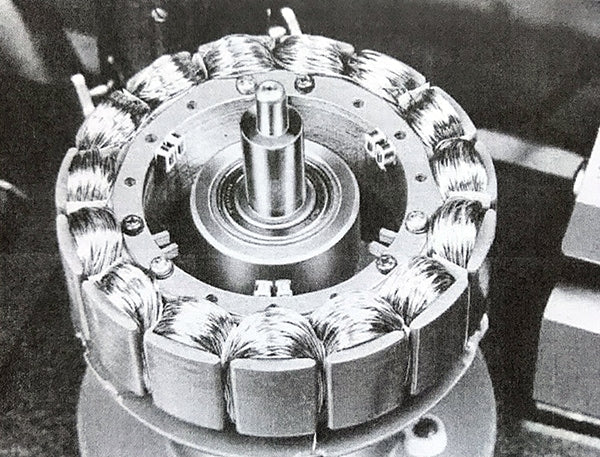
Technics SP-02 motor.


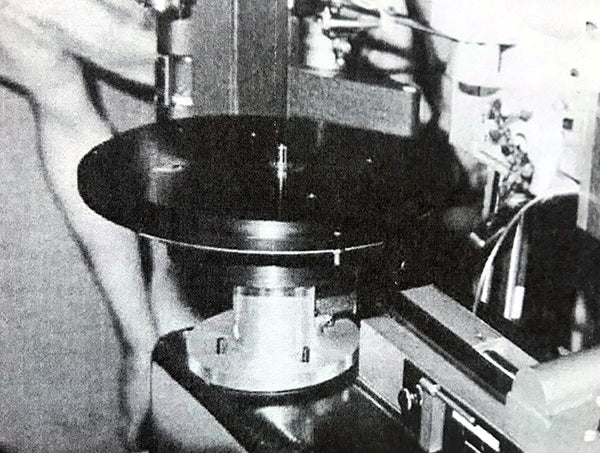
Above images: The Technics SP-02 was introduced as an aftermarket motor for the Neumann VMS-70 disk mastering lathe, intended to replace the Lyrec SM-8 synchronous AC motor that was originally used to drive the platter of the VMS-70. Unlike the SP-10, it was not a turntable. It was only the motor, designed to bolt directly onto the Neumann lathe bed, in place of the oil coupler (see Issues 157 and 159 for details), which had to be removed. It did not come with a platter. Instead, it was designed to support the massive Neumann vacuum platter. The drive electronics and control system were housed in an industrial-grade 19-inch rack mount enclosure. It was never offered as a standalone turntable or in versions that would be compatible with other disk mastering lathes. Only around 10-11 SP-02 units were ever made.

Above images: The Technics SP-02 was introduced as an aftermarket motor for the Neumann VMS-70 disk mastering lathe, intended to replace the Lyrec SM-8 synchronous AC motor that was originally used to drive the platter of the VMS-70. Unlike the SP-10, it was not a turntable. It was only the motor, designed to bolt directly onto the Neumann lathe bed, in place of the oil coupler (see Issues 157 and 159 for details), which had to be removed. It did not come with a platter. Instead, it was designed to support the massive Neumann vacuum platter. The drive electronics and control system were housed in an industrial-grade 19-inch rack mount enclosure. It was never offered as a standalone turntable or in versions that would be compatible with other disk mastering lathes. Only around 10-11 SP-02 units were ever made.


Technics, Denon and JVC entered the disk mastering market. Technics and Denon both introduced aftermarket direct-drive motors for use with the popular disk mastering lathes of the time. JVC focused on the quadraphonic record market, developing playback technology and cutting electronics based on modified Threshold Stasis 2 amplifiers, while re-branding Ortofon cutter heads as JVC to offer a complete system. Ortofon had developed a cutter head that was specifically intended to cut masters for the CD4 and other quadraphonic record systems, where the two rear channels were recorded in the same groove as the stereo channels, modulating an HF carrier, above the audible range.

The quadraphonic record formats saw relatively limited success, and so did the efforts of Technics and Denon with their disk-mastering lathe motors. The disk recording and mastering market was quite diverse prior to WWII, but quickly shrank to just four manufacturers as soon as tape recording became established in the 1950s. It became a small niche market which was extremely difficult to penetrate. Neumann was based in Germany and offered turnkey solutions. Scully was based in Connecticut in the US, and only manufactured lathes without any audio electronics. Westrex, the Western Electric Export Company, also in the US, manufactured cutter heads and cutting amplifiers, and Ortofon in Denmark also manufactured cutter heads and cutting amplifiers. While there were countless manufacturers of monophonic cutter heads prior to World War ll, only a select few attempted to develop a stereophonic cutter head. By the 1970s, only Ortofon, Fairchild, Westrex, Cook, HAECO, and Neumann had endeavored to make a stereophonic cutter head. Of these, only Ortofon, Westrex and Neumann moved on to production in significant numbers (it must be noted that in this sector, anything over 10 units constitutes significant a significant volume of production).

So, is the story of Japan’s involvement in disk recording that brief? Not at all! As we shall see in the next episode, Japan quite successfully established the idea of a consumer or prosumer disk recording lathe, at a time when the rest of the world had long abandoned the notion!


Header image: Mamiya C3 camera, courtesy of Agnew Analog Reference Instruments.

More from Issue 169

View All Articles in Issue 169

Search Copper Magazine

#230 Camaraderie by B. Jan Montana May 04, 2026 #230 AXPONA 2026: A Family Gathering by Paul McGowan May 04, 2026 #230 Pianist Ryan Benthall Explores Jazz Realms and Far Beyond With Divine Sky by Frank Doris May 04, 2026 #230 The Vinyl Beat in AXPONA-Land by Rudy Radelic May 04, 2026 #230 Teddy Thompson’s Musical Growth Deepens With Never Be the Same by Ray Chelstowski May 04, 2026 #230 More Fun in the Sun: Florida Audio Expo, Part Two by Frank Doris May 04, 2026 #230 CanJam NYC 2026 Show Report: Heady Sound, Part Two by Frank Doris and Harris Fogel May 04, 2026 #230 Sonic Youth On Murray Street by Wayne Robins May 04, 2026 #230 Graffeo Coffee: A Symphony of Sensory Experience by Joe Caplan May 04, 2026 #230 The Saul Authority: The Story of Hi-Fi Pioneer Saul Marantz by Olivier Meunier-Plante May 04, 2026 #230 How to Play in a Rock Band, 23: Encounters With Famous Musicians, Part Two by Frank Doris May 04, 2026 #230 An Outlier in the Rack: A Vintage BIC Beam Box by The Staff at Just Audio May 04, 2026 #230 PS Audio in the News by PS Audio Staff May 04, 2026 #230 A Cautionary Tale by Rich Isaacs May 04, 2026 #230 Reel-to-Reel Roots, Part 33 (Revised): Ken Kessler Reports On the 2026 (British) AudioJumble by Ken Kessler May 04, 2026 #230 Text Messaging by Frank Doris May 04, 2026 #230 The Audiophile Rat Race by Peter Xeni May 04, 2026 #230 On the Rocks by Rich Isaacs May 04, 2026 #229 The Earliest Stars of Country Music, Part Three by Jeff Weiner Apr 06, 2026 #229 The Healing Power of Music and Sound at the Omega Institute by Joe Caplan Apr 06, 2026 #229 CanJam NYC 2026 Show Report: Heady Sound, Part One by Frank Doris Apr 06, 2026 #229 Florida Audio Expo 2026: Warming Up to High-End Audio, Part One by Frank Doris Apr 06, 2026 #229 Quick Takes: Anne Bisson, Sam Morrison, The Velvet Underground, and the Stooges by Frank Doris Apr 06, 2026 #229 The Vinyl Beat: New Arrivals, and Old Audio Show Demo Scores to Settle by Rudy Radelic Apr 06, 2026 #229 Harvard Gets a High-End Audio Education by Frank Doris Apr 06, 2026 #229 No Country for Old Knees by B. Jan Montana Apr 06, 2026 #229 How To Play in A Rock Band, 22: Encounters With Famous Musicians, Part 1 by Frank Doris Apr 06, 2026 #229 The Soulful Grooves of Guinea-Bissau by Steve Kindig Apr 06, 2026 #229 Four-Hand Piano Performance at Its Finest by Stephan Haberthür Apr 06, 2026 #229 The People Who Make Audio Happen: Supreme Acoustics Systems’ Las Vegas Grand Opening by Harris Fogel Apr 06, 2026 #229 Blue Öyster Cult: Tyranny and Expectations by Wayne Robins Apr 06, 2026 #229 Guitarist Rick Vito’s Cinematic New Album, Slidemaster by Ray Chelstowski Apr 06, 2026 #229 Measurements and Observational Listening by Paul McGowan Apr 06, 2026 #229 PS Audio in the News by PS Audio Staff Apr 06, 2026 #229 Back to My Reel-to-Reel Roots, Part 28: The Cassette Strikes Back by Ken Kessler Apr 06, 2026 #229 Are You Receiving Me? by Frank Doris Apr 06, 2026 #229 Hospitality by Peter Xeni Apr 06, 2026 #229 Cantina Gateway by James Schrimpf Apr 06, 2026 #228 Serita’s Black Rose Duo Shakes Your Soul With a Blend of Funk, Rock, Blues and a Whole Lot More by Frank Doris Mar 02, 2026 #228 Vinyl, A Love Story by Wayne Robins Mar 02, 2026 #228 Thrill Seeker by B. Jan Montana Mar 02, 2026 #228 The Vinyl Beat: Donald Byrd, Bill Evans, Wes Montgomery, Eddie Palmieri and Frank Sinatra by Rudy Radelic Mar 02, 2026 #228 Listening to Prestige: The History of a Vitally Important Jazz Record Label by Frank Doris Mar 02, 2026 #228 How to Play in a Rock Band, 21: Touring With James Lee Stanley by Frank Doris Mar 02, 2026 #228 The NAMM 2026 Show: The Music Industry’s Premier Event by John Volanski Mar 02, 2026 #228 The Earliest Stars of Country Music, Part Two by Jeff Weiner Mar 02, 2026 #228 From The Audiophile's Guide: A Brief History of Stereophonic Sound by Paul McGowan Mar 02, 2026

Around the World In 80 Lathes, Part 19

Around the World In 80 Lathes, Part 19

Those among our readers with an interest in photography will certainly be familiar with Rollei, a company that started in 1920 in Braunschweig, Germany, manufacturing optics and photographic equipment. Even earlier, in 1869, Ernst Leitz founded Ernst Leitz Wetzlar, in Wetzlar, Germany, manufacturing optical instruments, microscopes and Leica rangefinder cameras. Even prior to that, Fritz Wiktor Hasselblad started Hasselblad in 1841, in Gothenburg, Sweden. Just a few years later, Carl Zeiss launched his own company in 1846 in Jena, Germany. George Eastman founded the Eastman Kodak Company in 1888, in Rochester, New York. Sherman Fairchild started the Fairchild Aerial Camera Corporation in 1920 (the same year that Rollei was founded in Germany) and the Fairchild Camera and Instrument Corporation in 1927, in Delaware.


Leica M2 rangefinder camera for 35 mm film, manufactured by Ernst Leitz GmbH in 1963 in Wetzlar, Germany. Courtesy of Agnew Analog Reference Instruments.

Leica M2 rangefinder camera for 35 mm film, manufactured by Ernst Leitz GmbH in 1963 in Wetzlar, Germany. Courtesy of Agnew Analog Reference Instruments.


Interestingly, it was the Fairchild Aerial Camera Corporation of New York that started manufacturing disk recording lathes in the early 1930s, an example of which was covered in Issue 164, a direction which was to be continued by the Fairchild Recording Equipment Corporation, founded in 1931 in Whitestone, New York. The result was a range of disk recording lathes, cutter heads (including one of the first stereophonic cutter heads, incorporating a miniature radar within the head to detect stylus motion, all powered by vacuum tube electronics) and recording electronics, such as the legendary Fairchild 670 compressor, designed by Rein Narma, along with the 660 (the mono version of the 670), in the 1950s.

Returning to photography, the lenses produced by the aforementioned companies were of outstanding quality, never failing to impress, even nowadays. By the end of World War II, these companies had considerable expertise in manufacturing very solid, high-quality products, that were already established in their markets. However, the end of WWII saw competition trying to establish a foothold right on the home turf of these giants. Not only was this a rather ambitious move, but it has also proven a highly successful one! Nikon, Canon, Pentax, Minolta, Mamiya, Bronica, and other manufacturers of photographic equipment quickly established themselves in the Western world. What they had in common was that they were all from Japan. Some of these companies produced lenses that could directly compete with the very best of the Western manufacturers, such as the Nikkor camera and enlarger lenses, or the Mamiya-Sekor series of lenses. They won over a substantial portion of the consumer market and many professional photographers were using them during the film era, but also after the market went digital, where Japan entirely dominated the market worldwide.


Mamiya C3.


Above images: Mamiya C3 Professional twin-lens reflex (TLR) camera with waist-level viewfinder, for medium-format film (120) in 6x6 frame size. It was manufactured in Japan in the 1960s. It's fitted with a Mamiya-Sekor 80 mm lens assembly with a leaf shutter built into the lens. Courtesy of Agnew Analog Reference Instruments.

Above images: Mamiya C3 Professional twin-lens reflex (TLR) camera with waist-level viewfinder, for medium-format film (120) in 6×6 frame size. It was manufactured in Japan in the 1960s. It’s fitted with a Mamiya-Sekor 80 mm lens assembly with a leaf shutter built into the lens. Courtesy of Agnew Analog Reference Instruments.


Nikon in particular had a long history. It was established in 1917 as Nippon Kogaku, in what was then the Empire of Japan. However, it was not until after the end of WWII that they became consumer- and export-oriented. Prior to that, their focus was on optics for industrial and military use, for the domestic market in Japan. When Japan started exporting photographic equipment, Nippon Kogaku often manufactured and supplied the lenses for the other Japanese manufacturers, such as Canon. Canon itself started as the Precision Optical Instruments Laboratory in 1933. Pentax originated in 1919 as the Asahi Kogaku Goshi Kaisha. Evidently, it is not that the Japanese manufacturers did not have a long history of invention and innovation. It was simply that they were not export-oriented for several decades.


A 50 mm Nikkor enlarger lens used for darkroom printing, manufactured in Japan by Nippon Kogaku. Courtesy of Agnew Analog Reference Instruments.

A 50 mm Nikkor enlarger lens used for darkroom printing, manufactured in Japan by Nippon Kogaku. Courtesy of Agnew Analog Reference Instruments.


Many of our readers will remember when Sony, Akai, Pioneer, Kenwood, Luxman, Sansui, Onkyo, Denon, Tascam, Fostex, Nakamichi, and others arrived on the scene, competing with well-established Western manufacturers such as Altec-Lansing, Dynaco, EICO, Fisher, H.H. Scott, Leak, Quad, Telefunken/AEG, Thorens, EMT, Western Electric and others. Japan was a strong player and their products easily won ground in Western markets. Apart from consumer-oriented audio equipment, Japan also pretty much established the “prosumer” market, of products normally encountered in professional audio environments but made smaller, simpler and usually much more attractively priced. Stereophonic and multitrack tape machines from companies such as Tascam and Fostex had quickly found their way into recording studios, broadcasting facilities, and the bedrooms of ambitious musicians and enthusiasts with the means or determination to be able to afford one. Otari took the concept a bit further, introducing a range of widely-respected professional tape machines that were often seen in studios and advertised in the trade publications of the time.


Akai GX-630D tape machine, manufactured in Japan in the 1970s. This is the rare high-speed (15/7.5 ips) version, in half-track stereo configuration, Instead of the quarter-track stereo that was the norm for Akai's consumer tape decks. It's fitted with original Akai NAB hub adapters, playing ATR Magnetics tape, with an original painting of Sabine Agnew's "Sabotage Kitten" acrylic on canvas series on the wall next to it. Courtesy of Magnetic Fidelity.

Akai GX-630D tape machine, manufactured in Japan in the 1970s. This is the rare high-speed (15/7.5 ips) version, in half-track stereo configuration, Instead of the quarter-track stereo that was the norm for Akai’s consumer tape decks. It’s fitted with original Akai NAB hub adapters, playing ATR Magnetics tape, with an original painting of Sabine Agnew’s “Sabotage Kitten” acrylic on canvas series on the wall next to it. Courtesy of Magnetic Fidelity.


An H.H. Scott Type 299 vacuum-tube amplifier, manufactured in 1958 in Maynard, Massachusetts. It was designed by Daniel von Recklinghausen, an MIT graduate who had been employed by H.H. Scott since 1951. The Type 299 was covered in detail in Issues 127and 128. Courtesy of Agnew Analog Reference Instruments.

An H.H. Scott Type 299 vacuum-tube amplifier, manufactured in 1958 in Maynard, Massachusetts. It was designed by Daniel von Recklinghausen, an MIT graduate who had been employed by H.H. Scott since 1951. The Type 299 was covered in detail in Issues 127and 128. Courtesy of Agnew Analog Reference Instruments.


Tascam and Fostex went on to introduce multitrack recorders using cassette tape as the recording medium, a very attractive solution for anyone on a tight budget, which opened up the way to multitrack recording and endless experimentation in home studios and bedrooms. These units often came with a built-in very basic mixing board with microphone and line inputs, as a sort of studio in a box. The quality could not compete with professional recording equipment and wider tape formats, but neither could the price!


Originally a Tascam 414 MK II cassette tape 4-track recorder with a built-in mixing board that served as the author's first multi-track recording device, it was soon discovered that the weakest point was the built-in mixing board electronics. J.I. Agnew gutted it out and replaced it with inputs and outputs for connecting an external mixing console of much higher performance and capabilities. Countless recordings on cassette tape and a variety of odd jobs later, the author was finally able to afford professional recording equipment and the rest, as they say, is history. Courtesy of the author's archive of audio adventures.

Originally a Tascam 414 MK II cassette tape 4-track recorder with a built-in mixing board that served as the author’s first multi-track recording device, it was soon discovered that the weakest point was the built-in mixing board electronics. J.I. Agnew gutted it out and replaced it with inputs and outputs for connecting an external mixing console of much higher performance and capabilities. Countless recordings on cassette tape and a variety of odd jobs later, the author was finally able to afford professional recording equipment and the rest, as they say, is history. Courtesy of the author’s archive of audio adventures.


A two-page Otari ad, appearing in the May 1983 issue of Broadcast Engineering, extolling the virtues of the MTR-10 tape machines in 1/4-inch and 1/2-inch configurations for broadcasting applications. Courtesy of Agnew Analog Reference Instruments.

A two-page Otari ad, appearing in the May 1983 issue of Broadcast Engineering, extolling the virtues of the MTR-10 tape machines in 1/4-inch and 1/2-inch configurations for broadcasting applications. Courtesy of Agnew Analog Reference Instruments.


Technics introduced a range of sturdy direct-drive turntables oriented towards the broadcasting sector, where they were widely appreciated. The Technics SP-10 and the similar models of that range were often seen in broadcasting studios, having effectively replaced the idler-driven Western counterparts. The SL-1200 established itself in the DJ market and could be found in nightclubs all around the world, earning a reputation for its ability to withstand all kinds of abuse.
 

Technics SP-02 electronics.


Technics SP-02 motor.


Above images: The Technics SP-02 was introduced as an aftermarket motor for the Neumann VMS-70 disk mastering lathe, intended to replace the Lyrec SM-8 synchronous AC motor that was originally used to drive the platter of the VMS-70. Unlike the SP-10, it was not a turntable. It was only the motor, designed to bolt directly onto the Neumann lathe bed, in place of the oil coupler (see Issues 157 and 159 for details), which had to be removed. It did not come with a platter. Instead, it was designed to support the massive Neumann vacuum platter. The drive electronics and control system were housed in an industrial-grade 19-inch rack mount enclosure. It was never offered as a standalone turntable or in versions that would be compatible with other disk mastering lathes. Only around 10-11 SP-02 units were ever made.

Above images: The Technics SP-02 was introduced as an aftermarket motor for the Neumann VMS-70 disk mastering lathe, intended to replace the Lyrec SM-8 synchronous AC motor that was originally used to drive the platter of the VMS-70. Unlike the SP-10, it was not a turntable. It was only the motor, designed to bolt directly onto the Neumann lathe bed, in place of the oil coupler (see Issues 157 and 159 for details), which had to be removed. It did not come with a platter. Instead, it was designed to support the massive Neumann vacuum platter. The drive electronics and control system were housed in an industrial-grade 19-inch rack mount enclosure. It was never offered as a standalone turntable or in versions that would be compatible with other disk mastering lathes. Only around 10-11 SP-02 units were ever made.


Technics, Denon and JVC entered the disk mastering market. Technics and Denon both introduced aftermarket direct-drive motors for use with the popular disk mastering lathes of the time. JVC focused on the quadraphonic record market, developing playback technology and cutting electronics based on modified Threshold Stasis 2 amplifiers, while re-branding Ortofon cutter heads as JVC to offer a complete system. Ortofon had developed a cutter head that was specifically intended to cut masters for the CD4 and other quadraphonic record systems, where the two rear channels were recorded in the same groove as the stereo channels, modulating an HF carrier, above the audible range.

The quadraphonic record formats saw relatively limited success, and so did the efforts of Technics and Denon with their disk-mastering lathe motors. The disk recording and mastering market was quite diverse prior to WWII, but quickly shrank to just four manufacturers as soon as tape recording became established in the 1950s. It became a small niche market which was extremely difficult to penetrate. Neumann was based in Germany and offered turnkey solutions. Scully was based in Connecticut in the US, and only manufactured lathes without any audio electronics. Westrex, the Western Electric Export Company, also in the US, manufactured cutter heads and cutting amplifiers, and Ortofon in Denmark also manufactured cutter heads and cutting amplifiers. While there were countless manufacturers of monophonic cutter heads prior to World War ll, only a select few attempted to develop a stereophonic cutter head. By the 1970s, only Ortofon, Fairchild, Westrex, Cook, HAECO, and Neumann had endeavored to make a stereophonic cutter head. Of these, only Ortofon, Westrex and Neumann moved on to production in significant numbers (it must be noted that in this sector, anything over 10 units constitutes significant a significant volume of production).

So, is the story of Japan’s involvement in disk recording that brief? Not at all! As we shall see in the next episode, Japan quite successfully established the idea of a consumer or prosumer disk recording lathe, at a time when the rest of the world had long abandoned the notion!


Header image: Mamiya C3 camera, courtesy of Agnew Analog Reference Instruments.

0 comments

Leave a comment

0 Comments

Your avatar

Loading comments...

🗑️ Delete Comment

Enter moderator password to delete this comment:

✏️ Edit Comment

Enter your email to verify ownership: