COPPER

A PS Audio Publication

Issue 106 • Free Online Magazine

Issue 106

The Last Station

The Last Station
Finding myself in Syracuse, New York and out of work once again, I sent resumes out and networked very seriously. I did get a bite via a friend in Minneapolis. A group had purchased an FM station and was looking for a program director to launch the new station. It had no staff or studio – just the station. The station was WCTS-AM, owned by the Christian Theological Seminary. Colfax, the new company that had bought WCTS, had recently purchased KQQL-FM (KOOL 108, an oldies station) and was looking to expand. As the story goes, they approached the Seminary and suggested they’d like to purchase the FM station, and give them (subject to FCC approval, of course) an AM station in return plus a check for $10,000,000. “Hallelujah! Praise God.” The deal was done. So Colfax now had this FM station, which had previously featured a religious-programming format. Colfax then shut down the station while they researched the competition, did some upgrades, built studios and hired a program director to assemble a staff and give it direction. Several radio industry consultants assured success, but agreed it would face a highly competitive format war. A format was chosen, as the two stations currently doing that format in the Minneapolis area were thought to be weak. A marketing person was asked to come up with ideas for the new property. Apparently an entire book of ideas was presented, none of which would have worked – yet one slogan was brilliant and would subsequently be adopted. Back in Syracuse, I had to sign an NDA (non-disclosure agreement), which I happily did, before they would tell me the new name of the station, as well as its format and slogan. When I found out the new name, I laughed and laughed, and actually had to put the phone down to gather my wits. The new station would be called BOB. The slogan would be “Turn Your Knob to BOB.” The format would be New Country. Searching for the call letters WBOB-FM, they were found to be owned by a disgruntled ex-wife, who had won the station and call letters in a divorce settlement and was happy to part with them for cash. A studio was built in the KQQL space, and I set about finding personalities, building the music-playback algorithms and so on. Six weeks later, we launched with a million-dollar marketing budget – heavy TV, prime “super” billboards (the really large ones) and more.
The WBOB-FM studio. When Bob spoke, people listened!
To make a long story short, one of our competitors dropped out of the race, and we subsequently beat the big country powerhouse station in the area. But, change was in the air. Colfax had expanded across the country (bankrolled by a pair of industrialist billionaire brothers), radio was a hot commodity in the mid ‘90s, and they sold the company for a hefty profit. Our subsequent owners sold their company after a short time too. Our third owners already owned our competition – the station we had beaten – and after their research, decided to keep that one in the country format. In doing their market research and seeing the high – 80% – consumer awareness for Howard Stern, the new owners decided to kill BOB, put syndicated Howard on in the morning and play what they called “real rock” the rest of the day. The company asked me to stay. I was given a choice: be the programming director for the rock station, or KQQL, the oldies station. I chose the oldies. Later, that company was sold to Clear Channel, which eventually became iHeartMedia. The rock station failed, and the former BOB/rock station was now smooth jazz. I was then given responsibility for that station in addition to KQQL. One day, at an industry gala awards ceremony for which we were nominated for something or other, the president of Clear Channel came up to our table and without thinking, signaled I should “speak with my manager” as I had been a topic of conversation at their budget meetings. The handwriting was on the wall. Back home I confronted my boss and he told me they were “absorbing” my jobs. I had a no-cut contract so I was paid until it expired. My wife grew up outside of Buffalo and had endured the snow of Syracuse, then Minneapolis, and wanted out of winter. We decided to move to Austin, Texas and had a home built. My radio programming days were over. Snapshots: Upcoming country artists would sometimes visit my office and sing a few songs from their new albums. As an audiophile, this was good ear training for the intimate sound of live, un-amplified music. (Eventually the station built a dedicated performance space.) Despite the fact that some of the artists had real talent, few made it to a national level of fame or success. Talent doesn’t guarantee success. I believe the truth is that there’s a simple three-part map to success: talent, tenacity, luck. I really enjoyed meeting so many artists, greatly respected their work ethic and wish that they all could have found fame, but only a few ever do.
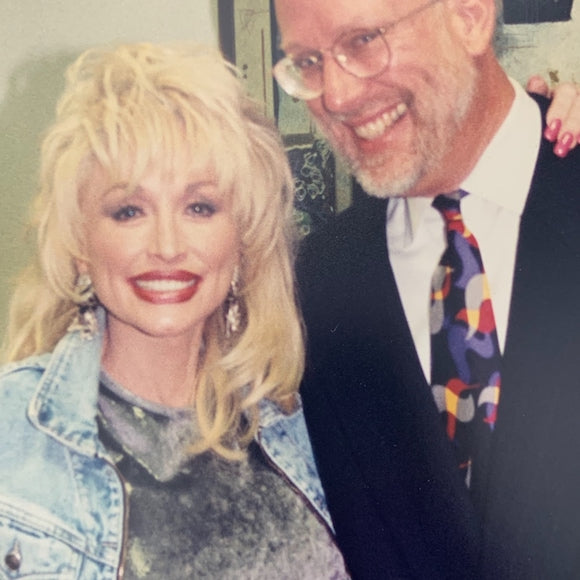
Here she comes again! Dolly Parton and our man.
Next issue – Bob ends his radio career, begins another and has some thoughts on the state of commercial radio today. – Ed.>

More from Issue 106

View All Articles in Issue 106

Search Copper Magazine

#234 A Life in High-End Audio: The Roy Hall Interview, Part One by Frank Doris Sep 07, 2026 #234 Jason Greenlaw Offers His Personal Perspective on Jazz Guitar in Vantage Point by Frank Doris Sep 07, 2026 #234 Transcendent Phoenix: Lucina Yue Brings the Ancient Konghou Into Modern Times by Frank Doris Sep 07, 2026 #234 We Must All Follow Our Bliss by B. Jan Montana Sep 07, 2026 #234 How to Play in a Rock Band, 27: Leveling Up by Frank Doris Sep 07, 2026 #234 Ross Valory: Traveling Into New Musical Territory With All of the Above by Ray Chelstowski Sep 07, 2026 #234 Singer/Songwriter John David Schrader: On the Need to Create by Joe Caplan Sep 07, 2026 #234 The People Who Make Audio Happen: More From T.H.E. Show SoCal 2026 by Harris Fogel Sep 07, 2026 #234 The Vinyl Beat Digs Into the Gadget Box by Rudy Radelic Sep 07, 2026 #234 The Rolling Stones: Foreign Tongues Spoken Loud by Wayne Robins Sep 07, 2026 #234 Musical Moments by Rich Isaacs Sep 07, 2026 #234 Rags for Solo Piano and a Dog: David Chesky's Ragtime Music for the Modern Age by Frankly Speaking Sep 07, 2026 #234 HIGH END 2026, Vienna: Here to Stay by Carsten Barnbeck Sep 07, 2026 #234 From The Audiophile’s Guide: The Two Main Types of Loudpeakers – Box and Panel by Paul McGowan Sep 07, 2026 #234 Letting it Slide by Frank Doris Sep 07, 2026 #234 PS Audio in the News by PS Audio Staff Sep 07, 2026 #234 Long Playing by Peter Xeni Sep 07, 2026 #234 La Mer by B. Jan Montana Sep 07, 2026 #233 A Report From The Total Hi-Fi Experience Show SoCal 2026 by B. Jan Montana Aug 03, 2026 #233 Bluegrass Meets Country, Folk, Jazz and More in All That We Carried by The Squid City Slingers by Frank Doris Aug 03, 2026 #233 Corey Glover and One Tribe Nation: A Variegated Musical Collective by Ray Chelstowski Aug 03, 2026 #233 Excursions with Clive: The Late Clive Davis, A Personal History by Wayne Robins Aug 03, 2026 #233 AI, Art, and Music: A Conversation With Synthography Art by Joe Caplan Aug 03, 2026 #233 New American Symphonies: A Rediscovered Gem and a Vital Contemporary Work by Frank Doris Aug 03, 2026 #233 The Vinyl Beat: Genesis, the Dave Clark Five, Antonio Carlos Jobim and More by Rudy Radelic Aug 03, 2026 #233 How to Play in a Rock Band, 26: When It's Time to Record Your Music by Frank Doris Aug 03, 2026 #233 More From T.H.E. Show 2026, and the People Who Made it Happen by Harris Fogel Aug 03, 2026 #233 Underappreciated Artists, Part Three: Icehouse by Rich Isaacs Aug 03, 2026 #233 The Surprisingly Rich and Varied Music of Somalia by Steve Kindig Aug 03, 2026 #233 A Remarkable Discographic Legacy: The LP Recordings of the Basel Symphony Orchestra by Stephan Haberthür Aug 03, 2026 #233 From The Audiophile’s Guide: The Importance of Loudspeakers by Paul McGowan Aug 03, 2026 #233 From Swimming Pool to New Listening Room: A Conversation with Norman Varney of AV RoomService by Gilles Laferrière Aug 03, 2026 #233 PS Audio in the News by PS Audio Staff Aug 03, 2026 #233 Audio Jewelry by Peter Xeni Aug 03, 2026 #233 Enrich Your Life by Frank Doris Aug 03, 2026 #233 The Searcher by James Schrimpf Aug 03, 2026 #232 What came first: Art or Music? A Conversation With Artist Jose Acosta by Joe Caplan Jul 06, 2026 #232 Blow By Blow: The Jeff Beck Story: An Insightful Book About a Guitar Icon by Ray Chelstowski Jul 06, 2026 #232 Creed Over Camaraderie? by B. Jan Montana Jul 06, 2026 #232 Chronicles of a Sound Pilgrim at the 2026 Montreal Audiofest by Hugues Morin Jul 06, 2026 #232 The Vinyl Beat: Summer Grooves by Rudy Radelic Jul 06, 2026 #232 Hibbing Hillbilly Dylan's Acoustic Rock by Wayne Robins Jul 06, 2026 #232 Quad Quads and Plasmatronics Tweeters: An Extraordinary System Comes to Life by Frank Doris Jul 06, 2026 #232 In Praise of Live Music, Once Again by Ted Shafran Jul 06, 2026 #232 Allnic Audio’s L-9000 Preamplifier: Design and Engineering Innovation by Howard Kneller Jul 06, 2026 #232 “Best Of” Lists and Rage Bait: Enough Already by Frank Doris Jul 06, 2026 #232 Quick Takes: Bud Shank, Paulo Almeida, Jakob Dreyer, Tim Eriksen and Peter Irvine by Frank Doris Jul 06, 2026

The Last Station

The Last Station
Finding myself in Syracuse, New York and out of work once again, I sent resumes out and networked very seriously. I did get a bite via a friend in Minneapolis. A group had purchased an FM station and was looking for a program director to launch the new station. It had no staff or studio – just the station. The station was WCTS-AM, owned by the Christian Theological Seminary. Colfax, the new company that had bought WCTS, had recently purchased KQQL-FM (KOOL 108, an oldies station) and was looking to expand. As the story goes, they approached the Seminary and suggested they’d like to purchase the FM station, and give them (subject to FCC approval, of course) an AM station in return plus a check for $10,000,000. “Hallelujah! Praise God.” The deal was done. So Colfax now had this FM station, which had previously featured a religious-programming format. Colfax then shut down the station while they researched the competition, did some upgrades, built studios and hired a program director to assemble a staff and give it direction. Several radio industry consultants assured success, but agreed it would face a highly competitive format war. A format was chosen, as the two stations currently doing that format in the Minneapolis area were thought to be weak. A marketing person was asked to come up with ideas for the new property. Apparently an entire book of ideas was presented, none of which would have worked – yet one slogan was brilliant and would subsequently be adopted. Back in Syracuse, I had to sign an NDA (non-disclosure agreement), which I happily did, before they would tell me the new name of the station, as well as its format and slogan. When I found out the new name, I laughed and laughed, and actually had to put the phone down to gather my wits. The new station would be called BOB. The slogan would be “Turn Your Knob to BOB.” The format would be New Country. Searching for the call letters WBOB-FM, they were found to be owned by a disgruntled ex-wife, who had won the station and call letters in a divorce settlement and was happy to part with them for cash. A studio was built in the KQQL space, and I set about finding personalities, building the music-playback algorithms and so on. Six weeks later, we launched with a million-dollar marketing budget – heavy TV, prime “super” billboards (the really large ones) and more.
The WBOB-FM studio. When Bob spoke, people listened!
To make a long story short, one of our competitors dropped out of the race, and we subsequently beat the big country powerhouse station in the area. But, change was in the air. Colfax had expanded across the country (bankrolled by a pair of industrialist billionaire brothers), radio was a hot commodity in the mid ‘90s, and they sold the company for a hefty profit. Our subsequent owners sold their company after a short time too. Our third owners already owned our competition – the station we had beaten – and after their research, decided to keep that one in the country format. In doing their market research and seeing the high – 80% – consumer awareness for Howard Stern, the new owners decided to kill BOB, put syndicated Howard on in the morning and play what they called “real rock” the rest of the day. The company asked me to stay. I was given a choice: be the programming director for the rock station, or KQQL, the oldies station. I chose the oldies. Later, that company was sold to Clear Channel, which eventually became iHeartMedia. The rock station failed, and the former BOB/rock station was now smooth jazz. I was then given responsibility for that station in addition to KQQL. One day, at an industry gala awards ceremony for which we were nominated for something or other, the president of Clear Channel came up to our table and without thinking, signaled I should “speak with my manager” as I had been a topic of conversation at their budget meetings. The handwriting was on the wall. Back home I confronted my boss and he told me they were “absorbing” my jobs. I had a no-cut contract so I was paid until it expired. My wife grew up outside of Buffalo and had endured the snow of Syracuse, then Minneapolis, and wanted out of winter. We decided to move to Austin, Texas and had a home built. My radio programming days were over. Snapshots: Upcoming country artists would sometimes visit my office and sing a few songs from their new albums. As an audiophile, this was good ear training for the intimate sound of live, un-amplified music. (Eventually the station built a dedicated performance space.) Despite the fact that some of the artists had real talent, few made it to a national level of fame or success. Talent doesn’t guarantee success. I believe the truth is that there’s a simple three-part map to success: talent, tenacity, luck. I really enjoyed meeting so many artists, greatly respected their work ethic and wish that they all could have found fame, but only a few ever do.
Here she comes again! Dolly Parton and our man.
Next issue – Bob ends his radio career, begins another and has some thoughts on the state of commercial radio today. – Ed.>

0 comments

Leave a comment

0 Comments

Your avatar

Loading comments...

🗑️ Delete Comment

Enter moderator password to delete this comment:

✏️ Edit Comment

Enter your email to verify ownership: