The Cowsills: The Family That Plays Together, Stays Together
By Ray Chelstowski•
Few bands became part of the fabric of American music more quickly than The Cowsills. Discovered in their home town of Newport, Rhode Island in 1967 by a producer for The Today Show, this family act delivered five studio albums in three years, produced hits like “The Rain, the Park and Other Things,” “We Can Fly,” “Indian Lake,” ”Hair,” and the theme song from the ABC television show Love American Style. They were also the subject of a successful comic book, and were the inspiration for the popular 1970s television series The Partridge Family.
Over the years the band saw family members both join and leave the lineup, and the band break up and reunite. That changed about 18 years ago when they decided to join the “Happy Together Tour” alongside the Association, the Turtles, Gary Puckett & The Union Gap, and the Vogues. Since then, they have maintained a steady presence on summer stages.
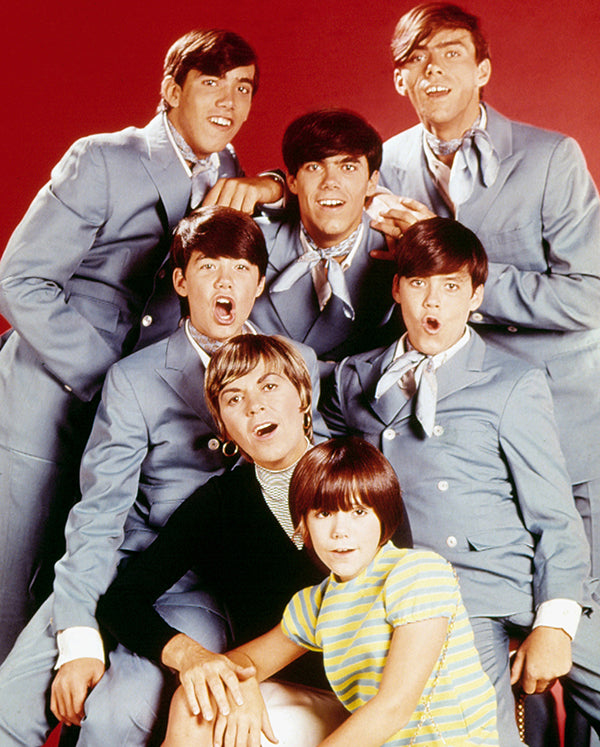
The Cowsills in the 1960s. Courtesy of Cowsills PR.
On that tour a few years back, they found the inspiration to write new material and then decided to put the songs to tape. That led them to a disastrous relationship with the now-defunct crowdfunding entity Pledge Music, where all of the money they had raised to record a new record was lost in the company’s bankruptcy. Fortunately, Ahmet Ertegun protégé Dr. Rock Positano arrived soon after to save the day. Positano was visiting Newport and looking upon its waterfront, decided that he had to work with the Cowsills. He reached out at just the right time and he and the band migrated to Louisiana where the three original members (siblings Bob, Susan, and Paul), along with their nephews and touring band, huddled and made what would become only the third studio album they’d release in over 40 years.
Rhythm of theWorld is the beginning of a productive label relationship with Omnivore Recordings and a musical outing that ties right back to the sound they made popular so long ago. The 11 new tracks are fresh, modern in theme, and live within a production that’s crisp, clean, and current. Just when everyone thought that the 2011 Showtime Documentary Family Band: The Cowsills Story would be the last time this band took a national stage, the future for this wonderful gift to American music is as bright as ever, and you soon will be able to see the Cowsills almost as often as you would have in 1968.
Copper caught up with Bob Cowsill just before the holidays and talked about how the Rhythm of the World project came about, what it was like to be writing again for the first time in almost 30 years, and how the family has stayed together on stage for so long.
Ray Chelstowski: Over the last 40 years you have huddled together as a group to make new music only three times. What prompted you to do it again now?
Bob Cowsill: Well, we did it twice before; once in the late 1970s, then again in the late 1990s. When you record that infrequently you go dry. You don’t write songs. I sure don’t, but Susan does. Susan is our “Neil Young.” She had been hounding us to make a new record and we thought she was out of her mind. But in the end it was the songs that generated all of this.
We’d been on the “Happy Together” tour for seven summers. A few years back we got inspired on tour to write a song together, which is something we’d never done. Every night on tour the Turtles would tell the crowd that they needed “to get up” and we thought there was a song there, even if there were already more than 80 songs about “getting up” already recorded. We decided to do one more and what that triggered was a frenzy of writing, and we had a lot of fun. There was no intent beyond the writing but we did it every day on that summer tour and there’s something to be said about that because it put us in the same place.
The songs turned out to be so good that we decided to record them and launched a Pledge Music campaign to fund the project. Just as we hit our fundraising goal, Pledge Music went bankrupt. It was a nightmare until Rock Positano was standing on Gull Rock Island just off Newport and looked toward the famous [historic Trinity] Church and decided that he needed to get ahold of us, and he did.
RC: Were these all half-cooked songs that you brought to the process, or did you create everything new?
BC: When we were on the [tour] bus it started with Paul [Cowsill] putting down a piece of paper with the first two verses of “Ya Gotta Get Up!” I’m a good melody guy and I picked up a guitar and put one to it quickly. Then Susan started singing what her part would be. What we discovered was that Paul and Susan are exceptional at bringing forward lyrics, and together we found a really good threesome that became one good brain.
We were lucky to get our physical recordings done just before the (pandemic) lockdown and got to mix them with Frank Filipetti at his studio in Connecticut. It took eight months because we were doing it remotely, but that was OK because no one was going anywhere. So it was a great experience.
RC: In the CD liner notes you reference scores of songs and artists that specifically impacted the music you made, track by track. Are those songs what you listened to on the summer tour bus?
BC: These are songs on playlists that we’d listen to as we were living our lives through the decades, whether we were together or apart. Many of these artists and songs influenced us when we began in the late 1960s. So it was a gift [for these influences to enable us] to record songs this good at this point in our careers. A part of why we were able to do it I think is because is because of the music that influenced us, and because of the fact that we hadn’t written or recorded for so long.
RC: The entire record feels new and of the moment. The art direction does as well.
BC: The visual strategist, Gail Marowitz, took a Danny Clinch photo of us on the boardwalk in Asbury Park, New Jersey and she gave it that effect. We thought it was really simple and that you could spot it from anywhere in the store. In fact, the vinyl version comes out for Record Store Day on April 15, 2023, so we are really excited about that as well.
RC: You recorded this new album with your core group, no outsiders.
BC: The seven of us on that album have been touring together for 18 years. If you line up our albums you’ll see that there are varying numbers of family members who participate, because we had that kind of family flexibility. Now we are moving into our next generation. We’ve lost three brothers and our parents; so replacing two of the brothers with two sons keeps the DNA thing going forever.
RC: Was that liberating?
BC: The studio where we recorded this is [in a] remote [location] on 12 acres. There’s no booth visitors or record executives who are going to stop by, and there are no musicians who can get to us to [let them] “guest” on the album. If we did this in Los Angeles there’d be 10 musicians making guest appearances on the record. We were able to get the basic tracks down and then the fun began, where we could play with things.
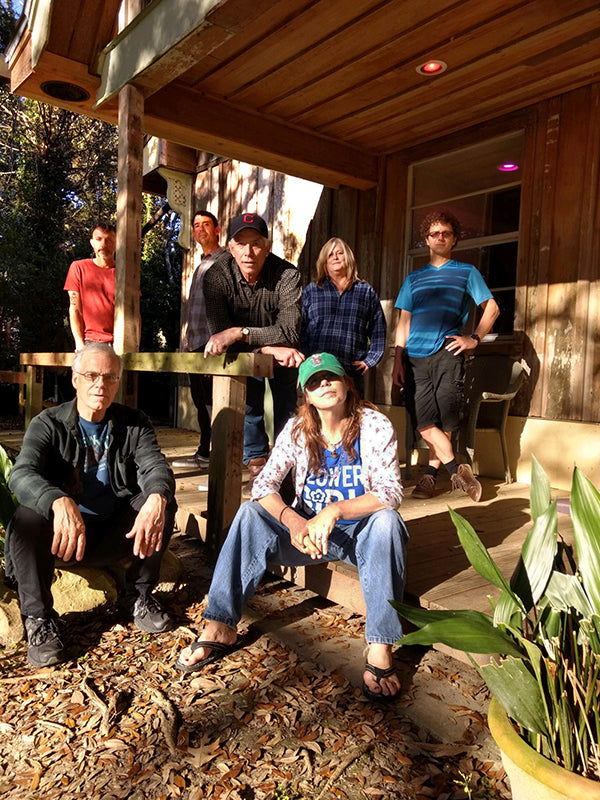
The Cowsills. Courtesy of LouAnn Cowsill.
RC: How have you kept it fresh and fun for so long?
BC: It’s a family, so you can have really [intense] arguments and disagreements but no one is going anywhere. No one can quit a family. And for all that we have gone through, we have always relied on each other to get all of us through. Today more than ever we are grateful that we have each other. You have better reasons for appreciating things.
RC: Ace session guitarist Waddy Wachtel has a long history with the band. You met early and pursued wildly different sounds. How did this begin?
The Cowsills: The Family That Plays Together, Stays Together
— By Ray Chelstowski —
Few bands became part of the fabric of American music more quickly than The Cowsills. Discovered in their home town of Newport, Rhode Island in 1967 by a producer for The Today Show, this family act delivered five studio albums in three years, produced hits like “The Rain, the Park and Other Things,” “We Can Fly,” “Indian Lake,” ”Hair,” and the theme song from the ABC television show Love American Style. They were also the subject of a successful comic book, and were the inspiration for the popular 1970s television series The Partridge Family.
Over the years the band saw family members both join and leave the lineup, and the band break up and reunite. That changed about 18 years ago when they decided to join the “Happy Together Tour” alongside the Association, the Turtles, Gary Puckett & The Union Gap, and the Vogues. Since then, they have maintained a steady presence on summer stages.
The Cowsills in the 1960s. Courtesy of Cowsills PR.
On that tour a few years back, they found the inspiration to write new material and then decided to put the songs to tape. That led them to a disastrous relationship with the now-defunct crowdfunding entity Pledge Music, where all of the money they had raised to record a new record was lost in the company’s bankruptcy. Fortunately, Ahmet Ertegun protégé Dr. Rock Positano arrived soon after to save the day. Positano was visiting Newport and looking upon its waterfront, decided that he had to work with the Cowsills. He reached out at just the right time and he and the band migrated to Louisiana where the three original members (siblings Bob, Susan, and Paul), along with their nephews and touring band, huddled and made what would become only the third studio album they’d release in over 40 years.
Rhythm of theWorld is the beginning of a productive label relationship with Omnivore Recordings and a musical outing that ties right back to the sound they made popular so long ago. The 11 new tracks are fresh, modern in theme, and live within a production that’s crisp, clean, and current. Just when everyone thought that the 2011 Showtime Documentary Family Band: The Cowsills Story would be the last time this band took a national stage, the future for this wonderful gift to American music is as bright as ever, and you soon will be able to see the Cowsills almost as often as you would have in 1968.
Copper caught up with Bob Cowsill just before the holidays and talked about how the Rhythm of the World project came about, what it was like to be writing again for the first time in almost 30 years, and how the family has stayed together on stage for so long.
Ray Chelstowski: Over the last 40 years you have huddled together as a group to make new music only three times. What prompted you to do it again now?
Bob Cowsill: Well, we did it twice before; once in the late 1970s, then again in the late 1990s. When you record that infrequently you go dry. You don’t write songs. I sure don’t, but Susan does. Susan is our “Neil Young.” She had been hounding us to make a new record and we thought she was out of her mind. But in the end it was the songs that generated all of this.
We’d been on the “Happy Together” tour for seven summers. A few years back we got inspired on tour to write a song together, which is something we’d never done. Every night on tour the Turtles would tell the crowd that they needed “to get up” and we thought there was a song there, even if there were already more than 80 songs about “getting up” already recorded. We decided to do one more and what that triggered was a frenzy of writing, and we had a lot of fun. There was no intent beyond the writing but we did it every day on that summer tour and there’s something to be said about that because it put us in the same place.
The songs turned out to be so good that we decided to record them and launched a Pledge Music campaign to fund the project. Just as we hit our fundraising goal, Pledge Music went bankrupt. It was a nightmare until Rock Positano was standing on Gull Rock Island just off Newport and looked toward the famous [historic Trinity] Church and decided that he needed to get ahold of us, and he did.
RC: Were these all half-cooked songs that you brought to the process, or did you create everything new?
BC: When we were on the [tour] bus it started with Paul [Cowsill] putting down a piece of paper with the first two verses of “Ya Gotta Get Up!” I’m a good melody guy and I picked up a guitar and put one to it quickly. Then Susan started singing what her part would be. What we discovered was that Paul and Susan are exceptional at bringing forward lyrics, and together we found a really good threesome that became one good brain.
We were lucky to get our physical recordings done just before the (pandemic) lockdown and got to mix them with Frank Filipetti at his studio in Connecticut. It took eight months because we were doing it remotely, but that was OK because no one was going anywhere. So it was a great experience.
RC: In the CD liner notes you reference scores of songs and artists that specifically impacted the music you made, track by track. Are those songs what you listened to on the summer tour bus?
BC: These are songs on playlists that we’d listen to as we were living our lives through the decades, whether we were together or apart. Many of these artists and songs influenced us when we began in the late 1960s. So it was a gift [for these influences to enable us] to record songs this good at this point in our careers. A part of why we were able to do it I think is because is because of the music that influenced us, and because of the fact that we hadn’t written or recorded for so long.
RC: The entire record feels new and of the moment. The art direction does as well.
BC: The visual strategist, Gail Marowitz, took a Danny Clinch photo of us on the boardwalk in Asbury Park, New Jersey and she gave it that effect. We thought it was really simple and that you could spot it from anywhere in the store. In fact, the vinyl version comes out for Record Store Day on April 15, 2023, so we are really excited about that as well.
RC: You recorded this new album with your core group, no outsiders.
BC: The seven of us on that album have been touring together for 18 years. If you line up our albums you’ll see that there are varying numbers of family members who participate, because we had that kind of family flexibility. Now we are moving into our next generation. We’ve lost three brothers and our parents; so replacing two of the brothers with two sons keeps the DNA thing going forever.
RC: Was that liberating?
BC: The studio where we recorded this is [in a] remote [location] on 12 acres. There’s no booth visitors or record executives who are going to stop by, and there are no musicians who can get to us to [let them] “guest” on the album. If we did this in Los Angeles there’d be 10 musicians making guest appearances on the record. We were able to get the basic tracks down and then the fun began, where we could play with things.
The Cowsills. Courtesy of LouAnn Cowsill.
RC: How have you kept it fresh and fun for so long?
BC: It’s a family, so you can have really [intense] arguments and disagreements but no one is going anywhere. No one can quit a family. And for all that we have gone through, we have always relied on each other to get all of us through. Today more than ever we are grateful that we have each other. You have better reasons for appreciating things.
RC: Ace session guitarist Waddy Wachtel has a long history with the band. You met early and pursued wildly different sounds. How did this begin?



0 comments