COPPER

A PS Audio Publication

Issue 171 • Free Online Magazine

Issue 171 Featured

The Beacon Theatre’s Sphere Immersive Sound in Action

The Beacon Theatre’s Sphere Immersive Sound in Action

The last show I had seen at the Beacon Theatre was either Lita Ford or Joe Jackson back in the 1980s, likely viewed from the only seat I could afford in the upper or lower balconies. I generally avoid theatres because of the seating and sound constraints – some people consider theatres to be intimate, but I always found them claustrophobic, especially for the bands I liked. Ever since my first concert at Madison Square Garden, my preferred venues have always been arenas because they have spacious loudness no matter where I end up, and all the imperfections are charming at this point. Lately, I’ve been watching shows from corporate suites around New York and New Jersey (all venues shall remain nameless), where the sound is also quite poor due to peripheral locations and glass partitions. If there really is a “sweet spot” in any live venue, I have never heard it and had given up trying to find it. That’s why I was so excited to attend Phish lead guitarist/vocalist Trey Anastasio’s performance as he previewed the Beacon Theatre’s new Sphere Immersive Sound PA system.

Before the show on August 19, 2022, I met with Stuart Elby, senior vice president of advanced engineering of MSG Entertainment, who gave me a quick rundown of Sphere Immersive Sound (SIS) and the 3D beamforming technology that targets every seat with the perfect mix of music whether it’s in the upper balcony, front row, or extreme corners of the venue. That’s an enormous advancement because 2,894 seats are now in the elusive sweet spot created by 52 active speakers. This new digital system that was surely going to be a far cry from the gear I remember at the Beacon in the 1980s. (Copper’s Jay Jay French was able to attend a pre-concert demo; see his article in this issue. (Here’s a link to an Instagram video featuring Anastasio and SIS.)

MSG Entertainment provided me a ticket in the left orchestra, about eight rows from the stage and in front of the left array of six MD96 speakers and six MD80S subwoofers, plus another two MD80S subs on the stage in front of me. At first, it was hard to adjust psychologically to facing that array head-on. I understood that my ears were receiving information from 38 other speakers along the center and right arrays, but I was fixated on what I could see. My row mates went to dance in the aisles so I moved out there as well and stood inside a crevice between the pedestals of a statue and pillar – just to keep out of everyone’s way. The new position allowed me to refocus my attention on the crystal-clear tones of Trey’s voice and acoustic guitars. I am not familiar with Anastasio’s repertoire or that of his band Phish, and intended to stay only for a few songs, but it was a testament to SIS and Anastasio that I stayed for an hour. I realized how much I liked the sound from my completely awkward vantage point in a crevice underneath the left speaker array. I was immersed. The room was alive, and the music had space, depth, and definition. If everyone was enjoying the same sonics as me, then SIS was already a triumph.
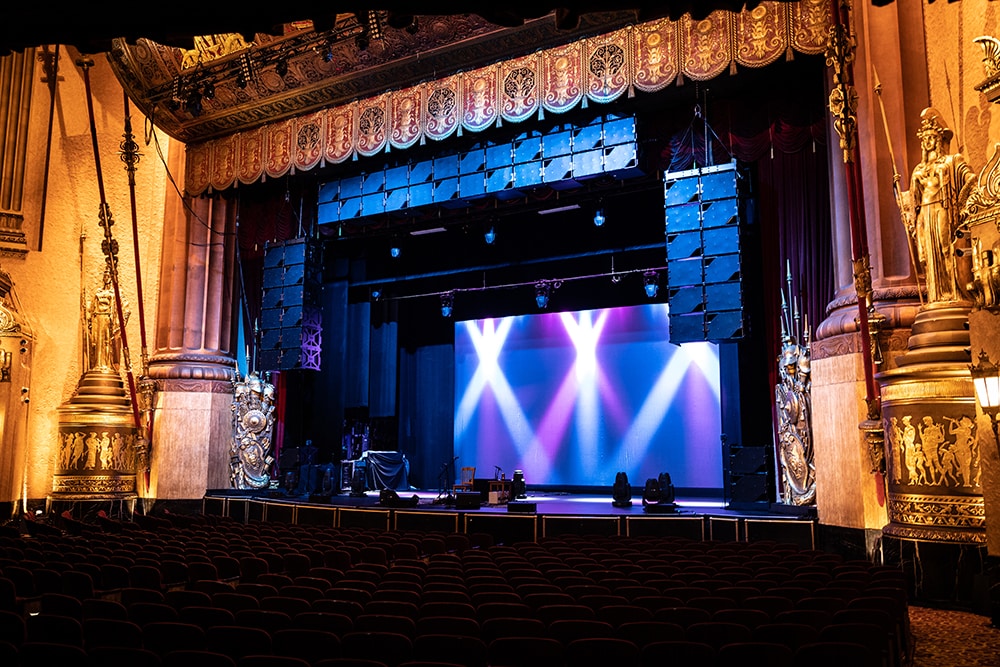
 

The Sphere Immersive Sound (SIS) system at the Beacon Theatre. Courtesy of MSG Entertainment.

The Sphere Immersive Sound (SIS) system at the Beacon Theatre. Courtesy of MSG Entertainment.


Although my ticket did not allow me to meander around the entire theatre, I made the most of my aisle and walked back and forth from the left emergency exit to the last row of the orchestra, listening for variations.

As I stood by the door leading to the lobby, I found myself under the loge overhang, a section of about 10 rows with 10 feet of headspace. I’ve been in these seats before! Not at the Beacon, but beneath other overhangs in other theaters, and they are some of the worst sections of the house. I once watched a Megadeth show from one of those seats and it was like being locked in the back of a van with a homemade car stereo blasting at me. I would rather have a worse view of the band than sit in that bucket of muddy sound waves. No matter the adjustments any venue makes with conventional fill speakers, there is no recreating the superior aural experience from the center front rows. However, it’s worth reminding ourselves that the original theatre was not built with audiophile PA sound in mind.


Detail shot of the SIS system. Courtesy of Tom Methans.

Detail shot of the SIS system. Courtesy of Tom Methans.


The Beacon started life as movie palace back in 1929 when it was more important for attendees to be able to see films, plays, and vaudeville acts rather than hear high-quality sound in the extreme rear of the orchestra sections. In 1982, the theatre was renovated and added to the National Register of Historic Places, so there was only so much architects and sound designers could do to make improvements without disturbing the integrity of the landmark building. Fortunately, a revolutionary sound system came along, taking the Beacon into the 21st Century as a cutting-edge live venue nearly 100 years after opening its doors.

As it turns out, the most auspicious part of my visit took place in the back rows and not my premium floor seat. The true accomplishment and merit of the system was most evident beneath the loge, where the sound was up to the same standard as the rest of the room. The only thing I missed was a bit of airiness given the low ceilings, but that’s a function of architecture and not Sphere Immersive Sound which absolutely sparkled with clarity and precision. Furthermore, no one else is going to spend 30 minutes walking from the stage to the back row looking for subtle variances, but that’s what we critical listeners do. Besides, after a few minutes in Row Y, I only noticed the great music.
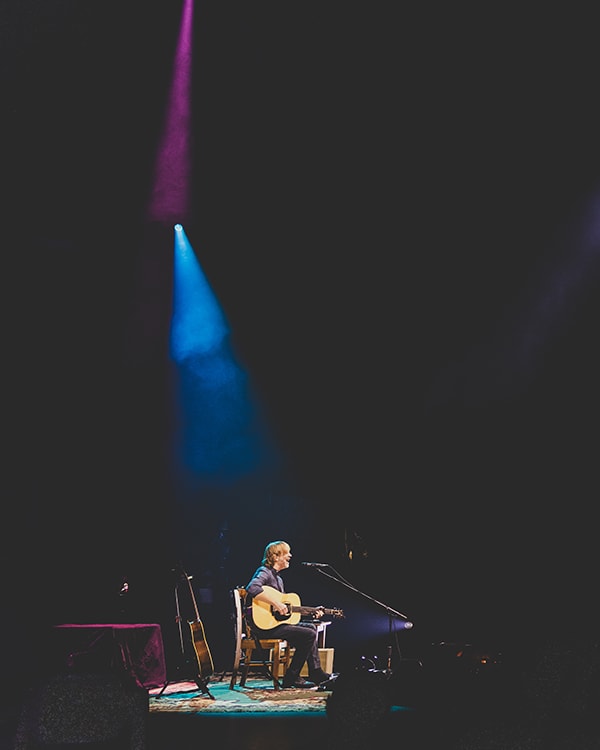
 

Trey Anastasio at the Beacon Theatre. Courtesy of MSG Entertainment.

Trey Anastasio at the Beacon Theatre. Courtesy of MSG Entertainment.


I enjoyed getting acquainted with the work of Trey Anastasio, but if the Beacon ever features a heavy metal act, I would love to see what Sphere Immersive Sound can do with double kick drums, two electric guitars, and heavy bass. That is my benchmark and reference point for any PA system. As for future permanent installations in other venues, Radio City Music Hall (5,960 seats) and even my beloved Madison Square Garden (20,000 seats) might be candidates. According to Rich Claffey, Executive Vice President and Chief Operations Officer of MSG Sphere, “…anything’s possible at this point.” And that is certainly true as Sphere Immersive Sound is being scaled to a full-size arena. When it opens in late 2023, MSG Sphere in Las Vegas will have 164,000 speakers beaming to 20,000 people. I only hope that will be a stop on the next Megadeth tour.


Header image: Trey Anastasio, courtesy of MSG Entertainment.

More from Issue 171

View All Articles in Issue 171

Search Copper Magazine

#227 Seth Lewis Gets in the Groove With Take a Look Around: a Tribute to the Meters by Frank Doris Feb 02, 2026 #227 Passport to Sound: May Anwar’s Audio Learning Experience for Young People by Frank Doris Feb 02, 2026 #227 Conjectures on Cosmic Consciousness by B. Jan Montana Feb 02, 2026 #227 The Big Takeover Turns 45 by Wayne Robins Feb 02, 2026 #227 Music and Chocolate: On the Sensory Connection by Joe Caplan Feb 02, 2026 #227 Singer/Songwriter Chris Berardo: Getting Wilder All the Time by Ray Chelstowski Feb 02, 2026 #227 The Earliest Stars of Country Music, Part One by Jeff Weiner Feb 02, 2026 #227 The Vinyl Beat Goes Down to Tijuana (By Way of Los Angeles), Part Two by Rudy Radelic Feb 02, 2026 #227 How to Play in a Rock Band, 20: On the Road With Blood, Sweat & Tears’ Guitarist Gabe Cummins by Frank Doris Feb 02, 2026 #227 From The Audiophile’s Guide: Audio Specs and Measuring by Paul McGowan Feb 02, 2026 #227 Our Brain is Always Listening by Peter Trübner Feb 02, 2026 #227 PS Audio in the News by PS Audio Staff Feb 02, 2026 #227 The Listening Chair: Sleek Style and Sound From the Luxman L3 by Howard Kneller Feb 02, 2026 #227 The Los Angeles and Orange County Audio Society Celebrates Its 32nd Anniversary, Honoring David and Sheryl Lee Wilson and Bernie Grundman by Harris Fogel Feb 02, 2026 #227 Back to My Reel-to-Reel Roots, Part 26: Half Full – Not Half Empty, Redux by Ken Kessler Feb 02, 2026 #227 That's What Puzzles Us... by Frank Doris Feb 02, 2026 #227 Record-Breaking by Peter Xeni Feb 02, 2026 #227 The Long and Winding Road by B. Jan Montana Feb 02, 2026 #226 JJ Murphy’s Sleep Paralysis is a Genre-Bending Musical Journey Through Jazz, Fusion and More by Frank Doris Jan 05, 2026 #226 Stewardship by Consent by B. Jan Montana Jan 05, 2026 #226 Food, Music, and Sensory Experience: An Interview With Professor Jonathan Zearfoss of the Culinary Institute of America by Joe Caplan Jan 05, 2026 #226 Studio Confidential: A Who’s Who of Recording Engineers Tell Their Stories by Frank Doris Jan 05, 2026 #226 Pilot Radio is Reborn, 50 Years Later: Talking With CEO Barak Epstein by Frank Doris Jan 05, 2026 #226 The Vinyl Beat Goes Down to Tijuana (By Way of Los Angeles), Part One by Rudy Radelic Jan 05, 2026 #226 Capital Audiofest 2025: Must-See Stereo, Part Two by Frank Doris Jan 05, 2026 #226 My Morning Jacket’s Carl Broemel and Tyler Ramsey Collaborate on Their Acoustic Guitar Album, Celestun by Ray Chelstowski Jan 05, 2026 #226 The People Who Make Audio Happen: CanJam SoCal 2025, Part Two by Harris Fogel Jan 05, 2026 #226 How to Play in a Rock Band, 19: Touring Can Make You Crazy, Part One by Frank Doris Jan 05, 2026 #226 Linda Ronstadt Goes Bigger by Wayne Robins Jan 05, 2026 #226 From The Audiophile’s Guide: Active Room Correction and Digital Signal Processing by Paul McGowan Jan 05, 2026 #226 PS Audio in the News by Frank Doris Jan 05, 2026 #226 Back to My Reel-to-Reel Roots, Part 25: Half-Full, Not Empty by Ken Kessler Jan 05, 2026 #226 Happy New Year! by Frank Doris Jan 05, 2026 #226 Turn It Down! by Peter Xeni Jan 05, 2026 #226 Ghost Riders by James Schrimpf Jan 05, 2026 #226 A Factory Tour of Audio Manufacturer German Physiks by Markus "Marsu" Manthey Jan 04, 2026 #225 Capital Audiofest 2025: Must-See Stereo, Part One by Frank Doris Dec 01, 2025 #225 Otis Taylor and the Electrics Delivers a Powerful Set of Hypnotic Modern Blues by Frank Doris Dec 01, 2025 #225 A Christmas Miracle by B. Jan Montana Dec 01, 2025 #225 T.H.E. Show New York 2025, Part Two: Plenty to See, Hear, and Enjoy by Frank Doris Dec 01, 2025 #225 Underappreciated Artists, Part One: Martin Briley by Rich Isaacs Dec 01, 2025 #225 Rock and Roll is Here to Stay by Wayne Robins Dec 01, 2025 #225 A Lifetime of Holiday Record (and CD) Listening by Rudy Radelic Dec 01, 2025 #225 Little Feat: Not Saying Goodbye, Not Yet by Ray Chelstowski Dec 01, 2025 #225 How to Play in a Rock Band, Part 18: Dealing With Burnout by Frank Doris Dec 01, 2025 #225 The People Who Make Audio Happen: CanJam SoCal 2025 by Harris Fogel Dec 01, 2025 #225 Chicago’s Sonic Sanctuaries: Four Hi‑Fi Listening Bars Channeling the Jazz‑Kissa Spirit by Olivier Meunier-Plante Dec 01, 2025

The Beacon Theatre’s Sphere Immersive Sound in Action

The Beacon Theatre’s Sphere Immersive Sound in Action

The last show I had seen at the Beacon Theatre was either Lita Ford or Joe Jackson back in the 1980s, likely viewed from the only seat I could afford in the upper or lower balconies. I generally avoid theatres because of the seating and sound constraints – some people consider theatres to be intimate, but I always found them claustrophobic, especially for the bands I liked. Ever since my first concert at Madison Square Garden, my preferred venues have always been arenas because they have spacious loudness no matter where I end up, and all the imperfections are charming at this point. Lately, I’ve been watching shows from corporate suites around New York and New Jersey (all venues shall remain nameless), where the sound is also quite poor due to peripheral locations and glass partitions. If there really is a “sweet spot” in any live venue, I have never heard it and had given up trying to find it. That’s why I was so excited to attend Phish lead guitarist/vocalist Trey Anastasio’s performance as he previewed the Beacon Theatre’s new Sphere Immersive Sound PA system.

Before the show on August 19, 2022, I met with Stuart Elby, senior vice president of advanced engineering of MSG Entertainment, who gave me a quick rundown of Sphere Immersive Sound (SIS) and the 3D beamforming technology that targets every seat with the perfect mix of music whether it’s in the upper balcony, front row, or extreme corners of the venue. That’s an enormous advancement because 2,894 seats are now in the elusive sweet spot created by 52 active speakers. This new digital system that was surely going to be a far cry from the gear I remember at the Beacon in the 1980s. (Copper’s Jay Jay French was able to attend a pre-concert demo; see his article in this issue. (Here’s a link to an Instagram video featuring Anastasio and SIS.)

MSG Entertainment provided me a ticket in the left orchestra, about eight rows from the stage and in front of the left array of six MD96 speakers and six MD80S subwoofers, plus another two MD80S subs on the stage in front of me. At first, it was hard to adjust psychologically to facing that array head-on. I understood that my ears were receiving information from 38 other speakers along the center and right arrays, but I was fixated on what I could see. My row mates went to dance in the aisles so I moved out there as well and stood inside a crevice between the pedestals of a statue and pillar – just to keep out of everyone’s way. The new position allowed me to refocus my attention on the crystal-clear tones of Trey’s voice and acoustic guitars. I am not familiar with Anastasio’s repertoire or that of his band Phish, and intended to stay only for a few songs, but it was a testament to SIS and Anastasio that I stayed for an hour. I realized how much I liked the sound from my completely awkward vantage point in a crevice underneath the left speaker array. I was immersed. The room was alive, and the music had space, depth, and definition. If everyone was enjoying the same sonics as me, then SIS was already a triumph.


The Sphere Immersive Sound (SIS) system at the Beacon Theatre. Courtesy of MSG Entertainment.

The Sphere Immersive Sound (SIS) system at the Beacon Theatre. Courtesy of MSG Entertainment.


Although my ticket did not allow me to meander around the entire theatre, I made the most of my aisle and walked back and forth from the left emergency exit to the last row of the orchestra, listening for variations.

As I stood by the door leading to the lobby, I found myself under the loge overhang, a section of about 10 rows with 10 feet of headspace. I’ve been in these seats before! Not at the Beacon, but beneath other overhangs in other theaters, and they are some of the worst sections of the house. I once watched a Megadeth show from one of those seats and it was like being locked in the back of a van with a homemade car stereo blasting at me. I would rather have a worse view of the band than sit in that bucket of muddy sound waves. No matter the adjustments any venue makes with conventional fill speakers, there is no recreating the superior aural experience from the center front rows. However, it’s worth reminding ourselves that the original theatre was not built with audiophile PA sound in mind.


Detail shot of the SIS system. Courtesy of Tom Methans.

Detail shot of the SIS system. Courtesy of Tom Methans.


The Beacon started life as movie palace back in 1929 when it was more important for attendees to be able to see films, plays, and vaudeville acts rather than hear high-quality sound in the extreme rear of the orchestra sections. In 1982, the theatre was renovated and added to the National Register of Historic Places, so there was only so much architects and sound designers could do to make improvements without disturbing the integrity of the landmark building. Fortunately, a revolutionary sound system came along, taking the Beacon into the 21st Century as a cutting-edge live venue nearly 100 years after opening its doors.

As it turns out, the most auspicious part of my visit took place in the back rows and not my premium floor seat. The true accomplishment and merit of the system was most evident beneath the loge, where the sound was up to the same standard as the rest of the room. The only thing I missed was a bit of airiness given the low ceilings, but that’s a function of architecture and not Sphere Immersive Sound which absolutely sparkled with clarity and precision. Furthermore, no one else is going to spend 30 minutes walking from the stage to the back row looking for subtle variances, but that’s what we critical listeners do. Besides, after a few minutes in Row Y, I only noticed the great music.


Trey Anastasio at the Beacon Theatre. Courtesy of MSG Entertainment.

Trey Anastasio at the Beacon Theatre. Courtesy of MSG Entertainment.


I enjoyed getting acquainted with the work of Trey Anastasio, but if the Beacon ever features a heavy metal act, I would love to see what Sphere Immersive Sound can do with double kick drums, two electric guitars, and heavy bass. That is my benchmark and reference point for any PA system. As for future permanent installations in other venues, Radio City Music Hall (5,960 seats) and even my beloved Madison Square Garden (20,000 seats) might be candidates. According to Rich Claffey, Executive Vice President and Chief Operations Officer of MSG Sphere, “…anything’s possible at this point.” And that is certainly true as Sphere Immersive Sound is being scaled to a full-size arena. When it opens in late 2023, MSG Sphere in Las Vegas will have 164,000 speakers beaming to 20,000 people. I only hope that will be a stop on the next Megadeth tour.


Header image: Trey Anastasio, courtesy of MSG Entertainment.

0 comments

Leave a comment

0 Comments

Your avatar

Loading comments...

🗑️ Delete Comment

Enter moderator password to delete this comment:

✏️ Edit Comment

Enter your email to verify ownership: