COPPER

A PS Audio Publication

Issue 171 • Free Online Magazine

Issue 171 Twisted Systems

First Look (and Listen): A Hi-Def Live Concert Audio Experience for the 21st Century

First Look (and Listen): A Hi-Def Live Concert Audio Experience for the 21st Century

I recently attended a press showing (and listening) session at the Beacon Theatre in New York of their new, recently-installed sound system, called Sphere Immersive Sound. It was touted as “the world’s most advanced concert audio system,” and utilizes 3D audio beamforming technology.

The stated purpose of this system is to guarantee that listeners in every seat in the house hears exactly the same thing no matter where they’re sitting.

Hyperbolic?

Read on…

Before I get into the stats on how this experience has been created and how well it works, here’s a bit of a back story.

When Twisted Sister was playing in the bars on Long Island and New Jersey, the pecking order of the bands was directly related to how sophisticated a band’s sound and light systems were. When you walked into a bar where we (or the Good Rats, Rat Race Choir, Zebra, Crystal Ship, White Tiger, or the Stanton Anderson Band or others) were playing, you saw huge sound systems and big light shows. This was seriously expensive gear designed to give you a concert experience in a bar.

Thinking back on it, it was insane to have to carry ever-larger lights and PAs that had to be set up and broken down every night.

The systems (remember, we were playing in bars and clubs that held anywhere from 1,000 to 5,000-plus fans) had to increase in size and cost, not to mention the trucks that we had to buy or lease and the extra crews we had to hire to carry this stuff around.  If only the club owners had installed permanent light and sound systems tailored to each room, we could have saved hundreds of thousands of dollars. The club owners never thought about this stuff. Why should they? They were as shocked as we were that the bar scene grew so big so fast and no one, not the bands nor our agents ever broached the subject.

Fast forward to the present time. Most small rooms around the country have PAs and lights so new artists only have to bring their stage gear. That stops when artists get to the level of arenas, festivals, and some larger theaters. At that point, it’s every man and woman for himself!

Why do I bring this up?

Because if what I saw and heard at the Beacon becomes a standard, then, at least in theaters and arenas that are strictly designed for live performances, the cost savings to artists will be huge and maybe reflective, as a byproduct, of lower production costs and lower ticket prices…well, one can dream…
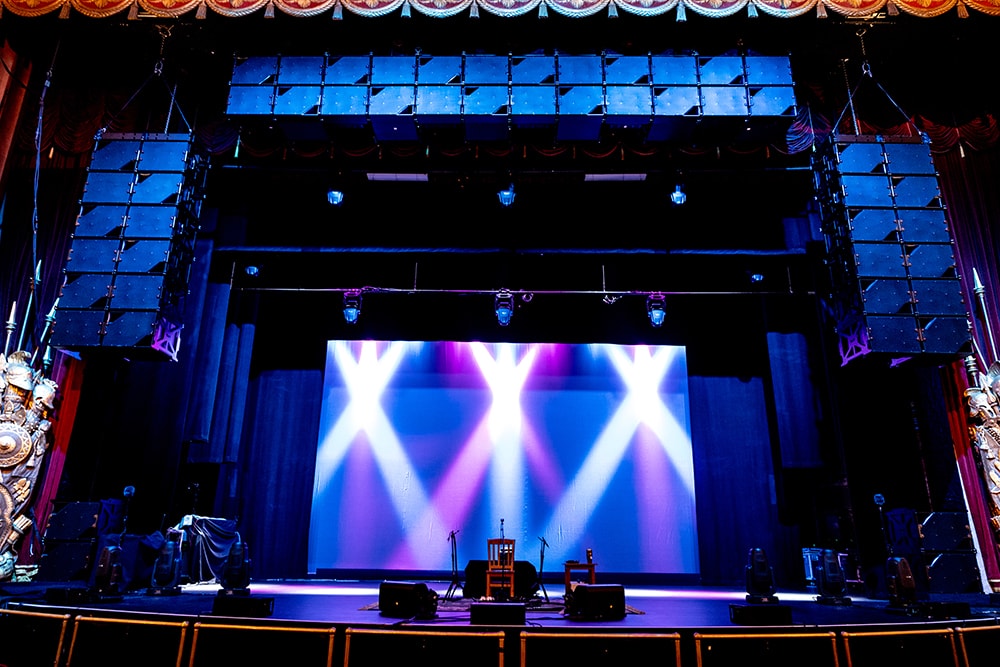
 

The Sphere Immersive Sound (SIS) system at the Beacon Theatre.

The Sphere Immersive Sound (SIS) system at the Beacon Theatre.


None of this was brought up at the listening session but was acknowledged by the creators of Sphere Immersive Sound when I asked about it.

Regarding what I heard at the morning demo, which lasted about 30 minutes, I was impressed.

Many readers of Copper, who have been in the high-end audio game for years, are aware of the many attempts to create a larger “sweet spot” to enjoy the audio systems that we have spent lots of hard-earned dollars to build. Sadly, this sweet spot, no matter how much we spend, winds up being about 30 inches wide. After you move out of that zone, many things about the sound – the imaging, the presence of a soundstage, and other aspects – start to change and the illusion of a real performance starts to collapse. Ironic, ain’t it. The more you spend, the greater the illusion, until you go off-axis. The sweet spot should get wider, the more you spend!

The result of this quandary has been the attempt to digitally create, through multichannel surround speakers and DSP (digital signal processing), a more immersive sound experience. Oh no!  Not digital. That’s cheating. That’s fake! DSP (digital signal processing) is a dirty reference in our purist high-end world.

Actually, for the record, I have heard some amazing DSP-based playback systems and given the right sources, the experience is fantastic. I must add, however, that I remain a committed 2-channel audiophile at the moment in my listening room

I bring this up because, in a live concert experience, where you sit determines, for the most part, how much you enjoyed the show.

The closer to the mixing console the better the sound, as that is where the sound mixer sits.

Pink Floyd has always led the way when it comes to immersive audio. Even back in the late 1960s in the Fillmore days, they brought a quad sound system.

Floyd knew what they were after. Their albums, especially The Dark Side of the Moon, have always been audiophile favorites.

When they performed The Wall in 1980, they outfitted the Nassau Coliseum with speakers all around the floor mounted under seats.

“Stanley Screamers,” I was told by the promoter. I was there for two of the shows and it was an awesome sonic experience. [According to the Lansing Heritage website, Stanley Screamers were made by Stanal Sound from the late 1970s through early 1980s, and marketed by Altec Lansing – Ed.]

Those who have seen the Beatles Love show by Cirque du Soleil in Las Vegas also know what incredible surround sound can do. In this show, there are speakers behind every seat. It has consistently led to raves about how the music has never sounded better. This has to do with a special mix that allows all the channels of audio to provide enveloping multichannel sound.

This is where this new SIS (Sphere Immersive Sound) technology comes into play. (Click here for an Instagram video about SIS.)

Thanks to DSP, the fixed-array sound system does (or tries to do) what multiple speakers do without the need for actual physical surround (rear and height-channel) speakers. It’s all done through DSP with state-of-the-art loudspeakers and amplifiers. The SIS system uses five speaker arrays with built-in subwoofers, arranged in a left-center-right configuration. Using beamforming, the arrays are tailored to aim their sound to the four sections of the Beacon Theatre – the orchestra, loge, lower balcony and upper balcony.

Here’s more information provided by MSG Entertainment: instead of an ever-expanding wave as produced by conventional PA systems, the SIS process causes the sound to travel as thousands of beams – the “beamforming” part of the technology. (More on this below.) This enables audio to be directed at the listener so that it sounds close, even though the source is far away.

I only heard a taped demo, as I couldn’t make the show in the evening. Trey Anastasio of Phish was going to do an acoustic set to debut the system that night. (Copper’s Tom Methans was able to go, and has a report in this issue.)
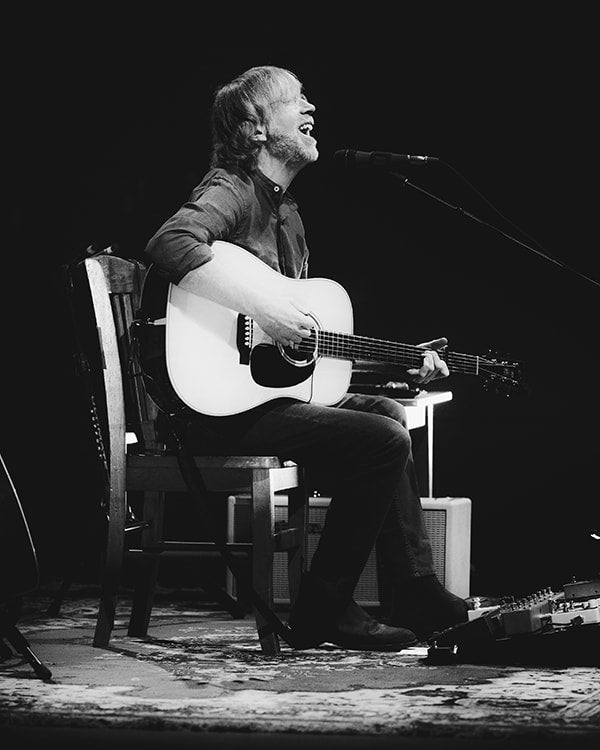
 

Trey Anastasio of Phish at the Beacon Theatre, August 19, 2022.

Trey Anastasio of Phish at the Beacon Theatre, August 19, 2022.


The sound pressure level, as played back while I was there, was impressive. Several blues tracks were also played. There were a number of other journalists there, and we were encouraged to walk around the theater as the demo sound was playing. I walked around, from one side to the other, from front to back, and basically heard the same mix, which did envelop me.

I must note, however that this was in an empty theater, so I don’t know how the system, or equalization, compensates once people fill in the seats. I also did not walk up to the balcony.

The SIS system is now permanently installed in the Beacon Theatre. Another SIS system is being installed at the MSG Sphere in Las Vegas at the Venetian. It will be a 20,000-seat venue when it’s finished in 2023.

The Madison Square Garden Entertainment Company has a lot invested in the Beacon and the upcoming MSG Sphere. The size and complexity of the latter is huge and I’m sure the cost of development (the Sphere will cost $1.8 billion) is commensurate with the size and scope of this creation.
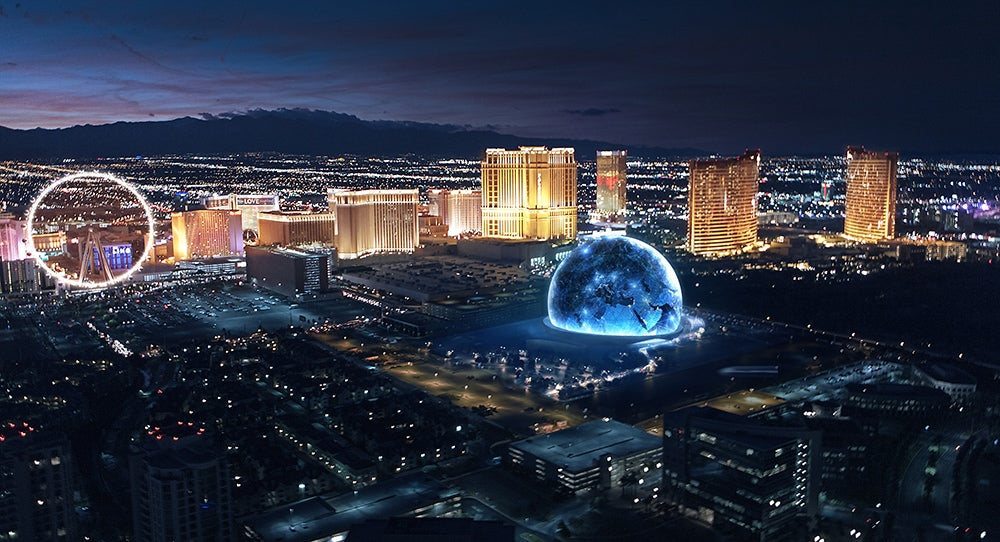
 

A rendering of the MSG Sphere in Las Vegas, to be completed in 2023.

A rendering of the MSG Sphere in Las Vegas, to be completed in 2023.


What I can say is, after my short exposure, is that the system appears to do what is claimed, but when I hear it in real-world use, I’ll be able to give a more educated opinion. Needless to say, the idea of a properly set up sound system in any given room is always a plus, and if this new design performs as advertised, live sound has truly entered the 21st century.

Editor’s Notes: Beamforming works by controlling the phase, relative amplitude, and timing of different [sources] to create patterns of constructive and destructive interference (from Wikipedia). Put another way, beamforming relies on different speakers responding to the input signal in different ways. The different speaker settings allow the system to control the size, shape and direction of the acoustic wave (from MathWorks).

The SIS system is modular in design. The Beacon Theatre system uses 52 total speaker modules, both flown and ground-stacked.


All images and video links courtesy of MSG Entertainment.

More from Issue 171

View All Articles in Issue 171

Search Copper Magazine

#231 Piano Prodigy Jude Kofie Releases His Debut Album On Octave Records by Frank Doris Jun 01, 2026 #231 Underappreciated Artists, Part Two: City Boy by Rich Isaacs Jun 01, 2026 #231 Music and the Art of Creation: Talking With Saxophonist Rob Scheps by Joe Caplan Jun 01, 2026 #231 How to Play in a Rock Band, 24: Further Adventures at the 2026 Montauk Music Festival by Frank Doris Jun 01, 2026 #231 Courtney Barnett: Creature of Habit by Wayne Robins Jun 01, 2026 #231 Angine de Poitrine: Interstellar Guitar Rock Saviors Headed for Late-Night TV Pop Stardom? by Mark Lepage Jun 01, 2026 #231 My Impressions of AXPONA 2026, Part One by Frank Doris Jun 01, 2026 #231 2026 La Jolla Concours d'Elegance: Another Aesthetic Feast by B. Jan Montana Jun 01, 2026 #231 Country Music Icon Jo Dee Messina’s Bridges: A New Beginning by Ray Chelstowski Jun 01, 2026 #231 The Luxury Dispatch Hosts a Video Podcast With Ken Kessler by Ken Kessler Jun 01, 2026 #231 The Vinyl Beat: Tracking in the Motor City by Rudy Radelic Jun 01, 2026 #231 Lots of Fun With DSP: The Ferrum Audio WANDLA DAC and Its Tube Mode by Frank Doris Jun 01, 2026 #231 From The Audiophile's Guide: Digital Source Components and Streaming Audio by Paul McGowan Jun 01, 2026 #231 Onkyo’s Monster M-510 power amplifier by The Staff at Just Audio Jun 01, 2026 #231 PS Audio in the News by PS Audio Staff Jun 01, 2026 #231 Naming Convention by Peter Xeni Jun 01, 2026 #231 Les Invisibles by Frank Doris Jun 01, 2026 #231 Wildlife Scene by James Schrimpf Jun 01, 2026 #230 Camaraderie by B. Jan Montana May 04, 2026 #230 AXPONA 2026: A Family Gathering by Paul McGowan May 04, 2026 #230 Pianist Ryan Benthall Explores Jazz Realms and Far Beyond With Divine Sky by Frank Doris May 04, 2026 #230 The Vinyl Beat in AXPONA-Land by Rudy Radelic May 04, 2026 #230 Teddy Thompson’s Musical Growth Deepens With Never Be the Same by Ray Chelstowski May 04, 2026 #230 More Fun in the Sun: Florida Audio Expo, Part Two by Frank Doris May 04, 2026 #230 CanJam NYC 2026 Show Report: Heady Sound, Part Two by Frank Doris and Harris Fogel May 04, 2026 #230 Sonic Youth On Murray Street by Wayne Robins May 04, 2026 #230 Graffeo Coffee: A Symphony of Sensory Experience by Joe Caplan May 04, 2026 #230 The Saul Authority: The Story of Hi-Fi Pioneer Saul Marantz by Olivier Meunier-Plante May 04, 2026 #230 How to Play in a Rock Band, 23: Encounters With Famous Musicians, Part Two by Frank Doris May 04, 2026 #230 An Outlier in the Rack: A Vintage BIC Beam Box by The Staff at Just Audio May 04, 2026 #230 PS Audio in the News by PS Audio Staff May 04, 2026 #230 A Cautionary Tale by Rich Isaacs May 04, 2026 #230 Reel-to-Reel Roots, Part 33 (Revised): Ken Kessler Reports On the 2026 (British) AudioJumble by Ken Kessler May 04, 2026 #230 Text Messaging by Frank Doris May 04, 2026 #230 The Audiophile Rat Race by Peter Xeni May 04, 2026 #230 On the Rocks by Rich Isaacs May 04, 2026 #229 The Earliest Stars of Country Music, Part Three by Jeff Weiner Apr 06, 2026 #229 The Healing Power of Music and Sound at the Omega Institute by Joe Caplan Apr 06, 2026 #229 CanJam NYC 2026 Show Report: Heady Sound, Part One by Frank Doris Apr 06, 2026 #229 Florida Audio Expo 2026: Warming Up to High-End Audio, Part One by Frank Doris Apr 06, 2026 #229 Quick Takes: Anne Bisson, Sam Morrison, The Velvet Underground, and the Stooges by Frank Doris Apr 06, 2026 #229 The Vinyl Beat: New Arrivals, and Old Audio Show Demo Scores to Settle by Rudy Radelic Apr 06, 2026 #229 Harvard Gets a High-End Audio Education by Frank Doris Apr 06, 2026 #229 No Country for Old Knees by B. Jan Montana Apr 06, 2026 #229 How To Play in A Rock Band, 22: Encounters With Famous Musicians, Part 1 by Frank Doris Apr 06, 2026 #229 The Soulful Grooves of Guinea-Bissau by Steve Kindig Apr 06, 2026 #229 Four-Hand Piano Performance at Its Finest by Stephan Haberthür Apr 06, 2026

First Look (and Listen): A Hi-Def Live Concert Audio Experience for the 21st Century

First Look (and Listen): A Hi-Def Live Concert Audio Experience for the 21st Century

I recently attended a press showing (and listening) session at the Beacon Theatre in New York of their new, recently-installed sound system, called Sphere Immersive Sound. It was touted as “the world’s most advanced concert audio system,” and utilizes 3D audio beamforming technology.

The stated purpose of this system is to guarantee that listeners in every seat in the house hears exactly the same thing no matter where they’re sitting.

Hyperbolic?

Read on…

Before I get into the stats on how this experience has been created and how well it works, here’s a bit of a back story.

When Twisted Sister was playing in the bars on Long Island and New Jersey, the pecking order of the bands was directly related to how sophisticated a band’s sound and light systems were. When you walked into a bar where we (or the Good Rats, Rat Race Choir, Zebra, Crystal Ship, White Tiger, or the Stanton Anderson Band or others) were playing, you saw huge sound systems and big light shows. This was seriously expensive gear designed to give you a concert experience in a bar.

Thinking back on it, it was insane to have to carry ever-larger lights and PAs that had to be set up and broken down every night.

The systems (remember, we were playing in bars and clubs that held anywhere from 1,000 to 5,000-plus fans) had to increase in size and cost, not to mention the trucks that we had to buy or lease and the extra crews we had to hire to carry this stuff around.  If only the club owners had installed permanent light and sound systems tailored to each room, we could have saved hundreds of thousands of dollars. The club owners never thought about this stuff. Why should they? They were as shocked as we were that the bar scene grew so big so fast and no one, not the bands nor our agents ever broached the subject.

Fast forward to the present time. Most small rooms around the country have PAs and lights so new artists only have to bring their stage gear. That stops when artists get to the level of arenas, festivals, and some larger theaters. At that point, it’s every man and woman for himself!

Why do I bring this up?

Because if what I saw and heard at the Beacon becomes a standard, then, at least in theaters and arenas that are strictly designed for live performances, the cost savings to artists will be huge and maybe reflective, as a byproduct, of lower production costs and lower ticket prices…well, one can dream…


The Sphere Immersive Sound (SIS) system at the Beacon Theatre.

The Sphere Immersive Sound (SIS) system at the Beacon Theatre.


None of this was brought up at the listening session but was acknowledged by the creators of Sphere Immersive Sound when I asked about it.

Regarding what I heard at the morning demo, which lasted about 30 minutes, I was impressed.

Many readers of Copper, who have been in the high-end audio game for years, are aware of the many attempts to create a larger “sweet spot” to enjoy the audio systems that we have spent lots of hard-earned dollars to build. Sadly, this sweet spot, no matter how much we spend, winds up being about 30 inches wide. After you move out of that zone, many things about the sound – the imaging, the presence of a soundstage, and other aspects – start to change and the illusion of a real performance starts to collapse. Ironic, ain’t it. The more you spend, the greater the illusion, until you go off-axis. The sweet spot should get wider, the more you spend!

The result of this quandary has been the attempt to digitally create, through multichannel surround speakers and DSP (digital signal processing), a more immersive sound experience. Oh no!  Not digital. That’s cheating. That’s fake! DSP (digital signal processing) is a dirty reference in our purist high-end world.

Actually, for the record, I have heard some amazing DSP-based playback systems and given the right sources, the experience is fantastic. I must add, however, that I remain a committed 2-channel audiophile at the moment in my listening room

I bring this up because, in a live concert experience, where you sit determines, for the most part, how much you enjoyed the show.

The closer to the mixing console the better the sound, as that is where the sound mixer sits.

Pink Floyd has always led the way when it comes to immersive audio. Even back in the late 1960s in the Fillmore days, they brought a quad sound system.

Floyd knew what they were after. Their albums, especially The Dark Side of the Moon, have always been audiophile favorites.

When they performed The Wall in 1980, they outfitted the Nassau Coliseum with speakers all around the floor mounted under seats.

“Stanley Screamers,” I was told by the promoter. I was there for two of the shows and it was an awesome sonic experience. [According to the Lansing Heritage website, Stanley Screamers were made by Stanal Sound from the late 1970s through early 1980s, and marketed by Altec Lansing – Ed.]

Those who have seen the Beatles Love show by Cirque du Soleil in Las Vegas also know what incredible surround sound can do. In this show, there are speakers behind every seat. It has consistently led to raves about how the music has never sounded better. This has to do with a special mix that allows all the channels of audio to provide enveloping multichannel sound.

This is where this new SIS (Sphere Immersive Sound) technology comes into play. (Click here for an Instagram video about SIS.)

Thanks to DSP, the fixed-array sound system does (or tries to do) what multiple speakers do without the need for actual physical surround (rear and height-channel) speakers. It’s all done through DSP with state-of-the-art loudspeakers and amplifiers. The SIS system uses five speaker arrays with built-in subwoofers, arranged in a left-center-right configuration. Using beamforming, the arrays are tailored to aim their sound to the four sections of the Beacon Theatre – the orchestra, loge, lower balcony and upper balcony.

Here’s more information provided by MSG Entertainment: instead of an ever-expanding wave as produced by conventional PA systems, the SIS process causes the sound to travel as thousands of beams – the “beamforming” part of the technology. (More on this below.) This enables audio to be directed at the listener so that it sounds close, even though the source is far away.

I only heard a taped demo, as I couldn’t make the show in the evening. Trey Anastasio of Phish was going to do an acoustic set to debut the system that night. (Copper’s Tom Methans was able to go, and has a report in this issue.)


Trey Anastasio of Phish at the Beacon Theatre, August 19, 2022.

Trey Anastasio of Phish at the Beacon Theatre, August 19, 2022.


The sound pressure level, as played back while I was there, was impressive. Several blues tracks were also played. There were a number of other journalists there, and we were encouraged to walk around the theater as the demo sound was playing. I walked around, from one side to the other, from front to back, and basically heard the same mix, which did envelop me.

I must note, however that this was in an empty theater, so I don’t know how the system, or equalization, compensates once people fill in the seats. I also did not walk up to the balcony.

The SIS system is now permanently installed in the Beacon Theatre. Another SIS system is being installed at the MSG Sphere in Las Vegas at the Venetian. It will be a 20,000-seat venue when it’s finished in 2023.

The Madison Square Garden Entertainment Company has a lot invested in the Beacon and the upcoming MSG Sphere. The size and complexity of the latter is huge and I’m sure the cost of development (the Sphere will cost $1.8 billion) is commensurate with the size and scope of this creation.


A rendering of the MSG Sphere in Las Vegas, to be completed in 2023.

A rendering of the MSG Sphere in Las Vegas, to be completed in 2023.


What I can say is, after my short exposure, is that the system appears to do what is claimed, but when I hear it in real-world use, I’ll be able to give a more educated opinion. Needless to say, the idea of a properly set up sound system in any given room is always a plus, and if this new design performs as advertised, live sound has truly entered the 21st century.

Editor’s Notes: Beamforming works by controlling the phase, relative amplitude, and timing of different [sources] to create patterns of constructive and destructive interference (from Wikipedia). Put another way, beamforming relies on different speakers responding to the input signal in different ways. The different speaker settings allow the system to control the size, shape and direction of the acoustic wave (from MathWorks).

The SIS system is modular in design. The Beacon Theatre system uses 52 total speaker modules, both flown and ground-stacked.


All images and video links courtesy of MSG Entertainment.

0 comments

Leave a comment

0 Comments

Your avatar

Loading comments...

🗑️ Delete Comment

Enter moderator password to delete this comment:

✏️ Edit Comment

Enter your email to verify ownership: