COPPER

A PS Audio Publication

Issue 160 • Free Online Magazine

Issue 160 Deep Dive

The A&M Records Story, Part One

The A&M Records Story, Part One

The year was 1962. A singer/trumpet player in Los Angeles, inspired by the sounds of a Tijuana bullfight, turned a song called “Twinkle Star” written by a composer and bandleader friend into a mariachi-themed hit record, and launched a new record label in the process. It would grow to become the biggest independent record label in the music business.

Rewind to 1961. A young musician named Herb Alpert had previously written a handful of tunes with a collaborator, Lou Adler, who he had met a few years earlier. They found success with songs like “Wonderful World” (recorded by Sam Cooke and later Herman’s Hermits) and also produced Jan and Dean during their time at Doré Records. While Alpert and Adler had some success, they ultimately and amicably split. Alpert then tried his luck at RCA with a few vocal singles under the name Dore Alpert.

A chance meeting with record promotion man Jerry Moss that year led Alpert to introduce Moss to his song “Tell It To The Birds,” and they formed a partnership by chipping in $100 each to create a new label called Carnival Records. Carnival single #701 (Dore Alpert, “Tell It To the Birds”), its first release, caught the attention of Dot Records, who purchased the master and released it on their own label. Carnival released one other single, “Love is Back in Style” by Charlie Robinson, an artist Moss was promoting, who had Alpert contribute his trumpet to the track.
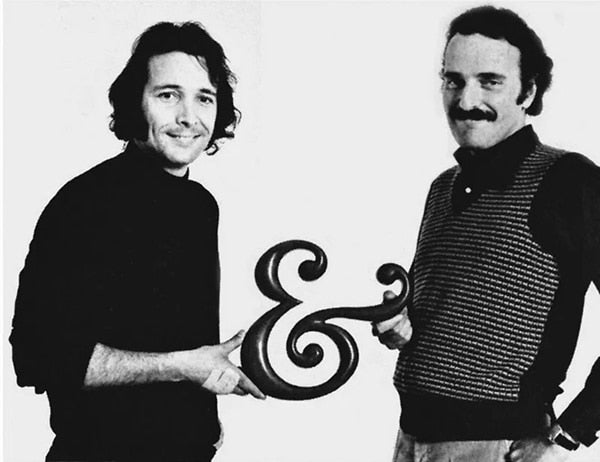
 

Herb Alpert and Jerry Moss. Courtesy of A&M Records.

Herb Alpert and Jerry Moss. Courtesy of A&M Records.


With the profit from the Dore Alpert single, Alpert put together a small recording studio in his garage in Los Angeles and began working on “Twinkle Star,” a song written by Sol Lake. Taking a break in recording, the two attended a bullfight in Tijuana, and the inspiration came to give the song a Mariachi feel. By the time the single was ready for release, Alpert and Moss discovered that another label had taken the name Carnival Records. Using the initials of their surnames to name their label A&M Records, they released “The Lonely Bull” in August 1962, which climbed to Number 6 on the Billboard Hot 100 chart and sold around 700,000 copies. A complete album of the same name followed, released in December 1962, and A&M was off and running.


A&M Records operated out of Alpert’s garage. But once he had recorded the second Tijuana Brass album (Volume 2) to modest success, they relocated the label’s offices to Sunset Boulevard in Hollywood.

A&M’s early artist roster featured an easygoing pop vocal sound, with such artists as The Sandpipers, Claudine Longet, Chris Montez, and We Five. Instrumentally, the Tijuana Brass went onto great success, at one point placing as many four albums in the top ten of Billboard’s album chart simultaneously. A spinoff group featuring session percussionist and former Martin Denny sideman Julius Wechter, called the Baja Marimba Band, extended the mariachi sound. And Alpert’s inspired signing of a young, rising musician from Brazil resulted in a handful of acclaimed albums by Sergio Mendes & Brasil ’66. A&M would also sign composer Burt Bacharach to the label as an instrumentalist.

The success of the label was the result of the partnership of Alpert and Moss. Herb Alpert was the artist with a musical ear that recognized potential talent, his ear and patience helping create many successful careers. Jerry Moss was the businessman, inking the deals and promoting the product to make the label successful. That partnership would bear fruit until 1989, when they sold the company they built on that initial $200 investment to Polygram for $500 million dollars.

This Copper series celebrates A&M’s 60th anniversary. I will highlight notable recordings along the way, mixed with a few rarities that have not gotten much attention over the years. I won’t get too in-depth with biographical information of the individual artists, but will include signposts of changing trends as A&M Records evolved with the musical landscape.

With The Lonely Bull well on its way, A&M’s second album release featured this now long-forgotten singer. Once a part of the gospel group The Pilgrim Travelers (of which Lou Rawls was also a member), bass singer George McCurn was offered the chance to record an album with A&M, enlisting jazz bandleader Shorty Rogers to provide the vocal and instrumental arrangements for the album.


While he was not well-known throughout most of the country, keyboardist Dave Lewis was an influential figure in R&B and rock music in the Pacific Northwest. He enjoyed the same musical environment that brought us music by The Kingsmen. Little-known fact: Lewis’s father, also a musician, tutored the trumpet-playing son of the Jones family who had moved in next door; that son, Quincy, would become an A&M artist in the late 1960s, and go on to produce some of the biggest albums in music history. A&M released an album of Lewis’s songs, including the title track and hit, “Little Green Thing.”


Chris Montez had a million-seller with his 1962 hit single “Let’s Dance.” Performing with Tommy Roe, Montez was one of the artists who had a burgeoning British band open for him: the Beatles. When he signed with A&M, Alpert suggested he try a softer approach to his music, and Montez was groomed as a pop music crooner for a series of A&M albums. This is “Call Me,” from his first A&M album.


Formed in the 1960s, a trio of folk-rock singers calling themselves The Grads (Mike Piano, Richard Shoff and Jim Brady) recorded a single for A&M, which did not chart. After a name change to The Sandpipers, producer Tommy LiPuma suggested they record a Cuban song, “Guantanamera,” and it became the trio’s biggest hit record as well as the title track to their first album.


Slightly predating the psychedelic folk/rock that would make San Francisco popular, the singer/guitarist quintet We Five released a remake of an Ian & Sylvia song, “You Were On My Mind” which reached Number 3 on Billboard’s Hot 100 chart. Mike Stewart (brother of John Stewart of the Kingston Trio) arranged and led the group, while singer Beverly Bivens carried the lead vocals. Their only other Top 40 hit would be “Let’s Get Together,” from the album Make Someone Happy, which was released months after the original lineup of the group had split up.


One of the young label’s most fortuitous signings was Sergio Mendes who, with his Brasil ’66 group, melded Brazilian music, jazz, rock and (as the liner notes of their first album say) “a little sex” to create a new sound for the label. While Herb Alpert’s ear was firmly on the group’s music, one might say that his eye was on the group’s lead singer, Lani Hall; they would marry several years later, and remain a couple to this day. Not only was “Mas Que Nada” a hit for the group, it would become Mendes’s signature song throughout his career, being recorded many times, including a version for the hit animated film Rio.


One mid-’60s album in particular has become a cult favorite among fans of California pop music. Composer Roger Nichols (who often collaborated with lyricists Paul Williams, Tony Asher and Bill Lane) released only one album on A&M, Roger Nichols and the Small Circle of Friends. Produced by Tommy LiPuma and assisted by the brother/sister duo of Murray and Linda McLeod and LA session musicians Van Dyke Parks and Randy Newman (among others), the group recorded an album of originals and cover tunes. “Love So Fine” seems as though it’s a lost hit, but only appeared as a B-side. The album did not sell well initially, but was successful enough that Alpert hired Nichols as a staff songwriter for A&M.


The Parade (which Murray McLeod was a member of, along with Jerry Riopelle and Smoky Roberds) recorded a similar pop album, yet A&M chose not to release anything but the title song from this record. A reissue label in the CD era would eventually release this lost California pop classic by The Parade. Here is The Parade’s single, “Sunshine Girl.”


A&M Records would score several charting hits during these early years.  While Herb Alpert’s albums sold in fair numbers, and his recording of “Mexican Shuffle” would be featured in a gum commercial as the “Teaberry Shuffle,” the fortunes of his Tijuana Brass would receive a major boost in 1965 when the iconic album Whipped Cream & Other Delights was released (as famous for its stop/start arrangement of “A Taste of Honey” as it would be for its then-provocative album cover).

After releasing the follow-up album Going Places, the Brass became (and remain, to this day) the only act to simultaneously place four albums in the Top Ten of Billboard’s Top LPs chart.  Alpert would also record his and A&M’s first Number 1 hit in 1968, “This Guy’s In Love with You,” thanks to the song being used in the Brass’s Beat of the Brass television special.

This first installment in the A&M 60th Anniversary series provides a partial snapshot of the sound of the label in its earliest days. In Part Two, we’ll look how the label’s musical landscape changed. Or, did it? A&M would move in a new direction, but with one awkward exception that would prove to be one of the label’s biggest hit acts.

More from Issue 160

View All Articles in Issue 160

Past Issues

225 issues and counting

View All Past Issues

Search Copper Magazine

#225 Capital Audiofest 2025: Must-See Stereo, Part One by Frank Doris Dec 01, 2025 #225 Otis Taylor and the Electrics Delivers a Powerful Set of Hypnotic Modern Blues by Frank Doris Dec 01, 2025 #225 A Christmas Miracle by B. Jan Montana Dec 01, 2025 #225 T.H.E. Show New York 2025, Part Two: Plenty to See, Hear, and Enjoy by Frank Doris Dec 01, 2025 #225 Underappreciated Artists, Part One: Martin Briley by Rich Isaacs Dec 01, 2025 #225 Rock and Roll is Here to Stay by Wayne Robins Dec 01, 2025 #225 A Lifetime of Holiday Record (and CD) Listening by Rudy Radelic Dec 01, 2025 #225 Little Feat: Not Saying Goodbye, Not Yet by Ray Chelstowski Dec 01, 2025 #225 How to Play in a Rock Band, Part 18: Dealing With Burnout by Frank Doris Dec 01, 2025 #225 The People Who Make Audio Happen: CanJam SoCal 2025 by Harris Fogel Dec 01, 2025 #225 Chicago’s Sonic Sanctuaries: Four Hi‑Fi Listening Bars Channeling the Jazz‑Kissa Spirit by Olivier Meunier-Plante Dec 01, 2025 #225 From The Audiophile’s Guide: Controlling Bass Frequencies Through Membrane Absorbers (and How to Build Your Own) by Paul McGowan Dec 01, 2025 #225 Your Editor’s Tips for Attending Audio Shows by Frank Doris Dec 01, 2025 #225 PS Audio in the News by Frank Doris Dec 01, 2025 #225 Back to My Reel-to-Reel Roots, Part 24 by Ken Kessler Dec 01, 2025 #225 Holiday Music by Frank Doris Dec 01, 2025 #225 Puppy Prognostication by Peter Xeni Dec 01, 2025 #225 How to Post Comments on Copper by Frank Doris Dec 01, 2025 #225 Living Color by Rudy Radelic Dec 01, 2025 #224 T.H.E. Show New York 2025, Part One: A New Beginning by Frank Doris Nov 03, 2025 #224 Fool’s Leap of Faith is the Extraordinary Octave Records Debut from Singer/Songwriter Tyler Burba and Visit by Frank Doris Nov 03, 2025 #224 The Beatles’ “Aeolian Cadences.” What? by Wayne Robins Nov 03, 2025 #224 Persona Non Grata by B. Jan Montana Nov 03, 2025 #224 Talking With Recording Engineer Barry Diament of Soundkeeper Recordings, Part Two by Frank Doris Nov 03, 2025 #224 B Sides, B Movies, and Beware of Zombies by Rudy Radelic Nov 03, 2025 #224 The Burn-In Chronicles: 1,000 Hours to Sonic Salvation by Olivier Meunier-Plante Nov 03, 2025 #224 A Conversation With Mat Weisfeld of VPI Industries by Joe Caplan Nov 03, 2025 #224 Blues-Rocker Kenny Wayne Shepherd Celebrates 30 Years of Ledbetter Heights by Ray Chelstowski Nov 03, 2025 #224 Playing in a Rock Band, 17: When Good Gigs Go Bad, Part Two by Frank Doris Nov 03, 2025 #224 From The Audiophile’s Guide: Dealing with Odd-Shaped Rooms by Paul McGowan Nov 03, 2025 #224 TEAC’s TN-3B-SE Turntable Plays Bob Dylan by Howard Kneller Nov 03, 2025 #224 PS Audio in the News by Frank Doris Nov 03, 2025 #224 Lost in Translation by Peter Xeni Nov 03, 2025 #224 Reel-to-Reel Roots, Part 23: Better Than Rice Krispies by Ken Kessler Nov 03, 2025 #224 I Bring Joy! by Frank Doris Nov 03, 2025 #224 Screen Test by Rich Isaacs Nov 03, 2025 #224 How to Post Comments on Copper by Frank Doris Nov 03, 2025 #132 Dr. Patrick Gleeson: The Interview, Part Two by Rich Isaacs Oct 07, 2025 #223 World Fusion Meets Flamenco in Gratitude from Steve Mullins and Rim of the Well by Frank Doris Oct 06, 2025 #223 Judging Albums by Their Covers by Rich Isaacs Oct 06, 2025 #223 Recent Arrivals and 12-inch Royalty by Rudy Radelic Oct 06, 2025 #223 Summer of Creem, Part Two by Wayne Robins Oct 06, 2025 #223 Recording Engineer Barry Diament of Soundkeeper Recordings: Striving for Natural Sound by Frank Doris Oct 06, 2025 #223 Tea on the Terrace by B. Jan Montana Oct 06, 2025 #223 How Good Can Car Audio Get? by Joe Caplan Oct 06, 2025 #223 The Advantages of a Dedicated Listening Room by Paul McGowan Oct 06, 2025 #223 1! 2! 3! 4! Surrounded by the Ramones in Dolby Atmos! by Frank Doris Oct 06, 2025

The A&M Records Story, Part One

The A&M Records Story, Part One

The year was 1962. A singer/trumpet player in Los Angeles, inspired by the sounds of a Tijuana bullfight, turned a song called “Twinkle Star” written by a composer and bandleader friend into a mariachi-themed hit record, and launched a new record label in the process. It would grow to become the biggest independent record label in the music business.

Rewind to 1961. A young musician named Herb Alpert had previously written a handful of tunes with a collaborator, Lou Adler, who he had met a few years earlier. They found success with songs like “Wonderful World” (recorded by Sam Cooke and later Herman’s Hermits) and also produced Jan and Dean during their time at Doré Records. While Alpert and Adler had some success, they ultimately and amicably split. Alpert then tried his luck at RCA with a few vocal singles under the name Dore Alpert.

A chance meeting with record promotion man Jerry Moss that year led Alpert to introduce Moss to his song “Tell It To The Birds,” and they formed a partnership by chipping in $100 each to create a new label called Carnival Records. Carnival single #701 (Dore Alpert, “Tell It To the Birds”), its first release, caught the attention of Dot Records, who purchased the master and released it on their own label. Carnival released one other single, “Love is Back in Style” by Charlie Robinson, an artist Moss was promoting, who had Alpert contribute his trumpet to the track.


Herb Alpert and Jerry Moss. Courtesy of A&M Records.

Herb Alpert and Jerry Moss. Courtesy of A&M Records.


With the profit from the Dore Alpert single, Alpert put together a small recording studio in his garage in Los Angeles and began working on “Twinkle Star,” a song written by Sol Lake. Taking a break in recording, the two attended a bullfight in Tijuana, and the inspiration came to give the song a Mariachi feel. By the time the single was ready for release, Alpert and Moss discovered that another label had taken the name Carnival Records. Using the initials of their surnames to name their label A&M Records, they released “The Lonely Bull” in August 1962, which climbed to Number 6 on the Billboard Hot 100 chart and sold around 700,000 copies. A complete album of the same name followed, released in December 1962, and A&M was off and running.


A&M Records operated out of Alpert’s garage. But once he had recorded the second Tijuana Brass album (Volume 2) to modest success, they relocated the label’s offices to Sunset Boulevard in Hollywood.

A&M’s early artist roster featured an easygoing pop vocal sound, with such artists as The Sandpipers, Claudine Longet, Chris Montez, and We Five. Instrumentally, the Tijuana Brass went onto great success, at one point placing as many four albums in the top ten of Billboard’s album chart simultaneously. A spinoff group featuring session percussionist and former Martin Denny sideman Julius Wechter, called the Baja Marimba Band, extended the mariachi sound. And Alpert’s inspired signing of a young, rising musician from Brazil resulted in a handful of acclaimed albums by Sergio Mendes & Brasil ’66. A&M would also sign composer Burt Bacharach to the label as an instrumentalist.

The success of the label was the result of the partnership of Alpert and Moss. Herb Alpert was the artist with a musical ear that recognized potential talent, his ear and patience helping create many successful careers. Jerry Moss was the businessman, inking the deals and promoting the product to make the label successful. That partnership would bear fruit until 1989, when they sold the company they built on that initial $200 investment to Polygram for $500 million dollars.

This Copper series celebrates A&M’s 60th anniversary. I will highlight notable recordings along the way, mixed with a few rarities that have not gotten much attention over the years. I won’t get too in-depth with biographical information of the individual artists, but will include signposts of changing trends as A&M Records evolved with the musical landscape.

With The Lonely Bull well on its way, A&M’s second album release featured this now long-forgotten singer. Once a part of the gospel group The Pilgrim Travelers (of which Lou Rawls was also a member), bass singer George McCurn was offered the chance to record an album with A&M, enlisting jazz bandleader Shorty Rogers to provide the vocal and instrumental arrangements for the album.


While he was not well-known throughout most of the country, keyboardist Dave Lewis was an influential figure in R&B and rock music in the Pacific Northwest. He enjoyed the same musical environment that brought us music by The Kingsmen. Little-known fact: Lewis’s father, also a musician, tutored the trumpet-playing son of the Jones family who had moved in next door; that son, Quincy, would become an A&M artist in the late 1960s, and go on to produce some of the biggest albums in music history. A&M released an album of Lewis’s songs, including the title track and hit, “Little Green Thing.”


Chris Montez had a million-seller with his 1962 hit single “Let’s Dance.” Performing with Tommy Roe, Montez was one of the artists who had a burgeoning British band open for him: the Beatles. When he signed with A&M, Alpert suggested he try a softer approach to his music, and Montez was groomed as a pop music crooner for a series of A&M albums. This is “Call Me,” from his first A&M album.


Formed in the 1960s, a trio of folk-rock singers calling themselves The Grads (Mike Piano, Richard Shoff and Jim Brady) recorded a single for A&M, which did not chart. After a name change to The Sandpipers, producer Tommy LiPuma suggested they record a Cuban song, “Guantanamera,” and it became the trio’s biggest hit record as well as the title track to their first album.


Slightly predating the psychedelic folk/rock that would make San Francisco popular, the singer/guitarist quintet We Five released a remake of an Ian & Sylvia song, “You Were On My Mind” which reached Number 3 on Billboard’s Hot 100 chart. Mike Stewart (brother of John Stewart of the Kingston Trio) arranged and led the group, while singer Beverly Bivens carried the lead vocals. Their only other Top 40 hit would be “Let’s Get Together,” from the album Make Someone Happy, which was released months after the original lineup of the group had split up.


One of the young label’s most fortuitous signings was Sergio Mendes who, with his Brasil ’66 group, melded Brazilian music, jazz, rock and (as the liner notes of their first album say) “a little sex” to create a new sound for the label. While Herb Alpert’s ear was firmly on the group’s music, one might say that his eye was on the group’s lead singer, Lani Hall; they would marry several years later, and remain a couple to this day. Not only was “Mas Que Nada” a hit for the group, it would become Mendes’s signature song throughout his career, being recorded many times, including a version for the hit animated film Rio.


One mid-’60s album in particular has become a cult favorite among fans of California pop music. Composer Roger Nichols (who often collaborated with lyricists Paul Williams, Tony Asher and Bill Lane) released only one album on A&M, Roger Nichols and the Small Circle of Friends. Produced by Tommy LiPuma and assisted by the brother/sister duo of Murray and Linda McLeod and LA session musicians Van Dyke Parks and Randy Newman (among others), the group recorded an album of originals and cover tunes. “Love So Fine” seems as though it’s a lost hit, but only appeared as a B-side. The album did not sell well initially, but was successful enough that Alpert hired Nichols as a staff songwriter for A&M.


The Parade (which Murray McLeod was a member of, along with Jerry Riopelle and Smoky Roberds) recorded a similar pop album, yet A&M chose not to release anything but the title song from this record. A reissue label in the CD era would eventually release this lost California pop classic by The Parade. Here is The Parade’s single, “Sunshine Girl.”


A&M Records would score several charting hits during these early years.  While Herb Alpert’s albums sold in fair numbers, and his recording of “Mexican Shuffle” would be featured in a gum commercial as the “Teaberry Shuffle,” the fortunes of his Tijuana Brass would receive a major boost in 1965 when the iconic album Whipped Cream & Other Delights was released (as famous for its stop/start arrangement of “A Taste of Honey” as it would be for its then-provocative album cover).

After releasing the follow-up album Going Places, the Brass became (and remain, to this day) the only act to simultaneously place four albums in the Top Ten of Billboard’s Top LPs chart.  Alpert would also record his and A&M’s first Number 1 hit in 1968, “This Guy’s In Love with You,” thanks to the song being used in the Brass’s Beat of the Brass television special.

This first installment in the A&M 60th Anniversary series provides a partial snapshot of the sound of the label in its earliest days. In Part Two, we’ll look how the label’s musical landscape changed. Or, did it? A&M would move in a new direction, but with one awkward exception that would prove to be one of the label’s biggest hit acts.

0 comments

Leave a comment

0 Comments

Your avatar

Loading comments...

🗑️ Delete Comment

Enter moderator password to delete this comment: