Copper Magazine · Issue 164 · A free PS Audio publication
Issue 164 FROM THE SWEET SPOT

Spending Time With the Grado RS1x Headphones

Spending Time With the Grado RS1x Headphones

I’m willing to bet that most of us with big speakers, bulky amps, and dedicated listening rooms rarely use headphones. I’m not talking about the sweaty loud ones you use on the treadmill, or the sound-insulating, noise-canceling cans for plane trips and office work. I’m especially not talking about portable buds, pods, and wireless sets that let you talk, stream, and tell Alexa to order groceries from your smartphone. When I say headphones, I’m talking about those large over-ear pieces of plastic, padding and metal tethered directly to an amp with a cable and whose primary function is to disconnect you from the world so you can just focus on the music.

I’ve had several sets over the years, usually for no other reason than to blast music while my parents were home. My first headphones were a pair of Realistic Nova series from RadioShack, powered by my Sony compact all-in-one receiver/turntable. For increased mobility, I bought an extension cord that uncoiled as far as my desk and bed. One Christmas, I requested the ultimate in 20th century engineering, a pair of AM/FM battery-powered headphones with tuning knobs and antennae for reception. My parents weren’t hip to that idea. They had already bought me a transistor radio, but I wanted to listen to KC and The Sunshine Band and ride my bike at the same time. They outlined a number of frightening scenarios, like not being able to hear the speeding Camaro that would run into me. Or, if it suddenly started to rain, I could be electrocuted by the batteries or struck by lightning, both causing me to ride my bike into a ditch. Then, there was the danger of other kids stealing the electronics that shouldn’t be outdoors in the first place. I’m sure it’s the thoughts of such hazards that have prevented me from ever committing fully to portable music.

In junior high school, I upgraded to a pair of chunky brown Koss with a nifty volume knob. Koss was one of the more popular brands of the 1970s, but others included Pioneer, Pickering, Sansui, Kenwood, Sony, and, of course, Tandy/Realistic from RadioShack. By the time I graduated to my NAD 7250PE receiver, I was finally ready for something a bit more refined and splurged on the Austrian-made AKG K240s. These were different than all the closed-back headphones that created a sealed listening environment around your ears. The K240s (available today as the K240 Studio and K240 MKII) are a semi open-back model that allows for some ambient sound to be heard from the outside world and gives your music a more “open” and lifelike sound. I had them for years and enjoyed their ability to provide consistently good sound, no matter what my speakers or room were like. But as my gear improved over time, my critical headphone listening nearly ceased – until we all started working from home during lockdowns. With the AKGs long gone, it was time again to get a new set of headphones so I wouldn’t bother my wife.

After researching their phono cartridges in the past, I was aware that Grado Laboratories, founded in 1953 and headquartered in Brooklyn, NY, had been making headphones for more than thirty years. (For an in-depth piece about Grado, please read John Seetoo’s Copper articles in Issue 115 and Issue 116.) Figuring that it really wasn’t worth spending too much, I decided to buy one of their more reasonable models that have been in production since the early days.

The Prestige SR80e, about $100 at the time, sounded terrific. (The current model is the SR80x.) I also got the 15-foot Grado X-Series extension cable, which cost almost as much as the headphones but allowed my wife and me to work in different rooms. When lockdowns ended and I got my listening room back, I immediately forgot about my Grados, but then a friend called on me for some headphone advice. As I explored possibilities for him, I realized how much the world had changed. There were headphones selling for nearly as much as a pair of Klipsch Cornwall floorstanding speakers. And the category had become increasingly specialized, with choices of electrostatic, planar magnetic, or dynamic drivers, and a variety of in-ear options also existed, complete with noise-cancellation and wireless features. How did we go from RadioShack Novas to the current panoply of brands, styles, and prices?

John Chen, sales manager at Grado Laboratories, reminded me that Steve Jobs and a youth-driven market have played a huge role in reinvigorating headphone technology and sales. If you’re old enough to have owned a Sony Walkman cassette player, you realize how revolutionary the Apple iPod was in portable music, followed of course by CD-quality and high-resolution streaming formats available on smartphones and other devices. Add today’s new generation of headphones, and the portable music experience is better than ever. My friend ended up getting a pair of $399 wireless over-ear Sennheiser MOMENTUM 3 headphones with active noise cancellation, which he couples with his iPhone. He really likes their convenience, comfort, and sound, but his satisfaction has not encouraged me to up my portable game.

I still have a $10 pair of earbuds for my old Android phone, and I don’t have plans to adopt Bluetooth in-ear monitors, with or without active noise-cancellation, but I’ll always have a good old-fashioned set of traditional indoor headphones.

I’ve been using the SR80e for about two years and they sound just fine to me, but there are diehard Grado users out there who spend hundreds or thousands of dollars on their sets. Grado headphones run from $100 to $1,795, and in a few months, they will release the GS3000x in their Statement Series, which will be priced at $1,995. I have never owned an expensive pair of headphones and have always wondered why someone would spend so much, until John Chen generously let me audition the Reference Series RS1x at $750 – approximately seven times the price of any headphones I’ve ever owned.
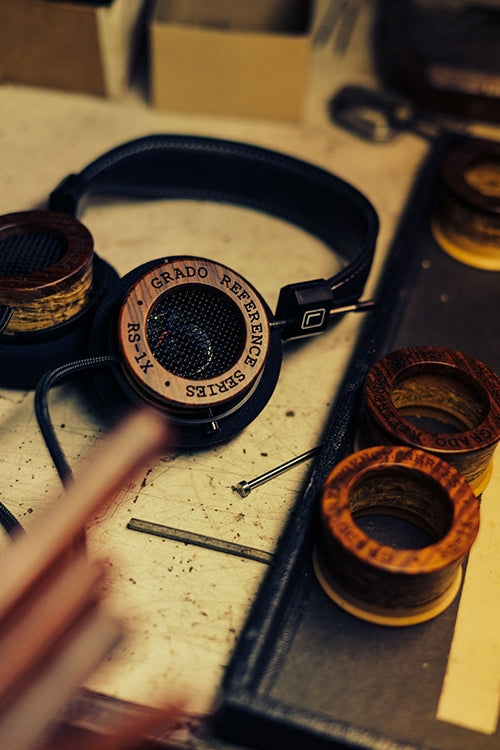


Grado Rs1x headphones.

Grado Rs1x headphones.


They arrived beautifully packaged and presented in a white box. The materials are top-notch, with a heavy copper 8-conductor cable and leather headband. I plugged the phones into my Rogers High Fidelity 65-V1 tube integrated amplifier, which has a dedicated headphone output circuit with impedance matching, a convenient feature given that some onboard stages might not power your headphones properly and require you to use an additional headphone amplifier to flesh out the signal or drive headphones with impedance levels as high as 600 ohms.  For the driver housing, the RS1x phones use gorgeous wooden cups made of maple, hemp, and cocobolo. The size of the ear cushion, the materials used, and the distance from the drivers to the ears are carefully thought out for optimal sound quality because listeners are essentially wearing a listening room on their heads.

I wasn’t even sure what to expect from high-end headphones. I remember first hearing a pair of Cerwin-Vega speakers with 15-inch woofers that sounded so good to my young ears, because I reacted to them viscerally. The bass beat my chest and the horn tweeter shrieked, but that’s certainly not what I want in headphones. I shouldn’t be blown away with thumping bass and extreme volumes – which can be achieved easily with a far cheaper set of headphones. I want a balanced full spectrum of sound and ample bass but at moderate volumes so I don’t damage my hearing even further.

I started by listening to vinyl, but decided that for extended listening, I would stream hi-res and CD-quality files from Qobuz via my laptop and a Schiit Modi 3E DAC. I enjoyed selections by Norah Jones, Bill Evans, Chet Baker, Johnny Cash, Joni Mitchell, The Chamber Music Society of Lincoln Center, and the Tedeschi Trucks Band, but it’s when I came upon Steely Dan’s Aja (1977) that the RS1x really enchanted me.
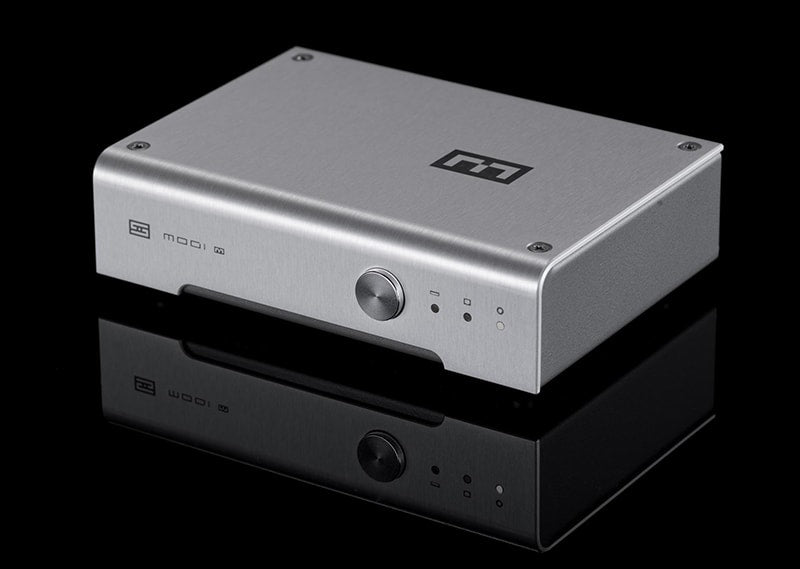
 

Schiit Modi 3E DAC.

Schiit Modi 3E DAC.


I hadn’t listened to those overplayed songs since they were on radio in the late 1970s, and hearing them fresh was a revelatory experience as Walter Becker, Donald Fagen, and something like 40 guest musicians who played on Aja, shined through the headphones. Though the vocals and instruments are layered, I always heard aural space and clarity. David Bowie, Primus, and The Police all sounded spot-on, but Steely Dan’s jazz-rock proved to be downright sublime. The RS1x were extraordinarily nuanced, precise, warm and intimate, yet sharply detailed and crisp and addictive in a way that gave me a fresh perspective on what high-end headphone listening has to offer.

First, I think most headphone enthusiasts would agree that audiophile-grade detail, dynamic range and musical engagement are possible at far lower cost than with a set of comparable speakers. That would be especially true of my Grado SR80e’s: I have yet to hear a $100 pair of speakers that sound that good. Secondly, headphones allow you to be fully immersed in great-sounding music without worrying about space requirements, room treatments, and disturbing the neighbors. Finally, integrating a pair of headphones into your existing system does not require a major investment in audio components. If you don’t already have a headphone jack on your integrated amp, preamp, or receiver, it’s as easy as adding a headphone amplifier, starting at $99. In fact, a fine speaker-less system can be built upon a DAC/integrated amp combo unit.

If there comes a time when I no longer want to maintain a scorching tube amp, floorstanding speakers, and a vinyl collection, I would get the best Grado headphones I could afford and either a Schiit Jotunheim with DAC module, PS Audio’s Sprout,  or the ultimate all-in-one player, PS Audio’s Stellar Strata. Meanwhile, I will savor the RS1x for a few more hours before I have to ship them back to Brooklyn. Maybe I’ll listen to Aja one more time.


Header image of the Grado RS1x from the Grado Labs website.

More from Issue 164

View All Articles in Issue 164

Search Copper Magazine

#236 Magic Boy: The Jimi Hendrix Experience, Live and Rediscovered by Frank Doris Nov 02, 2026 #236 The Great Rhythmic Divide: Composer David Chesky Asks, Why Doesn't the Symphony Orchestra Groove? by David Chesky Nov 02, 2026 #236 More Record Reviews: Roni Eytan’s Microtonal Harmonica, Jane Ira Bloom, and a Frank Zappa Freak Out by Frank Doris Nov 02, 2026 #236 An Album of Inviting Beauty: Goodnight Moon from Acoustic Eidolon, And an Interview With the Artists Who Created it by Frank Doris Nov 02, 2026 #236 Never Ignore Your Inner Voice by B. Jan Montana Nov 02, 2026 #236 Composer Joseph Bertolozzi Uses Bridges, Structures and the World as Musical Instruments, Part One by Joe Caplan Nov 02, 2026 #236 Transmission: A Powerful Horn-Loaded Album from the Huntertones by Ray Chelstowski Nov 02, 2026 #236 Les Quatre Saisons du Québec: a New “Four Seasons” on Tour and on ATMA Classique by Robert Schryer Nov 02, 2026 #236 From The Audiophile's Guide: A Glossary of Terms for Today's Audio Systems, A – M by Paul McGowan Nov 02, 2026 #236 From The Listening Chair: An Introduction to Audiophile Tweaks by Howard Kneller Nov 02, 2026 #236 The Vinyl Beat Grew Two Inches Since October! by Rudy Radelic Nov 02, 2026 #236 How to Play in a Rock Band, Part 29: Figuring Out How to Play the Songs by Frank Doris Nov 02, 2026 #236 The Return of the Residents: Eskimo is On the Road by Wayne Robins Nov 02, 2026 #236 PS Audio in the News by PS Audio Staff Nov 02, 2026 #236 The People Who Make Audio Happen – Fun In Las Vegas at…CES 2026? by Harris Fogel Nov 02, 2026 #236 The Forms of Things Unknown by Frank Doris Nov 02, 2026 #236 Prophetic by Peter Xeni Nov 02, 2026 #236 Here's Looking at You, Kid by Rich Isaacs Nov 02, 2026 Favorites From T.H.E. Show SoCal 2026 by Cam Martin Oct 05, 2026 #235 Singer/Songwriter John David Schrader: On the Need to Create, Part Two by Joe Caplan Oct 05, 2026 #235 A Life in High-End Audio: The Roy Hall Interview, Part Two by Frank Doris Oct 05, 2026 #235 Grammy-Winning Producer, Songwriter, and Guitarist John Leventhal Goes Instrumental With National Drift by Ray Chelstowski Oct 05, 2026 #235 From Swimming Pool to New Listening Room—to Founding an Accidental Audio Company by Gilles Laferrière Oct 05, 2026 #235 The Vinyl Beat’s Size Matters Edition by Rudy Radelic Oct 05, 2026 #235 The Sublime Complexities of Nature by B. Jan Montana Oct 05, 2026 #235 How to Play In a Rock Band, 28: Growing Older and Dealing With It by Frank Doris Oct 05, 2026 #235 Young Rascals: From Bar Band to Stardom by Wayne Robins Oct 05, 2026 #235 Duncan Sheik: In Memoriam by Ray Chelstowski Oct 05, 2026 #235 From The Listening Chair: The Meze Audio 105 Silva Headphones by Howard Kneller Oct 05, 2026 #235 Checking Out Some NOLA Loudspeakers – and Some Thoughts About Audio Writing by Frank Doris Oct 05, 2026 #235 The Kanazawa Phonograph Museum: Music from a Time Capsule by Sebastian Polcyn Oct 05, 2026 #235 PS Audio in the News by PS Audio Staff Oct 05, 2026 #235 From The Audiophile’s Guide: Making the Most Critical Choice by Paul McGowan Oct 05, 2026 #235 Evolutionary Growth by Frank Doris Oct 05, 2026 #235 Speed Racer by Peter Xeni Oct 05, 2026 #235 Happy Halloween! by James Schrimpf Oct 05, 2026 #234 A Life in High-End Audio: The Roy Hall Interview, Part One by Frank Doris Sep 07, 2026 #234 Jason Greenlaw Offers His Personal Perspective on Jazz Guitar in Vantage Point by Frank Doris Sep 07, 2026 #234 Transcendent Phoenix: Lucina Yue Brings the Ancient Konghou Into Modern Times by Frank Doris Sep 07, 2026 #234 We Must All Follow Our Bliss by B. Jan Montana Sep 07, 2026 #234 How to Play in a Rock Band, 27: Leveling Up by Frank Doris Sep 07, 2026 #234 Ross Valory: Traveling Into New Musical Territory With All of the Above by Ray Chelstowski Sep 07, 2026 #234 Singer/Songwriter John David Schrader: On the Need to Create by Joe Caplan Sep 07, 2026 #234 The People Who Make Audio Happen: More From T.H.E. Show SoCal 2026 by Harris Fogel Sep 07, 2026 #234 The Vinyl Beat Digs Into the Gadget Box by Rudy Radelic Sep 07, 2026 #234 The Rolling Stones: Foreign Tongues Spoken Loud by Wayne Robins Sep 07, 2026 #234 Musical Moments by Rich Isaacs Sep 07, 2026

Spending Time With the Grado RS1x Headphones

Spending Time With the Grado RS1x Headphones

I’m willing to bet that most of us with big speakers, bulky amps, and dedicated listening rooms rarely use headphones. I’m not talking about the sweaty loud ones you use on the treadmill, or the sound-insulating, noise-canceling cans for plane trips and office work. I’m especially not talking about portable buds, pods, and wireless sets that let you talk, stream, and tell Alexa to order groceries from your smartphone. When I say headphones, I’m talking about those large over-ear pieces of plastic, padding and metal tethered directly to an amp with a cable and whose primary function is to disconnect you from the world so you can just focus on the music.

I’ve had several sets over the years, usually for no other reason than to blast music while my parents were home. My first headphones were a pair of Realistic Nova series from RadioShack, powered by my Sony compact all-in-one receiver/turntable. For increased mobility, I bought an extension cord that uncoiled as far as my desk and bed. One Christmas, I requested the ultimate in 20th century engineering, a pair of AM/FM battery-powered headphones with tuning knobs and antennae for reception. My parents weren’t hip to that idea. They had already bought me a transistor radio, but I wanted to listen to KC and The Sunshine Band and ride my bike at the same time. They outlined a number of frightening scenarios, like not being able to hear the speeding Camaro that would run into me. Or, if it suddenly started to rain, I could be electrocuted by the batteries or struck by lightning, both causing me to ride my bike into a ditch. Then, there was the danger of other kids stealing the electronics that shouldn’t be outdoors in the first place. I’m sure it’s the thoughts of such hazards that have prevented me from ever committing fully to portable music.

In junior high school, I upgraded to a pair of chunky brown Koss with a nifty volume knob. Koss was one of the more popular brands of the 1970s, but others included Pioneer, Pickering, Sansui, Kenwood, Sony, and, of course, Tandy/Realistic from RadioShack. By the time I graduated to my NAD 7250PE receiver, I was finally ready for something a bit more refined and splurged on the Austrian-made AKG K240s. These were different than all the closed-back headphones that created a sealed listening environment around your ears. The K240s (available today as the K240 Studio and K240 MKII) are a semi open-back model that allows for some ambient sound to be heard from the outside world and gives your music a more “open” and lifelike sound. I had them for years and enjoyed their ability to provide consistently good sound, no matter what my speakers or room were like. But as my gear improved over time, my critical headphone listening nearly ceased – until we all started working from home during lockdowns. With the AKGs long gone, it was time again to get a new set of headphones so I wouldn’t bother my wife.

After researching their phono cartridges in the past, I was aware that Grado Laboratories, founded in 1953 and headquartered in Brooklyn, NY, had been making headphones for more than thirty years. (For an in-depth piece about Grado, please read John Seetoo’s Copper articles in Issue 115 and Issue 116.) Figuring that it really wasn’t worth spending too much, I decided to buy one of their more reasonable models that have been in production since the early days.

The Prestige SR80e, about $100 at the time, sounded terrific. (The current model is the SR80x.) I also got the 15-foot Grado X-Series extension cable, which cost almost as much as the headphones but allowed my wife and me to work in different rooms. When lockdowns ended and I got my listening room back, I immediately forgot about my Grados, but then a friend called on me for some headphone advice. As I explored possibilities for him, I realized how much the world had changed. There were headphones selling for nearly as much as a pair of Klipsch Cornwall floorstanding speakers. And the category had become increasingly specialized, with choices of electrostatic, planar magnetic, or dynamic drivers, and a variety of in-ear options also existed, complete with noise-cancellation and wireless features. How did we go from RadioShack Novas to the current panoply of brands, styles, and prices?

John Chen, sales manager at Grado Laboratories, reminded me that Steve Jobs and a youth-driven market have played a huge role in reinvigorating headphone technology and sales. If you’re old enough to have owned a Sony Walkman cassette player, you realize how revolutionary the Apple iPod was in portable music, followed of course by CD-quality and high-resolution streaming formats available on smartphones and other devices. Add today’s new generation of headphones, and the portable music experience is better than ever. My friend ended up getting a pair of $399 wireless over-ear Sennheiser MOMENTUM 3 headphones with active noise cancellation, which he couples with his iPhone. He really likes their convenience, comfort, and sound, but his satisfaction has not encouraged me to up my portable game.

I still have a $10 pair of earbuds for my old Android phone, and I don’t have plans to adopt Bluetooth in-ear monitors, with or without active noise-cancellation, but I’ll always have a good old-fashioned set of traditional indoor headphones.

I’ve been using the SR80e for about two years and they sound just fine to me, but there are diehard Grado users out there who spend hundreds or thousands of dollars on their sets. Grado headphones run from $100 to $1,795, and in a few months, they will release the GS3000x in their Statement Series, which will be priced at $1,995. I have never owned an expensive pair of headphones and have always wondered why someone would spend so much, until John Chen generously let me audition the Reference Series RS1x at $750 – approximately seven times the price of any headphones I’ve ever owned.


Grado Rs1x headphones.

Grado Rs1x headphones.


They arrived beautifully packaged and presented in a white box. The materials are top-notch, with a heavy copper 8-conductor cable and leather headband. I plugged the phones into my Rogers High Fidelity 65-V1 tube integrated amplifier, which has a dedicated headphone output circuit with impedance matching, a convenient feature given that some onboard stages might not power your headphones properly and require you to use an additional headphone amplifier to flesh out the signal or drive headphones with impedance levels as high as 600 ohms.  For the driver housing, the RS1x phones use gorgeous wooden cups made of maple, hemp, and cocobolo. The size of the ear cushion, the materials used, and the distance from the drivers to the ears are carefully thought out for optimal sound quality because listeners are essentially wearing a listening room on their heads.

I wasn’t even sure what to expect from high-end headphones. I remember first hearing a pair of Cerwin-Vega speakers with 15-inch woofers that sounded so good to my young ears, because I reacted to them viscerally. The bass beat my chest and the horn tweeter shrieked, but that’s certainly not what I want in headphones. I shouldn’t be blown away with thumping bass and extreme volumes – which can be achieved easily with a far cheaper set of headphones. I want a balanced full spectrum of sound and ample bass but at moderate volumes so I don’t damage my hearing even further.

I started by listening to vinyl, but decided that for extended listening, I would stream hi-res and CD-quality files from Qobuz via my laptop and a Schiit Modi 3E DAC. I enjoyed selections by Norah Jones, Bill Evans, Chet Baker, Johnny Cash, Joni Mitchell, The Chamber Music Society of Lincoln Center, and the Tedeschi Trucks Band, but it’s when I came upon Steely Dan’s Aja (1977) that the RS1x really enchanted me.


Schiit Modi 3E DAC.

Schiit Modi 3E DAC.


I hadn’t listened to those overplayed songs since they were on radio in the late 1970s, and hearing them fresh was a revelatory experience as Walter Becker, Donald Fagen, and something like 40 guest musicians who played on Aja, shined through the headphones. Though the vocals and instruments are layered, I always heard aural space and clarity. David Bowie, Primus, and The Police all sounded spot-on, but Steely Dan’s jazz-rock proved to be downright sublime. The RS1x were extraordinarily nuanced, precise, warm and intimate, yet sharply detailed and crisp and addictive in a way that gave me a fresh perspective on what high-end headphone listening has to offer.

First, I think most headphone enthusiasts would agree that audiophile-grade detail, dynamic range and musical engagement are possible at far lower cost than with a set of comparable speakers. That would be especially true of my Grado SR80e’s: I have yet to hear a $100 pair of speakers that sound that good. Secondly, headphones allow you to be fully immersed in great-sounding music without worrying about space requirements, room treatments, and disturbing the neighbors. Finally, integrating a pair of headphones into your existing system does not require a major investment in audio components. If you don’t already have a headphone jack on your integrated amp, preamp, or receiver, it’s as easy as adding a headphone amplifier, starting at $99. In fact, a fine speaker-less system can be built upon a DAC/integrated amp combo unit.

If there comes a time when I no longer want to maintain a scorching tube amp, floorstanding speakers, and a vinyl collection, I would get the best Grado headphones I could afford and either a Schiit Jotunheim with DAC module, PS Audio’s Sprout,  or the ultimate all-in-one player, PS Audio’s Stellar Strata. Meanwhile, I will savor the RS1x for a few more hours before I have to ship them back to Brooklyn. Maybe I’ll listen to Aja one more time.


Header image of the Grado RS1x from the Grado Labs website.

0 comments

Leave a comment

0 Comments

Your avatar

Loading comments...

🗑️ Delete Comment

Enter moderator password to delete this comment:

✏️ Edit Comment

Enter your email to verify ownership: