COPPER

A PS Audio Publication

Issue 168 • Free Online Magazine

Issue 168 Octave Pitch

Octave Records Releases Nightmares by Country/Americana/Rock Band Gasoline Lollipops

Octave Records Releases Nightmares by Country/Americana/Rock Band Gasoline Lollipops

Octave Records has released Nightmares by country/Americana/rock band Gasoline Lollipops, a record that weaves roots music influences, intimate confessional songwriting and the raw power of rock and roll into a deeply moving album. Front man and singer/guitarist Clay Rose was raised by an outlaw truck-driving father and a country songwriting mom in rural Nashville, Tennessee, and he’s complemented by a sympatico band – Gasoline Lollipops are two-time winners of a Best Colorado Band award and have toured throughout the US and internationally.

Nightmares features three new songs and seven GasPops favorites, rearranged to showcase the acoustic-based, intimate yet spacious listening experience offered by Octave’s Pure DSD high-resolution recording process.

Clay Rose is joined by Don Ambory (electric and acoustic guitars, mandolin), Scott Coulter (keyboards, harmonica), “Bad” Brad Morse (bass), and Kevin Matthews (drums, percussion) in Gasoline Lollipops, with guest backup singers Carly Ricks Smith, Giselle Collazo and Kate Farmer. Nightmares was recorded and mixed at Animal Lane Studios in Lyons, Colorado by Jay Elliott, with Giselle Collazo assisting, and mastered by Gus Skinas.

Nightmares was created using Octave Records’ Pure DSD process and the Sonoma multi-track DSD recording system. It’s available in a variety of SACD, CD and other disc formats. In addition, the master DSD and PCM files are available for purchase and download (including DSD64, DSDDirect Mastered 192kHz/24-bit, 96kHz/24-bit and 44.1kHz/16-bit PCM).
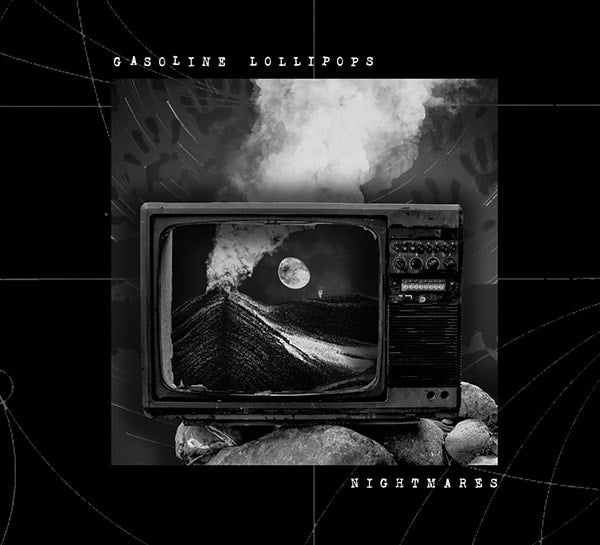


Gasoline Lollipops, Nightmares, album cover.

Gasoline Lollipops, Nightmares, album cover.


The title track was inspired by the events of the summer of 2020. “The song was just the most honest thing I could say at the time,” notes Rose. “I was trying to find a way to say something of comfort to my family. It doesn’t really provide any solution other than, let’s just hold onto each other.”

The songs range from the rollicking train beat of “Smoke and Steam” to the meditative, piano-based “Hard Days.” “Jesus Ain’t Dead” sounds like a timeless country classic, combining profound observations with wry humor. Nightmares is filled with vintage sounds, like the piano and mandolin soloing of Don Ambory and Scott Coulter on “Midnight Dance,” blazing Telecaster electric guitar work, classic Hammond organ sounds, and even a guitar through a Leslie rotating speaker cabinet. At times, Rose chose different microphones for separate sections of a single song, to best capture the tone and mood of what he wanted to say.

Clay Rose’s deep, expressive voice conveys the songs with time-worn emotion. As he notes, “My dad was a truck driver and an avid music lover. From the time I was four years old, I’d ride coast to coast with him. He taught me how to listen to music, with your whole self, your heart, your body, mind, and spirit.”

I interviewed Clay Rose about the making of Nightmares and many other topics.

Frank Doris: How did you come up with the name Gasoline Lollipops?

Clay Rose: Before I even played guitar, I was with a bunch of friends and just thinking of crazy band names and that one got pitched out there. I decided that someday I was gonna learn how to play guitar and start a band, and that was gonna be the name of it. I guess I kind of grew into the name of the band, or at least justified the name by saying that we are sweet yet explosive (laughs).

At first, we were leaning much more towards the punk rock aesthetic; then as I got older and kind of calmed down a little bit, the music calmed down as well and became a little more nuanced.
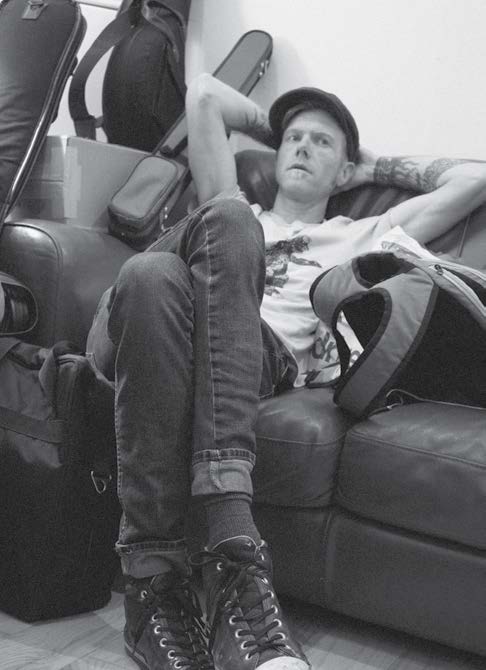
 

Clay Rose.

Clay Rose.


FD: The band sounds really open and even sparse at times.

CR: Yeah, that sparseness, that space, was definitely a deliberate thing that we wanted to do on this record with Octave, because we knew that Octave specialized more in acoustic music and we’re more traditionally an electric rock band. So, we thought we would take the opportunity, see if we could rearrange them to be more ethereal and acoustic. I’d say my guiding lights for the production of this record was Daniel Lanois, and specifically, the Emmylou Harris Wrecking Ball album he produced.

FD: There are also a lot of Telecaster (electric guitars) on this album. Did you go for that vintage rootsy kind of sound because that’s just your sound, or because you decided you wanted to do it for this record?

CR: I feel that as music keeps moving in this more electronic, digital, very clean quantized direction, my natural instinct is to pull against that. I feel like in general we’re moving farther and farther away from spirited, inspired, just organic music. I was raised on my dad’s record collection, which was all from the late Sixties and early Seventies, and those are still my favorite records and most of them were recorded in the same room together, straight to tape. I feel there’s a spirit that’s captured in that environment that’s not captured when you’re recording to a click track. Recording each track separately when you’re not watching the drummer’s hands while you’re playing rhythm guitar, it kind of sucks the life out of things.

When we record live, there’s a tendency for the tempo to fluctuate. I’m totally okay with that. I feel like the tempo of our heart fluctuates depending on our emotions. Music is a spiritual representation of our physical body and it should reflect that.

FD: Tell us about some of the songs.

CR: “Hard Days” is a song I wrote back when that tsunami hit, during the second Iraq war. That same week, I’d lost a sister. I had a feeling of desperation and needing to process this overwhelming feeling of apocalypse. I’m a recovering alcoholic and “Fast Train” was written right towards the end of my drinking career, before I got sober. It’s [about] the need for escape and the feeling of helplessness and lack of life skills. Like I did not feel qualified for the job of life (laughs).

Those [kind of] songs seem to come very urgently and quickly. The way I break down songwriting is, you, you can either build a song or you can find a song. The songs that I find come out fully formed in a matter of hours. I feel like most of the writers in Nashville, LA and New York, they build songs. And that there’s a skill to that, like building a house, and certain rules. You gotta follow the rules, have a good hook, a good bridge, all the pieces need to be in there. I enjoy doing that. It’s like doing a crossword puzzle for me, but I also don’t feel as connected to those songs.

FD: “Jesus Ain’t Dead” could get a lot of attention. How’d that one come about?

CR: That song was a study in John Prine. I just loved John Prine and I sat down one day and wanted to write a John Prine song. It’s an homage to his style and, and his wit and his tongue-in-cheek [outlook].

My dad had about 30 tapes that sat in the front seat of the truck. I’d ride with him, just listening to those same 30 records over and over again. And my mom was a country songwriter in Nashville. When I wasn’t with my dad, I was with her and hanging out in honky tonks, watching her in her band perform and watching her build songs. When I turned 13, I was full of angst and piss and vinegar. My older sister turned me on to punk rock and taught me that I could exorcise these demons in the pit of a punk show. I was a very angry teenager.

FD: I think most of us were.

CR: I was getting into a lot of fights and spending quite a few nights in jail. I learned that you could express all of that energy through a microphone or a guitar, [and] then you didn’t have to swing at anybody. You didn’t have to go to jail anymore. And you could earn money at it.

I don’t think I ever intended to blend the folk and psychedelic rock of my dad with the country and honky tonk of my mom with the punk rock of my sister. But that’s what came out when I started writing songs [and found musicians to play with].
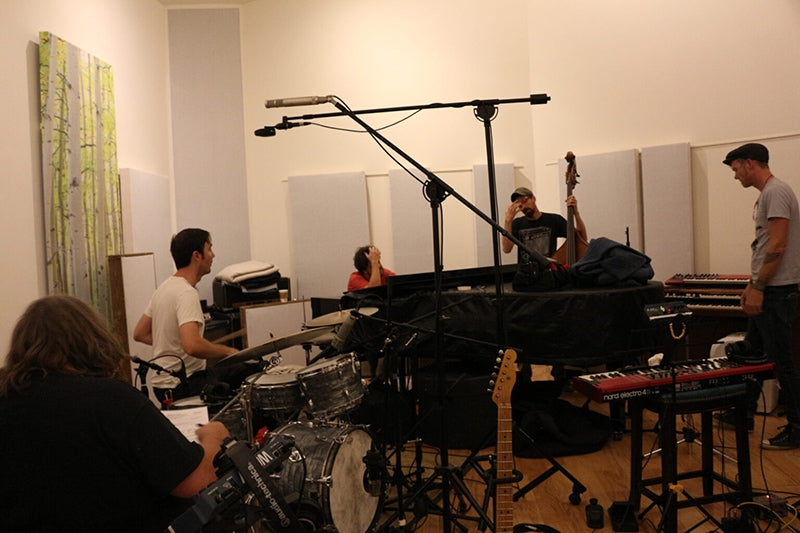
 

Gasoline Lollipops.

Gasoline Lollipops.


FD: What were some of the records you listened to in the truck?

CR: Pop loved Bob Dylan a lot. Neil Young and Jimi Hendrix. A lot of Janis Joplin. Bruce Springsteen was huge for me growing up. [At this point Clay shows me his tattoos of Springsteen and a bird on a wire representing Leonard Cohen.] If I could only listen to one artist for the rest of my life it would be Leonard Cohen.

FD: What about getting back into playing live?

CR: Things have gotten back pretty much full swing here in Colorado, a lot of outdoor festivals and outdoor private events. I think what COVID taught me is how to live without a plan. How to let go of expectations. Before COVID, I’d really gotten obsessed with climbing this career ladder and lost sight of why I started playing music in the first place. We were just playing really big theater shows and booking tours and playing big festivals and the money was great, but I didn’t actually enjoy any of that.

I don’t enjoy being on a huge stage 15 feet from my nearest band mate, listening to drums through a monitor with a row of security guards in front of me and then a barricade in front of the audience and all this huge spectacle with all the light shows and the smoke machines. When it was all taken away, all I missed was being in a small venue that’s packed full, [with my] elbows rubbing with the bass player and the electric guitar player. We’re so tightly packed together that we are one body.

I don’t miss climbing the ladder to stardom. The higher we got on that ladder, the lonelier and less inspired I felt. I think the pandemic really inspired me to simplify, get back to basics, and just play for the love of the music. Cause if that’s not there, I need to get another job.

FD: So I guess I won’t look for you at Radio City Music Hall. (laughter)

CR: I’ve redefined success these days as having deep and meaningful relationships.


Header image: Gasoline Lollipops, courtesy of Octave Records.

More from Issue 168

View All Articles in Issue 168

Search Copper Magazine

#230 Camaraderie by B. Jan Montana May 04, 2026 #230 AXPONA 2026: A Family Gathering by Paul McGowan May 04, 2026 #230 Pianist Ryan Benthall Explores Jazz Realms and Far Beyond With Divine Sky by Frank Doris May 04, 2026 #230 The Vinyl Beat in AXPONA-Land by Rudy Radelic May 04, 2026 #230 Teddy Thompson’s Musical Growth Deepens With Never Be the Same by Ray Chelstowski May 04, 2026 #230 More Fun in the Sun: Florida Audio Expo, Part Two by Frank Doris May 04, 2026 #230 CanJam NYC 2026 Show Report: Heady Sound, Part Two by Frank Doris and Harris Fogel May 04, 2026 #230 Sonic Youth On Murray Street by Wayne Robins May 04, 2026 #230 Graffeo Coffee: A Symphony of Sensory Experience by Joe Caplan May 04, 2026 #230 The Saul Authority: The Story of Hi-Fi Pioneer Saul Marantz by Olivier Meunier-Plante May 04, 2026 #230 How to Play in a Rock Band, 23: Encounters With Famous Musicians, Part Two by Frank Doris May 04, 2026 #230 An Outlier in the Rack: A Vintage BIC Beam Box by The Staff at Just Audio May 04, 2026 #230 PS Audio in the News by PS Audio Staff May 04, 2026 #230 A Cautionary Tale by Rich Isaacs May 04, 2026 #230 Reel-to-Reel Roots, Part 33 (Revised): Ken Kessler Reports On the 2026 (British) AudioJumble by Ken Kessler May 04, 2026 #230 Text Messaging by Frank Doris May 04, 2026 #230 The Audiophile Rat Race by Peter Xeni May 04, 2026 #230 On the Rocks by Rich Isaacs May 04, 2026 #229 The Earliest Stars of Country Music, Part Three by Jeff Weiner Apr 06, 2026 #229 The Healing Power of Music and Sound at the Omega Institute by Joe Caplan Apr 06, 2026 #229 CanJam NYC 2026 Show Report: Heady Sound, Part One by Frank Doris Apr 06, 2026 #229 Florida Audio Expo 2026: Warming Up to High-End Audio, Part One by Frank Doris Apr 06, 2026 #229 Quick Takes: Anne Bisson, Sam Morrison, The Velvet Underground, and the Stooges by Frank Doris Apr 06, 2026 #229 The Vinyl Beat: New Arrivals, and Old Audio Show Demo Scores to Settle by Rudy Radelic Apr 06, 2026 #229 Harvard Gets a High-End Audio Education by Frank Doris Apr 06, 2026 #229 No Country for Old Knees by B. Jan Montana Apr 06, 2026 #229 How To Play in A Rock Band, 22: Encounters With Famous Musicians, Part 1 by Frank Doris Apr 06, 2026 #229 The Soulful Grooves of Guinea-Bissau by Steve Kindig Apr 06, 2026 #229 Four-Hand Piano Performance at Its Finest by Stephan Haberthür Apr 06, 2026 #229 The People Who Make Audio Happen: Supreme Acoustics Systems’ Las Vegas Grand Opening by Harris Fogel Apr 06, 2026 #229 Blue Öyster Cult: Tyranny and Expectations by Wayne Robins Apr 06, 2026 #229 Guitarist Rick Vito’s Cinematic New Album, Slidemaster by Ray Chelstowski Apr 06, 2026 #229 Measurements and Observational Listening by Paul McGowan Apr 06, 2026 #229 PS Audio in the News by PS Audio Staff Apr 06, 2026 #229 Back to My Reel-to-Reel Roots, Part 28: The Cassette Strikes Back by Ken Kessler Apr 06, 2026 #229 Are You Receiving Me? by Frank Doris Apr 06, 2026 #229 Hospitality by Peter Xeni Apr 06, 2026 #229 Cantina Gateway by James Schrimpf Apr 06, 2026 #228 Serita’s Black Rose Duo Shakes Your Soul With a Blend of Funk, Rock, Blues and a Whole Lot More by Frank Doris Mar 02, 2026 #228 Vinyl, A Love Story by Wayne Robins Mar 02, 2026 #228 Thrill Seeker by B. Jan Montana Mar 02, 2026 #228 The Vinyl Beat: Donald Byrd, Bill Evans, Wes Montgomery, Eddie Palmieri and Frank Sinatra by Rudy Radelic Mar 02, 2026 #228 Listening to Prestige: The History of a Vitally Important Jazz Record Label by Frank Doris Mar 02, 2026 #228 How to Play in a Rock Band, 21: Touring With James Lee Stanley by Frank Doris Mar 02, 2026 #228 The NAMM 2026 Show: The Music Industry’s Premier Event by John Volanski Mar 02, 2026 #228 The Earliest Stars of Country Music, Part Two by Jeff Weiner Mar 02, 2026 #228 From The Audiophile's Guide: A Brief History of Stereophonic Sound by Paul McGowan Mar 02, 2026

Octave Records Releases Nightmares by Country/Americana/Rock Band Gasoline Lollipops

Octave Records Releases <em>Nightmares</em> by Country/Americana/Rock Band Gasoline Lollipops

Octave Records has released Nightmares by country/Americana/rock band Gasoline Lollipops, a record that weaves roots music influences, intimate confessional songwriting and the raw power of rock and roll into a deeply moving album. Front man and singer/guitarist Clay Rose was raised by an outlaw truck-driving father and a country songwriting mom in rural Nashville, Tennessee, and he’s complemented by a sympatico band – Gasoline Lollipops are two-time winners of a Best Colorado Band award and have toured throughout the US and internationally.

Nightmares features three new songs and seven GasPops favorites, rearranged to showcase the acoustic-based, intimate yet spacious listening experience offered by Octave’s Pure DSD high-resolution recording process.

Clay Rose is joined by Don Ambory (electric and acoustic guitars, mandolin), Scott Coulter (keyboards, harmonica), “Bad” Brad Morse (bass), and Kevin Matthews (drums, percussion) in Gasoline Lollipops, with guest backup singers Carly Ricks Smith, Giselle Collazo and Kate Farmer. Nightmares was recorded and mixed at Animal Lane Studios in Lyons, Colorado by Jay Elliott, with Giselle Collazo assisting, and mastered by Gus Skinas.

Nightmares was created using Octave Records’ Pure DSD process and the Sonoma multi-track DSD recording system. It’s available in a variety of SACD, CD and other disc formats. In addition, the master DSD and PCM files are available for purchase and download (including DSD64, DSDDirect Mastered 192kHz/24-bit, 96kHz/24-bit and 44.1kHz/16-bit PCM).


Gasoline Lollipops, Nightmares, album cover.

Gasoline Lollipops, Nightmares, album cover.


The title track was inspired by the events of the summer of 2020. “The song was just the most honest thing I could say at the time,” notes Rose. “I was trying to find a way to say something of comfort to my family. It doesn’t really provide any solution other than, let’s just hold onto each other.”

The songs range from the rollicking train beat of “Smoke and Steam” to the meditative, piano-based “Hard Days.” “Jesus Ain’t Dead” sounds like a timeless country classic, combining profound observations with wry humor. Nightmares is filled with vintage sounds, like the piano and mandolin soloing of Don Ambory and Scott Coulter on “Midnight Dance,” blazing Telecaster electric guitar work, classic Hammond organ sounds, and even a guitar through a Leslie rotating speaker cabinet. At times, Rose chose different microphones for separate sections of a single song, to best capture the tone and mood of what he wanted to say.

Clay Rose’s deep, expressive voice conveys the songs with time-worn emotion. As he notes, “My dad was a truck driver and an avid music lover. From the time I was four years old, I’d ride coast to coast with him. He taught me how to listen to music, with your whole self, your heart, your body, mind, and spirit.”

I interviewed Clay Rose about the making of Nightmares and many other topics.

Frank Doris: How did you come up with the name Gasoline Lollipops?

Clay Rose: Before I even played guitar, I was with a bunch of friends and just thinking of crazy band names and that one got pitched out there. I decided that someday I was gonna learn how to play guitar and start a band, and that was gonna be the name of it. I guess I kind of grew into the name of the band, or at least justified the name by saying that we are sweet yet explosive (laughs).

At first, we were leaning much more towards the punk rock aesthetic; then as I got older and kind of calmed down a little bit, the music calmed down as well and became a little more nuanced.


Clay Rose.

Clay Rose.


FD: The band sounds really open and even sparse at times.

CR: Yeah, that sparseness, that space, was definitely a deliberate thing that we wanted to do on this record with Octave, because we knew that Octave specialized more in acoustic music and we’re more traditionally an electric rock band. So, we thought we would take the opportunity, see if we could rearrange them to be more ethereal and acoustic. I’d say my guiding lights for the production of this record was Daniel Lanois, and specifically, the Emmylou Harris Wrecking Ball album he produced.

FD: There are also a lot of Telecaster (electric guitars) on this album. Did you go for that vintage rootsy kind of sound because that’s just your sound, or because you decided you wanted to do it for this record?

CR: I feel that as music keeps moving in this more electronic, digital, very clean quantized direction, my natural instinct is to pull against that. I feel like in general we’re moving farther and farther away from spirited, inspired, just organic music. I was raised on my dad’s record collection, which was all from the late Sixties and early Seventies, and those are still my favorite records and most of them were recorded in the same room together, straight to tape. I feel there’s a spirit that’s captured in that environment that’s not captured when you’re recording to a click track. Recording each track separately when you’re not watching the drummer’s hands while you’re playing rhythm guitar, it kind of sucks the life out of things.

When we record live, there’s a tendency for the tempo to fluctuate. I’m totally okay with that. I feel like the tempo of our heart fluctuates depending on our emotions. Music is a spiritual representation of our physical body and it should reflect that.

FD: Tell us about some of the songs.

CR: “Hard Days” is a song I wrote back when that tsunami hit, during the second Iraq war. That same week, I’d lost a sister. I had a feeling of desperation and needing to process this overwhelming feeling of apocalypse. I’m a recovering alcoholic and “Fast Train” was written right towards the end of my drinking career, before I got sober. It’s [about] the need for escape and the feeling of helplessness and lack of life skills. Like I did not feel qualified for the job of life (laughs).

Those [kind of] songs seem to come very urgently and quickly. The way I break down songwriting is, you, you can either build a song or you can find a song. The songs that I find come out fully formed in a matter of hours. I feel like most of the writers in Nashville, LA and New York, they build songs. And that there’s a skill to that, like building a house, and certain rules. You gotta follow the rules, have a good hook, a good bridge, all the pieces need to be in there. I enjoy doing that. It’s like doing a crossword puzzle for me, but I also don’t feel as connected to those songs.

FD: “Jesus Ain’t Dead” could get a lot of attention. How’d that one come about?

CR: That song was a study in John Prine. I just loved John Prine and I sat down one day and wanted to write a John Prine song. It’s an homage to his style and, and his wit and his tongue-in-cheek [outlook].

My dad had about 30 tapes that sat in the front seat of the truck. I’d ride with him, just listening to those same 30 records over and over again. And my mom was a country songwriter in Nashville. When I wasn’t with my dad, I was with her and hanging out in honky tonks, watching her in her band perform and watching her build songs. When I turned 13, I was full of angst and piss and vinegar. My older sister turned me on to punk rock and taught me that I could exorcise these demons in the pit of a punk show. I was a very angry teenager.

FD: I think most of us were.

CR: I was getting into a lot of fights and spending quite a few nights in jail. I learned that you could express all of that energy through a microphone or a guitar, [and] then you didn’t have to swing at anybody. You didn’t have to go to jail anymore. And you could earn money at it.

I don’t think I ever intended to blend the folk and psychedelic rock of my dad with the country and honky tonk of my mom with the punk rock of my sister. But that’s what came out when I started writing songs [and found musicians to play with].


Gasoline Lollipops.

Gasoline Lollipops.


FD: What were some of the records you listened to in the truck?

CR: Pop loved Bob Dylan a lot. Neil Young and Jimi Hendrix. A lot of Janis Joplin. Bruce Springsteen was huge for me growing up. [At this point Clay shows me his tattoos of Springsteen and a bird on a wire representing Leonard Cohen.] If I could only listen to one artist for the rest of my life it would be Leonard Cohen.

FD: What about getting back into playing live?

CR: Things have gotten back pretty much full swing here in Colorado, a lot of outdoor festivals and outdoor private events. I think what COVID taught me is how to live without a plan. How to let go of expectations. Before COVID, I’d really gotten obsessed with climbing this career ladder and lost sight of why I started playing music in the first place. We were just playing really big theater shows and booking tours and playing big festivals and the money was great, but I didn’t actually enjoy any of that.

I don’t enjoy being on a huge stage 15 feet from my nearest band mate, listening to drums through a monitor with a row of security guards in front of me and then a barricade in front of the audience and all this huge spectacle with all the light shows and the smoke machines. When it was all taken away, all I missed was being in a small venue that’s packed full, [with my] elbows rubbing with the bass player and the electric guitar player. We’re so tightly packed together that we are one body.

I don’t miss climbing the ladder to stardom. The higher we got on that ladder, the lonelier and less inspired I felt. I think the pandemic really inspired me to simplify, get back to basics, and just play for the love of the music. Cause if that’s not there, I need to get another job.

FD: So I guess I won’t look for you at Radio City Music Hall. (laughter)

CR: I’ve redefined success these days as having deep and meaningful relationships.


Header image: Gasoline Lollipops, courtesy of Octave Records.

0 comments

Leave a comment

0 Comments

Your avatar

Loading comments...

🗑️ Delete Comment

Enter moderator password to delete this comment:

✏️ Edit Comment

Enter your email to verify ownership: