COPPER

A PS Audio Publication

Issue 173 • Free Online Magazine

Issue 173 Octave Pitch

Octave Records Debuts The Audiophile’s Guide: The Loudspeaker (Plus, an Interview With Paul McGowan)

Octave Records Debuts The Audiophile’s Guide: The Loudspeaker (Plus, an Interview With Paul McGowan)

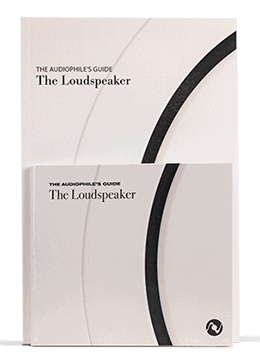
PS Audio’s Octave Records now offers its latest release, The Audiophile’s Guide: The Loudspeaker, a book and companion SACD/download that tells listeners exactly how to get the most out of their loudspeaker setup. Written by PS Audio’s Paul McGowan (see our interview below), the book and its accompanying disc (also available as a download) offer the practical knowledge he’s gained through more than 50 years of setting up speaker systems. The Audiophile’s Guide: The Loudspeaker is ideal for both novices and experienced audiophiles who may benefit from bringing their setup to a higher level or musical realism.

The book begins by covering a variety of topics including the nature of sound, different speaker designs, the importance of choosing the right speaker for your particular needs and listening tastes, and one of the most critical aspects of speaker setup: the effect of the listening room on loudspeaker performance.

Next the book discusses where to place the speakers in the room, and how do deal with various types and shapes of rooms. The Guide notes that different placements may be appropriate for different speaker types – for example, stand-mounted “box” speakers versus dipole planar designs – and listening room configurations (such as whether to place speakers across the short or long wall of a room). Real-world aspects like accommodating living spaces that aren’t dedicated to loudspeakers, and taking account of the locations of furniture, are also considered.

The Audiophile’s Guide: The Loudspeaker (SRP: $58 – $68 depending on format) then walks the listener through using the accompanying reference disc (or download) to fine-tune a system to perfection. The disc starts with some basic tests for channel orientation and moves on to exacting, step-by-step procedures (time to get out the tape measure!) for getting the best bass response and tonal balance, achieving a solid center image, finding the best seating position, maximizing dynamics, producing a believable soundstage, capturing subtle musical details, and ultimately, getting the speakers to “disappear” and create the feeling that the musicians are in the room with the listener.

The tracks on the disc are tailored to help the listener zero in on various sonic aspects, from the pluck of Chris Brunhaver’s acoustic bass and how it energizes the room, to the focused center image of Gabriel Mervine’s trumpet, and the resonance and spatiality of Bill Kopper’s acoustic guitars, plus a number of tracks featuring vocalists with a full band.

The Audiophile’s Guide: The Loudspeaker SACD is playable on any SACD, CD, DVD, or Blu-ray player (an SACD player is required to play the high-resolution DSD files on the disc). In addition, the master DSD and PCM files are available for purchase and download in formats up to 352.8 kHz/DSD256 from psaudio.com at this link.

I was more than a little curious about this book – once an audiophile, always an audiophile! – so I asked Paul about it.

Frank Doris: So much has been written about loudspeaker setup (a good thing, as there can never be too much good knowledge). What made you decide to write a book about it? In fact, what made you decide to write a series of books, beginning with the already-published The Audiophile’s Guide: The Stereo?

Paul McGowan: Most setup guides I am familiar with are somewhat limited and never really gave me the results I was looking for. And after watching and being part of hundreds of system setups at shows and people’s homes I started noticing a pattern. I and others had a set routine that used very familiar music. In fact, when on the road I would carry my trusted musical arsenal with me. I knew every one of those cuts and how they should sound. I found that within a very short period of time, I could set up a pair of speakers to where they “disappeared” and in their place was music.

That skill and those musical tracks became part of my life and I wanted to share this with people. Too many times I’ve had to come to the rescue of someone’s hard-fought system because it just wasn’t sounding right. They would tell me it must be the equipment, the room, the weather. Whatever. The truth was, it was almost always the result of setup problems – problem I could fix in a few minutes.

Having a recording studio [Octave Records] at my disposal was the final piece of the puzzle. Now, I could [completely know the sound of] the tracks I wanted to use, and then write a book about how to implement those tracks for great advantage.

Thousands around the world have upgraded their systems over the course of a Saturday afternoon using one (or both) of my Audiophile’s Guides. It’s made me really proud.

 

Paul McGowan.

Paul McGowan.


FD: What do you personally look for in a loudspeaker, and what were you aiming for in the design of the FR30?

PM: The ability to disappear and present a seamless full-range soundstage, where nothing is missing and nothing jumps out at me.

Part of the problem I have personally had over all these many years of being an electronics manufacturer and designer has been speakers. What do we recommend with our electronics? Heck, for that matter, what speakers do we bring to the hi-fi shows to show off our electronics? Our choices had really narrowed down. Every speaker had its good and bad points. None were perfect.

Then the Aspen [FR30 loudspeaker] came along. What a joy! Not only can I recommend these beauties to anyone who loves what I love, but when they receive their new speakers they are flabbergasted at how much better those speakers are than I could possibly have described in words. What a treat!

FD: Do you think the room is more important than the speaker, as some internet pundits have suggested?

PM: No, not at all. The room can certainly help and hinder, but with only a bit of work you can make a good pair of speakers sing in any room. You just need to know how. But, here’s the thing: the opposite isn’t true. No matter how good the room you cannot put enough lipstick on a speaker to make its sing if it isn’t designed properly.

FD: You make an interesting point in the book: when forced to place the speakers along the long wall or in a square room, you recommend not placing the speakers along the middle of the rear wall, but off to the side. (I confess, I had to make this compromise as my basement floor is pitched to a drain in case of a flood!) I’ve never heard mention of this trick. Why?

PM: There’s an old and inaccurate audiophile-wisdom chestnut about symmetry. Audiophiles at times go bananas obsessing over 1/16th of an inch symmetry when what will really fix the problem is exactly the opposite. (Symmetry has its place sometimes.) It’s one of the great secrets that shouldn’t be a secret.
FD: I don’t know that there’s a “best” speaker placement. Should a listener decide which sonic aspect is the most important to them, and place their speaker accordingly? For example, in one location you may get the best soundstage but at the expense of bass response, and vice versa. Or, is the “best” speaker placement the one with the least amount of compromises, in your opinion?

PM: You’re absolutely correct. “Best” is dependent on what your tastes, goals, and expectations are (all coupled with the design of your speaker type). If you’ve ever been to a hi-fi show and gone into, say, the Wilson Audio room you’ll notice a very different setup than you might in the PS Audio room. Both sound magical but both couldn’t be more different.

Wilsons, for example, are really happy when spread apart and pointed at the sweet spot through toe-in. In the space between the two speakers there’s a near-perfect soundstage. In our room you’ll note that the speakers are much closer together and without a lot of toe-in. The soundstage is wide and deep and extends beyond the sides of the speakers. (The Aspen is very smooth in the off-axis response which allows this to happen.)

This is one of the reasons that in The Audiophile’s Guide: The Loudspeaker, we really roll up our proverbial sleeves and delve deeply into both setup methods.

FD: One more question: where do you get the energy to do all this?

PM: Hah! I get asked this a lot and, what’s funny, the people asking me don’t realize that on top of the books, recording studio, day-to-day at PS Central, my daily posts and videos, an actual home life, and still getting a good nine hours of sleep a night I am also working hard on finishing up a mystery/thriller trilogy called Eemians that I have been plugging away at for the last decade.

And I still at times get bored.

Here’s the thing. We all have the same number of hours in a day. And we all think that for the most part our lives are full. There’s not much room left to pile on more. Only, that’s simply not true. It’s the big lie our “lizard brain” (the amygdala) tell us because its job is to preserve our energy stores. It’s the part of our brain that makes us afraid, tells us we can’t, we shouldn’t, we don’t have the bandwidth. It’s that little voice in our head we do battle with daily and hourly.

It’s a story we tell ourselves and it is not true.

I have simply learned to tell a different story. To step out on a limb and just do it. Once that happens, my little lizard brain gives up and voila! Amazingly there’s enough time in the day for that.

I am sure few of you reading this will do anything about it. That’s normal. But, for those interested in changing their story, there’s a great book to read. It’s short and fun. Changed my life.

Steven Pressfield’s The War of Art.

More from Issue 173

View All Articles in Issue 173

Search Copper Magazine

#228 Serita’s Black Rose Duo Shakes Your Soul With a Blend of Funk, Rock, Blues and a Whole Lot More by Frank Doris Mar 02, 2026 #228 Vinyl, A Love Story by Wayne Robins Mar 02, 2026 #228 Thrill Seeker by B. Jan Montana Mar 02, 2026 #228 The Vinyl Beat: Donald Byrd, Bill Evans, Wes Montgomery, Eddie Palmieri and Frank Sinatra by Rudy Radelic Mar 02, 2026 #228 Listening to Prestige: The History of a Vitally Important Jazz Record Label by Frank Doris Mar 02, 2026 #228 How to Play in a Rock Band, 21: Touring With James Lee Stanley by Frank Doris Mar 02, 2026 #228 The NAMM 2026 Show: The Music Industry’s Premier Event by John Volanski Mar 02, 2026 #228 The Earliest Stars of Country Music, Part Two by Jeff Weiner Mar 02, 2026 #228 From The Audiophile's Guide: A Brief History of Stereophonic Sound by Paul McGowan Mar 02, 2026 #228 A Bone to Pick With Streaming Audio by Frank Doris Mar 02, 2026 #228 Blast Off With Bluesman Duke Robillard by Ray Chelstowski Mar 02, 2026 #228 A Visit to the Marten Loudspeaker Factory in Göteborg, Sweden by Ingo Schulz and Sebastian Polcyn Mar 02, 2026 #228 Pure Distortion by Peter Xeni Mar 02, 2026 #228 A Nagra Factory Tour by Markus "Marsu" Manthey Mar 02, 2026 #228 Back to My Reel-to-Reel Roots, Part 27: Noodge and Ye Shall Receive, Part Two by Ken Kessler Mar 02, 2026 #228 PS Audio in the News by PS Audio Staff Mar 02, 2026 #228 90-Degree Stereo by Frank Doris Mar 02, 2026 #228 The Keys to Art by Rich Isaacs Mar 02, 2026 #227 Seth Lewis Gets in the Groove With Take a Look Around: a Tribute to the Meters by Frank Doris Feb 02, 2026 #227 Passport to Sound: May Anwar’s Audio Learning Experience for Young People by Frank Doris Feb 02, 2026 #227 Conjectures on Cosmic Consciousness by B. Jan Montana Feb 02, 2026 #227 The Big Takeover Turns 45 by Wayne Robins Feb 02, 2026 #227 Music and Chocolate: On the Sensory Connection by Joe Caplan Feb 02, 2026 #227 Singer/Songwriter Chris Berardo: Getting Wilder All the Time by Ray Chelstowski Feb 02, 2026 #227 The Earliest Stars of Country Music, Part One by Jeff Weiner Feb 02, 2026 #227 The Vinyl Beat Goes Down to Tijuana (By Way of Los Angeles), Part Two by Rudy Radelic Feb 02, 2026 #227 How to Play in a Rock Band, 20: On the Road With Blood, Sweat & Tears’ Guitarist Gabe Cummins by Frank Doris Feb 02, 2026 #227 From The Audiophile’s Guide: Audio Specs and Measuring by Paul McGowan Feb 02, 2026 #227 Our Brain is Always Listening by Peter Trübner Feb 02, 2026 #227 PS Audio in the News by PS Audio Staff Feb 02, 2026 #227 The Listening Chair: Sleek Style and Sound From the Luxman L3 by Howard Kneller Feb 02, 2026 #227 The Los Angeles and Orange County Audio Society Celebrates Its 32nd Anniversary, Honoring David and Sheryl Lee Wilson and Bernie Grundman by Harris Fogel Feb 02, 2026 #227 Back to My Reel-to-Reel Roots, Part 26: Half Full – Not Half Empty, Redux by Ken Kessler Feb 02, 2026 #227 That's What Puzzles Us... by Frank Doris Feb 02, 2026 #227 Record-Breaking by Peter Xeni Feb 02, 2026 #227 The Long and Winding Road by B. Jan Montana Feb 02, 2026 #226 JJ Murphy’s Sleep Paralysis is a Genre-Bending Musical Journey Through Jazz, Fusion and More by Frank Doris Jan 05, 2026 #226 Stewardship by Consent by B. Jan Montana Jan 05, 2026 #226 Food, Music, and Sensory Experience: An Interview With Professor Jonathan Zearfoss of the Culinary Institute of America by Joe Caplan Jan 05, 2026 #226 Studio Confidential: A Who’s Who of Recording Engineers Tell Their Stories by Frank Doris Jan 05, 2026 #226 Pilot Radio is Reborn, 50 Years Later: Talking With CEO Barak Epstein by Frank Doris Jan 05, 2026 #226 The Vinyl Beat Goes Down to Tijuana (By Way of Los Angeles), Part One by Rudy Radelic Jan 05, 2026 #226 Capital Audiofest 2025: Must-See Stereo, Part Two by Frank Doris Jan 05, 2026 #226 My Morning Jacket’s Carl Broemel and Tyler Ramsey Collaborate on Their Acoustic Guitar Album, Celestun by Ray Chelstowski Jan 05, 2026 #226 The People Who Make Audio Happen: CanJam SoCal 2025, Part Two by Harris Fogel Jan 05, 2026 #226 How to Play in a Rock Band, 19: Touring Can Make You Crazy, Part One by Frank Doris Jan 05, 2026 #226 Linda Ronstadt Goes Bigger by Wayne Robins Jan 05, 2026

Octave Records Debuts The Audiophile’s Guide: The Loudspeaker (Plus, an Interview With Paul McGowan)

Octave Records Debuts The Audiophile’s Guide: The Loudspeaker (Plus, an Interview With Paul McGowan)

PS Audio’s Octave Records now offers its latest release, The Audiophile’s Guide: The Loudspeaker, a book and companion SACD/download that tells listeners exactly how to get the most out of their loudspeaker setup. Written by PS Audio’s Paul McGowan (see our interview below), the book and its accompanying disc (also available as a download) offer the practical knowledge he’s gained through more than 50 years of setting up speaker systems. The Audiophile’s Guide: The Loudspeaker is ideal for both novices and experienced audiophiles who may benefit from bringing their setup to a higher level or musical realism.

The book begins by covering a variety of topics including the nature of sound, different speaker designs, the importance of choosing the right speaker for your particular needs and listening tastes, and one of the most critical aspects of speaker setup: the effect of the listening room on loudspeaker performance.

Next the book discusses where to place the speakers in the room, and how do deal with various types and shapes of rooms. The Guide notes that different placements may be appropriate for different speaker types – for example, stand-mounted “box” speakers versus dipole planar designs – and listening room configurations (such as whether to place speakers across the short or long wall of a room). Real-world aspects like accommodating living spaces that aren’t dedicated to loudspeakers, and taking account of the locations of furniture, are also considered.

The Audiophile’s Guide: The Loudspeaker (SRP: $58 – $68 depending on format) then walks the listener through using the accompanying reference disc (or download) to fine-tune a system to perfection. The disc starts with some basic tests for channel orientation and moves on to exacting, step-by-step procedures (time to get out the tape measure!) for getting the best bass response and tonal balance, achieving a solid center image, finding the best seating position, maximizing dynamics, producing a believable soundstage, capturing subtle musical details, and ultimately, getting the speakers to “disappear” and create the feeling that the musicians are in the room with the listener.

The tracks on the disc are tailored to help the listener zero in on various sonic aspects, from the pluck of Chris Brunhaver’s acoustic bass and how it energizes the room, to the focused center image of Gabriel Mervine’s trumpet, and the resonance and spatiality of Bill Kopper’s acoustic guitars, plus a number of tracks featuring vocalists with a full band.

The Audiophile’s Guide: The Loudspeaker SACD is playable on any SACD, CD, DVD, or Blu-ray player (an SACD player is required to play the high-resolution DSD files on the disc). In addition, the master DSD and PCM files are available for purchase and download in formats up to 352.8 kHz/DSD256 from psaudio.com at this link.

I was more than a little curious about this book – once an audiophile, always an audiophile! – so I asked Paul about it.

Frank Doris: So much has been written about loudspeaker setup (a good thing, as there can never be too much good knowledge). What made you decide to write a book about it? In fact, what made you decide to write a series of books, beginning with the already-published The Audiophile’s Guide: The Stereo?

Paul McGowan: Most setup guides I am familiar with are somewhat limited and never really gave me the results I was looking for. And after watching and being part of hundreds of system setups at shows and people’s homes I started noticing a pattern. I and others had a set routine that used very familiar music. In fact, when on the road I would carry my trusted musical arsenal with me. I knew every one of those cuts and how they should sound. I found that within a very short period of time, I could set up a pair of speakers to where they “disappeared” and in their place was music.

That skill and those musical tracks became part of my life and I wanted to share this with people. Too many times I’ve had to come to the rescue of someone’s hard-fought system because it just wasn’t sounding right. They would tell me it must be the equipment, the room, the weather. Whatever. The truth was, it was almost always the result of setup problems – problem I could fix in a few minutes.

Having a recording studio [Octave Records] at my disposal was the final piece of the puzzle. Now, I could [completely know the sound of] the tracks I wanted to use, and then write a book about how to implement those tracks for great advantage.

Thousands around the world have upgraded their systems over the course of a Saturday afternoon using one (or both) of my Audiophile’s Guides. It’s made me really proud.


Paul McGowan.

Paul McGowan.


FD: What do you personally look for in a loudspeaker, and what were you aiming for in the design of the FR30?

PM: The ability to disappear and present a seamless full-range soundstage, where nothing is missing and nothing jumps out at me.

Part of the problem I have personally had over all these many years of being an electronics manufacturer and designer has been speakers. What do we recommend with our electronics? Heck, for that matter, what speakers do we bring to the hi-fi shows to show off our electronics? Our choices had really narrowed down. Every speaker had its good and bad points. None were perfect.

Then the Aspen [FR30 loudspeaker] came along. What a joy! Not only can I recommend these beauties to anyone who loves what I love, but when they receive their new speakers they are flabbergasted at how much better those speakers are than I could possibly have described in words. What a treat!

FD: Do you think the room is more important than the speaker, as some internet pundits have suggested?

PM: No, not at all. The room can certainly help and hinder, but with only a bit of work you can make a good pair of speakers sing in any room. You just need to know how. But, here’s the thing: the opposite isn’t true. No matter how good the room you cannot put enough lipstick on a speaker to make its sing if it isn’t designed properly.

FD: You make an interesting point in the book: when forced to place the speakers along the long wall or in a square room, you recommend not placing the speakers along the middle of the rear wall, but off to the side. (I confess, I had to make this compromise as my basement floor is pitched to a drain in case of a flood!) I’ve never heard mention of this trick. Why?

PM: There’s an old and inaccurate audiophile-wisdom chestnut about symmetry. Audiophiles at times go bananas obsessing over 1/16th of an inch symmetry when what will really fix the problem is exactly the opposite. (Symmetry has its place sometimes.) It’s one of the great secrets that shouldn’t be a secret.

FD: I don’t know that there’s a “best” speaker placement. Should a listener decide which sonic aspect is the most important to them, and place their speaker accordingly? For example, in one location you may get the best soundstage but at the expense of bass response, and vice versa. Or, is the “best” speaker placement the one with the least amount of compromises, in your opinion?

PM: You’re absolutely correct. “Best” is dependent on what your tastes, goals, and expectations are (all coupled with the design of your speaker type). If you’ve ever been to a hi-fi show and gone into, say, the Wilson Audio room you’ll notice a very different setup than you might in the PS Audio room. Both sound magical but both couldn’t be more different.

Wilsons, for example, are really happy when spread apart and pointed at the sweet spot through toe-in. In the space between the two speakers there’s a near-perfect soundstage. In our room you’ll note that the speakers are much closer together and without a lot of toe-in. The soundstage is wide and deep and extends beyond the sides of the speakers. (The Aspen is very smooth in the off-axis response which allows this to happen.)

This is one of the reasons that in The Audiophile’s Guide: The Loudspeaker, we really roll up our proverbial sleeves and delve deeply into both setup methods.

FD: One more question: where do you get the energy to do all this?

PM: Hah! I get asked this a lot and, what’s funny, the people asking me don’t realize that on top of the books, recording studio, day-to-day at PS Central, my daily posts and videos, an actual home life, and still getting a good nine hours of sleep a night I am also working hard on finishing up a mystery/thriller trilogy called Eemians that I have been plugging away at for the last decade.

And I still at times get bored.

Here’s the thing. We all have the same number of hours in a day. And we all think that for the most part our lives are full. There’s not much room left to pile on more. Only, that’s simply not true. It’s the big lie our “lizard brain” (the amygdala) tell us because its job is to preserve our energy stores. It’s the part of our brain that makes us afraid, tells us we can’t, we shouldn’t, we don’t have the bandwidth. It’s that little voice in our head we do battle with daily and hourly.

It’s a story we tell ourselves and it is not true.

I have simply learned to tell a different story. To step out on a limb and just do it. Once that happens, my little lizard brain gives up and voila! Amazingly there’s enough time in the day for that.

I am sure few of you reading this will do anything about it. That’s normal. But, for those interested in changing their story, there’s a great book to read. It’s short and fun. Changed my life.

Steven Pressfield’s The War of Art.

0 comments

Leave a comment

0 Comments

Your avatar

Loading comments...

🗑️ Delete Comment

Enter moderator password to delete this comment:

✏️ Edit Comment

Enter your email to verify ownership: