COPPER

A PS Audio Publication

Issue 228 • Free Online Magazine

Issue 228

Back to My Reel-to-Reel Roots, Part 27: Noodge and Ye Shall Receive, Part Two

Back to My Reel-to-Reel Roots, Part 27: Noodge and Ye Shall Receive, Part Two

If you recall my installment in Issue 171, I recounted how my incessant pestering of Kevin Root of RX Reels drove him to silence me by producing a 7-inch version of his magnificent 10-inch carbon fiber spools. At that point, I had been treated to a visit by Kevin to the UK, who arrived with pre-production samples, all but identical to what would go on sale. I have now received the actual production versions, and they’re even nicer than the promise of the spools with which he appeared.

A few of points before I go into the findings. The first is that you need to visit rxreels.com to find the US price, as I am UK-domiciled and it only comes up in pounds. [At press time, prices ranged from $135 to $255 – Ed.] The second is that it is always worth visiting the site, as there are occasional discounts to be had, e.g., on ex-demo or slightly cosmetically-flawed spools. The third is that I am writing this follow-up because I have made it my raison d’être to support any venture which benefits the reel-to-reel revival.

To that I must add a qualifier: I haven’t tried every original-equipment, aftermarket or current spool available. What I can say is that I have, in the main, been disappointed with a few too many which lacked rigidity – here I would cite especially the 7-inch spools from TEAC – but equally I have been impressed by the spools used by the current labels offering pre-recorded 15 ips tapes on 10-inch reels, such as those employed by STS.

As the photos seen here tell you, I have now tried the new 7-inch spools on five of my 10 machines, mainly to show how wise RX was to stick with the natural gray of the carbon fiber they’re using for the flanges. RX opted for carefully-devised economies to keep the prices attractive, such as offering only the one color. As you can see here, it complements a number of decks. The way it matches the Technics RS-1500 and Revox A77 Mk IV might be accidental or deliberate but it matters not to me: I just love the way they look on those machines.
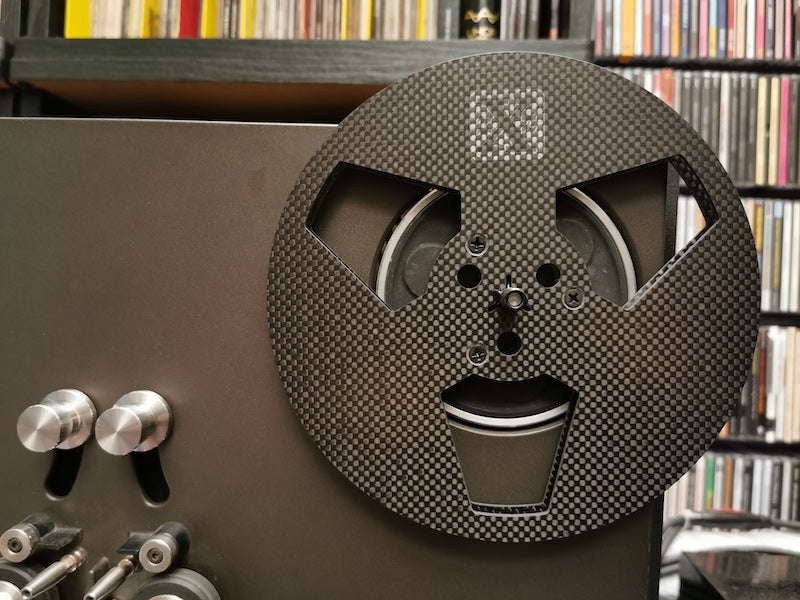
 

RX Reels' 7-inch reel on a Technics RS-1500.

RX Reels’ 7-inch reel on a Technics RS-1500.
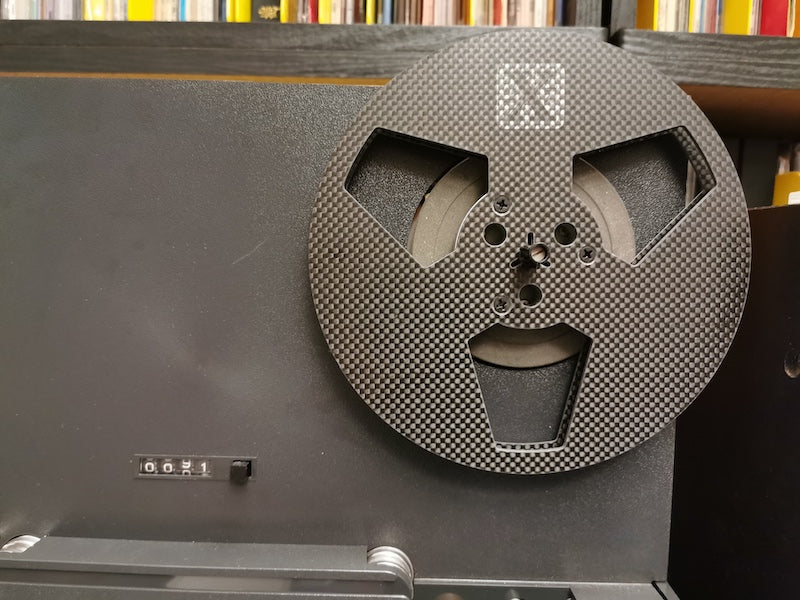
 

Here's one on a Revox A77 Mk IV.

Here’s one on a Revox A77 Mk IV.


But prettiness is not enough to inspire you to part with up to $175 for a take-up reel for your 7-inch tapes, so now to the main part: performance. In no way do I want to open up the can of worms which would cause those of you with decades of hands-on studio experience to tell me how I am full of guano should I attribute to these spools any virtues whatsoever – functional or sonic. So I won’t even bother with the latter. As for the former? That’s another story entirely.

As I found out when Kevin dropped by with the prototypes, regardless of which deck I used, they seemed to spool more evenly both in the side flushness of the spooled tape and in the centering of the tape on the hub. The latter is an issue which crops up frequently with some plastic spools. (Remember: I am only interested in commercially-available pre-recorded tapes pre-1985, and do not concern myself with anything else, including blanks from TDK, Maxell, Scotch, Ampex, etc., hence my daily dealings with plastic spools.)
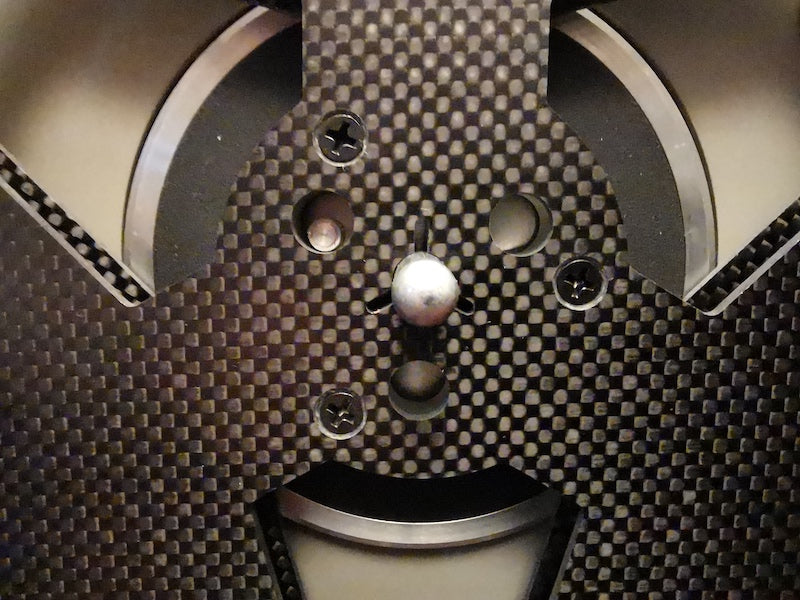
 

Close-up of the RX Reels' 7-inch spool showing the aperture for the location peg on a Denon DH-710F deck.

Close-up of the RX Reels’ 7-inch spool showing the aperture for the location peg on a Denon DH-710F tape deck.


This problem with plastic reels usually manifests in the tape stubbornly refusing to center itself, thus causing it to scrape against one of the flanges. And, no, it is not an issue with the alignment of my tape decks’ tape paths, tensioners, pinch rollers et al., as I have enough to try different machines with troublesome tapes. And it’s always the tapes, not the decks.

Why is this important to me? It’s down to my near-Herculean challenge of curating the 2,500 used tapes I’ve acquired, of which I still have 200 or so to clean up, re-spool and audition. What surprised me was the remedial effect of the RX Reels when I found myself curating a Loretta Lynn (R.I.P.) tape, Hymns (Decca ST74-4695), which had clearly been played only the Lord knows how many times. On its spool, it looked so poorly wound or stretched that I was expecting it to fall to pieces.

As has been described before, my regimen with used tapes is to fit leader tape, fast-forward the tape, add a tail, and then spool it back onto the original reel in real-time. Then, after letting it rest a day or so, I sit down and listen to it. With this tape, as with others in similar states of neglect, it spooled onto the RX reel a little bit better than its previous state, but not as perfectly flat, as discovered when running one’s finger along the sides, as I had hoped. But what happened after that is why I find the RX reels – how do I put this? – “therapeutic” as far as the tape being curated is concerned.
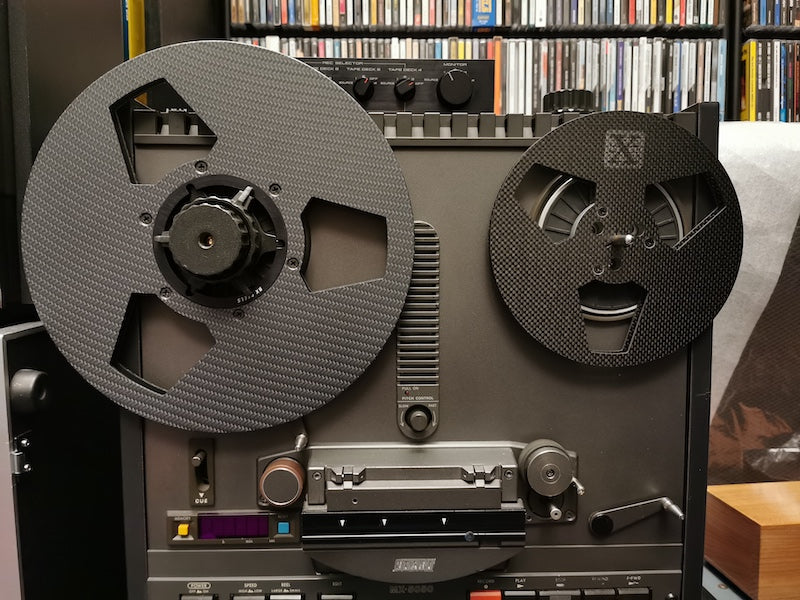
 

10-inch and 7-inch reels on an Otari MX-5050.

10-inch and 7-inch reels on an Otari MX-5050.


Lo and behold (sorry about the Biblical tone, but this was not Loretta in a secular vein), the tape when re-spooled onto the plastic reel was as perfectly flat as if it had just come from the factory. Decca’s plastic spools were heavier than most, while wiser veterans than I have pointed out that in some cases, plastic spools can be superior to metal ones for precision and dependability (see TEAC, above), but I was not expecting such restorative results.

I have now replaced all but two of my 7-inch take-up spools with RX reels. One which remains in situ is the superb reel that Pioneer supplied with the RT-707, and the other an unbranded reel which matches it for rigidity, but from now on, the RXs are my go-to take-up spools. The more cynical or suspicious among you will no doubt presume that I am delusional, attributing impossible capabilities to an inert device, but both my eyes and fingertips tell me otherwise.

As for my ears? Sonic improvements are subjective, so I won’t wind you up with what I’ve been hearing. But the wow and flut – no, I can’t bring myself to tell you.


Header image: RX Reels’ 10-inch and 7-inch reels on a Denon DH-710F tape deck. All images courtesy of the author.

This article originally appeared in Issue 177.

More from Issue 228

View All Articles in Issue 228

Search Copper Magazine

#231 Piano Prodigy Jude Kofie Releases His Debut Album On Octave Records by Frank Doris Jun 01, 2026 #231 Underappreciated Artists, Part Two: City Boy by Rich Isaacs Jun 01, 2026 #231 Music and the Art of Creation: Talking With Saxophonist Rob Scheps by Joe Caplan Jun 01, 2026 #231 How to Play in a Rock Band, 24: Further Adventures at the 2026 Montauk Music Festival by Frank Doris Jun 01, 2026 #231 Courtney Barnett: Creature of Habit by Wayne Robins Jun 01, 2026 #231 Angine de Poitrine: Interstellar Guitar Rock Saviors Headed for Late-Night TV Pop Stardom? by Mark Lepage Jun 01, 2026 #231 My Impressions of AXPONA 2026, Part One by Frank Doris Jun 01, 2026 #231 2026 La Jolla Concours d'Elegance: Another Aesthetic Feast by B. Jan Montana Jun 01, 2026 #231 Country Music Icon Jo Dee Messina’s Bridges: A New Beginning by Ray Chelstowski Jun 01, 2026 #231 The Luxury Dispatch Hosts a Video Podcast With Ken Kessler by Ken Kessler Jun 01, 2026 #231 The Vinyl Beat: Tracking in the Motor City by Rudy Radelic Jun 01, 2026 #231 Lots of Fun With DSP: The Ferrum Audio WANDLA DAC and Its Tube Mode by Frank Doris Jun 01, 2026 #231 From The Audiophile's Guide: Digital Source Components and Streaming Audio by Paul McGowan Jun 01, 2026 #231 Onkyo’s Monster M-510 power amplifier by The Staff at Just Audio Jun 01, 2026 #231 PS Audio in the News by PS Audio Staff Jun 01, 2026 #231 Naming Convention by Peter Xeni Jun 01, 2026 #231 Les Invisibles by Frank Doris Jun 01, 2026 #231 Wildlife Scene by James Schrimpf Jun 01, 2026 #230 Camaraderie by B. Jan Montana May 04, 2026 #230 AXPONA 2026: A Family Gathering by Paul McGowan May 04, 2026 #230 Pianist Ryan Benthall Explores Jazz Realms and Far Beyond With Divine Sky by Frank Doris May 04, 2026 #230 The Vinyl Beat in AXPONA-Land by Rudy Radelic May 04, 2026 #230 Teddy Thompson’s Musical Growth Deepens With Never Be the Same by Ray Chelstowski May 04, 2026 #230 More Fun in the Sun: Florida Audio Expo, Part Two by Frank Doris May 04, 2026 #230 CanJam NYC 2026 Show Report: Heady Sound, Part Two by Frank Doris and Harris Fogel May 04, 2026 #230 Sonic Youth On Murray Street by Wayne Robins May 04, 2026 #230 Graffeo Coffee: A Symphony of Sensory Experience by Joe Caplan May 04, 2026 #230 The Saul Authority: The Story of Hi-Fi Pioneer Saul Marantz by Olivier Meunier-Plante May 04, 2026 #230 How to Play in a Rock Band, 23: Encounters With Famous Musicians, Part Two by Frank Doris May 04, 2026 #230 An Outlier in the Rack: A Vintage BIC Beam Box by The Staff at Just Audio May 04, 2026 #230 PS Audio in the News by PS Audio Staff May 04, 2026 #230 A Cautionary Tale by Rich Isaacs May 04, 2026 #230 Reel-to-Reel Roots, Part 33 (Revised): Ken Kessler Reports On the 2026 (British) AudioJumble by Ken Kessler May 04, 2026 #230 Text Messaging by Frank Doris May 04, 2026 #230 The Audiophile Rat Race by Peter Xeni May 04, 2026 #230 On the Rocks by Rich Isaacs May 04, 2026 #229 The Earliest Stars of Country Music, Part Three by Jeff Weiner Apr 06, 2026 #229 The Healing Power of Music and Sound at the Omega Institute by Joe Caplan Apr 06, 2026 #229 CanJam NYC 2026 Show Report: Heady Sound, Part One by Frank Doris Apr 06, 2026 #229 Florida Audio Expo 2026: Warming Up to High-End Audio, Part One by Frank Doris Apr 06, 2026 #229 Quick Takes: Anne Bisson, Sam Morrison, The Velvet Underground, and the Stooges by Frank Doris Apr 06, 2026 #229 The Vinyl Beat: New Arrivals, and Old Audio Show Demo Scores to Settle by Rudy Radelic Apr 06, 2026 #229 Harvard Gets a High-End Audio Education by Frank Doris Apr 06, 2026 #229 No Country for Old Knees by B. Jan Montana Apr 06, 2026 #229 How To Play in A Rock Band, 22: Encounters With Famous Musicians, Part 1 by Frank Doris Apr 06, 2026 #229 The Soulful Grooves of Guinea-Bissau by Steve Kindig Apr 06, 2026 #229 Four-Hand Piano Performance at Its Finest by Stephan Haberthür Apr 06, 2026

Back to My Reel-to-Reel Roots, Part 27: Noodge and Ye Shall Receive, Part Two

Back to My Reel-to-Reel Roots, Part 27: Noodge and Ye Shall Receive, Part Two

If you recall my installment in Issue 171, I recounted how my incessant pestering of Kevin Root of RX Reels drove him to silence me by producing a 7-inch version of his magnificent 10-inch carbon fiber spools. At that point, I had been treated to a visit by Kevin to the UK, who arrived with pre-production samples, all but identical to what would go on sale. I have now received the actual production versions, and they’re even nicer than the promise of the spools with which he appeared.

A few of points before I go into the findings. The first is that you need to visit rxreels.com to find the US price, as I am UK-domiciled and it only comes up in pounds. [At press time, prices ranged from $135 to $255 – Ed.] The second is that it is always worth visiting the site, as there are occasional discounts to be had, e.g., on ex-demo or slightly cosmetically-flawed spools. The third is that I am writing this follow-up because I have made it my raison d’être to support any venture which benefits the reel-to-reel revival.

To that I must add a qualifier: I haven’t tried every original-equipment, aftermarket or current spool available. What I can say is that I have, in the main, been disappointed with a few too many which lacked rigidity – here I would cite especially the 7-inch spools from TEAC – but equally I have been impressed by the spools used by the current labels offering pre-recorded 15 ips tapes on 10-inch reels, such as those employed by STS.

As the photos seen here tell you, I have now tried the new 7-inch spools on five of my 10 machines, mainly to show how wise RX was to stick with the natural gray of the carbon fiber they’re using for the flanges. RX opted for carefully-devised economies to keep the prices attractive, such as offering only the one color. As you can see here, it complements a number of decks. The way it matches the Technics RS-1500 and Revox A77 Mk IV might be accidental or deliberate but it matters not to me: I just love the way they look on those machines.


RX Reels' 7-inch reel on a Technics RS-1500.

RX Reels’ 7-inch reel on a Technics RS-1500.


Here's one on a Revox A77 Mk IV.

Here’s one on a Revox A77 Mk IV.


But prettiness is not enough to inspire you to part with up to $175 for a take-up reel for your 7-inch tapes, so now to the main part: performance. In no way do I want to open up the can of worms which would cause those of you with decades of hands-on studio experience to tell me how I am full of guano should I attribute to these spools any virtues whatsoever – functional or sonic. So I won’t even bother with the latter. As for the former? That’s another story entirely.

As I found out when Kevin dropped by with the prototypes, regardless of which deck I used, they seemed to spool more evenly both in the side flushness of the spooled tape and in the centering of the tape on the hub. The latter is an issue which crops up frequently with some plastic spools. (Remember: I am only interested in commercially-available pre-recorded tapes pre-1985, and do not concern myself with anything else, including blanks from TDK, Maxell, Scotch, Ampex, etc., hence my daily dealings with plastic spools.)


Close-up of the RX Reels' 7-inch spool showing the aperture for the location peg on a Denon DH-710F deck.

Close-up of the RX Reels’ 7-inch spool showing the aperture for the location peg on a Denon DH-710F tape deck.


This problem with plastic reels usually manifests in the tape stubbornly refusing to center itself, thus causing it to scrape against one of the flanges. And, no, it is not an issue with the alignment of my tape decks’ tape paths, tensioners, pinch rollers et al., as I have enough to try different machines with troublesome tapes. And it’s always the tapes, not the decks.

Why is this important to me? It’s down to my near-Herculean challenge of curating the 2,500 used tapes I’ve acquired, of which I still have 200 or so to clean up, re-spool and audition. What surprised me was the remedial effect of the RX Reels when I found myself curating a Loretta Lynn (R.I.P.) tape, Hymns (Decca ST74-4695), which had clearly been played only the Lord knows how many times. On its spool, it looked so poorly wound or stretched that I was expecting it to fall to pieces.

As has been described before, my regimen with used tapes is to fit leader tape, fast-forward the tape, add a tail, and then spool it back onto the original reel in real-time. Then, after letting it rest a day or so, I sit down and listen to it. With this tape, as with others in similar states of neglect, it spooled onto the RX reel a little bit better than its previous state, but not as perfectly flat, as discovered when running one’s finger along the sides, as I had hoped. But what happened after that is why I find the RX reels – how do I put this? – “therapeutic” as far as the tape being curated is concerned.


10-inch and 7-inch reels on an Otari MX-5050.

10-inch and 7-inch reels on an Otari MX-5050.


Lo and behold (sorry about the Biblical tone, but this was not Loretta in a secular vein), the tape when re-spooled onto the plastic reel was as perfectly flat as if it had just come from the factory. Decca’s plastic spools were heavier than most, while wiser veterans than I have pointed out that in some cases, plastic spools can be superior to metal ones for precision and dependability (see TEAC, above), but I was not expecting such restorative results.

I have now replaced all but two of my 7-inch take-up spools with RX reels. One which remains in situ is the superb reel that Pioneer supplied with the RT-707, and the other an unbranded reel which matches it for rigidity, but from now on, the RXs are my go-to take-up spools. The more cynical or suspicious among you will no doubt presume that I am delusional, attributing impossible capabilities to an inert device, but both my eyes and fingertips tell me otherwise.

As for my ears? Sonic improvements are subjective, so I won’t wind you up with what I’ve been hearing. But the wow and flut – no, I can’t bring myself to tell you.


Header image: RX Reels’ 10-inch and 7-inch reels on a Denon DH-710F tape deck. All images courtesy of the author.

This article originally appeared in Issue 177.

0 comments

Leave a comment

0 Comments

Your avatar

Loading comments...

🗑️ Delete Comment

Enter moderator password to delete this comment:

✏️ Edit Comment

Enter your email to verify ownership: