COPPER

A PS Audio Publication

Issue 160 • Free Online Magazine

Issue 160 Octave Pitch

Octave Records Debuts Dreams of You: Classic Swing by Jeremy Mohney

Octave Records Debuts Dreams of You: Classic Swing by Jeremy Mohney

Octave Records has released Dreams of You by vocalist and alto saxophonist Jeremy Mohney. It’s a recording that hearkens back to classic swing-era and traditional jazz, yet is up to the minute, with a set of all-original songs recorded in high-resolution DSD and SACD sound.

The swing’s the thing here, and Mohney’s music has a propulsive bounce that evokes the ballrooms of a bygone era. Songs like “The Octave Stomp,” “Show Me What You Got (and Swing It)” and “Let Go” have a toe-tapping groove, thanks to the infectious singing and playing of Mohney and his fellow musicians: Conner Hollingsworth on upright bass, Braxton Kahn on drums, Andrew McNew on trombone, and the standout guitar and banjo playing of Matt Cantor, who provides a rich chordal and rhythmic accompaniment and inventive soloing.

How did a modern-day musician like Jeremy Mohney get so steeped in the sounds of swing? “I was close to my grandfather and from a very early age he played me music like Glenn Miller, Tommy Dorsey and Artie Shaw. It just kind of stuck with me,” Mohney noted. “I was also into the Beatles and Pink Floyd and Jimi Hendrix. But in the 1920s, people like Louis Armstrong redefined what music could be and basically made everything that followed possible.”
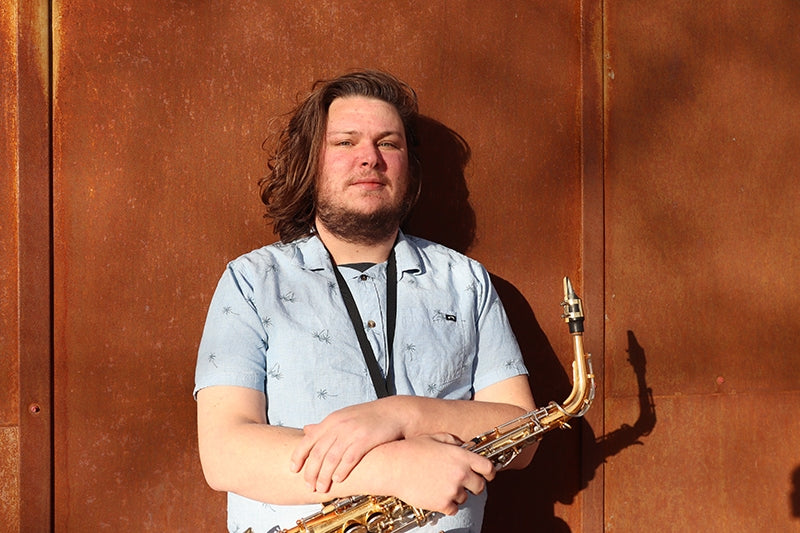
 

Jeremy Mohney.

Jeremy Mohney.


Dreams of You was recorded at Animal Lane Studios in Lyons, Colorado using Octave Records’ Pure DSD process and the Sonoma multi-track DSD recording system. It was mixed at PS Audio in Boulder, CO. Dreams of You is playable on any SACD, CD, DVD, or Blu-ray player. It also has a high-resolution DSD layer that is accessible only using a PS Audio SACD transport, or by copying the DSD tracks on the included DVD data discs.

In addition, the master DSD and PCM files are available for download (including DSD64, DSDDirect Mastered 192kHz/24-bit, 96kHz/24-bit and 44.1kHz/16-bit PCM) from psaudio.com at this link. The album was recorded by Jay Elliott, produced by Thom LaFond, and mixed by Elliott and LaFond. Giselle Collazo assisted, and Octave Records’ Jessica Carson was the executive producer.

We talked more with Jeremy Mohney about the new album.

Frank Doris: Since you mentioned being influenced by this music from an early age, I’m guessing you were in a high school stage band or something like that?

Jeremy Mohney: Yeah, I was, and that made my grade point average look halfway decent.

FD: How did you meet the other musicians who play on Dreams of You?

JM: It sort of built over the years. I’ve been playing with guitarist Matt Cantor for about 11 years. I’ve known our bass player, Conner Hollingsworth, for about three or four years now. Lineups have changed, but in the last couple of years I’ve been able to work with a more reliable group, not having to hire substitutes all the time. That’s kinda big.

FD: Your guitar player Matt Cantor is something else. His playing really gives you that authentic sound.
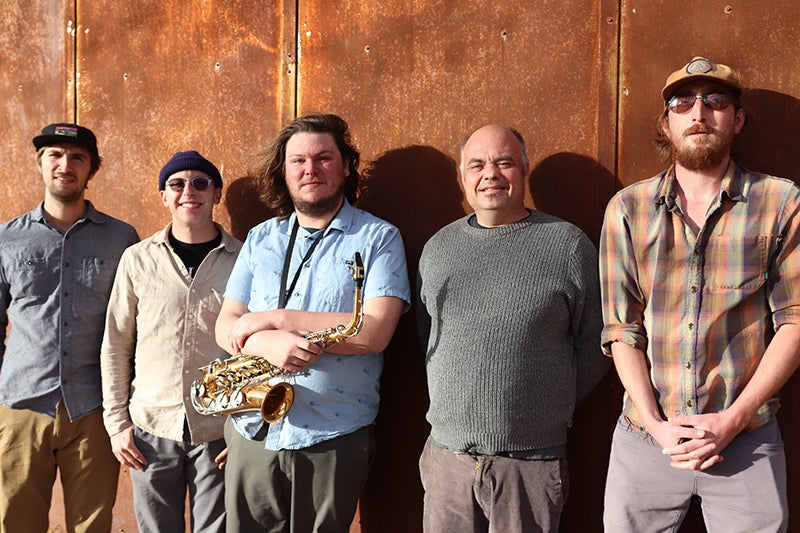
 

The band for Dreams of You.

Matt Cantor, Braxton Kahn, Jeremy Mohney, Andrew McNew and Conner Hollingsworth.


JM: We really try to get inside that music. Maybe the way they would’ve 80 years ago.

FD: Do you write out charts or just play it off the tops of your heads?

JM: We write out chord charts and the rest of it is memorizing melodies and riffs. I can read, but not enough to hurt me much!

FD: As the saying goes.

JM: Think about the way they would’ve done it back in the day. Maybe they read the music, but didn’t want to be confined into playing it one certain way the whole time.

FD: How do you write the songs? They’re all originals.

JM: I usually start out [with] a chord progression on the guitar and then we just sort of jam over the chord progression and come up with a melody. Maybe if I’m lucky a melody will just pop into my head right away. Every song’s kind of a different animal, you know?

FD:  The title song, “Dreams of You”; did somebody in particular inspire that?

JM: There was…(pause)

FD: You don’t want to reveal the mystery!

It doesn’t sound like you guys are playing at trying to sound like a swing band. It sounds like you are one.

JM:  That’s exactly what we’re going for.
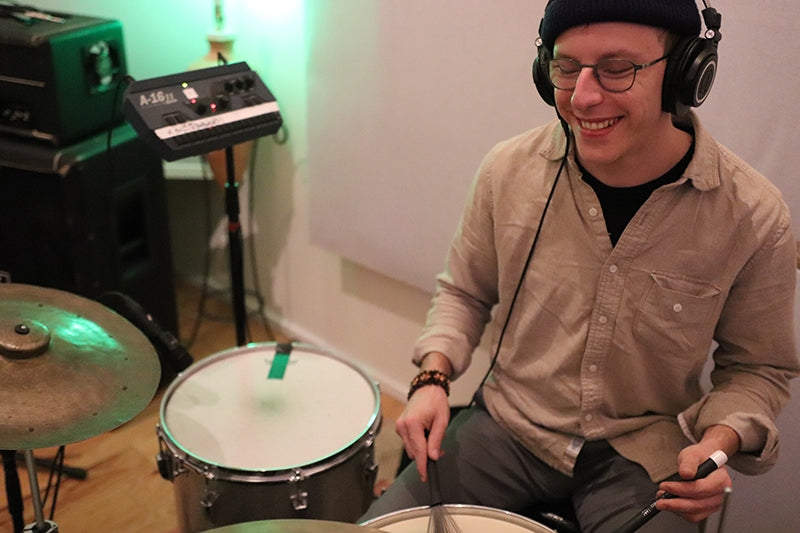
 

Braxton Kahn.

Braxton Kahn.


FD: Who are some of your other inspirations?

JM: As far as my playing goes, Glenn Miller has always been my favorite. I can’t explain why. It just has so much sentimental value, his music and [how it relates to my] relationship with my grandfather. And, Sidney Bechet, Benny Carter, and Lester Young of course. Billie Holiday.

FD: How did the pandemic affect your ability to make music?

JM: Well, it was pretty sad there for a while because gigs dried up, and we were all scared to even get together at all for a couple of months there.

It’s always been tough [being] a musician. And who knows what it’s gonna be like in the future.
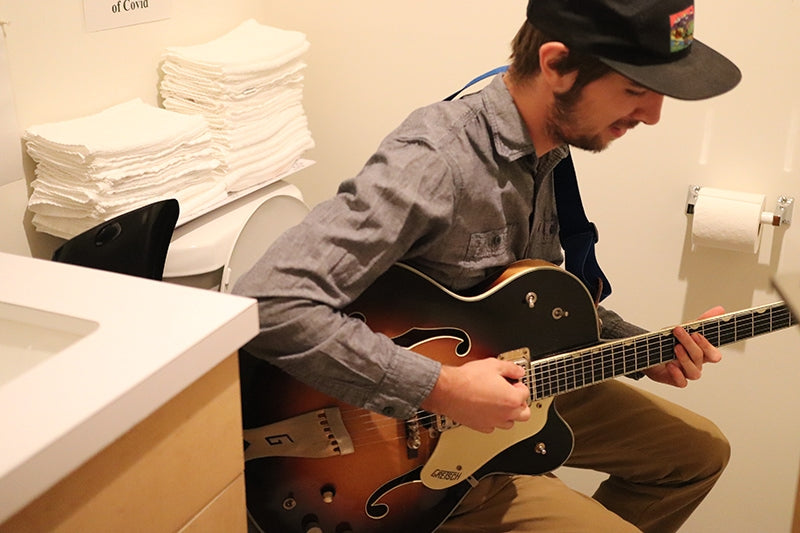
 

Matt Cantor.

Matt Cantor.


FD: I think it’s going to be a balance between two things. A lot venues either went away or are going to decide they can’t afford live music anymore. On the other hand, people are so pent up in wanting to go out and hear live music – that will be the opposing factor.

JM: I’ve done quite a few private things like weddings and some corporate events, but haven’t been playing too much in public. The swing dance scene is where we do most of our public gigs and that’s just [been] hard to keep afloat. There have been a few people who are willing to go out and dance, but nothing like there were before.

FD: So, you’d play covers and not your originals on those gigs.

JM: We do play a lot of standards. We’ve started recording some covers of public domain tunes. Before 1926 is now the year that you’re allowed to record and publish on your own.

FD: You’re keeping that part of jazz history alive.

JM: The older jazz is definitely a different animal – that you can dance to.

More from Issue 160

View All Articles in Issue 160

Search Copper Magazine

#230 Camaraderie by B. Jan Montana May 04, 2026 #230 AXPONA 2026: A Family Gathering by Paul McGowan May 04, 2026 #230 Pianist Ryan Benthall Explores Jazz Realms and Far Beyond With Divine Sky by Frank Doris May 04, 2026 #230 The Vinyl Beat in AXPONA-Land by Rudy Radelic May 04, 2026 #230 Teddy Thompson’s Musical Growth Deepens With Never Be the Same by Ray Chelstowski May 04, 2026 #230 More Fun in the Sun: Florida Audio Expo, Part Two by Frank Doris May 04, 2026 #230 CanJam NYC 2026 Show Report: Heady Sound, Part Two by Frank Doris and Harris Fogel May 04, 2026 #230 Sonic Youth On Murray Street by Wayne Robins May 04, 2026 #230 Graffeo Coffee: A Symphony of Sensory Experience by Joe Caplan May 04, 2026 #230 The Saul Authority: The Story of Hi-Fi Pioneer Saul Marantz by Olivier Meunier-Plante May 04, 2026 #230 How to Play in a Rock Band, 23: Encounters With Famous Musicians, Part Two by Frank Doris May 04, 2026 #230 An Outlier in the Rack: A Vintage BIC Beam Box by The Staff at Just Audio May 04, 2026 #230 PS Audio in the News by PS Audio Staff May 04, 2026 #230 A Cautionary Tale by Rich Isaacs May 04, 2026 #230 Reel-to-Reel Roots, Part 33 (Revised): Ken Kessler Reports On the 2026 (British) AudioJumble by Ken Kessler May 04, 2026 #230 Text Messaging by Frank Doris May 04, 2026 #230 The Audiophile Rat Race by Peter Xeni May 04, 2026 #230 On the Rocks by Rich Isaacs May 04, 2026 #229 The Earliest Stars of Country Music, Part Three by Jeff Weiner Apr 06, 2026 #229 The Healing Power of Music and Sound at the Omega Institute by Joe Caplan Apr 06, 2026 #229 CanJam NYC 2026 Show Report: Heady Sound, Part One by Frank Doris Apr 06, 2026 #229 Florida Audio Expo 2026: Warming Up to High-End Audio, Part One by Frank Doris Apr 06, 2026 #229 Quick Takes: Anne Bisson, Sam Morrison, The Velvet Underground, and the Stooges by Frank Doris Apr 06, 2026 #229 The Vinyl Beat: New Arrivals, and Old Audio Show Demo Scores to Settle by Rudy Radelic Apr 06, 2026 #229 Harvard Gets a High-End Audio Education by Frank Doris Apr 06, 2026 #229 No Country for Old Knees by B. Jan Montana Apr 06, 2026 #229 How To Play in A Rock Band, 22: Encounters With Famous Musicians, Part 1 by Frank Doris Apr 06, 2026 #229 The Soulful Grooves of Guinea-Bissau by Steve Kindig Apr 06, 2026 #229 Four-Hand Piano Performance at Its Finest by Stephan Haberthür Apr 06, 2026 #229 The People Who Make Audio Happen: Supreme Acoustics Systems’ Las Vegas Grand Opening by Harris Fogel Apr 06, 2026 #229 Blue Öyster Cult: Tyranny and Expectations by Wayne Robins Apr 06, 2026 #229 Guitarist Rick Vito’s Cinematic New Album, Slidemaster by Ray Chelstowski Apr 06, 2026 #229 Measurements and Observational Listening by Paul McGowan Apr 06, 2026 #229 PS Audio in the News by PS Audio Staff Apr 06, 2026 #229 Back to My Reel-to-Reel Roots, Part 28: The Cassette Strikes Back by Ken Kessler Apr 06, 2026 #229 Are You Receiving Me? by Frank Doris Apr 06, 2026 #229 Hospitality by Peter Xeni Apr 06, 2026 #229 Cantina Gateway by James Schrimpf Apr 06, 2026 #228 Serita’s Black Rose Duo Shakes Your Soul With a Blend of Funk, Rock, Blues and a Whole Lot More by Frank Doris Mar 02, 2026 #228 Vinyl, A Love Story by Wayne Robins Mar 02, 2026 #228 Thrill Seeker by B. Jan Montana Mar 02, 2026 #228 The Vinyl Beat: Donald Byrd, Bill Evans, Wes Montgomery, Eddie Palmieri and Frank Sinatra by Rudy Radelic Mar 02, 2026 #228 Listening to Prestige: The History of a Vitally Important Jazz Record Label by Frank Doris Mar 02, 2026 #228 How to Play in a Rock Band, 21: Touring With James Lee Stanley by Frank Doris Mar 02, 2026 #228 The NAMM 2026 Show: The Music Industry’s Premier Event by John Volanski Mar 02, 2026 #228 The Earliest Stars of Country Music, Part Two by Jeff Weiner Mar 02, 2026 #228 From The Audiophile's Guide: A Brief History of Stereophonic Sound by Paul McGowan Mar 02, 2026

Octave Records Debuts Dreams of You: Classic Swing by Jeremy Mohney

Octave Records Debuts Dreams of You: Classic Swing by Jeremy Mohney

Octave Records has released Dreams of You by vocalist and alto saxophonist Jeremy Mohney. It’s a recording that hearkens back to classic swing-era and traditional jazz, yet is up to the minute, with a set of all-original songs recorded in high-resolution DSD and SACD sound.

The swing’s the thing here, and Mohney’s music has a propulsive bounce that evokes the ballrooms of a bygone era. Songs like “The Octave Stomp,” “Show Me What You Got (and Swing It)” and “Let Go” have a toe-tapping groove, thanks to the infectious singing and playing of Mohney and his fellow musicians: Conner Hollingsworth on upright bass, Braxton Kahn on drums, Andrew McNew on trombone, and the standout guitar and banjo playing of Matt Cantor, who provides a rich chordal and rhythmic accompaniment and inventive soloing.

How did a modern-day musician like Jeremy Mohney get so steeped in the sounds of swing? “I was close to my grandfather and from a very early age he played me music like Glenn Miller, Tommy Dorsey and Artie Shaw. It just kind of stuck with me,” Mohney noted. “I was also into the Beatles and Pink Floyd and Jimi Hendrix. But in the 1920s, people like Louis Armstrong redefined what music could be and basically made everything that followed possible.”


Jeremy Mohney.

Jeremy Mohney.


Dreams of You was recorded at Animal Lane Studios in Lyons, Colorado using Octave Records’ Pure DSD process and the Sonoma multi-track DSD recording system. It was mixed at PS Audio in Boulder, CO. Dreams of You is playable on any SACD, CD, DVD, or Blu-ray player. It also has a high-resolution DSD layer that is accessible only using a PS Audio SACD transport, or by copying the DSD tracks on the included DVD data discs.

In addition, the master DSD and PCM files are available for download (including DSD64, DSDDirect Mastered 192kHz/24-bit, 96kHz/24-bit and 44.1kHz/16-bit PCM) from psaudio.com at this link. The album was recorded by Jay Elliott, produced by Thom LaFond, and mixed by Elliott and LaFond. Giselle Collazo assisted, and Octave Records’ Jessica Carson was the executive producer.

We talked more with Jeremy Mohney about the new album.

Frank Doris: Since you mentioned being influenced by this music from an early age, I’m guessing you were in a high school stage band or something like that?

Jeremy Mohney: Yeah, I was, and that made my grade point average look halfway decent.

FD: How did you meet the other musicians who play on Dreams of You?

JM: It sort of built over the years. I’ve been playing with guitarist Matt Cantor for about 11 years. I’ve known our bass player, Conner Hollingsworth, for about three or four years now. Lineups have changed, but in the last couple of years I’ve been able to work with a more reliable group, not having to hire substitutes all the time. That’s kinda big.

FD: Your guitar player Matt Cantor is something else. His playing really gives you that authentic sound.


The band for Dreams of You.

Matt Cantor, Braxton Kahn, Jeremy Mohney, Andrew McNew and Conner Hollingsworth.


JM: We really try to get inside that music. Maybe the way they would’ve 80 years ago.

FD: Do you write out charts or just play it off the tops of your heads?

JM: We write out chord charts and the rest of it is memorizing melodies and riffs. I can read, but not enough to hurt me much!

FD: As the saying goes.

JM: Think about the way they would’ve done it back in the day. Maybe they read the music, but didn’t want to be confined into playing it one certain way the whole time.

FD: How do you write the songs? They’re all originals.

JM: I usually start out [with] a chord progression on the guitar and then we just sort of jam over the chord progression and come up with a melody. Maybe if I’m lucky a melody will just pop into my head right away. Every song’s kind of a different animal, you know?

FD:  The title song, “Dreams of You”; did somebody in particular inspire that?

JM: There was…(pause)

FD: You don’t want to reveal the mystery!

It doesn’t sound like you guys are playing at trying to sound like a swing band. It sounds like you are one.

JM:  That’s exactly what we’re going for.


Braxton Kahn.

Braxton Kahn.


FD: Who are some of your other inspirations?

JM: As far as my playing goes, Glenn Miller has always been my favorite. I can’t explain why. It just has so much sentimental value, his music and [how it relates to my] relationship with my grandfather. And, Sidney Bechet, Benny Carter, and Lester Young of course. Billie Holiday.

FD: How did the pandemic affect your ability to make music?

JM: Well, it was pretty sad there for a while because gigs dried up, and we were all scared to even get together at all for a couple of months there.

It’s always been tough [being] a musician. And who knows what it’s gonna be like in the future.


Matt Cantor.

Matt Cantor.


FD: I think it’s going to be a balance between two things. A lot venues either went away or are going to decide they can’t afford live music anymore. On the other hand, people are so pent up in wanting to go out and hear live music – that will be the opposing factor.

JM: I’ve done quite a few private things like weddings and some corporate events, but haven’t been playing too much in public. The swing dance scene is where we do most of our public gigs and that’s just [been] hard to keep afloat. There have been a few people who are willing to go out and dance, but nothing like there were before.

FD: So, you’d play covers and not your originals on those gigs.

JM: We do play a lot of standards. We’ve started recording some covers of public domain tunes. Before 1926 is now the year that you’re allowed to record and publish on your own.

FD: You’re keeping that part of jazz history alive.

JM: The older jazz is definitely a different animal – that you can dance to.

0 comments

Leave a comment

0 Comments

Your avatar

Loading comments...

🗑️ Delete Comment

Enter moderator password to delete this comment:

✏️ Edit Comment

Enter your email to verify ownership: