COPPER

A PS Audio Publication

Issue 182 • Free Online Magazine

Issue 182 Featured

Lounging with In-Ear Monitors, Part Three

Lounging with In-Ear Monitors, Part Three

In our previous two articles (Issue 180 and Issue 181) we have briefly considered some of the factors which may affect the sound quality of in-ear monitors, aka IEMs, in-ear headphones, or earbuds. To recap, these entailed a good frequency response, a good physical fit and seal to prevent undesired bass leakage, and in the case of active noise-cancelling headphones, adequate noise cancellation that also does not detract from your overall listening pleasure.

To achieve these goals, we noted that it can be advantageous to use IEMs that fit deeply into the ear canal, or wear Comply Foam eartips, which gently expand to fill your ear canal to prevent sound leakage.

The Harman curve, a headphones frequency response curve derived from research by Harman International, was found to appeal to a majority of listeners as subjectively and objectively tested by Dr. Sean Olive of Harman engineering. We can use the Harman curve as a benchmark., Any deviation from it can be seen graphically, or in more detailed cases, in viewing the resultant error curve between a headphone’s frequency response and the Harman target curve. Of course, deviations from the curve can also be audible.

Regarding noise cancellation, a combination of both active and passive noise cancellation can provide a more balanced sonic behavior. By way of clarification, passive noise cancellation can include any non-active means of preventing external noise reaching your ear. Perhaps the obvious example is on-ear headphone earcups than form a physical barrier over the ear. They can reduce a large degree of unwanted sonic invasion. As pointed out by Dr. Sean Olive (see my last installment in Issue 181), passive-only solutions tend to favor cancelling more of the upper and treble frequencies whereas active noise cancellation is more effective at frequencies below 1 kHz. Dr. Olive’s conclusion is that a system which uses both passive and active noise cancellation covers the full frequency range and gives a more balanced and desirable result.

Taking stock of what constitutes a great IEM, I eventually decided upon purchasing the Samsung Galaxy Buds Pro. They have since been refined further by the introduction of the Galaxy Buds 2 Pro, which I have also tried out. The newer incarnation has a slightly more “clinical” clarity – call it less warm perhaps, but somehow for me they just sounded more “processed.” They also feature a change to the eartip design, which now accommodates upgradeable Comply Foam tips for a snugger fit and improved noise cancellation.  (Some of the other in-ears I considered are discussed in Part Two in Issue 181.) But hang on a minute, I hear some of you cry out in protest! How can I wind up with a generic Samsung Buds product and expect it to sound anywhere like a high-quality listening experience? Well, the simple truth of the matter is that Samsung has done their homework. Not only were the original Buds and Bud Plus models popular for a reason, but these later iterations are a huge step up in sonic integrity. Now, this is not to justify my choice, but rather to explain a little of my thinking process regarding how I came to enjoy the Buds Pro. They may not be for everyone but I do think that many will enjoy them, very much.


Comply Foam eartips. These have a “memory foam” exterior that conforms to the shape of the ear.


When you think of Samsung, your initial thought may be of TV monitors, or smartphones or tablets. Yet Samsung owns some of the world’s most prestigious audio companies, which have spent many collective decades in researching good sound and how to reproduce it. Samsung owns Harman International, which they acquired in 2016 to the tune of about eight billion dollars. Under their umbrella Samsung’s brands include Harman/Kardon, Infinity, Crown, dbx, Soundcraft, Austere, Arcam, JBL, Mark Levinson, Lexicon and Revel. Oh and of course, AKG! These are some thoroughbred horses to have in your audio stables.


Samsung Galaxy Buds2 Pro in-ear headphones.


Upon examining the response curve of the Samsung Galaxy Buds Pro, they have an average error curve of just 1.17 deviation from the Harman target curve. They also have a predicted preference of 88.42 percent. OK, other earbuds have “better” figures, but I thought I would give the Galaxy Buds Pro a listen and was not disappointed. I think they sound fantastic. There is warmth in the lower midrange and excellent definition in the upper registers. Male and female vocals sound natural despite the slightly warmer tonality, and they are never muddy or boxy sounding in the midrange.

There is nothing aggressive about the headphones’ overall profile. They have significant bass without being over the top, and they track the Harman target curve very closely while retaining something of their own personality. They are warm but in no way dark. If alternatively, you prefer a more typical “V”-shaped EQ profile, you may find that these Bud Pros are better-suited for your tastes. I find it hard to imagine that the Galaxy Buds Pro could ever become fatiguing to listen to. They do have a peak above 10,000 Hz which for me adds a very welcome sheen to the upper registers that complements vocals beautifully. That’s also a characteristic that I add to my home audio system and speakers using the built-in parametric EQ editor of my A/V receiver (with a narrow Q for the WQ).

Apart from the fact that I like the sound of these IEMs very much, their frequency response led me to another thought process. Given that there is this slightly warmer characteristic blending in up to and above 200 Hz (and smoothly tapering down after about 500 Hz) and the slight top-end emphasis, it occurred to me that I could both enjoy the Galaxy Buds Pro in their native state and in use with an amazing piece of software known as Wavelet.

Wavelet (available for free from Google Play) is an Android app that allows you to select from an extensive list of premeasured in-ear headphones, and then apply the app’s Auto EQ to map your IEM to the Harman curve. I was so impressed when I first tried this software out with a budget pair of Samsung in-ears that I knew I would continue to enjoy what the Harman target curve offers. So now, with the Galaxy Buds Pro I can choose to either listen to the sound of the Galaxy Buds Pro as they come out of the box, or with the Wavelet app EQ’d to exact Harman curve. This has the effect of taking out some of that bass bleed into the midrange, and calms the top end down just in that 12 kHz region. You also get to see the adjustment curve applied to your IEM so that you can understand a little more of what is happening to your tone shaping. For me, it’s the best of both worlds.
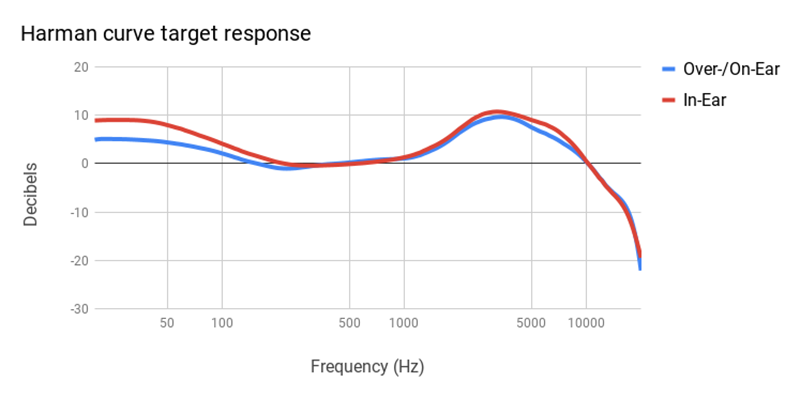
The Harman curve, a target frequency response curve for headphones. Courtesy of Jazz Times magazine.

The Harman curve, a target frequency response curve for headphones. Courtesy of Jazz Times magazine.


You may also use Wavelet to make additional EQ adjustments if desired, which can be insightful in training your hearing to identify what such EQ changes actually do to the Harman curve and the overall sound quality. In addition, more detailed EQ control is available at an extra cost in order to hone your tone with even more specific refinements.

For the icing on the cake, I use the Adapt Sound preset profile saved on my Samsung Galaxy Tablet, which accommodates for hearing loss, and the result is quite special. (For more information the Adapt Sound software and on how to test yourself, see my article in Copper issue 162, “Hearing Loss: now It’s Getting Personal.”)

I would be interested in your personal user experiences with in-ear headphones and the Wavelet and Adapt Sound software programs. Please give them a try and let us know your comments.


Header image courtesy of Audio-Technica U.S., Inc.

More from Issue 182

View All Articles in Issue 182

Search Copper Magazine

#230 Camaraderie by B. Jan Montana May 04, 2026 #230 AXPONA 2026: A Family Gathering by Paul McGowan May 04, 2026 #230 Pianist Ryan Benthall Explores Jazz Realms and Far Beyond With Divine Sky by Frank Doris May 04, 2026 #230 The Vinyl Beat in AXPONA-Land by Rudy Radelic May 04, 2026 #230 Teddy Thompson’s Musical Growth Deepens With Never Be the Same by Ray Chelstowski May 04, 2026 #230 More Fun in the Sun: Florida Audio Expo, Part Two by Frank Doris May 04, 2026 #230 CanJam NYC 2026 Show Report: Heady Sound, Part Two by Frank Doris and Harris Fogel May 04, 2026 #230 Sonic Youth On Murray Street by Wayne Robins May 04, 2026 #230 Graffeo Coffee: A Symphony of Sensory Experience by Joe Caplan May 04, 2026 #230 The Saul Authority: The Story of Hi-Fi Pioneer Saul Marantz by Olivier Meunier-Plante May 04, 2026 #230 How to Play in a Rock Band, 23: Encounters With Famous Musicians, Part Two by Frank Doris May 04, 2026 #230 An Outlier in the Rack: A Vintage BIC Beam Box by The Staff at Just Audio May 04, 2026 #230 PS Audio in the News by PS Audio Staff May 04, 2026 #230 A Cautionary Tale by Rich Isaacs May 04, 2026 #230 Reel-to-Reel Roots, Part 33 (Revised): Ken Kessler Reports On the 2026 (British) AudioJumble by Ken Kessler May 04, 2026 #230 Text Messaging by Frank Doris May 04, 2026 #230 The Audiophile Rat Race by Peter Xeni May 04, 2026 #230 On the Rocks by Rich Isaacs May 04, 2026 #229 The Earliest Stars of Country Music, Part Three by Jeff Weiner Apr 06, 2026 #229 The Healing Power of Music and Sound at the Omega Institute by Joe Caplan Apr 06, 2026 #229 CanJam NYC 2026 Show Report: Heady Sound, Part One by Frank Doris Apr 06, 2026 #229 Florida Audio Expo 2026: Warming Up to High-End Audio, Part One by Frank Doris Apr 06, 2026 #229 Quick Takes: Anne Bisson, Sam Morrison, The Velvet Underground, and the Stooges by Frank Doris Apr 06, 2026 #229 The Vinyl Beat: New Arrivals, and Old Audio Show Demo Scores to Settle by Rudy Radelic Apr 06, 2026 #229 Harvard Gets a High-End Audio Education by Frank Doris Apr 06, 2026 #229 No Country for Old Knees by B. Jan Montana Apr 06, 2026 #229 How To Play in A Rock Band, 22: Encounters With Famous Musicians, Part 1 by Frank Doris Apr 06, 2026 #229 The Soulful Grooves of Guinea-Bissau by Steve Kindig Apr 06, 2026 #229 Four-Hand Piano Performance at Its Finest by Stephan Haberthür Apr 06, 2026 #229 The People Who Make Audio Happen: Supreme Acoustics Systems’ Las Vegas Grand Opening by Harris Fogel Apr 06, 2026 #229 Blue Öyster Cult: Tyranny and Expectations by Wayne Robins Apr 06, 2026 #229 Guitarist Rick Vito’s Cinematic New Album, Slidemaster by Ray Chelstowski Apr 06, 2026 #229 Measurements and Observational Listening by Paul McGowan Apr 06, 2026 #229 PS Audio in the News by PS Audio Staff Apr 06, 2026 #229 Back to My Reel-to-Reel Roots, Part 28: The Cassette Strikes Back by Ken Kessler Apr 06, 2026 #229 Are You Receiving Me? by Frank Doris Apr 06, 2026 #229 Hospitality by Peter Xeni Apr 06, 2026 #229 Cantina Gateway by James Schrimpf Apr 06, 2026 #228 Serita’s Black Rose Duo Shakes Your Soul With a Blend of Funk, Rock, Blues and a Whole Lot More by Frank Doris Mar 02, 2026 #228 Vinyl, A Love Story by Wayne Robins Mar 02, 2026 #228 Thrill Seeker by B. Jan Montana Mar 02, 2026 #228 The Vinyl Beat: Donald Byrd, Bill Evans, Wes Montgomery, Eddie Palmieri and Frank Sinatra by Rudy Radelic Mar 02, 2026 #228 Listening to Prestige: The History of a Vitally Important Jazz Record Label by Frank Doris Mar 02, 2026 #228 How to Play in a Rock Band, 21: Touring With James Lee Stanley by Frank Doris Mar 02, 2026 #228 The NAMM 2026 Show: The Music Industry’s Premier Event by John Volanski Mar 02, 2026 #228 The Earliest Stars of Country Music, Part Two by Jeff Weiner Mar 02, 2026 #228 From The Audiophile's Guide: A Brief History of Stereophonic Sound by Paul McGowan Mar 02, 2026

Lounging with In-Ear Monitors, Part Three

Lounging with In-Ear Monitors, Part Three

In our previous two articles (Issue 180 and Issue 181) we have briefly considered some of the factors which may affect the sound quality of in-ear monitors, aka IEMs, in-ear headphones, or earbuds. To recap, these entailed a good frequency response, a good physical fit and seal to prevent undesired bass leakage, and in the case of active noise-cancelling headphones, adequate noise cancellation that also does not detract from your overall listening pleasure.

To achieve these goals, we noted that it can be advantageous to use IEMs that fit deeply into the ear canal, or wear Comply Foam eartips, which gently expand to fill your ear canal to prevent sound leakage.

The Harman curve, a headphones frequency response curve derived from research by Harman International, was found to appeal to a majority of listeners as subjectively and objectively tested by Dr. Sean Olive of Harman engineering. We can use the Harman curve as a benchmark., Any deviation from it can be seen graphically, or in more detailed cases, in viewing the resultant error curve between a headphone’s frequency response and the Harman target curve. Of course, deviations from the curve can also be audible.

Regarding noise cancellation, a combination of both active and passive noise cancellation can provide a more balanced sonic behavior. By way of clarification, passive noise cancellation can include any non-active means of preventing external noise reaching your ear. Perhaps the obvious example is on-ear headphone earcups than form a physical barrier over the ear. They can reduce a large degree of unwanted sonic invasion. As pointed out by Dr. Sean Olive (see my last installment in Issue 181), passive-only solutions tend to favor cancelling more of the upper and treble frequencies whereas active noise cancellation is more effective at frequencies below 1 kHz. Dr. Olive’s conclusion is that a system which uses both passive and active noise cancellation covers the full frequency range and gives a more balanced and desirable result.

Taking stock of what constitutes a great IEM, I eventually decided upon purchasing the Samsung Galaxy Buds Pro. They have since been refined further by the introduction of the Galaxy Buds 2 Pro, which I have also tried out. The newer incarnation has a slightly more “clinical” clarity – call it less warm perhaps, but somehow for me they just sounded more “processed.” They also feature a change to the eartip design, which now accommodates upgradeable Comply Foam tips for a snugger fit and improved noise cancellation.  (Some of the other in-ears I considered are discussed in Part Two in Issue 181.) But hang on a minute, I hear some of you cry out in protest! How can I wind up with a generic Samsung Buds product and expect it to sound anywhere like a high-quality listening experience? Well, the simple truth of the matter is that Samsung has done their homework. Not only were the original Buds and Bud Plus models popular for a reason, but these later iterations are a huge step up in sonic integrity. Now, this is not to justify my choice, but rather to explain a little of my thinking process regarding how I came to enjoy the Buds Pro. They may not be for everyone but I do think that many will enjoy them, very much.


Comply Foam eartips. These have a “memory foam” exterior that conforms to the shape of the ear.


When you think of Samsung, your initial thought may be of TV monitors, or smartphones or tablets. Yet Samsung owns some of the world’s most prestigious audio companies, which have spent many collective decades in researching good sound and how to reproduce it. Samsung owns Harman International, which they acquired in 2016 to the tune of about eight billion dollars. Under their umbrella Samsung’s brands include Harman/Kardon, Infinity, Crown, dbx, Soundcraft, Austere, Arcam, JBL, Mark Levinson, Lexicon and Revel. Oh and of course, AKG! These are some thoroughbred horses to have in your audio stables.


Samsung Galaxy Buds2 Pro in-ear headphones.


Upon examining the response curve of the Samsung Galaxy Buds Pro, they have an average error curve of just 1.17 deviation from the Harman target curve. They also have a predicted preference of 88.42 percent. OK, other earbuds have “better” figures, but I thought I would give the Galaxy Buds Pro a listen and was not disappointed. I think they sound fantastic. There is warmth in the lower midrange and excellent definition in the upper registers. Male and female vocals sound natural despite the slightly warmer tonality, and they are never muddy or boxy sounding in the midrange.

There is nothing aggressive about the headphones’ overall profile. They have significant bass without being over the top, and they track the Harman target curve very closely while retaining something of their own personality. They are warm but in no way dark. If alternatively, you prefer a more typical “V”-shaped EQ profile, you may find that these Bud Pros are better-suited for your tastes. I find it hard to imagine that the Galaxy Buds Pro could ever become fatiguing to listen to. They do have a peak above 10,000 Hz which for me adds a very welcome sheen to the upper registers that complements vocals beautifully. That’s also a characteristic that I add to my home audio system and speakers using the built-in parametric EQ editor of my A/V receiver (with a narrow Q for the WQ).

Apart from the fact that I like the sound of these IEMs very much, their frequency response led me to another thought process. Given that there is this slightly warmer characteristic blending in up to and above 200 Hz (and smoothly tapering down after about 500 Hz) and the slight top-end emphasis, it occurred to me that I could both enjoy the Galaxy Buds Pro in their native state and in use with an amazing piece of software known as Wavelet.

Wavelet (available for free from Google Play) is an Android app that allows you to select from an extensive list of premeasured in-ear headphones, and then apply the app’s Auto EQ to map your IEM to the Harman curve. I was so impressed when I first tried this software out with a budget pair of Samsung in-ears that I knew I would continue to enjoy what the Harman target curve offers. So now, with the Galaxy Buds Pro I can choose to either listen to the sound of the Galaxy Buds Pro as they come out of the box, or with the Wavelet app EQ’d to exact Harman curve. This has the effect of taking out some of that bass bleed into the midrange, and calms the top end down just in that 12 kHz region. You also get to see the adjustment curve applied to your IEM so that you can understand a little more of what is happening to your tone shaping. For me, it’s the best of both worlds.

The Harman curve, a target frequency response curve for headphones. Courtesy of Jazz Times magazine.

The Harman curve, a target frequency response curve for headphones. Courtesy of Jazz Times magazine.


You may also use Wavelet to make additional EQ adjustments if desired, which can be insightful in training your hearing to identify what such EQ changes actually do to the Harman curve and the overall sound quality. In addition, more detailed EQ control is available at an extra cost in order to hone your tone with even more specific refinements.

For the icing on the cake, I use the Adapt Sound preset profile saved on my Samsung Galaxy Tablet, which accommodates for hearing loss, and the result is quite special. (For more information the Adapt Sound software and on how to test yourself, see my article in Copper issue 162, “Hearing Loss: now It’s Getting Personal.”)

I would be interested in your personal user experiences with in-ear headphones and the Wavelet and Adapt Sound software programs. Please give them a try and let us know your comments.


Header image courtesy of Audio-Technica U.S., Inc.

0 comments

Leave a comment

0 Comments

Your avatar

Loading comments...

🗑️ Delete Comment

Enter moderator password to delete this comment:

✏️ Edit Comment

Enter your email to verify ownership: