COPPER

A PS Audio Publication

Issue 171 • Free Online Magazine

Issue 171 Featured

Jazz Producer Creed Taylor: In Memoriam

Jazz Producer Creed Taylor: In Memoriam

August 22, 2022 marked the passing of legendary jazz producer Creed Taylor. Active in the music industry for decades, he left a lasting impression on the world of jazz. He passed away in Germany, while visiting family, from heart failure following a stroke. He was 93 years old.

Taylor was born Creed Bane Taylor V on May 13, 1929 in Lynchburg, Virginia, gaining an affinity for jazz at a young age through hearing remote radio broadcasts from Birdland (the New York City jazz club) on his local radio. Creed played trumpet in his high school’s marching band and orchestra. He attended Duke University, performing with the university’s renowned jazz ensembles and graduating with a degree in psychology. It was, in fact, the jazz history of Duke’s music program that led Taylor to attend the university.

Taylor then relocated to New York City with the intention of becoming a record producer. A fellow Duke alumnus was running Bethlehem Records at the time, and that was Taylor’s foot in the door to the music industry. After producing a successful record by vocalist Chris Connor, Taylor became head of the label’s A&R (artists and repertoire) department. During his stint at the label, he recorded such artists as Charles Mingus, Oscar Pettiford, Herbie Mann, the J.J. Johnson-Kai Winding Quintet, Milt Hinton, Urbie Green, Ruby Braff, and others.

Here is “Out of this World,” from Bethlehem album K + J.J. by Kai Winding and J.J. Johnson:


Leaving Bethlehem Records in 1956, Taylor joined ABC-Paramount, eventually forming the subsidiary label Impulse! and recording such classic jazz albums as Oliver Nelson’s Blues and the Abstract Truth, Ray Charles’ Genius + Soul = Jazz, Gil Evans’ Out of the Cool, and John Coltrane’s Africa/Brass, Coltrane having been signed to Impulse! by Taylor in 1960. Other artists that Taylor produced were Quincy Jones, Zoot Sims, Don Elliott, Jackie and Roy, Lambert, Hendricks and Ross, and Oscar Pettiford. Taylor also recorded a handful of novelty instrumental albums as The Creed Taylor Orchestra.

“Little Pony” is taken from the album Sing a Song of Basie by Lambert, Hendricks & Ross:


1961 found Taylor on the move again, this time to Verve Records, where he would not only produce dozens of the label’s records, he would help introduce the newest music from Brazil, bossa nova, to American audiences, beginning with the Stan Getz/Charlie Byrd album Jazz Samba. The single from the iconic Getz/Gilberto album, “The Girl from Ipanema” (sung by Astrud Gilberto) became a worldwide hit, reaching the Top 5 on the Billboard Hot 100 chart. Taylor also produced records by Wes Montgomery, Jimmy Smith, Cal Tjader, Lalo Schifrin, Bill Evans, Johnny Hodges, Wynton Kelly (including the legendary Smokin’ at the Half Note with Wes Montgomery), Antonio Carlos Jobim, Willie Bobo, and (Rahsaan) Roland Kirk.

This is “Samba Dees Days” from the Jazz Samba album:


Creed Taylor’s style of jazz could, at times, be polarizing. Jazz purists often scoffed at his pop/jazz instincts. Despite that, his commercial leanings brought jazz to a wider audience, a trend that grew during his time at Verve. When A&M Records offered Taylor his own CTI (Creed Taylor, Inc.) jazz imprint in 1967, he took that concept further, and floundered somewhat at the label until he found his footing. His experiments with soul music (with albums by Tamiko Jones and Richard Barbary) were not all that convincing, and his tendency to overproduce records resulted in some of the albums being awash in strings (most often arranged by Don Sebesky).

Yet there were stellar albums by Antonio Carlos Jobim, Tamba 4, Nat Adderley, Paul Desmond, Quincy Jones, and George Benson, among others, that proved his point. Taylor was also instrumental in presenting the next wave in Brazilian music to American audiences: Milton Nascimento. The sidemen on these recordings were a who’s who of musicians from the era – Herbie Hancock, Chick Corea, Ron Carter, Hubert Laws, Urbie Green, and plenty of other musicians who have become household names in jazz.

Taylor’s need for a unique visual identity led to unique album packaging utilizing elaborate gatefolds, with jackets featuring the color photography of Pete Turner on the covers, in a bold design language created by graphic designer Sam Antupit.
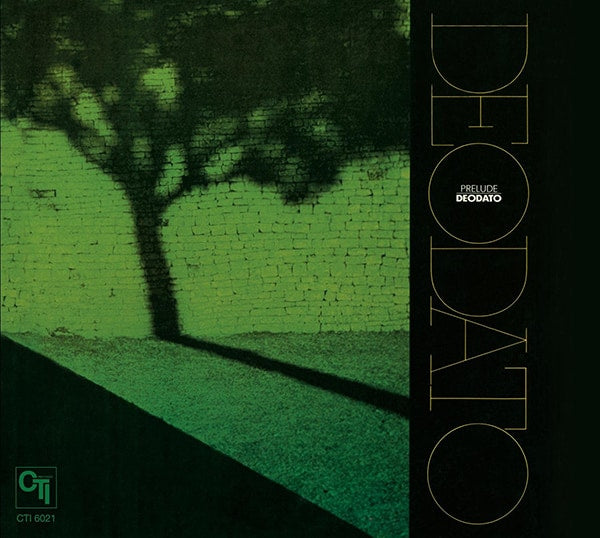
 

Deodato, Prelude, album cover.

Deodato, Prelude, album cover.


“Bridges” (“Travessia”) by Milton Nascimento leads off the Courage album, only his second album, but his first for the American market.


When his association as an A&M Records imprint ended, Taylor finally got the chance to launch his own independent label, CTI Records. Financial woes, bankruptcy, and a sale to Columbia Records aside, his new label ran with the ideas he had been developing since leaving Verve. As was typical with his earlier label moves, many artists he worked with in the past followed him to CTI. In addition, his productions included records by up-and-coming Brazilian musicians Airto Moreira and Eumir Deodato, as well as jazz artists Freddie Hubbard, Stanley Turrentine, Kenny Burrell, Joe Farrell, Ron Carter, Hubert Laws, Milt Jackson, Chet Baker, Bob James, Jim Hall, Allan Holdsworth, Ray Barretto, and others. CTI’s soul jazz subsidiary Kudu Records featured Grant Green, Joe Beck, Dr. Lonnie Smith and Grover Washington Jr. As with his records under A&M’s wing, many of the cover photos were provided by Pete Turner.

This is the title track from Stanley Turrentine’s album Sugar:


CTI Records would also bring hits to Taylor’s résumé. Deodato’s remake of “Also Sprach Zarathustra (2001)” would reach No. 2 on the Billboard Hot 100 (and also win a Grammy award), and the album it came from, Prelude, would reach No. 3 on the Billboard album chart. Other hit singles include Bob James’ “Westchester Lady,” Esther Phillips’ “What a Diff’rence a Day Makes,” and Idris Muhammed’s “Could Heaven Ever Be Like This.” Hit albums include Grover Washington Jr.’s Mister Magic and Bob James’ BJ4.

Here is Grover Washington Jr.’s “Mister Magic”:


The label remained active until 1984, and Taylor revived the label in 1989 for a handful of new releases. In more recent times, Taylor took a CTI All Stars band on the road in 2009 and 2010, the former resulting in a video release CTI All Stars at Montreux 2009. Taylor also supervised the reissue of his CDs starting in 2009, with later batches being released in 2013 and 2017 (for CTI’s 50th anniversary).

Creed Taylor’s legacy of several decades in the music business lives on. The thousands of recordings he produced are in the libraries of many jazz fans and music collectors. He discovered and nurtured talent, featuring younger players in his ensembles who would go on to be big names in jazz, many still active today (Herbie Hancock, Ron Carter, Chick Corea, Hubert Laws, and Bob James, among many others, appeared as sidemen on his recordings). Taylor’s productions also live on through the many times his records have been sampled over the years.


Header image: A&M Records promo photo.

More from Issue 171

View All Articles in Issue 171

Search Copper Magazine

#232 What came first: Art or Music? A Conversation With Artist Jose Acosta by Joe Caplan Jul 06, 2026 #232 Blow By Blow: The Jeff Beck Story: An Insightful Book About a Guitar Icon by Ray Chelstowski Jul 06, 2026 #232 Creed Over Camaraderie? by B. Jan Montana Jul 06, 2026 #232 Chronicles of a Sound Pilgrim at the 2026 Montreal Audiofest by Hugues Morin Jul 06, 2026 #232 The Vinyl Beat: Summer Grooves by Rudy Radelic Jul 06, 2026 #232 Hibbing Hillbilly Dylan's Acoustic Rock by Wayne Robins Jul 06, 2026 #232 Quad Quads and Plasmatronics Tweeters: An Extraordinary System Comes to Life by Frank Doris Jul 06, 2026 #232 In Praise of Live Music, Once Again by Ted Shafran Jul 06, 2026 #232 Allnic Audio’s L-9000 Preamplifier: Design and Engineering Innovation by Howard Kneller Jul 06, 2026 #232 “Best Of” Lists and Rage Bait: Enough Already by Frank Doris Jul 06, 2026 #232 Quick Takes: Bud Shank, Paulo Almeida, Jakob Dreyer, Tim Eriksen and Peter Irvine by Frank Doris Jul 06, 2026 #232 My Impressions of AXPONA 2026, Part 2 by Frank Doris Jul 06, 2026 #232 How to Play in a Rock Band, 25: Encounters With Famous Musicians, Part Three by Frank Doris Jul 06, 2026 #232 Budgets, and Systems From Small to Outrageous by Paul McGowan Jul 06, 2026 #232 PS Audio in the News by PS Audio Staff Jul 06, 2026 #232 Hand It Over by Frank Doris Jul 06, 2026 #232 Difference of Opinion by Peter Xeni Jul 06, 2026 #232 Wabi-sabi Tree by James Schrimpf Jul 06, 2026 #231 Piano Prodigy Jude Kofie Releases His Debut Album On Octave Records by Frank Doris Jun 01, 2026 #231 Underappreciated Artists, Part Two: City Boy by Rich Isaacs Jun 01, 2026 #231 Music and the Art of Creation: Talking With Saxophonist Rob Scheps by Joe Caplan Jun 01, 2026 #231 How to Play in a Rock Band, 24: Further Adventures at the 2026 Montauk Music Festival by Frank Doris Jun 01, 2026 #231 Courtney Barnett: Creature of Habit by Wayne Robins Jun 01, 2026 #231 Angine de Poitrine: Interstellar Guitar Rock Saviors Headed for Late-Night TV Pop Stardom? by Mark Lepage Jun 01, 2026 #231 My Impressions of AXPONA 2026, Part One by Frank Doris Jun 01, 2026 #231 2026 La Jolla Concours d'Elegance: Another Aesthetic Feast by B. Jan Montana Jun 01, 2026 #231 Country Music Icon Jo Dee Messina’s Bridges: A New Beginning by Ray Chelstowski Jun 01, 2026 #231 The Luxury Dispatch Hosts a Video Podcast With Ken Kessler by Ken Kessler Jun 01, 2026 #231 The Vinyl Beat: Tracking in the Motor City by Rudy Radelic Jun 01, 2026 #231 Lots of Fun With DSP: The Ferrum Audio WANDLA DAC and Its Tube Mode by Frank Doris Jun 01, 2026 #231 From The Audiophile's Guide: Digital Source Components and Streaming Audio by Paul McGowan Jun 01, 2026 #231 Onkyo’s Monster M-510 power amplifier by The Staff at Just Audio Jun 01, 2026 #231 PS Audio in the News by PS Audio Staff Jun 01, 2026 #231 Naming Convention by Peter Xeni Jun 01, 2026 #231 Les Invisibles by Frank Doris Jun 01, 2026 #231 Wildlife Scene by James Schrimpf Jun 01, 2026 #230 Camaraderie by B. Jan Montana May 04, 2026 #230 AXPONA 2026: A Family Gathering by Paul McGowan May 04, 2026 #230 Pianist Ryan Benthall Explores Jazz Realms and Far Beyond With Divine Sky by Frank Doris May 04, 2026 #230 The Vinyl Beat in AXPONA-Land by Rudy Radelic May 04, 2026 #230 Teddy Thompson’s Musical Growth Deepens With Never Be the Same by Ray Chelstowski May 04, 2026 #230 More Fun in the Sun: Florida Audio Expo, Part Two by Frank Doris May 04, 2026 #230 CanJam NYC 2026 Show Report: Heady Sound, Part Two by Frank Doris and Harris Fogel May 04, 2026 #230 Sonic Youth On Murray Street by Wayne Robins May 04, 2026 #230 Graffeo Coffee: A Symphony of Sensory Experience by Joe Caplan May 04, 2026 #230 The Saul Authority: The Story of Hi-Fi Pioneer Saul Marantz by Olivier Meunier-Plante May 04, 2026 #230 How to Play in a Rock Band, 23: Encounters With Famous Musicians, Part Two by Frank Doris May 04, 2026

Jazz Producer Creed Taylor: In Memoriam

Jazz Producer Creed Taylor: In Memoriam

August 22, 2022 marked the passing of legendary jazz producer Creed Taylor. Active in the music industry for decades, he left a lasting impression on the world of jazz. He passed away in Germany, while visiting family, from heart failure following a stroke. He was 93 years old.

Taylor was born Creed Bane Taylor V on May 13, 1929 in Lynchburg, Virginia, gaining an affinity for jazz at a young age through hearing remote radio broadcasts from Birdland (the New York City jazz club) on his local radio. Creed played trumpet in his high school’s marching band and orchestra. He attended Duke University, performing with the university’s renowned jazz ensembles and graduating with a degree in psychology. It was, in fact, the jazz history of Duke’s music program that led Taylor to attend the university.

Taylor then relocated to New York City with the intention of becoming a record producer. A fellow Duke alumnus was running Bethlehem Records at the time, and that was Taylor’s foot in the door to the music industry. After producing a successful record by vocalist Chris Connor, Taylor became head of the label’s A&R (artists and repertoire) department. During his stint at the label, he recorded such artists as Charles Mingus, Oscar Pettiford, Herbie Mann, the J.J. Johnson-Kai Winding Quintet, Milt Hinton, Urbie Green, Ruby Braff, and others.

Here is “Out of this World,” from Bethlehem album K + J.J. by Kai Winding and J.J. Johnson:


Leaving Bethlehem Records in 1956, Taylor joined ABC-Paramount, eventually forming the subsidiary label Impulse! and recording such classic jazz albums as Oliver Nelson’s Blues and the Abstract Truth, Ray Charles’ Genius + Soul = Jazz, Gil Evans’ Out of the Cool, and John Coltrane’s Africa/Brass, Coltrane having been signed to Impulse! by Taylor in 1960. Other artists that Taylor produced were Quincy Jones, Zoot Sims, Don Elliott, Jackie and Roy, Lambert, Hendricks and Ross, and Oscar Pettiford. Taylor also recorded a handful of novelty instrumental albums as The Creed Taylor Orchestra.

“Little Pony” is taken from the album Sing a Song of Basie by Lambert, Hendricks & Ross:


1961 found Taylor on the move again, this time to Verve Records, where he would not only produce dozens of the label’s records, he would help introduce the newest music from Brazil, bossa nova, to American audiences, beginning with the Stan Getz/Charlie Byrd album Jazz Samba. The single from the iconic Getz/Gilberto album, “The Girl from Ipanema” (sung by Astrud Gilberto) became a worldwide hit, reaching the Top 5 on the Billboard Hot 100 chart. Taylor also produced records by Wes Montgomery, Jimmy Smith, Cal Tjader, Lalo Schifrin, Bill Evans, Johnny Hodges, Wynton Kelly (including the legendary Smokin’ at the Half Note with Wes Montgomery), Antonio Carlos Jobim, Willie Bobo, and (Rahsaan) Roland Kirk.

This is “Samba Dees Days” from the Jazz Samba album:


Creed Taylor’s style of jazz could, at times, be polarizing. Jazz purists often scoffed at his pop/jazz instincts. Despite that, his commercial leanings brought jazz to a wider audience, a trend that grew during his time at Verve. When A&M Records offered Taylor his own CTI (Creed Taylor, Inc.) jazz imprint in 1967, he took that concept further, and floundered somewhat at the label until he found his footing. His experiments with soul music (with albums by Tamiko Jones and Richard Barbary) were not all that convincing, and his tendency to overproduce records resulted in some of the albums being awash in strings (most often arranged by Don Sebesky).

Yet there were stellar albums by Antonio Carlos Jobim, Tamba 4, Nat Adderley, Paul Desmond, Quincy Jones, and George Benson, among others, that proved his point. Taylor was also instrumental in presenting the next wave in Brazilian music to American audiences: Milton Nascimento. The sidemen on these recordings were a who’s who of musicians from the era – Herbie Hancock, Chick Corea, Ron Carter, Hubert Laws, Urbie Green, and plenty of other musicians who have become household names in jazz.

Taylor’s need for a unique visual identity led to unique album packaging utilizing elaborate gatefolds, with jackets featuring the color photography of Pete Turner on the covers, in a bold design language created by graphic designer Sam Antupit.


Deodato, Prelude, album cover.

Deodato, Prelude, album cover.


“Bridges” (“Travessia”) by Milton Nascimento leads off the Courage album, only his second album, but his first for the American market.


When his association as an A&M Records imprint ended, Taylor finally got the chance to launch his own independent label, CTI Records. Financial woes, bankruptcy, and a sale to Columbia Records aside, his new label ran with the ideas he had been developing since leaving Verve. As was typical with his earlier label moves, many artists he worked with in the past followed him to CTI. In addition, his productions included records by up-and-coming Brazilian musicians Airto Moreira and Eumir Deodato, as well as jazz artists Freddie Hubbard, Stanley Turrentine, Kenny Burrell, Joe Farrell, Ron Carter, Hubert Laws, Milt Jackson, Chet Baker, Bob James, Jim Hall, Allan Holdsworth, Ray Barretto, and others. CTI’s soul jazz subsidiary Kudu Records featured Grant Green, Joe Beck, Dr. Lonnie Smith and Grover Washington Jr. As with his records under A&M’s wing, many of the cover photos were provided by Pete Turner.

This is the title track from Stanley Turrentine’s album Sugar:


CTI Records would also bring hits to Taylor’s résumé. Deodato’s remake of “Also Sprach Zarathustra (2001)” would reach No. 2 on the Billboard Hot 100 (and also win a Grammy award), and the album it came from, Prelude, would reach No. 3 on the Billboard album chart. Other hit singles include Bob James’ “Westchester Lady,” Esther Phillips’ “What a Diff’rence a Day Makes,” and Idris Muhammed’s “Could Heaven Ever Be Like This.” Hit albums include Grover Washington Jr.’s Mister Magic and Bob James’ BJ4.

Here is Grover Washington Jr.’s “Mister Magic”:


The label remained active until 1984, and Taylor revived the label in 1989 for a handful of new releases. In more recent times, Taylor took a CTI All Stars band on the road in 2009 and 2010, the former resulting in a video release CTI All Stars at Montreux 2009. Taylor also supervised the reissue of his CDs starting in 2009, with later batches being released in 2013 and 2017 (for CTI’s 50th anniversary).

Creed Taylor’s legacy of several decades in the music business lives on. The thousands of recordings he produced are in the libraries of many jazz fans and music collectors. He discovered and nurtured talent, featuring younger players in his ensembles who would go on to be big names in jazz, many still active today (Herbie Hancock, Ron Carter, Chick Corea, Hubert Laws, and Bob James, among many others, appeared as sidemen on his recordings). Taylor’s productions also live on through the many times his records have been sampled over the years.


Header image: A&M Records promo photo.

0 comments

Leave a comment

0 Comments

Your avatar

Loading comments...

🗑️ Delete Comment

Enter moderator password to delete this comment:

✏️ Edit Comment

Enter your email to verify ownership: