COPPER

A PS Audio Publication

Issue 170 • Free Online Magazine

Issue 170 Eureka Moments

High-Quality Audio In Clubland

High-Quality Audio In Clubland

When was the last time you went to a really trendy dance club? How about one that caters to an in-the-know young crowd? What about one of New York City’s premier queer venues that features Alaska Thunderf*ck, winner of RuPaul’s Drag Race All Stars, singing Taylor Swift songs? I ask these loaded questions of myself as I quickly approach senior citizenship and prefer to stay home listening to my own records and gear. The last time I heard a pumping club system was, oh, about 40 years ago at Studio 54. I was interested in audio, even as a teen, and tried my best to peek into the DJ booth. It’s an odd thing to want to do instead participating in Studio 54’s other activities, but I wasn’t the only one who was enamored with the equipment. I could have never imagined that I would someday be auditioning a set of speakers designed by someone influenced by the same system at Studio 54.

Like the renowned designers of two-channel home audio components, clubland has its own luminaries. Some of the most legendary names are Alex Rosner and Richard Long. Rosner designed sound systems at New York’s Limelight, Max’s Kansas City, and 1970’s era Copacabana. Long, who once worked under Rosner, went on to create systems at Bond’s International Casino, Paradise Garage, and, the big daddy of them all, Studio 54. However, there’s another designer, a protégé of Long’s who also contributed to the beloved Paradise Garage, a 10,000-square-foot disco with an open-door policy in SoHo that was open from 1977 to 1987. He was the late Gary Stewart, famous for systems in the Hamptons, Ibiza, London, and Singapore.

Shortly before his death in 2012, Stewart achieved new heights through a collaboration with Pioneer Pro Audio. His pre-fab GS-WAVE speaker stack was a departure from most great-sounding club systems which are built from the ground up with custom cabinets and crossovers, but Stewart made it much easier for smaller venues to capture his signature sound without having to undertake a custom build.

Located in Brooklyn, on the border of Williamsburg and Bushwick, 3 Dollar Bill is housed in an old brewery built in 1858. It’s a cavernous brick structure with accents of original wood, metal, and masonry that are incorporated beautifully into a network of several bars, dance areas, and even an expansive yard big enough for the upcoming Oktoberfest. There are sound systems everywhere, but the main dance floor and performance space is where the GS-WAVE towers over the room. This is where I met with 3 Dollar Bill’s production manager, Kris Anton.
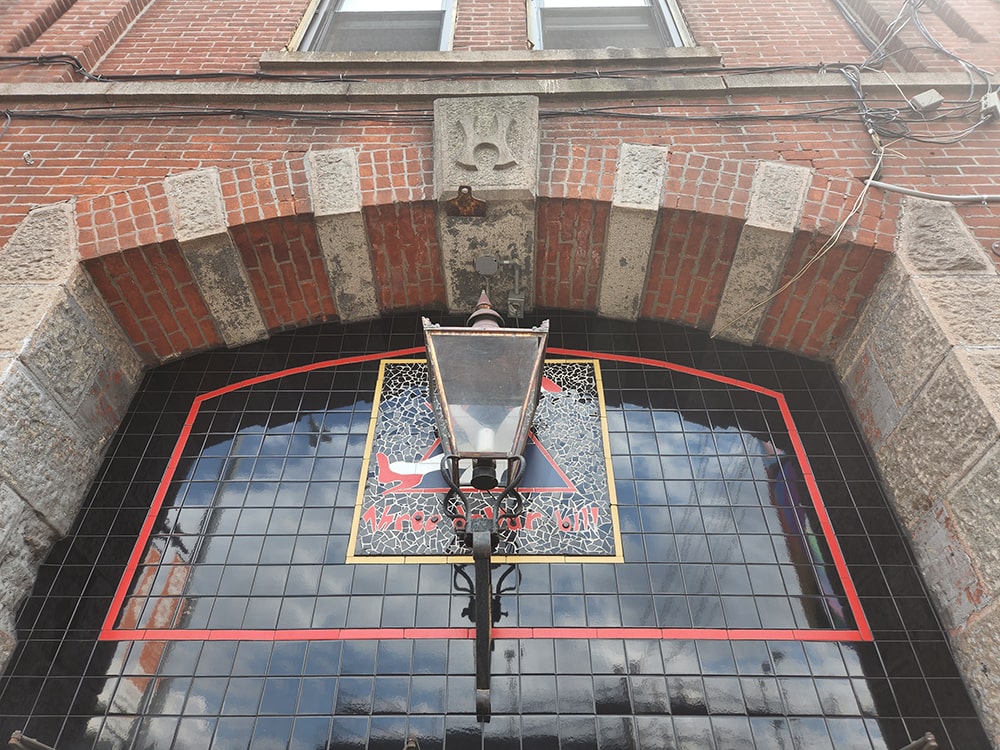
 

Timeless architecture: the entrance to 3 Dollar Bill.

Timeless architecture: the entrance to 3 Dollar Bill.


Kris has spent the last 25 years operating and building light and sound systems for theater, live shows and dance clubs, as well as for bars and restaurants. He’s worked with Big Audio Dynamite, Fishbone, Gibby Haynes of the Butthole Surfers, and numerous drag performers, many of them familiar from appearances on TV shows. Since COVID-19, Kris has been a jack of all trades at 3 Dollar Bill, creating a unique atmosphere and filling nearly every nook and cranny with lights and sound.

Although Kris sent me photos of his showpiece, the two 12-foot, 1,438 lb. speaker stacks, there’s nothing like seeing them in person. Set in a stereo configuration about 15 feet apart and firing onto the dance floor, each GS-WAVE stack is comprised of:

  • One 18-inch subwoofer in a folded-horn cabinet.
  • Two cabinets containing 2 15-inch drivers for the bass and low midrange.
  • Two compression drivers behind an adjustable lens to handle the high-mids and high frequencies.
  • Hanging over the dance floor is an associated super tweeter pod with four ultra-high-frequency drivers.
  • An optional 275-lb. horn extension is included with each speaker stack to increase bass delivery without the need for additional amplification. However, for Kris’s maximum capacity of 350 people, the horn extenders would overwhelm the room.

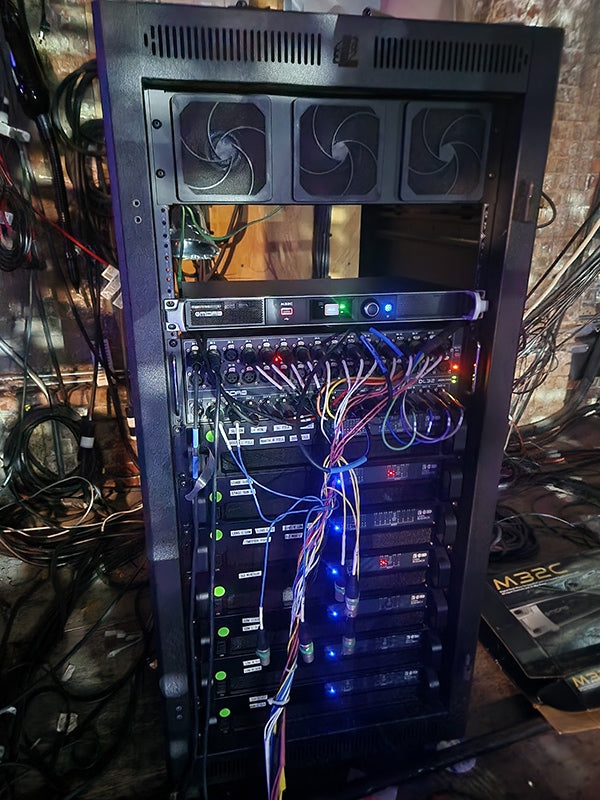
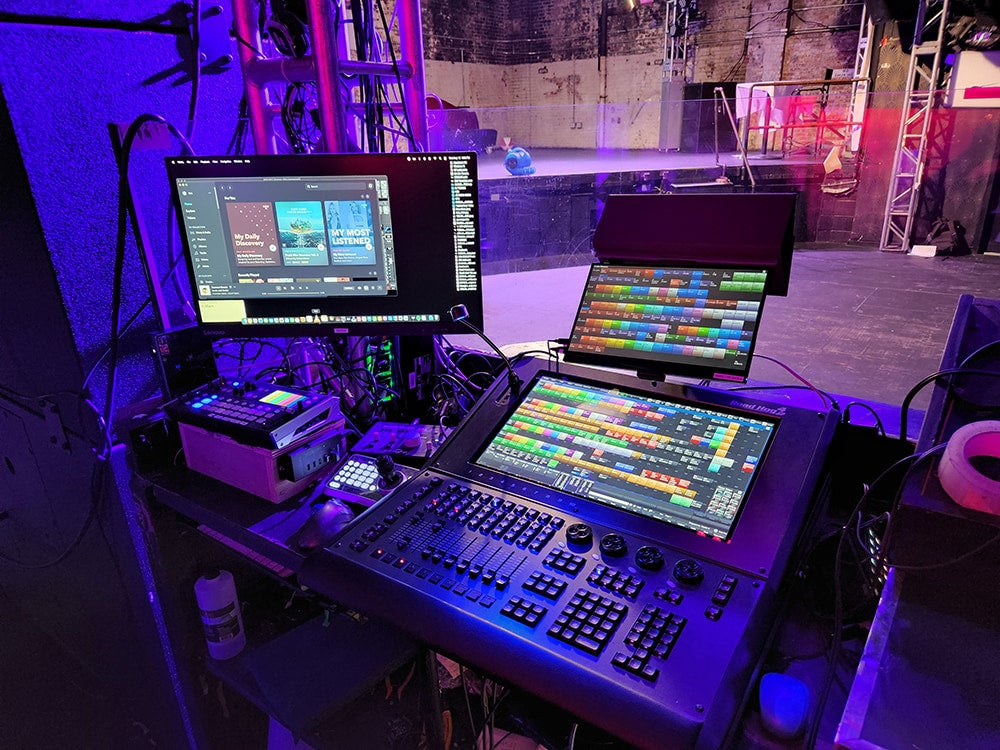
Power comes from two 8-channel and five 4-channel Linea Research amplifiers rated at 1,500 watts per channel at 8 ohms. To keep the system functioning efficiently, each amp has onboard DSPs (digital signal processors) to manage the crossover points, EQ, and power requirements for each driver. All the information is fed through a computer in the DJ booth where adjustments can be made. Kris also installed a complete main stage PA system of Pioneer Pro Audio XY-122 2-way speakers (also designed by Gary Stewart) and active JBL arrays. Additional XY-122 fill speakers and 18-inch subwoofers compensate for dead spots in the room and create a surround-sound effect. Using calibration software by System Engineer and his ears, Kris meticulously tunes 32 speakers to the space. With that many speakers, extreme volume is not required to achieve a gut-punching yet well-balanced musical presentation.
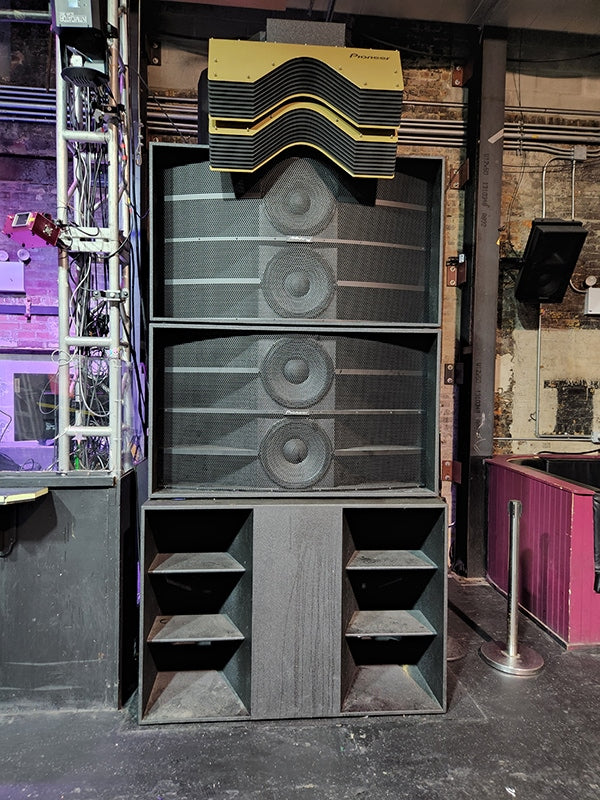
 

Clarity and balance: the GS-WAVE main speaker stacks.
Clarity and balance: the GS-WAVE main speaker stacks.


Behind the scenes: Linea Research amplifiers and associated equipment.

Behind the scenes: Linea Research amplifiers and associated equipment.


I make it seem like Kris did everything by himself, but designing and assembling a system this big requires collaboration. Kris would like to acknowledge Alex Graham and Peter Gotfredsen from audio brokers Purplesound NYC, and David Sullivan from Pioneer Pro Audio. Ron Lorman, a recording engineer with several Miles Davis albums under his belt, lent his expert ears for tuning. But enough tech-talk for now: let’s get back to GS-WAVE.


Sound system designer Kris Anton. Courtesy of Courtney Bradley.

Sound system designer Kris Anton. Courtesy of Courtney Bradley.


Kris played a number of selections, some rock and some dance music, but what would I play if I had the system to myself? So, Kris pulled up “Spirit of Radio” by Rush and sent it through the stacks. They suddenly transformed from “disco speakers” to the ultimate rock and roll speakers of my teenage dreams. For all their size and power, the GS-WAVEs delivered balanced, defined clear sound as good as any high-end home systems I’ve heard.

I had never given much thought to club audio before, dismissing it a necessary evil. Ironically, the bad-sounding systems are more memorable than the good ones. I recall dive bars of the Lower East Side which were so loud that no one could hear themselves talk over the noise. The culprits were usually speakers, too few and badly placed, playing beyond their specs, powered by inadequate amps, and operated by a person who has no experience outside of their basement.

Dance floors are certainly not audio shows and most people are not contemplating the timbre of the drum machine, the analog purity of a cowbell, or that the synthesizer was particularly revelatory on certain tracks. I just assumed the target sound was lots of pounding bass and high volume, but maybe there was something I didn’t know. So, I asked Kris what was the most important aspect of his sound. The one-word answer: transparency. Mega-decibels and bass are great – that’s why we go to clubs and shows, but it’s the nuances of the mid and high frequencies that keep us engaged.
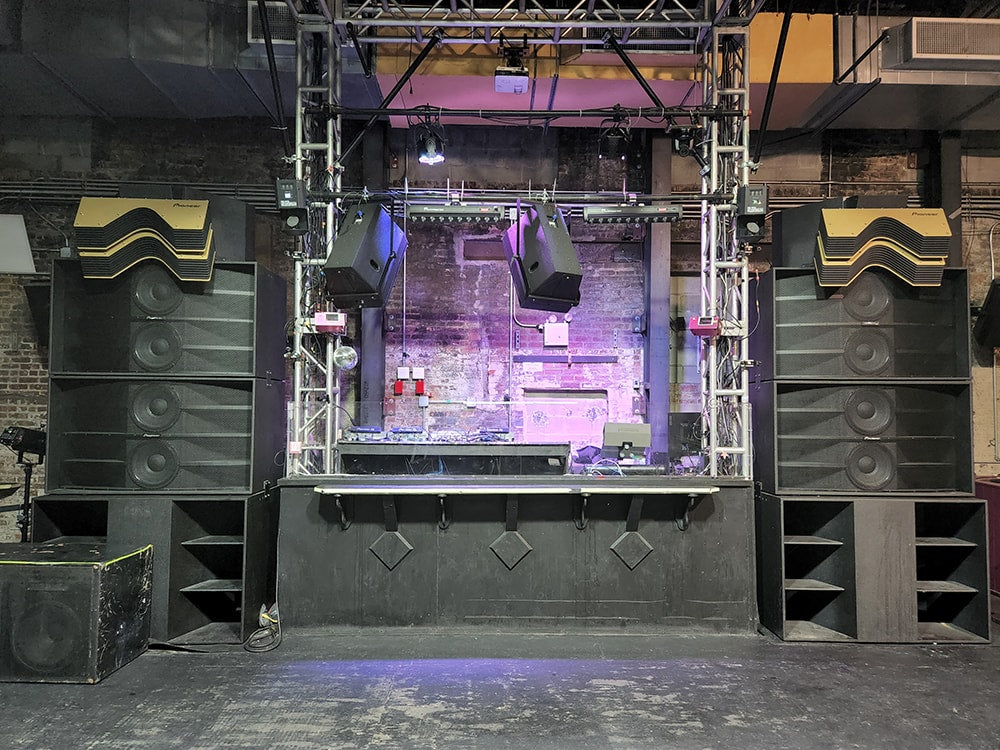
 

The kind of system that dreams are made of.
The kind of system that dreams are made of.


The control center for the club's audio system.

The control center for the club’s audio system.
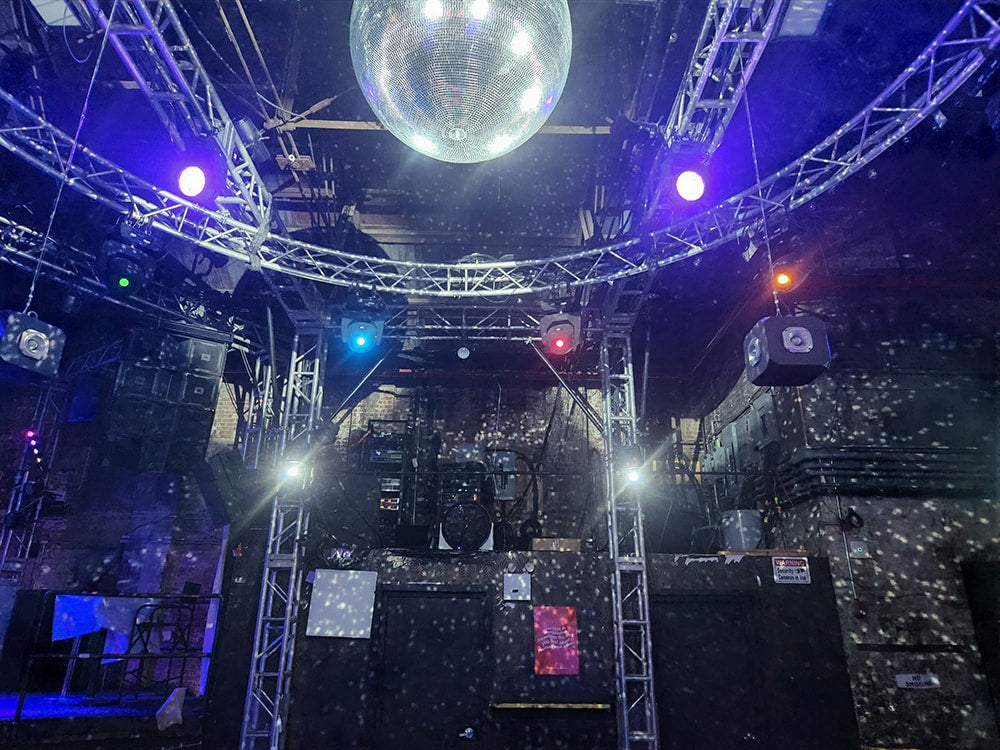
 

The main system is augmented by fill speakers throughout the space.

The main system is augmented by fill speakers throughout the space.


Is a well-designed club system that dissimilar from an audiophile rig at home? Not really. The machinery is different but the objectives are the same. It’s worth noting the Alex Rosner was a hi-fi man back in the 1950s when stereo systems were just beginning to take off. Here is a bit of his philosophy in a nutshell: the purpose of a sound reproduction system is to tell the truth; a loudspeaker can never be too big; and $60-per-foot speaker wire is no better than lamp cord (I apologize to audiophiles about the last part). The sheer artistry of great club sound is making it seamless and unobtrusive while remaining visceral and immersive. Now that I have a new perspective on club systems, I think the greatest downside to even the best home systems is that we don’t have Kris Anton to do all the expert tweaking, tuning, and setup.

No matter your age or musical taste, go see one of Gary Stewart’s last GS-WAVE systems and hear Kris and his guest DJs play CDs, vinyl, and files. You will not be bored. There’s always something entertaining and exciting happening there. Some events even take place early in the day. Come to think of it, Oktoberfest oompah bands and beer tents fit perfectly into my schedule.

3 Dollar Bill is located at 260 Meserole Street, Brooklyn, NY, convenient to the L subway line and just a few blocks from the Montrose Avenue Station.
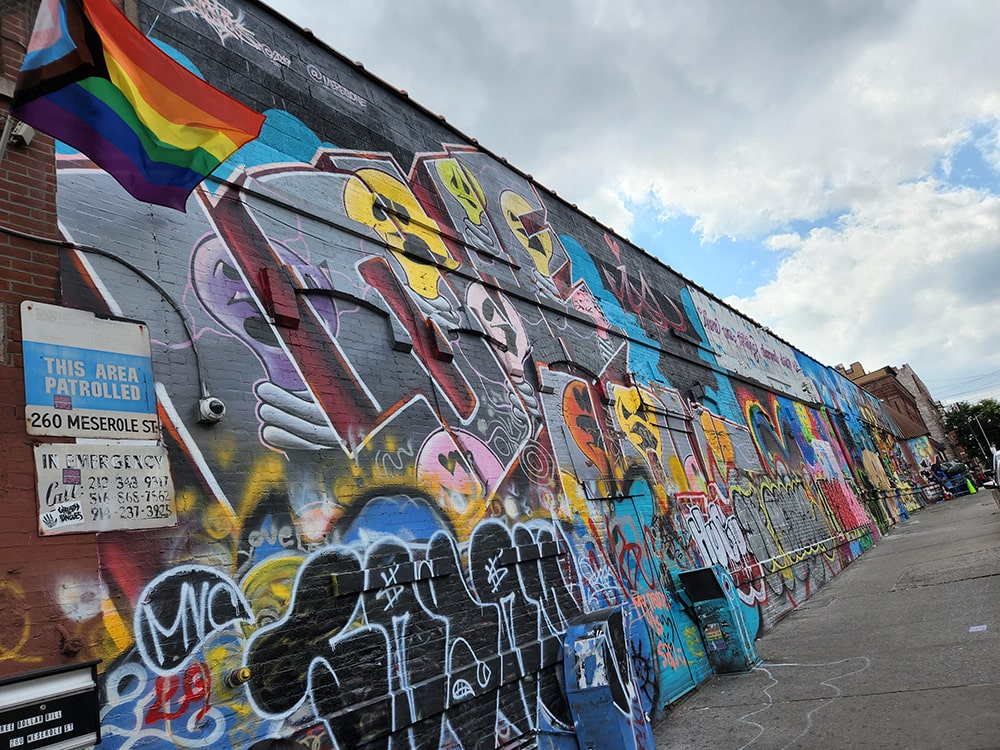
 

A view from 260 Meserole Street.

A view from 260 Meserole Street.


All images courtesy of the author except where noted.

More from Issue 170

View All Articles in Issue 170

Search Copper Magazine

#233 A Report From The Total Hi-Fi Experience Show SoCal 2026 by B. Jan Montana Aug 03, 2026 #233 Bluegrass Meets Country, Folk, Jazz and More in All That We Carried by The Squid City Slingers by Frank Doris Aug 03, 2026 #233 Corey Glover and One Tribe Nation: A Variegated Musical Collective by Ray Chelstowski Aug 03, 2026 #233 Excursions with Clive: The Late Clive Davis, A Personal History by Wayne Robins Aug 03, 2026 #233 AI, Art, and Music: A Conversation With Synthography Art by Joe Caplan Aug 03, 2026 #233 New American Symphonies: A Rediscovered Gem and a Vital Contemporary Work by Frank Doris Aug 03, 2026 #233 The Vinyl Beat: Genesis, the Dave Clark Five, Antonio Carlos Jobim and More by Rudy Radelic Aug 03, 2026 #233 How to Play in a Rock Band, 26: When It's Time to Record Your Music by Frank Doris Aug 03, 2026 #233 More From T.H.E. Show 2026, and the People Who Made it Happen by Harris Fogel Aug 03, 2026 #233 Underappreciated Artists, Part Three: Icehouse by Rich Isaacs Aug 03, 2026 #233 The Surprisingly Rich and Varied Music of Somalia by Steve Kindig Aug 03, 2026 #233 A Remarkable Discographic Legacy: The LP Recordings of the Basel Symphony Orchestra by Stephan Haberthür Aug 03, 2026 #233 From The Audiophile’s Guide: The Importance of Loudspeakers by Paul McGowan Aug 03, 2026 #233 From Swimming Pool to New Listening Room: A Conversation with Norman Varney of AV RoomService by Gilles Laferrière Aug 03, 2026 #233 PS Audio in the News by PS Audio Staff Aug 03, 2026 #233 Audio Jewelry by Peter Xeni Aug 03, 2026 #233 Enrich Your Life by Frank Doris Aug 03, 2026 #233 The Searcher by James Schrimpf Aug 03, 2026 #232 What came first: Art or Music? A Conversation With Artist Jose Acosta by Joe Caplan Jul 06, 2026 #232 Blow By Blow: The Jeff Beck Story: An Insightful Book About a Guitar Icon by Ray Chelstowski Jul 06, 2026 #232 Creed Over Camaraderie? by B. Jan Montana Jul 06, 2026 #232 Chronicles of a Sound Pilgrim at the 2026 Montreal Audiofest by Hugues Morin Jul 06, 2026 #232 The Vinyl Beat: Summer Grooves by Rudy Radelic Jul 06, 2026 #232 Hibbing Hillbilly Dylan's Acoustic Rock by Wayne Robins Jul 06, 2026 #232 Quad Quads and Plasmatronics Tweeters: An Extraordinary System Comes to Life by Frank Doris Jul 06, 2026 #232 In Praise of Live Music, Once Again by Ted Shafran Jul 06, 2026 #232 Allnic Audio’s L-9000 Preamplifier: Design and Engineering Innovation by Howard Kneller Jul 06, 2026 #232 “Best Of” Lists and Rage Bait: Enough Already by Frank Doris Jul 06, 2026 #232 Quick Takes: Bud Shank, Paulo Almeida, Jakob Dreyer, Tim Eriksen and Peter Irvine by Frank Doris Jul 06, 2026 #232 My Impressions of AXPONA 2026, Part 2 by Frank Doris Jul 06, 2026 #232 How to Play in a Rock Band, 25: Encounters With Famous Musicians, Part Three by Frank Doris Jul 06, 2026 #232 Budgets, and Systems From Small to Outrageous by Paul McGowan Jul 06, 2026 #232 PS Audio in the News by PS Audio Staff Jul 06, 2026 #232 Hand It Over by Frank Doris Jul 06, 2026 #232 Difference of Opinion by Peter Xeni Jul 06, 2026 #232 Wabi-sabi Tree by James Schrimpf Jul 06, 2026 #231 Piano Prodigy Jude Kofie Releases His Debut Album On Octave Records by Frank Doris Jun 01, 2026 #231 Underappreciated Artists, Part Two: City Boy by Rich Isaacs Jun 01, 2026 #231 Music and the Art of Creation: Talking With Saxophonist Rob Scheps by Joe Caplan Jun 01, 2026 #231 How to Play in a Rock Band, 24: Further Adventures at the 2026 Montauk Music Festival by Frank Doris Jun 01, 2026 #231 Courtney Barnett: Creature of Habit by Wayne Robins Jun 01, 2026 #231 Angine de Poitrine: Interstellar Guitar Rock Saviors Headed for Late-Night TV Pop Stardom? by Mark Lepage Jun 01, 2026 #231 My Impressions of AXPONA 2026, Part One by Frank Doris Jun 01, 2026 #231 2026 La Jolla Concours d'Elegance: Another Aesthetic Feast by B. Jan Montana Jun 01, 2026 #231 Country Music Icon Jo Dee Messina’s Bridges: A New Beginning by Ray Chelstowski Jun 01, 2026 #231 The Luxury Dispatch Hosts a Video Podcast With Ken Kessler by Ken Kessler Jun 01, 2026 #231 The Vinyl Beat: Tracking in the Motor City by Rudy Radelic Jun 01, 2026

High-Quality Audio In Clubland

High-Quality Audio In Clubland

When was the last time you went to a really trendy dance club? How about one that caters to an in-the-know young crowd? What about one of New York City’s premier queer venues that features Alaska Thunderf*ck, winner of RuPaul’s Drag Race All Stars, singing Taylor Swift songs? I ask these loaded questions of myself as I quickly approach senior citizenship and prefer to stay home listening to my own records and gear. The last time I heard a pumping club system was, oh, about 40 years ago at Studio 54. I was interested in audio, even as a teen, and tried my best to peek into the DJ booth. It’s an odd thing to want to do instead participating in Studio 54’s other activities, but I wasn’t the only one who was enamored with the equipment. I could have never imagined that I would someday be auditioning a set of speakers designed by someone influenced by the same system at Studio 54.

Like the renowned designers of two-channel home audio components, clubland has its own luminaries. Some of the most legendary names are Alex Rosner and Richard Long. Rosner designed sound systems at New York’s Limelight, Max’s Kansas City, and 1970’s era Copacabana. Long, who once worked under Rosner, went on to create systems at Bond’s International Casino, Paradise Garage, and, the big daddy of them all, Studio 54. However, there’s another designer, a protégé of Long’s who also contributed to the beloved Paradise Garage, a 10,000-square-foot disco with an open-door policy in SoHo that was open from 1977 to 1987. He was the late Gary Stewart, famous for systems in the Hamptons, Ibiza, London, and Singapore.

Shortly before his death in 2012, Stewart achieved new heights through a collaboration with Pioneer Pro Audio. His pre-fab GS-WAVE speaker stack was a departure from most great-sounding club systems which are built from the ground up with custom cabinets and crossovers, but Stewart made it much easier for smaller venues to capture his signature sound without having to undertake a custom build.

Located in Brooklyn, on the border of Williamsburg and Bushwick, 3 Dollar Bill is housed in an old brewery built in 1858. It’s a cavernous brick structure with accents of original wood, metal, and masonry that are incorporated beautifully into a network of several bars, dance areas, and even an expansive yard big enough for the upcoming Oktoberfest. There are sound systems everywhere, but the main dance floor and performance space is where the GS-WAVE towers over the room. This is where I met with 3 Dollar Bill’s production manager, Kris Anton.


Timeless architecture: the entrance to 3 Dollar Bill.

Timeless architecture: the entrance to 3 Dollar Bill.


Kris has spent the last 25 years operating and building light and sound systems for theater, live shows and dance clubs, as well as for bars and restaurants. He’s worked with Big Audio Dynamite, Fishbone, Gibby Haynes of the Butthole Surfers, and numerous drag performers, many of them familiar from appearances on TV shows. Since COVID-19, Kris has been a jack of all trades at 3 Dollar Bill, creating a unique atmosphere and filling nearly every nook and cranny with lights and sound.

Although Kris sent me photos of his showpiece, the two 12-foot, 1,438 lb. speaker stacks, there’s nothing like seeing them in person. Set in a stereo configuration about 15 feet apart and firing onto the dance floor, each GS-WAVE stack is comprised of:

  • One 18-inch subwoofer in a folded-horn cabinet.
  • Two cabinets containing 2 15-inch drivers for the bass and low midrange.
  • Two compression drivers behind an adjustable lens to handle the high-mids and high frequencies.
  • Hanging over the dance floor is an associated super tweeter pod with four ultra-high-frequency drivers.
  • An optional 275-lb. horn extension is included with each speaker stack to increase bass delivery without the need for additional amplification. However, for Kris’s maximum capacity of 350 people, the horn extenders would overwhelm the room.

Power comes from two 8-channel and five 4-channel Linea Research amplifiers rated at 1,500 watts per channel at 8 ohms. To keep the system functioning efficiently, each amp has onboard DSPs (digital signal processors) to manage the crossover points, EQ, and power requirements for each driver. All the information is fed through a computer in the DJ booth where adjustments can be made. Kris also installed a complete main stage PA system of Pioneer Pro Audio XY-122 2-way speakers (also designed by Gary Stewart) and active JBL arrays. Additional XY-122 fill speakers and 18-inch subwoofers compensate for dead spots in the room and create a surround-sound effect. Using calibration software by System Engineer and his ears, Kris meticulously tunes 32 speakers to the space. With that many speakers, extreme volume is not required to achieve a gut-punching yet well-balanced musical presentation.


Clarity and balance: the GS-WAVE main speaker stacks.

Clarity and balance: the GS-WAVE main speaker stacks.


Behind the scenes: Linea Research amplifiers and associated equipment.

Behind the scenes: Linea Research amplifiers and associated equipment.


I make it seem like Kris did everything by himself, but designing and assembling a system this big requires collaboration. Kris would like to acknowledge Alex Graham and Peter Gotfredsen from audio brokers Purplesound NYC, and David Sullivan from Pioneer Pro Audio. Ron Lorman, a recording engineer with several Miles Davis albums under his belt, lent his expert ears for tuning. But enough tech-talk for now: let’s get back to GS-WAVE.


Sound system designer Kris Anton. Courtesy of Courtney Bradley.

Sound system designer Kris Anton. Courtesy of Courtney Bradley.


Kris played a number of selections, some rock and some dance music, but what would I play if I had the system to myself? So, Kris pulled up “Spirit of Radio” by Rush and sent it through the stacks. They suddenly transformed from “disco speakers” to the ultimate rock and roll speakers of my teenage dreams. For all their size and power, the GS-WAVEs delivered balanced, defined clear sound as good as any high-end home systems I’ve heard.

I had never given much thought to club audio before, dismissing it a necessary evil. Ironically, the bad-sounding systems are more memorable than the good ones. I recall dive bars of the Lower East Side which were so loud that no one could hear themselves talk over the noise. The culprits were usually speakers, too few and badly placed, playing beyond their specs, powered by inadequate amps, and operated by a person who has no experience outside of their basement.

Dance floors are certainly not audio shows and most people are not contemplating the timbre of the drum machine, the analog purity of a cowbell, or that the synthesizer was particularly revelatory on certain tracks. I just assumed the target sound was lots of pounding bass and high volume, but maybe there was something I didn’t know. So, I asked Kris what was the most important aspect of his sound. The one-word answer: transparency. Mega-decibels and bass are great – that’s why we go to clubs and shows, but it’s the nuances of the mid and high frequencies that keep us engaged.


The kind of system that dreams are made of.

The kind of system that dreams are made of.


The control center for the club's audio system.

The control center for the club’s audio system.


The main system is augmented by fill speakers throughout the space.

The main system is augmented by fill speakers throughout the space.


Is a well-designed club system that dissimilar from an audiophile rig at home? Not really. The machinery is different but the objectives are the same. It’s worth noting the Alex Rosner was a hi-fi man back in the 1950s when stereo systems were just beginning to take off. Here is a bit of his philosophy in a nutshell: the purpose of a sound reproduction system is to tell the truth; a loudspeaker can never be too big; and $60-per-foot speaker wire is no better than lamp cord (I apologize to audiophiles about the last part). The sheer artistry of great club sound is making it seamless and unobtrusive while remaining visceral and immersive. Now that I have a new perspective on club systems, I think the greatest downside to even the best home systems is that we don’t have Kris Anton to do all the expert tweaking, tuning, and setup.

No matter your age or musical taste, go see one of Gary Stewart’s last GS-WAVE systems and hear Kris and his guest DJs play CDs, vinyl, and files. You will not be bored. There’s always something entertaining and exciting happening there. Some events even take place early in the day. Come to think of it, Oktoberfest oompah bands and beer tents fit perfectly into my schedule.

3 Dollar Bill is located at 260 Meserole Street, Brooklyn, NY, convenient to the L subway line and just a few blocks from the Montrose Avenue Station.


A view from 260 Meserole Street.

A view from 260 Meserole Street.


All images courtesy of the author except where noted.

0 comments

Leave a comment

0 Comments

Your avatar

Loading comments...

🗑️ Delete Comment

Enter moderator password to delete this comment:

✏️ Edit Comment

Enter your email to verify ownership: