COPPER

A PS Audio Publication

Issue 160 • Free Online Magazine

Issue 160 Idle Chatter

Envy of None: Alex Lifeson of Rush Joins a New Band

Envy of None: Alex Lifeson of Rush Joins a New Band

Fans longing for new music from legendary Canadian progressive rocker Alex Lifeson of Rush will have to wait no longer, as the guitar virtuoso’s newest group, Envy of None, has delivered some of the most inventive and surprisingly vital work of the 68-year old’s career. Envy of None, their debut album, was released on April 8.

Listeners will be delighted to a cohesive blend of alternative and indie, with hints of industrial sprinkled across the soundscape. Along with Lifeson, the cast of players includes bassist Andy Curran (of Coney Hatch), actress turned singer/songwriter, Maiah Wynne, and guitarist Alfio Annibalini.

When asked about the project, Lifeson quipped that Envy of None “had no rules,” an approach that seems to be an ongoing and most successful methodology for the veteran axe-slinger. To see that the old dog can in fact be taught some new tricks is nothing short of delightful.

I talked with Andy Curran and Maiah Wynne about the uber-surprising Envy of None project.

Andrew Daly: Tell us about Envy Of None.

Maiah Wynne: I first started working on some songs with Andy around five years ago. The project started out slowly, with zero pressure. It was just for the fun of making some cool music together. Even when Alex [Lifeson] got on board, there was never any pressure to do anything differently or try to make any sort of big hit song. It wasn’t until four years and ten songs later that we decided [to] officially release it.

The music is diverse, and I love that about the project. There [are] heavier songs like “Dogs Life,” and “Enemy,” [and softer and sweeter songs like “Old Strings” and “Western Sunset.” Any song idea was on the table, and we just enjoyed the process of creating together.

Andrew Curran: Envy Of None was really four like-minded musicians adding their ideas to seeds of songs that just seemed to ooze out of all of us. It had been in the works with no real master plan, and no label or management driving us. It wasn’t until Alex Lifeson asked me one day, “Andy, what are we going to do with all these songs?” that we felt we should share it with some music industry people. “Liar” was requested for the Netflix series Tiny Pretty Things, and then, when the team at K-Scope/Snapper Music heard the music, this caught fire, and we then had a mission to finish, record and release [the album].


AD: How did everyone in the band meet?

MW: I met Andy through a song contest I won five years ago. One of my prizes was a mentorship with Andy through Zoom. We got to talking about an industrial-sounding song of mine that he really liked. Andy had been working on some similar music, and I offered to add vocals to them – not having any clue about who Andy was at that point. Alf [Annibalini] was already Andy’s creative partner. About two songs into working together, Andy called me out of the blue and said, “Alex [Lifeson] really likes the songs, and wants to add some guitars.” I flew to Toronto and met everyone. That was a really exciting day.

AC: Alex Lifeson and I have known each other for years, and at one time were label mates on Anthem Records (Rush’s label). I [had] an A&R job at Anthem and had worked together with Rush for over a decade. Alf and I met when I was recording an album with the band Leisureworld, and we instantly hit it off. I met Maiah when she [did the] online radio competition. I played Alex a song called “Shadow” that we co-wrote. He added some guitars and loved Maiah’s voice and the vibe, and bingo – we had a lineup!

AD: What first got both of you hooked on music?

MW: One of my earliest memories is playing the piano at three years old and figuring out notes that sounded good together. I vividly remember the rush of excitement that gave me. I loved piano lessons. I took choir and band in school and always loved singing harmonies. At 13, I started teaching myself guitar and drums, and that’s when I really got the bug for learning new instruments. I still get that same rush now, branching out into synth and MIDI instruments and music production.

AC: I grew up in a household where music was all around. My grandpa, Joe Curran, was a professional musician and played in the BBC Symphony Orchestra. My dad played piano and guitar, and my sisters and older brother Mike introduced me to so many cool bands. But it wasn’t until I saw the Edgar Winter Group perform at Maple Leaf Gardens that I was really hooked. That was a defining moment where I remember thinking, that’s what I wanna do. Oh, and the opening act was Bad Company…my mind was officially blown.

AD: What themes are you exploring with your new music? How has your background brought you to this point in your musical journey?

MW: A big part of music for me is working through whatever I’m going through. I tried to bring a lot of personal perspective to the lyrics for Envy Of None. Most of the songs were co-written, where Andy would have a few specific words, and I’d build the rest of the song around them. In retrospect, we probably used the word “darkness” a few too many times! A lot of the songs are pretty dark. It might make a fun drinking game while you listen to the record. [Laughs].
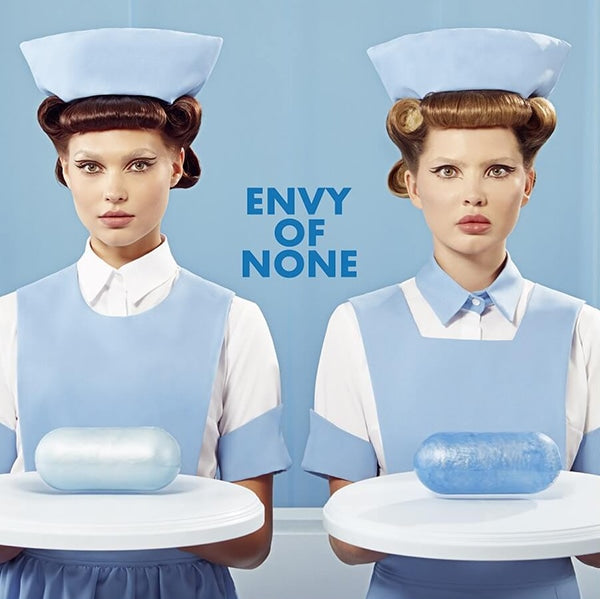
 

Envy of None, album cover.

Envy of None, album cover.


AC: I felt it was time to move outside my [musical] comfort zone. [My previous band] Coney Hatch was full-on hard rock, and with [the band] Soho, I started leaning a little more alternative. By the time Caramel and Leisureworld were written, I’d gone into a much darker alt-rock vibe [but with] some melodic hooks. During those years, I started writing a lot more “chilled” stuff, playing more keyboards, Moog bass lines, fretless bass, and guitars. I was listening to a lot of ambient, dub [artists]. It certainly influenced my writing, and that’s where a lot of the Envy Of None material started.

Lyrically, I’ve never changed my approach. There are so many things that happen to me daily, so there’s no shortage of lyrical ideas that sit right under my nose.

AD: How about the production side of things?

MW: The four of us co-produced the record. Everyone was sort of in charge of recording and producing their own [songs], with some crossover at the end of the process. On many tracks, Aliephant, a producer I work with, co-produced the vocals, adding some cool effects layers. Alex Lifeson mixed a few of the songs and Alf mixed the rest.

AC: Everyone had the freedom to do what they felt was needed to develop the song. The only time we went outside our bubble was to play a few songs for our friend [Canadian record producer] David Bottrill to get some feedback. He said, “you guys are doing great, the material and sonics are really good,” offered a few tips, and sent us on our way. It was a nice confidence booster.

AD: What went into the decision to release “Liar” as the first single?

MW: We let the label decide the singles. I think we all agreed that “Liar” was a great first track, and it was an easy choice.

AC: I was on board just for the fuzz bass alone (laughs).

AD: Who are some of your early influences?

MW: My dad. He played piano and I would watch his hands. My grandpa plays banjo and mandolin. I listened to a lot of No Doubt, Radiohead, Norah Jones, Aimee Mann, Duran Duran, Queen, and the Pixies with my parents. Around 13, I was learning the drums and listened to ACϟDC, Led Zeppelin, Rush, and pretty much anything that I discovered while playing Guitar Hero. I then went through an indie phase and listened to artists like Daughter, Iron and Wine, Florence and The Machine, Ben Harper, and Feist.

AC: Like I said, Edgar Winter was a big one for me, [also] bands like Aerosmith, UFO, Cheap Trick…and Rush! When I started learning bass, that’s when Yes, Genesis, Return to Forever, Weather Report, and Jeff Beck were on my turntable 24/7.

AD: What are a few of your favorite albums, and why?

MW: Some of my favorite albums are Amy Winehouse’s Back To Black, Fleetwood Mac’s Rumours, Fiona Apple’s Tidal, and Radiohead’s OK Computer. They feel really cohesive from beginning to end.

AC: Some of my new favorite records are from Tame Impala, Bones UK, and a Toronto artist called Jaguar Sun. They’re not new, but I love Middle Class Rut. This is a darn good playlist if I do say so myself. (laughs)
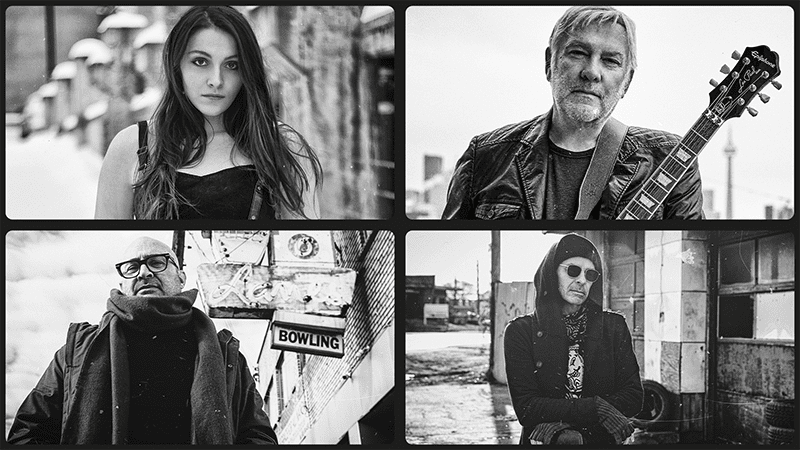
 

Top row: Maiah Wynne, Alex Lifeson. Bottom row: Alfio Annibalini, Andy Curran. Courtesy of Troy William Dunn, Richard Sibbald and Jaden D.


AD: What other passions do both of you have? How do they inform your music?

MW: I love acting. I hope I can pursue a career in acting as well as music. There is a lot of crossover between the two worlds, especially when putting on a concert. In order to give a good musical performance, you have to be a good entertainer, and that includes channeling emotion and having a good rapport with the audience. I also enjoy writing poetry and that informs my lyrics at times.

AC: Those who know me well will tell you hockey is a big passion. I was skating three times a week all year until COVID hit and rinks were shut down. I’m a die-hard Chicago Blackhawks fan.

My family means the world to me, and that includes my four-legged canine friends. Those personal connections certainly find their way into my lyrics. Hockey not so much. (laughs)


AD: In your opinions, what is the state of the music business these days? Should artists be hopeful? Scared? Both?

MW: I think the state of the music industry today is a double-edged sword. There are benefits to everything being so accessible, like any artist being able to share their music with the world, and anyone being able to listen to them across the globe. However, digital music platforms have devalued music to the point where artists can’t make money easily anymore. An already challenging career path has become ten times harder. On top of that, COVID and the inability to tour safely and easily have created a huge deficit for artists trying to survive.

I don’t see us resolving these issues anytime soon. Unless someone can create a digital streaming platform as convenient and cheaper than Spotify that treats artists more fairly, I don’t think the average person is going to take the time to change the way they listen to music. I would like to believe there will be a better solution in the future, but it is going to take work and a conscious effort from a large number of people.

AC: I really feel hopeful. There are so many great opportunities for young artists to get their music out there. The internet has leveled the playing field in terms of [having] a destination to share music. You have an uphill battle to get your music heard, and poke your head above the pack, but if I compare [the situation] to when I started, unless you had a label behind you there was no way your music was going to get out to a global marketplace.

The live scene has shrunk for sure, but as my friend, [Canadian music executive] Ray Danniels will say, “nothing can get in the way of a great song.” Persistence and patience are the names of the game.

Header image courtesy of Richard Sibbald.

More from Issue 160

View All Articles in Issue 160

Search Copper Magazine

#234 A Life in High-End Audio: The Roy Hall Interview, Part One by Frank Doris Sep 07, 2026 #234 Jason Greenlaw Offers His Personal Perspective on Jazz Guitar in Vantage Point by Frank Doris Sep 07, 2026 #234 Transcendent Phoenix: Lucina Yue Brings the Ancient Konghou Into Modern Times by Frank Doris Sep 07, 2026 #234 We Must All Follow Our Bliss by B. Jan Montana Sep 07, 2026 #234 How to Play in a Rock Band, 27: Leveling Up by Frank Doris Sep 07, 2026 #234 Ross Valory: Traveling Into New Musical Territory With All of the Above by Ray Chelstowski Sep 07, 2026 #234 Singer/Songwriter John David Schrader: On the Need to Create by Joe Caplan Sep 07, 2026 #234 The People Who Make Audio Happen: More From T.H.E. Show SoCal 2026 by Harris Fogel Sep 07, 2026 #234 The Vinyl Beat Digs Into the Gadget Box by Rudy Radelic Sep 07, 2026 #234 The Rolling Stones: Foreign Tongues Spoken Loud by Wayne Robins Sep 07, 2026 #234 Musical Moments by Rich Isaacs Sep 07, 2026 #234 Rags for Solo Piano and a Dog: David Chesky's Ragtime Music for the Modern Age by Frankly Speaking Sep 07, 2026 #234 HIGH END 2026, Vienna: Here to Stay by Carsten Barnbeck Sep 07, 2026 #234 From The Audiophile’s Guide: The Two Main Types of Loudpeakers – Box and Panel by Paul McGowan Sep 07, 2026 #234 Letting it Slide by Frank Doris Sep 07, 2026 #234 PS Audio in the News by PS Audio Staff Sep 07, 2026 #234 Long Playing by Peter Xeni Sep 07, 2026 #234 La Mer by B. Jan Montana Sep 07, 2026 #233 A Report From The Total Hi-Fi Experience Show SoCal 2026 by B. Jan Montana Aug 03, 2026 #233 Bluegrass Meets Country, Folk, Jazz and More in All That We Carried by The Squid City Slingers by Frank Doris Aug 03, 2026 #233 Corey Glover and One Tribe Nation: A Variegated Musical Collective by Ray Chelstowski Aug 03, 2026 #233 Excursions with Clive: The Late Clive Davis, A Personal History by Wayne Robins Aug 03, 2026 #233 AI, Art, and Music: A Conversation With Synthography Art by Joe Caplan Aug 03, 2026 #233 New American Symphonies: A Rediscovered Gem and a Vital Contemporary Work by Frank Doris Aug 03, 2026 #233 The Vinyl Beat: Genesis, the Dave Clark Five, Antonio Carlos Jobim and More by Rudy Radelic Aug 03, 2026 #233 How to Play in a Rock Band, 26: When It's Time to Record Your Music by Frank Doris Aug 03, 2026 #233 More From T.H.E. Show 2026, and the People Who Made it Happen by Harris Fogel Aug 03, 2026 #233 Underappreciated Artists, Part Three: Icehouse by Rich Isaacs Aug 03, 2026 #233 The Surprisingly Rich and Varied Music of Somalia by Steve Kindig Aug 03, 2026 #233 A Remarkable Discographic Legacy: The LP Recordings of the Basel Symphony Orchestra by Stephan Haberthür Aug 03, 2026 #233 From The Audiophile’s Guide: The Importance of Loudspeakers by Paul McGowan Aug 03, 2026 #233 From Swimming Pool to New Listening Room: A Conversation with Norman Varney of AV RoomService by Gilles Laferrière Aug 03, 2026 #233 PS Audio in the News by PS Audio Staff Aug 03, 2026 #233 Audio Jewelry by Peter Xeni Aug 03, 2026 #233 Enrich Your Life by Frank Doris Aug 03, 2026 #233 The Searcher by James Schrimpf Aug 03, 2026 #232 What came first: Art or Music? A Conversation With Artist Jose Acosta by Joe Caplan Jul 06, 2026 #232 Blow By Blow: The Jeff Beck Story: An Insightful Book About a Guitar Icon by Ray Chelstowski Jul 06, 2026 #232 Creed Over Camaraderie? by B. Jan Montana Jul 06, 2026 #232 Chronicles of a Sound Pilgrim at the 2026 Montreal Audiofest by Hugues Morin Jul 06, 2026 #232 The Vinyl Beat: Summer Grooves by Rudy Radelic Jul 06, 2026 #232 Hibbing Hillbilly Dylan's Acoustic Rock by Wayne Robins Jul 06, 2026 #232 Quad Quads and Plasmatronics Tweeters: An Extraordinary System Comes to Life by Frank Doris Jul 06, 2026 #232 In Praise of Live Music, Once Again by Ted Shafran Jul 06, 2026 #232 Allnic Audio’s L-9000 Preamplifier: Design and Engineering Innovation by Howard Kneller Jul 06, 2026 #232 “Best Of” Lists and Rage Bait: Enough Already by Frank Doris Jul 06, 2026 #232 Quick Takes: Bud Shank, Paulo Almeida, Jakob Dreyer, Tim Eriksen and Peter Irvine by Frank Doris Jul 06, 2026

Envy of None: Alex Lifeson of Rush Joins a New Band

Envy of None: Alex Lifeson of Rush Joins a New Band

Fans longing for new music from legendary Canadian progressive rocker Alex Lifeson of Rush will have to wait no longer, as the guitar virtuoso’s newest group, Envy of None, has delivered some of the most inventive and surprisingly vital work of the 68-year old’s career. Envy of None, their debut album, was released on April 8.

Listeners will be delighted to a cohesive blend of alternative and indie, with hints of industrial sprinkled across the soundscape. Along with Lifeson, the cast of players includes bassist Andy Curran (of Coney Hatch), actress turned singer/songwriter, Maiah Wynne, and guitarist Alfio Annibalini.

When asked about the project, Lifeson quipped that Envy of None “had no rules,” an approach that seems to be an ongoing and most successful methodology for the veteran axe-slinger. To see that the old dog can in fact be taught some new tricks is nothing short of delightful.

I talked with Andy Curran and Maiah Wynne about the uber-surprising Envy of None project.

Andrew Daly: Tell us about Envy Of None.

Maiah Wynne: I first started working on some songs with Andy around five years ago. The project started out slowly, with zero pressure. It was just for the fun of making some cool music together. Even when Alex [Lifeson] got on board, there was never any pressure to do anything differently or try to make any sort of big hit song. It wasn’t until four years and ten songs later that we decided [to] officially release it.

The music is diverse, and I love that about the project. There [are] heavier songs like “Dogs Life,” and “Enemy,” [and softer and sweeter songs like “Old Strings” and “Western Sunset.” Any song idea was on the table, and we just enjoyed the process of creating together.

Andrew Curran: Envy Of None was really four like-minded musicians adding their ideas to seeds of songs that just seemed to ooze out of all of us. It had been in the works with no real master plan, and no label or management driving us. It wasn’t until Alex Lifeson asked me one day, “Andy, what are we going to do with all these songs?” that we felt we should share it with some music industry people. “Liar” was requested for the Netflix series Tiny Pretty Things, and then, when the team at K-Scope/Snapper Music heard the music, this caught fire, and we then had a mission to finish, record and release [the album].


AD: How did everyone in the band meet?

MW: I met Andy through a song contest I won five years ago. One of my prizes was a mentorship with Andy through Zoom. We got to talking about an industrial-sounding song of mine that he really liked. Andy had been working on some similar music, and I offered to add vocals to them – not having any clue about who Andy was at that point. Alf [Annibalini] was already Andy’s creative partner. About two songs into working together, Andy called me out of the blue and said, “Alex [Lifeson] really likes the songs, and wants to add some guitars.” I flew to Toronto and met everyone. That was a really exciting day.

AC: Alex Lifeson and I have known each other for years, and at one time were label mates on Anthem Records (Rush’s label). I [had] an A&R job at Anthem and had worked together with Rush for over a decade. Alf and I met when I was recording an album with the band Leisureworld, and we instantly hit it off. I met Maiah when she [did the] online radio competition. I played Alex a song called “Shadow” that we co-wrote. He added some guitars and loved Maiah’s voice and the vibe, and bingo – we had a lineup!

AD: What first got both of you hooked on music?

MW: One of my earliest memories is playing the piano at three years old and figuring out notes that sounded good together. I vividly remember the rush of excitement that gave me. I loved piano lessons. I took choir and band in school and always loved singing harmonies. At 13, I started teaching myself guitar and drums, and that’s when I really got the bug for learning new instruments. I still get that same rush now, branching out into synth and MIDI instruments and music production.

AC: I grew up in a household where music was all around. My grandpa, Joe Curran, was a professional musician and played in the BBC Symphony Orchestra. My dad played piano and guitar, and my sisters and older brother Mike introduced me to so many cool bands. But it wasn’t until I saw the Edgar Winter Group perform at Maple Leaf Gardens that I was really hooked. That was a defining moment where I remember thinking, that’s what I wanna do. Oh, and the opening act was Bad Company…my mind was officially blown.

AD: What themes are you exploring with your new music? How has your background brought you to this point in your musical journey?

MW: A big part of music for me is working through whatever I’m going through. I tried to bring a lot of personal perspective to the lyrics for Envy Of None. Most of the songs were co-written, where Andy would have a few specific words, and I’d build the rest of the song around them. In retrospect, we probably used the word “darkness” a few too many times! A lot of the songs are pretty dark. It might make a fun drinking game while you listen to the record. [Laughs].


Envy of None, album cover.

Envy of None, album cover.


AC: I felt it was time to move outside my [musical] comfort zone. [My previous band] Coney Hatch was full-on hard rock, and with [the band] Soho, I started leaning a little more alternative. By the time Caramel and Leisureworld were written, I’d gone into a much darker alt-rock vibe [but with] some melodic hooks. During those years, I started writing a lot more “chilled” stuff, playing more keyboards, Moog bass lines, fretless bass, and guitars. I was listening to a lot of ambient, dub [artists]. It certainly influenced my writing, and that’s where a lot of the Envy Of None material started.

Lyrically, I’ve never changed my approach. There are so many things that happen to me daily, so there’s no shortage of lyrical ideas that sit right under my nose.

AD: How about the production side of things?

MW: The four of us co-produced the record. Everyone was sort of in charge of recording and producing their own [songs], with some crossover at the end of the process. On many tracks, Aliephant, a producer I work with, co-produced the vocals, adding some cool effects layers. Alex Lifeson mixed a few of the songs and Alf mixed the rest.

AC: Everyone had the freedom to do what they felt was needed to develop the song. The only time we went outside our bubble was to play a few songs for our friend [Canadian record producer] David Bottrill to get some feedback. He said, “you guys are doing great, the material and sonics are really good,” offered a few tips, and sent us on our way. It was a nice confidence booster.

AD: What went into the decision to release “Liar” as the first single?

MW: We let the label decide the singles. I think we all agreed that “Liar” was a great first track, and it was an easy choice.

AC: I was on board just for the fuzz bass alone (laughs).

AD: Who are some of your early influences?

MW: My dad. He played piano and I would watch his hands. My grandpa plays banjo and mandolin. I listened to a lot of No Doubt, Radiohead, Norah Jones, Aimee Mann, Duran Duran, Queen, and the Pixies with my parents. Around 13, I was learning the drums and listened to ACϟDC, Led Zeppelin, Rush, and pretty much anything that I discovered while playing Guitar Hero. I then went through an indie phase and listened to artists like Daughter, Iron and Wine, Florence and The Machine, Ben Harper, and Feist.

AC: Like I said, Edgar Winter was a big one for me, [also] bands like Aerosmith, UFO, Cheap Trick…and Rush! When I started learning bass, that’s when Yes, Genesis, Return to Forever, Weather Report, and Jeff Beck were on my turntable 24/7.

AD: What are a few of your favorite albums, and why?

MW: Some of my favorite albums are Amy Winehouse’s Back To Black, Fleetwood Mac’s Rumours, Fiona Apple’s Tidal, and Radiohead’s OK Computer. They feel really cohesive from beginning to end.

AC: Some of my new favorite records are from Tame Impala, Bones UK, and a Toronto artist called Jaguar Sun. They’re not new, but I love Middle Class Rut. This is a darn good playlist if I do say so myself. (laughs)


Top row: Maiah Wynne, Alex Lifeson. Bottom row: Alfio Annibalini, Andy Curran. Courtesy of Troy William Dunn, Richard Sibbald and Jaden D.


AD: What other passions do both of you have? How do they inform your music?

MW: I love acting. I hope I can pursue a career in acting as well as music. There is a lot of crossover between the two worlds, especially when putting on a concert. In order to give a good musical performance, you have to be a good entertainer, and that includes channeling emotion and having a good rapport with the audience. I also enjoy writing poetry and that informs my lyrics at times.

AC: Those who know me well will tell you hockey is a big passion. I was skating three times a week all year until COVID hit and rinks were shut down. I’m a die-hard Chicago Blackhawks fan.

My family means the world to me, and that includes my four-legged canine friends. Those personal connections certainly find their way into my lyrics. Hockey not so much. (laughs)


AD: In your opinions, what is the state of the music business these days? Should artists be hopeful? Scared? Both?

MW: I think the state of the music industry today is a double-edged sword. There are benefits to everything being so accessible, like any artist being able to share their music with the world, and anyone being able to listen to them across the globe. However, digital music platforms have devalued music to the point where artists can’t make money easily anymore. An already challenging career path has become ten times harder. On top of that, COVID and the inability to tour safely and easily have created a huge deficit for artists trying to survive.

I don’t see us resolving these issues anytime soon. Unless someone can create a digital streaming platform as convenient and cheaper than Spotify that treats artists more fairly, I don’t think the average person is going to take the time to change the way they listen to music. I would like to believe there will be a better solution in the future, but it is going to take work and a conscious effort from a large number of people.

AC: I really feel hopeful. There are so many great opportunities for young artists to get their music out there. The internet has leveled the playing field in terms of [having] a destination to share music. You have an uphill battle to get your music heard, and poke your head above the pack, but if I compare [the situation] to when I started, unless you had a label behind you there was no way your music was going to get out to a global marketplace.

The live scene has shrunk for sure, but as my friend, [Canadian music executive] Ray Danniels will say, “nothing can get in the way of a great song.” Persistence and patience are the names of the game.

Header image courtesy of Richard Sibbald.

0 comments

Leave a comment

0 Comments

Your avatar

Loading comments...

🗑️ Delete Comment

Enter moderator password to delete this comment:

✏️ Edit Comment

Enter your email to verify ownership: