COPPER

A PS Audio Publication

Issue 136 • Free Online Magazine

Issue 136 THE COPPER INTERVIEW

Engineer/Producer Tom Newman: From Virgin Records to Tubular World and Beyond

Engineer/Producer Tom Newman: From Virgin Records to Tubular World and Beyond

The birth of Virgin Records, the recording of Mike Oldfield’s landmark Tubular Bells, and a whole new approach to granting recording artists time out of the city to compose with creative freedom are all special ingredients which contributed to entrepreneur Sir Richard Branson’s initial musical successes. The Manor Studio, one of the first recording studios to be housed in a residential setting, was owned by Branson and beginning in 1971 was the site of recordings by artists from Oldfield to Leo Sayer’s Silverbird and Cat Stevens’ Catch Bull at Four. Who was one of the innovative recording engineers and producers who blended this heady mixture into such global fame for the artists involved? His name is Tom Newman.

Thomas Newman helped to found The Manor Studio, worked on the original 1973 recording of Tubular Bells, and has released more than a dozen solo albums. He remains active with projects including a 2020 production of Mike Oldfield’s classic album by Tubular World (on Tigermoth Records). Tom mixed the album, which is the accompanying soundtrack to From the Manor Born, a documentary about the making of the original Tubular Bells and the early days of Virgin.
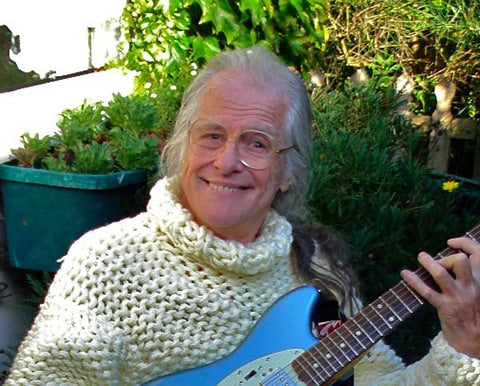
Tom Newman.
Tom Newman.

He reveals more about his favorite experiences at the iconic Manor Studio, his personal preferences for vintage gear and more.

Russ Welton: What are some of your favorite personal experiences from your time mixing in The Manor Studio?

Tom Newman: The whole period was quite magical, Russell. Though at the time, I suppose I was too close to all of it to be able to fully appreciate what was happening. I’d come from the band July [psych-rock aficionados among us may remember their debut single, “My Clown,” and their eponymous album – Ed.] and the break-up of band life, into this bizarre situation with Richard and The Manor, that I was “in charge of” yet I was busking desperately to learn how to do it all! Finding myself behind the faders of a professional mixing console, without any substantial training – I can now see being thrown into things as a crucial element in how my ‘sound’ developed!


Had I been trained BBC-style with its rigid protocols, I think I may have never been able to see the freedom possible by ignoring the rules. The poetry that developed between Michael Oldfield and I while mixing Tubular Bells, Hergest Ridge and so on I failed to enjoy fully at the time, due to the steepness of the learning curve Phil Newell – the only “real” engineer present – was imposing on us all!

Here’s a video of Tom talking about the recording of Tubular Bells:


Right from the start at The Manor, every session was golden! The Bonzo Dog Band (covered in Copper Issue 98) were the best imaginable band for me to “practice” on; Neil Innes was kind and full of helpful good humour. Vivian Stanshall was outrageous, unpredictable and exciting. Holy Roller, led by Paul Kennerley, were serious “Confederate rockers.” Henry Cow – superlative musicianship and dedicated anarchy! Adam Faith and Leo Sayer – my privilege to be part of working with enduring hit-making talent. There was a band called The Scaffold, with Tim Rice as executive producer! I had the opportunity to work with Cat Stevens! I was the luckiest person alive at the time – and too self-obsessed to realize it.

RW: How did you develop such an insightful and critical ear?

TN: All of the above conspired to deny me the need to construct a mix to any kind of convention. What is most important for me is emphasizing the emotional content of a piece of music. I try to find the “engine” of the music, whatever it may be, and focus on drawing the ear to that.


RW: For you, what makes for an excellent recording?

TN: Mmmm…well there’s technical excellence – i.e., good frequency response, low noise and so on. All that is very low on my list of priorities though. Does it move me spiritually and emotionally? That’s very high on the list! So many (poor-quality) recordings have been made on early, technically “sub-standard” gear, but have never been equalled in performance!

RW: Tell us about your new Tubular World double-CD project, which you mixed and performed on, and also how your approach to mixing has developed over time.

TN: The digital age was a double-edged sword for me. It took a long time for me to fully recognize its advantages. The Tubular World Tubular Bells project wasn’t mine at all. Paul Harris and Rob Reed started it as a “lockdown” project. I had been working with Rob Reed on his Sanctuary series of albums, when I heard of the Tubular World thing, and I wangled my way into it out of devilment!
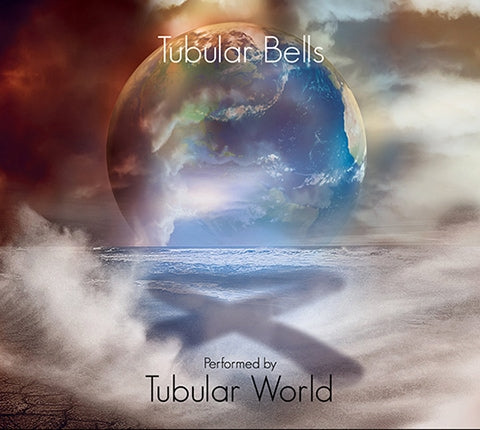
Tubular World album cover.

RW: What techniques do you use to alter the emotions within a piece of music via your mixing?

TN: It’s kind of what I mentioned before, but also careful and empathetic exploration of each part in solo mode [listening to or “soloing” each track in the mix by itself – Ed.], to uncover the true “pecking order” of the piece – then careful placing of each individual track within the overall “landscape.”

RW: What is your favorite medium to listen to music via and why?

TN: Sadly, I only have a few minutes a year to spare to do listening! I have always preferred vinyl – almost as an act of rebellion, as I loathe the tiny cheap deal of the CD concept, and am rejoicing in the revival of proper records, with sleeve art and writing big enough to see.

RW: Could you tell us about some of your favorite hi-fi gear over the years?

TN: I’ve always been a Quad person amp-wise, and dearly wish I’d never sold my old Quad 22 preamp-based setup way back in ’72, as I now can’t afford to replace it! The best speakers are Tannoy speakers with 15-inch woofers, the Red or Gold [models], in corner cabs or Lockwoods. I also love Quad (electrostatic) loudspeakers for quiet classics.
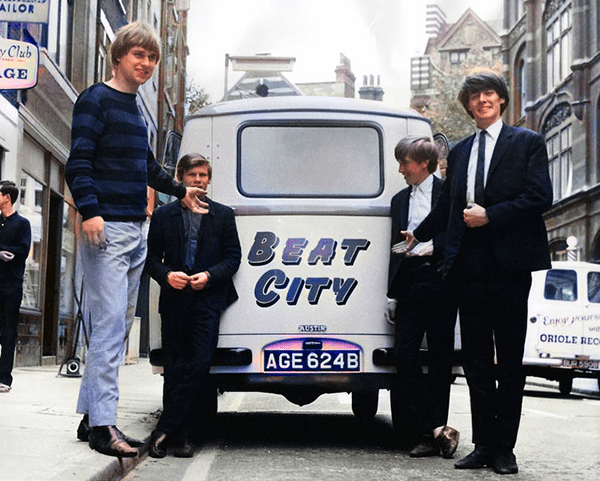


Tom Newman with early band the Tom Cats, circa 1964.


RW: What hi-fi system do you like to use these days?

TN: I only have a very simple cheap set-up now, mainly to check mixes on: 30-year-old Richer Sounds Eltax column speakers – excellent! Driven by an old Denon amp plus a Revox A77 tape deck, and a record player. I’ve no idea what make…works great in our front room!

RW: How does your approach to listening to music differ between near-field monitoring in the studio and your home hi-fi set up?

TN: I work with both to achieve a compromise that retains the emotionally crucial mix elements, with as much dynamic range as is needed.

RW: What advice would you give to today’s aspiring sound recording and mixing engineers?

TN: Stop seeing the bass drum as the flag you wave to other “engineers” to prove you have a big willy! Listen to the song, don’t follow the charts, or listen to Simon Cowell!

RW: Who would you love to mix an album for whom you, as yet, haven’t had the opportunity?

TN: Kate Bush – The world’s best songwriter.

RW: What music excites you that you love listening to today?

TN: The same old stuff I listened to as an eight-year-old, 15-year-old, 29-year-old . . .

RW: What question do you wish you had been asked about your career or something else, which has never been put to you?

TN: Ha ha . . . “Tom – what’s your favorite color?”

Tom’s new album, A Faerie Symphony II is now available by clicking on this link.
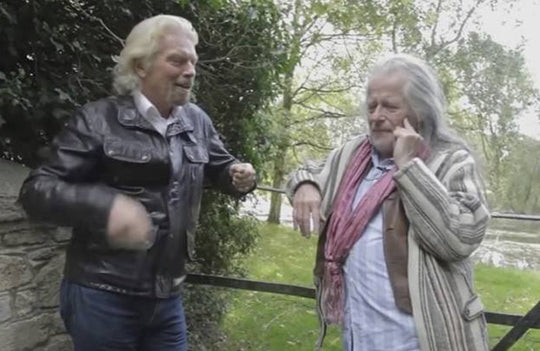
Sir Richard Branson and Tom Newman. Sir Richard Branson and Tom Newman.


For more on the early days of Virgin Records, please read J.I. Agnew’s two-part article on Philip Newell in Copper Issue 119 and Issue 120.

A selected Tom Newman Discography

Solo albums:

Fine Old Tom (1975)
Live at the Argonaut (1975) – Never released by Virgin, except for test pressings. It was released by Voiceprint Records in 1995.
Faerie Symphony (1977)
Bayou Moon (1986)
Aspects (1986)
Ozymandias (1988)
Hotel Splendide [Live] (1997)
Snow Blind (1997)
Faerie Symphony and Other Stories (1999)
Tall Scary Things (1999)
The Hound Of Ulster (1999)
The Secret Life of Angels (2014)
The Calling (2015)
A Faerie Symphony II (2021)

As producer and/or engineer (selected discography):

Tubular Bells – Mike Oldfield (1973)
Froggy Went A-Courting – Mike Oldfield (1974)
Hatfield and the North – Hatfield and the North (1973)
Hergest Ridge – Mike Oldfield (1974)
Platinum – Mike Oldfield (1979)
All Right Now (unreleased single) – Mike Oldfield (1980)
Celebration – Sally Oldfield (1980)
101 Live Letters (1981)
Doll By Doll – Doll By Doll (1981)
Grand Passion – Doll By Doll (1982) Co-producer with Jackie Leven
Five Miles Out – Mike Oldfield (1982) Co-producer
Captured – Natasha (1982)
Islands – Mike Oldfield (1987)
Amarok – Mike Oldfield (1990)
Heaven’s Open – Mike Oldfield (1991)
Tubular Bells II – Mike Oldfield (1992)
Six Elementary Songs – Clodagh Simonds (1996)
Neon Emptiness EP – Cyan2 (1999)
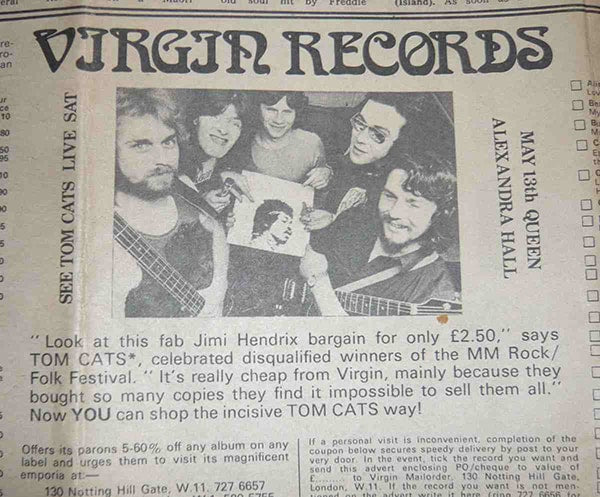


Melody Maker ad featuring the Tom Cats, 1960s. Melody Maker ad featuring the Tom Cats, 1960s.


Header image: Tom Newman recording Jade Warrior.


More from Issue 136

View All Articles in Issue 136

Search Copper Magazine

#234 A Life in High-End Audio: The Roy Hall Interview, Part One by Frank Doris Sep 07, 2026 #234 Jason Greenlaw Offers His Personal Perspective on Jazz Guitar in Vantage Point by Frank Doris Sep 07, 2026 #234 Transcendent Phoenix: Lucina Yue Brings the Ancient Konghou Into Modern Times by Frank Doris Sep 07, 2026 #234 We Must All Follow Our Bliss by B. Jan Montana Sep 07, 2026 #234 How to Play in a Rock Band, 27: Leveling Up by Frank Doris Sep 07, 2026 #234 Ross Valory: Traveling Into New Musical Territory With All of the Above by Ray Chelstowski Sep 07, 2026 #234 Singer/Songwriter John David Schrader: On the Need to Create by Joe Caplan Sep 07, 2026 #234 The People Who Make Audio Happen: More From T.H.E. Show SoCal 2026 by Harris Fogel Sep 07, 2026 #234 The Vinyl Beat Digs Into the Gadget Box by Rudy Radelic Sep 07, 2026 #234 The Rolling Stones: Foreign Tongues Spoken Loud by Wayne Robins Sep 07, 2026 #234 Musical Moments by Rich Isaacs Sep 07, 2026 #234 Rags for Solo Piano and a Dog: David Chesky's Ragtime Music for the Modern Age by Frankly Speaking Sep 07, 2026 #234 HIGH END 2026, Vienna: Here to Stay by Carsten Barnbeck Sep 07, 2026 #234 From The Audiophile’s Guide: The Two Main Types of Loudpeakers – Box and Panel by Paul McGowan Sep 07, 2026 #234 Letting it Slide by Frank Doris Sep 07, 2026 #234 PS Audio in the News by PS Audio Staff Sep 07, 2026 #234 Long Playing by Peter Xeni Sep 07, 2026 #234 La Mer by B. Jan Montana Sep 07, 2026 #233 A Report From The Total Hi-Fi Experience Show SoCal 2026 by B. Jan Montana Aug 03, 2026 #233 Bluegrass Meets Country, Folk, Jazz and More in All That We Carried by The Squid City Slingers by Frank Doris Aug 03, 2026 #233 Corey Glover and One Tribe Nation: A Variegated Musical Collective by Ray Chelstowski Aug 03, 2026 #233 Excursions with Clive: The Late Clive Davis, A Personal History by Wayne Robins Aug 03, 2026 #233 AI, Art, and Music: A Conversation With Synthography Art by Joe Caplan Aug 03, 2026 #233 New American Symphonies: A Rediscovered Gem and a Vital Contemporary Work by Frank Doris Aug 03, 2026 #233 The Vinyl Beat: Genesis, the Dave Clark Five, Antonio Carlos Jobim and More by Rudy Radelic Aug 03, 2026 #233 How to Play in a Rock Band, 26: When It's Time to Record Your Music by Frank Doris Aug 03, 2026 #233 More From T.H.E. Show 2026, and the People Who Made it Happen by Harris Fogel Aug 03, 2026 #233 Underappreciated Artists, Part Three: Icehouse by Rich Isaacs Aug 03, 2026 #233 The Surprisingly Rich and Varied Music of Somalia by Steve Kindig Aug 03, 2026 #233 A Remarkable Discographic Legacy: The LP Recordings of the Basel Symphony Orchestra by Stephan Haberthür Aug 03, 2026 #233 From The Audiophile’s Guide: The Importance of Loudspeakers by Paul McGowan Aug 03, 2026 #233 From Swimming Pool to New Listening Room: A Conversation with Norman Varney of AV RoomService by Gilles Laferrière Aug 03, 2026 #233 PS Audio in the News by PS Audio Staff Aug 03, 2026 #233 Audio Jewelry by Peter Xeni Aug 03, 2026 #233 Enrich Your Life by Frank Doris Aug 03, 2026 #233 The Searcher by James Schrimpf Aug 03, 2026 #232 What came first: Art or Music? A Conversation With Artist Jose Acosta by Joe Caplan Jul 06, 2026 #232 Blow By Blow: The Jeff Beck Story: An Insightful Book About a Guitar Icon by Ray Chelstowski Jul 06, 2026 #232 Creed Over Camaraderie? by B. Jan Montana Jul 06, 2026 #232 Chronicles of a Sound Pilgrim at the 2026 Montreal Audiofest by Hugues Morin Jul 06, 2026 #232 The Vinyl Beat: Summer Grooves by Rudy Radelic Jul 06, 2026 #232 Hibbing Hillbilly Dylan's Acoustic Rock by Wayne Robins Jul 06, 2026 #232 Quad Quads and Plasmatronics Tweeters: An Extraordinary System Comes to Life by Frank Doris Jul 06, 2026 #232 In Praise of Live Music, Once Again by Ted Shafran Jul 06, 2026 #232 Allnic Audio’s L-9000 Preamplifier: Design and Engineering Innovation by Howard Kneller Jul 06, 2026 #232 “Best Of” Lists and Rage Bait: Enough Already by Frank Doris Jul 06, 2026 #232 Quick Takes: Bud Shank, Paulo Almeida, Jakob Dreyer, Tim Eriksen and Peter Irvine by Frank Doris Jul 06, 2026

Engineer/Producer Tom Newman: From Virgin Records to Tubular World and Beyond

Engineer/Producer Tom Newman: From Virgin Records to Tubular World and Beyond

The birth of Virgin Records, the recording of Mike Oldfield’s landmark Tubular Bells, and a whole new approach to granting recording artists time out of the city to compose with creative freedom are all special ingredients which contributed to entrepreneur Sir Richard Branson’s initial musical successes. The Manor Studio, one of the first recording studios to be housed in a residential setting, was owned by Branson and beginning in 1971 was the site of recordings by artists from Oldfield to Leo Sayer’s Silverbird and Cat Stevens’ Catch Bull at Four. Who was one of the innovative recording engineers and producers who blended this heady mixture into such global fame for the artists involved? His name is Tom Newman.

Thomas Newman helped to found The Manor Studio, worked on the original 1973 recording of Tubular Bells, and has released more than a dozen solo albums. He remains active with projects including a 2020 production of Mike Oldfield’s classic album by Tubular World (on Tigermoth Records). Tom mixed the album, which is the accompanying soundtrack to From the Manor Born, a documentary about the making of the original Tubular Bells and the early days of Virgin.

Tom Newman.
Tom Newman.

He reveals more about his favorite experiences at the iconic Manor Studio, his personal preferences for vintage gear and more.

Russ Welton: What are some of your favorite personal experiences from your time mixing in The Manor Studio?

Tom Newman: The whole period was quite magical, Russell. Though at the time, I suppose I was too close to all of it to be able to fully appreciate what was happening. I’d come from the band July [psych-rock aficionados among us may remember their debut single, “My Clown,” and their eponymous album – Ed.] and the break-up of band life, into this bizarre situation with Richard and The Manor, that I was “in charge of” yet I was busking desperately to learn how to do it all! Finding myself behind the faders of a professional mixing console, without any substantial training – I can now see being thrown into things as a crucial element in how my ‘sound’ developed!


Had I been trained BBC-style with its rigid protocols, I think I may have never been able to see the freedom possible by ignoring the rules. The poetry that developed between Michael Oldfield and I while mixing Tubular Bells, Hergest Ridge and so on I failed to enjoy fully at the time, due to the steepness of the learning curve Phil Newell – the only “real” engineer present – was imposing on us all!

Here’s a video of Tom talking about the recording of Tubular Bells:


Right from the start at The Manor, every session was golden! The Bonzo Dog Band (covered in Copper Issue 98) were the best imaginable band for me to “practice” on; Neil Innes was kind and full of helpful good humour. Vivian Stanshall was outrageous, unpredictable and exciting. Holy Roller, led by Paul Kennerley, were serious “Confederate rockers.” Henry Cow – superlative musicianship and dedicated anarchy! Adam Faith and Leo Sayer – my privilege to be part of working with enduring hit-making talent. There was a band called The Scaffold, with Tim Rice as executive producer! I had the opportunity to work with Cat Stevens! I was the luckiest person alive at the time – and too self-obsessed to realize it.

RW: How did you develop such an insightful and critical ear?

TN: All of the above conspired to deny me the need to construct a mix to any kind of convention. What is most important for me is emphasizing the emotional content of a piece of music. I try to find the “engine” of the music, whatever it may be, and focus on drawing the ear to that.


RW: For you, what makes for an excellent recording?

TN: Mmmm…well there’s technical excellence – i.e., good frequency response, low noise and so on. All that is very low on my list of priorities though. Does it move me spiritually and emotionally? That’s very high on the list! So many (poor-quality) recordings have been made on early, technically “sub-standard” gear, but have never been equalled in performance!

RW: Tell us about your new Tubular World double-CD project, which you mixed and performed on, and also how your approach to mixing has developed over time.

TN: The digital age was a double-edged sword for me. It took a long time for me to fully recognize its advantages. The Tubular World Tubular Bells project wasn’t mine at all. Paul Harris and Rob Reed started it as a “lockdown” project. I had been working with Rob Reed on his Sanctuary series of albums, when I heard of the Tubular World thing, and I wangled my way into it out of devilment!

Tubular World album cover.

RW: What techniques do you use to alter the emotions within a piece of music via your mixing?

TN: It’s kind of what I mentioned before, but also careful and empathetic exploration of each part in solo mode [listening to or “soloing” each track in the mix by itself – Ed.], to uncover the true “pecking order” of the piece – then careful placing of each individual track within the overall “landscape.”

RW: What is your favorite medium to listen to music via and why?

TN: Sadly, I only have a few minutes a year to spare to do listening! I have always preferred vinyl – almost as an act of rebellion, as I loathe the tiny cheap deal of the CD concept, and am rejoicing in the revival of proper records, with sleeve art and writing big enough to see.

RW: Could you tell us about some of your favorite hi-fi gear over the years?

TN: I’ve always been a Quad person amp-wise, and dearly wish I’d never sold my old Quad 22 preamp-based setup way back in ’72, as I now can’t afford to replace it! The best speakers are Tannoy speakers with 15-inch woofers, the Red or Gold [models], in corner cabs or Lockwoods. I also love Quad (electrostatic) loudspeakers for quiet classics.


Tom Newman with early band the Tom Cats, circa 1964.


RW: What hi-fi system do you like to use these days?

TN: I only have a very simple cheap set-up now, mainly to check mixes on: 30-year-old Richer Sounds Eltax column speakers – excellent! Driven by an old Denon amp plus a Revox A77 tape deck, and a record player. I’ve no idea what make…works great in our front room!

RW: How does your approach to listening to music differ between near-field monitoring in the studio and your home hi-fi set up?

TN: I work with both to achieve a compromise that retains the emotionally crucial mix elements, with as much dynamic range as is needed.

RW: What advice would you give to today’s aspiring sound recording and mixing engineers?

TN: Stop seeing the bass drum as the flag you wave to other “engineers” to prove you have a big willy! Listen to the song, don’t follow the charts, or listen to Simon Cowell!

RW: Who would you love to mix an album for whom you, as yet, haven’t had the opportunity?

TN: Kate Bush – The world’s best songwriter.

RW: What music excites you that you love listening to today?

TN: The same old stuff I listened to as an eight-year-old, 15-year-old, 29-year-old . . .

RW: What question do you wish you had been asked about your career or something else, which has never been put to you?

TN: Ha ha . . . “Tom – what’s your favorite color?”

Tom’s new album, A Faerie Symphony II is now available by clicking on this link.

Sir Richard Branson and Tom Newman. Sir Richard Branson and Tom Newman.


For more on the early days of Virgin Records, please read J.I. Agnew’s two-part article on Philip Newell in Copper Issue 119 and Issue 120.

A selected Tom Newman Discography

Solo albums:

Fine Old Tom (1975)
Live at the Argonaut (1975) – Never released by Virgin, except for test pressings. It was released by Voiceprint Records in 1995.
Faerie Symphony (1977)
Bayou Moon (1986)
Aspects (1986)
Ozymandias (1988)
Hotel Splendide [Live] (1997)
Snow Blind (1997)
Faerie Symphony and Other Stories (1999)
Tall Scary Things (1999)
The Hound Of Ulster (1999)
The Secret Life of Angels (2014)
The Calling (2015)
A Faerie Symphony II (2021)

As producer and/or engineer (selected discography):

Tubular Bells – Mike Oldfield (1973)
Froggy Went A-Courting – Mike Oldfield (1974)
Hatfield and the North – Hatfield and the North (1973)
Hergest Ridge – Mike Oldfield (1974)
Platinum – Mike Oldfield (1979)
All Right Now (unreleased single) – Mike Oldfield (1980)
Celebration – Sally Oldfield (1980)
101 Live Letters (1981)
Doll By Doll – Doll By Doll (1981)
Grand Passion – Doll By Doll (1982) Co-producer with Jackie Leven
Five Miles Out – Mike Oldfield (1982) Co-producer
Captured – Natasha (1982)
Islands – Mike Oldfield (1987)
Amarok – Mike Oldfield (1990)
Heaven’s Open – Mike Oldfield (1991)
Tubular Bells II – Mike Oldfield (1992)
Six Elementary Songs – Clodagh Simonds (1996)
Neon Emptiness EP – Cyan2 (1999)


Melody Maker ad featuring the Tom Cats, 1960s. Melody Maker ad featuring the Tom Cats, 1960s.


Header image: Tom Newman recording Jade Warrior.


0 comments

Leave a comment

0 Comments

Your avatar

Loading comments...

🗑️ Delete Comment

Enter moderator password to delete this comment:

✏️ Edit Comment

Enter your email to verify ownership: