COPPER

A PS Audio Publication

Issue 91 • Free Online Magazine

Issue 91 TRADING EIGHTS

Billy Taylor: Eight Great Tracks

Billy Taylor: Eight Great Tracks
  1. Pianist and composer Billy Taylor (1921-2010) grew up in Washington, DC, where he took classical piano lessons with a man named Henry Grant. Grant’s other claim to fame in jazz history is being Duke Ellington’s teacher – so you know the level we’re dealing with here! Despite that impressive start, Taylor chose a sociology major at Virginia State College until somebody pointed out what an excellent pianist he was.

    He moved to New York in 1943 and got his first regular jazz gig with the Ben Webster Quartet. Although he mastered the standards with a delicate swing style, he loved the burgeoning be-bop scene. Soon he would become as important for composing as he was for playing.

    By the 1950s he started to establish himself as an important jazz educator; NBC hired him as music director of The Subject Was Jazz, the first TV show on that topic. Later in his career, he won an Emmy as a music correspondent for CBS News Sunday Morning. His accolades and respected positions make a mighty list, including the post of artistic director for jazz at the Kennedy Center.

    Over the years, Taylor became an ardent activist for the well-being of aging jazz and blues musicians, a segment of the population without much of a safety net. But probably most important to him overall was his role as teacher. He referred to himself as an “urban griot” (even giving that name to his penultimate album in 2000), a keeper and disseminator of jazz knowledge.

    Please enjoy these eight great tracks by Billy Taylor.

    “Give Me the Simple Life”
Billy Taylor Trio
Prestige
1953

Taylor’s favorite way to perform was with bass and drums, a configuration he always called the Billy Taylor Trio, no matter who joined him. Here’s one of the early versions, with Earl May on bass and Charlie Smith on drums. In 1953 this was released as two albums (Volumes 1 and 2), but all twenty tracks were combined for the 1995 CD re-release.
“Give Me the Simple Life” shows typical traits of Taylor’s playing in ’40s and early ’50s: ease, comfort, lightness. The motion has a lot of swing; the tone is smooth but not slick. You’ll also notice an off-handed approach to dissonances, using them for tinges of color rather than for tension. At this stage the “trio” is more a solo piano with accompanying rhythm section than a musically equal threesome. 
  1. “It’s a Grand Night for Swinging”
Ernie Royal: Accent on Trumpet
Urania
1956
Throughout the ’50s, Taylor increasingly wrote his own music. His compositional style tends to bridge swing and be-bop. The title of this tune, of course, is a play on the Rodgers and Hammerstein song (from State Fair), “It’s a Grand Night for Singing.”
As is common among jazz musicians, Taylor jumped at opportunities to collaborate with other great musicians, in this case trumpeter Ernie Royal. Here Taylor’s erudite leanings come through: Notice the Bach fugue influence in Taylor’s solo around 2:20.
  1. “Get Me to the Church on Time”

My Fair Lady Loves Jazz
ABC-Paramount
1957

Just because Taylor was becoming an important jazz composer didn’t mean he walked away from the standards. But when he played well-known repertoire, like the songs from the Lerner and Loewe musical My Fair Lady, he gave them a distinctive touch.

It’s interesting that, among that show’s sweet melodies like “Wouldn’t It Be Loverly” and “On the Street Where You Live,” Taylor has included the comic, up-tempo number “Get Me to the Church on Time.”

The trombone solo is by Jimmy Cleveland, and Ernie Royal is again on trumpet. The arrangements are by a young man poised to become an American music icon: Quincy Jones.


  1. “Warm Blue Stream”
Uptown
Riverside
1960

“Warm Blue Stream” is by one-hit wonders Sara Cassey and Dotty Wayne, who saw their song recorded by many jazz dignitaries, including Stan Kenton, Nat Adderley, and even the pop-leaning big band of Harry James.

As you can tell by the song-like phrasing, this tune originally had lyrics comparing a wistful love affair to the ripples of a stream. Taylor’s ethereal playing reflects that. Ray Mosca’s brushwork on the drums completes the worldbuilding.


  1. “I Wish I Knew How It Would Feel to Be Free”

I Wish I Knew How It Would Feel to Be Free
Tower
1968

Taylor co-wrote the spiritual-like title song of this album, and it became his best-known and most-recorded tune. Taylor himself recorded it many times; this is his second version on vinyl, the one picked up by the BBC as the theme song for its Film Show review program.

This live performance with Ben Tucker on bass and Grady Tate on drums finds Taylor weaving through a number of different styles, from a chord-based laying out of the simple melody (inspired by typical church organ playing), to a decorated swinging toe-tapper, and then to a passage of complex harmonic shifts.


  1. “A Tune for Howard to Improvise Upon”
Billy Taylor Solo
Taylor-Made
1988

In 1988, Taylor started his own record label, Taylor-Made. It lasted only two years, and he was featured on all seven of its releases.

This solo album is culled from live performances and, true to its name, has Taylor playing without the trio. For anyone who doubts that he could have mastered Liszt and Schumann piano works if wanted to, there are plenty of tracks here to make you a believer. My heart goes out to the “Howard” in the title, who is expected to improvise to this devastatingly difficult tune. (It starts at 4:05.)


  1. “Line for Lyons”

Dr. T (with Gerry Mulligan)
GRT
1993

One of Taylor’s many fine collaborations was this album with bass saxophone guru Gerry Mulligan, who appears on three live tracks. Mulligan’s early-’80s composition “Line for Lyons” is an angular bop tune, presented in the intriguingly hoarse yet singing tones of Mulligan’s bari-sax. But when Taylor comes in with his first solo, he smooths things out with a swing sensibility.


  1. “Wrap Your Troubles in Dreams”
Ten Fingers – One Voice
Arkadia
1998

Taylor was 77 when he recorded this solo album, one of the last few he made.

This standard tune dates back to 1931. Taylor opens with a slow version. His touch isn’t quite as light and silky as it was 45 years before, but the melody still sings and swings. But then he picks up the pace and starts to decorate the tune — It’s odd not to hear bass and drums come in at this moment, but the quiet sibilance of Taylor’s own unmiked scatting is percussion enough — with glittery passages and popping chords. And of course, there’s that harmonic imagination and the use of counterpoint, as if he’s a whole band unto himself.

More from Issue 91

View All Articles in Issue 91

Search Copper Magazine

#233 A Report From The Total Hi-Fi Experience Show SoCal 2026 by B. Jan Montana Aug 03, 2026 #233 Bluegrass Meets Country, Folk, Jazz and More in All That We Carried by The Squid City Slingers by Frank Doris Aug 03, 2026 #233 Corey Glover and One Tribe Nation: A Variegated Musical Collective by Ray Chelstowski Aug 03, 2026 #233 Excursions with Clive: The Late Clive Davis, A Personal History by Wayne Robins Aug 03, 2026 #233 AI, Art, and Music: A Conversation With Synthography Art by Joe Caplan Aug 03, 2026 #233 New American Symphonies: A Rediscovered Gem and a Vital Contemporary Work by Frank Doris Aug 03, 2026 #233 The Vinyl Beat: Genesis, the Dave Clark Five, Antonio Carlos Jobim and More by Rudy Radelic Aug 03, 2026 #233 How to Play in a Rock Band, 26: When It's Time to Record Your Music by Frank Doris Aug 03, 2026 #233 More From T.H.E. Show 2026, and the People Who Made it Happen by Harris Fogel Aug 03, 2026 #233 Underappreciated Artists, Part Three: Icehouse by Rich Isaacs Aug 03, 2026 #233 The Surprisingly Rich and Varied Music of Somalia by Steve Kindig Aug 03, 2026 #233 A Remarkable Discographic Legacy: The LP Recordings of the Basel Symphony Orchestra by Stephan Haberthür Aug 03, 2026 #233 From The Audiophile’s Guide: The Importance of Loudspeakers by Paul McGowan Aug 03, 2026 #233 From Swimming Pool to New Listening Room: A Conversation with Norman Varney of AV RoomService by Gilles Laferrière Aug 03, 2026 #233 PS Audio in the News by PS Audio Staff Aug 03, 2026 #233 Audio Jewelry by Peter Xeni Aug 03, 2026 #233 Enrich Your Life by Frank Doris Aug 03, 2026 #233 The Searcher by James Schrimpf Aug 03, 2026 #232 What came first: Art or Music? A Conversation With Artist Jose Acosta by Joe Caplan Jul 06, 2026 #232 Blow By Blow: The Jeff Beck Story: An Insightful Book About a Guitar Icon by Ray Chelstowski Jul 06, 2026 #232 Creed Over Camaraderie? by B. Jan Montana Jul 06, 2026 #232 Chronicles of a Sound Pilgrim at the 2026 Montreal Audiofest by Hugues Morin Jul 06, 2026 #232 The Vinyl Beat: Summer Grooves by Rudy Radelic Jul 06, 2026 #232 Hibbing Hillbilly Dylan's Acoustic Rock by Wayne Robins Jul 06, 2026 #232 Quad Quads and Plasmatronics Tweeters: An Extraordinary System Comes to Life by Frank Doris Jul 06, 2026 #232 In Praise of Live Music, Once Again by Ted Shafran Jul 06, 2026 #232 Allnic Audio’s L-9000 Preamplifier: Design and Engineering Innovation by Howard Kneller Jul 06, 2026 #232 “Best Of” Lists and Rage Bait: Enough Already by Frank Doris Jul 06, 2026 #232 Quick Takes: Bud Shank, Paulo Almeida, Jakob Dreyer, Tim Eriksen and Peter Irvine by Frank Doris Jul 06, 2026 #232 My Impressions of AXPONA 2026, Part 2 by Frank Doris Jul 06, 2026 #232 How to Play in a Rock Band, 25: Encounters With Famous Musicians, Part Three by Frank Doris Jul 06, 2026 #232 Budgets, and Systems From Small to Outrageous by Paul McGowan Jul 06, 2026 #232 PS Audio in the News by PS Audio Staff Jul 06, 2026 #232 Hand It Over by Frank Doris Jul 06, 2026 #232 Difference of Opinion by Peter Xeni Jul 06, 2026 #232 Wabi-sabi Tree by James Schrimpf Jul 06, 2026 #231 Piano Prodigy Jude Kofie Releases His Debut Album On Octave Records by Frank Doris Jun 01, 2026 #231 Underappreciated Artists, Part Two: City Boy by Rich Isaacs Jun 01, 2026 #231 Music and the Art of Creation: Talking With Saxophonist Rob Scheps by Joe Caplan Jun 01, 2026 #231 How to Play in a Rock Band, 24: Further Adventures at the 2026 Montauk Music Festival by Frank Doris Jun 01, 2026 #231 Courtney Barnett: Creature of Habit by Wayne Robins Jun 01, 2026 #231 Angine de Poitrine: Interstellar Guitar Rock Saviors Headed for Late-Night TV Pop Stardom? by Mark Lepage Jun 01, 2026 #231 My Impressions of AXPONA 2026, Part One by Frank Doris Jun 01, 2026 #231 2026 La Jolla Concours d'Elegance: Another Aesthetic Feast by B. Jan Montana Jun 01, 2026 #231 Country Music Icon Jo Dee Messina’s Bridges: A New Beginning by Ray Chelstowski Jun 01, 2026 #231 The Luxury Dispatch Hosts a Video Podcast With Ken Kessler by Ken Kessler Jun 01, 2026 #231 The Vinyl Beat: Tracking in the Motor City by Rudy Radelic Jun 01, 2026

Billy Taylor: Eight Great Tracks

Billy Taylor: Eight Great Tracks
  1. Pianist and composer Billy Taylor (1921-2010) grew up in Washington, DC, where he took classical piano lessons with a man named Henry Grant. Grant’s other claim to fame in jazz history is being Duke Ellington’s teacher – so you know the level we’re dealing with here! Despite that impressive start, Taylor chose a sociology major at Virginia State College until somebody pointed out what an excellent pianist he was.

    He moved to New York in 1943 and got his first regular jazz gig with the Ben Webster Quartet. Although he mastered the standards with a delicate swing style, he loved the burgeoning be-bop scene. Soon he would become as important for composing as he was for playing.

    By the 1950s he started to establish himself as an important jazz educator; NBC hired him as music director of The Subject Was Jazz, the first TV show on that topic. Later in his career, he won an Emmy as a music correspondent for CBS News Sunday Morning. His accolades and respected positions make a mighty list, including the post of artistic director for jazz at the Kennedy Center.

    Over the years, Taylor became an ardent activist for the well-being of aging jazz and blues musicians, a segment of the population without much of a safety net. But probably most important to him overall was his role as teacher. He referred to himself as an “urban griot” (even giving that name to his penultimate album in 2000), a keeper and disseminator of jazz knowledge.

    Please enjoy these eight great tracks by Billy Taylor.

    “Give Me the Simple Life”
Billy Taylor Trio
Prestige
1953

Taylor’s favorite way to perform was with bass and drums, a configuration he always called the Billy Taylor Trio, no matter who joined him. Here’s one of the early versions, with Earl May on bass and Charlie Smith on drums. In 1953 this was released as two albums (Volumes 1 and 2), but all twenty tracks were combined for the 1995 CD re-release.
“Give Me the Simple Life” shows typical traits of Taylor’s playing in ’40s and early ’50s: ease, comfort, lightness. The motion has a lot of swing; the tone is smooth but not slick. You’ll also notice an off-handed approach to dissonances, using them for tinges of color rather than for tension. At this stage the “trio” is more a solo piano with accompanying rhythm section than a musically equal threesome. 
  1. “It’s a Grand Night for Swinging”
Ernie Royal: Accent on Trumpet
Urania
1956
Throughout the ’50s, Taylor increasingly wrote his own music. His compositional style tends to bridge swing and be-bop. The title of this tune, of course, is a play on the Rodgers and Hammerstein song (from State Fair), “It’s a Grand Night for Singing.”
As is common among jazz musicians, Taylor jumped at opportunities to collaborate with other great musicians, in this case trumpeter Ernie Royal. Here Taylor’s erudite leanings come through: Notice the Bach fugue influence in Taylor’s solo around 2:20.
  1. “Get Me to the Church on Time”

My Fair Lady Loves Jazz
ABC-Paramount
1957

Just because Taylor was becoming an important jazz composer didn’t mean he walked away from the standards. But when he played well-known repertoire, like the songs from the Lerner and Loewe musical My Fair Lady, he gave them a distinctive touch.

It’s interesting that, among that show’s sweet melodies like “Wouldn’t It Be Loverly” and “On the Street Where You Live,” Taylor has included the comic, up-tempo number “Get Me to the Church on Time.”

The trombone solo is by Jimmy Cleveland, and Ernie Royal is again on trumpet. The arrangements are by a young man poised to become an American music icon: Quincy Jones.


  1. “Warm Blue Stream”
Uptown
Riverside
1960

“Warm Blue Stream” is by one-hit wonders Sara Cassey and Dotty Wayne, who saw their song recorded by many jazz dignitaries, including Stan Kenton, Nat Adderley, and even the pop-leaning big band of Harry James.

As you can tell by the song-like phrasing, this tune originally had lyrics comparing a wistful love affair to the ripples of a stream. Taylor’s ethereal playing reflects that. Ray Mosca’s brushwork on the drums completes the worldbuilding.


  1. “I Wish I Knew How It Would Feel to Be Free”

I Wish I Knew How It Would Feel to Be Free
Tower
1968

Taylor co-wrote the spiritual-like title song of this album, and it became his best-known and most-recorded tune. Taylor himself recorded it many times; this is his second version on vinyl, the one picked up by the BBC as the theme song for its Film Show review program.

This live performance with Ben Tucker on bass and Grady Tate on drums finds Taylor weaving through a number of different styles, from a chord-based laying out of the simple melody (inspired by typical church organ playing), to a decorated swinging toe-tapper, and then to a passage of complex harmonic shifts.


  1. “A Tune for Howard to Improvise Upon”
Billy Taylor Solo
Taylor-Made
1988

In 1988, Taylor started his own record label, Taylor-Made. It lasted only two years, and he was featured on all seven of its releases.

This solo album is culled from live performances and, true to its name, has Taylor playing without the trio. For anyone who doubts that he could have mastered Liszt and Schumann piano works if wanted to, there are plenty of tracks here to make you a believer. My heart goes out to the “Howard” in the title, who is expected to improvise to this devastatingly difficult tune. (It starts at 4:05.)


  1. “Line for Lyons”

Dr. T (with Gerry Mulligan)
GRT
1993

One of Taylor’s many fine collaborations was this album with bass saxophone guru Gerry Mulligan, who appears on three live tracks. Mulligan’s early-’80s composition “Line for Lyons” is an angular bop tune, presented in the intriguingly hoarse yet singing tones of Mulligan’s bari-sax. But when Taylor comes in with his first solo, he smooths things out with a swing sensibility.


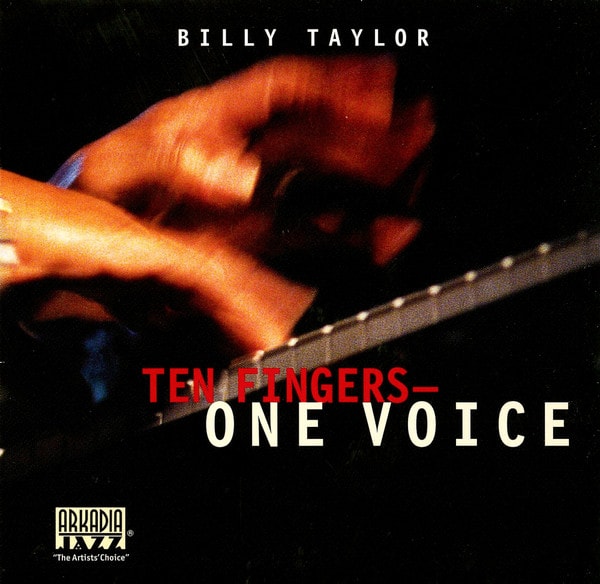
  1. “Wrap Your Troubles in Dreams”
Ten Fingers – One Voice
Arkadia
1998

Taylor was 77 when he recorded this solo album, one of the last few he made.

This standard tune dates back to 1931. Taylor opens with a slow version. His touch isn’t quite as light and silky as it was 45 years before, but the melody still sings and swings. But then he picks up the pace and starts to decorate the tune — It’s odd not to hear bass and drums come in at this moment, but the quiet sibilance of Taylor’s own unmiked scatting is percussion enough — with glittery passages and popping chords. And of course, there’s that harmonic imagination and the use of counterpoint, as if he’s a whole band unto himself.

0 comments

Leave a comment

0 Comments

Your avatar

Loading comments...

🗑️ Delete Comment

Enter moderator password to delete this comment:

✏️ Edit Comment

Enter your email to verify ownership: