COPPER

A PS Audio Publication

Issue 179 • Free Online Magazine

Issue 179 Revolutions Per Minute

Around the World In 80 Lathes, Part 29

Around the World In 80 Lathes, Part 29

The Cost of Everything and the Value of Nothing

During the period from 1992 until 2002, Peter Copeland, employed by the British Library, wrote the Manual of Analogue Sound Restoration Techniques. Peter passed away in 2006, before the publication of his work, which was to take a couple more years.

A section of this outstanding compilation of knowledge is devoted to a historic overview of the cost of the various recording media available around the world. It begins with cylinders and progresses to wax blanks, lacquer disks, shellac and vinyl pressings, magnetic tape, and cassette tape, and concludes with the CD. He wrote, “As I write this, music distribution via The Internet is beginning to conquer conventional retail sales" (we are now at least 20 years down the line). After warning readers who would prefer a happy ending to read no further, he confides that “sound recording is no longer a ‘sexy’ industry. It shows every sign of becoming like the water industry – you just turn a tap, and there it is."

His final conclusion has stayed with me, and I have often quoted him: "It'll take a major shortage to remind people about the cost of everything and the value of nothing." Ever so relevant, I can think of many situations in a few of the industries I have an active interest in where this phrase would be painfully appropriate.

However, at present, vinyl record sales are still on the rise with the disk medium having experienced a massive resurgence over the past few years, while many lower-cost options for listening to music (such as the CD) are on a steep decline. Yet, there is no shortage of people who will take every opportunity to publicly state that they find records grossly overpriced nowadays, while they usually admit that they still buy them anyway. At the same time, the “race to the bottom" mentality is not proving very successful for the record labels that have been engaging in such practices. The lower-priced product is, more often than not, not the one with the highest sales figures, or turnover. Conversely, it is actually the better-quality, more elaborately packaged, mid-priced records that have been selling the highest numbers of copies over the last five years. But is selling more copies always more profitable?

We are living through a time of great change in every aspect of our lives. Many have been experimenting with different business models for sound recordings. The lowest-priced records are usually inadequate in terms of overall product quality to satisfy the market for this particular medium, in the digital age, where alternatives are plentiful and omnipresent for those who do not place quality particularly high on their priority list. As a consequence, they usually neither sell many copies, nor generate much profit in the vinyl domain. However, it doesn't seem like the high volume of sales associated with a carefully-created album is the most profitable avenue either. In fact, it is highly questionable whether there is any direct correlation between quality and profitability anymore.

So, what is the most highly desirable aspect of a product consisting of a carrier of recorded sound? What will make people splash out, when they are already complaining about the cost of a $19.99 record retail price?

A few episodes back, in Issues 147, 148, 149 and 150, we looked at the work of Stockfisch Records and their release of the DMM Dubplate Vol. 1, cut straight onto a copper-plated disk which you can play back on a regular turntable with outstanding sonic results. The disc also features superb packaging and presentation. The retail price far exceeds that of ordinary records and is high enough to not need to end in .99, as it won't make a difference, at least to anyone serious enough about sound quality and audio in general as to be willing to invest in something like that.
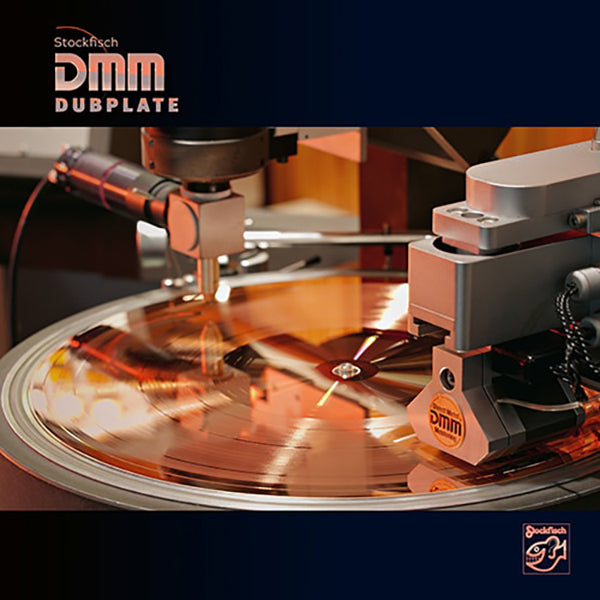
Stockfisch Records' DMM Dubplate, Vol. 1.

Similarly, Pete Hutchinson of the Electric Recording Company started a business offering exquisite reissues of outstanding recordings, cut from the original master tapes, using some of the finest vacuum tube mastering electronics ever made, along with a collection of excellent disk mastering lathes. ERC goes as far as using letterpress printing for a faithful and truly authentic reproduction of the original artwork. Their prices are also far beyond the $.99 range, but as with the DMM Dubplate, once the actual materials and processes used are taken into consideration, they merely account for the economics of producing something of genuinely high quality. There is not much left in the form of an enormous profit margin. It is a labor of love. If the motivation would have been the profit, there are certainly much easier ways of making money.

Both the Electric Recording Co. and Stockfisch Records are successful ventures. Both are certainly outside the ordinary. Both sell very limited-edition products and neither are likely to become tough competition for the individuals on the Forbes Real-Time Billionaires List.

Pete Hutchinson of The Electric Recording Co., with his Lyrec lathe. Courtesy of The Electric Recording Company. Pete Hutchinson of The Electric Recording Co., with his Lyrec lathe. Courtesy of The Electric Recording Company.

Back in 1953, using a modest Presto 6N disk recording lathe, Sam Phillips recorded Elvis Presley performing two songs for his mom, as a one-off record that was not intended as a commercial product. Elvis went on to make quite a bit of money, selling plenty of records. So did Jack White, beginning with the White Stripes and by now involved in a variety of musical projects and business ventures.

But, in 2015, Jack White purchased that one-off acetate of the very first recording of Elvis, for $300,000! It was a rather primitive recording of a man who up until that point was sustaining himself by hauling goods as a truck driver. It wasn't the highest sound quality ever captured in the universe, and it wasn't exquisitely packaged either. It wasn't even a commercial product. What it did have was scarcity, even if originally unintentional. As a one-off direct-to-disk recording, there was only one copy of it. And, it wasn't anywhere near the most expensive record ever sold!

Here's a video about how the disc was transferred to digital for preservation:

At around the same time in 2015, the very first pressed copy of the “White Album” by the Beatles (The Beatles), owned by Ringo Starr, was auctioned for $790,000. But that was peanuts. After all, it was just a mere copy of a record manufactured by the millions. OK, the first copy. I bet the press wasn't even fully warmed up!

More recently, T-Bone Burnett came up with a two-fold concept. One part of the concept was artificial scarcity and the other half was using a process of ionic deposition of a protective layer on a recorded lacquer master disk, so that it can be played back without damage, using a regular turntable. He called his concept Ionic Originals. As for the scarcity part, the idea was to make only one copy and see how much it sells for. For his first release, he got Bob Dylan to record a new version of "Blowin' In The Wind". It was a digital recording, recorded and mixed by Mike Piersante, pre-mastered for vinyl by Gavin Lurssen and cut to disk by Jeff Powell. It sold at auction for $1,769,508 in July 2022.

The reason I call this “artificial scarcity” is that, being a digital recording, there is no technically imposed limitation to how many copies could be generated, in various media. There was no particular reason why only a single record could be made, other than preference due to the business model.

It would make a fitting end to this story if the most expensive sound carrier in history was a one-off ionically-protected dubplate, containing a classic hit by Bob Dylan. But it wasn't. It wasn't even a record.

It was a measly little CD. Yes, that little piece of cheap plastic containing digital data, that costs a few cents to make. In 2015, Wu Tang Clan released on CD a single copy of an album they had reportedly spent six years recording. That copy sold for $2,400,000. The lucky buyer, Martin Shkreli, wasn’t that lucky after all and he was arrested, convicted and imprisoned shortly thereafter. The CD was confiscated by the Department of Justice and subsequently sold again in 2021 to PleasrDAO (a decentralized autonomous organization) for $4,000,000. For a CD.

Just let that sink in for a little bit.

Rewind: the cost of everything and the value of nothing...

Header image: The presentation case for the Wu-Tang Clan Once Upon a Time in Shaolin CD, the most expensive audio carrier in the world. Courtesy of Wikimedia Commons/Wutangcashew. Pete Hutchinson of Electric Recording Co., with his Lyrec lathe. Courtesy of The Electric Recording Company.

More from Issue 179

View All Articles in Issue 179

Search Copper Magazine

#230 Camaraderie by B. Jan Montana May 04, 2026 #230 AXPONA 2026: A Family Gathering by Paul McGowan May 04, 2026 #230 Pianist Ryan Benthall Explores Jazz Realms and Far Beyond With Divine Sky by Frank Doris May 04, 2026 #230 The Vinyl Beat in AXPONA-Land by Rudy Radelic May 04, 2026 #230 Teddy Thompson’s Musical Growth Deepens With Never Be the Same by Ray Chelstowski May 04, 2026 #230 More Fun in the Sun: Florida Audio Expo, Part Two by Frank Doris May 04, 2026 #230 CanJam NYC 2026 Show Report: Heady Sound, Part Two by Frank Doris and Harris Fogel May 04, 2026 #230 Sonic Youth On Murray Street by Wayne Robins May 04, 2026 #230 Graffeo Coffee: A Symphony of Sensory Experience by Joe Caplan May 04, 2026 #230 The Saul Authority: The Story of Hi-Fi Pioneer Saul Marantz by Olivier Meunier-Plante May 04, 2026 #230 How to Play in a Rock Band, 23: Encounters With Famous Musicians, Part Two by Frank Doris May 04, 2026 #230 An Outlier in the Rack: A Vintage BIC Beam Box by The Staff at Just Audio May 04, 2026 #230 PS Audio in the News by PS Audio Staff May 04, 2026 #230 A Cautionary Tale by Rich Isaacs May 04, 2026 #230 Reel-to-Reel Roots, Part 33 (Revised): Ken Kessler Reports On the 2026 (British) AudioJumble by Ken Kessler May 04, 2026 #230 Text Messaging by Frank Doris May 04, 2026 #230 The Audiophile Rat Race by Peter Xeni May 04, 2026 #230 On the Rocks by Rich Isaacs May 04, 2026 #229 The Earliest Stars of Country Music, Part Three by Jeff Weiner Apr 06, 2026 #229 The Healing Power of Music and Sound at the Omega Institute by Joe Caplan Apr 06, 2026 #229 CanJam NYC 2026 Show Report: Heady Sound, Part One by Frank Doris Apr 06, 2026 #229 Florida Audio Expo 2026: Warming Up to High-End Audio, Part One by Frank Doris Apr 06, 2026 #229 Quick Takes: Anne Bisson, Sam Morrison, The Velvet Underground, and the Stooges by Frank Doris Apr 06, 2026 #229 The Vinyl Beat: New Arrivals, and Old Audio Show Demo Scores to Settle by Rudy Radelic Apr 06, 2026 #229 Harvard Gets a High-End Audio Education by Frank Doris Apr 06, 2026 #229 No Country for Old Knees by B. Jan Montana Apr 06, 2026 #229 How To Play in A Rock Band, 22: Encounters With Famous Musicians, Part 1 by Frank Doris Apr 06, 2026 #229 The Soulful Grooves of Guinea-Bissau by Steve Kindig Apr 06, 2026 #229 Four-Hand Piano Performance at Its Finest by Stephan Haberthür Apr 06, 2026 #229 The People Who Make Audio Happen: Supreme Acoustics Systems’ Las Vegas Grand Opening by Harris Fogel Apr 06, 2026 #229 Blue Öyster Cult: Tyranny and Expectations by Wayne Robins Apr 06, 2026 #229 Guitarist Rick Vito’s Cinematic New Album, Slidemaster by Ray Chelstowski Apr 06, 2026 #229 Measurements and Observational Listening by Paul McGowan Apr 06, 2026 #229 PS Audio in the News by PS Audio Staff Apr 06, 2026 #229 Back to My Reel-to-Reel Roots, Part 28: The Cassette Strikes Back by Ken Kessler Apr 06, 2026 #229 Are You Receiving Me? by Frank Doris Apr 06, 2026 #229 Hospitality by Peter Xeni Apr 06, 2026 #229 Cantina Gateway by James Schrimpf Apr 06, 2026 #228 Serita’s Black Rose Duo Shakes Your Soul With a Blend of Funk, Rock, Blues and a Whole Lot More by Frank Doris Mar 02, 2026 #228 Vinyl, A Love Story by Wayne Robins Mar 02, 2026 #228 Thrill Seeker by B. Jan Montana Mar 02, 2026 #228 The Vinyl Beat: Donald Byrd, Bill Evans, Wes Montgomery, Eddie Palmieri and Frank Sinatra by Rudy Radelic Mar 02, 2026 #228 Listening to Prestige: The History of a Vitally Important Jazz Record Label by Frank Doris Mar 02, 2026 #228 How to Play in a Rock Band, 21: Touring With James Lee Stanley by Frank Doris Mar 02, 2026 #228 The NAMM 2026 Show: The Music Industry’s Premier Event by John Volanski Mar 02, 2026 #228 The Earliest Stars of Country Music, Part Two by Jeff Weiner Mar 02, 2026 #228 From The Audiophile's Guide: A Brief History of Stereophonic Sound by Paul McGowan Mar 02, 2026

Around the World In 80 Lathes, Part 29

Around the World In 80 Lathes, Part 29

The Cost of Everything and the Value of Nothing

During the period from 1992 until 2002, Peter Copeland, employed by the British Library, wrote the Manual of Analogue Sound Restoration Techniques. Peter passed away in 2006, before the publication of his work, which was to take a couple more years.

A section of this outstanding compilation of knowledge is devoted to a historic overview of the cost of the various recording media available around the world. It begins with cylinders and progresses to wax blanks, lacquer disks, shellac and vinyl pressings, magnetic tape, and cassette tape, and concludes with the CD. He wrote, “As I write this, music distribution via The Internet is beginning to conquer conventional retail sales" (we are now at least 20 years down the line). After warning readers who would prefer a happy ending to read no further, he confides that “sound recording is no longer a ‘sexy’ industry. It shows every sign of becoming like the water industry – you just turn a tap, and there it is."

His final conclusion has stayed with me, and I have often quoted him: "It'll take a major shortage to remind people about the cost of everything and the value of nothing." Ever so relevant, I can think of many situations in a few of the industries I have an active interest in where this phrase would be painfully appropriate.

However, at present, vinyl record sales are still on the rise with the disk medium having experienced a massive resurgence over the past few years, while many lower-cost options for listening to music (such as the CD) are on a steep decline. Yet, there is no shortage of people who will take every opportunity to publicly state that they find records grossly overpriced nowadays, while they usually admit that they still buy them anyway. At the same time, the “race to the bottom" mentality is not proving very successful for the record labels that have been engaging in such practices. The lower-priced product is, more often than not, not the one with the highest sales figures, or turnover. Conversely, it is actually the better-quality, more elaborately packaged, mid-priced records that have been selling the highest numbers of copies over the last five years. But is selling more copies always more profitable?

We are living through a time of great change in every aspect of our lives. Many have been experimenting with different business models for sound recordings. The lowest-priced records are usually inadequate in terms of overall product quality to satisfy the market for this particular medium, in the digital age, where alternatives are plentiful and omnipresent for those who do not place quality particularly high on their priority list. As a consequence, they usually neither sell many copies, nor generate much profit in the vinyl domain. However, it doesn't seem like the high volume of sales associated with a carefully-created album is the most profitable avenue either. In fact, it is highly questionable whether there is any direct correlation between quality and profitability anymore.

So, what is the most highly desirable aspect of a product consisting of a carrier of recorded sound? What will make people splash out, when they are already complaining about the cost of a $19.99 record retail price?

A few episodes back, in Issues 147, 148, 149 and 150, we looked at the work of Stockfisch Records and their release of the DMM Dubplate Vol. 1, cut straight onto a copper-plated disk which you can play back on a regular turntable with outstanding sonic results. The disc also features superb packaging and presentation. The retail price far exceeds that of ordinary records and is high enough to not need to end in .99, as it won't make a difference, at least to anyone serious enough about sound quality and audio in general as to be willing to invest in something like that.

Stockfisch Records' DMM Dubplate, Vol. 1.

Similarly, Pete Hutchinson of the Electric Recording Company started a business offering exquisite reissues of outstanding recordings, cut from the original master tapes, using some of the finest vacuum tube mastering electronics ever made, along with a collection of excellent disk mastering lathes. ERC goes as far as using letterpress printing for a faithful and truly authentic reproduction of the original artwork. Their prices are also far beyond the $.99 range, but as with the DMM Dubplate, once the actual materials and processes used are taken into consideration, they merely account for the economics of producing something of genuinely high quality. There is not much left in the form of an enormous profit margin. It is a labor of love. If the motivation would have been the profit, there are certainly much easier ways of making money.

Both the Electric Recording Co. and Stockfisch Records are successful ventures. Both are certainly outside the ordinary. Both sell very limited-edition products and neither are likely to become tough competition for the individuals on the Forbes Real-Time Billionaires List.

Pete Hutchinson of The Electric Recording Co., with his Lyrec lathe. Courtesy of The Electric Recording Company. Pete Hutchinson of The Electric Recording Co., with his Lyrec lathe. Courtesy of The Electric Recording Company.

Back in 1953, using a modest Presto 6N disk recording lathe, Sam Phillips recorded Elvis Presley performing two songs for his mom, as a one-off record that was not intended as a commercial product. Elvis went on to make quite a bit of money, selling plenty of records. So did Jack White, beginning with the White Stripes and by now involved in a variety of musical projects and business ventures.

But, in 2015, Jack White purchased that one-off acetate of the very first recording of Elvis, for $300,000! It was a rather primitive recording of a man who up until that point was sustaining himself by hauling goods as a truck driver. It wasn't the highest sound quality ever captured in the universe, and it wasn't exquisitely packaged either. It wasn't even a commercial product. What it did have was scarcity, even if originally unintentional. As a one-off direct-to-disk recording, there was only one copy of it. And, it wasn't anywhere near the most expensive record ever sold!

Here's a video about how the disc was transferred to digital for preservation:

At around the same time in 2015, the very first pressed copy of the “White Album” by the Beatles (The Beatles), owned by Ringo Starr, was auctioned for $790,000. But that was peanuts. After all, it was just a mere copy of a record manufactured by the millions. OK, the first copy. I bet the press wasn't even fully warmed up!

More recently, T-Bone Burnett came up with a two-fold concept. One part of the concept was artificial scarcity and the other half was using a process of ionic deposition of a protective layer on a recorded lacquer master disk, so that it can be played back without damage, using a regular turntable. He called his concept Ionic Originals. As for the scarcity part, the idea was to make only one copy and see how much it sells for. For his first release, he got Bob Dylan to record a new version of "Blowin' In The Wind". It was a digital recording, recorded and mixed by Mike Piersante, pre-mastered for vinyl by Gavin Lurssen and cut to disk by Jeff Powell. It sold at auction for $1,769,508 in July 2022.

The reason I call this “artificial scarcity” is that, being a digital recording, there is no technically imposed limitation to how many copies could be generated, in various media. There was no particular reason why only a single record could be made, other than preference due to the business model.

It would make a fitting end to this story if the most expensive sound carrier in history was a one-off ionically-protected dubplate, containing a classic hit by Bob Dylan. But it wasn't. It wasn't even a record.

It was a measly little CD. Yes, that little piece of cheap plastic containing digital data, that costs a few cents to make. In 2015, Wu Tang Clan released on CD a single copy of an album they had reportedly spent six years recording. That copy sold for $2,400,000. The lucky buyer, Martin Shkreli, wasn’t that lucky after all and he was arrested, convicted and imprisoned shortly thereafter. The CD was confiscated by the Department of Justice and subsequently sold again in 2021 to PleasrDAO (a decentralized autonomous organization) for $4,000,000. For a CD.

Just let that sink in for a little bit.

Rewind: the cost of everything and the value of nothing...

Header image: The presentation case for the Wu-Tang Clan Once Upon a Time in Shaolin CD, the most expensive audio carrier in the world. Courtesy of Wikimedia Commons/Wutangcashew. Pete Hutchinson of Electric Recording Co., with his Lyrec lathe. Courtesy of The Electric Recording Company.

0 comments

Leave a comment

0 Comments

Your avatar

Loading comments...

🗑️ Delete Comment

Enter moderator password to delete this comment:

✏️ Edit Comment

Enter your email to verify ownership: