COPPER

A PS Audio Publication

Issue 67 • Free Online Magazine

Issue 67 FEATURED

Wine Like Grandpa Used to Make

When I told Editor Bill Leebens that I write about wine for a living, he wanted exciting, off-the-wall stories about my day job. Such anecdotes might have been more common during my time in wine auctions when millionaires swooped in to buy up all the cases of 1982 Latour, Lafite, and Mouton, but I’m no longer involved with trends, scores, and prices of commodity wines. Nowadays, my work revolves around searching out more affordable and accessible products, making me the envy of my wife’s friends, family, and colleagues. “He gets paid to taste wine? Where do I sign up?”  Next comes the inevitable recommendation request. “Ask him what I should drink,” thinking that I know the exact $20 bottle they too would love. After twenty years of retailing, consulting, and marketing, my personal tastes have long departed the mainstream and gone back to wine’s genesis, like switching from EDM to pure Delta Blues. I only want soulful, complex, natural stuff – straight out of the dirt, and that’s what I hope other wine drinkers will try.

Every week salespeople and producers bring me new and interesting products to evaluate for my restaurant and store accounts. I also attend the equivalent of audio shows for wine professionals where I meet winemakers and grape growers. I ask them about their portfolio, winemaking practices and farming philosophy as I weave from table to table, sipping and spitting up to one hundred wines. It’s certainly not the worst way to spend a workday. But then there’s the junk I have to wade through: market-driven, mass-produced wines that pose as genuine articles.

Some wine, especially the ones with cute labels and creative backstories, are nothing more than an exercise in branding. There are all kinds of media personalities, conglomerates, and ad-men that dream up wine labels with no tradition, skill, or provenance behind them. Just tap into reservoirs of surplus wine, hire a consultant, invent the marketing and anyone can set up a label. I’ve even received offers to start my own brand. If I had to find wine that met my standards, it would never make it to the bottling line.

Most consumers believe that their wine is a healthy all-natural drink made from grapes. Were it not for those pesky sulfites it would be a miracle beverage full of anti-oxidants and cholesterol-lowering properties. During one of my retail stints in Brooklyn, NY, I lived through many epidemics of sulfite hysteria instigated by an article on a slow news day. Suddenly, everyone would be asking, “Where are your organic wines? Which ones are sulfite-free? Did you know sulfites cause headaches and hives?” Then, depending on my mood, I would go into a shorter or longer explanation of sulfur.

My stock answer would be, “Well, organic doesn’t mean sulfite-free, and ‘sulfite-free’ wines actually contain naturally occurring sulfites as a by-product of fermentation… organic wines can also have the same amount of sulfur as regular wine, and white wine has more than red…” and then the customer zones out. “But does it taste good? And, why does it cost $30!?” They ask as if I’m trying beef up my nonexistent commission. Upon consideration of price against my description of the wine, many revert to their usual brand. Sulfites be damned!

After the transaction, my co-workers and I exchange a knowing glance, “If they only knew what else was in that wine.” Organic granola even has dried fruit treated with sulfites. And if one eats from fast food restaurants or packages, then avoiding sulfites in wine is pure folly.

Sulfur is a chemical element that has been used since antiquity. Also called brimstone, naturally occurring crystallized sulfur (often found near volcanoes) is one of the oldest farming and medicinal remedies. While you don’t want too much of any chemical in your wine, sulfur should be the least of your worries. Besides sulfites, winemakers are under no obligation to list ingredients in wine – not to mention all the traces of pesticides, herbicides, and fungicides sprayed in the vineyards.  Producers are free to use scores of animal, vegetable, and chemical additives to fix color, smell, flavor, and stability, transforming swill into a palatable liquid.

That $15 gallon-box of wine is not to be trusted, and the same goes for some of the extremely high-end cult wines that risk losing piles of money due to a bad review. So what in the world is safe to drink? First of all, drink what you enjoy. As the French say, “À chacun son goût” – to each his own taste. Don’t let me or a salesman talk you into anything. But, if you’re willing to stimulate your palate and brain, I have a recommendation: Biodynamic, the original organic wine.

Developed in the 1920s by Rudolf Steiner, Biodynamic agriculture is a complicated name for pre-industrial farming. It’s what my grandfather did back in Yugoslavia. It’s what everyone did before agrochemicals and machinery. A sustainable family farm is an integrated system that relies on animals, plants, and people to nourish each other in a regenerative cycle. Hence, larger farm animals eat vegetation and spread manure to provide further nutrition for bugs and new plants. Ducks, chickens, and predatory birds feed on vegetation, rodents, and insects. People eat the birds, farm animals, and plants. Then, leftovers and inedibles are put back into the system as compost and animal feed.

Although this type of farming has been around for thousands of years, Biodynamics is viewed with skepticism because it circumvents chemical intervention and is dictated by nature’s schedule. For example, planting, fertilizing, and harvesting are done according to lunar cycles. Does this conjure up visions of witches dancing around a fire during moonrise? Even so, there’s no denying that the moon’s gravitational force affects ocean tides as well as sap activity in vines and water content in soil. In fact, NASA charts moons phases to the minute, so it’s even easier for Biodynamic farmers to map out their year from sowing to final harvest.

Biodynamic farming is simply about planting the right crops in the right place at the right time and letting nature conduct her symphony: bats and birds and ladybugs control pests; grasses are planted between vine rows to crowd out weeds; hoofed animals work as tractors and tillers. When needed, infusions of herbs, barks, plants, bacteria, and fungi are used as natural remedies in the field, as well as a limited amount of sulfur. Unlike that gallon box of cheap Chablis, this type of low-intervention wine is made in the vineyard and not in the lab. Does it make a difference in flavor? You bet. Does it taste better? Let’s just say it’s different. I find Biodynamic wine to be vivacious, expressive of its environment, and brimming with natural grape flavor. Compare a seasonal local tomato from an organic farm and that greenhouse imposter at the supermarket. I know which one’s going into my Caprese salad.

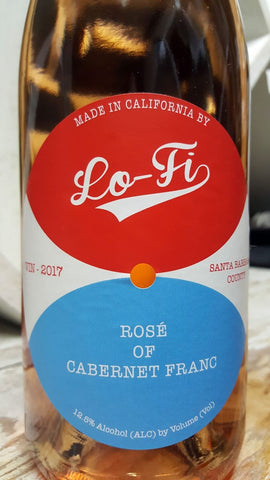
I could list my favorite winemakers here, but the brands might not be available at your local shop. Instead, let me suggest my go-to regions. From France, I like Loire, Beaujolais, Languedoc, and Rhône. Spain has many excellent wines from Penedes, Jumilla, and Rioja. Italy and Greece have quirky old-school winemakers all over the place, and don’t forget California! One of my favorite Rosés this past season was from Mike Roth & Craig Winchester at Lo-Fi Wines. Check out the back label: they listed the ingredients; this should be the norm.
If you live outside of a major urban center and have a limited selection of shops, here are a few more tips for seeking out healthier wines:

-Contact natural wine importers like Jenny & Francois and Kermit Lynch for retailer referrals, or ask your shop to special order Biodynamic wines from them.

– Browse the European sections for default organic options at reasonable prices. Many winemakers forgo the costly certifications.

– Look on the back label for descriptors such as: low intervention, spontaneous fermentation, wild yeasts, no added sulfites, sustainable, small-production, and organic practices.

If you’re like me and prefer not to drink polyvinyl-polypyr-rolidone, glyceryl mono-oleate, or potassium ferrocyanide, then try Biodynamic — or at least organic—wine. Natural winemakers are a serious, sometimes eccentric, bunch entirely devoted to sustainable farming. It’s an all-encompassing lifestyle for them but we can still reap the benefits of wholesome wine. It won’t make you look twenty years younger, re-grow hair, or restore hearing, but Biodynamic wines are much better for you and the environment. À votre santé!

More from Issue 67

View All Articles in Issue 67

Search Copper Magazine

#231 Piano Prodigy Jude Kofie Releases His Debut Album On Octave Records by Frank Doris Jun 01, 2026 #231 Underappreciated Artists, Part Two: City Boy by Rich Isaacs Jun 01, 2026 #231 Music and the Art of Creation: Talking With Saxophonist Rob Scheps by Joe Caplan Jun 01, 2026 #231 How to Play in a Rock Band, 24: Further Adventures at the 2026 Montauk Music Festival by Frank Doris Jun 01, 2026 #231 Courtney Barnett: Creature of Habit by Wayne Robins Jun 01, 2026 #231 Angine de Poitrine: Interstellar Guitar Rock Saviors Headed for Late-Night TV Pop Stardom? by Mark Lepage Jun 01, 2026 #231 My Impressions of AXPONA 2026, Part One by Frank Doris Jun 01, 2026 #231 2026 La Jolla Concours d'Elegance: Another Aesthetic Feast by B. Jan Montana Jun 01, 2026 #231 Country Music Icon Jo Dee Messina’s Bridges: A New Beginning by Ray Chelstowski Jun 01, 2026 #231 The Luxury Dispatch Hosts a Video Podcast With Ken Kessler by Ken Kessler Jun 01, 2026 #231 The Vinyl Beat: Tracking in the Motor City by Rudy Radelic Jun 01, 2026 #231 Lots of Fun With DSP: The Ferrum Audio WANDLA DAC and Its Tube Mode by Frank Doris Jun 01, 2026 #231 From The Audiophile's Guide: Digital Source Components and Streaming Audio by Paul McGowan Jun 01, 2026 #231 Onkyo’s Monster M-510 power amplifier by The Staff at Just Audio Jun 01, 2026 #231 PS Audio in the News by PS Audio Staff Jun 01, 2026 #231 Naming Convention by Peter Xeni Jun 01, 2026 #231 Les Invisibles by Frank Doris Jun 01, 2026 #231 Wildlife Scene by James Schrimpf Jun 01, 2026 #230 Camaraderie by B. Jan Montana May 04, 2026 #230 AXPONA 2026: A Family Gathering by Paul McGowan May 04, 2026 #230 Pianist Ryan Benthall Explores Jazz Realms and Far Beyond With Divine Sky by Frank Doris May 04, 2026 #230 The Vinyl Beat in AXPONA-Land by Rudy Radelic May 04, 2026 #230 Teddy Thompson’s Musical Growth Deepens With Never Be the Same by Ray Chelstowski May 04, 2026 #230 More Fun in the Sun: Florida Audio Expo, Part Two by Frank Doris May 04, 2026 #230 CanJam NYC 2026 Show Report: Heady Sound, Part Two by Frank Doris and Harris Fogel May 04, 2026 #230 Sonic Youth On Murray Street by Wayne Robins May 04, 2026 #230 Graffeo Coffee: A Symphony of Sensory Experience by Joe Caplan May 04, 2026 #230 The Saul Authority: The Story of Hi-Fi Pioneer Saul Marantz by Olivier Meunier-Plante May 04, 2026 #230 How to Play in a Rock Band, 23: Encounters With Famous Musicians, Part Two by Frank Doris May 04, 2026 #230 An Outlier in the Rack: A Vintage BIC Beam Box by The Staff at Just Audio May 04, 2026 #230 PS Audio in the News by PS Audio Staff May 04, 2026 #230 A Cautionary Tale by Rich Isaacs May 04, 2026 #230 Reel-to-Reel Roots, Part 33 (Revised): Ken Kessler Reports On the 2026 (British) AudioJumble by Ken Kessler May 04, 2026 #230 Text Messaging by Frank Doris May 04, 2026 #230 The Audiophile Rat Race by Peter Xeni May 04, 2026 #230 On the Rocks by Rich Isaacs May 04, 2026 #229 The Earliest Stars of Country Music, Part Three by Jeff Weiner Apr 06, 2026 #229 The Healing Power of Music and Sound at the Omega Institute by Joe Caplan Apr 06, 2026 #229 CanJam NYC 2026 Show Report: Heady Sound, Part One by Frank Doris Apr 06, 2026 #229 Florida Audio Expo 2026: Warming Up to High-End Audio, Part One by Frank Doris Apr 06, 2026 #229 Quick Takes: Anne Bisson, Sam Morrison, The Velvet Underground, and the Stooges by Frank Doris Apr 06, 2026 #229 The Vinyl Beat: New Arrivals, and Old Audio Show Demo Scores to Settle by Rudy Radelic Apr 06, 2026 #229 Harvard Gets a High-End Audio Education by Frank Doris Apr 06, 2026 #229 No Country for Old Knees by B. Jan Montana Apr 06, 2026 #229 How To Play in A Rock Band, 22: Encounters With Famous Musicians, Part 1 by Frank Doris Apr 06, 2026 #229 The Soulful Grooves of Guinea-Bissau by Steve Kindig Apr 06, 2026 #229 Four-Hand Piano Performance at Its Finest by Stephan Haberthür Apr 06, 2026

Wine Like Grandpa Used to Make

When I told Editor Bill Leebens that I write about wine for a living, he wanted exciting, off-the-wall stories about my day job. Such anecdotes might have been more common during my time in wine auctions when millionaires swooped in to buy up all the cases of 1982 Latour, Lafite, and Mouton, but I’m no longer involved with trends, scores, and prices of commodity wines. Nowadays, my work revolves around searching out more affordable and accessible products, making me the envy of my wife’s friends, family, and colleagues. “He gets paid to taste wine? Where do I sign up?”  Next comes the inevitable recommendation request. “Ask him what I should drink,” thinking that I know the exact $20 bottle they too would love. After twenty years of retailing, consulting, and marketing, my personal tastes have long departed the mainstream and gone back to wine’s genesis, like switching from EDM to pure Delta Blues. I only want soulful, complex, natural stuff – straight out of the dirt, and that’s what I hope other wine drinkers will try.

Every week salespeople and producers bring me new and interesting products to evaluate for my restaurant and store accounts. I also attend the equivalent of audio shows for wine professionals where I meet winemakers and grape growers. I ask them about their portfolio, winemaking practices and farming philosophy as I weave from table to table, sipping and spitting up to one hundred wines. It’s certainly not the worst way to spend a workday. But then there’s the junk I have to wade through: market-driven, mass-produced wines that pose as genuine articles.

Some wine, especially the ones with cute labels and creative backstories, are nothing more than an exercise in branding. There are all kinds of media personalities, conglomerates, and ad-men that dream up wine labels with no tradition, skill, or provenance behind them. Just tap into reservoirs of surplus wine, hire a consultant, invent the marketing and anyone can set up a label. I’ve even received offers to start my own brand. If I had to find wine that met my standards, it would never make it to the bottling line.

Most consumers believe that their wine is a healthy all-natural drink made from grapes. Were it not for those pesky sulfites it would be a miracle beverage full of anti-oxidants and cholesterol-lowering properties. During one of my retail stints in Brooklyn, NY, I lived through many epidemics of sulfite hysteria instigated by an article on a slow news day. Suddenly, everyone would be asking, “Where are your organic wines? Which ones are sulfite-free? Did you know sulfites cause headaches and hives?” Then, depending on my mood, I would go into a shorter or longer explanation of sulfur.

My stock answer would be, “Well, organic doesn’t mean sulfite-free, and ‘sulfite-free’ wines actually contain naturally occurring sulfites as a by-product of fermentation… organic wines can also have the same amount of sulfur as regular wine, and white wine has more than red…” and then the customer zones out. “But does it taste good? And, why does it cost $30!?” They ask as if I’m trying beef up my nonexistent commission. Upon consideration of price against my description of the wine, many revert to their usual brand. Sulfites be damned!

After the transaction, my co-workers and I exchange a knowing glance, “If they only knew what else was in that wine.” Organic granola even has dried fruit treated with sulfites. And if one eats from fast food restaurants or packages, then avoiding sulfites in wine is pure folly.

Sulfur is a chemical element that has been used since antiquity. Also called brimstone, naturally occurring crystallized sulfur (often found near volcanoes) is one of the oldest farming and medicinal remedies. While you don’t want too much of any chemical in your wine, sulfur should be the least of your worries. Besides sulfites, winemakers are under no obligation to list ingredients in wine – not to mention all the traces of pesticides, herbicides, and fungicides sprayed in the vineyards.  Producers are free to use scores of animal, vegetable, and chemical additives to fix color, smell, flavor, and stability, transforming swill into a palatable liquid.

That $15 gallon-box of wine is not to be trusted, and the same goes for some of the extremely high-end cult wines that risk losing piles of money due to a bad review. So what in the world is safe to drink? First of all, drink what you enjoy. As the French say, “À chacun son goût” – to each his own taste. Don’t let me or a salesman talk you into anything. But, if you’re willing to stimulate your palate and brain, I have a recommendation: Biodynamic, the original organic wine.

Developed in the 1920s by Rudolf Steiner, Biodynamic agriculture is a complicated name for pre-industrial farming. It’s what my grandfather did back in Yugoslavia. It’s what everyone did before agrochemicals and machinery. A sustainable family farm is an integrated system that relies on animals, plants, and people to nourish each other in a regenerative cycle. Hence, larger farm animals eat vegetation and spread manure to provide further nutrition for bugs and new plants. Ducks, chickens, and predatory birds feed on vegetation, rodents, and insects. People eat the birds, farm animals, and plants. Then, leftovers and inedibles are put back into the system as compost and animal feed.

Although this type of farming has been around for thousands of years, Biodynamics is viewed with skepticism because it circumvents chemical intervention and is dictated by nature’s schedule. For example, planting, fertilizing, and harvesting are done according to lunar cycles. Does this conjure up visions of witches dancing around a fire during moonrise? Even so, there’s no denying that the moon’s gravitational force affects ocean tides as well as sap activity in vines and water content in soil. In fact, NASA charts moons phases to the minute, so it’s even easier for Biodynamic farmers to map out their year from sowing to final harvest.

Biodynamic farming is simply about planting the right crops in the right place at the right time and letting nature conduct her symphony: bats and birds and ladybugs control pests; grasses are planted between vine rows to crowd out weeds; hoofed animals work as tractors and tillers. When needed, infusions of herbs, barks, plants, bacteria, and fungi are used as natural remedies in the field, as well as a limited amount of sulfur. Unlike that gallon box of cheap Chablis, this type of low-intervention wine is made in the vineyard and not in the lab. Does it make a difference in flavor? You bet. Does it taste better? Let’s just say it’s different. I find Biodynamic wine to be vivacious, expressive of its environment, and brimming with natural grape flavor. Compare a seasonal local tomato from an organic farm and that greenhouse imposter at the supermarket. I know which one’s going into my Caprese salad.

I could list my favorite winemakers here, but the brands might not be available at your local shop. Instead, let me suggest my go-to regions. From France, I like Loire, Beaujolais, Languedoc, and Rhône. Spain has many excellent wines from Penedes, Jumilla, and Rioja. Italy and Greece have quirky old-school winemakers all over the place, and don’t forget California! One of my favorite Rosés this past season was from Mike Roth & Craig Winchester at Lo-Fi Wines. Check out the back label: they listed the ingredients; this should be the norm.

If you live outside of a major urban center and have a limited selection of shops, here are a few more tips for seeking out healthier wines:

-Contact natural wine importers like Jenny & Francois and Kermit Lynch for retailer referrals, or ask your shop to special order Biodynamic wines from them.

– Browse the European sections for default organic options at reasonable prices. Many winemakers forgo the costly certifications.

– Look on the back label for descriptors such as: low intervention, spontaneous fermentation, wild yeasts, no added sulfites, sustainable, small-production, and organic practices.

If you’re like me and prefer not to drink polyvinyl-polypyr-rolidone, glyceryl mono-oleate, or potassium ferrocyanide, then try Biodynamic — or at least organic—wine. Natural winemakers are a serious, sometimes eccentric, bunch entirely devoted to sustainable farming. It’s an all-encompassing lifestyle for them but we can still reap the benefits of wholesome wine. It won’t make you look twenty years younger, re-grow hair, or restore hearing, but Biodynamic wines are much better for you and the environment. À votre santé!

0 comments

Leave a comment

0 Comments

Your avatar

Loading comments...

🗑️ Delete Comment

Enter moderator password to delete this comment:

✏️ Edit Comment

Enter your email to verify ownership: