COPPER

A PS Audio Publication

Issue 18 • Free Online Magazine

Issue 18 FEATURED

Talking Direct

Back in my pre-teen youth, I had an undying love for the brand Technics. My uncle owned a Technics cassette deck , the local hi-fi store seemed to stock nothing else but, and I think I had virtually memorized the catalog by the time I turned teenage!

No surprise then that my first real turntable at age 16 was a Technics SL-1200/II. I had read enough to know that anything automatic and linear tracking in the arm department was a no-no, which ruled out most of the Technics range. I could find no word, good or bad, about the ‘1200 in the UK press, so I didn’t realize at the time that it had already been around some seven years. I eventually fitted the deck with an Ortofon MC10/II cartridge (a hefty £60 at the time!) and do you know what? It sounded rather good. Good enough to make the sound of a CD player a disappointment, when I finally managed to buy one of those wretched machines.  I can remember listening to a Madonna album on CD versus the 7” single, and confused was I that the record sounded better. Especially since I had lusted after one of the bloody digital things for several years.


Before I was aged 21, I had worked at Alphason Designs, and left there for a job at what was then one of the UKs biggest Linn dealers , Cleartone Hifi. Mike Knowles at Alphason had explained in great detail all of his ideas on turntable design and theory. He didn’t understand direct drive, but doubted it was any good. At Cleartone I was sent up to Glasgow for ‘Linn training’. Pre-armed with Mike’s knowledge of the LP12, and knowing quite how superior the Alphason Sonata turntable was to the Sondek, I certainly wasn’t converted to the Linn cause. However, both  Linn and Mike left me with the notion that it was so hard to get the critical main bearing right, that it was totally impossible to get it right AND build a motor around it…which pretty much ruled out direct drive ‘tables altogether.

Peer pressure. I caved in, The Tecchy became a bit embarrassing in my new hi-fi circles. A new, expensive suspended belt drive deck was ordered, the ‘1200 sold, and a temporary  Thorens TD150/II was in place. The Thorens blurred the bass, was noisy, and not as defined, but it sounded ok. Livable. The expensive deck I did buy sounded worse than either the Technics or the Thorens.  It was quickly swapped for something else, biggest disappointment ever, and again, the 1200 & 150, both now departed, sounded better. A new CD player was now sounding better than my vinyl. I was depressed, until the accidental purchase of a Garrard 401 came along!
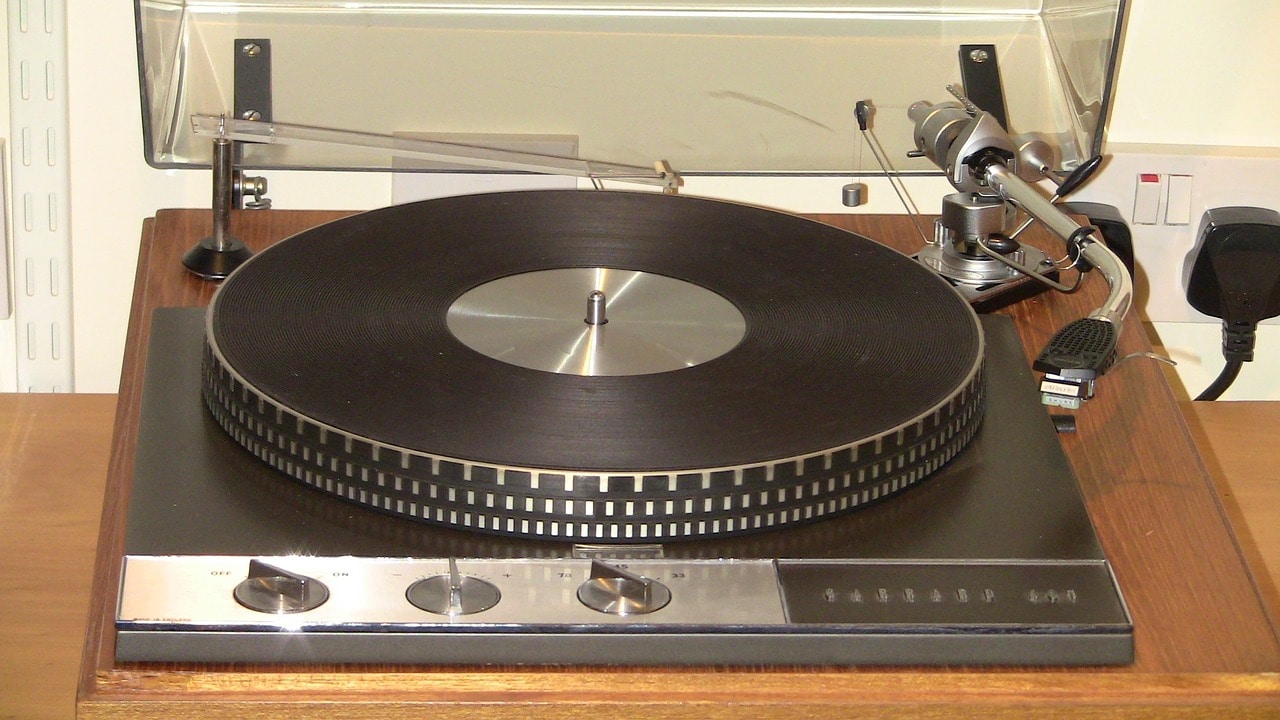
garrard-401-891915_1280 

The life-changing (for Haden, anyway) Garrard 401.

Over the past 20 years, the Technics direct drive system has been realized to be something. In the UK especially, direct drive was considered something of a joke. Not quite as big a joke as idler drive, but a joke nonetheless. The fact that I feel both are vastly superior to rubber band belt drive is irrelevant.

The deck that started it all, back in 1969, was the Technics SP10, an arm-free motor unit. Built on a square chassis, of quite thin wall aluminium, the deck measures and sounds well. Technically, it offered  noise and wow and flutter levels  superior to any deck previously made. Speeds of 33 and 45 rpm, with electronic pitch control. As with  the Garrard 301/401, the plinth is a critical component, and the original Technics plinth is just as bad as every other design from that era. The electronically- controlled motor, however,  was a revolution in turntable design. On this early deck, an 18V DC supply feeds a central motor hub, which contains all the drive electronics. An oscillator and a three-channel power amplifier drive multiples of windings on the motor itself.


Technics_SP-10_Service_Manual_Schematics_DIY

When mounted correctly, the deck is a firm rival for a standard 301 or 401. The biggest tweak is to remove the motor unit from the thin and rather ringy, resonant chassis and bolt it in to a solid lump of wood; this goes for the later SP10/II as well. The square shape of the SP10 makes fitting tone arms a bit of a chore.

The original SL1200 and the rest of the pre-1979 range all used some variant of this drive unit. Sadly the SL1200, SL1300, SL1400, SL1700 etc, all had rubbish plastic-y plinths, and pretty crappy arms. But again: rip the heart out of the deck, and you potentially have something excellent.

Direct Drive was Matsushita, Technics’ parent company, baby. The original SP10 I have seen branded National, Panasonic, Technics by Panasonic, and just Technics! By 1980 most Japanese companies had developed their own direct drive systems. Pioneer made an excellent deck in the PLC 590, Sony did a really High-End deck. Less successful (in my perhaps solitary opinion!) are the Denon offerings or the JVC.

But it was the Europeans who really brassed off the Japanese: EMT launched the 950, which started instantly, stopped instantly, and bettered the SP10s specification. Technics counter-offered the rare SP10D, which only seems to have appeared in Canada, ex-broadcast. This has a much bigger power supply and motor drive circuit, and was also capable, with mods, of running at 78 rpm. But this was still no match for the EMT.

Matsushita upped the ante with the SP10 Mk II. The original deck was just ‘powered up and down’ from the mains. The Mk II featured a myriad of early logic ICs buried deep in the deck, which controlled a quartz reference voltage control, a gutsier motor, a very powerful servo system and a mechanical brake on the platter. Like the Mk I a strobe is provided, but on the domestic deck its ‘tits on a bull’ useful, as you can’t adjust the pitch. Biggest upgrade, and the only real sonic advantage, is that the power supply is no longer in-built, but is a separate little box with an 4 pin plug. On pressing the start button, the logic control gives the motor drive a jolt, and the deck spins up to speed ridiculously quickly. The servo is cast iron, you can apply as much pressure to the platter with a finger as you like— you are just going to burn your finger! Stopping the deck engages the mechanical brake, and ‘stalls’ the motor in an instant. All of this jiggery pokery of the original design rivalled the much more expensive EMT; and record stations around the world dumped their Gates, Garrards, Thorens et al for them.

Along with the Mk II came a range of quite nice tone arms, ranging from modest to quite good, and some quite exceptional cartridges. The deck was a huge success professionally, being eventually replaced by the massive SP10 Mk III which used a different motor system that was a real monster of a thing. And yours truly has never had his sticky paws on one! (Technics also upgraded the plinth, to ‘obsidian’, volcanic glass combined with solid wood. Sounds as bad to be honest, makes your records as cold as digital.)

However, the SL1200/SL1210 Mk II used a new motor design similar to that of the SP10 Mk III. Not as big, but quartz and logic controlled, variable pitch, a rubber loaded plinth, the whole deck is as tough as old boots (except the arm!), incredibly reliable (although the power micro switch can stick in the off position on well-used examples), and sounds really quite good. I bought a very clean second-hand 1210 to play my car-boot finds on, and it is quite remarkable for the money just how good it sounds. Of course, this deck now has a reputation as a DJ deck due to its bomb-proof construction, fast start and stop, and ease of use. It has become an iconic design. It is and was designed as a Hi-fi deck.  The arm is a little flimsy, but actually it isn’t that bad sounding. It’s easy to remove and put something better or worse in its place. Technics only stopped making them when the moulds broke a few years ago; not bad for a 1970s product.

For the money, it’s hard to fault these lovely Technics decks. SP10 or SL1200/II. The latter has of course been subject to a makeover and reissue. The iconic style remains, but only the lid from the original plays a part in the two new decks. It’s easy to go whoa! at the price of these two; but hold on, name me a single competitor that offers the features and sound for the money? I have only heard the new Limited Edition model briefly,  I can’t tell you how it sounds in comparison. But as a collectable thing you can use and that sounds good, well it has no rival. Prices of SP10s have shot up of course, similar to the price of a nice clean Garrard. But there are plenty of SL1200/1210 out there— just avoid the ones that have been in the DJ booth at your local club for the past 25 years!

More from Issue 18

View All Articles in Issue 18

Search Copper Magazine

#231 Piano Prodigy Jude Kofie Releases His Debut Album On Octave Records by Frank Doris Jun 01, 2026 #231 Underappreciated Artists, Part Two: City Boy by Rich Isaacs Jun 01, 2026 #231 Music and the Art of Creation: Talking With Saxophonist Rob Scheps by Joe Caplan Jun 01, 2026 #231 How to Play in a Rock Band, 24: Further Adventures at the 2026 Montauk Music Festival by Frank Doris Jun 01, 2026 #231 Courtney Barnett: Creature of Habit by Wayne Robins Jun 01, 2026 #231 Angine de Poitrine: Interstellar Guitar Rock Saviors Headed for Late-Night TV Pop Stardom? by Mark Lepage Jun 01, 2026 #231 My Impressions of AXPONA 2026, Part One by Frank Doris Jun 01, 2026 #231 2026 La Jolla Concours d'Elegance: Another Aesthetic Feast by B. Jan Montana Jun 01, 2026 #231 Country Music Icon Jo Dee Messina’s Bridges: A New Beginning by Ray Chelstowski Jun 01, 2026 #231 The Luxury Dispatch Hosts a Video Podcast With Ken Kessler by Ken Kessler Jun 01, 2026 #231 The Vinyl Beat: Tracking in the Motor City by Rudy Radelic Jun 01, 2026 #231 Lots of Fun With DSP: The Ferrum Audio WANDLA DAC and Its Tube Mode by Frank Doris Jun 01, 2026 #231 From The Audiophile's Guide: Digital Source Components and Streaming Audio by Paul McGowan Jun 01, 2026 #231 Onkyo’s Monster M-510 power amplifier by The Staff at Just Audio Jun 01, 2026 #231 PS Audio in the News by PS Audio Staff Jun 01, 2026 #231 Naming Convention by Peter Xeni Jun 01, 2026 #231 Les Invisibles by Frank Doris Jun 01, 2026 #231 Wildlife Scene by James Schrimpf Jun 01, 2026 #230 Camaraderie by B. Jan Montana May 04, 2026 #230 AXPONA 2026: A Family Gathering by Paul McGowan May 04, 2026 #230 Pianist Ryan Benthall Explores Jazz Realms and Far Beyond With Divine Sky by Frank Doris May 04, 2026 #230 The Vinyl Beat in AXPONA-Land by Rudy Radelic May 04, 2026 #230 Teddy Thompson’s Musical Growth Deepens With Never Be the Same by Ray Chelstowski May 04, 2026 #230 More Fun in the Sun: Florida Audio Expo, Part Two by Frank Doris May 04, 2026 #230 CanJam NYC 2026 Show Report: Heady Sound, Part Two by Frank Doris and Harris Fogel May 04, 2026 #230 Sonic Youth On Murray Street by Wayne Robins May 04, 2026 #230 Graffeo Coffee: A Symphony of Sensory Experience by Joe Caplan May 04, 2026 #230 The Saul Authority: The Story of Hi-Fi Pioneer Saul Marantz by Olivier Meunier-Plante May 04, 2026 #230 How to Play in a Rock Band, 23: Encounters With Famous Musicians, Part Two by Frank Doris May 04, 2026 #230 An Outlier in the Rack: A Vintage BIC Beam Box by The Staff at Just Audio May 04, 2026 #230 PS Audio in the News by PS Audio Staff May 04, 2026 #230 A Cautionary Tale by Rich Isaacs May 04, 2026 #230 Reel-to-Reel Roots, Part 33 (Revised): Ken Kessler Reports On the 2026 (British) AudioJumble by Ken Kessler May 04, 2026 #230 Text Messaging by Frank Doris May 04, 2026 #230 The Audiophile Rat Race by Peter Xeni May 04, 2026 #230 On the Rocks by Rich Isaacs May 04, 2026 #229 The Earliest Stars of Country Music, Part Three by Jeff Weiner Apr 06, 2026 #229 The Healing Power of Music and Sound at the Omega Institute by Joe Caplan Apr 06, 2026 #229 CanJam NYC 2026 Show Report: Heady Sound, Part One by Frank Doris Apr 06, 2026 #229 Florida Audio Expo 2026: Warming Up to High-End Audio, Part One by Frank Doris Apr 06, 2026 #229 Quick Takes: Anne Bisson, Sam Morrison, The Velvet Underground, and the Stooges by Frank Doris Apr 06, 2026 #229 The Vinyl Beat: New Arrivals, and Old Audio Show Demo Scores to Settle by Rudy Radelic Apr 06, 2026 #229 Harvard Gets a High-End Audio Education by Frank Doris Apr 06, 2026 #229 No Country for Old Knees by B. Jan Montana Apr 06, 2026 #229 How To Play in A Rock Band, 22: Encounters With Famous Musicians, Part 1 by Frank Doris Apr 06, 2026 #229 The Soulful Grooves of Guinea-Bissau by Steve Kindig Apr 06, 2026 #229 Four-Hand Piano Performance at Its Finest by Stephan Haberthür Apr 06, 2026

Talking Direct

Back in my pre-teen youth, I had an undying love for the brand Technics. My uncle owned a Technics cassette deck , the local hi-fi store seemed to stock nothing else but, and I think I had virtually memorized the catalog by the time I turned teenage!

No surprise then that my first real turntable at age 16 was a Technics SL-1200/II. I had read enough to know that anything automatic and linear tracking in the arm department was a no-no, which ruled out most of the Technics range. I could find no word, good or bad, about the ‘1200 in the UK press, so I didn’t realize at the time that it had already been around some seven years. I eventually fitted the deck with an Ortofon MC10/II cartridge (a hefty £60 at the time!) and do you know what? It sounded rather good. Good enough to make the sound of a CD player a disappointment, when I finally managed to buy one of those wretched machines.  I can remember listening to a Madonna album on CD versus the 7” single, and confused was I that the record sounded better. Especially since I had lusted after one of the bloody digital things for several years.


Before I was aged 21, I had worked at Alphason Designs, and left there for a job at what was then one of the UKs biggest Linn dealers , Cleartone Hifi. Mike Knowles at Alphason had explained in great detail all of his ideas on turntable design and theory. He didn’t understand direct drive, but doubted it was any good. At Cleartone I was sent up to Glasgow for ‘Linn training’. Pre-armed with Mike’s knowledge of the LP12, and knowing quite how superior the Alphason Sonata turntable was to the Sondek, I certainly wasn’t converted to the Linn cause. However, both  Linn and Mike left me with the notion that it was so hard to get the critical main bearing right, that it was totally impossible to get it right AND build a motor around it…which pretty much ruled out direct drive ‘tables altogether.

Peer pressure. I caved in, The Tecchy became a bit embarrassing in my new hi-fi circles. A new, expensive suspended belt drive deck was ordered, the ‘1200 sold, and a temporary  Thorens TD150/II was in place. The Thorens blurred the bass, was noisy, and not as defined, but it sounded ok. Livable. The expensive deck I did buy sounded worse than either the Technics or the Thorens.  It was quickly swapped for something else, biggest disappointment ever, and again, the 1200 & 150, both now departed, sounded better. A new CD player was now sounding better than my vinyl. I was depressed, until the accidental purchase of a Garrard 401 came along!

garrard-401-891915_1280 

The life-changing (for Haden, anyway) Garrard 401.

Over the past 20 years, the Technics direct drive system has been realized to be something. In the UK especially, direct drive was considered something of a joke. Not quite as big a joke as idler drive, but a joke nonetheless. The fact that I feel both are vastly superior to rubber band belt drive is irrelevant.

The deck that started it all, back in 1969, was the Technics SP10, an arm-free motor unit. Built on a square chassis, of quite thin wall aluminium, the deck measures and sounds well. Technically, it offered  noise and wow and flutter levels  superior to any deck previously made. Speeds of 33 and 45 rpm, with electronic pitch control. As with  the Garrard 301/401, the plinth is a critical component, and the original Technics plinth is just as bad as every other design from that era. The electronically- controlled motor, however,  was a revolution in turntable design. On this early deck, an 18V DC supply feeds a central motor hub, which contains all the drive electronics. An oscillator and a three-channel power amplifier drive multiples of windings on the motor itself.


Technics_SP-10_Service_Manual_Schematics_DIY

When mounted correctly, the deck is a firm rival for a standard 301 or 401. The biggest tweak is to remove the motor unit from the thin and rather ringy, resonant chassis and bolt it in to a solid lump of wood; this goes for the later SP10/II as well. The square shape of the SP10 makes fitting tone arms a bit of a chore.

The original SL1200 and the rest of the pre-1979 range all used some variant of this drive unit. Sadly the SL1200, SL1300, SL1400, SL1700 etc, all had rubbish plastic-y plinths, and pretty crappy arms. But again: rip the heart out of the deck, and you potentially have something excellent.

Direct Drive was Matsushita, Technics’ parent company, baby. The original SP10 I have seen branded National, Panasonic, Technics by Panasonic, and just Technics! By 1980 most Japanese companies had developed their own direct drive systems. Pioneer made an excellent deck in the PLC 590, Sony did a really High-End deck. Less successful (in my perhaps solitary opinion!) are the Denon offerings or the JVC.

But it was the Europeans who really brassed off the Japanese: EMT launched the 950, which started instantly, stopped instantly, and bettered the SP10s specification. Technics counter-offered the rare SP10D, which only seems to have appeared in Canada, ex-broadcast. This has a much bigger power supply and motor drive circuit, and was also capable, with mods, of running at 78 rpm. But this was still no match for the EMT.

Matsushita upped the ante with the SP10 Mk II. The original deck was just ‘powered up and down’ from the mains. The Mk II featured a myriad of early logic ICs buried deep in the deck, which controlled a quartz reference voltage control, a gutsier motor, a very powerful servo system and a mechanical brake on the platter. Like the Mk I a strobe is provided, but on the domestic deck its ‘tits on a bull’ useful, as you can’t adjust the pitch. Biggest upgrade, and the only real sonic advantage, is that the power supply is no longer in-built, but is a separate little box with an 4 pin plug. On pressing the start button, the logic control gives the motor drive a jolt, and the deck spins up to speed ridiculously quickly. The servo is cast iron, you can apply as much pressure to the platter with a finger as you like— you are just going to burn your finger! Stopping the deck engages the mechanical brake, and ‘stalls’ the motor in an instant. All of this jiggery pokery of the original design rivalled the much more expensive EMT; and record stations around the world dumped their Gates, Garrards, Thorens et al for them.

Along with the Mk II came a range of quite nice tone arms, ranging from modest to quite good, and some quite exceptional cartridges. The deck was a huge success professionally, being eventually replaced by the massive SP10 Mk III which used a different motor system that was a real monster of a thing. And yours truly has never had his sticky paws on one! (Technics also upgraded the plinth, to ‘obsidian’, volcanic glass combined with solid wood. Sounds as bad to be honest, makes your records as cold as digital.)

However, the SL1200/SL1210 Mk II used a new motor design similar to that of the SP10 Mk III. Not as big, but quartz and logic controlled, variable pitch, a rubber loaded plinth, the whole deck is as tough as old boots (except the arm!), incredibly reliable (although the power micro switch can stick in the off position on well-used examples), and sounds really quite good. I bought a very clean second-hand 1210 to play my car-boot finds on, and it is quite remarkable for the money just how good it sounds. Of course, this deck now has a reputation as a DJ deck due to its bomb-proof construction, fast start and stop, and ease of use. It has become an iconic design. It is and was designed as a Hi-fi deck.  The arm is a little flimsy, but actually it isn’t that bad sounding. It’s easy to remove and put something better or worse in its place. Technics only stopped making them when the moulds broke a few years ago; not bad for a 1970s product.

For the money, it’s hard to fault these lovely Technics decks. SP10 or SL1200/II. The latter has of course been subject to a makeover and reissue. The iconic style remains, but only the lid from the original plays a part in the two new decks. It’s easy to go whoa! at the price of these two; but hold on, name me a single competitor that offers the features and sound for the money? I have only heard the new Limited Edition model briefly,  I can’t tell you how it sounds in comparison. But as a collectable thing you can use and that sounds good, well it has no rival. Prices of SP10s have shot up of course, similar to the price of a nice clean Garrard. But there are plenty of SL1200/1210 out there— just avoid the ones that have been in the DJ booth at your local club for the past 25 years!

0 comments

Leave a comment

0 Comments

Your avatar

Loading comments...

🗑️ Delete Comment

Enter moderator password to delete this comment:

✏️ Edit Comment

Enter your email to verify ownership: