COPPER

A PS Audio Publication

Issue 142 • Free Online Magazine

Issue 142

Some Notable Analog Recordings, Part Two

Some Notable Analog Recordings, Part Two
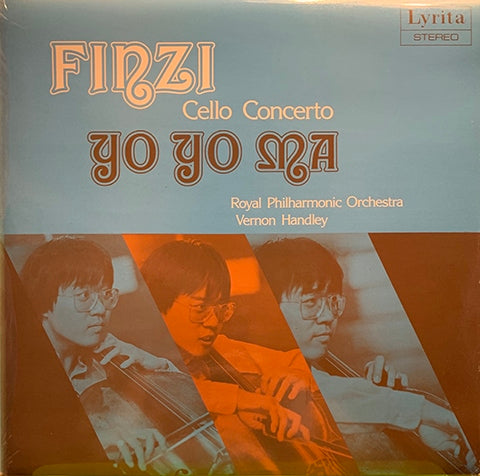
In Part One (Issue 141), Adrian looked at vinyl versus tape playback, the record-manufacturing process, and one of his favorite recordings, the Lyrita Recorded Edition LP of Malcolm Arnold and the London Philharmonic Orchestra’s English, Scottish and Cornish Dances. The series continues here. Bridge Phantasm/Moeran Rhapsody Lyrita Recorded Edition SRCS 91 I don't honestly remember whether I had ever listened to this LP before last week. If I had, it should have left an impression on me, as it is indeed impressive. I probably never went through all the LPs after receiving the shipment that contained this album at the time, and this one has been sitting on the shelf unplayed for more than 30 years. Both works on the album are single-movement pieces with a piano and a full orchestra, and are modernist in style. They are not like piano concertos insofar as the piano is part of the ensemble, not a soloist with an accompanying orchestra. I prefer the Bridge Phantasm, and although the music sounds abstract at first blush, it grows on you. The recording is impressive right from the first note. It has some of the most realistic piano sounds I have heard on a record. The piano has the widest dynamic range of all acoustic instruments, and if it is miked closely to capture the dynamic impact, the loud notes can sound hard, and the natural ambiance is also sacrificed. The piano on this recording has the weight and impact of the real instrument (and a majestic one) as heard in a concert hall, with the natural decay of the notes well-captured. The notes sound natural and liquid right up to the loudest passages, and there are plenty of these. The orchestra has impressive, even explosive dynamics, and the low end is incisive and clean, better than the Arnold LP above. What is most striking is the sense of space. There is impressive stage width and especially depth. The instruments have great clarity and presence, with each instrument bathing in its own halo of ambience. This is the mark of a great concert hall, and the characteristic that struck me the most when I attended a concert at the Golden Hall of the Musikverein in Vienna for the first time. There are haunting passages with distant drums and horns in the background supporting string and woodwind solos in turn, and the sense of depth and the reverberant soundfield give one an eerie sense of being in a dream. This is one instance where the full capacity of a sound system is taxed to the maximum in order to express the intent of the composer. Noise floor, microdynamics, imaging and frequency extension all come into play. The piece is most dramatic towards the end, and even though it is cut quite close to the center of the record, I did not hear any distortion or compression. This is truly a demonstration-quality recording. You should be able to find a clean copy for less than 10 bucks on Discogs. Yo-Yo Ma, Royal Philharmonic Orchestra, Vernon Handley – Finzi Cello Concerto Lyrita Recorded Edition SRCS 112 If you take a poll of music lovers and ask them to choose the greatest English cello concerti, significant numbers will vote for Elgar, Walton or Britten. The Elgar cello concerto launched the spectacular career of Jacqueline du Pré, which was tragically cut short by multiple sclerosis, and her recording with Sir John Barbirolli has never been out of the EMI catalog during the past 56 years. If you take the same poll with professional cellists, however, the Finzi will garner many votes, and perhaps even eclipse the other three. This LP was apparently the first commercial recording for the then 24-year-old Yo-Yo Ma, and is still considered the best recording of this work. Coincidentally, both the concerto and the soloist were born in 1955. This piece requires virtuosity, which Ma possessed in abundance, not for its own sake but only in the service of the music. This was the last major work of the composer, written when he was terminally ill at the age of 54. It was also the last piece of music he heard (on a radio broadcast) before passing away the following day. It therefore has an extra depth and poignancy compared to his earlier works. Cello concertos tend to be less spectacular as hi-fi showpieces, since the orchestral part has to balance the solo instrument, which has a narrower dynamic range than a piano, and the lower range of the instrument compared to a violin means it is less able to cut through thick musical textures. On the other hand, the cello most closely resembles the human voice, allowing the soloist a greater palette of tone color to work with. One cannot help but compare this recording with that of the du Pré Elgar concerto, recorded fourteen years earlier. The Elgar has the soloist more upfront, perhaps to serve her outsized personality. Du Pré played with abandon, throwing caution to the wind, resulting in an exhilarating performance. This recording has a more realistic balance between the soloist and the orchestra, and Ma's playing was more cautious and restrained. The soundstage is narrower than the two recordings previously mentioned, but the instruments have good separation and the image has moderate depth. The tone of the cello is realistic and colorful, with just the right amount of bite. I remember playing back some session tapes of violin recordings I made to some audiophile friends, and they were shocked how raw a violin can sound when recorded up close. Many recordings try to make the string instruments sound smooth, losing their characters in the process. It is not easy to find the right balance. The second movement is hauntingly beautiful, at times meditative. The young soloist already had the superb control that is his trademark, playing with expressiveness and a ravishing tone. However, a musician with just two decades of life experience can hardly be expected to do justice to a piece written by someone whose days were numbered, expressing all the regrets of life, all the unfulfilled promises, all the missed opportunities, and the anger of being robbed of the decades ahead. I wonder how Ma would play this piece today, assuming he is still interested in playing "classical" music. The final movement finally has some fireworks. It starts with pizzicato strings and percussion, and the soundstage opens up when the brass and tympani join in. The trademark Decca sound becomes evident, with an expansive soundstage and explosive dynamics, albeit in lower doses than the two recordings discussed previously. This recording is less impressive in a “hi-fi” sense, but still significant since it is a rarely-recorded, and even less-often-performed piece that in my view is unjustly neglected. It is also the first recorded work of a major artist of our generation. And it is one of the best recordings of the genre. As an aside, the oldest son of the composer, Christopher Finzi, was the husband of Jacqueline du Pré's older sister Hilary. According to Hilary, her husband had an affair with Jacqueline, and became quite abusive towards the end of Jacqueline's life. Somehow, du Pré never recorded the Finzi concerto, and she was too disabled to play by the time this recording was made. Her famous Davidov Stradivarius cello was passed on to Yo-Yo Ma upon her death. This LP is more expensive due to the rarity of the music, at up to $80 on Discogs. London Philharmonic Orchestra – Holst, A Somerset Rhapsody/Hammersmith/Scherzo/Beni Mora Lyrita Recorded Edition SRCS 56 Gustav Holst is most well-known for his suite The Planets, and audiophiles are blessed with an abundance of excellent recordings of this piece, which should be the subject of an article all on its own. Holst was very prolific and it is a joy to discover some of his relatively neglected oeuvres, which contain many pleasant surprises. The four compositions in this compilation span from the beginning to the end of his career, and show an interesting contrast in style. A Somerset Rhapsody is a set of short pieces based on the folksongs of Somerset. The mood is idyllic and calm, and there are beautiful tunes played by solo instruments, especially the oboe. But there are more energetic passages as well, including a march employing woodwinds and brass. Hammersmith is one of Holst's late works. It is a soundscape of wind instruments that depicts the scenes of the Hammersmith district of London, starting with a brooding introduction describing the Thames river in a foggy morning (London was extremely polluted during the first half of the 20th Century), with fog horns and all. The music becomes more energetic as the city wakes up and activities pick up. The orchestration is innovative, with the interplay of different instruments weaving in and out, like different characters passing by the district over the course of the day. The recording has impressive dynamic contrasts and scale. The tone of the different wind instruments is a good test of a system's resolution. The Beni Mora is a three-movement piece inspired by the music the composer heard while traveling in Algeria. It is an exotic composition with Middle Eastern flavors. Again, there are passages with explosive dynamics, and quiet passages with delicate musical texture. The second movement has a continuous drum beat in the background in 5/4 time that should sound distant but well-defined even at low volume. The music is quite atmospheric, and the system needs to have good low-level resolution and microdynamics to successfully create this atmosphere. This quality carries over to the final movement, dominated by a four-note motif played repeatedly by various woodwind instruments. The sound goes from ppp to fff, again with impressive dynamics and scale, especially at the climaxes where the tympani has the weight and scale of the best "audiophile approved" recordings. The Planets suite is a favorite demonstration recording, but the music gets a bit old with repeated playing. This LP should make a nice change, and can be picked up for around 10 bucks. This is by no means an exhaustive survey of the Lyrita catalog, as I only have a limited number of recordings on hand. Even so, I have been impressed by what I heard. The records are generally well made, with quiet surfaces, and the quality of the recordings are consistent with the best Decca has to offer in some cases. There are many hidden gems waiting to be discovered. Sadly, I have not been able to find these recordings on the streaming services, but you can sample some of the pieces on Lyrita's website, and even order the CDs directly there. Another Decca-related label worth considering is Argo, but this will be the subject of another article. Header image: Gustav Holst.
More from Issue 142

View All Articles in Issue 142

Search Copper Magazine

#234 A Life in High-End Audio: The Roy Hall Interview, Part One by Frank Doris Sep 07, 2026 #234 Jason Greenlaw Offers His Personal Perspective on Jazz Guitar in Vantage Point by Frank Doris Sep 07, 2026 #234 Transcendent Phoenix: Lucina Yue Brings the Ancient Konghou Into Modern Times by Frank Doris Sep 07, 2026 #234 We Must All Follow Our Bliss by B. Jan Montana Sep 07, 2026 #234 How to Play in a Rock Band, 27: Leveling Up by Frank Doris Sep 07, 2026 #234 Ross Valory: Traveling Into New Musical Territory With All of the Above by Ray Chelstowski Sep 07, 2026 #234 Singer/Songwriter John David Schrader: On the Need to Create by Joe Caplan Sep 07, 2026 #234 The People Who Make Audio Happen: More From T.H.E. Show SoCal 2026 by Harris Fogel Sep 07, 2026 #234 The Vinyl Beat Digs Into the Gadget Box by Rudy Radelic Sep 07, 2026 #234 The Rolling Stones: Foreign Tongues Spoken Loud by Wayne Robins Sep 07, 2026 #234 Musical Moments by Rich Isaacs Sep 07, 2026 #234 Rags for Solo Piano and a Dog: David Chesky's Ragtime Music for the Modern Age by Frankly Speaking Sep 07, 2026 #234 HIGH END 2026, Vienna: Here to Stay by Carsten Barnbeck Sep 07, 2026 #234 From The Audiophile’s Guide: The Two Main Types of Loudpeakers – Box and Panel by Paul McGowan Sep 07, 2026 #234 Letting it Slide by Frank Doris Sep 07, 2026 #234 PS Audio in the News by PS Audio Staff Sep 07, 2026 #234 Long Playing by Peter Xeni Sep 07, 2026 #234 La Mer by B. Jan Montana Sep 07, 2026 #233 A Report From The Total Hi-Fi Experience Show SoCal 2026 by B. Jan Montana Aug 03, 2026 #233 Bluegrass Meets Country, Folk, Jazz and More in All That We Carried by The Squid City Slingers by Frank Doris Aug 03, 2026 #233 Corey Glover and One Tribe Nation: A Variegated Musical Collective by Ray Chelstowski Aug 03, 2026 #233 Excursions with Clive: The Late Clive Davis, A Personal History by Wayne Robins Aug 03, 2026 #233 AI, Art, and Music: A Conversation With Synthography Art by Joe Caplan Aug 03, 2026 #233 New American Symphonies: A Rediscovered Gem and a Vital Contemporary Work by Frank Doris Aug 03, 2026 #233 The Vinyl Beat: Genesis, the Dave Clark Five, Antonio Carlos Jobim and More by Rudy Radelic Aug 03, 2026 #233 How to Play in a Rock Band, 26: When It's Time to Record Your Music by Frank Doris Aug 03, 2026 #233 More From T.H.E. Show 2026, and the People Who Made it Happen by Harris Fogel Aug 03, 2026 #233 Underappreciated Artists, Part Three: Icehouse by Rich Isaacs Aug 03, 2026 #233 The Surprisingly Rich and Varied Music of Somalia by Steve Kindig Aug 03, 2026 #233 A Remarkable Discographic Legacy: The LP Recordings of the Basel Symphony Orchestra by Stephan Haberthür Aug 03, 2026 #233 From The Audiophile’s Guide: The Importance of Loudspeakers by Paul McGowan Aug 03, 2026 #233 From Swimming Pool to New Listening Room: A Conversation with Norman Varney of AV RoomService by Gilles Laferrière Aug 03, 2026 #233 PS Audio in the News by PS Audio Staff Aug 03, 2026 #233 Audio Jewelry by Peter Xeni Aug 03, 2026 #233 Enrich Your Life by Frank Doris Aug 03, 2026 #233 The Searcher by James Schrimpf Aug 03, 2026 #232 What came first: Art or Music? A Conversation With Artist Jose Acosta by Joe Caplan Jul 06, 2026 #232 Blow By Blow: The Jeff Beck Story: An Insightful Book About a Guitar Icon by Ray Chelstowski Jul 06, 2026 #232 Creed Over Camaraderie? by B. Jan Montana Jul 06, 2026 #232 Chronicles of a Sound Pilgrim at the 2026 Montreal Audiofest by Hugues Morin Jul 06, 2026 #232 The Vinyl Beat: Summer Grooves by Rudy Radelic Jul 06, 2026 #232 Hibbing Hillbilly Dylan's Acoustic Rock by Wayne Robins Jul 06, 2026 #232 Quad Quads and Plasmatronics Tweeters: An Extraordinary System Comes to Life by Frank Doris Jul 06, 2026 #232 In Praise of Live Music, Once Again by Ted Shafran Jul 06, 2026 #232 Allnic Audio’s L-9000 Preamplifier: Design and Engineering Innovation by Howard Kneller Jul 06, 2026 #232 “Best Of” Lists and Rage Bait: Enough Already by Frank Doris Jul 06, 2026 #232 Quick Takes: Bud Shank, Paulo Almeida, Jakob Dreyer, Tim Eriksen and Peter Irvine by Frank Doris Jul 06, 2026

Some Notable Analog Recordings, Part Two

Some Notable Analog Recordings, Part Two
In Part One (Issue 141), Adrian looked at vinyl versus tape playback, the record-manufacturing process, and one of his favorite recordings, the Lyrita Recorded Edition LP of Malcolm Arnold and the London Philharmonic Orchestra’s English, Scottish and Cornish Dances. The series continues here. Bridge Phantasm/Moeran Rhapsody Lyrita Recorded Edition SRCS 91 I don't honestly remember whether I had ever listened to this LP before last week. If I had, it should have left an impression on me, as it is indeed impressive. I probably never went through all the LPs after receiving the shipment that contained this album at the time, and this one has been sitting on the shelf unplayed for more than 30 years. Both works on the album are single-movement pieces with a piano and a full orchestra, and are modernist in style. They are not like piano concertos insofar as the piano is part of the ensemble, not a soloist with an accompanying orchestra. I prefer the Bridge Phantasm, and although the music sounds abstract at first blush, it grows on you. The recording is impressive right from the first note. It has some of the most realistic piano sounds I have heard on a record. The piano has the widest dynamic range of all acoustic instruments, and if it is miked closely to capture the dynamic impact, the loud notes can sound hard, and the natural ambiance is also sacrificed. The piano on this recording has the weight and impact of the real instrument (and a majestic one) as heard in a concert hall, with the natural decay of the notes well-captured. The notes sound natural and liquid right up to the loudest passages, and there are plenty of these. The orchestra has impressive, even explosive dynamics, and the low end is incisive and clean, better than the Arnold LP above. What is most striking is the sense of space. There is impressive stage width and especially depth. The instruments have great clarity and presence, with each instrument bathing in its own halo of ambience. This is the mark of a great concert hall, and the characteristic that struck me the most when I attended a concert at the Golden Hall of the Musikverein in Vienna for the first time. There are haunting passages with distant drums and horns in the background supporting string and woodwind solos in turn, and the sense of depth and the reverberant soundfield give one an eerie sense of being in a dream. This is one instance where the full capacity of a sound system is taxed to the maximum in order to express the intent of the composer. Noise floor, microdynamics, imaging and frequency extension all come into play. The piece is most dramatic towards the end, and even though it is cut quite close to the center of the record, I did not hear any distortion or compression. This is truly a demonstration-quality recording. You should be able to find a clean copy for less than 10 bucks on Discogs. Yo-Yo Ma, Royal Philharmonic Orchestra, Vernon Handley – Finzi Cello Concerto Lyrita Recorded Edition SRCS 112 If you take a poll of music lovers and ask them to choose the greatest English cello concerti, significant numbers will vote for Elgar, Walton or Britten. The Elgar cello concerto launched the spectacular career of Jacqueline du Pré, which was tragically cut short by multiple sclerosis, and her recording with Sir John Barbirolli has never been out of the EMI catalog during the past 56 years. If you take the same poll with professional cellists, however, the Finzi will garner many votes, and perhaps even eclipse the other three. This LP was apparently the first commercial recording for the then 24-year-old Yo-Yo Ma, and is still considered the best recording of this work. Coincidentally, both the concerto and the soloist were born in 1955. This piece requires virtuosity, which Ma possessed in abundance, not for its own sake but only in the service of the music. This was the last major work of the composer, written when he was terminally ill at the age of 54. It was also the last piece of music he heard (on a radio broadcast) before passing away the following day. It therefore has an extra depth and poignancy compared to his earlier works. Cello concertos tend to be less spectacular as hi-fi showpieces, since the orchestral part has to balance the solo instrument, which has a narrower dynamic range than a piano, and the lower range of the instrument compared to a violin means it is less able to cut through thick musical textures. On the other hand, the cello most closely resembles the human voice, allowing the soloist a greater palette of tone color to work with. One cannot help but compare this recording with that of the du Pré Elgar concerto, recorded fourteen years earlier. The Elgar has the soloist more upfront, perhaps to serve her outsized personality. Du Pré played with abandon, throwing caution to the wind, resulting in an exhilarating performance. This recording has a more realistic balance between the soloist and the orchestra, and Ma's playing was more cautious and restrained. The soundstage is narrower than the two recordings previously mentioned, but the instruments have good separation and the image has moderate depth. The tone of the cello is realistic and colorful, with just the right amount of bite. I remember playing back some session tapes of violin recordings I made to some audiophile friends, and they were shocked how raw a violin can sound when recorded up close. Many recordings try to make the string instruments sound smooth, losing their characters in the process. It is not easy to find the right balance. The second movement is hauntingly beautiful, at times meditative. The young soloist already had the superb control that is his trademark, playing with expressiveness and a ravishing tone. However, a musician with just two decades of life experience can hardly be expected to do justice to a piece written by someone whose days were numbered, expressing all the regrets of life, all the unfulfilled promises, all the missed opportunities, and the anger of being robbed of the decades ahead. I wonder how Ma would play this piece today, assuming he is still interested in playing "classical" music. The final movement finally has some fireworks. It starts with pizzicato strings and percussion, and the soundstage opens up when the brass and tympani join in. The trademark Decca sound becomes evident, with an expansive soundstage and explosive dynamics, albeit in lower doses than the two recordings discussed previously. This recording is less impressive in a “hi-fi” sense, but still significant since it is a rarely-recorded, and even less-often-performed piece that in my view is unjustly neglected. It is also the first recorded work of a major artist of our generation. And it is one of the best recordings of the genre. As an aside, the oldest son of the composer, Christopher Finzi, was the husband of Jacqueline du Pré's older sister Hilary. According to Hilary, her husband had an affair with Jacqueline, and became quite abusive towards the end of Jacqueline's life. Somehow, du Pré never recorded the Finzi concerto, and she was too disabled to play by the time this recording was made. Her famous Davidov Stradivarius cello was passed on to Yo-Yo Ma upon her death. This LP is more expensive due to the rarity of the music, at up to $80 on Discogs. London Philharmonic Orchestra – Holst, A Somerset Rhapsody/Hammersmith/Scherzo/Beni Mora Lyrita Recorded Edition SRCS 56 Gustav Holst is most well-known for his suite The Planets, and audiophiles are blessed with an abundance of excellent recordings of this piece, which should be the subject of an article all on its own. Holst was very prolific and it is a joy to discover some of his relatively neglected oeuvres, which contain many pleasant surprises. The four compositions in this compilation span from the beginning to the end of his career, and show an interesting contrast in style. A Somerset Rhapsody is a set of short pieces based on the folksongs of Somerset. The mood is idyllic and calm, and there are beautiful tunes played by solo instruments, especially the oboe. But there are more energetic passages as well, including a march employing woodwinds and brass. Hammersmith is one of Holst's late works. It is a soundscape of wind instruments that depicts the scenes of the Hammersmith district of London, starting with a brooding introduction describing the Thames river in a foggy morning (London was extremely polluted during the first half of the 20th Century), with fog horns and all. The music becomes more energetic as the city wakes up and activities pick up. The orchestration is innovative, with the interplay of different instruments weaving in and out, like different characters passing by the district over the course of the day. The recording has impressive dynamic contrasts and scale. The tone of the different wind instruments is a good test of a system's resolution. The Beni Mora is a three-movement piece inspired by the music the composer heard while traveling in Algeria. It is an exotic composition with Middle Eastern flavors. Again, there are passages with explosive dynamics, and quiet passages with delicate musical texture. The second movement has a continuous drum beat in the background in 5/4 time that should sound distant but well-defined even at low volume. The music is quite atmospheric, and the system needs to have good low-level resolution and microdynamics to successfully create this atmosphere. This quality carries over to the final movement, dominated by a four-note motif played repeatedly by various woodwind instruments. The sound goes from ppp to fff, again with impressive dynamics and scale, especially at the climaxes where the tympani has the weight and scale of the best "audiophile approved" recordings. The Planets suite is a favorite demonstration recording, but the music gets a bit old with repeated playing. This LP should make a nice change, and can be picked up for around 10 bucks. This is by no means an exhaustive survey of the Lyrita catalog, as I only have a limited number of recordings on hand. Even so, I have been impressed by what I heard. The records are generally well made, with quiet surfaces, and the quality of the recordings are consistent with the best Decca has to offer in some cases. There are many hidden gems waiting to be discovered. Sadly, I have not been able to find these recordings on the streaming services, but you can sample some of the pieces on Lyrita's website, and even order the CDs directly there. Another Decca-related label worth considering is Argo, but this will be the subject of another article. Header image: Gustav Holst.

0 comments

Leave a comment

0 Comments

Your avatar

Loading comments...

🗑️ Delete Comment

Enter moderator password to delete this comment:

✏️ Edit Comment

Enter your email to verify ownership: