COPPER

A PS Audio Publication

Issue 221 • Free Online Magazine

Issue 221 Wayne's Words

Peter Asher's Life, in Concert

Peter Asher's Life, in Concert


Songs and Stories, at My Father's Place in Roslyn, NY, June 29, 2025

It's not often that you see a show by an 81-year-old musician, who could have been a near-forgotten relic of the 1960s British Invasion, who could hold the stage for two hours of first-rate entertainment.

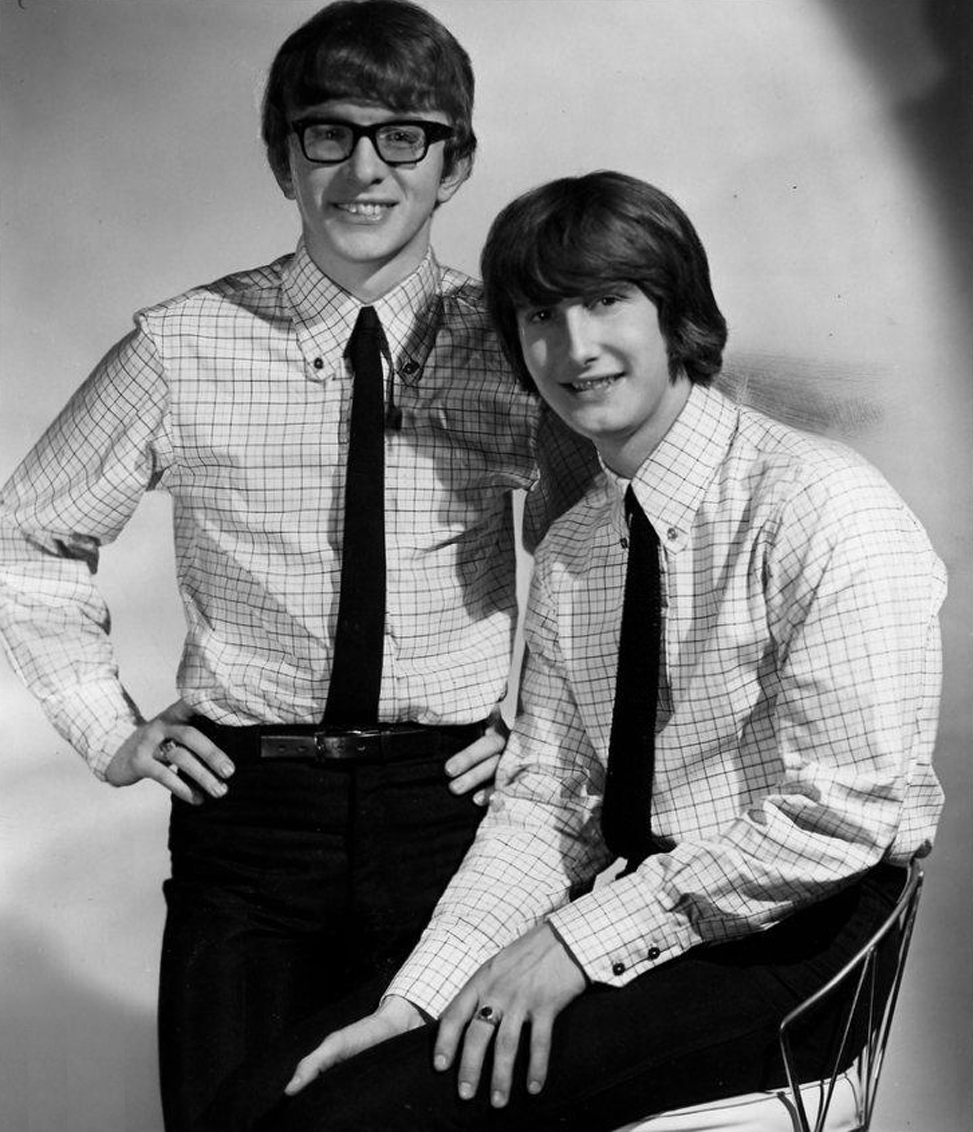
Peter Asher, first known as half of the soft-rock duo Peter and Gordon (pictured in the header image, on the left), has lived no ordinary life. Starting in 1964 with hits such as "A World Without Love" (written by Paul McCartney, whose presence is so essential that he could have been called "the third Peter & Gordon); "I Go to Pieces" (written by Del Shannon of "Runaway" fame); Buddy Holly's "True Love Ways"; and a trifle I had forgotten called "Lady Godiva," the act broke up in 1968. Asher's partner, Gordon Waller, died in 2009 at age 64. Not only did they remain on good terms: Asher did a tribute to Waller, using photographs and film stills, as part of his show at My Father’s Place yesterday afternoon.



Peter Asher, 81, telling tales and singing songs at My Father’s Place, Roslyn, NY, June 29, 2025. Photo by Maureen Picard Robins.

The storytelling, full of almost Pythonesque self-deprecation, was about half the show. The rest was music, played and sung by Asher with a full band of two guitars, bass, keyboard, and a fiddle/mandolin player, with harmony singing that complemented Asher, still in fine voice. There were plenty of tributes, especially to the duo that influenced them most: the Everly Brothers, who most certainly did not split on good terms. They weren't even speaking to each other when they were together. Asher said the Everlys were Peter and Gordon's greatest musical influence.

"We idolized them," he said from the stage. He thought it odd that they always began their shows entering from different sides of the stage, and later discovered that they left performances in different cars and stayed in separate hotels, because "they couldn't stand each other." Asher, perhaps wanting to condense the show, sang as his Everly Brothers song their minor 1962 hit "Crying in the Rain." It was meant to also recognize Carole King, though I don't believe he noted that her co-writer was not her partner Gerry Goffin, but Howard Greenfield, best known as Neil Sedaka's lyricist. A case of early Brill Building musical chairs, I guess. I was hoping Asher and band would do the Everlys’ "Bird Dog," or at least the very suitable "All I Have to Do is Dream."

The show opened with film clips and an announcer in the film reeling off Asher's accomplishments, and there were many. After Peter and Gordon's career ended, Asher became A&R head of the Beatles' Apple Records, where his essential signing was James Taylor. Because the Beatles were having their own difficulties, Taylor's Apple Records debut underachieved. Asher moved to Los Angeles, and produced and managed Taylor through the golden years of "Sweet Baby James," and well as Linda Ronstadt through her most productive years, and managed Joni Mitchell, Carole King, and Randy Newman, among many others. He was named a Commander of the British Empire (to be brief about it), or C.B.E., by Queen Elizabeth in 2015.


After the short video bio, the singer added in sotto voce, self-deprecatingly as possible, if that's possible, [he] "shagged Marianne Faithfull."

Peter and his sisters Jane and Clare had all been successful actors in British movies from childhood. He was featured in the 1952 film Outpost in Malaya aka The Planter's Wife, as the son of stars Jack Hawkins and Claudette Colbert. If I'd chatted with Asher, I would have asked if he had shagged Claudette Colbert, as they are shown doing mommy and child hugging and kissing in the film clip that was shown. It might have been inappropriate, as Asher was just eight at the time.

The still red-headed Asher had plenty of material to work with besides his own duo’s material. He acknowledged his upper class family background, attending the Westminster School (as in Westminster Abbey). His mother played oboe, his dad was a doctor who played piano, and the family grew up performing Gilbert and Sullivan material at home. In a paper in a 1951 issue of the British medical journal The Lancet, Dr. Richard Asher was the first to name the psychiatric malady "Munchausen's Syndrome" and "Munchausen's Syndrome by Proxy," in which a parent projects their ailments on to another, often a child, for sympathy and attention.


If you know anything about the Asher family, though, it is probably through Jane
Asher, the actress, model, and girlfriend of Paul McCartney when the Beatles became stars. And yes, Asher had Beatles stories. He and McCartney had adjoining bedrooms for two years in the Asher family home when McCartney, already dating Jane, a TV celebrity in her own right, needed a place to live when the Beatles moved from Liverpool to London.

McCartney had a piano in the basement of the house and according to Asher, John Lennon came over one day for a writing session. Two hours later, they invited him down to hear the tune they had just knocked out: "I Want to Hold Your Hand."

At other times, even then, McCartney and Lennon wrote separately, but the songs were always credited to the duo, Lennon-McCartney. One of those early tunes by McCartney was "World Without Love," Peter and Gordon's first number one song. The song ended the show as an audience singalong, but there was an interesting reason the Beatles did not keep it for themselves.

The opening line is "Please, lock me away." Lennon disliked that line, and whenever Paul would play it for John, Lennon would interrupt and say something like "I'm gonna lock you away." Beginning their career with a number one record had its pluses and minuses. It's a great start, Asher said, but he then suffered some anxiety about being a "one-hit wonder."

He need not have worried.


Header image courtesy of Wikipedia/GAC General Artists Corporation/Bruno of Hollywood/public domain.

This article originally appeared in Wayne Robins’ Substack and is used here by permission. Wayne’s Words columnist Wayne Robins writes the Critical Conditions Substack: https://waynerobins.substack.com/.

More from Issue 221

View All Articles in Issue 221

Search Copper Magazine

#227 Seth Lewis Gets in the Groove With Take a Look Around: a Tribute to the Meters by Frank Doris Feb 02, 2026 #227 Passport to Sound: May Anwar’s Audio Learning Experience for Young People by Frank Doris Feb 02, 2026 #227 Conjectures on Cosmic Consciousness by B. Jan Montana Feb 02, 2026 #227 The Big Takeover Turns 45 by Wayne Robins Feb 02, 2026 #227 Music and Chocolate: On the Sensory Connection by Joe Caplan Feb 02, 2026 #227 Singer/Songwriter Chris Berardo: Getting Wilder All the Time by Ray Chelstowski Feb 02, 2026 #227 The Earliest Stars of Country Music, Part One by Jeff Weiner Feb 02, 2026 #227 The Vinyl Beat Goes Down to Tijuana (By Way of Los Angeles), Part Two by Rudy Radelic Feb 02, 2026 #227 How to Play in a Rock Band, 20: On the Road With Blood, Sweat & Tears’ Guitarist Gabe Cummins by Frank Doris Feb 02, 2026 #227 From The Audiophile’s Guide: Audio Specs and Measuring by Paul McGowan Feb 02, 2026 #227 Our Brain is Always Listening by Peter Trübner Feb 02, 2026 #227 PS Audio in the News by PS Audio Staff Feb 02, 2026 #227 The Listening Chair: Sleek Style and Sound From the Luxman L3 by Howard Kneller Feb 02, 2026 #227 The Los Angeles and Orange County Audio Society Celebrates Its 32nd Anniversary, Honoring David and Sheryl Lee Wilson and Bernie Grundman by Harris Fogel Feb 02, 2026 #227 Back to My Reel-to-Reel Roots, Part 26: Half Full – Not Half Empty, Redux by Ken Kessler Feb 02, 2026 #227 That's What Puzzles Us... by Frank Doris Feb 02, 2026 #227 Record-Breaking by Peter Xeni Feb 02, 2026 #227 The Long and Winding Road by B. Jan Montana Feb 02, 2026 #226 JJ Murphy’s Sleep Paralysis is a Genre-Bending Musical Journey Through Jazz, Fusion and More by Frank Doris Jan 05, 2026 #226 Stewardship by Consent by B. Jan Montana Jan 05, 2026 #226 Food, Music, and Sensory Experience: An Interview With Professor Jonathan Zearfoss of the Culinary Institute of America by Joe Caplan Jan 05, 2026 #226 Studio Confidential: A Who’s Who of Recording Engineers Tell Their Stories by Frank Doris Jan 05, 2026 #226 Pilot Radio is Reborn, 50 Years Later: Talking With CEO Barak Epstein by Frank Doris Jan 05, 2026 #226 The Vinyl Beat Goes Down to Tijuana (By Way of Los Angeles), Part One by Rudy Radelic Jan 05, 2026 #226 Capital Audiofest 2025: Must-See Stereo, Part Two by Frank Doris Jan 05, 2026 #226 My Morning Jacket’s Carl Broemel and Tyler Ramsey Collaborate on Their Acoustic Guitar Album, Celestun by Ray Chelstowski Jan 05, 2026 #226 The People Who Make Audio Happen: CanJam SoCal 2025, Part Two by Harris Fogel Jan 05, 2026 #226 How to Play in a Rock Band, 19: Touring Can Make You Crazy, Part One by Frank Doris Jan 05, 2026 #226 Linda Ronstadt Goes Bigger by Wayne Robins Jan 05, 2026 #226 From The Audiophile’s Guide: Active Room Correction and Digital Signal Processing by Paul McGowan Jan 05, 2026 #226 PS Audio in the News by Frank Doris Jan 05, 2026 #226 Back to My Reel-to-Reel Roots, Part 25: Half-Full, Not Empty by Ken Kessler Jan 05, 2026 #226 Happy New Year! by Frank Doris Jan 05, 2026 #226 Turn It Down! by Peter Xeni Jan 05, 2026 #226 Ghost Riders by James Schrimpf Jan 05, 2026 #226 A Factory Tour of Audio Manufacturer German Physiks by Markus "Marsu" Manthey Jan 04, 2026 #225 Capital Audiofest 2025: Must-See Stereo, Part One by Frank Doris Dec 01, 2025 #225 Otis Taylor and the Electrics Delivers a Powerful Set of Hypnotic Modern Blues by Frank Doris Dec 01, 2025 #225 A Christmas Miracle by B. Jan Montana Dec 01, 2025 #225 T.H.E. Show New York 2025, Part Two: Plenty to See, Hear, and Enjoy by Frank Doris Dec 01, 2025 #225 Underappreciated Artists, Part One: Martin Briley by Rich Isaacs Dec 01, 2025 #225 Rock and Roll is Here to Stay by Wayne Robins Dec 01, 2025 #225 A Lifetime of Holiday Record (and CD) Listening by Rudy Radelic Dec 01, 2025 #225 Little Feat: Not Saying Goodbye, Not Yet by Ray Chelstowski Dec 01, 2025 #225 How to Play in a Rock Band, Part 18: Dealing With Burnout by Frank Doris Dec 01, 2025 #225 The People Who Make Audio Happen: CanJam SoCal 2025 by Harris Fogel Dec 01, 2025 #225 Chicago’s Sonic Sanctuaries: Four Hi‑Fi Listening Bars Channeling the Jazz‑Kissa Spirit by Olivier Meunier-Plante Dec 01, 2025

Peter Asher's Life, in Concert

Peter Asher's Life, in Concert


Songs and Stories, at My Father's Place in Roslyn, NY, June 29, 2025

It's not often that you see a show by an 81-year-old musician, who could have been a near-forgotten relic of the 1960s British Invasion, who could hold the stage for two hours of first-rate entertainment.

Peter Asher, first known as half of the soft-rock duo Peter and Gordon (pictured in the header image, on the left), has lived no ordinary life. Starting in 1964 with hits such as "A World Without Love" (written by Paul McCartney, whose presence is so essential that he could have been called "the third Peter & Gordon); "I Go to Pieces" (written by Del Shannon of "Runaway" fame); Buddy Holly's "True Love Ways"; and a trifle I had forgotten called "Lady Godiva," the act broke up in 1968. Asher's partner, Gordon Waller, died in 2009 at age 64. Not only did they remain on good terms: Asher did a tribute to Waller, using photographs and film stills, as part of his show at My Father’s Place yesterday afternoon.


Peter Asher, 81, telling tales and singing songs at My Father’s Place, Roslyn, NY, June 29, 2025. Photo by Maureen Picard Robins.

The storytelling, full of almost Pythonesque self-deprecation, was about half the show. The rest was music, played and sung by Asher with a full band of two guitars, bass, keyboard, and a fiddle/mandolin player, with harmony singing that complemented Asher, still in fine voice. There were plenty of tributes, especially to the duo that influenced them most: the Everly Brothers, who most certainly did not split on good terms. They weren't even speaking to each other when they were together. Asher said the Everlys were Peter and Gordon's greatest musical influence.

"We idolized them," he said from the stage. He thought it odd that they always began their shows entering from different sides of the stage, and later discovered that they left performances in different cars and stayed in separate hotels, because "they couldn't stand each other." Asher, perhaps wanting to condense the show, sang as his Everly Brothers song their minor 1962 hit "Crying in the Rain." It was meant to also recognize Carole King, though I don't believe he noted that her co-writer was not her partner Gerry Goffin, but Howard Greenfield, best known as Neil Sedaka's lyricist. A case of early Brill Building musical chairs, I guess. I was hoping Asher and band would do the Everlys’ "Bird Dog," or at least the very suitable "All I Have to Do is Dream."

The show opened with film clips and an announcer in the film reeling off Asher's accomplishments, and there were many. After Peter and Gordon's career ended, Asher became A&R head of the Beatles' Apple Records, where his essential signing was James Taylor. Because the Beatles were having their own difficulties, Taylor's Apple Records debut underachieved. Asher moved to Los Angeles, and produced and managed Taylor through the golden years of "Sweet Baby James," and well as Linda Ronstadt through her most productive years, and managed Joni Mitchell, Carole King, and Randy Newman, among many others. He was named a Commander of the British Empire (to be brief about it), or C.B.E., by Queen Elizabeth in 2015.


After the short video bio, the singer added in sotto voce, self-deprecatingly as possible, if that's possible, [he] "shagged Marianne Faithfull."

Peter and his sisters Jane and Clare had all been successful actors in British movies from childhood. He was featured in the 1952 film Outpost in Malaya aka The Planter's Wife, as the son of stars Jack Hawkins and Claudette Colbert. If I'd chatted with Asher, I would have asked if he had shagged Claudette Colbert, as they are shown doing mommy and child hugging and kissing in the film clip that was shown. It might have been inappropriate, as Asher was just eight at the time.

The still red-headed Asher had plenty of material to work with besides his own duo’s material. He acknowledged his upper class family background, attending the Westminster School (as in Westminster Abbey). His mother played oboe, his dad was a doctor who played piano, and the family grew up performing Gilbert and Sullivan material at home. In a paper in a 1951 issue of the British medical journal The Lancet, Dr. Richard Asher was the first to name the psychiatric malady "Munchausen's Syndrome" and "Munchausen's Syndrome by Proxy," in which a parent projects their ailments on to another, often a child, for sympathy and attention.


If you know anything about the Asher family, though, it is probably through Jane
Asher, the actress, model, and girlfriend of Paul McCartney when the Beatles became stars. And yes, Asher had Beatles stories. He and McCartney had adjoining bedrooms for two years in the Asher family home when McCartney, already dating Jane, a TV celebrity in her own right, needed a place to live when the Beatles moved from Liverpool to London.

McCartney had a piano in the basement of the house and according to Asher, John Lennon came over one day for a writing session. Two hours later, they invited him down to hear the tune they had just knocked out: "I Want to Hold Your Hand."

At other times, even then, McCartney and Lennon wrote separately, but the songs were always credited to the duo, Lennon-McCartney. One of those early tunes by McCartney was "World Without Love," Peter and Gordon's first number one song. The song ended the show as an audience singalong, but there was an interesting reason the Beatles did not keep it for themselves.

The opening line is "Please, lock me away." Lennon disliked that line, and whenever Paul would play it for John, Lennon would interrupt and say something like "I'm gonna lock you away." Beginning their career with a number one record had its pluses and minuses. It's a great start, Asher said, but he then suffered some anxiety about being a "one-hit wonder."

He need not have worried.


Header image courtesy of Wikipedia/GAC General Artists Corporation/Bruno of Hollywood/public domain.

This article originally appeared in Wayne Robins’ Substack and is used here by permission. Wayne’s Words columnist Wayne Robins writes the Critical Conditions Substack: https://waynerobins.substack.com/.
0 comments

Leave a comment

0 Comments

Your avatar

Loading comments...

🗑️ Delete Comment

Enter moderator password to delete this comment:

✏️ Edit Comment

Enter your email to verify ownership: