COPPER

A PS Audio Publication

Issue 161 • Free Online Magazine

Issue 161 Disciples of Sound

Like a Picasso: Bonnie Pointer’s Lost Album, Rediscovered

Like a Picasso: Bonnie Pointer’s Lost Album, Rediscovered

The Pointer Sisters were a musical force of nature. Across 20 years beginning in the 1970s they released fifteen albums, delivered 13 top twenty hits, and won three Grammys. Songs like “Jump (For My Love),” “Fire,” and “I’m So Excited” defined a generation and continue to brighten moods at memorable moments both large and small. The Pointer Sisters’ story is marked with both soaring highs and tragic lows. But through it all, they delivered electrifying live performances and enjoyed success across genres, scoring hits in pop, disco, R&B and even country. Now, Like a Picasso, an overlooked 2011 release by Bonnie Pointer, has been re-released and it’s arguably her finest outing ever. Sadly, Bonnie Pointer passed away in 2020.

In 1975, Bonnie left her sisters to go solo and quickly found success with the hit record “Heaven Must Have Sent You,” which reached Number 11 on the Billboard Hot 100. Her career soon became somewhat unstructured, with seemingly random album releases and scattered live appearances with her sisters. Bonnie appeared on Soul Train in 1985, but it would be decades before she would release more music.

After being approached by songwriter/producers Lloyd Poe and Robin Taylor (Taylor Poe) Bonnie agreed to record a demo for a new composition, “Answered Prayer,” and brought in her sister Anita to sing background vocals. The 2008 session laid a foundation that resulted in an entire album’s worth of recordings. Like a Picasso took years to make and required a surprisingly expansive roster of musicians (five drummers, six guitarists, five bassists, and three keyboardists) to complete. It doesn’t matter. In the end the record holds together, guided by the strong songwriting and production skills that Taylor Poe brought to the project.

The real hallmark, here, though, are the remarkable vocals that Bonnie gave to this collection of songs. This record drops the disco and leans more toward late 1990s-era Bonnie Raitt. Like a Picasso rocks in a way that is sophisticated and sexy. Like a Picasso suffered upon its release in 2011 because of lack of funding and promotion. Now, through Omnivore Recordings, the album is being properly presented to the public on CD and digital formats, including all 13 original songs along with three previously unissued tracks. The music has been remastered, the album artwork updated, and the packaging expanded with liner notes that tell this record’s special tale.
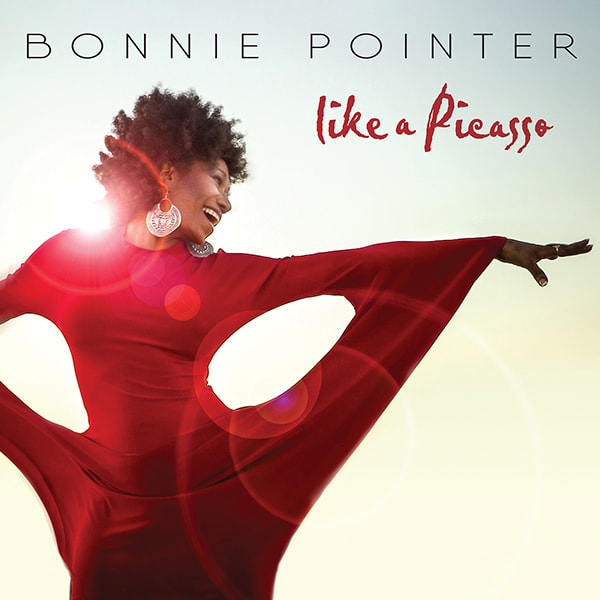
 

Bonnie Pointer, Like A Picasso, album cover.


Bonnie Pointer’s musical journey is wonderfully captured in this collection of songs that embody the viewpoint of an adult who has seen it all. We had the opportunity to talk with Lloyd Poe of Taylor Poe about how the project came to be, some special studio moments, and about the legacy Bonnie Pointer leaves behind.

Ray Chelstowski: How did you start working with your partner Robin Taylor?

Lloyd Poe: There is a story there. We were friends early on, coming out of high school. Then one day we met [again] at a restaurant and that was it. We’ve now been writing partners for decades. We don’t live in the same area so we’ve done a lot of work by phone, just grinding out lyrics until four in the morning. It’s just been an amazing relationship. He has a rock sensibility and I come at it from more of a pop, Motown point of view. So, we have a sound. That’s why we call ourselves “Taylor Poe.”

RC: How did this collaboration with Bonnie Pointer begin?

LP: Robin and I wrote this song, “Answered Prayer,” which is on the record. [Our working method is to] demo some of our stuff vocally, and then we find “real singers” to cut final tracks. We were in the studio and Dave Williams, [an engineer we work with] who [had previously] recorded it, asked, “What about Bonnie Pointer?” I happen to be a huge Pointer Sisters fan and asked him if [he thought] she would really do this [on a] work-for-hire [basis] and he said, “yeah!” She apparently had done some stuff in [Dave’s] studio before. So, we called her and she came to work just on that song [initially]. That’s where it all started.


RC: How did Bonnie’s sister Anita get involved with the project?

LP: So, Bonnie comes in and does the song. As she started to listen to the track she got on the phone and called her sister Anita. She told her she was in the studio singing this beautiful song, and asked her to come down and sing it with her. They hadn’t sung in the studio together for 20 years. Can you believe this? Anita Pointer came down just for that session and they did the backs (backing vocals) together on that song. Dave, Robin, and I got to witness all of that. And, they were ace backup singers; in fact, that’s how she told me they got many of their early gigs. That was a real “wow!”

RC: Was Bonnie in voice when she arrived or did it take some work for her to get to where you needed her to be?

LP: She just [came in and] did a great job. That’s one of the reasons why we went forward with the entire record. We [knew we] could rely on her, and she did a lot of work on [the album]. This is not a Motown record. It’s a different animal. She had to rise to the occasion and she did.

RC: How do you go about building a track list for an artist like this, knowing you had a more modern approach in mind for the music, especially the song “Hide,” which is a rock track start to finish?

LP: It started with that first song (“Answered Prayer,”) which is more gospel, and it kind of evolved from there. I guess we brought in the songs that we thought she would shine on. The title track came in early and we decided on a very modern take for that song. That set the tone. We decided that we wanted to do a “modern artist’s” record. So, then we started to bring in material behind that. I’m glad that you picked up on “Hide.” I think that it’s one of the great rock and roll tracks. She just lays it out there like Tina (Turner) or Janis (Joplin).


Bonnie Pointer.

Bonnie Pointer.


RC: There are so many different musicians on this record. For example, you have five drummers, including the legendary Gary Mallaber (Van Morrison, Steve Miller, Bruce Springsteen). How did you hold the record together with so many different playing styles in the mix?

LP: Well, when Gary Mallaber became available we jumped on it. He did it all in one day, like all great players do. He gave [the] songs an amazing foundation and that was it. Robin and I are doing a lot of the playing. It really revolves around us. Dave Williams, our studio guy, is a great guitarist and we use him all of the time, so [it] was just natural for him to play [on Like a Picasso]. I think the fact that it was all done in the same studio gave it some consistency, but [still]it was recorded over a period of time. There was an evolution to it.

RC: Which song on the record was Bonnie Pointer most proud of?

LP: I think that I can answer that. “Genius of my Heart.” She just loved singing it. I’m fond of it too because that’s just basically me and her. I’m doing all of the tracks and she comes in and does her thing with it. I just remember her articulating that she loved to sing that song. I’d also say that she knew that “Like a Picasso” was always going to be the lead track. So, I’d say those two.

RC: What’s next for Taylor Poe?

LP: You know, we write all of the time and record constantly. We are hosting a [record] release party with Omnivore, where we work [with] this girl Gia Ciambotti, who’s fantastic.  She does a lot of demos for (Grammy-winning songwriter) Diane Warren. She’s also worked with Lucinda Williams, Bruce Springsteen and Joe Walsh. We have done quite a few tracks with her. It’s just like how this Bonnie Pointer project came along. It’s just about us looking for opportunities to put our music out there.

Photos courtesy of Tashi Palmer and Te Flack.

More from Issue 161

View All Articles in Issue 161

Search Copper Magazine

#231 Piano Prodigy Jude Kofie Releases His Debut Album On Octave Records by Frank Doris Jun 01, 2026 #231 Underappreciated Artists, Part Two: City Boy by Rich Isaacs Jun 01, 2026 #231 Music and the Art of Creation: Talking With Saxophonist Rob Scheps by Joe Caplan Jun 01, 2026 #231 How to Play in a Rock Band, 24: Further Adventures at the 2026 Montauk Music Festival by Frank Doris Jun 01, 2026 #231 Courtney Barnett: Creature of Habit by Wayne Robins Jun 01, 2026 #231 Angine de Poitrine: Interstellar Guitar Rock Saviors Headed for Late-Night TV Pop Stardom? by Mark Lepage Jun 01, 2026 #231 My Impressions of AXPONA 2026, Part One by Frank Doris Jun 01, 2026 #231 2026 La Jolla Concours d'Elegance: Another Aesthetic Feast by B. Jan Montana Jun 01, 2026 #231 Country Music Icon Jo Dee Messina’s Bridges: A New Beginning by Ray Chelstowski Jun 01, 2026 #231 The Luxury Dispatch Hosts a Video Podcast With Ken Kessler by Ken Kessler Jun 01, 2026 #231 The Vinyl Beat: Tracking in the Motor City by Rudy Radelic Jun 01, 2026 #231 Lots of Fun With DSP: The Ferrum Audio WANDLA DAC and Its Tube Mode by Frank Doris Jun 01, 2026 #231 From The Audiophile's Guide: Digital Source Components and Streaming Audio by Paul McGowan Jun 01, 2026 #231 Onkyo’s Monster M-510 power amplifier by The Staff at Just Audio Jun 01, 2026 #231 PS Audio in the News by PS Audio Staff Jun 01, 2026 #231 Naming Convention by Peter Xeni Jun 01, 2026 #231 Les Invisibles by Frank Doris Jun 01, 2026 #231 Wildlife Scene by James Schrimpf Jun 01, 2026 #230 Camaraderie by B. Jan Montana May 04, 2026 #230 AXPONA 2026: A Family Gathering by Paul McGowan May 04, 2026 #230 Pianist Ryan Benthall Explores Jazz Realms and Far Beyond With Divine Sky by Frank Doris May 04, 2026 #230 The Vinyl Beat in AXPONA-Land by Rudy Radelic May 04, 2026 #230 Teddy Thompson’s Musical Growth Deepens With Never Be the Same by Ray Chelstowski May 04, 2026 #230 More Fun in the Sun: Florida Audio Expo, Part Two by Frank Doris May 04, 2026 #230 CanJam NYC 2026 Show Report: Heady Sound, Part Two by Frank Doris and Harris Fogel May 04, 2026 #230 Sonic Youth On Murray Street by Wayne Robins May 04, 2026 #230 Graffeo Coffee: A Symphony of Sensory Experience by Joe Caplan May 04, 2026 #230 The Saul Authority: The Story of Hi-Fi Pioneer Saul Marantz by Olivier Meunier-Plante May 04, 2026 #230 How to Play in a Rock Band, 23: Encounters With Famous Musicians, Part Two by Frank Doris May 04, 2026 #230 An Outlier in the Rack: A Vintage BIC Beam Box by The Staff at Just Audio May 04, 2026 #230 PS Audio in the News by PS Audio Staff May 04, 2026 #230 A Cautionary Tale by Rich Isaacs May 04, 2026 #230 Reel-to-Reel Roots, Part 33 (Revised): Ken Kessler Reports On the 2026 (British) AudioJumble by Ken Kessler May 04, 2026 #230 Text Messaging by Frank Doris May 04, 2026 #230 The Audiophile Rat Race by Peter Xeni May 04, 2026 #230 On the Rocks by Rich Isaacs May 04, 2026 #229 The Earliest Stars of Country Music, Part Three by Jeff Weiner Apr 06, 2026 #229 The Healing Power of Music and Sound at the Omega Institute by Joe Caplan Apr 06, 2026 #229 CanJam NYC 2026 Show Report: Heady Sound, Part One by Frank Doris Apr 06, 2026 #229 Florida Audio Expo 2026: Warming Up to High-End Audio, Part One by Frank Doris Apr 06, 2026 #229 Quick Takes: Anne Bisson, Sam Morrison, The Velvet Underground, and the Stooges by Frank Doris Apr 06, 2026 #229 The Vinyl Beat: New Arrivals, and Old Audio Show Demo Scores to Settle by Rudy Radelic Apr 06, 2026 #229 Harvard Gets a High-End Audio Education by Frank Doris Apr 06, 2026 #229 No Country for Old Knees by B. Jan Montana Apr 06, 2026 #229 How To Play in A Rock Band, 22: Encounters With Famous Musicians, Part 1 by Frank Doris Apr 06, 2026 #229 The Soulful Grooves of Guinea-Bissau by Steve Kindig Apr 06, 2026 #229 Four-Hand Piano Performance at Its Finest by Stephan Haberthür Apr 06, 2026

Like a Picasso: Bonnie Pointer’s Lost Album, Rediscovered

Like a Picasso: Bonnie Pointer’s Lost Album, Rediscovered

The Pointer Sisters were a musical force of nature. Across 20 years beginning in the 1970s they released fifteen albums, delivered 13 top twenty hits, and won three Grammys. Songs like “Jump (For My Love),” “Fire,” and “I’m So Excited” defined a generation and continue to brighten moods at memorable moments both large and small. The Pointer Sisters’ story is marked with both soaring highs and tragic lows. But through it all, they delivered electrifying live performances and enjoyed success across genres, scoring hits in pop, disco, R&B and even country. Now, Like a Picasso, an overlooked 2011 release by Bonnie Pointer, has been re-released and it’s arguably her finest outing ever. Sadly, Bonnie Pointer passed away in 2020.

In 1975, Bonnie left her sisters to go solo and quickly found success with the hit record “Heaven Must Have Sent You,” which reached Number 11 on the Billboard Hot 100. Her career soon became somewhat unstructured, with seemingly random album releases and scattered live appearances with her sisters. Bonnie appeared on Soul Train in 1985, but it would be decades before she would release more music.

After being approached by songwriter/producers Lloyd Poe and Robin Taylor (Taylor Poe) Bonnie agreed to record a demo for a new composition, “Answered Prayer,” and brought in her sister Anita to sing background vocals. The 2008 session laid a foundation that resulted in an entire album’s worth of recordings. Like a Picasso took years to make and required a surprisingly expansive roster of musicians (five drummers, six guitarists, five bassists, and three keyboardists) to complete. It doesn’t matter. In the end the record holds together, guided by the strong songwriting and production skills that Taylor Poe brought to the project.

The real hallmark, here, though, are the remarkable vocals that Bonnie gave to this collection of songs. This record drops the disco and leans more toward late 1990s-era Bonnie Raitt. Like a Picasso rocks in a way that is sophisticated and sexy. Like a Picasso suffered upon its release in 2011 because of lack of funding and promotion. Now, through Omnivore Recordings, the album is being properly presented to the public on CD and digital formats, including all 13 original songs along with three previously unissued tracks. The music has been remastered, the album artwork updated, and the packaging expanded with liner notes that tell this record’s special tale.


Bonnie Pointer, Like A Picasso, album cover.


Bonnie Pointer’s musical journey is wonderfully captured in this collection of songs that embody the viewpoint of an adult who has seen it all. We had the opportunity to talk with Lloyd Poe of Taylor Poe about how the project came to be, some special studio moments, and about the legacy Bonnie Pointer leaves behind.

Ray Chelstowski: How did you start working with your partner Robin Taylor?

Lloyd Poe: There is a story there. We were friends early on, coming out of high school. Then one day we met [again] at a restaurant and that was it. We’ve now been writing partners for decades. We don’t live in the same area so we’ve done a lot of work by phone, just grinding out lyrics until four in the morning. It’s just been an amazing relationship. He has a rock sensibility and I come at it from more of a pop, Motown point of view. So, we have a sound. That’s why we call ourselves “Taylor Poe.”

RC: How did this collaboration with Bonnie Pointer begin?

LP: Robin and I wrote this song, “Answered Prayer,” which is on the record. [Our working method is to] demo some of our stuff vocally, and then we find “real singers” to cut final tracks. We were in the studio and Dave Williams, [an engineer we work with] who [had previously] recorded it, asked, “What about Bonnie Pointer?” I happen to be a huge Pointer Sisters fan and asked him if [he thought] she would really do this [on a] work-for-hire [basis] and he said, “yeah!” She apparently had done some stuff in [Dave’s] studio before. So, we called her and she came to work just on that song [initially]. That’s where it all started.


RC: How did Bonnie’s sister Anita get involved with the project?

LP: So, Bonnie comes in and does the song. As she started to listen to the track she got on the phone and called her sister Anita. She told her she was in the studio singing this beautiful song, and asked her to come down and sing it with her. They hadn’t sung in the studio together for 20 years. Can you believe this? Anita Pointer came down just for that session and they did the backs (backing vocals) together on that song. Dave, Robin, and I got to witness all of that. And, they were ace backup singers; in fact, that’s how she told me they got many of their early gigs. That was a real “wow!”

RC: Was Bonnie in voice when she arrived or did it take some work for her to get to where you needed her to be?

LP: She just [came in and] did a great job. That’s one of the reasons why we went forward with the entire record. We [knew we] could rely on her, and she did a lot of work on [the album]. This is not a Motown record. It’s a different animal. She had to rise to the occasion and she did.

RC: How do you go about building a track list for an artist like this, knowing you had a more modern approach in mind for the music, especially the song “Hide,” which is a rock track start to finish?

LP: It started with that first song (“Answered Prayer,”) which is more gospel, and it kind of evolved from there. I guess we brought in the songs that we thought she would shine on. The title track came in early and we decided on a very modern take for that song. That set the tone. We decided that we wanted to do a “modern artist’s” record. So, then we started to bring in material behind that. I’m glad that you picked up on “Hide.” I think that it’s one of the great rock and roll tracks. She just lays it out there like Tina (Turner) or Janis (Joplin).


Bonnie Pointer.

Bonnie Pointer.


RC: There are so many different musicians on this record. For example, you have five drummers, including the legendary Gary Mallaber (Van Morrison, Steve Miller, Bruce Springsteen). How did you hold the record together with so many different playing styles in the mix?

LP: Well, when Gary Mallaber became available we jumped on it. He did it all in one day, like all great players do. He gave [the] songs an amazing foundation and that was it. Robin and I are doing a lot of the playing. It really revolves around us. Dave Williams, our studio guy, is a great guitarist and we use him all of the time, so [it] was just natural for him to play [on Like a Picasso]. I think the fact that it was all done in the same studio gave it some consistency, but [still]it was recorded over a period of time. There was an evolution to it.

RC: Which song on the record was Bonnie Pointer most proud of?

LP: I think that I can answer that. “Genius of my Heart.” She just loved singing it. I’m fond of it too because that’s just basically me and her. I’m doing all of the tracks and she comes in and does her thing with it. I just remember her articulating that she loved to sing that song. I’d also say that she knew that “Like a Picasso” was always going to be the lead track. So, I’d say those two.

RC: What’s next for Taylor Poe?

LP: You know, we write all of the time and record constantly. We are hosting a [record] release party with Omnivore, where we work [with] this girl Gia Ciambotti, who’s fantastic.  She does a lot of demos for (Grammy-winning songwriter) Diane Warren. She’s also worked with Lucinda Williams, Bruce Springsteen and Joe Walsh. We have done quite a few tracks with her. It’s just like how this Bonnie Pointer project came along. It’s just about us looking for opportunities to put our music out there.

Photos courtesy of Tashi Palmer and Te Flack.

0 comments

Leave a comment

0 Comments

Your avatar

Loading comments...

🗑️ Delete Comment

Enter moderator password to delete this comment:

✏️ Edit Comment

Enter your email to verify ownership: