COPPER

A PS Audio Publication

Issue 178 • Free Online Magazine

Issue 178 Idle Chatter

Jack Daley: Rockin’ the Bass for Lenny Kravitz and Spin Doctors

Jack Daley: Rockin’ the Bass for Lenny Kravitz and Spin Doctors

Bass players are often the forgotten men and women on the rock and roll totem pole. If you think about it, the notion is unfounded given their importance in laying the bedrock of any given song. Having said that, few bassists in the last 30-odd years have laid it down better than Jack Daley.

Daley got his start in the upstate New York rock scene (yes, there is one), and made his mark before a sudden quarter-life crisis sent him south to New York City. Once he got to Manhattan, Daley worked his way up the ladder, playing nightly for months before a chance meeting with Lenny Kravitz’s keyboardist offered him the opportunity of a lifetime.

For over a decade, Daley provided world-class grooves that would become a linchpin of Kravitz’s work, while also guesting on numerous recordings by others, further imprinting his R&B-based four-string magic onto the music of the last two decades. Most recently, Daley’s journey has seen him land in the lap of storied NYC outfit Spin Doctors (“Two Princes,” “Little Miss Can’t Be Wrong”). The triple platinum-selling band needed a bassist in the wake of founding member Mark White’s recent departure, and it seems that Daley is, once again, just what the doctor ordered.

On a break from working on the Spin Doctors’ upcoming record, Daley dialed in with Copper to talk about his origins in music, what it was like to work with Lenny Kravitz, his approach to the bass, how he joined the Spin Doctors, and more.

Andrew Daly: What was your introduction to the bass guitar?

Jack Daley: I originally wanted to be a drummer. Maybe because my uncle was a drummer; I’m not sure. But I got some practice pads, a snare, a hi-hat, and a few cymbals and was going in that direction. And then, one day, I was listening to my mom’s Airline stereo console [that had] a huge woofer, and “25 or 6 to 4” by Chicago came on, and that descending bass line just killed me. It’s all history after that.

AD: Can you recall your first bass?

JD: It was a St. George copy of Paul McCartney’s bass. I got it in downtown Troy, NY, along with a Fender Bantam Bass amplifier, which my dad and I later customized. I remember it came with the weirdest speaker of all time, an oddly shaped Yamaha styrofoam speaker that sounded horrible. (laughs) After that, I graduated to my second bass, a Fender Mustang in candy apple red with a racing stripe. And not long after I got it, I hippy-wooded [refinished] it and replaced the pickups with huge Fender humbuckers.

AD: Can you recount some of your early gigs?

JD: My earliest gigs were parties and school dances with my brother Frank in our early teens. But when we were growing up, it was great because Troy had a great music scene. My brother and I were exposed to many great players, singers, etc. The funny thing was that the bands we idolized in our early teens were the same ones we started playing with just a few years later. We were not even out of high school, and here we were, playing with these musicians in their late 20s. I thought I had made it big. (laughs)

AD: What prompted your move to New York City?

JD: Well, I had been working at a studio in Saratoga, New York for about four years, and I woke up one day on the eve of turning 29, and I was suddenly freaked out. I was like, “Sh*t, I need to make something happen. I need to get out of here.” Once I had that revelation, I was in like 14 bands in New York City within two years. And man, the scene was killer, you could play seven nights a week, and that’s precisely what I did with an eye toward making something of myself beyond my little town in upstate New York.

AD: How did you get the gig with Lenny Kravitz?

JD: I had been playing every Monday night at The Rock ’n Roll Cafe down on Bleeker Street. We did Led Zeppelin covers with a band called Four Sticks, and I’ll tell you what – we kicked ass, dude. We were so good that most musicians in and around New York City would stumble in to check out what we were doing.

So, the word was that Lenny was looking for a John Paul Jones-style bassist who could also play funk. And apparently, my name came up multiple times as he was telling people that he was looking for this type of player. Funny enough, the week before I was with George Laks, who was Lenny’s keyboardist, bragging that if they needed a bassist I could be ready overnight. (laughs) I said this, not realizing I would have to do just that. From what I know, all the bass guys in L.A. and New York auditioned. I was never in doubt that I would get the gig.
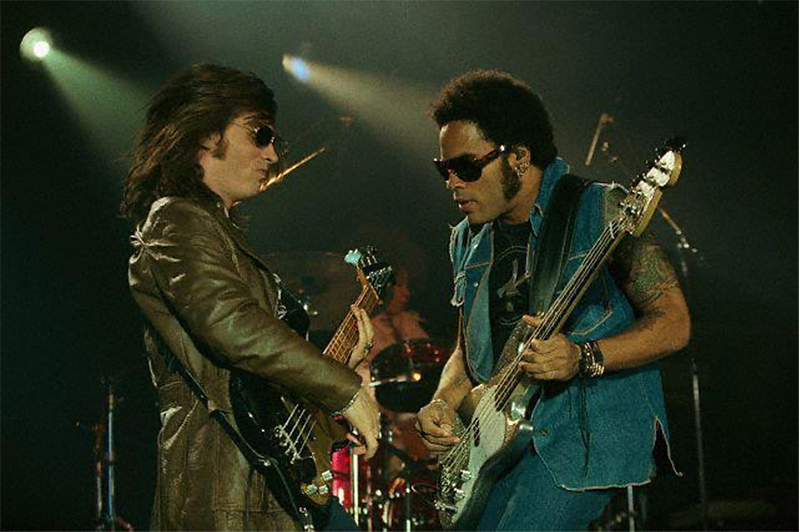
 

Getting to the bottom of it: Jack Daley and Lenny Kravitz. Courtesy of Jack Daley/Northstar Artists.

Getting to the bottom of it: Jack Daley and Lenny Kravitz. Courtesy of Jack Daley/Northstar Artists.


AD: What was your approach with Lenny?

JD: My approach with Lenny was a perfect combination of all my various styles and influences combined. My goal was simple: I wanted to simultaneously make the gig groove like hell, and rock hard. I have a ton of unforgettable memories from that first tour, too. It was an amazing time for music. I remember our first week was in New York City, and we played the Academy Theatre and Radio City Music Hall, and we even did David Letterman. It was Lenny’s Universal Love tour. The music really floored me with its rawness, and its ability to connect with the crowds was huge. But my approach never changed; I just did the things that got me the gig. I just tried to make sh*t groove and remembered that the drummer is my best friend. I figured that’s why he hired me, so why change?

AD: Of all the sessions you’ve performed, which are the most meaningful, and why?

JD: I love playing in the studio. I feel like that is where I most belong. Any record where I was totally playing by feel with no preconceived idea of what I would play, and incredible and unpredictable things happened. That is what I live for. Having said that, I did a session once for a producer friend, and the artist asked me to detune my B-string on a 5-string bass. She just kept saying, “Lower! No, lower. Even lower!” That kept happening until I gave up, packed up, and drove home. (laughs) So, that was one where I felt most out of place. It actually felt good to walk out.

AD: How did you get the gig with Spin Doctors?

JD: Aaron (Comess, drums, bass and keyboards) and I had done a lot of work together and several tours of Germany with Marius Mueller Westernhagen. And one day, Aaron said, “We are having a problem because several promoters are requesting that everybody is vaccinated, and Mark [White] doesn’t want to do that. Can you play with us?” At first, he just asked me to do two gigs, probably hoping that Mark would return, but here we are a year later. I’ve really enjoyed working with them. They’re great guys, have great songs, and are great musicians.


AD: What do you bring to the table that’s different than Mark?

JD: Mark primarily plays slap bass style, and to be fair, he is incredible at it. I played slap a ton in the ’80s but backed off from it for years. It’s been fun to get back at it with the Spin Doctors here and there, but I use it much more sparingly than Mark. I am an individual just like Mark, but I have been a sideman for much of my career. So, I try to fit the situation and gig both musically and personally, which is a sideman skill from being in so many different situations and having to fit in. But I try to do that without losing who I am, so it’s a real balance. Also, I always show up prepared and on time and try not to be a jerk. This sounds pretty simple, but everybody would do it if it were. (laughs)
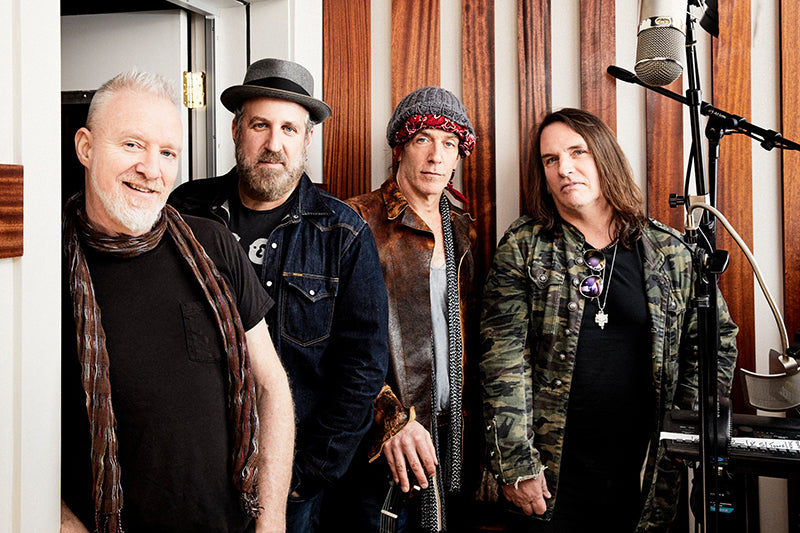
 

Spin Doctors: Chris Barron (vocals), Aaron Comess (drums), Erik Schenkman (guitar), Jack Daley (bass). Courtesy of Jack Daley/Northstar Artists.

Spin Doctors: Chris Barron (vocals), Aaron Comess (drums), Erik Schenkman (guitar), Jack Daley (bass). Courtesy of Jack Daley/Northstar Artists.


AD: What can you tell us about the new, upcoming Spin Doctors album?

JD: I can’t say too much now, and I will leave it to Aaron, Chris [Barron], and Eric [Schenkman] to do most of the talking. But the new record is great, and we’ve been playing about six of the songs regularly, and people have been reacting well to what they’ve heard. They’re going over great, and we are all very optimistic about its release and the future of Spin Doctors as it stands now. We work very well together and feel good about what we’re doing.

AD: What are five records that shaped your musical outlook?

JD: Man, that’s tough, but I’ll give it a try. These are records that shaped what I do and my need to make things groove. If I had to choose, I would go with: What’s Going On by Marvin Gaye, Release Yourself by Graham Central Station, Led Zeppelin II by Led Zeppelin, Who’s Next by the Who, and Live at the Bitter, New York City, 1971 end from Donny Hathaway. I always say I am an R&B bassist who rocks. And I’d say that these five records are the reason why.

AD: Do you have any regrets or anything you’d like to do over?

JD: Overall, I’m pretty happy with how my life has worked out. I wish I had married my wife, Thea, a decade earlier because I could never have done better. But other than that, life is way too short to live with regrets, and I’ve done a lot of incredible things and have so many great memories that I’ll carry with me forever. Being with Spin Doctors is another amazing chapter in my career as a bassist. Life is good.


Header image courtesy of Jack Daley/Northstar Artists.

More from Issue 178

View All Articles in Issue 178

Search Copper Magazine

#229 The Earliest Stars of Country Music, Part Three by Jeff Weiner Apr 06, 2026 #229 The Healing Power of Music and Sound at the Omega Institute by Joe Caplan Apr 06, 2026 #229 CanJam NYC 2026 Show Report: Heady Sound, Part One by Frank Doris Apr 06, 2026 #229 Florida Audio Expo 2026: Warming Up to High-End Audio, Part One by Frank Doris Apr 06, 2026 #229 Quick Takes: Anne Bisson, Sam Morrison, The Velvet Underground, and the Stooges by Frank Doris Apr 06, 2026 #229 The Vinyl Beat: New Arrivals, and Old Audio Show Demo Scores to Settle by Rudy Radelic Apr 06, 2026 #229 Harvard Gets a High-End Audio Education by Frank Doris Apr 06, 2026 #229 No Country for Old Knees by B. Jan Montana Apr 06, 2026 #229 How To Play in A Rock Band, 22: Encounters With Famous Musicians, Part 1 by Frank Doris Apr 06, 2026 #229 The Soulful Grooves of Guinea-Bissau by Steve Kindig Apr 06, 2026 #229 Four-Hand Piano Performance at Its Finest by Stephan Haberthür Apr 06, 2026 #229 The People Who Make Audio Happen: Supreme Acoustics Systems’ Las Vegas Grand Opening by Harris Fogel Apr 06, 2026 #229 Blue Öyster Cult: Tyranny and Expectations by Wayne Robins Apr 06, 2026 #229 Guitarist Rick Vito’s Cinematic New Album, Slidemaster by Ray Chelstowski Apr 06, 2026 #229 Measurements and Observational Listening by Paul McGowan Apr 06, 2026 #229 PS Audio in the News by PS Audio Staff Apr 06, 2026 #229 Back to My Reel-to-Reel Roots, Part 28: The Cassette Strikes Back by Ken Kessler Apr 06, 2026 #229 Are You Receiving Me? by Frank Doris Apr 06, 2026 #229 Hospitality by Peter Xeni Apr 06, 2026 #229 Cantina Gateway by James Schrimpf Apr 06, 2026 #228 Serita’s Black Rose Duo Shakes Your Soul With a Blend of Funk, Rock, Blues and a Whole Lot More by Frank Doris Mar 02, 2026 #228 Vinyl, A Love Story by Wayne Robins Mar 02, 2026 #228 Thrill Seeker by B. Jan Montana Mar 02, 2026 #228 The Vinyl Beat: Donald Byrd, Bill Evans, Wes Montgomery, Eddie Palmieri and Frank Sinatra by Rudy Radelic Mar 02, 2026 #228 Listening to Prestige: The History of a Vitally Important Jazz Record Label by Frank Doris Mar 02, 2026 #228 How to Play in a Rock Band, 21: Touring With James Lee Stanley by Frank Doris Mar 02, 2026 #228 The NAMM 2026 Show: The Music Industry’s Premier Event by John Volanski Mar 02, 2026 #228 The Earliest Stars of Country Music, Part Two by Jeff Weiner Mar 02, 2026 #228 From The Audiophile's Guide: A Brief History of Stereophonic Sound by Paul McGowan Mar 02, 2026 #228 A Bone to Pick With Streaming Audio by Frank Doris Mar 02, 2026 #228 Blast Off With Bluesman Duke Robillard by Ray Chelstowski Mar 02, 2026 #228 A Visit to the Marten Loudspeaker Factory in Göteborg, Sweden by Ingo Schulz and Sebastian Polcyn Mar 02, 2026 #228 Pure Distortion by Peter Xeni Mar 02, 2026 #228 A Nagra Factory Tour by Markus "Marsu" Manthey Mar 02, 2026 #228 Back to My Reel-to-Reel Roots, Part 27: Noodge and Ye Shall Receive, Part Two by Ken Kessler Mar 02, 2026 #228 PS Audio in the News by PS Audio Staff Mar 02, 2026 #228 90-Degree Stereo by Frank Doris Mar 02, 2026 #228 The Keys to Art by Rich Isaacs Mar 02, 2026 #227 Seth Lewis Gets in the Groove With Take a Look Around: a Tribute to the Meters by Frank Doris Feb 02, 2026 #227 Passport to Sound: May Anwar’s Audio Learning Experience for Young People by Frank Doris Feb 02, 2026 #227 Conjectures on Cosmic Consciousness by B. Jan Montana Feb 02, 2026 #227 The Big Takeover Turns 45 by Wayne Robins Feb 02, 2026 #227 Music and Chocolate: On the Sensory Connection by Joe Caplan Feb 02, 2026 #227 Singer/Songwriter Chris Berardo: Getting Wilder All the Time by Ray Chelstowski Feb 02, 2026 #227 The Earliest Stars of Country Music, Part One by Jeff Weiner Feb 02, 2026 #227 The Vinyl Beat Goes Down to Tijuana (By Way of Los Angeles), Part Two by Rudy Radelic Feb 02, 2026 #227 How to Play in a Rock Band, 20: On the Road With Blood, Sweat & Tears’ Guitarist Gabe Cummins by Frank Doris Feb 02, 2026

Jack Daley: Rockin’ the Bass for Lenny Kravitz and Spin Doctors

Jack Daley: Rockin’ the Bass for Lenny Kravitz and Spin Doctors

Bass players are often the forgotten men and women on the rock and roll totem pole. If you think about it, the notion is unfounded given their importance in laying the bedrock of any given song. Having said that, few bassists in the last 30-odd years have laid it down better than Jack Daley.

Daley got his start in the upstate New York rock scene (yes, there is one), and made his mark before a sudden quarter-life crisis sent him south to New York City. Once he got to Manhattan, Daley worked his way up the ladder, playing nightly for months before a chance meeting with Lenny Kravitz’s keyboardist offered him the opportunity of a lifetime.

For over a decade, Daley provided world-class grooves that would become a linchpin of Kravitz’s work, while also guesting on numerous recordings by others, further imprinting his R&B-based four-string magic onto the music of the last two decades. Most recently, Daley’s journey has seen him land in the lap of storied NYC outfit Spin Doctors (“Two Princes,” “Little Miss Can’t Be Wrong”). The triple platinum-selling band needed a bassist in the wake of founding member Mark White’s recent departure, and it seems that Daley is, once again, just what the doctor ordered.

On a break from working on the Spin Doctors’ upcoming record, Daley dialed in with Copper to talk about his origins in music, what it was like to work with Lenny Kravitz, his approach to the bass, how he joined the Spin Doctors, and more.

Andrew Daly: What was your introduction to the bass guitar?

Jack Daley: I originally wanted to be a drummer. Maybe because my uncle was a drummer; I’m not sure. But I got some practice pads, a snare, a hi-hat, and a few cymbals and was going in that direction. And then, one day, I was listening to my mom’s Airline stereo console [that had] a huge woofer, and “25 or 6 to 4” by Chicago came on, and that descending bass line just killed me. It’s all history after that.

AD: Can you recall your first bass?

JD: It was a St. George copy of Paul McCartney’s bass. I got it in downtown Troy, NY, along with a Fender Bantam Bass amplifier, which my dad and I later customized. I remember it came with the weirdest speaker of all time, an oddly shaped Yamaha styrofoam speaker that sounded horrible. (laughs) After that, I graduated to my second bass, a Fender Mustang in candy apple red with a racing stripe. And not long after I got it, I hippy-wooded [refinished] it and replaced the pickups with huge Fender humbuckers.

AD: Can you recount some of your early gigs?

JD: My earliest gigs were parties and school dances with my brother Frank in our early teens. But when we were growing up, it was great because Troy had a great music scene. My brother and I were exposed to many great players, singers, etc. The funny thing was that the bands we idolized in our early teens were the same ones we started playing with just a few years later. We were not even out of high school, and here we were, playing with these musicians in their late 20s. I thought I had made it big. (laughs)

AD: What prompted your move to New York City?

JD: Well, I had been working at a studio in Saratoga, New York for about four years, and I woke up one day on the eve of turning 29, and I was suddenly freaked out. I was like, “Sh*t, I need to make something happen. I need to get out of here.” Once I had that revelation, I was in like 14 bands in New York City within two years. And man, the scene was killer, you could play seven nights a week, and that’s precisely what I did with an eye toward making something of myself beyond my little town in upstate New York.

AD: How did you get the gig with Lenny Kravitz?

JD: I had been playing every Monday night at The Rock ’n Roll Cafe down on Bleeker Street. We did Led Zeppelin covers with a band called Four Sticks, and I’ll tell you what – we kicked ass, dude. We were so good that most musicians in and around New York City would stumble in to check out what we were doing.

So, the word was that Lenny was looking for a John Paul Jones-style bassist who could also play funk. And apparently, my name came up multiple times as he was telling people that he was looking for this type of player. Funny enough, the week before I was with George Laks, who was Lenny’s keyboardist, bragging that if they needed a bassist I could be ready overnight. (laughs) I said this, not realizing I would have to do just that. From what I know, all the bass guys in L.A. and New York auditioned. I was never in doubt that I would get the gig.


Getting to the bottom of it: Jack Daley and Lenny Kravitz. Courtesy of Jack Daley/Northstar Artists.

Getting to the bottom of it: Jack Daley and Lenny Kravitz. Courtesy of Jack Daley/Northstar Artists.


AD: What was your approach with Lenny?

JD: My approach with Lenny was a perfect combination of all my various styles and influences combined. My goal was simple: I wanted to simultaneously make the gig groove like hell, and rock hard. I have a ton of unforgettable memories from that first tour, too. It was an amazing time for music. I remember our first week was in New York City, and we played the Academy Theatre and Radio City Music Hall, and we even did David Letterman. It was Lenny’s Universal Love tour. The music really floored me with its rawness, and its ability to connect with the crowds was huge. But my approach never changed; I just did the things that got me the gig. I just tried to make sh*t groove and remembered that the drummer is my best friend. I figured that’s why he hired me, so why change?

AD: Of all the sessions you’ve performed, which are the most meaningful, and why?

JD: I love playing in the studio. I feel like that is where I most belong. Any record where I was totally playing by feel with no preconceived idea of what I would play, and incredible and unpredictable things happened. That is what I live for. Having said that, I did a session once for a producer friend, and the artist asked me to detune my B-string on a 5-string bass. She just kept saying, “Lower! No, lower. Even lower!” That kept happening until I gave up, packed up, and drove home. (laughs) So, that was one where I felt most out of place. It actually felt good to walk out.

AD: How did you get the gig with Spin Doctors?

JD: Aaron (Comess, drums, bass and keyboards) and I had done a lot of work together and several tours of Germany with Marius Mueller Westernhagen. And one day, Aaron said, “We are having a problem because several promoters are requesting that everybody is vaccinated, and Mark [White] doesn’t want to do that. Can you play with us?” At first, he just asked me to do two gigs, probably hoping that Mark would return, but here we are a year later. I’ve really enjoyed working with them. They’re great guys, have great songs, and are great musicians.


AD: What do you bring to the table that’s different than Mark?

JD: Mark primarily plays slap bass style, and to be fair, he is incredible at it. I played slap a ton in the ’80s but backed off from it for years. It’s been fun to get back at it with the Spin Doctors here and there, but I use it much more sparingly than Mark. I am an individual just like Mark, but I have been a sideman for much of my career. So, I try to fit the situation and gig both musically and personally, which is a sideman skill from being in so many different situations and having to fit in. But I try to do that without losing who I am, so it’s a real balance. Also, I always show up prepared and on time and try not to be a jerk. This sounds pretty simple, but everybody would do it if it were. (laughs)


Spin Doctors: Chris Barron (vocals), Aaron Comess (drums), Erik Schenkman (guitar), Jack Daley (bass). Courtesy of Jack Daley/Northstar Artists.

Spin Doctors: Chris Barron (vocals), Aaron Comess (drums), Erik Schenkman (guitar), Jack Daley (bass). Courtesy of Jack Daley/Northstar Artists.


AD: What can you tell us about the new, upcoming Spin Doctors album?

JD: I can’t say too much now, and I will leave it to Aaron, Chris [Barron], and Eric [Schenkman] to do most of the talking. But the new record is great, and we’ve been playing about six of the songs regularly, and people have been reacting well to what they’ve heard. They’re going over great, and we are all very optimistic about its release and the future of Spin Doctors as it stands now. We work very well together and feel good about what we’re doing.

AD: What are five records that shaped your musical outlook?

JD: Man, that’s tough, but I’ll give it a try. These are records that shaped what I do and my need to make things groove. If I had to choose, I would go with: What’s Going On by Marvin Gaye, Release Yourself by Graham Central Station, Led Zeppelin II by Led Zeppelin, Who’s Next by the Who, and Live at the Bitter, New York City, 1971 end from Donny Hathaway. I always say I am an R&B bassist who rocks. And I’d say that these five records are the reason why.

AD: Do you have any regrets or anything you’d like to do over?

JD: Overall, I’m pretty happy with how my life has worked out. I wish I had married my wife, Thea, a decade earlier because I could never have done better. But other than that, life is way too short to live with regrets, and I’ve done a lot of incredible things and have so many great memories that I’ll carry with me forever. Being with Spin Doctors is another amazing chapter in my career as a bassist. Life is good.


Header image courtesy of Jack Daley/Northstar Artists.

0 comments

Leave a comment

0 Comments

Your avatar

Loading comments...

🗑️ Delete Comment

Enter moderator password to delete this comment:

✏️ Edit Comment

Enter your email to verify ownership: