COPPER

A PS Audio Publication

Issue 229 • Free Online Magazine

Issue 229

Back to My Reel-to-Reel Roots, Part 28: The Cassette Strikes Back

Back to My Reel-to-Reel Roots, Part 28: The Cassette Strikes Back

As noted in previous installments, including my report on an AudioJumble in the UK (Issue 164) and a later column (Issue 175) about the emergence of a new generation of open-reel tape enthusiasts exemplified by Instagrammers geraldine.hifi and hifi-david, cassettes are back with a vengeance, and with much greater force than reel-to-reel. While the reasons are obvious, they do fall into two categories which distinguish the new-found appeal of cassettes from that of open-reel, in practical if not sonic terms.

In three words, the two reasons why cassettes are able to enjoy a rebirth include the original basis for the cassette’s supplanting of open-reel as a home playback and recording medium, and the state of the current market. The first reason is the irresistible combination of “cost” and “convenience” of cassette over open-reel, while the second is the more recent phenomenon: “availability.” This applies to both the hardware and the tapes (blank and pre-recorded).

Cost and convenience are self-explanatory, as cassette tapes and cassette decks, from the very outset nearly 60 years ago, sold for far less than open-reel machines and reels of blank tape. The convenience was self-evident, with no fiddly handling to worry about, the tapes being self-contained to the point where cassettes lent themselves to in-car playback, which open-reel never did. Far more crucial was the music industry embracing the so-called Compact Cassette or Musicassette so comprehensively that it became the major format for pre-recorded material, its dominance only ending with the ascent of CD.

Despite the eventual arrival of genuinely fine-sounding machines from TEAC, Revox, Tandberg, Nakamichi, Sony and just about every other manufacturer of cassette decks, superior sound quality was never a crucial factor in the cassette’s saga. Even when companies like Mobile Fidelity offered pre-recorded tapes and the blank tape manufacturers created ever more exotic formulae, cassettes never really conquered the high-end/purist/audiophile sector.

They didn’t need to: the public adored cassettes because of the cost and convenience, and any perceived reduction in sound quality escaped mass consciousness. This has been the case with every new audio format that has appeared since the days when the stereo LP and open-reel tape dominated quality music playback in the home: each new format delivered greater convenience but poorer sound.

(That describes in a nutshell the arrival of all forms of digital playback, which rewrote the rules of music-in-the-home such that a modern system no longer requires any physical media whatsoever. This column, however, is not about analogue-vs-digital, and that particular battle is old, over, and irrelevant as digital will ultimately “win” in mass-market terms, so let’s move on.)

Which brings us to the second reason why the cassette revival will be and will forever remain greater than the open-reel revival. Unlike open-reel decks, which can only be purchased new today if you have a budget of $20,000 or so as a starting point, there are still cassette decks being made by major brands. All you have to do to find a brand-spanking-new machine is to click on amazon.com and up pops TEAC’s W-1200 Dual Cassette Deck “with Recorder/USB/Pitch/Karaoke-Mic-in and Remote” for $549. I’ve seen one and it’s a honey.
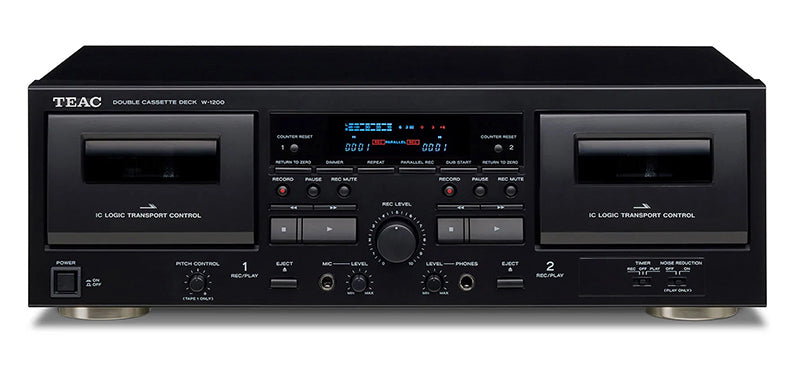
Teac W-1200 dual cassette deck.Teac W-1200 dual cassette deck.


Limited funds? Then the same source will supply you with the Pyle Home Digital Tuner Dual Cassette Deck/Media Player for $214.99. Additionally, I counted 25 cassette-equipped portables and boom boxes on Amazon, so finding a new cassette player does not involve scouring the web for obscure suppliers of refurbished hardware – as is necessary for open-reel unless you can consider a Ballfinger, or happen to be intrepid enough to buy something used and in need of refurbishing. eBay, by the way, is loaded with both, and there are still silly bargains to be had with cassette decks, if not open reel machines.
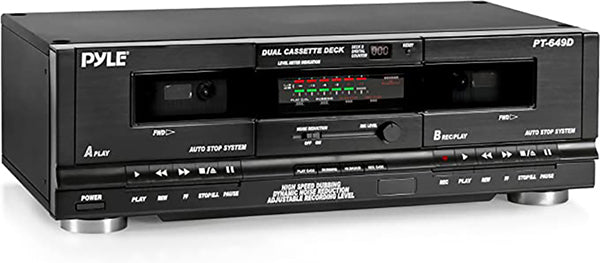
Pyle PT-649D dual cassette deck.

Pyle PT-649D dual cassette deck.


As for blank cassettes, Amazon yielded a plethora of fresh tapes from TDK, Sony, Maxell and others, for as little as $2.54 per tape and in all manner of formulae. More important for some, however, is the fact that numerous artists are releasing pre-recorded cassettes because they have acquired some kind of cool. This is a post-Guardians of the Galaxy singularity, that Marvel Multiverse smash hit film single-handedly reviving the cassette Walkman. Performers who have issued new albums and singles on cassettes include Billie Eilish, Ariana Grande, Taylor Swift, Kylie Minogue, Lana Del Rey and too many others to list.

That roster, however, defines the target demographic, even if the prices of circa-2022 [this article originally appeared in 2022; pre-recorded cassette prices today start at around $7  – Ed.] pre-recorded cassettes place them slightly above CDs (if lower than most new LPs) at $15 – $30. One might assume that this would make them mildly forbidding to those with less disposable income than fiftysomething audiophiles, but this new wave of pre-recorded cassettes is not aimed at music lovers who buy multiple copies of Kind of Blue or One-Step vinyl. 

Generation Z’s high regard for cassettes, or should I say their lack of audiophile prejudice against cassettes, is mirrored in the postings of geraldine.hifi and hifi-david, though those two high-end-enthusiasts-in the-making use vintage tape decks and acquire pre-owned cassettes of 20th century performers. (Far be it for me to suggest that either of them are fans of any of the artists mentioned above.)

Readers who have been following the open-reel revival can easily rattle off the negatives which the cassette doesn’t suffer but which afflict reel-to-reel. The litany remains that of excruciatingly expensive new open-reel tapes – both pre-recorded and blank, and tape decks, whether completely new or fully restored; the need for those of limited means to depend on used decks for which spares will be scarce, ad nauseam. One example serves as synecdoche regarding the cost of open-reel: the cheapest 7-inch blank tape I could find on Amazon was $46, while a web search produced mainly used or NOS tapes at crazy prices.
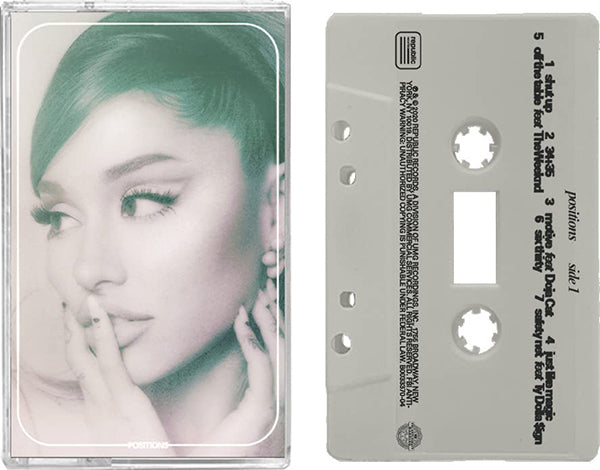

Ariana Grande, Positions album on cassette.

Ariana Grande, Positions album on cassette.


But back to cassettes. Back in the day, I had a voracious appetite for recording off air the various live concerts broadcast on FM by the BBC, along with rock documentaries and other programs which would never be issued commercially. With a library of around 1,000 cassettes, I have always kept a cassette deck or two, including a cherished Walkman Pro WM-D6C and a Harman-Kardon TD4600.

Just before COVID hit, at one of the last AudioJumbles before lockdown, I went nuts and bought a JVC TD-X335 and two twin-cassette decks: a Pioneer CT-W803RS and a Sony TC-WE525. All three came to less than £100 combined, a rare occurrence where I was ahead of the curve. The Pioneer alone went for £150 – £200 the last time I looked in 2022. [The editor checked in March 2026 and could not find one for sale.]

As luck would have it, I found a case of pre-recorded cassettes which I had never played, including a few dozen advance copies for review. These massacre the commercial pre-recorded tapes, approaching audiophile performance levels, as they were duplicated in real time and on quality tape, e.g., chrome bias TDKs. Which explains why I made room for a Sony TC-D5M, a.k.a. the Walkman Pro on steroids. And why would I buy that, with all the other cassette decks I own? Simple: it fits perfectly and looks cool sitting on top of the Otari MX-5050.


Header image of the Sony TC-D5M courtesy of Ken Kessler.

This article originally appeared in Issue 178. Prices have been updated to reflect 2026 values.

More from Issue 229

View All Articles in Issue 229

Search Copper Magazine

#232 What came first: Art or Music? A Conversation With Artist Jose Acosta by Joe Caplan Jul 06, 2026 #232 Blow By Blow: The Jeff Beck Story: An Insightful Book About a Guitar Icon by Ray Chelstowski Jul 06, 2026 #232 Creed Over Camaraderie? by B. Jan Montana Jul 06, 2026 #232 Chronicles of a Sound Pilgrim at the 2026 Montreal Audiofest by Hugues Morin Jul 06, 2026 #232 The Vinyl Beat: Summer Grooves by Rudy Radelic Jul 06, 2026 #232 Hibbing Hillbilly Dylan's Acoustic Rock by Wayne Robins Jul 06, 2026 #232 Quad Quads and Plasmatronics Tweeters: An Extraordinary System Comes to Life by Frank Doris Jul 06, 2026 #232 In Praise of Live Music, Once Again by Ted Shafran Jul 06, 2026 #232 Allnic Audio’s L-9000 Preamplifier: Design and Engineering Innovation by Howard Kneller Jul 06, 2026 #232 “Best Of” Lists and Rage Bait: Enough Already by Frank Doris Jul 06, 2026 #232 Quick Takes: Bud Shank, Paulo Almeida, Jakob Dreyer, Tim Eriksen and Peter Irvine by Frank Doris Jul 06, 2026 #232 My Impressions of AXPONA 2026, Part 2 by Frank Doris Jul 06, 2026 #232 How to Play in a Rock Band, 25: Encounters With Famous Musicians, Part Three by Frank Doris Jul 06, 2026 #232 Budgets, and Systems From Small to Outrageous by Paul McGowan Jul 06, 2026 #232 PS Audio in the News by PS Audio Staff Jul 06, 2026 #232 Hand It Over by Frank Doris Jul 06, 2026 #232 Difference of Opinion by Peter Xeni Jul 06, 2026 #232 Wabi-sabi Tree by James Schrimpf Jul 06, 2026 #231 Piano Prodigy Jude Kofie Releases His Debut Album On Octave Records by Frank Doris Jun 01, 2026 #231 Underappreciated Artists, Part Two: City Boy by Rich Isaacs Jun 01, 2026 #231 Music and the Art of Creation: Talking With Saxophonist Rob Scheps by Joe Caplan Jun 01, 2026 #231 How to Play in a Rock Band, 24: Further Adventures at the 2026 Montauk Music Festival by Frank Doris Jun 01, 2026 #231 Courtney Barnett: Creature of Habit by Wayne Robins Jun 01, 2026 #231 Angine de Poitrine: Interstellar Guitar Rock Saviors Headed for Late-Night TV Pop Stardom? by Mark Lepage Jun 01, 2026 #231 My Impressions of AXPONA 2026, Part One by Frank Doris Jun 01, 2026 #231 2026 La Jolla Concours d'Elegance: Another Aesthetic Feast by B. Jan Montana Jun 01, 2026 #231 Country Music Icon Jo Dee Messina’s Bridges: A New Beginning by Ray Chelstowski Jun 01, 2026 #231 The Luxury Dispatch Hosts a Video Podcast With Ken Kessler by Ken Kessler Jun 01, 2026 #231 The Vinyl Beat: Tracking in the Motor City by Rudy Radelic Jun 01, 2026 #231 Lots of Fun With DSP: The Ferrum Audio WANDLA DAC and Its Tube Mode by Frank Doris Jun 01, 2026 #231 From The Audiophile's Guide: Digital Source Components and Streaming Audio by Paul McGowan Jun 01, 2026 #231 Onkyo’s Monster M-510 power amplifier by The Staff at Just Audio Jun 01, 2026 #231 PS Audio in the News by PS Audio Staff Jun 01, 2026 #231 Naming Convention by Peter Xeni Jun 01, 2026 #231 Les Invisibles by Frank Doris Jun 01, 2026 #231 Wildlife Scene by James Schrimpf Jun 01, 2026 #230 Camaraderie by B. Jan Montana May 04, 2026 #230 AXPONA 2026: A Family Gathering by Paul McGowan May 04, 2026 #230 Pianist Ryan Benthall Explores Jazz Realms and Far Beyond With Divine Sky by Frank Doris May 04, 2026 #230 The Vinyl Beat in AXPONA-Land by Rudy Radelic May 04, 2026 #230 Teddy Thompson’s Musical Growth Deepens With Never Be the Same by Ray Chelstowski May 04, 2026 #230 More Fun in the Sun: Florida Audio Expo, Part Two by Frank Doris May 04, 2026 #230 CanJam NYC 2026 Show Report: Heady Sound, Part Two by Frank Doris and Harris Fogel May 04, 2026 #230 Sonic Youth On Murray Street by Wayne Robins May 04, 2026 #230 Graffeo Coffee: A Symphony of Sensory Experience by Joe Caplan May 04, 2026 #230 The Saul Authority: The Story of Hi-Fi Pioneer Saul Marantz by Olivier Meunier-Plante May 04, 2026 #230 How to Play in a Rock Band, 23: Encounters With Famous Musicians, Part Two by Frank Doris May 04, 2026

Back to My Reel-to-Reel Roots, Part 28: The Cassette Strikes Back

Back to My Reel-to-Reel Roots, Part 28: The Cassette Strikes Back

As noted in previous installments, including my report on an AudioJumble in the UK (Issue 164) and a later column (Issue 175) about the emergence of a new generation of open-reel tape enthusiasts exemplified by Instagrammers geraldine.hifi and hifi-david, cassettes are back with a vengeance, and with much greater force than reel-to-reel. While the reasons are obvious, they do fall into two categories which distinguish the new-found appeal of cassettes from that of open-reel, in practical if not sonic terms.

In three words, the two reasons why cassettes are able to enjoy a rebirth include the original basis for the cassette’s supplanting of open-reel as a home playback and recording medium, and the state of the current market. The first reason is the irresistible combination of “cost” and “convenience” of cassette over open-reel, while the second is the more recent phenomenon: “availability.” This applies to both the hardware and the tapes (blank and pre-recorded).

Cost and convenience are self-explanatory, as cassette tapes and cassette decks, from the very outset nearly 60 years ago, sold for far less than open-reel machines and reels of blank tape. The convenience was self-evident, with no fiddly handling to worry about, the tapes being self-contained to the point where cassettes lent themselves to in-car playback, which open-reel never did. Far more crucial was the music industry embracing the so-called Compact Cassette or Musicassette so comprehensively that it became the major format for pre-recorded material, its dominance only ending with the ascent of CD.

Despite the eventual arrival of genuinely fine-sounding machines from TEAC, Revox, Tandberg, Nakamichi, Sony and just about every other manufacturer of cassette decks, superior sound quality was never a crucial factor in the cassette’s saga. Even when companies like Mobile Fidelity offered pre-recorded tapes and the blank tape manufacturers created ever more exotic formulae, cassettes never really conquered the high-end/purist/audiophile sector.

They didn’t need to: the public adored cassettes because of the cost and convenience, and any perceived reduction in sound quality escaped mass consciousness. This has been the case with every new audio format that has appeared since the days when the stereo LP and open-reel tape dominated quality music playback in the home: each new format delivered greater convenience but poorer sound.

(That describes in a nutshell the arrival of all forms of digital playback, which rewrote the rules of music-in-the-home such that a modern system no longer requires any physical media whatsoever. This column, however, is not about analogue-vs-digital, and that particular battle is old, over, and irrelevant as digital will ultimately “win” in mass-market terms, so let’s move on.)

Which brings us to the second reason why the cassette revival will be and will forever remain greater than the open-reel revival. Unlike open-reel decks, which can only be purchased new today if you have a budget of $20,000 or so as a starting point, there are still cassette decks being made by major brands. All you have to do to find a brand-spanking-new machine is to click on amazon.com and up pops TEAC’s W-1200 Dual Cassette Deck “with Recorder/USB/Pitch/Karaoke-Mic-in and Remote” for $549. I’ve seen one and it’s a honey.

Teac W-1200 dual cassette deck.Teac W-1200 dual cassette deck.


Limited funds? Then the same source will supply you with the Pyle Home Digital Tuner Dual Cassette Deck/Media Player for $214.99. Additionally, I counted 25 cassette-equipped portables and boom boxes on Amazon, so finding a new cassette player does not involve scouring the web for obscure suppliers of refurbished hardware – as is necessary for open-reel unless you can consider a Ballfinger, or happen to be intrepid enough to buy something used and in need of refurbishing. eBay, by the way, is loaded with both, and there are still silly bargains to be had with cassette decks, if not open reel machines.

Pyle PT-649D dual cassette deck.

Pyle PT-649D dual cassette deck.


As for blank cassettes, Amazon yielded a plethora of fresh tapes from TDK, Sony, Maxell and others, for as little as $2.54 per tape and in all manner of formulae. More important for some, however, is the fact that numerous artists are releasing pre-recorded cassettes because they have acquired some kind of cool. This is a post-Guardians of the Galaxy singularity, that Marvel Multiverse smash hit film single-handedly reviving the cassette Walkman. Performers who have issued new albums and singles on cassettes include Billie Eilish, Ariana Grande, Taylor Swift, Kylie Minogue, Lana Del Rey and too many others to list.

That roster, however, defines the target demographic, even if the prices of circa-2022 [this article originally appeared in 2022; pre-recorded cassette prices today start at around $7  – Ed.] pre-recorded cassettes place them slightly above CDs (if lower than most new LPs) at $15 – $30. One might assume that this would make them mildly forbidding to those with less disposable income than fiftysomething audiophiles, but this new wave of pre-recorded cassettes is not aimed at music lovers who buy multiple copies of Kind of Blue or One-Step vinyl. 

Generation Z’s high regard for cassettes, or should I say their lack of audiophile prejudice against cassettes, is mirrored in the postings of geraldine.hifi and hifi-david, though those two high-end-enthusiasts-in the-making use vintage tape decks and acquire pre-owned cassettes of 20th century performers. (Far be it for me to suggest that either of them are fans of any of the artists mentioned above.)

Readers who have been following the open-reel revival can easily rattle off the negatives which the cassette doesn’t suffer but which afflict reel-to-reel. The litany remains that of excruciatingly expensive new open-reel tapes – both pre-recorded and blank, and tape decks, whether completely new or fully restored; the need for those of limited means to depend on used decks for which spares will be scarce, ad nauseam. One example serves as synecdoche regarding the cost of open-reel: the cheapest 7-inch blank tape I could find on Amazon was $46, while a web search produced mainly used or NOS tapes at crazy prices.


Ariana Grande, Positions album on cassette.

Ariana Grande, Positions album on cassette.


But back to cassettes. Back in the day, I had a voracious appetite for recording off air the various live concerts broadcast on FM by the BBC, along with rock documentaries and other programs which would never be issued commercially. With a library of around 1,000 cassettes, I have always kept a cassette deck or two, including a cherished Walkman Pro WM-D6C and a Harman-Kardon TD4600.

Just before COVID hit, at one of the last AudioJumbles before lockdown, I went nuts and bought a JVC TD-X335 and two twin-cassette decks: a Pioneer CT-W803RS and a Sony TC-WE525. All three came to less than £100 combined, a rare occurrence where I was ahead of the curve. The Pioneer alone went for £150 – £200 the last time I looked in 2022. [The editor checked in March 2026 and could not find one for sale.]

As luck would have it, I found a case of pre-recorded cassettes which I had never played, including a few dozen advance copies for review. These massacre the commercial pre-recorded tapes, approaching audiophile performance levels, as they were duplicated in real time and on quality tape, e.g., chrome bias TDKs. Which explains why I made room for a Sony TC-D5M, a.k.a. the Walkman Pro on steroids. And why would I buy that, with all the other cassette decks I own? Simple: it fits perfectly and looks cool sitting on top of the Otari MX-5050.


Header image of the Sony TC-D5M courtesy of Ken Kessler.

This article originally appeared in Issue 178. Prices have been updated to reflect 2026 values.

0 comments

Leave a comment

0 Comments

Your avatar

Loading comments...

🗑️ Delete Comment

Enter moderator password to delete this comment:

✏️ Edit Comment

Enter your email to verify ownership: