COPPER

A PS Audio Publication

Issue 116 • Free Online Magazine

Issue 116 TRUE-LIFE ROCK TALES

Images of the Past: On the Road with Nektar

Images of the Past: On the Road with Nektar

Things work out, I’m happy, I have the job as road manager for Nektar, a British progressive rock band, as told in Issue 115. First concert is in Fort Wayne, Indiana. The crew loads in, sets up and the band does a sound check. Not perfect, but acceptable. At showtime the house (concert hall) seems full. After I get the band on stage and the show starts, I mosey over to the sound booth. This is the best place in the house to hear the band (of course that is why they put it there). I’m standing next to Vinnie Schmidt, the front of house sound man and close to Mick Brockett and Pete Lango’s light show control set up.
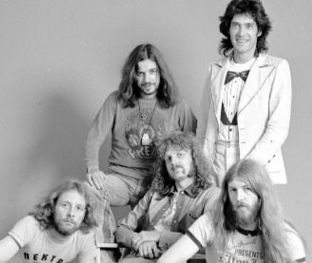
Nektar. Photo courtesy of Bellaphon Records.

This is my first look at Nektar’s full production. Its big and impressive. Just four musicians (before the later addition of legendary keyboardist Larry Fast of Synergy fame). Roye Albrighton is the lead singer and guitarist. He is talented, a tall handsome presence. A diamond in the rough. With his talent he could play with anyone. Derek “Mo” Moore is on bass and vocals. Mo and Roye are of similar height, which makes for a nice visual balance on stage. Mo plays bass in a very unusual way. He plays it like a guitar, quite different, but it works, and he sings too. On drums and some vocals is Ron Howden and he is just right in the musical mix, a world-class drummer contributing on vocals and putting out a precise rhythm, loud but not overwhelming. On keys is Taff Freeman, the Scottish lad, and he is more than first rate. He strokes a Hammond B3 organ with two Leslie speakers (I love the sound of a B-3 with two Leslies), and sometimes a clavinet and a small synthesizer. Nektar has its own unique sound.

This being the first show on the tour there are more problems than normal, but they are taken in stride. The audience is into the show. The band and Mick’s light show are right on. They handle the little technical breakdowns and play on, unfazed. Between the encores the band make quick adjustments in some timing and music cues and Roye uses a strobe tuner to tune his guitar.

Back in the dressing room after the show the band goes over their miscues and technical mishaps. None of them are upset; it is the first date of the tour and stuff will get worked out. They are seasoned and have been here before. I am standing by taking in the flow of information as some of what is required will fall to me for fixing or for purchasing equipment. This is just for the band; the crew come later and are more detailed in their requests.

Next day is Detroit, just a hundred and sixty miles to the northeast. That night the technical problems are halved. Then we play Minneapolis and now the band is in mid-season form. Next is Kansas City and I have been there before. The off-duty uniformed police in the venue, Memorial Hall, search the audience as they enter and throw all the contraband into a cardboard box. Leather jugs of wine, weed, hash and every kind of powder you can imagine. But no syringes or anything like that. These fans will party, but they are not the street druggie type.

During the show I go to the box office to settle up the payment for the gig. It is a bonded box office, like a bonded messenger, insured and vetted with no chance of funny business so it goes as smoothly as withdrawing money from my own bank account. Then everyone else leaves the box office, telling me they will give me “privacy to do my paperwork.” I am all alone with the cardboard box and I start sifting through it. I see a few things of interest and help myself. This will come in handy to smooth the edges of touring for those who partake. (I’m sure I wasn’t the only road manager given that leeway.)

Ten minutes later I stroll out of the box office and the cops smile at me and say, “see you next time Ken.” “Always a pleasure,” I answer. In fact, I do see them again later down the road. Concert security is a high-paying fun perk, er, gig for off-duty uniformed local law enforcement and the promoter is glad to pay. It is a comfort for him to have the law on his side. I have never heard of a box office being held up and there is often a lot of cash there.

I am starting to get rumbles from Ron Powell, their American manager. There is nothing he can fault me with, but he does not like my relationship with the band. It feels to me that he is expecting a big emotional high-five from Nektar but there is none. Not to say the band does not appreciate him, but he is not there on a day to day basis. It seems like he is jealous of my relationship with Nektar. This is unheard of. It is in the manager’s best interest that the road manager, band and crew get along in order to work well together. It lightens the manager’s load (one less thing to worry about). But Ron does not know anything about band management. He can produce a concert though.

Being on the road is like riding together in a spaceship. Within bands, crew, wives, groupies and girlfriends there is a degree of shifting around. It is not that unusual for a gal to be with someone at one point of the tour and someone else at another. This happens on the road. Look at Fleetwood Mac or the Mamas and the Papas and that just scratches the surface.

I do not want to give the impression that Nektar was a lovey dovey hippie commune. Bands have common goals and that overrides personality issues – until it gets to the point where it doesn’t. Many times, band members must bite their lip and say nothing. ZZ Top has said their longevity is due to having separate tour buses.

Sometimes aggressions come out sideways. There was a story I heard about the drummer for the Jefferson Airplane. Seems that their drummer was allowed a two-minute drum solo the middle of the set. Okay fine, but then their drummer’s solos kept getting longer and longer. The Airplane and Grace Slick talked to him, asking him to keep the solo short at two to three minutes tops, but to no avail. Before long he was averaging around twelve minutes and it was over the top, boring even.

Exasperated, finally the rest of the Airplane had had enough. The next show, when the drum solo started, they all walked off the stage (as usual), but this time the rest of the band left the theater, out the stage door to the alley (the load-in area) behind the theatre, smoked a J and just hung out. They timed it to exactly forty-five minutes and then they walked back on to the stage. The drummer was drained, exhausted, soaking wet with a pool of sweat puddled in a pear-shaped wide circle around the drum kit. He had the look of a dog who had been left out in the rain. No words were ever spoken, but from then on, the drum solos were respectfully short.

An aside: after they break up it is not unheard of a band to reform years later, maybe with some new members. There are many reasons for a successful band to reunite. Some bands owe back taxes. The IRS is responsible for more bands reuniting than any manager, agent and promoter combined. Nektar never had this problem.

Ken (yellow shirt) with the band. Photo courtesy of Tommy Jung.

Later in the tour we are checking into the Holiday Inn on Lake Shore Drive in Chicago. A really nice hotel, and our rooms have a view of Lake Michigan. At the same time Alice Cooper and his band are checking out along with Jonny Podell, Alice Cooper’s agent and a friend of mine. Alice (real name, Vincent Furnier) says a quick hi. We know each other from when we were both starting out in Los Angeles. They have a plane to catch so they are in a rush, but Jonny stops long enough to introduce me to two gals, and says, “these are nice girls, not users.” Nice surprise, really nice surprise.

That night the show is presented by JAM Productions, run by Jerry and Arnie, good guys. The concert is in the famous Aragon Ballroom in Chicago. This Deco ballroom is a trip. The clouds in the ceiling are moving, whoa! It was built in 1926 at a cost of 2 million dollars (back then) and was considered one of the most beautiful ballrooms at the time with breathtaking arches, extravagant balconies, and terra cotta ceilings.

Next night we move on to St. Louis and are back at the Ambassador Theatre. KSHE 95, the city’s rock and roll FM radio station, is plugging the show big time and Ron is based there. This is a big money date for Ron as all four shows (two a night) are totally sold out. Thankfully, this is the only time on this tour the group must deal with the grind of doing two shows a night. Security, once again uniformed off-duty cops, give me the same courtesy as their Kansas City brethren. (I know what you are thinking; why would they do that? Methinks it is because I used to be very likable?)

It is an exhausting two nights for the group. The next night is Milwaukee. Then, thankfully there are two days off to fly to Los Angeles where we play the Santa Monica Civic Center. We get precious little rest from there because we have only one travel day to get to Atlanta. Talk about dart board routing! But this is the reality of most tours. It has to do with venue availability and making sure there are no competing acts in town. No one in the business would want two headline acts playing in the same city at different venues on the same night.

After Atlanta we have one travel day to get to Washington DC. Now for a while we are in the northeast and the travel is a bit easier.

Four gigs later we are in New York playing the Academy of Music on 14th Street, just a few blocks from my apartment. Everyone and everybody who is involved with Nektar is there. Nektar’s whole support team (except Ron) is based here in New York while they’re in the States. After the show there’s a celebration party in the dressing room after the show. The promoter is Howard Stein, the big-name New York promoter, and after the show I walk home and finally get to sleep with my wife in my own bed.

This tour is going at warp speed and that is fine, as it is very efficient. It is coming to an end; just a few more concerts for Belkin Productions (in Cleveland and Columbus) and then we finish off with Panther Productions (owned by manager Ron Powell) in Houston. Ron and Mary Ann, his right-hand gal and previous Nektar road manager, bring a cake backstage afterwards. It has been a great tour. Ron made money, and Nektar lived up to expectations and then some. Everyone involved on all levels had a good experience.

Ready to enjoy a cake with a map of Texas at the end of the tour. Photo courtesy of Tommy Jung.


Header image: Roye Albrighton of Nektar. Courtesy of Wikimedia Commons/BlueBreezeWiki.

More from Issue 116

View All Articles in Issue 116

Search Copper Magazine

#234 A Life in High-End Audio: The Roy Hall Interview, Part One by Frank Doris Sep 07, 2026 #234 Jason Greenlaw Offers His Personal Perspective on Jazz Guitar in Vantage Point by Frank Doris Sep 07, 2026 #234 Transcendent Phoenix: Lucina Yue Brings the Ancient Konghou Into Modern Times by Frank Doris Sep 07, 2026 #234 We Must All Follow Our Bliss by B. Jan Montana Sep 07, 2026 #234 How to Play in a Rock Band, 27: Leveling Up by Frank Doris Sep 07, 2026 #234 Ross Valory: Traveling Into New Musical Territory With All of the Above by Ray Chelstowski Sep 07, 2026 #234 Singer/Songwriter John David Schrader: On the Need to Create by Joe Caplan Sep 07, 2026 #234 The People Who Make Audio Happen: More From T.H.E. Show SoCal 2026 by Harris Fogel Sep 07, 2026 #234 The Vinyl Beat Digs Into the Gadget Box by Rudy Radelic Sep 07, 2026 #234 The Rolling Stones: Foreign Tongues Spoken Loud by Wayne Robins Sep 07, 2026 #234 Musical Moments by Rich Isaacs Sep 07, 2026 #234 Rags for Solo Piano and a Dog: David Chesky's Ragtime Music for the Modern Age by Frankly Speaking Sep 07, 2026 #234 HIGH END 2026, Vienna: Here to Stay by Carsten Barnbeck Sep 07, 2026 #234 From The Audiophile’s Guide: The Two Main Types of Loudpeakers – Box and Panel by Paul McGowan Sep 07, 2026 #234 Letting it Slide by Frank Doris Sep 07, 2026 #234 PS Audio in the News by PS Audio Staff Sep 07, 2026 #234 Long Playing by Peter Xeni Sep 07, 2026 #234 La Mer by B. Jan Montana Sep 07, 2026 #233 A Report From The Total Hi-Fi Experience Show SoCal 2026 by B. Jan Montana Aug 03, 2026 #233 Bluegrass Meets Country, Folk, Jazz and More in All That We Carried by The Squid City Slingers by Frank Doris Aug 03, 2026 #233 Corey Glover and One Tribe Nation: A Variegated Musical Collective by Ray Chelstowski Aug 03, 2026 #233 Excursions with Clive: The Late Clive Davis, A Personal History by Wayne Robins Aug 03, 2026 #233 AI, Art, and Music: A Conversation With Synthography Art by Joe Caplan Aug 03, 2026 #233 New American Symphonies: A Rediscovered Gem and a Vital Contemporary Work by Frank Doris Aug 03, 2026 #233 The Vinyl Beat: Genesis, the Dave Clark Five, Antonio Carlos Jobim and More by Rudy Radelic Aug 03, 2026 #233 How to Play in a Rock Band, 26: When It's Time to Record Your Music by Frank Doris Aug 03, 2026 #233 More From T.H.E. Show 2026, and the People Who Made it Happen by Harris Fogel Aug 03, 2026 #233 Underappreciated Artists, Part Three: Icehouse by Rich Isaacs Aug 03, 2026 #233 The Surprisingly Rich and Varied Music of Somalia by Steve Kindig Aug 03, 2026 #233 A Remarkable Discographic Legacy: The LP Recordings of the Basel Symphony Orchestra by Stephan Haberthür Aug 03, 2026 #233 From The Audiophile’s Guide: The Importance of Loudspeakers by Paul McGowan Aug 03, 2026 #233 From Swimming Pool to New Listening Room: A Conversation with Norman Varney of AV RoomService by Gilles Laferrière Aug 03, 2026 #233 PS Audio in the News by PS Audio Staff Aug 03, 2026 #233 Audio Jewelry by Peter Xeni Aug 03, 2026 #233 Enrich Your Life by Frank Doris Aug 03, 2026 #233 The Searcher by James Schrimpf Aug 03, 2026 #232 What came first: Art or Music? A Conversation With Artist Jose Acosta by Joe Caplan Jul 06, 2026 #232 Blow By Blow: The Jeff Beck Story: An Insightful Book About a Guitar Icon by Ray Chelstowski Jul 06, 2026 #232 Creed Over Camaraderie? by B. Jan Montana Jul 06, 2026 #232 Chronicles of a Sound Pilgrim at the 2026 Montreal Audiofest by Hugues Morin Jul 06, 2026 #232 The Vinyl Beat: Summer Grooves by Rudy Radelic Jul 06, 2026 #232 Hibbing Hillbilly Dylan's Acoustic Rock by Wayne Robins Jul 06, 2026 #232 Quad Quads and Plasmatronics Tweeters: An Extraordinary System Comes to Life by Frank Doris Jul 06, 2026 #232 In Praise of Live Music, Once Again by Ted Shafran Jul 06, 2026 #232 Allnic Audio’s L-9000 Preamplifier: Design and Engineering Innovation by Howard Kneller Jul 06, 2026 #232 “Best Of” Lists and Rage Bait: Enough Already by Frank Doris Jul 06, 2026 #232 Quick Takes: Bud Shank, Paulo Almeida, Jakob Dreyer, Tim Eriksen and Peter Irvine by Frank Doris Jul 06, 2026

Images of the Past: On the Road with Nektar

Images of the Past: On the Road with Nektar

Things work out, I’m happy, I have the job as road manager for Nektar, a British progressive rock band, as told in Issue 115. First concert is in Fort Wayne, Indiana. The crew loads in, sets up and the band does a sound check. Not perfect, but acceptable. At showtime the house (concert hall) seems full. After I get the band on stage and the show starts, I mosey over to the sound booth. This is the best place in the house to hear the band (of course that is why they put it there). I’m standing next to Vinnie Schmidt, the front of house sound man and close to Mick Brockett and Pete Lango’s light show control set up.

Nektar. Photo courtesy of Bellaphon Records.

This is my first look at Nektar’s full production. Its big and impressive. Just four musicians (before the later addition of legendary keyboardist Larry Fast of Synergy fame). Roye Albrighton is the lead singer and guitarist. He is talented, a tall handsome presence. A diamond in the rough. With his talent he could play with anyone. Derek “Mo” Moore is on bass and vocals. Mo and Roye are of similar height, which makes for a nice visual balance on stage. Mo plays bass in a very unusual way. He plays it like a guitar, quite different, but it works, and he sings too. On drums and some vocals is Ron Howden and he is just right in the musical mix, a world-class drummer contributing on vocals and putting out a precise rhythm, loud but not overwhelming. On keys is Taff Freeman, the Scottish lad, and he is more than first rate. He strokes a Hammond B3 organ with two Leslie speakers (I love the sound of a B-3 with two Leslies), and sometimes a clavinet and a small synthesizer. Nektar has its own unique sound.

This being the first show on the tour there are more problems than normal, but they are taken in stride. The audience is into the show. The band and Mick’s light show are right on. They handle the little technical breakdowns and play on, unfazed. Between the encores the band make quick adjustments in some timing and music cues and Roye uses a strobe tuner to tune his guitar.

Back in the dressing room after the show the band goes over their miscues and technical mishaps. None of them are upset; it is the first date of the tour and stuff will get worked out. They are seasoned and have been here before. I am standing by taking in the flow of information as some of what is required will fall to me for fixing or for purchasing equipment. This is just for the band; the crew come later and are more detailed in their requests.

Next day is Detroit, just a hundred and sixty miles to the northeast. That night the technical problems are halved. Then we play Minneapolis and now the band is in mid-season form. Next is Kansas City and I have been there before. The off-duty uniformed police in the venue, Memorial Hall, search the audience as they enter and throw all the contraband into a cardboard box. Leather jugs of wine, weed, hash and every kind of powder you can imagine. But no syringes or anything like that. These fans will party, but they are not the street druggie type.

During the show I go to the box office to settle up the payment for the gig. It is a bonded box office, like a bonded messenger, insured and vetted with no chance of funny business so it goes as smoothly as withdrawing money from my own bank account. Then everyone else leaves the box office, telling me they will give me “privacy to do my paperwork.” I am all alone with the cardboard box and I start sifting through it. I see a few things of interest and help myself. This will come in handy to smooth the edges of touring for those who partake. (I’m sure I wasn’t the only road manager given that leeway.)

Ten minutes later I stroll out of the box office and the cops smile at me and say, “see you next time Ken.” “Always a pleasure,” I answer. In fact, I do see them again later down the road. Concert security is a high-paying fun perk, er, gig for off-duty uniformed local law enforcement and the promoter is glad to pay. It is a comfort for him to have the law on his side. I have never heard of a box office being held up and there is often a lot of cash there.

I am starting to get rumbles from Ron Powell, their American manager. There is nothing he can fault me with, but he does not like my relationship with the band. It feels to me that he is expecting a big emotional high-five from Nektar but there is none. Not to say the band does not appreciate him, but he is not there on a day to day basis. It seems like he is jealous of my relationship with Nektar. This is unheard of. It is in the manager’s best interest that the road manager, band and crew get along in order to work well together. It lightens the manager’s load (one less thing to worry about). But Ron does not know anything about band management. He can produce a concert though.

Being on the road is like riding together in a spaceship. Within bands, crew, wives, groupies and girlfriends there is a degree of shifting around. It is not that unusual for a gal to be with someone at one point of the tour and someone else at another. This happens on the road. Look at Fleetwood Mac or the Mamas and the Papas and that just scratches the surface.

I do not want to give the impression that Nektar was a lovey dovey hippie commune. Bands have common goals and that overrides personality issues – until it gets to the point where it doesn’t. Many times, band members must bite their lip and say nothing. ZZ Top has said their longevity is due to having separate tour buses.

Sometimes aggressions come out sideways. There was a story I heard about the drummer for the Jefferson Airplane. Seems that their drummer was allowed a two-minute drum solo the middle of the set. Okay fine, but then their drummer’s solos kept getting longer and longer. The Airplane and Grace Slick talked to him, asking him to keep the solo short at two to three minutes tops, but to no avail. Before long he was averaging around twelve minutes and it was over the top, boring even.

Exasperated, finally the rest of the Airplane had had enough. The next show, when the drum solo started, they all walked off the stage (as usual), but this time the rest of the band left the theater, out the stage door to the alley (the load-in area) behind the theatre, smoked a J and just hung out. They timed it to exactly forty-five minutes and then they walked back on to the stage. The drummer was drained, exhausted, soaking wet with a pool of sweat puddled in a pear-shaped wide circle around the drum kit. He had the look of a dog who had been left out in the rain. No words were ever spoken, but from then on, the drum solos were respectfully short.

An aside: after they break up it is not unheard of a band to reform years later, maybe with some new members. There are many reasons for a successful band to reunite. Some bands owe back taxes. The IRS is responsible for more bands reuniting than any manager, agent and promoter combined. Nektar never had this problem.

Ken (yellow shirt) with the band. Photo courtesy of Tommy Jung.

Later in the tour we are checking into the Holiday Inn on Lake Shore Drive in Chicago. A really nice hotel, and our rooms have a view of Lake Michigan. At the same time Alice Cooper and his band are checking out along with Jonny Podell, Alice Cooper’s agent and a friend of mine. Alice (real name, Vincent Furnier) says a quick hi. We know each other from when we were both starting out in Los Angeles. They have a plane to catch so they are in a rush, but Jonny stops long enough to introduce me to two gals, and says, “these are nice girls, not users.” Nice surprise, really nice surprise.

That night the show is presented by JAM Productions, run by Jerry and Arnie, good guys. The concert is in the famous Aragon Ballroom in Chicago. This Deco ballroom is a trip. The clouds in the ceiling are moving, whoa! It was built in 1926 at a cost of 2 million dollars (back then) and was considered one of the most beautiful ballrooms at the time with breathtaking arches, extravagant balconies, and terra cotta ceilings.

Next night we move on to St. Louis and are back at the Ambassador Theatre. KSHE 95, the city’s rock and roll FM radio station, is plugging the show big time and Ron is based there. This is a big money date for Ron as all four shows (two a night) are totally sold out. Thankfully, this is the only time on this tour the group must deal with the grind of doing two shows a night. Security, once again uniformed off-duty cops, give me the same courtesy as their Kansas City brethren. (I know what you are thinking; why would they do that? Methinks it is because I used to be very likable?)

It is an exhausting two nights for the group. The next night is Milwaukee. Then, thankfully there are two days off to fly to Los Angeles where we play the Santa Monica Civic Center. We get precious little rest from there because we have only one travel day to get to Atlanta. Talk about dart board routing! But this is the reality of most tours. It has to do with venue availability and making sure there are no competing acts in town. No one in the business would want two headline acts playing in the same city at different venues on the same night.

After Atlanta we have one travel day to get to Washington DC. Now for a while we are in the northeast and the travel is a bit easier.

Four gigs later we are in New York playing the Academy of Music on 14th Street, just a few blocks from my apartment. Everyone and everybody who is involved with Nektar is there. Nektar’s whole support team (except Ron) is based here in New York while they’re in the States. After the show there’s a celebration party in the dressing room after the show. The promoter is Howard Stein, the big-name New York promoter, and after the show I walk home and finally get to sleep with my wife in my own bed.

This tour is going at warp speed and that is fine, as it is very efficient. It is coming to an end; just a few more concerts for Belkin Productions (in Cleveland and Columbus) and then we finish off with Panther Productions (owned by manager Ron Powell) in Houston. Ron and Mary Ann, his right-hand gal and previous Nektar road manager, bring a cake backstage afterwards. It has been a great tour. Ron made money, and Nektar lived up to expectations and then some. Everyone involved on all levels had a good experience.

Ready to enjoy a cake with a map of Texas at the end of the tour. Photo courtesy of Tommy Jung.


Header image: Roye Albrighton of Nektar. Courtesy of Wikimedia Commons/BlueBreezeWiki.

0 comments

Leave a comment

0 Comments

Your avatar

Loading comments...

🗑️ Delete Comment

Enter moderator password to delete this comment:

✏️ Edit Comment

Enter your email to verify ownership: