COPPER

A PS Audio Publication

Issue 179 • Free Online Magazine

Issue 179 Complete Recovery

Borrowing (Stealing?) from the Classics

Borrowing (Stealing?) from the Classics

Cov•er•ing: in music, performing a song that has been written or recorded by the original artist

Bor•row•ing: obtaining or receiving something with the understanding that it will be returned (or, in this case, at least acknowledged or credited)

Steal•ing: taking without right or permission

When the groundbreaking album Switched-On Bach by Wendy Carlos was released in 1968, it was received with both acclaim and derision, but at least no one could claim the music was uncredited. Many classical purists found it sacrilegious, yet famed pianist Glenn Gould, one of the most highly regarded performers of Bach’s music, praised it highly. The album would go on to win Grammy awards and ultimately receive Platinum certification, a rarity for classical recordings.

The original album cover shown above was quickly replaced with another image from the same photo shoot showing “Bach” standing by the synthesizer with a more bemused expression on his face. Carlos and producer Rachel Elkind had objected to the first cover for two reasons: 1) they felt the facial expression was undignified, and 2) the headphones were erroneously plugged into an input, rather than the proper output of the Moog synthesizer. The replacement image was also reproduced more clearly.

Progressive rock is often characterized by the use of elements of classical composition such as repeating themes, shifts in dynamics, rhythmic changes, unusual time signatures, and distinct sections within a song. It’s only reasonable to assume that snippets (or sometimes whole pieces) occasionally find their way onto a rock album.

The sticking point for me is when a classical theme or melody is incorporated into a rock song without crediting the composer. My sense of fairness and justice does not allow for that sort of thing. Here are some examples of rock artists covering, borrowing or outright stealing from classical composers. (The rock YouTube entry comes first, followed by the classical performance.)

Gustav Holst’s The Planets is one of those compositions that make a good introduction to classical music for non-classical fans, and, as such, certain parts like “Mars, the Bringer of War” have been incorporated into a number of rock performances.

King Crimson, In the Wake of Poseidon, album cover.

King Crimson – “The Devil’s Triangle” – (Holst)

I am a big fan of the early King Crimson albums, and have a great deal of respect for guitarist Robert Fripp, but that is tempered by the fact that on In the Wake of Poseidon he took “Mars, the Bringer of War” without crediting Holst. No excuse.

The Mothers of Invention, Absolutely Free, album cover.

The Mothers of Invention, Absolutely Free, album cover.

The Mothers of Invention – “Invocation and Ritual Dance of the Young Pumpkin” – (Holst)

Frank Zappa was no stranger to classical music and composers. On this track from the album Absolutely Free, he uses an uncredited snippet from Holst (“Jupiter”).

Ravel’s “Bolero” is another classical piece that has found great favor with a number of rock outfits. Well before the movie 10 brought Bo Derek and “Bolero” into our consciousness, Jeff Beck and others had adapted it.

James Gang Rides Again, album cover.

James Gang – “The Bomber” – (Ravel)

On The James Gang Rides Again, Joe Walsh and company inserted “Bolero” into a long track that also incorporated a cover of Vince Guaraldi’s “Cast Your Fate to the Wind.” After the release of the album, objections from the estate of Maurice Ravel resulted in the “Bolero” section being removed from the piece with a rather clumsy edit, and the album cover was reprinted to reflect that omission. My copy of the album doesn’t mention the Ravel piece on the cover, but the label on the record and the recording itself include it.

Colosseum, The Grass is Greener, album cover.

Colosseum – “Bolero” – (Ravel)

British drummer Jon Hiseman’s band was a jazz/blues/rock outfit in the early 1970s. In the liner notes for their album The Grass is Greener, the group’s guitarist Dave Clemson had this to say about the inclusion of “Bolero”: “A diabolical liberty really. It’s got a horrible guitar solo which I was told to play. I hate it. P.S This was written for me. I hate it. P.P.S. So was that.” (I’ve got to admit, it’s not the best version of the piece.)
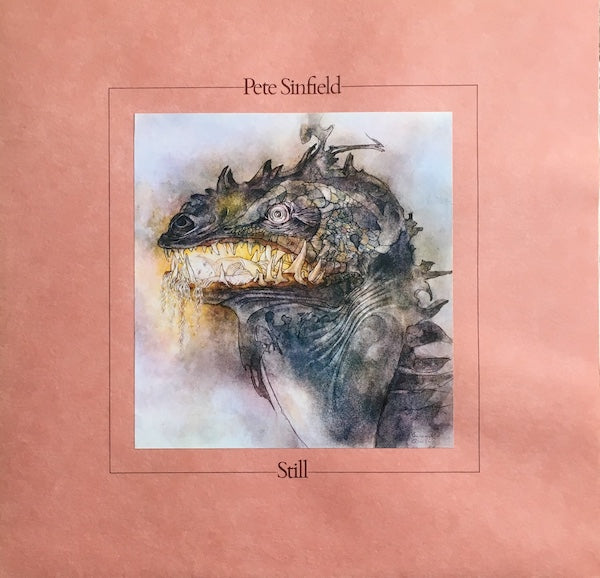
Pete Sinfield, Still, album cover.

Pete Sinfield – “Song of the Sea Goat” – (Vivaldi)

Peter Sinfield was the lyricist for the first four King Crimson Albums. He also worked with Emerson, Lake & Palmer. This track is from his only solo album, which was released on ELP’s Manticore label. Here Sinfield has adapted an instrumental work, Vivaldi’s Guitar Concerto in D, (fully credited) into a vocal piece. Although his voice is a bit weak, I actually think the melody works better sung, as the guitar notes seem too staccato to my ears.

Love Sculpture, Forms and Feelings, album cover.

Love Sculpture – “Farandole” – (Bizet)

Love Sculpture was one of the earliest bands for Welsh rocker Dave Edmunds. Their first album was Blues Helping, and you can guess the genre. The trio morphed into a more progressive outfit, and performed a number of fully credited classical pieces on their second album Forms and Feelings. Here, Bizet’s “Farandole” is given the full rock treatment.

Gabor Szabo, Dreams, album cover.

Gabor Szabo – “Fire Dance” – (de Falla)

A number of Hungarian-American guitarist Gabor Szabo’s albums consisted of jazz versions of pop songs. For his beautifully produced album Dreams, on Gary McFarland’s short-lived Skye label, he branched out to record original material and several credited classical adaptations.

Emerson, Lake & Palmer, album cover.

Emerson, Lake & Palmer – “Knife Edge” – (Janacek/Bach)

Keith Emerson arranged a number of classical pieces from composers such as Tchaikovsky, Sibelius, and Bach for his pre-ELP group, The Nice. This track from ELP’s first album is listed as an adaptation of Leon Janacek’s “Sinfonietta,” but it also includes an uncredited bit from Bach’s “French Suite No. 1” in the middle of the piece.

The Load, Praise the Load, album cover.

The Load – “Brandenburg Concerto #3 (third movement)” – (Bach)

The Load was a 1970s Midwestern emulation of Emerson, Lake & Palmer. They, too, did a number of classical adaptations on their cheekily titled album Praise the Load.

Manfred Mann’s Earth Band, The Roaring Silence, album cover.
Manfred Mann's Earth Band, The Roaring Silence, album cover.

Manfred Mann’s Earth Band – “Starbird” – (Stravinsky)

Manfred Mann’s eponymous 1960s pop group had hits with “Do Wah Diddy Diddy” and a cover of Bob Dylan’s “The Mighty Quinn.” The 1970s saw a new lineup, new name (Manfred Mann’s Earth Band), and a new direction toward progressive rock. On their seventh album, The Roaring Silence, they scored another hit with a cover of Bruce Springsteen’s “Blinded by the Light.” Also on that album was “Starbird,” the intro to which is clearly taken from Igor Stravinsky’s “Firebird Suite.” Guess who isn’t credited?

These are just a few examples of rock artists plundering the classical oeuvre. There will be another installment in the future.

More from Issue 179

View All Articles in Issue 179

Search Copper Magazine

#230 Camaraderie by B. Jan Montana May 04, 2026 #230 AXPONA 2026: A Family Gathering by Paul McGowan May 04, 2026 #230 Pianist Ryan Benthall Explores Jazz Realms and Far Beyond With Divine Sky by Frank Doris May 04, 2026 #230 The Vinyl Beat in AXPONA-Land by Rudy Radelic May 04, 2026 #230 Teddy Thompson’s Musical Growth Deepens With Never Be the Same by Ray Chelstowski May 04, 2026 #230 More Fun in the Sun: Florida Audio Expo, Part Two by Frank Doris May 04, 2026 #230 CanJam NYC 2026 Show Report: Heady Sound, Part Two by Frank Doris and Harris Fogel May 04, 2026 #230 Sonic Youth On Murray Street by Wayne Robins May 04, 2026 #230 Graffeo Coffee: A Symphony of Sensory Experience by Joe Caplan May 04, 2026 #230 The Saul Authority: The Story of Hi-Fi Pioneer Saul Marantz by Olivier Meunier-Plante May 04, 2026 #230 How to Play in a Rock Band, 23: Encounters With Famous Musicians, Part Two by Frank Doris May 04, 2026 #230 An Outlier in the Rack: A Vintage BIC Beam Box by The Staff at Just Audio May 04, 2026 #230 PS Audio in the News by PS Audio Staff May 04, 2026 #230 A Cautionary Tale by Rich Isaacs May 04, 2026 #230 Reel-to-Reel Roots, Part 33 (Revised): Ken Kessler Reports On the 2026 (British) AudioJumble by Ken Kessler May 04, 2026 #230 Text Messaging by Frank Doris May 04, 2026 #230 The Audiophile Rat Race by Peter Xeni May 04, 2026 #230 On the Rocks by Rich Isaacs May 04, 2026 #229 The Earliest Stars of Country Music, Part Three by Jeff Weiner Apr 06, 2026 #229 The Healing Power of Music and Sound at the Omega Institute by Joe Caplan Apr 06, 2026 #229 CanJam NYC 2026 Show Report: Heady Sound, Part One by Frank Doris Apr 06, 2026 #229 Florida Audio Expo 2026: Warming Up to High-End Audio, Part One by Frank Doris Apr 06, 2026 #229 Quick Takes: Anne Bisson, Sam Morrison, The Velvet Underground, and the Stooges by Frank Doris Apr 06, 2026 #229 The Vinyl Beat: New Arrivals, and Old Audio Show Demo Scores to Settle by Rudy Radelic Apr 06, 2026 #229 Harvard Gets a High-End Audio Education by Frank Doris Apr 06, 2026 #229 No Country for Old Knees by B. Jan Montana Apr 06, 2026 #229 How To Play in A Rock Band, 22: Encounters With Famous Musicians, Part 1 by Frank Doris Apr 06, 2026 #229 The Soulful Grooves of Guinea-Bissau by Steve Kindig Apr 06, 2026 #229 Four-Hand Piano Performance at Its Finest by Stephan Haberthür Apr 06, 2026 #229 The People Who Make Audio Happen: Supreme Acoustics Systems’ Las Vegas Grand Opening by Harris Fogel Apr 06, 2026 #229 Blue Öyster Cult: Tyranny and Expectations by Wayne Robins Apr 06, 2026 #229 Guitarist Rick Vito’s Cinematic New Album, Slidemaster by Ray Chelstowski Apr 06, 2026 #229 Measurements and Observational Listening by Paul McGowan Apr 06, 2026 #229 PS Audio in the News by PS Audio Staff Apr 06, 2026 #229 Back to My Reel-to-Reel Roots, Part 28: The Cassette Strikes Back by Ken Kessler Apr 06, 2026 #229 Are You Receiving Me? by Frank Doris Apr 06, 2026 #229 Hospitality by Peter Xeni Apr 06, 2026 #229 Cantina Gateway by James Schrimpf Apr 06, 2026 #228 Serita’s Black Rose Duo Shakes Your Soul With a Blend of Funk, Rock, Blues and a Whole Lot More by Frank Doris Mar 02, 2026 #228 Vinyl, A Love Story by Wayne Robins Mar 02, 2026 #228 Thrill Seeker by B. Jan Montana Mar 02, 2026 #228 The Vinyl Beat: Donald Byrd, Bill Evans, Wes Montgomery, Eddie Palmieri and Frank Sinatra by Rudy Radelic Mar 02, 2026 #228 Listening to Prestige: The History of a Vitally Important Jazz Record Label by Frank Doris Mar 02, 2026 #228 How to Play in a Rock Band, 21: Touring With James Lee Stanley by Frank Doris Mar 02, 2026 #228 The NAMM 2026 Show: The Music Industry’s Premier Event by John Volanski Mar 02, 2026 #228 The Earliest Stars of Country Music, Part Two by Jeff Weiner Mar 02, 2026 #228 From The Audiophile's Guide: A Brief History of Stereophonic Sound by Paul McGowan Mar 02, 2026

Borrowing (Stealing?) from the Classics

Borrowing (Stealing?) from the Classics

Cov•er•ing: in music, performing a song that has been written or recorded by the original artist

Bor•row•ing: obtaining or receiving something with the understanding that it will be returned (or, in this case, at least acknowledged or credited)

Steal•ing: taking without right or permission

When the groundbreaking album Switched-On Bach by Wendy Carlos was released in 1968, it was received with both acclaim and derision, but at least no one could claim the music was uncredited. Many classical purists found it sacrilegious, yet famed pianist Glenn Gould, one of the most highly regarded performers of Bach’s music, praised it highly. The album would go on to win Grammy awards and ultimately receive Platinum certification, a rarity for classical recordings.

The original album cover shown above was quickly replaced with another image from the same photo shoot showing “Bach” standing by the synthesizer with a more bemused expression on his face. Carlos and producer Rachel Elkind had objected to the first cover for two reasons: 1) they felt the facial expression was undignified, and 2) the headphones were erroneously plugged into an input, rather than the proper output of the Moog synthesizer. The replacement image was also reproduced more clearly.

Progressive rock is often characterized by the use of elements of classical composition such as repeating themes, shifts in dynamics, rhythmic changes, unusual time signatures, and distinct sections within a song. It’s only reasonable to assume that snippets (or sometimes whole pieces) occasionally find their way onto a rock album.

The sticking point for me is when a classical theme or melody is incorporated into a rock song without crediting the composer. My sense of fairness and justice does not allow for that sort of thing. Here are some examples of rock artists covering, borrowing or outright stealing from classical composers. (The rock YouTube entry comes first, followed by the classical performance.)

Gustav Holst’s The Planets is one of those compositions that make a good introduction to classical music for non-classical fans, and, as such, certain parts like “Mars, the Bringer of War” have been incorporated into a number of rock performances.

King Crimson, In the Wake of Poseidon, album cover.

King Crimson – “The Devil’s Triangle” – (Holst)

I am a big fan of the early King Crimson albums, and have a great deal of respect for guitarist Robert Fripp, but that is tempered by the fact that on In the Wake of Poseidon he took “Mars, the Bringer of War” without crediting Holst. No excuse.

The Mothers of Invention, Absolutely Free, album cover.

The Mothers of Invention, Absolutely Free, album cover.

The Mothers of Invention – “Invocation and Ritual Dance of the Young Pumpkin” – (Holst)

Frank Zappa was no stranger to classical music and composers. On this track from the album Absolutely Free, he uses an uncredited snippet from Holst (“Jupiter”).

Ravel’s “Bolero” is another classical piece that has found great favor with a number of rock outfits. Well before the movie 10 brought Bo Derek and “Bolero” into our consciousness, Jeff Beck and others had adapted it.

James Gang Rides Again, album cover.

James Gang – “The Bomber” – (Ravel)

On The James Gang Rides Again, Joe Walsh and company inserted “Bolero” into a long track that also incorporated a cover of Vince Guaraldi’s “Cast Your Fate to the Wind.” After the release of the album, objections from the estate of Maurice Ravel resulted in the “Bolero” section being removed from the piece with a rather clumsy edit, and the album cover was reprinted to reflect that omission. My copy of the album doesn’t mention the Ravel piece on the cover, but the label on the record and the recording itself include it.

Colosseum, The Grass is Greener, album cover.

Colosseum – “Bolero” – (Ravel)

British drummer Jon Hiseman’s band was a jazz/blues/rock outfit in the early 1970s. In the liner notes for their album The Grass is Greener, the group’s guitarist Dave Clemson had this to say about the inclusion of “Bolero”: “A diabolical liberty really. It’s got a horrible guitar solo which I was told to play. I hate it. P.S This was written for me. I hate it. P.P.S. So was that.” (I’ve got to admit, it’s not the best version of the piece.)

Pete Sinfield, Still, album cover.

Pete Sinfield – “Song of the Sea Goat” – (Vivaldi)

Peter Sinfield was the lyricist for the first four King Crimson Albums. He also worked with Emerson, Lake & Palmer. This track is from his only solo album, which was released on ELP’s Manticore label. Here Sinfield has adapted an instrumental work, Vivaldi’s Guitar Concerto in D, (fully credited) into a vocal piece. Although his voice is a bit weak, I actually think the melody works better sung, as the guitar notes seem too staccato to my ears.

Love Sculpture, Forms and Feelings, album cover.

Love Sculpture – “Farandole” – (Bizet)

Love Sculpture was one of the earliest bands for Welsh rocker Dave Edmunds. Their first album was Blues Helping, and you can guess the genre. The trio morphed into a more progressive outfit, and performed a number of fully credited classical pieces on their second album Forms and Feelings. Here, Bizet’s “Farandole” is given the full rock treatment.

Gabor Szabo, Dreams, album cover.

Gabor Szabo – “Fire Dance” – (de Falla)

A number of Hungarian-American guitarist Gabor Szabo’s albums consisted of jazz versions of pop songs. For his beautifully produced album Dreams, on Gary McFarland’s short-lived Skye label, he branched out to record original material and several credited classical adaptations.

Emerson, Lake & Palmer, album cover.

Emerson, Lake & Palmer – “Knife Edge” – (Janacek/Bach)

Keith Emerson arranged a number of classical pieces from composers such as Tchaikovsky, Sibelius, and Bach for his pre-ELP group, The Nice. This track from ELP’s first album is listed as an adaptation of Leon Janacek’s “Sinfonietta,” but it also includes an uncredited bit from Bach’s “French Suite No. 1” in the middle of the piece.

The Load, Praise the Load, album cover.

The Load – “Brandenburg Concerto #3 (third movement)” – (Bach)

The Load was a 1970s Midwestern emulation of Emerson, Lake & Palmer. They, too, did a number of classical adaptations on their cheekily titled album Praise the Load.

Manfred Mann’s Earth Band, The Roaring Silence, album cover.
Manfred Mann's Earth Band, The Roaring Silence, album cover.

Manfred Mann’s Earth Band – “Starbird” – (Stravinsky)

Manfred Mann’s eponymous 1960s pop group had hits with “Do Wah Diddy Diddy” and a cover of Bob Dylan’s “The Mighty Quinn.” The 1970s saw a new lineup, new name (Manfred Mann’s Earth Band), and a new direction toward progressive rock. On their seventh album, The Roaring Silence, they scored another hit with a cover of Bruce Springsteen’s “Blinded by the Light.” Also on that album was “Starbird,” the intro to which is clearly taken from Igor Stravinsky’s “Firebird Suite.” Guess who isn’t credited?

These are just a few examples of rock artists plundering the classical oeuvre. There will be another installment in the future.

0 comments

Leave a comment

0 Comments

Your avatar

Loading comments...

🗑️ Delete Comment

Enter moderator password to delete this comment:

✏️ Edit Comment

Enter your email to verify ownership: