COPPER

A PS Audio Publication

Issue 128 • Free Online Magazine

Issue 128 FEATURED

January's Most Memorable Concerts

January's Most Memorable Concerts

When you run through a list of the biggest rock concerts of all time, one thing you’ll notice is that most were held during the summer months. I guess this isn’t much of a surprise, although there are actually a fair share of exceptions that took place in the spring and early fall. But guess which month is largely absent of almost any big shows? If you guessed January, you win.

Even December has made more noise, hosting its fair share of memorable and infamous moments like the Rolling Stones’ performance at Altamont in 1969. Things just seem to come to a halt in January. Frankly I’m not sure why. Maybe it’s because the holidays take the wind out of concert-going crowds. Maybe weather plays a role. But as I look back at my own personal concert-going, the month of January has always been light.

That’s not to say that there haven’t been significant January concerts or even shows that changed the face of music. For example, the legendary Aloha From Hawaii via Satellite show that Elvis Presley hosted on January 14, 1973. I remember watching that as a kid and being dazzled by the fanfare built around a new technology breakthrough: the first live concert broadcast via satellite. That enabled The King to go global. The concert delivered better viewing numbers than any moon landing. Then there was the Trips Festival in 1966. 10,000 people attended this three-day event that featured bands like the Grateful Dead and Big Brother and the Holding Company. This festival put concert promoter Bill Graham on the map and became a psychedelic landmark, one of the first events to pose the question: “Can you pass the acid test?”


Then, there was that crazy moment in 1978 at Randy’s Rodeo in San Antonio, Texas, where the Sex Pistols took to the stage. From the get-go the band tirelessly taunted an audience of mostly cowboys with insults and digs. Things reached a boiling point when Sid Vicious hit a patron in the head with his bass. It became a definitive moment in the world of punk where the line between art and life became largely blurred.

These all were significant live music moments, but it’s hard to imagine how any past or future performance in the month of January could possibly top the one I’ll name as the greatest of all time.
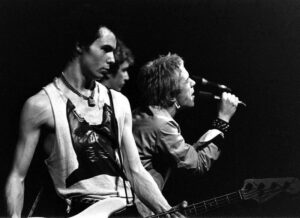
The Sex Pistols, 1977. Courtesy of Wikimedia Commons/Riksarkivet. The Sex Pistols, 1977. Courtesy of Wikimedia Commons/Riksarkivet.


I’m speaking about Johnny Cash’s performance in front of about 1,000 inmates at Folsom State Prison in 1968. Much like the comeback special that Elvis would host later that year (not to be confused with the Aloha From Hawaii show mentioned earlier), this performance catapulted Cash back to the forefront of American music. Prior to this appearance Cash’s career had hit the skids, derailed by an addiction to pills so strong that it had him contemplating suicide. But on Saturday, January 13, after two days of rehearsal in a Sacramento motel and with a new producer and the approval from Governor Ronald Reagan Johnny took to that stage in his trademark black ensemble. Backed by a small, tight band, he sat on a white stool and introduced himself to the crowd with the immortal words, “Hello, I’m Johnny Cash.”

What many don’t know is that Cash insisted on two performances, one at 9:40 am and another at 12:40 pm, in the event the first show wasn’t fit for recording. In both cases Carl Perkins and The Statler Brothers opened the show, each singing a song or two. From there, Cash was introduced and he ripped right into “Folsom Prison Blues,” The performance was later released as a live record, Johnny Cash at Folsom Prison, and would become his best-selling disc to that date. It also would provide him with a new footing that convinced June Carter that he was back on track. They married shortly thereafter.


Many artists, across genres, consider this live record to be a seminal work of American music. Longtime Cash sideman (and son-in-law) Marty Stuart once said, “if I had to point to one record –  if you’ve never heard rock and roll in your life, if you’ve never heard country music in your life, go get this record. If you want the definition of American country music, American rock and roll, whatever Americana music is, here it is. If I had to take one record to Heaven with me, it would be that one.”

Cash was no stranger to jails. He had been locked up over the years for public disorder, drug offenses, public intoxication, and breaking curfew while picking flowers in Starkville, Mississippi. That last brush with the law even inspired his song “Starkville County Jail.” Those experiences stayed with him and informed his writing.

In the early 1960s after Cash had written “Folsom Prison Blues,” prisoners across the country wrote letters asking Cash to play for them. Truth be told, he had actually played at various prisons before the idea to record his shows was proposed for Folsom. During these visits, Cash took the time to sit down with inmates from Arkansas to California and hear their stories. Through these moments he became their champion.

Almost a year after Folsom, Cash returned to California to play at San Quentin State Prison. Ironically, among the group of inmates was Merle Haggard. He would later say of Cash’s performance: “It gave everybody the feeling that if they could learn [from] “Folsom Prison Blues,” maybe they could stay out of prison.” June Carter Cash described the day as the moment they had come to “see the lost and lonely ones. Some kind of internal energy for those men – the prisoners, the guards, even the warden – gave way to anger, to love, and to laughter…a reaction like I’d never seen before.” In Johnny Cash the inmates at Folsom and San Quentin found a brother, and the photos and footage from both shows reveal the joy and the sense of hope that he brought to them. Apparently for Cash, performing at these correctional facilities was an important reminder of where he would be headed if he didn’t get control of his own personal demons.

This dedication to bringing music to inmates would move beyond Johnny Cash and extend to B.B. King’s Live at Cook County Jail in 1971 and even Metallica performing at San Quentin in 2003. Cash started a movement at Folsom in more ways than one. What few now know or remember about his prison tour is that he donated a portion of proceeds from their hit albums to prison reform campaigns, and in 1972 Cash testified in front of the United States Senate Committee on the Judiciary, Subcommittee on National Penitentiaries. He also sat down with President Richard Nixon to plead his case.


These Cash performances at Folsom Prison are in my opinion the centerpieces of his eternal legacy. They are the perfect intersection of his music, his qualities as a performer, his humanity and his own sense of justice. An otherwise musically quiet day in January was the spark for a body of music that still can change just about anyone’s mindset and mood. Listening to Johnny Cash at Folsom Prison is a great way to kick off any new year and after the one we’ve just lived through, now might be the perfect time to tap into an electrifying performance that was truly transformational – exactly what we all are hoping for from 2021.

Header image courtesy of Wikimedia Commons/Abernathyautoparts~commonswiki (assumed), cropped to fit format.

More from Issue 128

View All Articles in Issue 128

Search Copper Magazine

#234 A Life in High-End Audio: The Roy Hall Interview, Part One by Frank Doris Sep 07, 2026 #234 Jason Greenlaw Offers His Personal Perspective on Jazz Guitar in Vantage Point by Frank Doris Sep 07, 2026 #234 Transcendent Phoenix: Lucina Yue Brings the Ancient Konghou Into Modern Times by Frank Doris Sep 07, 2026 #234 We Must All Follow Our Bliss by B. Jan Montana Sep 07, 2026 #234 How to Play in a Rock Band, 27: Leveling Up by Frank Doris Sep 07, 2026 #234 Ross Valory: Traveling Into New Musical Territory With All of the Above by Ray Chelstowski Sep 07, 2026 #234 Singer/Songwriter John David Schrader: On the Need to Create by Joe Caplan Sep 07, 2026 #234 The People Who Make Audio Happen: More From T.H.E. Show SoCal 2026 by Harris Fogel Sep 07, 2026 #234 The Vinyl Beat Digs Into the Gadget Box by Rudy Radelic Sep 07, 2026 #234 The Rolling Stones: Foreign Tongues Spoken Loud by Wayne Robins Sep 07, 2026 #234 Musical Moments by Rich Isaacs Sep 07, 2026 #234 Rags for Solo Piano and a Dog: David Chesky's Ragtime Music for the Modern Age by Frankly Speaking Sep 07, 2026 #234 HIGH END 2026, Vienna: Here to Stay by Carsten Barnbeck Sep 07, 2026 #234 From The Audiophile’s Guide: The Two Main Types of Loudpeakers – Box and Panel by Paul McGowan Sep 07, 2026 #234 Letting it Slide by Frank Doris Sep 07, 2026 #234 PS Audio in the News by PS Audio Staff Sep 07, 2026 #234 Long Playing by Peter Xeni Sep 07, 2026 #234 La Mer by B. Jan Montana Sep 07, 2026 #233 A Report From The Total Hi-Fi Experience Show SoCal 2026 by B. Jan Montana Aug 03, 2026 #233 Bluegrass Meets Country, Folk, Jazz and More in All That We Carried by The Squid City Slingers by Frank Doris Aug 03, 2026 #233 Corey Glover and One Tribe Nation: A Variegated Musical Collective by Ray Chelstowski Aug 03, 2026 #233 Excursions with Clive: The Late Clive Davis, A Personal History by Wayne Robins Aug 03, 2026 #233 AI, Art, and Music: A Conversation With Synthography Art by Joe Caplan Aug 03, 2026 #233 New American Symphonies: A Rediscovered Gem and a Vital Contemporary Work by Frank Doris Aug 03, 2026 #233 The Vinyl Beat: Genesis, the Dave Clark Five, Antonio Carlos Jobim and More by Rudy Radelic Aug 03, 2026 #233 How to Play in a Rock Band, 26: When It's Time to Record Your Music by Frank Doris Aug 03, 2026 #233 More From T.H.E. Show 2026, and the People Who Made it Happen by Harris Fogel Aug 03, 2026 #233 Underappreciated Artists, Part Three: Icehouse by Rich Isaacs Aug 03, 2026 #233 The Surprisingly Rich and Varied Music of Somalia by Steve Kindig Aug 03, 2026 #233 A Remarkable Discographic Legacy: The LP Recordings of the Basel Symphony Orchestra by Stephan Haberthür Aug 03, 2026 #233 From The Audiophile’s Guide: The Importance of Loudspeakers by Paul McGowan Aug 03, 2026 #233 From Swimming Pool to New Listening Room: A Conversation with Norman Varney of AV RoomService by Gilles Laferrière Aug 03, 2026 #233 PS Audio in the News by PS Audio Staff Aug 03, 2026 #233 Audio Jewelry by Peter Xeni Aug 03, 2026 #233 Enrich Your Life by Frank Doris Aug 03, 2026 #233 The Searcher by James Schrimpf Aug 03, 2026 #232 What came first: Art or Music? A Conversation With Artist Jose Acosta by Joe Caplan Jul 06, 2026 #232 Blow By Blow: The Jeff Beck Story: An Insightful Book About a Guitar Icon by Ray Chelstowski Jul 06, 2026 #232 Creed Over Camaraderie? by B. Jan Montana Jul 06, 2026 #232 Chronicles of a Sound Pilgrim at the 2026 Montreal Audiofest by Hugues Morin Jul 06, 2026 #232 The Vinyl Beat: Summer Grooves by Rudy Radelic Jul 06, 2026 #232 Hibbing Hillbilly Dylan's Acoustic Rock by Wayne Robins Jul 06, 2026 #232 Quad Quads and Plasmatronics Tweeters: An Extraordinary System Comes to Life by Frank Doris Jul 06, 2026 #232 In Praise of Live Music, Once Again by Ted Shafran Jul 06, 2026 #232 Allnic Audio’s L-9000 Preamplifier: Design and Engineering Innovation by Howard Kneller Jul 06, 2026 #232 “Best Of” Lists and Rage Bait: Enough Already by Frank Doris Jul 06, 2026 #232 Quick Takes: Bud Shank, Paulo Almeida, Jakob Dreyer, Tim Eriksen and Peter Irvine by Frank Doris Jul 06, 2026

January's Most Memorable Concerts

January's Most Memorable Concerts

When you run through a list of the biggest rock concerts of all time, one thing you’ll notice is that most were held during the summer months. I guess this isn’t much of a surprise, although there are actually a fair share of exceptions that took place in the spring and early fall. But guess which month is largely absent of almost any big shows? If you guessed January, you win.

Even December has made more noise, hosting its fair share of memorable and infamous moments like the Rolling Stones’ performance at Altamont in 1969. Things just seem to come to a halt in January. Frankly I’m not sure why. Maybe it’s because the holidays take the wind out of concert-going crowds. Maybe weather plays a role. But as I look back at my own personal concert-going, the month of January has always been light.

That’s not to say that there haven’t been significant January concerts or even shows that changed the face of music. For example, the legendary Aloha From Hawaii via Satellite show that Elvis Presley hosted on January 14, 1973. I remember watching that as a kid and being dazzled by the fanfare built around a new technology breakthrough: the first live concert broadcast via satellite. That enabled The King to go global. The concert delivered better viewing numbers than any moon landing. Then there was the Trips Festival in 1966. 10,000 people attended this three-day event that featured bands like the Grateful Dead and Big Brother and the Holding Company. This festival put concert promoter Bill Graham on the map and became a psychedelic landmark, one of the first events to pose the question: “Can you pass the acid test?”


Then, there was that crazy moment in 1978 at Randy’s Rodeo in San Antonio, Texas, where the Sex Pistols took to the stage. From the get-go the band tirelessly taunted an audience of mostly cowboys with insults and digs. Things reached a boiling point when Sid Vicious hit a patron in the head with his bass. It became a definitive moment in the world of punk where the line between art and life became largely blurred.

These all were significant live music moments, but it’s hard to imagine how any past or future performance in the month of January could possibly top the one I’ll name as the greatest of all time.

The Sex Pistols, 1977. Courtesy of Wikimedia Commons/Riksarkivet. The Sex Pistols, 1977. Courtesy of Wikimedia Commons/Riksarkivet.


I’m speaking about Johnny Cash’s performance in front of about 1,000 inmates at Folsom State Prison in 1968. Much like the comeback special that Elvis would host later that year (not to be confused with the Aloha From Hawaii show mentioned earlier), this performance catapulted Cash back to the forefront of American music. Prior to this appearance Cash’s career had hit the skids, derailed by an addiction to pills so strong that it had him contemplating suicide. But on Saturday, January 13, after two days of rehearsal in a Sacramento motel and with a new producer and the approval from Governor Ronald Reagan Johnny took to that stage in his trademark black ensemble. Backed by a small, tight band, he sat on a white stool and introduced himself to the crowd with the immortal words, “Hello, I’m Johnny Cash.”

What many don’t know is that Cash insisted on two performances, one at 9:40 am and another at 12:40 pm, in the event the first show wasn’t fit for recording. In both cases Carl Perkins and The Statler Brothers opened the show, each singing a song or two. From there, Cash was introduced and he ripped right into “Folsom Prison Blues,” The performance was later released as a live record, Johnny Cash at Folsom Prison, and would become his best-selling disc to that date. It also would provide him with a new footing that convinced June Carter that he was back on track. They married shortly thereafter.


Many artists, across genres, consider this live record to be a seminal work of American music. Longtime Cash sideman (and son-in-law) Marty Stuart once said, “if I had to point to one record –  if you’ve never heard rock and roll in your life, if you’ve never heard country music in your life, go get this record. If you want the definition of American country music, American rock and roll, whatever Americana music is, here it is. If I had to take one record to Heaven with me, it would be that one.”

Cash was no stranger to jails. He had been locked up over the years for public disorder, drug offenses, public intoxication, and breaking curfew while picking flowers in Starkville, Mississippi. That last brush with the law even inspired his song “Starkville County Jail.” Those experiences stayed with him and informed his writing.

In the early 1960s after Cash had written “Folsom Prison Blues,” prisoners across the country wrote letters asking Cash to play for them. Truth be told, he had actually played at various prisons before the idea to record his shows was proposed for Folsom. During these visits, Cash took the time to sit down with inmates from Arkansas to California and hear their stories. Through these moments he became their champion.

Almost a year after Folsom, Cash returned to California to play at San Quentin State Prison. Ironically, among the group of inmates was Merle Haggard. He would later say of Cash’s performance: “It gave everybody the feeling that if they could learn [from] “Folsom Prison Blues,” maybe they could stay out of prison.” June Carter Cash described the day as the moment they had come to “see the lost and lonely ones. Some kind of internal energy for those men – the prisoners, the guards, even the warden – gave way to anger, to love, and to laughter…a reaction like I’d never seen before.” In Johnny Cash the inmates at Folsom and San Quentin found a brother, and the photos and footage from both shows reveal the joy and the sense of hope that he brought to them. Apparently for Cash, performing at these correctional facilities was an important reminder of where he would be headed if he didn’t get control of his own personal demons.

This dedication to bringing music to inmates would move beyond Johnny Cash and extend to B.B. King’s Live at Cook County Jail in 1971 and even Metallica performing at San Quentin in 2003. Cash started a movement at Folsom in more ways than one. What few now know or remember about his prison tour is that he donated a portion of proceeds from their hit albums to prison reform campaigns, and in 1972 Cash testified in front of the United States Senate Committee on the Judiciary, Subcommittee on National Penitentiaries. He also sat down with President Richard Nixon to plead his case.


These Cash performances at Folsom Prison are in my opinion the centerpieces of his eternal legacy. They are the perfect intersection of his music, his qualities as a performer, his humanity and his own sense of justice. An otherwise musically quiet day in January was the spark for a body of music that still can change just about anyone’s mindset and mood. Listening to Johnny Cash at Folsom Prison is a great way to kick off any new year and after the one we’ve just lived through, now might be the perfect time to tap into an electrifying performance that was truly transformational – exactly what we all are hoping for from 2021.

Header image courtesy of Wikimedia Commons/Abernathyautoparts~commonswiki (assumed), cropped to fit format.

0 comments

Leave a comment

0 Comments

Your avatar

Loading comments...

🗑️ Delete Comment

Enter moderator password to delete this comment:

✏️ Edit Comment

Enter your email to verify ownership: