COPPER

A PS Audio Publication

Issue 113 • Free Online Magazine

Issue 113 TWISTED SYSTEMS

And it Feels Just Like...Starting Over

And it Feels Just Like...Starting Over

So, as I have written about and stated in numerous articles and interviews, my portal to music was laid down through a 4-inch speaker through a Blaupunkt tabletop radio around February 1963.

I was at home, sick for nearly a month, and it was at that time that I first heard “Hit Radio 77 WABC.”

The DJ’s were Scott Muni, Bruce Morrow, Dan Ingram, Bob “Babaloo” Lewis (doing the overnights) HOA (Herb Oscar Anderson) in morning drive (if there was even such a description back in 1962) and Bob Dayton.

The Top 40 seemed really like a Top 10 played over and over again.

To an 11 year old this seemed like the world’s template for music.

Forget all the other music like jazz, classical, folk…they didn’t register one bit. All that mattered was what I was being fed hour by hour, day by day a relentless succession of the same songs that changed bit by bit as new songs were introduced into the Top 40 playlist and then made it to the Top 10 which then became cemented into my brain. This was one year before the Beatles and all the British Invasion artists and the wall-to-wall hits of Motown took over my world (and millions of others).

I contend that the music that you fall in love with between the ages of 12 and 20 create your taste forever.

I’m not a sociologist nor an anthropologist. It’s just one of those feelings, backed up by others who I have asked about personal musical taste.

This doesn’t mean, by any stretch, that one can’t learn to love new music later in life. What it does, however, speak to is the fact that when you are young, you have the time to invest in the music you love, pretty much unencumbered by all the issues that come into play when you get older. And when you get past 50…well, I mean really who the fu*k really has the time?

Harsh?

Maybe, but with COVID-19 literally stopping the world, I have a lot of time on my hands and that has led me to look at my record collection and ask myself why I haven’t listened to 75 percent of the albums I’ve owned. Sure, I might have listened to many of them a long time ago but because I’m in the business, I get albums given to me that just sit on shelves taking up space and looking cool…I guess.

Anyway, I don’t need to listen to a lot of the rock albums that I have because, frankly, I know enough about the artist to either have given some of it a passing listen, or I just disregard the music completely because I know where the artist is coming from and if they didn’t resonate enough in the world to make me care then I just don’t.

There is, however, another issue and that is: maybe there is a musical genre that I really don’t know about and now may be the time to try to get into it.

And that leads me to this latest musing.

I have lots of jazz albums that were given to me when I was an active artist at Atlantic Records. Atlantic Records was founded in 1947 by Ahmet Ertegun, the son of Turkish diplomats who came to the US, and by Herb Abramson.
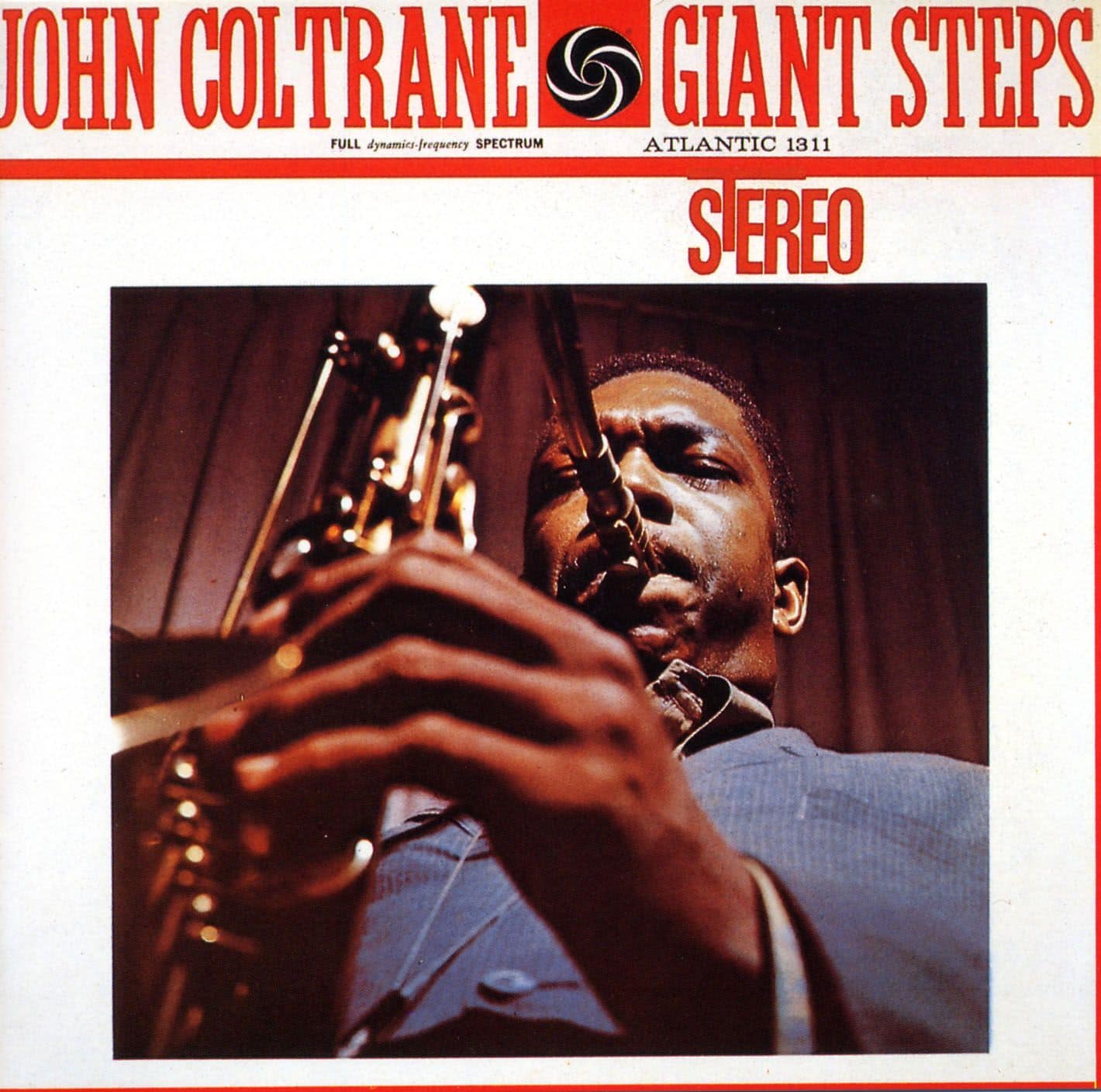
John Coltrane, Giant Steps, Atlantic Records SD 1311.

Atlantic became one of jazz music’s most important labels before moving into R&B, soul and then rock.

Their jazz roster contains luminaries such as Ray Charles (whose brilliant style also covered not only jazz but pop, R&B and country), John Coltrane, McCoy Tyner, Milt Jackson, Ornette Coleman, Bill Evans and many, many more.

Aretha Franklin created her most famous songs under the Atlantic label.
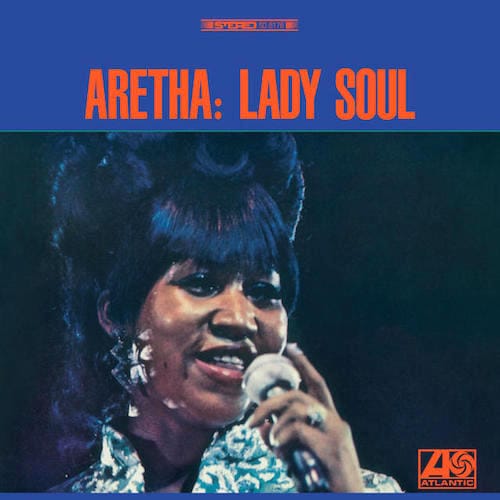
Aretha Franklin, Lady Soul, Atlantic Records K40016.

The point is, that I was on this label beginning in 1983 [with Twisted Sister – Ed.] and I can tell you that I never listened to any of these jazz artists. Ever. Not once. It never registered as something that I would even care about.

One day, in 1990, Ahmet Ertegun gave me copies of most of the albums he and his brother produced during their amazing jazz years from the late 1940s through the early 1960s. In other words, I have a great collection of some of the most revered jazz ever recorded and, over the last 30 years, it has all just been sitting, unopened and unplayed, on a shelf.

Maybe now is the time to find out what I have been missing.

Now, here is where it gets a little more interesting. When I was 17, most of my peers who were musicians were starting to get into people like Miles Davis and Sun Ra. One of my closest friends took me to see Elvin Jones one night at the Half Note in NYC. I began to wonder why I wasn’t (as a musician) following this path. At the time, I was a Deadhead. Putting aside any Dead jokes, the Grateful Dead were as close to a jazz improv band as rock would get and I “got it” totally. I completely understood their musical language.

Ornette Coleman, The Shape of Jazz to Come, Atlantic Records SD 1317.

I used to tell this to my friends but strangely, I was a Deadhead all by myself. None of my musician friends, some of whom were really incredible musicians, liked the Dead. In fact, they hated them and thought that their playing just plain sucked. I just came to this realization because of a conversation I recently had with Mark Pinkus, the US president of Rhino/WMG, which is my current record label as well as the label that oversees the Grateful Dead catalog. I’m older than Mark and when I told him about all the Dead shows I saw between 1969 and 1972, he was blown away. Especially because I walked away from the Dead completely in 1972, and went out of my way to never listen to another Dead song again (if I could help it, but that is another story for another time). Mark couldn’t believe that none of my serious music friends in the 1960s, in New York City no less, were Dead fans…trust me, the only person I ever convinced to go see the Dead with me was my mom. I took her to one of the Felt Forum shows in 1971 and even smoked a joint with her!

The point is that he was shocked that I had no friends who liked them back then. The Grateful Dead may have been the closest to “jazz improv” as I ever got and the point is…I got it…but I didn’t “get” jazz. Not Miles. Not Coltrane, not Bird.

None of it but…I have all these albums and now, I’m living during COVID-19 and I am listening.

All the time.

I put on an album and I just let it play. I’m trying to “normalize” it so I can understand it. It’s like a foreign language. The younger you are when you learn it, the easier it is to understand it. But maybe you can still teach an old dog new tricks.

I’m giving it my best shot and I will let you know how this experiment in new music appreciation develops.

Stay tuned.

And if all else fails, I’ll just put on Chuck Berry, Little Richard, the Beatles and some of Motown’s greatest hits…trust me I got lots of those…

The Genius of Ray Charles, Atlantic Records SD 1312.

More from Issue 113

View All Articles in Issue 113

Search Copper Magazine

#232 What came first: Art or Music? A Conversation With Artist Jose Acosta by Joe Caplan Jul 06, 2026 #232 Blow By Blow: The Jeff Beck Story: An Insightful Book About a Guitar Icon by Ray Chelstowski Jul 06, 2026 #232 Creed Over Camaraderie? by B. Jan Montana Jul 06, 2026 #232 Chronicles of a Sound Pilgrim at the 2026 Montreal Audiofest by Hugues Morin Jul 06, 2026 #232 The Vinyl Beat: Summer Grooves by Rudy Radelic Jul 06, 2026 #232 Hibbing Hillbilly Dylan's Acoustic Rock by Wayne Robins Jul 06, 2026 #232 Quad Quads and Plasmatronics Tweeters: An Extraordinary System Comes to Life by Frank Doris Jul 06, 2026 #232 In Praise of Live Music, Once Again by Ted Shafran Jul 06, 2026 #232 Allnic Audio’s L-9000 Preamplifier: Design and Engineering Innovation by Howard Kneller Jul 06, 2026 #232 “Best Of” Lists and Rage Bait: Enough Already by Frank Doris Jul 06, 2026 #232 Quick Takes: Bud Shank, Paulo Almeida, Jakob Dreyer, Tim Eriksen and Peter Irvine by Frank Doris Jul 06, 2026 #232 My Impressions of AXPONA 2026, Part 2 by Frank Doris Jul 06, 2026 #232 How to Play in a Rock Band, 25: Encounters With Famous Musicians, Part Three by Frank Doris Jul 06, 2026 #232 Budgets, and Systems From Small to Outrageous by Paul McGowan Jul 06, 2026 #232 PS Audio in the News by PS Audio Staff Jul 06, 2026 #232 Hand It Over by Frank Doris Jul 06, 2026 #232 Difference of Opinion by Peter Xeni Jul 06, 2026 #232 Wabi-sabi Tree by James Schrimpf Jul 06, 2026 #231 Piano Prodigy Jude Kofie Releases His Debut Album On Octave Records by Frank Doris Jun 01, 2026 #231 Underappreciated Artists, Part Two: City Boy by Rich Isaacs Jun 01, 2026 #231 Music and the Art of Creation: Talking With Saxophonist Rob Scheps by Joe Caplan Jun 01, 2026 #231 How to Play in a Rock Band, 24: Further Adventures at the 2026 Montauk Music Festival by Frank Doris Jun 01, 2026 #231 Courtney Barnett: Creature of Habit by Wayne Robins Jun 01, 2026 #231 Angine de Poitrine: Interstellar Guitar Rock Saviors Headed for Late-Night TV Pop Stardom? by Mark Lepage Jun 01, 2026 #231 My Impressions of AXPONA 2026, Part One by Frank Doris Jun 01, 2026 #231 2026 La Jolla Concours d'Elegance: Another Aesthetic Feast by B. Jan Montana Jun 01, 2026 #231 Country Music Icon Jo Dee Messina’s Bridges: A New Beginning by Ray Chelstowski Jun 01, 2026 #231 The Luxury Dispatch Hosts a Video Podcast With Ken Kessler by Ken Kessler Jun 01, 2026 #231 The Vinyl Beat: Tracking in the Motor City by Rudy Radelic Jun 01, 2026 #231 Lots of Fun With DSP: The Ferrum Audio WANDLA DAC and Its Tube Mode by Frank Doris Jun 01, 2026 #231 From The Audiophile's Guide: Digital Source Components and Streaming Audio by Paul McGowan Jun 01, 2026 #231 Onkyo’s Monster M-510 power amplifier by The Staff at Just Audio Jun 01, 2026 #231 PS Audio in the News by PS Audio Staff Jun 01, 2026 #231 Naming Convention by Peter Xeni Jun 01, 2026 #231 Les Invisibles by Frank Doris Jun 01, 2026 #231 Wildlife Scene by James Schrimpf Jun 01, 2026 #230 Camaraderie by B. Jan Montana May 04, 2026 #230 AXPONA 2026: A Family Gathering by Paul McGowan May 04, 2026 #230 Pianist Ryan Benthall Explores Jazz Realms and Far Beyond With Divine Sky by Frank Doris May 04, 2026 #230 The Vinyl Beat in AXPONA-Land by Rudy Radelic May 04, 2026 #230 Teddy Thompson’s Musical Growth Deepens With Never Be the Same by Ray Chelstowski May 04, 2026 #230 More Fun in the Sun: Florida Audio Expo, Part Two by Frank Doris May 04, 2026 #230 CanJam NYC 2026 Show Report: Heady Sound, Part Two by Frank Doris and Harris Fogel May 04, 2026 #230 Sonic Youth On Murray Street by Wayne Robins May 04, 2026 #230 Graffeo Coffee: A Symphony of Sensory Experience by Joe Caplan May 04, 2026 #230 The Saul Authority: The Story of Hi-Fi Pioneer Saul Marantz by Olivier Meunier-Plante May 04, 2026 #230 How to Play in a Rock Band, 23: Encounters With Famous Musicians, Part Two by Frank Doris May 04, 2026

And it Feels Just Like...Starting Over

And it Feels Just Like...Starting Over

So, as I have written about and stated in numerous articles and interviews, my portal to music was laid down through a 4-inch speaker through a Blaupunkt tabletop radio around February 1963.

I was at home, sick for nearly a month, and it was at that time that I first heard “Hit Radio 77 WABC.”

The DJ’s were Scott Muni, Bruce Morrow, Dan Ingram, Bob “Babaloo” Lewis (doing the overnights) HOA (Herb Oscar Anderson) in morning drive (if there was even such a description back in 1962) and Bob Dayton.

The Top 40 seemed really like a Top 10 played over and over again.

To an 11 year old this seemed like the world’s template for music.

Forget all the other music like jazz, classical, folk…they didn’t register one bit. All that mattered was what I was being fed hour by hour, day by day a relentless succession of the same songs that changed bit by bit as new songs were introduced into the Top 40 playlist and then made it to the Top 10 which then became cemented into my brain. This was one year before the Beatles and all the British Invasion artists and the wall-to-wall hits of Motown took over my world (and millions of others).

I contend that the music that you fall in love with between the ages of 12 and 20 create your taste forever.

I’m not a sociologist nor an anthropologist. It’s just one of those feelings, backed up by others who I have asked about personal musical taste.

This doesn’t mean, by any stretch, that one can’t learn to love new music later in life. What it does, however, speak to is the fact that when you are young, you have the time to invest in the music you love, pretty much unencumbered by all the issues that come into play when you get older. And when you get past 50…well, I mean really who the fu*k really has the time?

Harsh?

Maybe, but with COVID-19 literally stopping the world, I have a lot of time on my hands and that has led me to look at my record collection and ask myself why I haven’t listened to 75 percent of the albums I’ve owned. Sure, I might have listened to many of them a long time ago but because I’m in the business, I get albums given to me that just sit on shelves taking up space and looking cool…I guess.

Anyway, I don’t need to listen to a lot of the rock albums that I have because, frankly, I know enough about the artist to either have given some of it a passing listen, or I just disregard the music completely because I know where the artist is coming from and if they didn’t resonate enough in the world to make me care then I just don’t.

There is, however, another issue and that is: maybe there is a musical genre that I really don’t know about and now may be the time to try to get into it.

And that leads me to this latest musing.

I have lots of jazz albums that were given to me when I was an active artist at Atlantic Records. Atlantic Records was founded in 1947 by Ahmet Ertegun, the son of Turkish diplomats who came to the US, and by Herb Abramson.

John Coltrane, Giant Steps, Atlantic Records SD 1311.

Atlantic became one of jazz music’s most important labels before moving into R&B, soul and then rock.

Their jazz roster contains luminaries such as Ray Charles (whose brilliant style also covered not only jazz but pop, R&B and country), John Coltrane, McCoy Tyner, Milt Jackson, Ornette Coleman, Bill Evans and many, many more.

Aretha Franklin created her most famous songs under the Atlantic label.

Aretha Franklin, Lady Soul, Atlantic Records K40016.

The point is, that I was on this label beginning in 1983 [with Twisted Sister – Ed.] and I can tell you that I never listened to any of these jazz artists. Ever. Not once. It never registered as something that I would even care about.

One day, in 1990, Ahmet Ertegun gave me copies of most of the albums he and his brother produced during their amazing jazz years from the late 1940s through the early 1960s. In other words, I have a great collection of some of the most revered jazz ever recorded and, over the last 30 years, it has all just been sitting, unopened and unplayed, on a shelf.

Maybe now is the time to find out what I have been missing.

Now, here is where it gets a little more interesting. When I was 17, most of my peers who were musicians were starting to get into people like Miles Davis and Sun Ra. One of my closest friends took me to see Elvin Jones one night at the Half Note in NYC. I began to wonder why I wasn’t (as a musician) following this path. At the time, I was a Deadhead. Putting aside any Dead jokes, the Grateful Dead were as close to a jazz improv band as rock would get and I “got it” totally. I completely understood their musical language.

Ornette Coleman, The Shape of Jazz to Come, Atlantic Records SD 1317.

I used to tell this to my friends but strangely, I was a Deadhead all by myself. None of my musician friends, some of whom were really incredible musicians, liked the Dead. In fact, they hated them and thought that their playing just plain sucked. I just came to this realization because of a conversation I recently had with Mark Pinkus, the US president of Rhino/WMG, which is my current record label as well as the label that oversees the Grateful Dead catalog. I’m older than Mark and when I told him about all the Dead shows I saw between 1969 and 1972, he was blown away. Especially because I walked away from the Dead completely in 1972, and went out of my way to never listen to another Dead song again (if I could help it, but that is another story for another time). Mark couldn’t believe that none of my serious music friends in the 1960s, in New York City no less, were Dead fans…trust me, the only person I ever convinced to go see the Dead with me was my mom. I took her to one of the Felt Forum shows in 1971 and even smoked a joint with her!

The point is that he was shocked that I had no friends who liked them back then. The Grateful Dead may have been the closest to “jazz improv” as I ever got and the point is…I got it…but I didn’t “get” jazz. Not Miles. Not Coltrane, not Bird.

None of it but…I have all these albums and now, I’m living during COVID-19 and I am listening.

All the time.

I put on an album and I just let it play. I’m trying to “normalize” it so I can understand it. It’s like a foreign language. The younger you are when you learn it, the easier it is to understand it. But maybe you can still teach an old dog new tricks.

I’m giving it my best shot and I will let you know how this experiment in new music appreciation develops.

Stay tuned.

And if all else fails, I’ll just put on Chuck Berry, Little Richard, the Beatles and some of Motown’s greatest hits…trust me I got lots of those…

The Genius of Ray Charles, Atlantic Records SD 1312.

0 comments

Leave a comment

0 Comments

Your avatar

Loading comments...

🗑️ Delete Comment

Enter moderator password to delete this comment:

✏️ Edit Comment

Enter your email to verify ownership: