COPPER

A PS Audio Publication

Issue 122 • Free Online Magazine

Issue 122 FEATURED

An Assortment of Favorite Demo Recordings

An Assortment of Favorite Demo Recordings

Many audiophile magazines and internet sites compile lists of what they consider definitive demonstration recordings that every audiophile should own, or at least use religiously when auditioning equipment. I rarely find those lists helpful for a few reasons – the music isn’t to my taste, the recordings are almost impossible to find or outrageously expensive, or I never found the sound to be all that impressive.

Demo recordings should reflect our own interests in music. It should be music that we are intimately familiar with and know every nuance of. Our demos should also convey the feel of the music – a perfect-sounding system that doesn’t convey the emotion is one that I am not comfortable listening to. (And I’ve heard many like this!)

I have my own selected recordings which I tend to pull out when I want to audition a new component, enjoy the components I already own, tweak my system, or demonstrate my system to others. This list is in no particular order and evolves over time.

Michael Franks: Music in My Head (2018, Shanachie Records)

Franks’ latest recording, Music in My Head, recalls those early albums The Art of Tea and Sleeping Gypsy. It’s new yet still familiar, a well-produced recording to hear his voice with – “Bluebird Blue” places his breathy vocals dead center, with a jazz combo accompaniment. The rest of the tunes are typical of his style of songwriting – easygoing, with clever turns of lyrics and rhymes. The clean instrumentation is good for pinpointing resonances or colorations in components, and his voice is perfect for detecting unwanted “chestiness” in the speakers.

Tears For Fears: The Seeds of Love (1989, Fontana)

Despite the excellent Songs from the Big Chair, I find myself drawn to the lush, bigger-than-life acoustic sound from The Seeds of Love. The title track gives a nod towards the Beatles’ psychedelic era with a lot going on in the background. Other tunes lean towards soul and gospel, thanks to Oleta Adams, whose crystal-clear voice cuts through the multilayered sounds on this album. The sound of this album is full-bodied and clean. A system should allow me to pick out individual parts, as well as enjoy the music as a coherent whole.

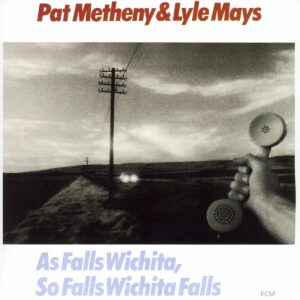
Pat Metheny and Lyle Mays: As Falls Wichita, So Falls Wichita Falls (1981, ECM)

While I enjoy the mood of the title track, it’s the following three tunes that bend genres and make the record interesting. That it’s recorded on ECM also means that like other albums from the label, this one was impeccably recorded. “Ozark” starts the run with a busy, folksy workout. “September Fifteenth” is the highlight for me; a quiet duo piece honoring pianist Bill Evans (who passed away during the recording of the album). “It’s for You” is sprightly and fun with Pat’s guitars and Lyle Mays’ piano accompaniment complementing each other. Nana Vasconcelos handles the percussion and occasional vocals throughout.
 

Nik Bärtsch’s Ronin: Holon (2008, ECM) and Randori (2001, Ronin Rhythm Records)

Holon was my gateway to Swiss pianist and composer Nik Bärtsch’s entire catalog. (Dan Schwartz wrote about Nik Bärtsch in Issue 31.) What also strikes me beyond the disarmingly simple music was how clean and precise the sound is on this album, without it sounding sterile as many modern recordings do. Bärtsch’s groups are all acoustic. Listen for intricate percussion, very subtle cues on the piano, the whisper of Sha’s bass clarinet and sax (often played in a percussive rather than melodic role)—there is much to uncover here on the right system.

Randori is an earlier album, more repetitive and simpler, but the way the instruments are recorded puts them in the forefront with crisp, clean attacks, especially the percussion, which will give your system a workout.  If you’ve ever heard these instruments up close in person, these recordings should give you an idea of what your system can reveal.

Oregon: Northwest Passage (1997, Intuition)

This album features clean acoustic sounds, intricate percussion, and a strong bass, all demonstrated on tracks like “Claridade” and the spooky “Nightfall.”

Kraftwerk: Computer World (1981, Warner Bros.)

There are some cases where you need the blips, bloops and buzzes of synthesized electronic music to test the “speed” of your system, and this one is my go-to since it’s also an engaging album musically. [Frank Doris wrote about this album and others from Kraftwerk in Issue 111.]

Burt Bacharach: Casino Royale (1966, Colgems, reissued by Classic Records)

An audiophile classic, the killer track by Dusty Springfield, “The Look of Love,” is enough to recommend this one. That voice…breathy and seductive. Herb Alpert’s trumpet on the main title is also the most lifelike I’ve heard it on those 1960s recordings, and the orchestra that Bacharach employed in London is nicely reproduced throughout. The Classic Records HDAD/DVD-A disc is the definitive digital version.


Eiji Oue/Minnesota Orchestra – Stravinsky (Song of the Nightingale/The Firebird Suite/The Rite of Spring) (1996, Reference Recordings)

This recording sounds as though it is over-boosted in the highs and lows. The overbearing bass drum resonates too loudly throughout the house, even without subwoofers. The brass is overly bright. The performance, under the baton of Eiji Oue, also differs from other renditions of these pieces; I still find it engaging though, despite the sound. The exaggerated lows and highs easily tax a lesser system. An edgy system will be triggered even more so by the overly bright brass.  Speakers with poorly-controlled bass will sound even worse with the bass drum, and power amps are easily taxed. The recording has attributes that can aggravate certain aspects of a system to reveal their flaws. There are a couple of other recordings on this label with Eiji Oue and the Minnesota Orchestra that sound much more balanced and musical.

Manfredo Fest: Braziliana (1987, dmp Records)

This is a naturally recorded digital CD from the 1980s. Fest re-records one of his better-known tunes here, “Brazilian Dorian Dream,” in an arrangement similar to the original from the 1970s.  Only this time, it’s so cleanly recorded, by Tom Jung at dmp Records. There is plenty of percussion details to listen for throughout the album.

Debussy: Nocturnes – Bernard Haitink conducting the Royal Concertgebouw Orchestra (1979, Philips)

The recording dates from 1979 and has a nice sense of ambience and “being there.” I’m a fan of Haitink’s conducting, and the Debussy works here have been among my favorites for decades. Despite a little tape hiss, I get a very “you are there” feeling from this recording. (The 2011 SACD is my go-to version.)

Henry Mancini: The Pink Panther (soundtrack) (1964, RCA, reissued by Analogue Productions)/Hatari! (1962, RCA, reissued by Analogue Productions)

Here are two albums I grew up listening to. The Pink Panther soundtrack is lush and orchestral.  But given Mancini’s penchant for jazz, there are plenty of intimate jazz solos throughout the album, oozing out from one speaker or the other as the strings and double bass back them up.  Pour a martini!

Hatari! features a lot of African percussion, highlighting the film’s safari theme. The nearly seven-minute-long title track opens the film on an action sequence, starting with only light percussion and picking up steam as the horns and piano build to a driving climax. The crystal-clear sound on the hit “Baby Elephant Walk” is also one of RCA’s finest moments.

Both are available as 45 RPM, 2-LP sets from Analogue Productions (as is The Music from Peter Gunn album) which make them fantastic vinyl demo recordings, but there are SACD equivalents from AP that sound almost as good. The Hi-Res Audio reissues from BMG are also the best sonic versions I’ve heard yet from that company.

Bill Evans: Sunday at the Village Vanguard (1961, Riverside, reissued by Analogue Productions)

This may be a clichéd pick, but in recent years I have become a big fan of Bill Evans’ trio recordings. Of all of them, this one certainly is not the best sounding, but this album should transport me to the Village Vanguard where this was recorded, with the ambient sounds of the audience sprinkled throughout the background. The Analogue Productions SACD is the best sounding version I own.


Elvis Costello & Burt Bacharach: Painted from Memory (1998, Mercury)

A lifelong Burt Bacharach fan (my mother played his records often), this project seemed so utterly strange at first that I didn’t think it would work. But it does.  Behind Costello’s voice and lyrics, the music is 100% bona fide Bacharach. The recording itself is rich and dynamic, with everything from intimate piano to full orchestral crescendos, Costello’s gravelly voice adding to what is a high-water mark for both performers. The original CD is an HDCD disc; I prefer that over the Mobile Fidelity SACD and vinyl (which are too bright to my ears).

Gino Vannelli: Crazy Life (1973, A&M)

Like my Tears for Fears pick, Crazy Life is a well-recorded multi-track pop album. Thanks to Joe Vannelli’s synthesizer bass, there are plenty of low notes throughout. The sparse production on many of the tracks is a far cry from his most popular albums–plenty of clean, clear percussion parts, various keyboards without too many cheesy 1970s synthesizers, and Gino’s multitracked voice. The CD is practically unobtanium; you can hear the album on Qobuz, or you might still be able to find a clean vinyl copy.

Harry Belafonte: Belafonte Sings the Blues (1958, RCA, reissued by Impex Records)

This album, reportedly one of Belafonte’s favorites and the first he recorded in stereo, features very low-key participation of the cream of west coast jazz musicians in what is a quiet and revealing album. The best version I’ve heard is the Impex 45 RPM/2-LP set that puts Belafonte and the musicians right in the room. The digital Hi-Res version is commendable although it lacks that last little bit that tips the vinyl version over the top. A quiet, intimate recording, it is good for revealing the intricacies of the musical accompaniment and is one of the best recordings of Belafonte’s voice.

Bebel Gilberto: Bebel Gilberto (2004, Six Degrees)

Isabel “Bebel” Gilberto is the daughter of Bossa Nova pioneer João Gilberto and singer Miucha.  Her style brings bossa nova and Música Popular Brasileira (MPB) to the 21st century and updates it. Her most engaging work is this well-recorded self-titled second album. The sparse instrumentation frames the breathiness of her voice, making this album a good test for determining how well a system can reproduce vocals.

Mel Tormé: Swings Shubert Alley (1960, Verve)

A favorite album by a favorite vocalist. Tormé’s vocals are clear as day. This is another “feeling” album for me – a swingin’ good time from end to end. If I’m not feeling Marty Paich’s horn charts on here, or the band seems congested or muddy, then something is wrong. The recent Hi-Res version available from Verve is the best I’ve ever heard this album.

Here are some links to give you a taste of the music.

Manfredo Fest: “Braziliana”
Michael Franks: “Bluebird Blue”
Bebel Gilberto: “Simplesmente”
Harry Belafonte: “A Fool For You”
Mel Tormé: “Whatever Lola Wants”
Gino Vannelli: “Crazy Life”
Oregon: “Claridade”
Nik Bartsch’s Ronin: “Module 8_9 I”
Henry Mancini: “Champagne and Quail”
Henry Mancini: “The Sounds of Hatari”
Kraftwerk: “Pocket Calculator”
Elvis Costello & Burt Bacharach: “I Still Have That Other Girl”
Bernard Haitink/Concertgebouw: Debussy – Trois Nocturnes
Pat Metheny & Lyle Mays: “Ozark”
Dusty Springfield: “The Look of Love”

Here’s a Qobuz playlist, for those who want to experience the tracks for themselves:

https://open.qobuz.com/playlist/4476932

I gathered two tracks from each of the albums listed, with two exceptions. Belafonte Sings the Blues is not available on Qobuz, so I had to substitute two of that album’s tracks from his 3-CD anthology.  (I really wanted to include “A Fool For You” but it’s not on the anthology.) Also, Bacharach’s Casino Royale soundtrack was nowhere to be found; Herb’s title track is on the TJB’s Sounds Like album, but I could not find that soundtrack version of Dusty’s “The Look of Love” on any of her anthologies. (They include a shorter version, a different performance, with a lot more reverb.) A bummer, since “The Look of Love” is one of my favorites and a standout demo track. I tried to pick Hi-Res Audio versions wherever possible.

More from Issue 122

View All Articles in Issue 122

Search Copper Magazine

#234 A Life in High-End Audio: The Roy Hall Interview, Part One by Frank Doris Sep 07, 2026 #234 Jason Greenlaw Offers His Personal Perspective on Jazz Guitar in Vantage Point by Frank Doris Sep 07, 2026 #234 Transcendent Phoenix: Lucina Yue Brings the Ancient Konghou Into Modern Times by Frank Doris Sep 07, 2026 #234 We Must All Follow Our Bliss by B. Jan Montana Sep 07, 2026 #234 How to Play in a Rock Band, 27: Leveling Up by Frank Doris Sep 07, 2026 #234 Ross Valory: Traveling Into New Musical Territory With All of the Above by Ray Chelstowski Sep 07, 2026 #234 Singer/Songwriter John David Schrader: On the Need to Create by Joe Caplan Sep 07, 2026 #234 The People Who Make Audio Happen: More From T.H.E. Show SoCal 2026 by Harris Fogel Sep 07, 2026 #234 The Vinyl Beat Digs Into the Gadget Box by Rudy Radelic Sep 07, 2026 #234 The Rolling Stones: Foreign Tongues Spoken Loud by Wayne Robins Sep 07, 2026 #234 Musical Moments by Rich Isaacs Sep 07, 2026 #234 Rags for Solo Piano and a Dog: David Chesky's Ragtime Music for the Modern Age by Frankly Speaking Sep 07, 2026 #234 HIGH END 2026, Vienna: Here to Stay by Carsten Barnbeck Sep 07, 2026 #234 From The Audiophile’s Guide: The Two Main Types of Loudpeakers – Box and Panel by Paul McGowan Sep 07, 2026 #234 Letting it Slide by Frank Doris Sep 07, 2026 #234 PS Audio in the News by PS Audio Staff Sep 07, 2026 #234 Long Playing by Peter Xeni Sep 07, 2026 #234 La Mer by B. Jan Montana Sep 07, 2026 #233 A Report From The Total Hi-Fi Experience Show SoCal 2026 by B. Jan Montana Aug 03, 2026 #233 Bluegrass Meets Country, Folk, Jazz and More in All That We Carried by The Squid City Slingers by Frank Doris Aug 03, 2026 #233 Corey Glover and One Tribe Nation: A Variegated Musical Collective by Ray Chelstowski Aug 03, 2026 #233 Excursions with Clive: The Late Clive Davis, A Personal History by Wayne Robins Aug 03, 2026 #233 AI, Art, and Music: A Conversation With Synthography Art by Joe Caplan Aug 03, 2026 #233 New American Symphonies: A Rediscovered Gem and a Vital Contemporary Work by Frank Doris Aug 03, 2026 #233 The Vinyl Beat: Genesis, the Dave Clark Five, Antonio Carlos Jobim and More by Rudy Radelic Aug 03, 2026 #233 How to Play in a Rock Band, 26: When It's Time to Record Your Music by Frank Doris Aug 03, 2026 #233 More From T.H.E. Show 2026, and the People Who Made it Happen by Harris Fogel Aug 03, 2026 #233 Underappreciated Artists, Part Three: Icehouse by Rich Isaacs Aug 03, 2026 #233 The Surprisingly Rich and Varied Music of Somalia by Steve Kindig Aug 03, 2026 #233 A Remarkable Discographic Legacy: The LP Recordings of the Basel Symphony Orchestra by Stephan Haberthür Aug 03, 2026 #233 From The Audiophile’s Guide: The Importance of Loudspeakers by Paul McGowan Aug 03, 2026 #233 From Swimming Pool to New Listening Room: A Conversation with Norman Varney of AV RoomService by Gilles Laferrière Aug 03, 2026 #233 PS Audio in the News by PS Audio Staff Aug 03, 2026 #233 Audio Jewelry by Peter Xeni Aug 03, 2026 #233 Enrich Your Life by Frank Doris Aug 03, 2026 #233 The Searcher by James Schrimpf Aug 03, 2026 #232 What came first: Art or Music? A Conversation With Artist Jose Acosta by Joe Caplan Jul 06, 2026 #232 Blow By Blow: The Jeff Beck Story: An Insightful Book About a Guitar Icon by Ray Chelstowski Jul 06, 2026 #232 Creed Over Camaraderie? by B. Jan Montana Jul 06, 2026 #232 Chronicles of a Sound Pilgrim at the 2026 Montreal Audiofest by Hugues Morin Jul 06, 2026 #232 The Vinyl Beat: Summer Grooves by Rudy Radelic Jul 06, 2026 #232 Hibbing Hillbilly Dylan's Acoustic Rock by Wayne Robins Jul 06, 2026 #232 Quad Quads and Plasmatronics Tweeters: An Extraordinary System Comes to Life by Frank Doris Jul 06, 2026 #232 In Praise of Live Music, Once Again by Ted Shafran Jul 06, 2026 #232 Allnic Audio’s L-9000 Preamplifier: Design and Engineering Innovation by Howard Kneller Jul 06, 2026 #232 “Best Of” Lists and Rage Bait: Enough Already by Frank Doris Jul 06, 2026 #232 Quick Takes: Bud Shank, Paulo Almeida, Jakob Dreyer, Tim Eriksen and Peter Irvine by Frank Doris Jul 06, 2026

An Assortment of Favorite Demo Recordings

An Assortment of Favorite Demo Recordings

Many audiophile magazines and internet sites compile lists of what they consider definitive demonstration recordings that every audiophile should own, or at least use religiously when auditioning equipment. I rarely find those lists helpful for a few reasons – the music isn’t to my taste, the recordings are almost impossible to find or outrageously expensive, or I never found the sound to be all that impressive.

Demo recordings should reflect our own interests in music. It should be music that we are intimately familiar with and know every nuance of. Our demos should also convey the feel of the music – a perfect-sounding system that doesn’t convey the emotion is one that I am not comfortable listening to. (And I’ve heard many like this!)

I have my own selected recordings which I tend to pull out when I want to audition a new component, enjoy the components I already own, tweak my system, or demonstrate my system to others. This list is in no particular order and evolves over time.

Michael Franks: Music in My Head (2018, Shanachie Records)

Franks’ latest recording, Music in My Head, recalls those early albums The Art of Tea and Sleeping Gypsy. It’s new yet still familiar, a well-produced recording to hear his voice with – “Bluebird Blue” places his breathy vocals dead center, with a jazz combo accompaniment. The rest of the tunes are typical of his style of songwriting – easygoing, with clever turns of lyrics and rhymes. The clean instrumentation is good for pinpointing resonances or colorations in components, and his voice is perfect for detecting unwanted “chestiness” in the speakers.

Tears For Fears: The Seeds of Love (1989, Fontana)

Despite the excellent Songs from the Big Chair, I find myself drawn to the lush, bigger-than-life acoustic sound from The Seeds of Love. The title track gives a nod towards the Beatles’ psychedelic era with a lot going on in the background. Other tunes lean towards soul and gospel, thanks to Oleta Adams, whose crystal-clear voice cuts through the multilayered sounds on this album. The sound of this album is full-bodied and clean. A system should allow me to pick out individual parts, as well as enjoy the music as a coherent whole.

Pat Metheny and Lyle Mays: As Falls Wichita, So Falls Wichita Falls (1981, ECM)

While I enjoy the mood of the title track, it’s the following three tunes that bend genres and make the record interesting. That it’s recorded on ECM also means that like other albums from the label, this one was impeccably recorded. “Ozark” starts the run with a busy, folksy workout. “September Fifteenth” is the highlight for me; a quiet duo piece honoring pianist Bill Evans (who passed away during the recording of the album). “It’s for You” is sprightly and fun with Pat’s guitars and Lyle Mays’ piano accompaniment complementing each other. Nana Vasconcelos handles the percussion and occasional vocals throughout.


Nik Bärtsch’s Ronin: Holon (2008, ECM) and Randori (2001, Ronin Rhythm Records)

Holon was my gateway to Swiss pianist and composer Nik Bärtsch’s entire catalog. (Dan Schwartz wrote about Nik Bärtsch in Issue 31.) What also strikes me beyond the disarmingly simple music was how clean and precise the sound is on this album, without it sounding sterile as many modern recordings do. Bärtsch’s groups are all acoustic. Listen for intricate percussion, very subtle cues on the piano, the whisper of Sha’s bass clarinet and sax (often played in a percussive rather than melodic role)—there is much to uncover here on the right system.

Randori is an earlier album, more repetitive and simpler, but the way the instruments are recorded puts them in the forefront with crisp, clean attacks, especially the percussion, which will give your system a workout.  If you’ve ever heard these instruments up close in person, these recordings should give you an idea of what your system can reveal.

Oregon: Northwest Passage (1997, Intuition)

This album features clean acoustic sounds, intricate percussion, and a strong bass, all demonstrated on tracks like “Claridade” and the spooky “Nightfall.”

Kraftwerk: Computer World (1981, Warner Bros.)

There are some cases where you need the blips, bloops and buzzes of synthesized electronic music to test the “speed” of your system, and this one is my go-to since it’s also an engaging album musically. [Frank Doris wrote about this album and others from Kraftwerk in Issue 111.]

Burt Bacharach: Casino Royale (1966, Colgems, reissued by Classic Records)

An audiophile classic, the killer track by Dusty Springfield, “The Look of Love,” is enough to recommend this one. That voice…breathy and seductive. Herb Alpert’s trumpet on the main title is also the most lifelike I’ve heard it on those 1960s recordings, and the orchestra that Bacharach employed in London is nicely reproduced throughout. The Classic Records HDAD/DVD-A disc is the definitive digital version.


Eiji Oue/Minnesota Orchestra – Stravinsky (Song of the Nightingale/The Firebird Suite/The Rite of Spring) (1996, Reference Recordings)

This recording sounds as though it is over-boosted in the highs and lows. The overbearing bass drum resonates too loudly throughout the house, even without subwoofers. The brass is overly bright. The performance, under the baton of Eiji Oue, also differs from other renditions of these pieces; I still find it engaging though, despite the sound. The exaggerated lows and highs easily tax a lesser system. An edgy system will be triggered even more so by the overly bright brass.  Speakers with poorly-controlled bass will sound even worse with the bass drum, and power amps are easily taxed. The recording has attributes that can aggravate certain aspects of a system to reveal their flaws. There are a couple of other recordings on this label with Eiji Oue and the Minnesota Orchestra that sound much more balanced and musical.

Manfredo Fest: Braziliana (1987, dmp Records)

This is a naturally recorded digital CD from the 1980s. Fest re-records one of his better-known tunes here, “Brazilian Dorian Dream,” in an arrangement similar to the original from the 1970s.  Only this time, it’s so cleanly recorded, by Tom Jung at dmp Records. There is plenty of percussion details to listen for throughout the album.

Debussy: Nocturnes – Bernard Haitink conducting the Royal Concertgebouw Orchestra (1979, Philips)

The recording dates from 1979 and has a nice sense of ambience and “being there.” I’m a fan of Haitink’s conducting, and the Debussy works here have been among my favorites for decades. Despite a little tape hiss, I get a very “you are there” feeling from this recording. (The 2011 SACD is my go-to version.)

Henry Mancini: The Pink Panther (soundtrack) (1964, RCA, reissued by Analogue Productions)/Hatari! (1962, RCA, reissued by Analogue Productions)

Here are two albums I grew up listening to. The Pink Panther soundtrack is lush and orchestral.  But given Mancini’s penchant for jazz, there are plenty of intimate jazz solos throughout the album, oozing out from one speaker or the other as the strings and double bass back them up.  Pour a martini!

Hatari! features a lot of African percussion, highlighting the film’s safari theme. The nearly seven-minute-long title track opens the film on an action sequence, starting with only light percussion and picking up steam as the horns and piano build to a driving climax. The crystal-clear sound on the hit “Baby Elephant Walk” is also one of RCA’s finest moments.

Both are available as 45 RPM, 2-LP sets from Analogue Productions (as is The Music from Peter Gunn album) which make them fantastic vinyl demo recordings, but there are SACD equivalents from AP that sound almost as good. The Hi-Res Audio reissues from BMG are also the best sonic versions I’ve heard yet from that company.

Bill Evans: Sunday at the Village Vanguard (1961, Riverside, reissued by Analogue Productions)

This may be a clichéd pick, but in recent years I have become a big fan of Bill Evans’ trio recordings. Of all of them, this one certainly is not the best sounding, but this album should transport me to the Village Vanguard where this was recorded, with the ambient sounds of the audience sprinkled throughout the background. The Analogue Productions SACD is the best sounding version I own.


Elvis Costello & Burt Bacharach: Painted from Memory (1998, Mercury)

A lifelong Burt Bacharach fan (my mother played his records often), this project seemed so utterly strange at first that I didn’t think it would work. But it does.  Behind Costello’s voice and lyrics, the music is 100% bona fide Bacharach. The recording itself is rich and dynamic, with everything from intimate piano to full orchestral crescendos, Costello’s gravelly voice adding to what is a high-water mark for both performers. The original CD is an HDCD disc; I prefer that over the Mobile Fidelity SACD and vinyl (which are too bright to my ears).

Gino Vannelli: Crazy Life (1973, A&M)

Like my Tears for Fears pick, Crazy Life is a well-recorded multi-track pop album. Thanks to Joe Vannelli’s synthesizer bass, there are plenty of low notes throughout. The sparse production on many of the tracks is a far cry from his most popular albums–plenty of clean, clear percussion parts, various keyboards without too many cheesy 1970s synthesizers, and Gino’s multitracked voice. The CD is practically unobtanium; you can hear the album on Qobuz, or you might still be able to find a clean vinyl copy.

Harry Belafonte: Belafonte Sings the Blues (1958, RCA, reissued by Impex Records)

This album, reportedly one of Belafonte’s favorites and the first he recorded in stereo, features very low-key participation of the cream of west coast jazz musicians in what is a quiet and revealing album. The best version I’ve heard is the Impex 45 RPM/2-LP set that puts Belafonte and the musicians right in the room. The digital Hi-Res version is commendable although it lacks that last little bit that tips the vinyl version over the top. A quiet, intimate recording, it is good for revealing the intricacies of the musical accompaniment and is one of the best recordings of Belafonte’s voice.

Bebel Gilberto: Bebel Gilberto (2004, Six Degrees)

Isabel “Bebel” Gilberto is the daughter of Bossa Nova pioneer João Gilberto and singer Miucha.  Her style brings bossa nova and Música Popular Brasileira (MPB) to the 21st century and updates it. Her most engaging work is this well-recorded self-titled second album. The sparse instrumentation frames the breathiness of her voice, making this album a good test for determining how well a system can reproduce vocals.

Mel Tormé: Swings Shubert Alley (1960, Verve)

A favorite album by a favorite vocalist. Tormé’s vocals are clear as day. This is another “feeling” album for me – a swingin’ good time from end to end. If I’m not feeling Marty Paich’s horn charts on here, or the band seems congested or muddy, then something is wrong. The recent Hi-Res version available from Verve is the best I’ve ever heard this album.

Here are some links to give you a taste of the music.

Manfredo Fest: “Braziliana”
Michael Franks: “Bluebird Blue”
Bebel Gilberto: “Simplesmente”
Harry Belafonte: “A Fool For You”
Mel Tormé: “Whatever Lola Wants”
Gino Vannelli: “Crazy Life”
Oregon: “Claridade”
Nik Bartsch’s Ronin: “Module 8_9 I”
Henry Mancini: “Champagne and Quail”
Henry Mancini: “The Sounds of Hatari”
Kraftwerk: “Pocket Calculator”
Elvis Costello & Burt Bacharach: “I Still Have That Other Girl”
Bernard Haitink/Concertgebouw: Debussy – Trois Nocturnes
Pat Metheny & Lyle Mays: “Ozark”
Dusty Springfield: “The Look of Love”

Here’s a Qobuz playlist, for those who want to experience the tracks for themselves:

https://open.qobuz.com/playlist/4476932

I gathered two tracks from each of the albums listed, with two exceptions. Belafonte Sings the Blues is not available on Qobuz, so I had to substitute two of that album’s tracks from his 3-CD anthology.  (I really wanted to include “A Fool For You” but it’s not on the anthology.) Also, Bacharach’s Casino Royale soundtrack was nowhere to be found; Herb’s title track is on the TJB’s Sounds Like album, but I could not find that soundtrack version of Dusty’s “The Look of Love” on any of her anthologies. (They include a shorter version, a different performance, with a lot more reverb.) A bummer, since “The Look of Love” is one of my favorites and a standout demo track. I tried to pick Hi-Res Audio versions wherever possible.

0 comments

Leave a comment

0 Comments

Your avatar

Loading comments...

🗑️ Delete Comment

Enter moderator password to delete this comment:

✏️ Edit Comment

Enter your email to verify ownership: