COPPER

A PS Audio Publication

Issue 148 • Free Online Magazine

Issue 148 FROM THE SWEET SPOT

You’ll Never Take the Amp Away From Me

You’ll Never Take the Amp Away From Me

I know I’m not the only one who gets that overpowering urge to explore new looks, sounds, and possibilities with a different piece of audio equipment. I spent all of last winter and spring obsessing over tube amplifiers and checking daily the pre-owned section of the hi-fi shop where I bought my first serious integrated amp, the Rogue Audio Sphinx V2. Then one day, a used Rogers High Fidelity tube amp appeared on the website. But for an occasional magazine ad, I had never seen nor heard one before. Not to be confused with the loudspeaker manufacturer in England, Rogers was founded in 2009 in Warwick, NY, before moving to North Adams, Massachusetts, in 2019. Owner, designer, and engineer Roger Gibboni builds a line of tube integrated amplifiers ranging in price from $20,900 for a handsome dual-mono beast at 100 watts per channel, down to the 25 wpc 65V-1 at $4,200 delivered new.

Although the shop’s price with a trade-in seemed achievable, I didn’t love the 65V-1’s barebones appearance as much as Rogers’ high-end pieces with their fire engine red chassis, silver faceplates, and power meters. I considered finding something more stylish and affordable online. Indeed, fifty feature-laden tube amps between $500 and $1,500 popped up in my search. They certainly looked sharp and had impressive comments: “Sounds better than my $20,000 amp!” Another said, “Audio Nirvana!” and “Done with overpriced audio!” But some negative reviews gave a clear picture of the risks: missing and broken parts, complicated repairs, inconsistent quality, short warranties, indecipherable manuals, and murky contact information. One amp might last three months and another three years, but most will eventually end up on the heap of electronic junk we’ve all helped to create.

Frankly, I was hoping to trade my Sphinx for Rogue’s all-tube Cronus Magnum, but pre-owned models are rare, as so few people give them up. Furthermore, the Magnum would require me to open a little hatch on its chassis in order to bias the tubes, using a tool to move switches while reading an onboard gauge. With my lack of technical knowledge, this was a bridge I dared not cross. I can barely understand specs or explain the differences between classes of amplifiers (A, B, C, D, etc.), whether they’re single-ended or push-pull, or what triode, pentode, and ultralinear operation modes really mean. All I know is that some amps have power tubes and others don’t, and they sound different.

I kept circling back to the auto-biasing capacity and brawny appeal of the Rogers 65V-1. At first glance, the gray-black metal box, with its toggle switches, blue display, and precision volume knob, is like something from a Cold War Navy vessel I once toured. And it’s probably no accident the 65V-1 is built that way. Before making audio, Roger was an engineer for RCA, General Electric, and NASA, designing aerospace, radar, and communications equipment. This product’s no-nonsense aviation-grade exterior conceals the same wiring and parts used in military applications. The gear is made to last, and Roger is not subtle about its longevity: “your kids will fight over these amps when you’re gone.” I have no children, but it would have been fun to change my will any time those spoiled brats disappointed their pop. The more I stared at the 65V-1, the more it called to me – exuding the quiet mechanical confidence of a parked muscle car.
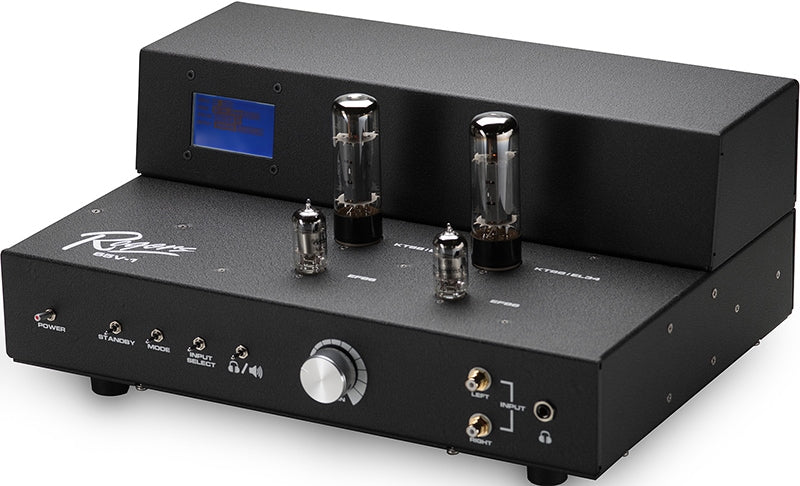
Rogers 65V-1 integrated amplifier.

Rogers 65V-1 integrated amplifier.


I still loved my impeccable Sphinx with its tube pre-amp stage and could have sent it to Pennsylvania for a complete set of upgrades, essentially turning it into the newest V3 version on the market for the price of the cheapest other tube amp I was considering. All I had to do was talk to the production manager, Nick Fitzsimmons, as I had done over the years with loads of amateur questions. If Nick doesn’t know the answer, owner and engineer Mark O’Brien also works onsite in Brodheadsville. But after swapping out the stock 12AU7 tubes for 1960s Dutch and English valves, I had taken the Sphinx as far as I could in my current setup.

Unless it was at an audio show, I had not listened to many tube amps, and if I did, they usually played audio show music, i.e., whispery female singers. The Rogers 65V-1 was only 25 watts, down from the Sphinx’s 100 wpc, and I wasn’t sure if it was suitable for me in the first place. So, I called the boss, Roger himself. After we chatted about music, bourbon, and the future of live entertainment, Roger confirmed that the amp works great with high-efficiency speakers like mine and referred me to Herb Reichert’s column in the March 2018 issue of Stereophile.

Reichert’s analysis of the Class A 65V-1, paired with his Zu Audio Soul Supreme loudspeakers at 16 ohms and 97dB sensitivity, described spatial realism, lifelike voices, intense textures, and three-dimensionality. One sentence, in particular, finally convinced me: “Rogers High Fidelity’s 65V-1 is an uncommon audio product in search of uncommon audiophiles. Might you be one of them?” Yes, Herb, I am. While I don’t have Soul Supremes, I was positive that my entry-level Zu Omen Dirty Weekends at 12 ohms and 97 dB would also perform well.
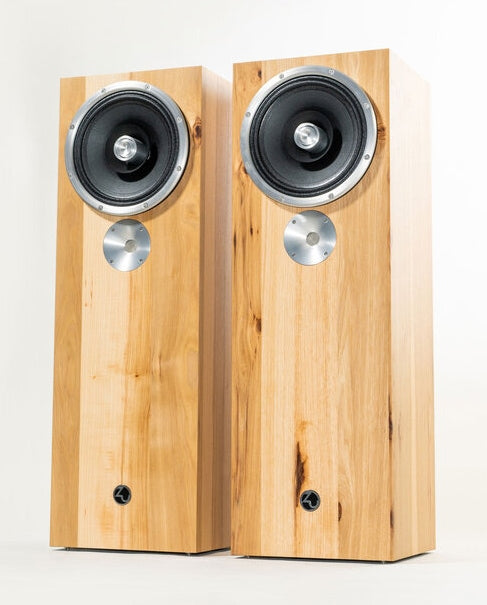
Zu Audio Dirty Weekend II loudspeakers.

Zu Audio Dirty Weekend II loudspeakers.


Ready to invest, I called Roger back and asked if it were possible to renew a warranty on the used 65V-1 I had found. “You should just buy one from me!” he said. Roger was matching the price for one of his thoroughly checked and updated demo units, complete with in-home trial and lifetime warranty – a bold move in the era of planned obsolescence. Not only was Roger generous with information and time, but he also saved me shipping, service, and potential repair charges. I guess it was meant to be – the uncommon audiophile with quirky speakers gets his uncommon amp. I sold off a bunch of audio clutter and found a new home for my Sphinx (bench tested by Rogue) with a man who was building a new system.

Several days later, a parcel truck delivered a large crash-proof box. Wearing my white cotton archiving gloves, the subject of endless derision by the non-audiophiles in my life, I sorted the contents before placing the amp on the ventilated rack. I delicately inserted a pair each of JJ EF86 pentode tubes and Mullard EL34 power tubes, connected all the components, and flicked a switch to illuminate the Mullards in a soft orange glow. Warm first impressions of Joni Mitchell’s Hejira (1976), Chick Corea’s Akoustic Band Live (2021), and Yo-Yo Ma’s Six Evolutions – Bach: Cello Suites (2018) streamed from my laptop through a Schiit Modi-3+ DAC. I fully expected the amp to play this music flawlessly, but there were new layers of realism and immediacy. Nevertheless, I kept in mind what Reichert wrote about the Gold Lion tubes, “KT88s delivered a bigger fist and a stronger blow – their detail was more etched.” That’s exactly what I wanted for my vinyl collection.

Chunky Gold Lion KT88 tubes lit up vintage records spinning on a restored 1982 Denon DP-57M turntable with a Sumiko Blue Point EVO-III MC cartridge and Parks Audio Puffin phono pre-amp. Cuts from (Pronounced ‘Lĕh-‘nérd ‘Skin-‘nérd), Lynyrd Skynyrd (1973), We Sold Our Soul for Rock ‘n’ Roll, Black Sabbath (1976), and Live! Bootleg, Aerosmith (1978) delivered thick bass, a spectrum of drums, and all the guitar crunch and screech I desire. As far as volume is concerned, there was no way I could drive the amp to clipping without someone calling the police. I made sure to inform Gerrit Koer at Zu Audio in Ogden, Utah, about this phenomenal amp/speaker combination, in case anyone else asks. After all the hand-wringing, research, and penny-pinching, I knew I had made the right decision. Rogers’ 65V-1 was the next level in performance, and, as luck would have it, my amp was made in Warwick, located about an hour away from me.

Parks Audio Puffin phono preamp.

Parks Audio Puffin phono preamp.


When I began searching for a new piece of equipment, the first impulse was to pay the least money for all my desires and imagined needs. Should I take a chance on that disposable yet attractive $500 amp? I have thirty days to get a refund from the importer if it’s a clunker. But then what’s the actual cost of a machine when it cannot be repaired, upgraded, and passed on to other audiophiles? More than its monetary value, a high-quality component handcrafted in my backyard brings assurance, convenience, and accessibility – not to mention the invaluable peace of mind if something goes wrong. No one mentioned above is a personal or business associate, but I greatly appreciate the relationships I have made with people who actually designed and built my gear – a statement that applies to nothing else I own! Plus, it’s hard to beat Roger’s customer service. You can’t just call the CEO of a multinational corporation with a ridiculous question like, “Hey, can your stuff play Motörhead, or is it just for fancy music?”

Header image: Rogers 65V-1 integrated amplifier and control app.

More from Issue 148

View All Articles in Issue 148

Search Copper Magazine

#230 Camaraderie by B. Jan Montana May 04, 2026 #230 AXPONA 2026: A Family Gathering by Paul McGowan May 04, 2026 #230 Pianist Ryan Benthall Explores Jazz Realms and Far Beyond With Divine Sky by Frank Doris May 04, 2026 #230 The Vinyl Beat in AXPONA-Land by Rudy Radelic May 04, 2026 #230 Teddy Thompson’s Musical Growth Deepens With Never Be the Same by Ray Chelstowski May 04, 2026 #230 More Fun in the Sun: Florida Audio Expo, Part Two by Frank Doris May 04, 2026 #230 CanJam NYC 2026 Show Report: Heady Sound, Part Two by Frank Doris and Harris Fogel May 04, 2026 #230 Sonic Youth On Murray Street by Wayne Robins May 04, 2026 #230 Graffeo Coffee: A Symphony of Sensory Experience by Joe Caplan May 04, 2026 #230 The Saul Authority: The Story of Hi-Fi Pioneer Saul Marantz by Olivier Meunier-Plante May 04, 2026 #230 How to Play in a Rock Band, 23: Encounters With Famous Musicians, Part Two by Frank Doris May 04, 2026 #230 An Outlier in the Rack: A Vintage BIC Beam Box by The Staff at Just Audio May 04, 2026 #230 PS Audio in the News by PS Audio Staff May 04, 2026 #230 A Cautionary Tale by Rich Isaacs May 04, 2026 #230 Reel-to-Reel Roots, Part 33 (Revised): Ken Kessler Reports On the 2026 (British) AudioJumble by Ken Kessler May 04, 2026 #230 Text Messaging by Frank Doris May 04, 2026 #230 The Audiophile Rat Race by Peter Xeni May 04, 2026 #230 On the Rocks by Rich Isaacs May 04, 2026 #229 The Earliest Stars of Country Music, Part Three by Jeff Weiner Apr 06, 2026 #229 The Healing Power of Music and Sound at the Omega Institute by Joe Caplan Apr 06, 2026 #229 CanJam NYC 2026 Show Report: Heady Sound, Part One by Frank Doris Apr 06, 2026 #229 Florida Audio Expo 2026: Warming Up to High-End Audio, Part One by Frank Doris Apr 06, 2026 #229 Quick Takes: Anne Bisson, Sam Morrison, The Velvet Underground, and the Stooges by Frank Doris Apr 06, 2026 #229 The Vinyl Beat: New Arrivals, and Old Audio Show Demo Scores to Settle by Rudy Radelic Apr 06, 2026 #229 Harvard Gets a High-End Audio Education by Frank Doris Apr 06, 2026 #229 No Country for Old Knees by B. Jan Montana Apr 06, 2026 #229 How To Play in A Rock Band, 22: Encounters With Famous Musicians, Part 1 by Frank Doris Apr 06, 2026 #229 The Soulful Grooves of Guinea-Bissau by Steve Kindig Apr 06, 2026 #229 Four-Hand Piano Performance at Its Finest by Stephan Haberthür Apr 06, 2026 #229 The People Who Make Audio Happen: Supreme Acoustics Systems’ Las Vegas Grand Opening by Harris Fogel Apr 06, 2026 #229 Blue Öyster Cult: Tyranny and Expectations by Wayne Robins Apr 06, 2026 #229 Guitarist Rick Vito’s Cinematic New Album, Slidemaster by Ray Chelstowski Apr 06, 2026 #229 Measurements and Observational Listening by Paul McGowan Apr 06, 2026 #229 PS Audio in the News by PS Audio Staff Apr 06, 2026 #229 Back to My Reel-to-Reel Roots, Part 28: The Cassette Strikes Back by Ken Kessler Apr 06, 2026 #229 Are You Receiving Me? by Frank Doris Apr 06, 2026 #229 Hospitality by Peter Xeni Apr 06, 2026 #229 Cantina Gateway by James Schrimpf Apr 06, 2026 #228 Serita’s Black Rose Duo Shakes Your Soul With a Blend of Funk, Rock, Blues and a Whole Lot More by Frank Doris Mar 02, 2026 #228 Vinyl, A Love Story by Wayne Robins Mar 02, 2026 #228 Thrill Seeker by B. Jan Montana Mar 02, 2026 #228 The Vinyl Beat: Donald Byrd, Bill Evans, Wes Montgomery, Eddie Palmieri and Frank Sinatra by Rudy Radelic Mar 02, 2026 #228 Listening to Prestige: The History of a Vitally Important Jazz Record Label by Frank Doris Mar 02, 2026 #228 How to Play in a Rock Band, 21: Touring With James Lee Stanley by Frank Doris Mar 02, 2026 #228 The NAMM 2026 Show: The Music Industry’s Premier Event by John Volanski Mar 02, 2026 #228 The Earliest Stars of Country Music, Part Two by Jeff Weiner Mar 02, 2026 #228 From The Audiophile's Guide: A Brief History of Stereophonic Sound by Paul McGowan Mar 02, 2026

You’ll Never Take the Amp Away From Me

You’ll Never Take the Amp Away From Me

I know I’m not the only one who gets that overpowering urge to explore new looks, sounds, and possibilities with a different piece of audio equipment. I spent all of last winter and spring obsessing over tube amplifiers and checking daily the pre-owned section of the hi-fi shop where I bought my first serious integrated amp, the Rogue Audio Sphinx V2. Then one day, a used Rogers High Fidelity tube amp appeared on the website. But for an occasional magazine ad, I had never seen nor heard one before. Not to be confused with the loudspeaker manufacturer in England, Rogers was founded in 2009 in Warwick, NY, before moving to North Adams, Massachusetts, in 2019. Owner, designer, and engineer Roger Gibboni builds a line of tube integrated amplifiers ranging in price from $20,900 for a handsome dual-mono beast at 100 watts per channel, down to the 25 wpc 65V-1 at $4,200 delivered new.

Although the shop’s price with a trade-in seemed achievable, I didn’t love the 65V-1’s barebones appearance as much as Rogers’ high-end pieces with their fire engine red chassis, silver faceplates, and power meters. I considered finding something more stylish and affordable online. Indeed, fifty feature-laden tube amps between $500 and $1,500 popped up in my search. They certainly looked sharp and had impressive comments: “Sounds better than my $20,000 amp!” Another said, “Audio Nirvana!” and “Done with overpriced audio!” But some negative reviews gave a clear picture of the risks: missing and broken parts, complicated repairs, inconsistent quality, short warranties, indecipherable manuals, and murky contact information. One amp might last three months and another three years, but most will eventually end up on the heap of electronic junk we’ve all helped to create.

Frankly, I was hoping to trade my Sphinx for Rogue’s all-tube Cronus Magnum, but pre-owned models are rare, as so few people give them up. Furthermore, the Magnum would require me to open a little hatch on its chassis in order to bias the tubes, using a tool to move switches while reading an onboard gauge. With my lack of technical knowledge, this was a bridge I dared not cross. I can barely understand specs or explain the differences between classes of amplifiers (A, B, C, D, etc.), whether they’re single-ended or push-pull, or what triode, pentode, and ultralinear operation modes really mean. All I know is that some amps have power tubes and others don’t, and they sound different.

I kept circling back to the auto-biasing capacity and brawny appeal of the Rogers 65V-1. At first glance, the gray-black metal box, with its toggle switches, blue display, and precision volume knob, is like something from a Cold War Navy vessel I once toured. And it’s probably no accident the 65V-1 is built that way. Before making audio, Roger was an engineer for RCA, General Electric, and NASA, designing aerospace, radar, and communications equipment. This product’s no-nonsense aviation-grade exterior conceals the same wiring and parts used in military applications. The gear is made to last, and Roger is not subtle about its longevity: “your kids will fight over these amps when you’re gone.” I have no children, but it would have been fun to change my will any time those spoiled brats disappointed their pop. The more I stared at the 65V-1, the more it called to me – exuding the quiet mechanical confidence of a parked muscle car.

Rogers 65V-1 integrated amplifier.

Rogers 65V-1 integrated amplifier.


I still loved my impeccable Sphinx with its tube pre-amp stage and could have sent it to Pennsylvania for a complete set of upgrades, essentially turning it into the newest V3 version on the market for the price of the cheapest other tube amp I was considering. All I had to do was talk to the production manager, Nick Fitzsimmons, as I had done over the years with loads of amateur questions. If Nick doesn’t know the answer, owner and engineer Mark O’Brien also works onsite in Brodheadsville. But after swapping out the stock 12AU7 tubes for 1960s Dutch and English valves, I had taken the Sphinx as far as I could in my current setup.

Unless it was at an audio show, I had not listened to many tube amps, and if I did, they usually played audio show music, i.e., whispery female singers. The Rogers 65V-1 was only 25 watts, down from the Sphinx’s 100 wpc, and I wasn’t sure if it was suitable for me in the first place. So, I called the boss, Roger himself. After we chatted about music, bourbon, and the future of live entertainment, Roger confirmed that the amp works great with high-efficiency speakers like mine and referred me to Herb Reichert’s column in the March 2018 issue of Stereophile.

Reichert’s analysis of the Class A 65V-1, paired with his Zu Audio Soul Supreme loudspeakers at 16 ohms and 97dB sensitivity, described spatial realism, lifelike voices, intense textures, and three-dimensionality. One sentence, in particular, finally convinced me: “Rogers High Fidelity’s 65V-1 is an uncommon audio product in search of uncommon audiophiles. Might you be one of them?” Yes, Herb, I am. While I don’t have Soul Supremes, I was positive that my entry-level Zu Omen Dirty Weekends at 12 ohms and 97 dB would also perform well.

Zu Audio Dirty Weekend II loudspeakers.

Zu Audio Dirty Weekend II loudspeakers.


Ready to invest, I called Roger back and asked if it were possible to renew a warranty on the used 65V-1 I had found. “You should just buy one from me!” he said. Roger was matching the price for one of his thoroughly checked and updated demo units, complete with in-home trial and lifetime warranty – a bold move in the era of planned obsolescence. Not only was Roger generous with information and time, but he also saved me shipping, service, and potential repair charges. I guess it was meant to be – the uncommon audiophile with quirky speakers gets his uncommon amp. I sold off a bunch of audio clutter and found a new home for my Sphinx (bench tested by Rogue) with a man who was building a new system.

Several days later, a parcel truck delivered a large crash-proof box. Wearing my white cotton archiving gloves, the subject of endless derision by the non-audiophiles in my life, I sorted the contents before placing the amp on the ventilated rack. I delicately inserted a pair each of JJ EF86 pentode tubes and Mullard EL34 power tubes, connected all the components, and flicked a switch to illuminate the Mullards in a soft orange glow. Warm first impressions of Joni Mitchell’s Hejira (1976), Chick Corea’s Akoustic Band Live (2021), and Yo-Yo Ma’s Six Evolutions – Bach: Cello Suites (2018) streamed from my laptop through a Schiit Modi-3+ DAC. I fully expected the amp to play this music flawlessly, but there were new layers of realism and immediacy. Nevertheless, I kept in mind what Reichert wrote about the Gold Lion tubes, “KT88s delivered a bigger fist and a stronger blow – their detail was more etched.” That’s exactly what I wanted for my vinyl collection.

Chunky Gold Lion KT88 tubes lit up vintage records spinning on a restored 1982 Denon DP-57M turntable with a Sumiko Blue Point EVO-III MC cartridge and Parks Audio Puffin phono pre-amp. Cuts from (Pronounced ‘Lĕh-‘nérd ‘Skin-‘nérd), Lynyrd Skynyrd (1973), We Sold Our Soul for Rock ‘n’ Roll, Black Sabbath (1976), and Live! Bootleg, Aerosmith (1978) delivered thick bass, a spectrum of drums, and all the guitar crunch and screech I desire. As far as volume is concerned, there was no way I could drive the amp to clipping without someone calling the police. I made sure to inform Gerrit Koer at Zu Audio in Ogden, Utah, about this phenomenal amp/speaker combination, in case anyone else asks. After all the hand-wringing, research, and penny-pinching, I knew I had made the right decision. Rogers’ 65V-1 was the next level in performance, and, as luck would have it, my amp was made in Warwick, located about an hour away from me.

Parks Audio Puffin phono preamp.

Parks Audio Puffin phono preamp.


When I began searching for a new piece of equipment, the first impulse was to pay the least money for all my desires and imagined needs. Should I take a chance on that disposable yet attractive $500 amp? I have thirty days to get a refund from the importer if it’s a clunker. But then what’s the actual cost of a machine when it cannot be repaired, upgraded, and passed on to other audiophiles? More than its monetary value, a high-quality component handcrafted in my backyard brings assurance, convenience, and accessibility – not to mention the invaluable peace of mind if something goes wrong. No one mentioned above is a personal or business associate, but I greatly appreciate the relationships I have made with people who actually designed and built my gear – a statement that applies to nothing else I own! Plus, it’s hard to beat Roger’s customer service. You can’t just call the CEO of a multinational corporation with a ridiculous question like, “Hey, can your stuff play Motörhead, or is it just for fancy music?”

Header image: Rogers 65V-1 integrated amplifier and control app.

0 comments

Leave a comment

0 Comments

Your avatar

Loading comments...

🗑️ Delete Comment

Enter moderator password to delete this comment:

✏️ Edit Comment

Enter your email to verify ownership: