COPPER

A PS Audio Publication

Issue 169 • Free Online Magazine

Issue 169 FROM THE SWEET SPOT

The Night Sergio Mendes Came to Town

The Night Sergio Mendes Came to Town

It’s not often that internationally known artists make it to the relatively small town (population about 11,000) in which I live, but the folks who run our local 1930s-era movie theater are trying to change that. Not long ago, we were graced with a solo acoustic show by British guitarist Richard Thompson that was quite well attended.

In July, Brazilian jazz artist Sergio Mendes was here for a special screening of Sergio Mendes in the Key of Joy, a wonderful documentary about his life by filmmaker John Scheinfeld. Although there was no concert, both Mendes and Scheinfeld (along with Mendes’s wife and musical partner Gracinha Leporace) were in attendance and participated in a Q & A session afterward.

I have to admit that I own only one Sergio Mendes album, 1972’s Primal Roots. It is not your typical Brasil ’77 outing. It is both more ethnic and jazzy than his usual fare. From the liner notes: “Primal Roots is the result of an influx of new ideas and experiments, and it takes a special place among the recording experiences of Sergio Mendes and Brasil ’77. Most of it reconstructs, through Sergio’s arrangements, authentic folk and popular musical expressions of Brazil.”
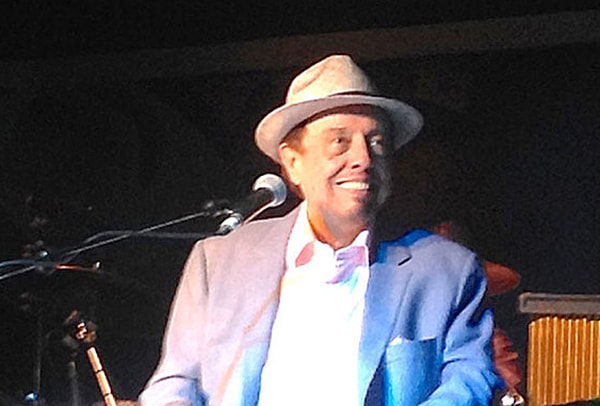


The film encompasses his long and varied career in depth, and the title is especially appropriate. The 81-year-old Mendes comes across as a positive, joyful person who, as he says, is very fond of the word “serendipity.” Growing up in the town of Niterói, just across a bridge from Rio de Janeiro, he was stricken with the bone disease osteomyelitis at an early age. For a time, he couldn’t play physical sports with the other children, and only penicillin saved him from having a leg amputated. While he was restricted in his activities, he learned to play the piano that his mother had gotten for him.

Although he began by playing classical music, he became enamored of jazz, especially after hearing Dave Brubeck’s “Take Five” around the age of 12. Soon, he was listening to other jazz pianists such as Art Tatum and Horace Silver. While in his teens, Mendes started playing in clubs as a part of jazz trios and quartets. The bossa nova style was just catching on, and he was quite taken with the melodies and rhythms when he got to meet Antônio Carlos Jobim at a bar where Mendes was gigging. That meeting was one of many serendipitous moments in his life.

In 1962, he participated in a bossa nova concert at Carnegie Hall that featured Jobim, João Gilberto, Luiz Bonfá, and Stan Getz. He also got to record with Cannonball Adderley, one of his idols, after encountering him at the legendary Birdland jazz club.

A military coup and general unrest led him to leave Brazil for a home in the United States. Although he recorded several albums on the Atlantic and Capitol labels, his career didn’t take off until he hooked up with Herb Alpert, who was just starting up A&M Records. His first album for the new label, Herb Alpert Presents Sergio Mendes & Brasil ’66, sold quite well, buoyed by the hit “Mas Que Nada.” He had come up with a novel sound featuring two female vocalists, Lani Hall and Bibi Vogel.


His arrangements of popular hits such as “The Look of Love” and “The Fool on the Hill” cemented his stardom. After a few years, Lani Hall left the group to pursue a solo career (and marry Herb Alpert). After this loss, Sergio went back to Brazil for a time. There, he discovered a very young Gracinha Leporace singing in a club and realized she would be his next vocalist. He ended up marrying her, and they are happily married to this day (as are Alpert and Hall).

The documentary features interviews with Quincy Jones, John Legend, Will.i.am, and Harrison Ford. Ford’s commentary is particularly amusing. Before he was a Hollywood star, he made ends meet as a carpenter. His first job was building a recording studio for Mendes on his home property. The self-effacing Ford said, “Would I have hired me to do this? F*ck no!”

Mendes’s career would have ups and downs, with a major rebound coming in the 1980s via the hit song “Never Gonna Let You Go,” with vocals by Joe Pizzulo and Leeza Miller. In recent years, he has worked with a variety of younger, more contemporary artists, such as John Legend and Will.i.am (of the Black Eyed Peas). All spoke glowingly of the opportunity.


After the documentary was shown, Mendes and Scheinfeld talked about the making of the film. When that was over, Mendes took the time to speak and pose for pictures with members of the audience. I had brought along my LP, and he was very gracious in autographing it. He told me that it was the first project that he had recorded in his (at the time) new studio.
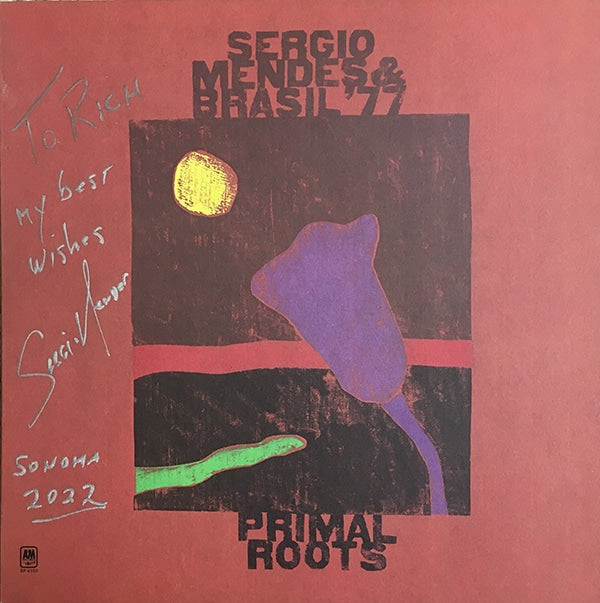
 

One of these days I’ll remember that metallic silver Sharpies don’t like to start writing right away – see the “To Rich” words.

One of these days I’ll remember that metallic silver Sharpies don’t like to start writing right away – see the “To Rich” words.


The documentary is available for purchase on DVD and can be streamed from multiple sources. Highly recommended.

More from Issue 169

View All Articles in Issue 169

Search Copper Magazine

#227 Seth Lewis Gets in the Groove With Take a Look Around: a Tribute to the Meters by Frank Doris Feb 02, 2026 #227 Passport to Sound: May Anwar’s Audio Learning Experience for Young People by Frank Doris Feb 02, 2026 #227 Conjectures on Cosmic Consciousness by B. Jan Montana Feb 02, 2026 #227 The Big Takeover Turns 45 by Wayne Robins Feb 02, 2026 #227 Music and Chocolate: On the Sensory Connection by Joe Caplan Feb 02, 2026 #227 Singer/Songwriter Chris Berardo: Getting Wilder All the Time by Ray Chelstowski Feb 02, 2026 #227 The Earliest Stars of Country Music, Part One by Jeff Weiner Feb 02, 2026 #227 The Vinyl Beat Goes Down to Tijuana (By Way of Los Angeles), Part Two by Rudy Radelic Feb 02, 2026 #227 How to Play in a Rock Band, 20: On the Road With Blood, Sweat & Tears’ Guitarist Gabe Cummins by Frank Doris Feb 02, 2026 #227 From The Audiophile’s Guide: Audio Specs and Measuring by Paul McGowan Feb 02, 2026 #227 Our Brain is Always Listening by Peter Trübner Feb 02, 2026 #227 PS Audio in the News by PS Audio Staff Feb 02, 2026 #227 The Listening Chair: Sleek Style and Sound From the Luxman L3 by Howard Kneller Feb 02, 2026 #227 The Los Angeles and Orange County Audio Society Celebrates Its 32nd Anniversary, Honoring David and Sheryl Lee Wilson and Bernie Grundman by Harris Fogel Feb 02, 2026 #227 Back to My Reel-to-Reel Roots, Part 26: Half Full – Not Half Empty, Redux by Ken Kessler Feb 02, 2026 #227 That's What Puzzles Us... by Frank Doris Feb 02, 2026 #227 Record-Breaking by Peter Xeni Feb 02, 2026 #227 The Long and Winding Road by B. Jan Montana Feb 02, 2026 #226 JJ Murphy’s Sleep Paralysis is a Genre-Bending Musical Journey Through Jazz, Fusion and More by Frank Doris Jan 05, 2026 #226 Stewardship by Consent by B. Jan Montana Jan 05, 2026 #226 Food, Music, and Sensory Experience: An Interview With Professor Jonathan Zearfoss of the Culinary Institute of America by Joe Caplan Jan 05, 2026 #226 Studio Confidential: A Who’s Who of Recording Engineers Tell Their Stories by Frank Doris Jan 05, 2026 #226 Pilot Radio is Reborn, 50 Years Later: Talking With CEO Barak Epstein by Frank Doris Jan 05, 2026 #226 The Vinyl Beat Goes Down to Tijuana (By Way of Los Angeles), Part One by Rudy Radelic Jan 05, 2026 #226 Capital Audiofest 2025: Must-See Stereo, Part Two by Frank Doris Jan 05, 2026 #226 My Morning Jacket’s Carl Broemel and Tyler Ramsey Collaborate on Their Acoustic Guitar Album, Celestun by Ray Chelstowski Jan 05, 2026 #226 The People Who Make Audio Happen: CanJam SoCal 2025, Part Two by Harris Fogel Jan 05, 2026 #226 How to Play in a Rock Band, 19: Touring Can Make You Crazy, Part One by Frank Doris Jan 05, 2026 #226 Linda Ronstadt Goes Bigger by Wayne Robins Jan 05, 2026 #226 From The Audiophile’s Guide: Active Room Correction and Digital Signal Processing by Paul McGowan Jan 05, 2026 #226 PS Audio in the News by Frank Doris Jan 05, 2026 #226 Back to My Reel-to-Reel Roots, Part 25: Half-Full, Not Empty by Ken Kessler Jan 05, 2026 #226 Happy New Year! by Frank Doris Jan 05, 2026 #226 Turn It Down! by Peter Xeni Jan 05, 2026 #226 Ghost Riders by James Schrimpf Jan 05, 2026 #226 A Factory Tour of Audio Manufacturer German Physiks by Markus "Marsu" Manthey Jan 04, 2026 #225 Capital Audiofest 2025: Must-See Stereo, Part One by Frank Doris Dec 01, 2025 #225 Otis Taylor and the Electrics Delivers a Powerful Set of Hypnotic Modern Blues by Frank Doris Dec 01, 2025 #225 A Christmas Miracle by B. Jan Montana Dec 01, 2025 #225 T.H.E. Show New York 2025, Part Two: Plenty to See, Hear, and Enjoy by Frank Doris Dec 01, 2025 #225 Underappreciated Artists, Part One: Martin Briley by Rich Isaacs Dec 01, 2025 #225 Rock and Roll is Here to Stay by Wayne Robins Dec 01, 2025 #225 A Lifetime of Holiday Record (and CD) Listening by Rudy Radelic Dec 01, 2025 #225 Little Feat: Not Saying Goodbye, Not Yet by Ray Chelstowski Dec 01, 2025 #225 How to Play in a Rock Band, Part 18: Dealing With Burnout by Frank Doris Dec 01, 2025 #225 The People Who Make Audio Happen: CanJam SoCal 2025 by Harris Fogel Dec 01, 2025 #225 Chicago’s Sonic Sanctuaries: Four Hi‑Fi Listening Bars Channeling the Jazz‑Kissa Spirit by Olivier Meunier-Plante Dec 01, 2025

The Night Sergio Mendes Came to Town

The Night Sergio Mendes Came to Town

It’s not often that internationally known artists make it to the relatively small town (population about 11,000) in which I live, but the folks who run our local 1930s-era movie theater are trying to change that. Not long ago, we were graced with a solo acoustic show by British guitarist Richard Thompson that was quite well attended.

In July, Brazilian jazz artist Sergio Mendes was here for a special screening of Sergio Mendes in the Key of Joy, a wonderful documentary about his life by filmmaker John Scheinfeld. Although there was no concert, both Mendes and Scheinfeld (along with Mendes’s wife and musical partner Gracinha Leporace) were in attendance and participated in a Q & A session afterward.

I have to admit that I own only one Sergio Mendes album, 1972’s Primal Roots. It is not your typical Brasil ’77 outing. It is both more ethnic and jazzy than his usual fare. From the liner notes: “Primal Roots is the result of an influx of new ideas and experiments, and it takes a special place among the recording experiences of Sergio Mendes and Brasil ’77. Most of it reconstructs, through Sergio’s arrangements, authentic folk and popular musical expressions of Brazil.”


The film encompasses his long and varied career in depth, and the title is especially appropriate. The 81-year-old Mendes comes across as a positive, joyful person who, as he says, is very fond of the word “serendipity.” Growing up in the town of Niterói, just across a bridge from Rio de Janeiro, he was stricken with the bone disease osteomyelitis at an early age. For a time, he couldn’t play physical sports with the other children, and only penicillin saved him from having a leg amputated. While he was restricted in his activities, he learned to play the piano that his mother had gotten for him.

Although he began by playing classical music, he became enamored of jazz, especially after hearing Dave Brubeck’s “Take Five” around the age of 12. Soon, he was listening to other jazz pianists such as Art Tatum and Horace Silver. While in his teens, Mendes started playing in clubs as a part of jazz trios and quartets. The bossa nova style was just catching on, and he was quite taken with the melodies and rhythms when he got to meet Antônio Carlos Jobim at a bar where Mendes was gigging. That meeting was one of many serendipitous moments in his life.

In 1962, he participated in a bossa nova concert at Carnegie Hall that featured Jobim, João Gilberto, Luiz Bonfá, and Stan Getz. He also got to record with Cannonball Adderley, one of his idols, after encountering him at the legendary Birdland jazz club.

A military coup and general unrest led him to leave Brazil for a home in the United States. Although he recorded several albums on the Atlantic and Capitol labels, his career didn’t take off until he hooked up with Herb Alpert, who was just starting up A&M Records. His first album for the new label, Herb Alpert Presents Sergio Mendes & Brasil ’66, sold quite well, buoyed by the hit “Mas Que Nada.” He had come up with a novel sound featuring two female vocalists, Lani Hall and Bibi Vogel.


His arrangements of popular hits such as “The Look of Love” and “The Fool on the Hill” cemented his stardom. After a few years, Lani Hall left the group to pursue a solo career (and marry Herb Alpert). After this loss, Sergio went back to Brazil for a time. There, he discovered a very young Gracinha Leporace singing in a club and realized she would be his next vocalist. He ended up marrying her, and they are happily married to this day (as are Alpert and Hall).

The documentary features interviews with Quincy Jones, John Legend, Will.i.am, and Harrison Ford. Ford’s commentary is particularly amusing. Before he was a Hollywood star, he made ends meet as a carpenter. His first job was building a recording studio for Mendes on his home property. The self-effacing Ford said, “Would I have hired me to do this? F*ck no!”

Mendes’s career would have ups and downs, with a major rebound coming in the 1980s via the hit song “Never Gonna Let You Go,” with vocals by Joe Pizzulo and Leeza Miller. In recent years, he has worked with a variety of younger, more contemporary artists, such as John Legend and Will.i.am (of the Black Eyed Peas). All spoke glowingly of the opportunity.


After the documentary was shown, Mendes and Scheinfeld talked about the making of the film. When that was over, Mendes took the time to speak and pose for pictures with members of the audience. I had brought along my LP, and he was very gracious in autographing it. He told me that it was the first project that he had recorded in his (at the time) new studio.


One of these days I’ll remember that metallic silver Sharpies don’t like to start writing right away – see the “To Rich” words.

One of these days I’ll remember that metallic silver Sharpies don’t like to start writing right away – see the “To Rich” words.


The documentary is available for purchase on DVD and can be streamed from multiple sources. Highly recommended.

0 comments

Leave a comment

0 Comments

Your avatar

Loading comments...

🗑️ Delete Comment

Enter moderator password to delete this comment:

✏️ Edit Comment

Enter your email to verify ownership: