COPPER

A PS Audio Publication

Issue 168 • Free Online Magazine

Issue 168 Featured

The Musical Instrument Museum: A National Treasure

The Musical Instrument Museum: A National Treasure

Jeff Weiner has been a volunteer museum guide/docent at Phoenix, Arizona’s Musical Instrument Museum for the last five years. Some of the content of this article has been adapted from material on the museum’s website.

Introduction

Realizing that most musical museums feature historic, primarily Western classical instruments, the founder of Phoenix, Arizona’s Musical Instrument Museum (MIM), Robert J. Ulrich (then CEO of Target Corporation), began with a vision to create a museum that would be global in scope. He wanted to develop a new kind of museum that would showcase the kind of instruments played by people worldwide. From its beginnings in 2010, the goal was to deliver an educational and inspiring musical experience.

The Musical Instrument Museum has a collection of over 8,000 instruments from more than 200 countries. The galleries reflect the diversity and history of many world cultures. As the museum’s website notes: “music and instruments also show us what we have in common…music is the language of the soul.” A visit to MIM is also about experiencing the sensory nature of music and how it affects our emotions. Through interactive media, guests can see the instruments, hear their sounds, and see them being played in their original contexts.

MIM’s collection was assembled by five curators, with consultation from distinguished ethnomusicologists, organologists, and other field experts. The bulk of the collection is highlighted in a series of Geographic Galleries that divide the world into five major global regions. There are also exhibition spaces such as the Target Gallery, which hosts traveling and special exhibitions, and the Artist Gallery, which includes noteworthy musical instruments and artifacts associated with some of the world’s leading musicians.

Why is the museum located in Phoenix? It’s one of the largest metropolitan areas in the United States, with a culturally diverse population. Drawn by the Grand Canyon and other natural wonders of the Southwest as well as by the city itself, many national and international visitors travel to and through Phoenix. 

The Architecture

The Musical Instrument Museum is a 200,000 square foot building across two levels. It was designed by architect Rich Varda, in conjunction with the firm of RSP Architects. MIM’s distinctive architecture pays homage to the desert landscape, the rhythms of musical composition, and the design of musical instruments. Indian sandstone is the primary element on the building’s façade. To quote Varda, “the design team is most proud of the fact that the spaces of the building are comfortable, friendly, and supportive of the desired immersive experience in the galleries. Moving through the building is intuitive and relaxing.”
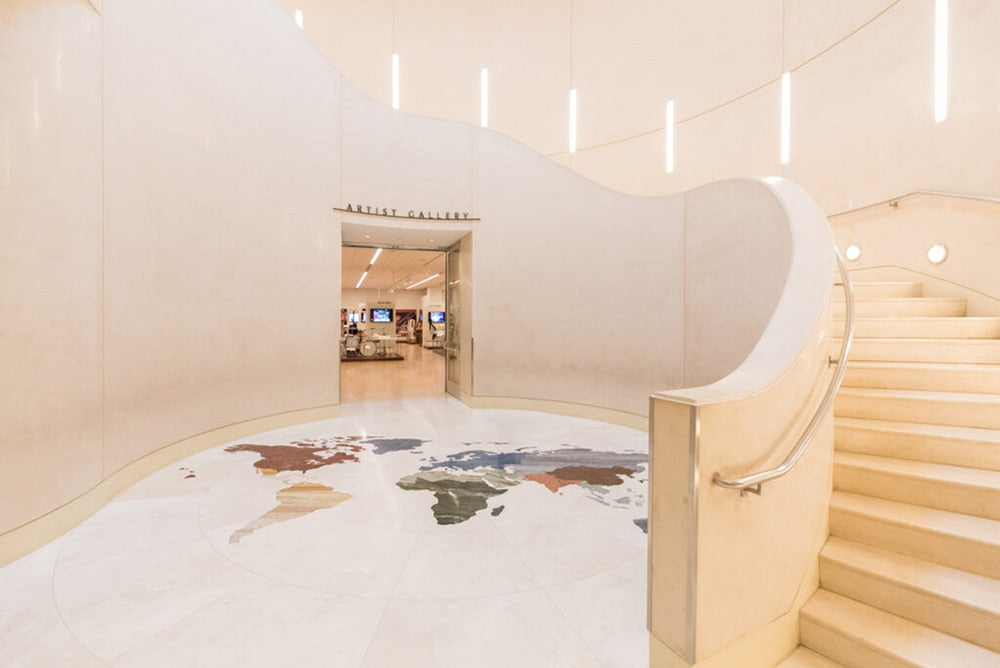
 

Interior architecture of the Musical Instrument Museum.

Interior architecture of the Musical Instrument Museum.


These are some of the highlights of MIM’s architecture:

  • The sandstone walls evoke the topography of the Southwest, while raised key shapes in the exterior stonework evoke musical notes.
  • A “piano key” pattern plays across MIM’s walls in clusters of windows.
  • Patterns that evoke music can be found throughout the building on staircase railings, lighting, and floor tiles.
  • The “meandering river” of the central corridor, El Río, is another reference to the region’s landscape.
  • The rotunda’s inlaid world map is formed with stones from the world regions they represent.
  • The rotunda’s elegant curve is reminiscent of the shape of a grand piano.

The Galleries

MIM presently displays more than 5,300 instruments representing all the world’s countries, and many territories. The Geographic Galleries focus on major world regions: Africa/Middle East, Asia and Oceania, Latin America, Europe, and the United States/Canada. Many of the instruments displayed are rare examples, the finest of their kind, historically significant, or part of distinctive musical cultures. Video monitors with footage of musical performances show instruments played in their original contexts.

The United States/Canada Gallery has a specific focus on musical genres such as jazz, rock and roll, Appalachian, and Hawaiian music. A large area at the gallery entrance showcases Native American and First Nations instruments.
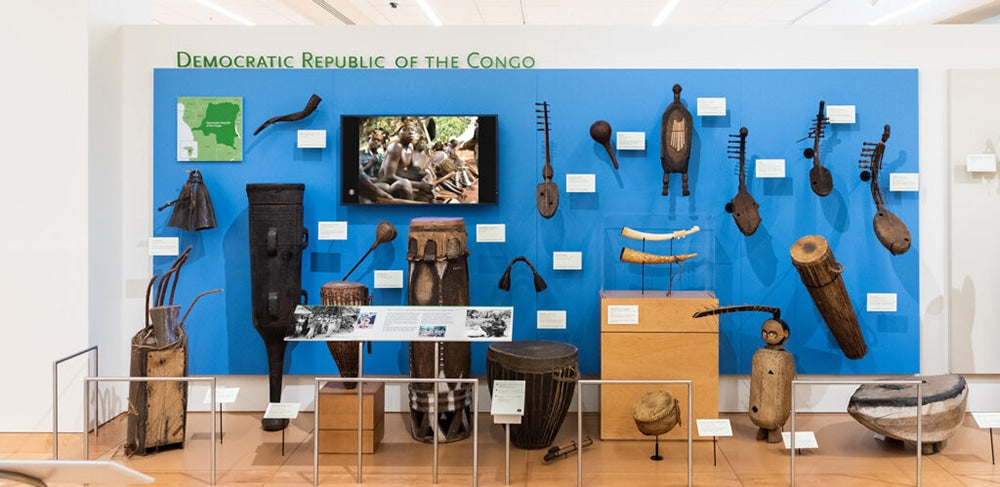
 

An exhibition of musical instruments from the Democratic Republic of the Congo.
An exhibition of musical instruments from the Democratic Republic of the Congo.


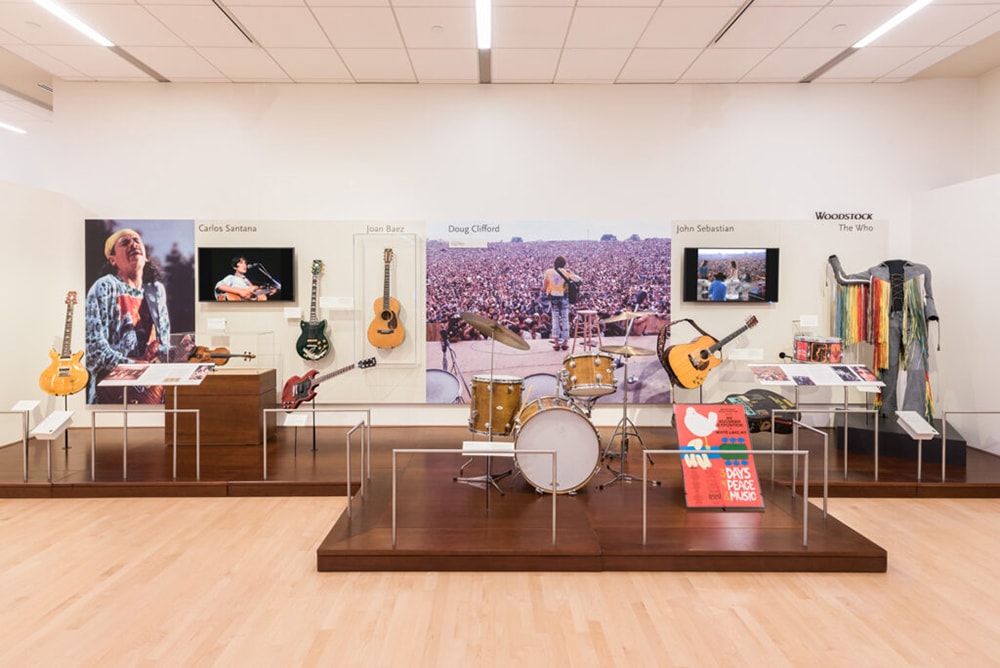
Woodstock at 50 exhibition.

Woodstock at 50 exhibition.


The Musical Instrument Museum’s Artist Gallery highlights a broad cross-section of world musicians with ever-changing exhibits that span sounds, styles, and eras. Through generous partnerships, MIM features historic instruments owned, played, and loved by noted musicians. Nearly 40 displays showcase instruments and artifacts from artists such as Elvis Presley, Tito Puente, the Carter Family and Johnny Cash, Roberta Flack, Glen Campbell, Joan Baez, Maroon 5, and others.

MIM’s Mechanical Music Gallery features a selection of mechanical musical instruments, such as barrel organs, mechanical zithers, cylinder music boxes, disc players, and automatons. The period between the late 19th and early 20th centuries is considered to be the golden age of automatic musical instruments. During this time, there was a surge in the creation of self-playing instruments. In the Mechanical Music Gallery, guests can see a range of instruments from this era that use technologies such as punched cards and discs, paper rolls, pinned cylinders, and electromagnets.

The Collier STEM Gallery explores the important connections between music and science, technology, engineering, and mathematics. Guests learn about the science behind musical instruments, and how humans experience sound. The gallery’s themes include sound creation, technological innovation, the human ear, and hearing safety. Multiple displays within the gallery introduce key concepts in the physics of sound creation through video, interactive technology, and instruments from all over the globe.

In the interactive Experience Gallery, guests can play instruments from around the world similar to the ones on display throughout the museum. This gallery is a place to explore self-made musical sounds, and to let loose and have a little fun. Attendees can play a Javanese gamelan, a West African djembe, a Peruvian harp, a theremin, and more.

Exhibitions in the Target Gallery complement the museum’s permanent collection with traveling shows, special engagements, and changing exhibitions. The current exhibition is Treasures: Legendary Musical Instruments, and spans 6,000 years of musical instrument history. There are one-of-a-kind and rare instruments that combine beauty, craftsmanship, and cultural significance. Past special exhibitions have included Congo Masks and Music, The Electric Guitar, and Ancient Musical Treasures from Central China.

The Theater

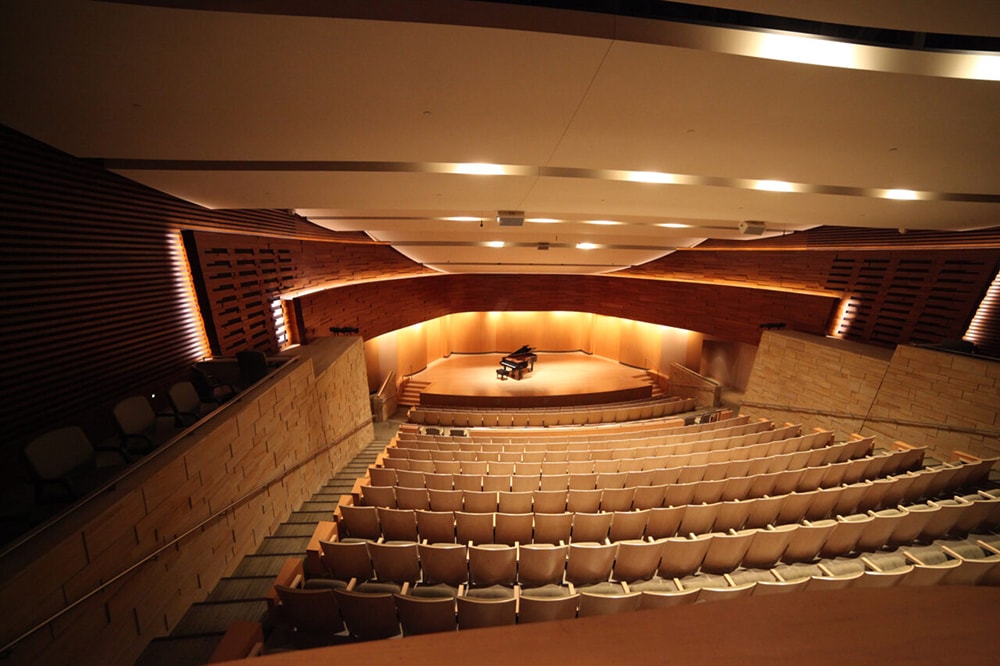
The Musical Instrument Museum’s theater has 300 seats and hosts a diverse range of concerts and global artists in an intimate environment. MIM hosts more than 200 shows per year across all genres in an acoustically superb theater. These are some of the more memorable concerts I have attended:

  • John Mayall
  • Charles Lloyd
  • The Milk Carton Kids
  • Patricia Barber
  • Dave Alvin and Jimmie Dale Gilmore


The theater at the MIM.

The theater at the MIM.


Education

MIM provides a multi-faceted educational program. In a typical year, over 70,000 students, teachers, and chaperones visit the museum. There are five different types of school tours tailored for age groups from pre-kindergarten through 12th grade, and teacher-guided school tours are also available. One of the true joys of volunteering at MIM is sharing the wonderment that many of the students experience. There are also “MIMkids” programs, one for children up to five years old and another for ages 6 to 10.

MIM also offers tours for adults, groups looking for a little more from their MIM visit. There are two flavors of adult tours: one takes visitors through the museum galleries, and the VIP Tour goes behind the scenes to give guests insights into how exhibits are created, what goes on backstage at the theater, what kind of storage is needed for MIM’s diverse collection, and other aspects of the museum’s operation.

MIM has also developed a variety of virtual education programs for school and youths, kids and family, and seniors. MIM has collaborated with the Arizona State University Music Therapy program to create the seniors program.

MIM provides additional amenities including the museum store with items from around the world, the Beats Coffee Bar, Café Allegro (features a rotating lunch menu of global cuisine), and various indoor and outdoor event spaces. They even host weddings.

The Musical Instrument Museum is rated on Tripadvisor as the number one attraction in the Phoenix area and one of the top museums in the United States. Having had the opportunity to volunteer and give tours these last five years, the museum has become a second home for me. I find myself regularly reminding myself how fortunate I am that I get to hang out at MIM. Music really is the language of the soul.

Note: this article was reviewed by museum personnel prior to submission to Copper. All images courtesy of the Musical Instrument Museum.

More from Issue 168

View All Articles in Issue 168

Search Copper Magazine

#233 A Report From The Total Hi-Fi Experience Show SoCal 2026 by B. Jan Montana Aug 03, 2026 #233 Bluegrass Meets Country, Folk, Jazz and More in All That We Carried by The Squid City Slingers by Frank Doris Aug 03, 2026 #233 Corey Glover and One Tribe Nation: A Variegated Musical Collective by Ray Chelstowski Aug 03, 2026 #233 Excursions with Clive: The Late Clive Davis, A Personal History by Wayne Robins Aug 03, 2026 #233 AI, Art, and Music: A Conversation With Synthography Art by Joe Caplan Aug 03, 2026 #233 New American Symphonies: A Rediscovered Gem and a Vital Contemporary Work by Frank Doris Aug 03, 2026 #233 The Vinyl Beat: Genesis, the Dave Clark Five, Antonio Carlos Jobim and More by Rudy Radelic Aug 03, 2026 #233 How to Play in a Rock Band, 26: When It's Time to Record Your Music by Frank Doris Aug 03, 2026 #233 More From T.H.E. Show 2026, and the People Who Made it Happen by Harris Fogel Aug 03, 2026 #233 Underappreciated Artists, Part Three: Icehouse by Rich Isaacs Aug 03, 2026 #233 The Surprisingly Rich and Varied Music of Somalia by Steve Kindig Aug 03, 2026 #233 A Remarkable Discographic Legacy: The LP Recordings of the Basel Symphony Orchestra by Stephan Haberthür Aug 03, 2026 #233 From The Audiophile’s Guide: The Importance of Loudspeakers by Paul McGowan Aug 03, 2026 #233 From Swimming Pool to New Listening Room: A Conversation with Norman Varney of AV RoomService by Gilles Laferrière Aug 03, 2026 #233 PS Audio in the News by PS Audio Staff Aug 03, 2026 #233 Audio Jewelry by Peter Xeni Aug 03, 2026 #233 Enrich Your Life by Frank Doris Aug 03, 2026 #233 The Searcher by James Schrimpf Aug 03, 2026 #232 What came first: Art or Music? A Conversation With Artist Jose Acosta by Joe Caplan Jul 06, 2026 #232 Blow By Blow: The Jeff Beck Story: An Insightful Book About a Guitar Icon by Ray Chelstowski Jul 06, 2026 #232 Creed Over Camaraderie? by B. Jan Montana Jul 06, 2026 #232 Chronicles of a Sound Pilgrim at the 2026 Montreal Audiofest by Hugues Morin Jul 06, 2026 #232 The Vinyl Beat: Summer Grooves by Rudy Radelic Jul 06, 2026 #232 Hibbing Hillbilly Dylan's Acoustic Rock by Wayne Robins Jul 06, 2026 #232 Quad Quads and Plasmatronics Tweeters: An Extraordinary System Comes to Life by Frank Doris Jul 06, 2026 #232 In Praise of Live Music, Once Again by Ted Shafran Jul 06, 2026 #232 Allnic Audio’s L-9000 Preamplifier: Design and Engineering Innovation by Howard Kneller Jul 06, 2026 #232 “Best Of” Lists and Rage Bait: Enough Already by Frank Doris Jul 06, 2026 #232 Quick Takes: Bud Shank, Paulo Almeida, Jakob Dreyer, Tim Eriksen and Peter Irvine by Frank Doris Jul 06, 2026 #232 My Impressions of AXPONA 2026, Part 2 by Frank Doris Jul 06, 2026 #232 How to Play in a Rock Band, 25: Encounters With Famous Musicians, Part Three by Frank Doris Jul 06, 2026 #232 Budgets, and Systems From Small to Outrageous by Paul McGowan Jul 06, 2026 #232 PS Audio in the News by PS Audio Staff Jul 06, 2026 #232 Hand It Over by Frank Doris Jul 06, 2026 #232 Difference of Opinion by Peter Xeni Jul 06, 2026 #232 Wabi-sabi Tree by James Schrimpf Jul 06, 2026 #231 Piano Prodigy Jude Kofie Releases His Debut Album On Octave Records by Frank Doris Jun 01, 2026 #231 Underappreciated Artists, Part Two: City Boy by Rich Isaacs Jun 01, 2026 #231 Music and the Art of Creation: Talking With Saxophonist Rob Scheps by Joe Caplan Jun 01, 2026 #231 How to Play in a Rock Band, 24: Further Adventures at the 2026 Montauk Music Festival by Frank Doris Jun 01, 2026 #231 Courtney Barnett: Creature of Habit by Wayne Robins Jun 01, 2026 #231 Angine de Poitrine: Interstellar Guitar Rock Saviors Headed for Late-Night TV Pop Stardom? by Mark Lepage Jun 01, 2026 #231 My Impressions of AXPONA 2026, Part One by Frank Doris Jun 01, 2026 #231 2026 La Jolla Concours d'Elegance: Another Aesthetic Feast by B. Jan Montana Jun 01, 2026 #231 Country Music Icon Jo Dee Messina’s Bridges: A New Beginning by Ray Chelstowski Jun 01, 2026 #231 The Luxury Dispatch Hosts a Video Podcast With Ken Kessler by Ken Kessler Jun 01, 2026 #231 The Vinyl Beat: Tracking in the Motor City by Rudy Radelic Jun 01, 2026

The Musical Instrument Museum: A National Treasure

The Musical Instrument Museum: A National Treasure

Jeff Weiner has been a volunteer museum guide/docent at Phoenix, Arizona’s Musical Instrument Museum for the last five years. Some of the content of this article has been adapted from material on the museum’s website.

Introduction

Realizing that most musical museums feature historic, primarily Western classical instruments, the founder of Phoenix, Arizona’s Musical Instrument Museum (MIM), Robert J. Ulrich (then CEO of Target Corporation), began with a vision to create a museum that would be global in scope. He wanted to develop a new kind of museum that would showcase the kind of instruments played by people worldwide. From its beginnings in 2010, the goal was to deliver an educational and inspiring musical experience.

The Musical Instrument Museum has a collection of over 8,000 instruments from more than 200 countries. The galleries reflect the diversity and history of many world cultures. As the museum’s website notes: “music and instruments also show us what we have in common…music is the language of the soul.” A visit to MIM is also about experiencing the sensory nature of music and how it affects our emotions. Through interactive media, guests can see the instruments, hear their sounds, and see them being played in their original contexts.

MIM’s collection was assembled by five curators, with consultation from distinguished ethnomusicologists, organologists, and other field experts. The bulk of the collection is highlighted in a series of Geographic Galleries that divide the world into five major global regions. There are also exhibition spaces such as the Target Gallery, which hosts traveling and special exhibitions, and the Artist Gallery, which includes noteworthy musical instruments and artifacts associated with some of the world’s leading musicians.

Why is the museum located in Phoenix? It’s one of the largest metropolitan areas in the United States, with a culturally diverse population. Drawn by the Grand Canyon and other natural wonders of the Southwest as well as by the city itself, many national and international visitors travel to and through Phoenix. 

The Architecture

The Musical Instrument Museum is a 200,000 square foot building across two levels. It was designed by architect Rich Varda, in conjunction with the firm of RSP Architects. MIM’s distinctive architecture pays homage to the desert landscape, the rhythms of musical composition, and the design of musical instruments. Indian sandstone is the primary element on the building’s façade. To quote Varda, “the design team is most proud of the fact that the spaces of the building are comfortable, friendly, and supportive of the desired immersive experience in the galleries. Moving through the building is intuitive and relaxing.”


Interior architecture of the Musical Instrument Museum.

Interior architecture of the Musical Instrument Museum.


These are some of the highlights of MIM’s architecture:

  • The sandstone walls evoke the topography of the Southwest, while raised key shapes in the exterior stonework evoke musical notes.
  • A “piano key” pattern plays across MIM’s walls in clusters of windows.
  • Patterns that evoke music can be found throughout the building on staircase railings, lighting, and floor tiles.
  • The “meandering river” of the central corridor, El Río, is another reference to the region’s landscape.
  • The rotunda’s inlaid world map is formed with stones from the world regions they represent.
  • The rotunda’s elegant curve is reminiscent of the shape of a grand piano.

The Galleries

MIM presently displays more than 5,300 instruments representing all the world’s countries, and many territories. The Geographic Galleries focus on major world regions: Africa/Middle East, Asia and Oceania, Latin America, Europe, and the United States/Canada. Many of the instruments displayed are rare examples, the finest of their kind, historically significant, or part of distinctive musical cultures. Video monitors with footage of musical performances show instruments played in their original contexts.

The United States/Canada Gallery has a specific focus on musical genres such as jazz, rock and roll, Appalachian, and Hawaiian music. A large area at the gallery entrance showcases Native American and First Nations instruments.


An exhibition of musical instruments from the Democratic Republic of the Congo.

An exhibition of musical instruments from the Democratic Republic of the Congo.


Woodstock at 50 exhibition.

Woodstock at 50 exhibition.


The Musical Instrument Museum’s Artist Gallery highlights a broad cross-section of world musicians with ever-changing exhibits that span sounds, styles, and eras. Through generous partnerships, MIM features historic instruments owned, played, and loved by noted musicians. Nearly 40 displays showcase instruments and artifacts from artists such as Elvis Presley, Tito Puente, the Carter Family and Johnny Cash, Roberta Flack, Glen Campbell, Joan Baez, Maroon 5, and others.

MIM’s Mechanical Music Gallery features a selection of mechanical musical instruments, such as barrel organs, mechanical zithers, cylinder music boxes, disc players, and automatons. The period between the late 19th and early 20th centuries is considered to be the golden age of automatic musical instruments. During this time, there was a surge in the creation of self-playing instruments. In the Mechanical Music Gallery, guests can see a range of instruments from this era that use technologies such as punched cards and discs, paper rolls, pinned cylinders, and electromagnets.

The Collier STEM Gallery explores the important connections between music and science, technology, engineering, and mathematics. Guests learn about the science behind musical instruments, and how humans experience sound. The gallery’s themes include sound creation, technological innovation, the human ear, and hearing safety. Multiple displays within the gallery introduce key concepts in the physics of sound creation through video, interactive technology, and instruments from all over the globe.

In the interactive Experience Gallery, guests can play instruments from around the world similar to the ones on display throughout the museum. This gallery is a place to explore self-made musical sounds, and to let loose and have a little fun. Attendees can play a Javanese gamelan, a West African djembe, a Peruvian harp, a theremin, and more.

Exhibitions in the Target Gallery complement the museum’s permanent collection with traveling shows, special engagements, and changing exhibitions. The current exhibition is Treasures: Legendary Musical Instruments, and spans 6,000 years of musical instrument history. There are one-of-a-kind and rare instruments that combine beauty, craftsmanship, and cultural significance. Past special exhibitions have included Congo Masks and Music, The Electric Guitar, and Ancient Musical Treasures from Central China.

The Theater

The Musical Instrument Museum’s theater has 300 seats and hosts a diverse range of concerts and global artists in an intimate environment. MIM hosts more than 200 shows per year across all genres in an acoustically superb theater. These are some of the more memorable concerts I have attended:

  • John Mayall
  • Charles Lloyd
  • The Milk Carton Kids
  • Patricia Barber
  • Dave Alvin and Jimmie Dale Gilmore


The theater at the MIM.

The theater at the MIM.


Education

MIM provides a multi-faceted educational program. In a typical year, over 70,000 students, teachers, and chaperones visit the museum. There are five different types of school tours tailored for age groups from pre-kindergarten through 12th grade, and teacher-guided school tours are also available. One of the true joys of volunteering at MIM is sharing the wonderment that many of the students experience. There are also “MIMkids” programs, one for children up to five years old and another for ages 6 to 10.

MIM also offers tours for adults, groups looking for a little more from their MIM visit. There are two flavors of adult tours: one takes visitors through the museum galleries, and the VIP Tour goes behind the scenes to give guests insights into how exhibits are created, what goes on backstage at the theater, what kind of storage is needed for MIM’s diverse collection, and other aspects of the museum’s operation.

MIM has also developed a variety of virtual education programs for school and youths, kids and family, and seniors. MIM has collaborated with the Arizona State University Music Therapy program to create the seniors program.

MIM provides additional amenities including the museum store with items from around the world, the Beats Coffee Bar, Café Allegro (features a rotating lunch menu of global cuisine), and various indoor and outdoor event spaces. They even host weddings.

The Musical Instrument Museum is rated on Tripadvisor as the number one attraction in the Phoenix area and one of the top museums in the United States. Having had the opportunity to volunteer and give tours these last five years, the museum has become a second home for me. I find myself regularly reminding myself how fortunate I am that I get to hang out at MIM. Music really is the language of the soul.

Note: this article was reviewed by museum personnel prior to submission to Copper. All images courtesy of the Musical Instrument Museum.

0 comments

Leave a comment

0 Comments

Your avatar

Loading comments...

🗑️ Delete Comment

Enter moderator password to delete this comment:

✏️ Edit Comment

Enter your email to verify ownership: