COPPER

A PS Audio Publication

Issue 168 • Free Online Magazine

Issue 168 Frankly Speaking

Talking With Larry Jaffee of Making Vinyl, Part Two

Talking With Larry Jaffee of Making Vinyl, Part Two

Copper contributor Larry Jaffee is the co-founder of Making Vinyl, an industry organization dedicated to fostering cooperation among those in the record-manufacturing industry. Larry is also the author of Record Store Day: The Most Improbable Comeback of the 21st Century. Part One of our interview (Issue 167) focused on the recent Making Vinyl convention in Nashville, Tennessee. We conclude our interview with some talk about Record Store Day, what kinds of people buy records, and more.

Frank Doris: How did you wind up writing a book about Record Store Day (RSD)?

Larry Jaffee: The ironic thing is I missed the first five years of Record Store Day (RSD), which began in 2008. Michael Kurtz [an RSD co-founder] and I had become friends in 2015. I interviewed Michael for an article I wrote in 2016 about the vinyl resurgence for (editor) Gene Pitts’s The Audiophile Voice. In November 2017, the British magazine Long Live Vinyl published my article about Record Store Day Summer Camp, RSD’s convention for record stores in New Orleans. I guess the piece impressed Michael, who helped us with the first few Making Vinyl conferences. He called me in October 2020 and noted the 15th anniversary of Record Store Day was coming up. He asked what would I think about writing a book about it. I told him, “I was born to write this book!” I had to rely on Michael and RSD co-founder Carrie Colliton, as well as some of the other co-founders, to fill in a lot of the blanks because I wasn’t there. I started participating in RSD as a consumer in 2014.


Larry Jaffee. Courtesy of the author.

Larry Jaffee. Courtesy of the author.


FD: In the book, you note that people don’t remember whether they were at the first RSD planning convention or not. Must have been a hell of a party.

LJ: It was sort of like Woodstock. A lot of people claim they were at Woodstock, but you later learn they weren’t really there [laughs]. Some who were at that pivotal breakfast meeting in September 2007 in Baltimore, where they green-lit the RSD concept, can’t remember the details now because they were hung over from partying the night before.

FD: What do you look for in an RSD release?

LJ: Unreleased or lost albums or stuff that’s under the radar. My favorite probably is a live recording of Horses (my favorite album) that Patti Smith did at Electric Lady Studios, done about 40 years after the original was released.

FD: Did anything surprise you once you started working on the book?

LJ: What I realized is that RSD is more about record store culture than the limited-edition releases. These stores play really important roles in their communities. I experienced this as a kid and as a teenager where you meet friends, find bandmates, and learn about music and life. Record Store Day helped bring that back. In the book, I wrote about a store in the South that lost electricity for weeks after a hurricane, and the store let people stay there overnight. And in Chicago, a couple – both DJs – had their first date in a store, where they were later married. In talking with owners of record stores, they all say they couldn’t picture themselves doing anything else. “Who else would have us?”

FD: What did you learn about the economics of Record Store Day?

LJ: It’s hard to make money on new records. Retailers only make a couple of dollars off a release, but that goes for all new pressings.

FD: So, selling used records is more profitable?

LJ: The wholesale prices [of new records] are just really high because manufacturing them is expensive these days. With used records, it all comes down to quality, scarcity [and desirability]. One of the things that came out in talking with Doyle Davis, co-owner of Grimey’s Records at the Making Vinyl conference we did in June in Nashville, was that he said prices on used vinyl are going up because there’s a pressing backlog, further impacted by supply chain issues.

FD: I tell people to go to garage sales. You never know what you’re going to get, but when you find something, it’ll be a bargain.

LJ: The new vinyl resurgence defies all technological, economic, and ecological logic in the digital age. On the other hand, it shows that people want something tangible. New research presented at Making Vinyl shows that 41 percent of new record buyers are 13 to 24 years old. This bodes well for the format’s future. About a quarter [of those buyers] just put the covers up on the wall, but 75 percent play them. And about one out of four Generation-Z buyers say classic rock is their favorite vinyl genre. What I find interesting about that is that we’re talking about music that’s 50 years old, right? Could you imagine you and me going back to the music that our parents grew up with?


Jack White and Larry Jaffee.

Jack White and Larry Jaffee.


FD: It’s a huge change. When I was a kid, any music that was, say, more than two years old was like King Tut, put it in a tomb, it’s ancient history.

LJ: I find myself going back to genres that I wasn’t familiar with when I was a teenager. Blues. Big Bill Broonzy. Skip James. The Gospel stuff that influenced Elvis.

FD: It’s humbling to know that you’ll never be able listen to everything that’s out there in your lifetime.

LJ: Now we have it all at our fingertips through streaming services. I just wish they paid musicians better. Musicians, by the way, are making more money from their vinyl sales than they ever will from streaming. I don’t think I’ll ever stop listening to music I’m hearing for the first time, or collecting now on vinyl what I had on CD. For example, there’s a story in the book about a record collector who passed away from COVID. But before he did, he arranged a sale of this amazing collection of sealed RSD and non-RSD albums a block and a half away from where I live. There I found a sealed first edition of the first Garbage record. I knew it was worth $500. I thought, should I open it or keep it sealed? I was like, I’m listening to it! [laughs]

FD: I’m sure every collector has gone through that. If it’s something you really want to hear, are you going to keep it sealed just because it’ll be worth more? Or are you going to play the darn thing? I wonder what our readers think.

LJ: Or just buy two copies.

FD: Well, some have more money than others.

LJ: I’ve always been in it for the music.

FD: Yeah. That’s why I became an audiophile.

LJ: I remember being at a friend’s house when I was about 14, 15, and his parents had one of those old-fashioned consoles with the record changer. He plays Exile on Main Street. As soon as “Rocks Off” started, I was like, this is amazing! I can still recall exactly how that sounded, all these years later. Things [like that] stick in your DNA, your brain cells.

FD: I think that’s why every single one of us are into all of this. It’s an experience we’ve all had. It’s magic. It’s unexplainable in a lot of ways.

LJ: I think listening to music keeps me sane. I have no doubt about that.

***

For more information on the whys, wherefores and history of Record Store Day, read Record Store Day: The Most Improbable Comeback of the 21st Century. It’s a warm, sometimes serious, sometimes hilarious look at the people and the events behind RSD and how it evolved from a meeting that some people can’t even recall being there for, to an international phenomenon involving hundreds of stores worldwide. The book goes into great detail about the times, places, and especially the people involved throughout the course of RSD’s evolution and how it became not only a keeper of the vinyl flame – though props must be given to the audiophiles and collectors who have always kept the embers burning – to becoming a key factor in fostering vinyl’s continuing growth. There are plenty of testimonials from artists including Metallica, Booker T., Jeff Tweedy, Neko Case, Bruce Springsteen, John Mellencamp, Cameron Crowe, Elton John and many others, who offer deeply personal insights into the impact that RSD and listening to records have had on their lives.

The book is available online via this link.
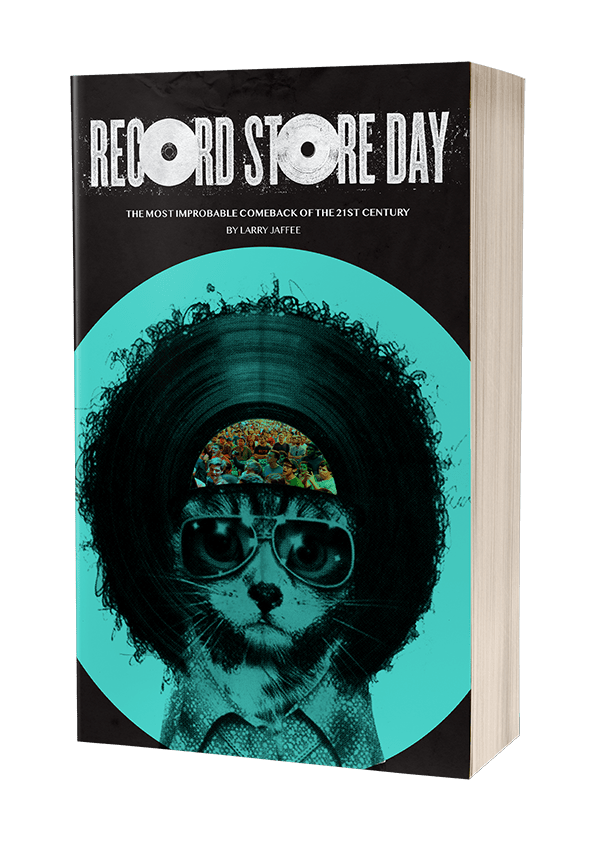
Record Store Day book cover.

Header image: plaque located in front of The Sound Garden, Baltimore, Maryland. Courtesy of Bryan Burkett.

More from Issue 168

View All Articles in Issue 168

Search Copper Magazine

#227 Seth Lewis Gets in the Groove With Take a Look Around: a Tribute to the Meters by Frank Doris Feb 02, 2026 #227 Passport to Sound: May Anwar’s Audio Learning Experience for Young People by Frank Doris Feb 02, 2026 #227 Conjectures on Cosmic Consciousness by B. Jan Montana Feb 02, 2026 #227 The Big Takeover Turns 45 by Wayne Robins Feb 02, 2026 #227 Music and Chocolate: On the Sensory Connection by Joe Caplan Feb 02, 2026 #227 Singer/Songwriter Chris Berardo: Getting Wilder All the Time by Ray Chelstowski Feb 02, 2026 #227 The Earliest Stars of Country Music, Part One by Jeff Weiner Feb 02, 2026 #227 The Vinyl Beat Goes Down to Tijuana (By Way of Los Angeles), Part Two by Rudy Radelic Feb 02, 2026 #227 How to Play in a Rock Band, 20: On the Road With Blood, Sweat & Tears’ Guitarist Gabe Cummins by Frank Doris Feb 02, 2026 #227 From The Audiophile’s Guide: Audio Specs and Measuring by Paul McGowan Feb 02, 2026 #227 Our Brain is Always Listening by Peter Trübner Feb 02, 2026 #227 PS Audio in the News by PS Audio Staff Feb 02, 2026 #227 The Listening Chair: Sleek Style and Sound From the Luxman L3 by Howard Kneller Feb 02, 2026 #227 The Los Angeles and Orange County Audio Society Celebrates Its 32nd Anniversary, Honoring David and Sheryl Lee Wilson and Bernie Grundman by Harris Fogel Feb 02, 2026 #227 Back to My Reel-to-Reel Roots, Part 26: Half Full – Not Half Empty, Redux by Ken Kessler Feb 02, 2026 #227 That's What Puzzles Us... by Frank Doris Feb 02, 2026 #227 Record-Breaking by Peter Xeni Feb 02, 2026 #227 The Long and Winding Road by B. Jan Montana Feb 02, 2026 #226 JJ Murphy’s Sleep Paralysis is a Genre-Bending Musical Journey Through Jazz, Fusion and More by Frank Doris Jan 05, 2026 #226 Stewardship by Consent by B. Jan Montana Jan 05, 2026 #226 Food, Music, and Sensory Experience: An Interview With Professor Jonathan Zearfoss of the Culinary Institute of America by Joe Caplan Jan 05, 2026 #226 Studio Confidential: A Who’s Who of Recording Engineers Tell Their Stories by Frank Doris Jan 05, 2026 #226 Pilot Radio is Reborn, 50 Years Later: Talking With CEO Barak Epstein by Frank Doris Jan 05, 2026 #226 The Vinyl Beat Goes Down to Tijuana (By Way of Los Angeles), Part One by Rudy Radelic Jan 05, 2026 #226 Capital Audiofest 2025: Must-See Stereo, Part Two by Frank Doris Jan 05, 2026 #226 My Morning Jacket’s Carl Broemel and Tyler Ramsey Collaborate on Their Acoustic Guitar Album, Celestun by Ray Chelstowski Jan 05, 2026 #226 The People Who Make Audio Happen: CanJam SoCal 2025, Part Two by Harris Fogel Jan 05, 2026 #226 How to Play in a Rock Band, 19: Touring Can Make You Crazy, Part One by Frank Doris Jan 05, 2026 #226 Linda Ronstadt Goes Bigger by Wayne Robins Jan 05, 2026 #226 From The Audiophile’s Guide: Active Room Correction and Digital Signal Processing by Paul McGowan Jan 05, 2026 #226 PS Audio in the News by Frank Doris Jan 05, 2026 #226 Back to My Reel-to-Reel Roots, Part 25: Half-Full, Not Empty by Ken Kessler Jan 05, 2026 #226 Happy New Year! by Frank Doris Jan 05, 2026 #226 Turn It Down! by Peter Xeni Jan 05, 2026 #226 Ghost Riders by James Schrimpf Jan 05, 2026 #226 A Factory Tour of Audio Manufacturer German Physiks by Markus "Marsu" Manthey Jan 04, 2026 #225 Capital Audiofest 2025: Must-See Stereo, Part One by Frank Doris Dec 01, 2025 #225 Otis Taylor and the Electrics Delivers a Powerful Set of Hypnotic Modern Blues by Frank Doris Dec 01, 2025 #225 A Christmas Miracle by B. Jan Montana Dec 01, 2025 #225 T.H.E. Show New York 2025, Part Two: Plenty to See, Hear, and Enjoy by Frank Doris Dec 01, 2025 #225 Underappreciated Artists, Part One: Martin Briley by Rich Isaacs Dec 01, 2025 #225 Rock and Roll is Here to Stay by Wayne Robins Dec 01, 2025 #225 A Lifetime of Holiday Record (and CD) Listening by Rudy Radelic Dec 01, 2025 #225 Little Feat: Not Saying Goodbye, Not Yet by Ray Chelstowski Dec 01, 2025 #225 How to Play in a Rock Band, Part 18: Dealing With Burnout by Frank Doris Dec 01, 2025 #225 The People Who Make Audio Happen: CanJam SoCal 2025 by Harris Fogel Dec 01, 2025 #225 Chicago’s Sonic Sanctuaries: Four Hi‑Fi Listening Bars Channeling the Jazz‑Kissa Spirit by Olivier Meunier-Plante Dec 01, 2025

Talking With Larry Jaffee of Making Vinyl, Part Two

Talking With Larry Jaffee of Making Vinyl, Part Two

Copper contributor Larry Jaffee is the co-founder of Making Vinyl, an industry organization dedicated to fostering cooperation among those in the record-manufacturing industry. Larry is also the author of Record Store Day: The Most Improbable Comeback of the 21st Century. Part One of our interview (Issue 167) focused on the recent Making Vinyl convention in Nashville, Tennessee. We conclude our interview with some talk about Record Store Day, what kinds of people buy records, and more.

Frank Doris: How did you wind up writing a book about Record Store Day (RSD)?

Larry Jaffee: The ironic thing is I missed the first five years of Record Store Day (RSD), which began in 2008. Michael Kurtz [an RSD co-founder] and I had become friends in 2015. I interviewed Michael for an article I wrote in 2016 about the vinyl resurgence for (editor) Gene Pitts’s The Audiophile Voice. In November 2017, the British magazine Long Live Vinyl published my article about Record Store Day Summer Camp, RSD’s convention for record stores in New Orleans. I guess the piece impressed Michael, who helped us with the first few Making Vinyl conferences. He called me in October 2020 and noted the 15th anniversary of Record Store Day was coming up. He asked what would I think about writing a book about it. I told him, “I was born to write this book!” I had to rely on Michael and RSD co-founder Carrie Colliton, as well as some of the other co-founders, to fill in a lot of the blanks because I wasn’t there. I started participating in RSD as a consumer in 2014.


Larry Jaffee. Courtesy of the author.

Larry Jaffee. Courtesy of the author.


FD: In the book, you note that people don’t remember whether they were at the first RSD planning convention or not. Must have been a hell of a party.

LJ: It was sort of like Woodstock. A lot of people claim they were at Woodstock, but you later learn they weren’t really there [laughs]. Some who were at that pivotal breakfast meeting in September 2007 in Baltimore, where they green-lit the RSD concept, can’t remember the details now because they were hung over from partying the night before.

FD: What do you look for in an RSD release?

LJ: Unreleased or lost albums or stuff that’s under the radar. My favorite probably is a live recording of Horses (my favorite album) that Patti Smith did at Electric Lady Studios, done about 40 years after the original was released.

FD: Did anything surprise you once you started working on the book?

LJ: What I realized is that RSD is more about record store culture than the limited-edition releases. These stores play really important roles in their communities. I experienced this as a kid and as a teenager where you meet friends, find bandmates, and learn about music and life. Record Store Day helped bring that back. In the book, I wrote about a store in the South that lost electricity for weeks after a hurricane, and the store let people stay there overnight. And in Chicago, a couple – both DJs – had their first date in a store, where they were later married. In talking with owners of record stores, they all say they couldn’t picture themselves doing anything else. “Who else would have us?”

FD: What did you learn about the economics of Record Store Day?

LJ: It’s hard to make money on new records. Retailers only make a couple of dollars off a release, but that goes for all new pressings.

FD: So, selling used records is more profitable?

LJ: The wholesale prices [of new records] are just really high because manufacturing them is expensive these days. With used records, it all comes down to quality, scarcity [and desirability]. One of the things that came out in talking with Doyle Davis, co-owner of Grimey’s Records at the Making Vinyl conference we did in June in Nashville, was that he said prices on used vinyl are going up because there’s a pressing backlog, further impacted by supply chain issues.

FD: I tell people to go to garage sales. You never know what you’re going to get, but when you find something, it’ll be a bargain.

LJ: The new vinyl resurgence defies all technological, economic, and ecological logic in the digital age. On the other hand, it shows that people want something tangible. New research presented at Making Vinyl shows that 41 percent of new record buyers are 13 to 24 years old. This bodes well for the format’s future. About a quarter [of those buyers] just put the covers up on the wall, but 75 percent play them. And about one out of four Generation-Z buyers say classic rock is their favorite vinyl genre. What I find interesting about that is that we’re talking about music that’s 50 years old, right? Could you imagine you and me going back to the music that our parents grew up with?


Jack White and Larry Jaffee.

Jack White and Larry Jaffee.


FD: It’s a huge change. When I was a kid, any music that was, say, more than two years old was like King Tut, put it in a tomb, it’s ancient history.

LJ: I find myself going back to genres that I wasn’t familiar with when I was a teenager. Blues. Big Bill Broonzy. Skip James. The Gospel stuff that influenced Elvis.

FD: It’s humbling to know that you’ll never be able listen to everything that’s out there in your lifetime.

LJ: Now we have it all at our fingertips through streaming services. I just wish they paid musicians better. Musicians, by the way, are making more money from their vinyl sales than they ever will from streaming. I don’t think I’ll ever stop listening to music I’m hearing for the first time, or collecting now on vinyl what I had on CD. For example, there’s a story in the book about a record collector who passed away from COVID. But before he did, he arranged a sale of this amazing collection of sealed RSD and non-RSD albums a block and a half away from where I live. There I found a sealed first edition of the first Garbage record. I knew it was worth $500. I thought, should I open it or keep it sealed? I was like, I’m listening to it! [laughs]

FD: I’m sure every collector has gone through that. If it’s something you really want to hear, are you going to keep it sealed just because it’ll be worth more? Or are you going to play the darn thing? I wonder what our readers think.

LJ: Or just buy two copies.

FD: Well, some have more money than others.

LJ: I’ve always been in it for the music.

FD: Yeah. That’s why I became an audiophile.

LJ: I remember being at a friend’s house when I was about 14, 15, and his parents had one of those old-fashioned consoles with the record changer. He plays Exile on Main Street. As soon as “Rocks Off” started, I was like, this is amazing! I can still recall exactly how that sounded, all these years later. Things [like that] stick in your DNA, your brain cells.

FD: I think that’s why every single one of us are into all of this. It’s an experience we’ve all had. It’s magic. It’s unexplainable in a lot of ways.

LJ: I think listening to music keeps me sane. I have no doubt about that.

***

For more information on the whys, wherefores and history of Record Store Day, read Record Store Day: The Most Improbable Comeback of the 21st Century. It’s a warm, sometimes serious, sometimes hilarious look at the people and the events behind RSD and how it evolved from a meeting that some people can’t even recall being there for, to an international phenomenon involving hundreds of stores worldwide. The book goes into great detail about the times, places, and especially the people involved throughout the course of RSD’s evolution and how it became not only a keeper of the vinyl flame – though props must be given to the audiophiles and collectors who have always kept the embers burning – to becoming a key factor in fostering vinyl’s continuing growth. There are plenty of testimonials from artists including Metallica, Booker T., Jeff Tweedy, Neko Case, Bruce Springsteen, John Mellencamp, Cameron Crowe, Elton John and many others, who offer deeply personal insights into the impact that RSD and listening to records have had on their lives.

The book is available online via this link.

Record Store Day book cover.

Header image: plaque located in front of The Sound Garden, Baltimore, Maryland. Courtesy of Bryan Burkett.

0 comments

Leave a comment

0 Comments

Your avatar

Loading comments...

🗑️ Delete Comment

Enter moderator password to delete this comment:

✏️ Edit Comment

Enter your email to verify ownership: