COPPER

A PS Audio Publication

Issue 174 • Free Online Magazine

Issue 174 Disciples of Sound

Steven Page (Formerly of Barenaked Ladies): Soaring Higher with Excelsior

Steven Page (Formerly of Barenaked Ladies): Soaring Higher with Excelsior

Barenaked Ladies (BNL) is a Canadian rock band that helped define the 1990s. As a rock outfit they found a way to marry musicianship and humor in a manner that brightened their studio work, and facilitated live performances that were electrifying. A BNL concert always brought with it theatrics and huge amounts of humor. This set the act apart from the angst-driven sounds that were so prevalent during that period. Maybe the band’s most vital voice came from Steven Page, an artist blessed with one of the best sets of rock pipes around. He has power, muscle and at the same time can deliver incredible control and style during some of the most intimate of musical moments.

When Page left Barenaked Ladies, a big part of what made the band work left with him, and he embarked on a solo career. There he has been exceptionally ambitious, exploring some of rock’s most outer reaches and band constructs. Last month, Page released a new record, Excelsior. It’s his first solo album since 2018 and it is as ardent as anything he has done to date.

The album’s 11 tracks were composed and produced entirely by Page after having been workshopped for audiences on his popular virtual concert series Live From Home, which Page has been conducting via Zoom since April 2020 over the course of 92 episodes. Page played most of the instruments on Excelsior, and was joined at times by Craig Northey (guitar, vocals) and Kevin Fox (cello, vocals), who are also members of the Steven Page Trio, his touring ensemble. Also heard on Excelsior are Doug Elliott of the Odds (bass), as well as Joe Pisapia (pedal steel), who had been a member of Guster. Steven’s brother Matthew Page also guests playing drums, and his contributions are impressive.
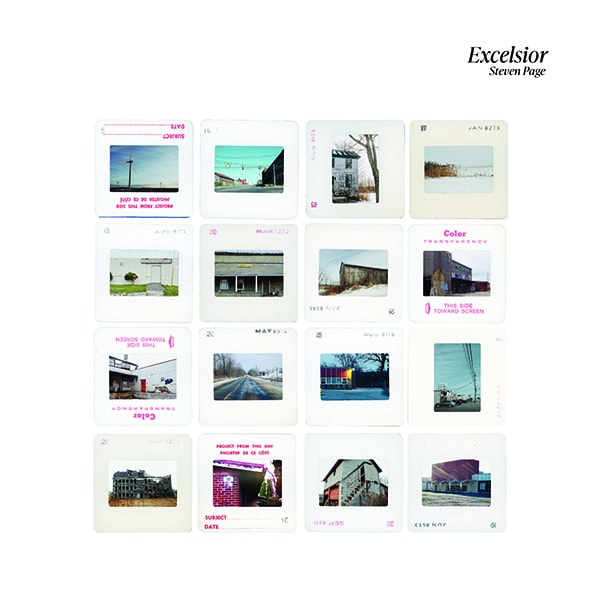
Steven Page, Excelsior, album cover.

Steven Page, Excelsior, album cover.


The record is broken into three Acts and in the vinyl format presents the final side as a blank, with no music or record groove Intended as a start-to-finish spin, Excelsior is both lavish and economical in its approach. Everything found on these three sides fits and holds together as a single expression that a fourth side of songs might only diminish.

As always, Page is in fit form vocally, and the group he has assembled to compliment his contributions will make you further wonder why he so sparingly releases new material.

Recently, the Steven Page Trio opened select North American dates for the Who. It’s a dream gig for Page, who grew up a fan of that Brit sound. We caught up with him mid-tour to talk about the new record, what it’s like opening for such a legendary act in some of the world’s biggest rooms, and what’s next after he and his trio jump off the tour and take to the road as headliners themselves. Page is one of rock’s great men of music, an advocate for breaking conventions and finding sounds that are just out of most people’s reach.

Ray Chelstowski: Your first solo record, 2010’s Page One is a singles-driven record. Excelsior is more of an opus. How did you decide on the approach for the new release?


Steven Page: Obviously anyone would love to have a hit record. But when you get honest with yourself and acknowledge that it’s not going to be that thing, you make the record that you want to listen to. Honestly, when you know that there’s less pressure, you look to trust that the people who love your music are going to go along for the ride. You don’t write songs that could potentially be played on the radio. That doesn’t exist anymore because radio is different. So it prompted me to ask myself: what kind of album would I want to hear? What music moves me when I listen to it and what can I learn as a musician? Then you add to that a lot of things you’ve experienced and have done. For example, I’ve spent a lot of time over the last few years with this ensemble called The Art of Time. That’s when the imposter syndrome starts to wear off and you understand that you can do what you didn’t think was possible.

RC: I’ve read that you “workshopped” this music on your virtual concert series. How do you test-drive songs that in the end become such larger productions, with broader arrangements, and so on?

SP: Well honestly, there are songs that I haven’t figured out how to do live just yet. That’s also the magic of not being “on the clock.” Most of us are making records in our home studios now, not being on the big studio clock. You can take your time. On a live stream you really can’t [though]. Sometimes what I would do is pre-film one part and then duet with myself. But in general, those songs are quite stripped down. Some were simply born out of necessity. “Zoom” is one example was a song that I wrote for an alphabetical show I had done [where I would write songs with titles for the letters of the alphabet]. One thing about [doing] streaming shows is that it’s the same audience every week. You can’t do the same set list every night, or every week.


RC: Do you have a disciplined approach to the writing process or does your work usually arrive in spurts?

SP: That idea of the disciplined habit and format is so foreign to me. The one benefit of the pandemic is that my live show was every Saturday and it made me focus on the shape of the week. As a musician I’ve never had to do that other than when my kids were in school. Separately, one of the things I would do is an opening theme song with a film for every show. [Those were moments where I knew that I needed a song and couldn’t wait until inspiration struck.

What I’ve realized over the years is that with the stuff I’ve labored over, there’s some sense that it didn’t quite live up to what I had hoped. The stuff that comes from the ether often needs no work, and some of my favorite songs are ones that spilled out over the course of an hour.

RC: The new record opens with a funeral song called “Feel.” It allows the entire record to build, and I’m not sure where else it would have fit in the tracking, but was storytelling the intent behind this approach?

SP: That’s exactly it. I couldn’t figure out where else to put it, and because several of those songs reference each other, either musically or thematically, I needed to put that one first because the song “Safe,” the seventh song of that set, ends with an echo of the chorus of “Field.” So I needed those two songs to complete the circle. Normally I would start the record with a song like “The Golden Age of Doubling Down.” It sounds like what I think people think a Steven Page song sounds like and it’s got a feel that is exciting. But that’s commercially-minded, and I wanted this to unfold like a story and hope that people stuck with it long enough to experience the whole thing.

RC: Songs like “Look to the Stars” and “She’s Trying to Save Me” have a very British Invasion feel. Was that the sound you were shooting for throughout?

SP: It’s really where my heart lives. If you look at the British music scape, everything from the classic stuff through the stuff I grew up loving in the 1980s, like Prefab Sprout or Deacon Blue, that’s all in there. For me it’s about what music is evocative and takes me on a trip.

RC: You are opening for the Who without drums or bass. How do you fill these big rooms with sound?

SP: Opening for another band has been one of my favorite things to do because nothing beats winning over an audience that’s not prepared to like you. We used to do that in BNL, but here as a grown adult playing in front of the Who, you wonder if the audience is as open-minded as Pete (Townshend). And, when you don’t have bass or drums in the mix it just gives you so much more headroom for the house guy to turn you up and give you this kid of presence. The best thing is when after a few songs, the audience starts to come on board.
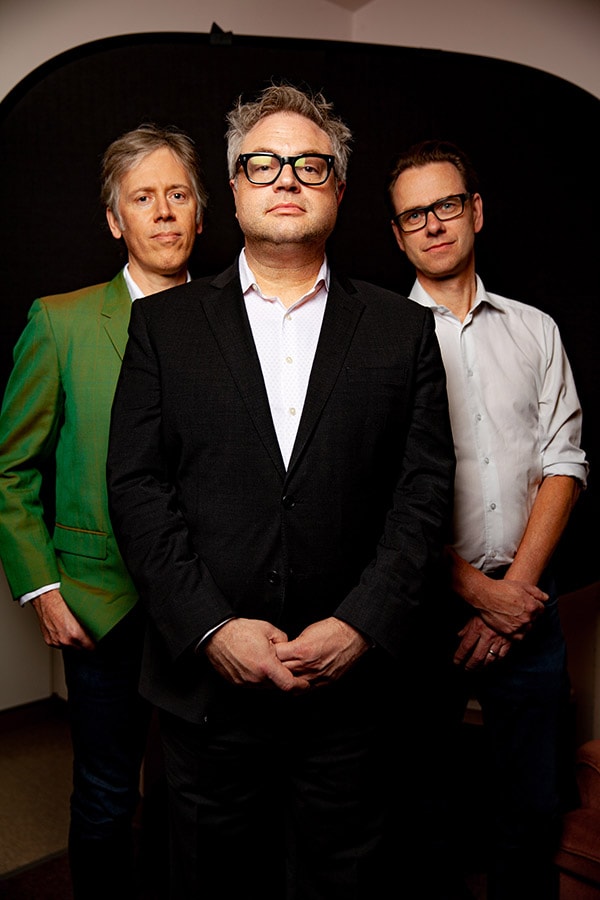
 

The Steven Page Trio. Courtesy of Robert Georgeff.

The Steven Page Trio. Courtesy of Robert Georgeff.


RC: You were able to achieve great success coming from Canada, but that still seems very elusive for many Canadian artists. Is it as difficult as it appears?

SP: It’s interesting because so many top 20 artists are Canadian right now, whether you look at Drake or The Weeknd. These people are dominating the charts, but they have had to make it work in the United States. Drake obviously keeps his empire in Canada. But they have made their connection to the audience through [making it in Los Angeles], which is the old model, what Joni and Neil did. They moved away in order to make it happen. The Canadian music industry along with the Canadian government decided in the early 1970s that they needed to fix this. They wanted to nurture a creative, artistic community in order to keep everyone from leaving to make a living, and that’s happened. But it feels like it did in the 1980s where, when you get signed to a label in Canada you get ignored by everyone else. In the end, it’s hard for everyone to get noticed because there are so many ways to get your music out there now.

RC: You have collaborated with many artists but your work with the founder of Duran Duran, Stephen Duffy, is among my favorites. Is there any chance that you might work together again in the future?

SP: Funny you should ask. I just finished a tour of the UK in September. But I went there early to spend some time with Stephen and his family in Cornwall. We have stayed in touch with each other but haven’t written together in 20 years. While I was there we wrote about a half an album’s worth of stuff. I have all of the tracks to finish up and the intent is to make The Vanity Project, Part 2.

RC: After you finish up your dates with the Who, what’s next?

SP: We do a tour of the Midwest in November and then January looks like a West Coast tour, followed by a pretty mammoth Canadian tour. We are just starting to sort out spring and summer. My hope is that we get another gig like this one. The fact that we were able to make it work on the big stage as a trio was just so affirming to us, like we’re doing something right, and I really don’t have any need or desire to slow down.


Steven Page. Courtesy of JD Scarcliff.

Steven Page. Courtesy of JD Scarcliff.

More from Issue 174

View All Articles in Issue 174

Search Copper Magazine

#228 Serita’s Black Rose Duo Shakes Your Soul With a Blend of Funk, Rock, Blues and a Whole Lot More by Frank Doris Mar 02, 2026 #228 Vinyl, A Love Story by Wayne Robins Mar 02, 2026 #228 Thrill Seeker by B. Jan Montana Mar 02, 2026 #228 The Vinyl Beat: Donald Byrd, Bill Evans, Wes Montgomery, Eddie Palmieri and Frank Sinatra by Rudy Radelic Mar 02, 2026 #228 Listening to Prestige: The History of a Vitally Important Jazz Record Label by Frank Doris Mar 02, 2026 #228 How to Play in a Rock Band, 21: Touring With James Lee Stanley by Frank Doris Mar 02, 2026 #228 The NAMM 2026 Show: The Music Industry’s Premier Event by John Volanski Mar 02, 2026 #228 The Earliest Stars of Country Music, Part Two by Jeff Weiner Mar 02, 2026 #228 From The Audiophile's Guide: A Brief History of Stereophonic Sound by Paul McGowan Mar 02, 2026 #228 A Bone to Pick With Streaming Audio by Frank Doris Mar 02, 2026 #228 Blast Off With Bluesman Duke Robillard by Ray Chelstowski Mar 02, 2026 #228 A Visit to the Marten Loudspeaker Factory in Göteborg, Sweden by Ingo Schulz and Sebastian Polcyn Mar 02, 2026 #228 Pure Distortion by Peter Xeni Mar 02, 2026 #228 A Nagra Factory Tour by Markus "Marsu" Manthey Mar 02, 2026 #228 Back to My Reel-to-Reel Roots, Part 27: Noodge and Ye Shall Receive, Part Two by Ken Kessler Mar 02, 2026 #228 PS Audio in the News by PS Audio Staff Mar 02, 2026 #228 90-Degree Stereo by Frank Doris Mar 02, 2026 #228 The Keys to Art by Rich Isaacs Mar 02, 2026 #227 Seth Lewis Gets in the Groove With Take a Look Around: a Tribute to the Meters by Frank Doris Feb 02, 2026 #227 Passport to Sound: May Anwar’s Audio Learning Experience for Young People by Frank Doris Feb 02, 2026 #227 Conjectures on Cosmic Consciousness by B. Jan Montana Feb 02, 2026 #227 The Big Takeover Turns 45 by Wayne Robins Feb 02, 2026 #227 Music and Chocolate: On the Sensory Connection by Joe Caplan Feb 02, 2026 #227 Singer/Songwriter Chris Berardo: Getting Wilder All the Time by Ray Chelstowski Feb 02, 2026 #227 The Earliest Stars of Country Music, Part One by Jeff Weiner Feb 02, 2026 #227 The Vinyl Beat Goes Down to Tijuana (By Way of Los Angeles), Part Two by Rudy Radelic Feb 02, 2026 #227 How to Play in a Rock Band, 20: On the Road With Blood, Sweat & Tears’ Guitarist Gabe Cummins by Frank Doris Feb 02, 2026 #227 From The Audiophile’s Guide: Audio Specs and Measuring by Paul McGowan Feb 02, 2026 #227 Our Brain is Always Listening by Peter Trübner Feb 02, 2026 #227 PS Audio in the News by PS Audio Staff Feb 02, 2026 #227 The Listening Chair: Sleek Style and Sound From the Luxman L3 by Howard Kneller Feb 02, 2026 #227 The Los Angeles and Orange County Audio Society Celebrates Its 32nd Anniversary, Honoring David and Sheryl Lee Wilson and Bernie Grundman by Harris Fogel Feb 02, 2026 #227 Back to My Reel-to-Reel Roots, Part 26: Half Full – Not Half Empty, Redux by Ken Kessler Feb 02, 2026 #227 That's What Puzzles Us... by Frank Doris Feb 02, 2026 #227 Record-Breaking by Peter Xeni Feb 02, 2026 #227 The Long and Winding Road by B. Jan Montana Feb 02, 2026 #226 JJ Murphy’s Sleep Paralysis is a Genre-Bending Musical Journey Through Jazz, Fusion and More by Frank Doris Jan 05, 2026 #226 Stewardship by Consent by B. Jan Montana Jan 05, 2026 #226 Food, Music, and Sensory Experience: An Interview With Professor Jonathan Zearfoss of the Culinary Institute of America by Joe Caplan Jan 05, 2026 #226 Studio Confidential: A Who’s Who of Recording Engineers Tell Their Stories by Frank Doris Jan 05, 2026 #226 Pilot Radio is Reborn, 50 Years Later: Talking With CEO Barak Epstein by Frank Doris Jan 05, 2026 #226 The Vinyl Beat Goes Down to Tijuana (By Way of Los Angeles), Part One by Rudy Radelic Jan 05, 2026 #226 Capital Audiofest 2025: Must-See Stereo, Part Two by Frank Doris Jan 05, 2026 #226 My Morning Jacket’s Carl Broemel and Tyler Ramsey Collaborate on Their Acoustic Guitar Album, Celestun by Ray Chelstowski Jan 05, 2026 #226 The People Who Make Audio Happen: CanJam SoCal 2025, Part Two by Harris Fogel Jan 05, 2026 #226 How to Play in a Rock Band, 19: Touring Can Make You Crazy, Part One by Frank Doris Jan 05, 2026 #226 Linda Ronstadt Goes Bigger by Wayne Robins Jan 05, 2026

Steven Page (Formerly of Barenaked Ladies): Soaring Higher with Excelsior

Steven Page (Formerly of Barenaked Ladies): Soaring Higher with Excelsior

Barenaked Ladies (BNL) is a Canadian rock band that helped define the 1990s. As a rock outfit they found a way to marry musicianship and humor in a manner that brightened their studio work, and facilitated live performances that were electrifying. A BNL concert always brought with it theatrics and huge amounts of humor. This set the act apart from the angst-driven sounds that were so prevalent during that period. Maybe the band’s most vital voice came from Steven Page, an artist blessed with one of the best sets of rock pipes around. He has power, muscle and at the same time can deliver incredible control and style during some of the most intimate of musical moments.

When Page left Barenaked Ladies, a big part of what made the band work left with him, and he embarked on a solo career. There he has been exceptionally ambitious, exploring some of rock’s most outer reaches and band constructs. Last month, Page released a new record, Excelsior. It’s his first solo album since 2018 and it is as ardent as anything he has done to date.

The album’s 11 tracks were composed and produced entirely by Page after having been workshopped for audiences on his popular virtual concert series Live From Home, which Page has been conducting via Zoom since April 2020 over the course of 92 episodes. Page played most of the instruments on Excelsior, and was joined at times by Craig Northey (guitar, vocals) and Kevin Fox (cello, vocals), who are also members of the Steven Page Trio, his touring ensemble. Also heard on Excelsior are Doug Elliott of the Odds (bass), as well as Joe Pisapia (pedal steel), who had been a member of Guster. Steven’s brother Matthew Page also guests playing drums, and his contributions are impressive.

Steven Page, Excelsior, album cover.

Steven Page, Excelsior, album cover.


The record is broken into three Acts and in the vinyl format presents the final side as a blank, with no music or record groove Intended as a start-to-finish spin, Excelsior is both lavish and economical in its approach. Everything found on these three sides fits and holds together as a single expression that a fourth side of songs might only diminish.

As always, Page is in fit form vocally, and the group he has assembled to compliment his contributions will make you further wonder why he so sparingly releases new material.

Recently, the Steven Page Trio opened select North American dates for the Who. It’s a dream gig for Page, who grew up a fan of that Brit sound. We caught up with him mid-tour to talk about the new record, what it’s like opening for such a legendary act in some of the world’s biggest rooms, and what’s next after he and his trio jump off the tour and take to the road as headliners themselves. Page is one of rock’s great men of music, an advocate for breaking conventions and finding sounds that are just out of most people’s reach.

Ray Chelstowski: Your first solo record, 2010’s Page One is a singles-driven record. Excelsior is more of an opus. How did you decide on the approach for the new release?


Steven Page: Obviously anyone would love to have a hit record. But when you get honest with yourself and acknowledge that it’s not going to be that thing, you make the record that you want to listen to. Honestly, when you know that there’s less pressure, you look to trust that the people who love your music are going to go along for the ride. You don’t write songs that could potentially be played on the radio. That doesn’t exist anymore because radio is different. So it prompted me to ask myself: what kind of album would I want to hear? What music moves me when I listen to it and what can I learn as a musician? Then you add to that a lot of things you’ve experienced and have done. For example, I’ve spent a lot of time over the last few years with this ensemble called The Art of Time. That’s when the imposter syndrome starts to wear off and you understand that you can do what you didn’t think was possible.

RC: I’ve read that you “workshopped” this music on your virtual concert series. How do you test-drive songs that in the end become such larger productions, with broader arrangements, and so on?

SP: Well honestly, there are songs that I haven’t figured out how to do live just yet. That’s also the magic of not being “on the clock.” Most of us are making records in our home studios now, not being on the big studio clock. You can take your time. On a live stream you really can’t [though]. Sometimes what I would do is pre-film one part and then duet with myself. But in general, those songs are quite stripped down. Some were simply born out of necessity. “Zoom” is one example was a song that I wrote for an alphabetical show I had done [where I would write songs with titles for the letters of the alphabet]. One thing about [doing] streaming shows is that it’s the same audience every week. You can’t do the same set list every night, or every week.


RC: Do you have a disciplined approach to the writing process or does your work usually arrive in spurts?

SP: That idea of the disciplined habit and format is so foreign to me. The one benefit of the pandemic is that my live show was every Saturday and it made me focus on the shape of the week. As a musician I’ve never had to do that other than when my kids were in school. Separately, one of the things I would do is an opening theme song with a film for every show. [Those were moments where I knew that I needed a song and couldn’t wait until inspiration struck.

What I’ve realized over the years is that with the stuff I’ve labored over, there’s some sense that it didn’t quite live up to what I had hoped. The stuff that comes from the ether often needs no work, and some of my favorite songs are ones that spilled out over the course of an hour.

RC: The new record opens with a funeral song called “Feel.” It allows the entire record to build, and I’m not sure where else it would have fit in the tracking, but was storytelling the intent behind this approach?

SP: That’s exactly it. I couldn’t figure out where else to put it, and because several of those songs reference each other, either musically or thematically, I needed to put that one first because the song “Safe,” the seventh song of that set, ends with an echo of the chorus of “Field.” So I needed those two songs to complete the circle. Normally I would start the record with a song like “The Golden Age of Doubling Down.” It sounds like what I think people think a Steven Page song sounds like and it’s got a feel that is exciting. But that’s commercially-minded, and I wanted this to unfold like a story and hope that people stuck with it long enough to experience the whole thing.

RC: Songs like “Look to the Stars” and “She’s Trying to Save Me” have a very British Invasion feel. Was that the sound you were shooting for throughout?

SP: It’s really where my heart lives. If you look at the British music scape, everything from the classic stuff through the stuff I grew up loving in the 1980s, like Prefab Sprout or Deacon Blue, that’s all in there. For me it’s about what music is evocative and takes me on a trip.

RC: You are opening for the Who without drums or bass. How do you fill these big rooms with sound?

SP: Opening for another band has been one of my favorite things to do because nothing beats winning over an audience that’s not prepared to like you. We used to do that in BNL, but here as a grown adult playing in front of the Who, you wonder if the audience is as open-minded as Pete (Townshend). And, when you don’t have bass or drums in the mix it just gives you so much more headroom for the house guy to turn you up and give you this kid of presence. The best thing is when after a few songs, the audience starts to come on board.


The Steven Page Trio. Courtesy of Robert Georgeff.

The Steven Page Trio. Courtesy of Robert Georgeff.


RC: You were able to achieve great success coming from Canada, but that still seems very elusive for many Canadian artists. Is it as difficult as it appears?

SP: It’s interesting because so many top 20 artists are Canadian right now, whether you look at Drake or The Weeknd. These people are dominating the charts, but they have had to make it work in the United States. Drake obviously keeps his empire in Canada. But they have made their connection to the audience through [making it in Los Angeles], which is the old model, what Joni and Neil did. They moved away in order to make it happen. The Canadian music industry along with the Canadian government decided in the early 1970s that they needed to fix this. They wanted to nurture a creative, artistic community in order to keep everyone from leaving to make a living, and that’s happened. But it feels like it did in the 1980s where, when you get signed to a label in Canada you get ignored by everyone else. In the end, it’s hard for everyone to get noticed because there are so many ways to get your music out there now.

RC: You have collaborated with many artists but your work with the founder of Duran Duran, Stephen Duffy, is among my favorites. Is there any chance that you might work together again in the future?

SP: Funny you should ask. I just finished a tour of the UK in September. But I went there early to spend some time with Stephen and his family in Cornwall. We have stayed in touch with each other but haven’t written together in 20 years. While I was there we wrote about a half an album’s worth of stuff. I have all of the tracks to finish up and the intent is to make The Vanity Project, Part 2.

RC: After you finish up your dates with the Who, what’s next?

SP: We do a tour of the Midwest in November and then January looks like a West Coast tour, followed by a pretty mammoth Canadian tour. We are just starting to sort out spring and summer. My hope is that we get another gig like this one. The fact that we were able to make it work on the big stage as a trio was just so affirming to us, like we’re doing something right, and I really don’t have any need or desire to slow down.


Steven Page. Courtesy of JD Scarcliff.

Steven Page. Courtesy of JD Scarcliff.

0 comments

Leave a comment

0 Comments

Your avatar

Loading comments...

🗑️ Delete Comment

Enter moderator password to delete this comment:

✏️ Edit Comment

Enter your email to verify ownership: