COPPER

A PS Audio Publication

Issue 160 • Free Online Magazine

Issue 160 Octave Pitch

Octave Records Debuts Dreams of You: Classic Swing by Jeremy Mohney

Octave Records Debuts Dreams of You: Classic Swing by Jeremy Mohney

Octave Records has released Dreams of You by vocalist and alto saxophonist Jeremy Mohney. It’s a recording that hearkens back to classic swing-era and traditional jazz, yet is up to the minute, with a set of all-original songs recorded in high-resolution DSD and SACD sound.

The swing’s the thing here, and Mohney’s music has a propulsive bounce that evokes the ballrooms of a bygone era. Songs like “The Octave Stomp,” “Show Me What You Got (and Swing It)” and “Let Go” have a toe-tapping groove, thanks to the infectious singing and playing of Mohney and his fellow musicians: Conner Hollingsworth on upright bass, Braxton Kahn on drums, Andrew McNew on trombone, and the standout guitar and banjo playing of Matt Cantor, who provides a rich chordal and rhythmic accompaniment and inventive soloing.

How did a modern-day musician like Jeremy Mohney get so steeped in the sounds of swing? “I was close to my grandfather and from a very early age he played me music like Glenn Miller, Tommy Dorsey and Artie Shaw. It just kind of stuck with me,” Mohney noted. “I was also into the Beatles and Pink Floyd and Jimi Hendrix. But in the 1920s, people like Louis Armstrong redefined what music could be and basically made everything that followed possible.”
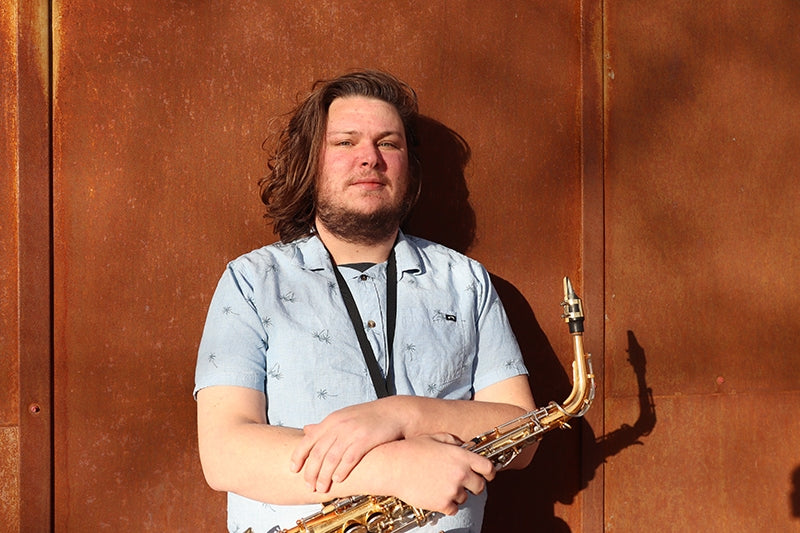
 

Jeremy Mohney.

Jeremy Mohney.


Dreams of You was recorded at Animal Lane Studios in Lyons, Colorado using Octave Records’ Pure DSD process and the Sonoma multi-track DSD recording system. It was mixed at PS Audio in Boulder, CO. Dreams of You is playable on any SACD, CD, DVD, or Blu-ray player. It also has a high-resolution DSD layer that is accessible only using a PS Audio SACD transport, or by copying the DSD tracks on the included DVD data discs.

In addition, the master DSD and PCM files are available for download (including DSD64, DSDDirect Mastered 192kHz/24-bit, 96kHz/24-bit and 44.1kHz/16-bit PCM) from psaudio.com at this link. The album was recorded by Jay Elliott, produced by Thom LaFond, and mixed by Elliott and LaFond. Giselle Collazo assisted, and Octave Records’ Jessica Carson was the executive producer.

We talked more with Jeremy Mohney about the new album.

Frank Doris: Since you mentioned being influenced by this music from an early age, I’m guessing you were in a high school stage band or something like that?

Jeremy Mohney: Yeah, I was, and that made my grade point average look halfway decent.

FD: How did you meet the other musicians who play on Dreams of You?

JM: It sort of built over the years. I’ve been playing with guitarist Matt Cantor for about 11 years. I’ve known our bass player, Conner Hollingsworth, for about three or four years now. Lineups have changed, but in the last couple of years I’ve been able to work with a more reliable group, not having to hire substitutes all the time. That’s kinda big.

FD: Your guitar player Matt Cantor is something else. His playing really gives you that authentic sound.
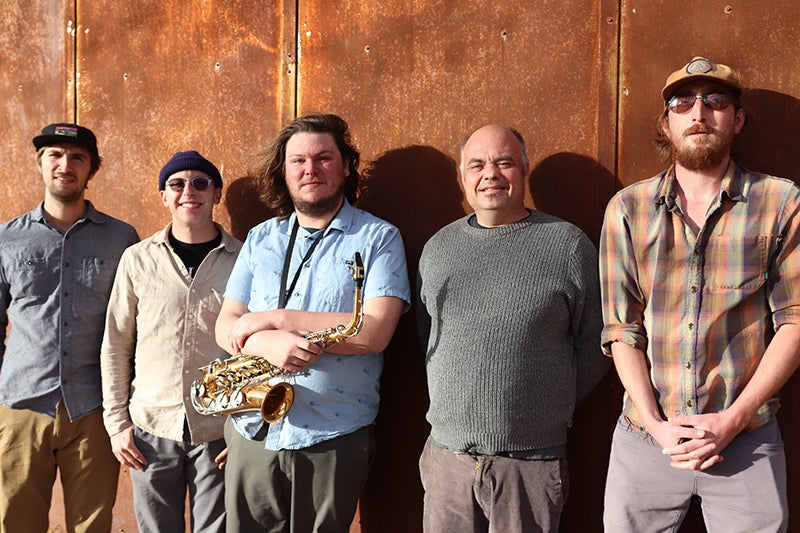
 

The band for Dreams of You.

Matt Cantor, Braxton Kahn, Jeremy Mohney, Andrew McNew and Conner Hollingsworth.


JM: We really try to get inside that music. Maybe the way they would’ve 80 years ago.

FD: Do you write out charts or just play it off the tops of your heads?

JM: We write out chord charts and the rest of it is memorizing melodies and riffs. I can read, but not enough to hurt me much!

FD: As the saying goes.

JM: Think about the way they would’ve done it back in the day. Maybe they read the music, but didn’t want to be confined into playing it one certain way the whole time.

FD: How do you write the songs? They’re all originals.

JM: I usually start out [with] a chord progression on the guitar and then we just sort of jam over the chord progression and come up with a melody. Maybe if I’m lucky a melody will just pop into my head right away. Every song’s kind of a different animal, you know?

FD:  The title song, “Dreams of You”; did somebody in particular inspire that?

JM: There was…(pause)

FD: You don’t want to reveal the mystery!

It doesn’t sound like you guys are playing at trying to sound like a swing band. It sounds like you are one.

JM:  That’s exactly what we’re going for.
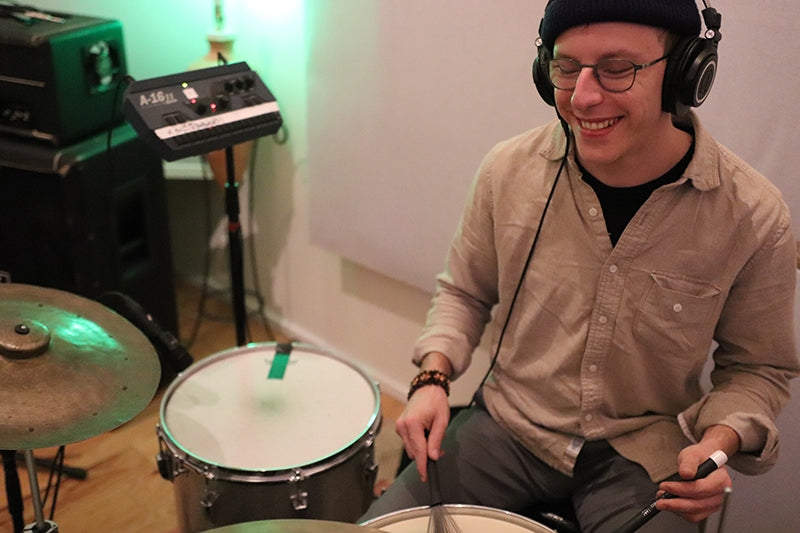
 

Braxton Kahn.

Braxton Kahn.


FD: Who are some of your other inspirations?

JM: As far as my playing goes, Glenn Miller has always been my favorite. I can’t explain why. It just has so much sentimental value, his music and [how it relates to my] relationship with my grandfather. And, Sidney Bechet, Benny Carter, and Lester Young of course. Billie Holiday.

FD: How did the pandemic affect your ability to make music?

JM: Well, it was pretty sad there for a while because gigs dried up, and we were all scared to even get together at all for a couple of months there.

It’s always been tough [being] a musician. And who knows what it’s gonna be like in the future.
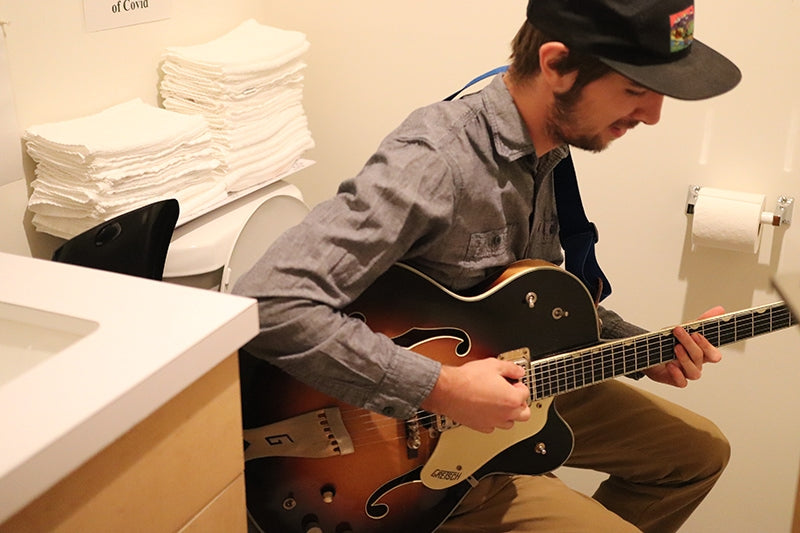
 

Matt Cantor.

Matt Cantor.


FD: I think it’s going to be a balance between two things. A lot venues either went away or are going to decide they can’t afford live music anymore. On the other hand, people are so pent up in wanting to go out and hear live music – that will be the opposing factor.

JM: I’ve done quite a few private things like weddings and some corporate events, but haven’t been playing too much in public. The swing dance scene is where we do most of our public gigs and that’s just [been] hard to keep afloat. There have been a few people who are willing to go out and dance, but nothing like there were before.

FD: So, you’d play covers and not your originals on those gigs.

JM: We do play a lot of standards. We’ve started recording some covers of public domain tunes. Before 1926 is now the year that you’re allowed to record and publish on your own.

FD: You’re keeping that part of jazz history alive.

JM: The older jazz is definitely a different animal – that you can dance to.

More from Issue 160

View All Articles in Issue 160

Search Copper Magazine

#225 Capital Audiofest 2025: Must-See Stereo, Part One by Frank Doris Dec 01, 2025 #225 Otis Taylor and the Electrics Delivers a Powerful Set of Hypnotic Modern Blues by Frank Doris Dec 01, 2025 #225 A Christmas Miracle by B. Jan Montana Dec 01, 2025 #225 T.H.E. Show New York 2025, Part Two: Plenty to See, Hear, and Enjoy by Frank Doris Dec 01, 2025 #225 Underappreciated Artists, Part One: Martin Briley by Rich Isaacs Dec 01, 2025 #225 Rock and Roll is Here to Stay by Wayne Robins Dec 01, 2025 #225 A Lifetime of Holiday Record (and CD) Listening by Rudy Radelic Dec 01, 2025 #225 Little Feat: Not Saying Goodbye, Not Yet by Ray Chelstowski Dec 01, 2025 #225 How to Play in a Rock Band, Part 18: Dealing With Burnout by Frank Doris Dec 01, 2025 #225 The People Who Make Audio Happen: CanJam SoCal 2025 by Harris Fogel Dec 01, 2025 #225 Chicago’s Sonic Sanctuaries: Four Hi‑Fi Listening Bars Channeling the Jazz‑Kissa Spirit by Olivier Meunier-Plante Dec 01, 2025 #225 From The Audiophile’s Guide: Controlling Bass Frequencies Through Membrane Absorbers (and How to Build Your Own) by Paul McGowan Dec 01, 2025 #225 Your Editor’s Tips for Attending Audio Shows by Frank Doris Dec 01, 2025 #225 PS Audio in the News by Frank Doris Dec 01, 2025 #225 Back to My Reel-to-Reel Roots, Part 24 by Ken Kessler Dec 01, 2025 #225 Holiday Music by Frank Doris Dec 01, 2025 #225 Puppy Prognostication by Peter Xeni Dec 01, 2025 #225 How to Post Comments on Copper by Frank Doris Dec 01, 2025 #225 Living Color by Rudy Radelic Dec 01, 2025 #224 T.H.E. Show New York 2025, Part One: A New Beginning by Frank Doris Nov 03, 2025 #224 Fool’s Leap of Faith is the Extraordinary Octave Records Debut from Singer/Songwriter Tyler Burba and Visit by Frank Doris Nov 03, 2025 #224 The Beatles’ “Aeolian Cadences.” What? by Wayne Robins Nov 03, 2025 #224 Persona Non Grata by B. Jan Montana Nov 03, 2025 #224 Talking With Recording Engineer Barry Diament of Soundkeeper Recordings, Part Two by Frank Doris Nov 03, 2025 #224 B Sides, B Movies, and Beware of Zombies by Rudy Radelic Nov 03, 2025 #224 The Burn-In Chronicles: 1,000 Hours to Sonic Salvation by Olivier Meunier-Plante Nov 03, 2025 #224 A Conversation With Mat Weisfeld of VPI Industries by Joe Caplan Nov 03, 2025 #224 Blues-Rocker Kenny Wayne Shepherd Celebrates 30 Years of Ledbetter Heights by Ray Chelstowski Nov 03, 2025 #224 Playing in a Rock Band, 17: When Good Gigs Go Bad, Part Two by Frank Doris Nov 03, 2025 #224 From The Audiophile’s Guide: Dealing with Odd-Shaped Rooms by Paul McGowan Nov 03, 2025 #224 TEAC’s TN-3B-SE Turntable Plays Bob Dylan by Howard Kneller Nov 03, 2025 #224 PS Audio in the News by Frank Doris Nov 03, 2025 #224 Lost in Translation by Peter Xeni Nov 03, 2025 #224 Reel-to-Reel Roots, Part 23: Better Than Rice Krispies by Ken Kessler Nov 03, 2025 #224 I Bring Joy! by Frank Doris Nov 03, 2025 #224 Screen Test by Rich Isaacs Nov 03, 2025 #224 How to Post Comments on Copper by Frank Doris Nov 03, 2025 #132 Dr. Patrick Gleeson: The Interview, Part Two by Rich Isaacs Oct 07, 2025 #223 World Fusion Meets Flamenco in Gratitude from Steve Mullins and Rim of the Well by Frank Doris Oct 06, 2025 #223 Judging Albums by Their Covers by Rich Isaacs Oct 06, 2025 #223 Recent Arrivals and 12-inch Royalty by Rudy Radelic Oct 06, 2025 #223 Summer of Creem, Part Two by Wayne Robins Oct 06, 2025 #223 Recording Engineer Barry Diament of Soundkeeper Recordings: Striving for Natural Sound by Frank Doris Oct 06, 2025 #223 Tea on the Terrace by B. Jan Montana Oct 06, 2025 #223 How Good Can Car Audio Get? by Joe Caplan Oct 06, 2025 #223 The Advantages of a Dedicated Listening Room by Paul McGowan Oct 06, 2025 #223 1! 2! 3! 4! Surrounded by the Ramones in Dolby Atmos! by Frank Doris Oct 06, 2025

Octave Records Debuts Dreams of You: Classic Swing by Jeremy Mohney

Octave Records Debuts Dreams of You: Classic Swing by Jeremy Mohney

Octave Records has released Dreams of You by vocalist and alto saxophonist Jeremy Mohney. It’s a recording that hearkens back to classic swing-era and traditional jazz, yet is up to the minute, with a set of all-original songs recorded in high-resolution DSD and SACD sound.

The swing’s the thing here, and Mohney’s music has a propulsive bounce that evokes the ballrooms of a bygone era. Songs like “The Octave Stomp,” “Show Me What You Got (and Swing It)” and “Let Go” have a toe-tapping groove, thanks to the infectious singing and playing of Mohney and his fellow musicians: Conner Hollingsworth on upright bass, Braxton Kahn on drums, Andrew McNew on trombone, and the standout guitar and banjo playing of Matt Cantor, who provides a rich chordal and rhythmic accompaniment and inventive soloing.

How did a modern-day musician like Jeremy Mohney get so steeped in the sounds of swing? “I was close to my grandfather and from a very early age he played me music like Glenn Miller, Tommy Dorsey and Artie Shaw. It just kind of stuck with me,” Mohney noted. “I was also into the Beatles and Pink Floyd and Jimi Hendrix. But in the 1920s, people like Louis Armstrong redefined what music could be and basically made everything that followed possible.”


Jeremy Mohney.

Jeremy Mohney.


Dreams of You was recorded at Animal Lane Studios in Lyons, Colorado using Octave Records’ Pure DSD process and the Sonoma multi-track DSD recording system. It was mixed at PS Audio in Boulder, CO. Dreams of You is playable on any SACD, CD, DVD, or Blu-ray player. It also has a high-resolution DSD layer that is accessible only using a PS Audio SACD transport, or by copying the DSD tracks on the included DVD data discs.

In addition, the master DSD and PCM files are available for download (including DSD64, DSDDirect Mastered 192kHz/24-bit, 96kHz/24-bit and 44.1kHz/16-bit PCM) from psaudio.com at this link. The album was recorded by Jay Elliott, produced by Thom LaFond, and mixed by Elliott and LaFond. Giselle Collazo assisted, and Octave Records’ Jessica Carson was the executive producer.

We talked more with Jeremy Mohney about the new album.

Frank Doris: Since you mentioned being influenced by this music from an early age, I’m guessing you were in a high school stage band or something like that?

Jeremy Mohney: Yeah, I was, and that made my grade point average look halfway decent.

FD: How did you meet the other musicians who play on Dreams of You?

JM: It sort of built over the years. I’ve been playing with guitarist Matt Cantor for about 11 years. I’ve known our bass player, Conner Hollingsworth, for about three or four years now. Lineups have changed, but in the last couple of years I’ve been able to work with a more reliable group, not having to hire substitutes all the time. That’s kinda big.

FD: Your guitar player Matt Cantor is something else. His playing really gives you that authentic sound.


The band for Dreams of You.

Matt Cantor, Braxton Kahn, Jeremy Mohney, Andrew McNew and Conner Hollingsworth.


JM: We really try to get inside that music. Maybe the way they would’ve 80 years ago.

FD: Do you write out charts or just play it off the tops of your heads?

JM: We write out chord charts and the rest of it is memorizing melodies and riffs. I can read, but not enough to hurt me much!

FD: As the saying goes.

JM: Think about the way they would’ve done it back in the day. Maybe they read the music, but didn’t want to be confined into playing it one certain way the whole time.

FD: How do you write the songs? They’re all originals.

JM: I usually start out [with] a chord progression on the guitar and then we just sort of jam over the chord progression and come up with a melody. Maybe if I’m lucky a melody will just pop into my head right away. Every song’s kind of a different animal, you know?

FD:  The title song, “Dreams of You”; did somebody in particular inspire that?

JM: There was…(pause)

FD: You don’t want to reveal the mystery!

It doesn’t sound like you guys are playing at trying to sound like a swing band. It sounds like you are one.

JM:  That’s exactly what we’re going for.


Braxton Kahn.

Braxton Kahn.


FD: Who are some of your other inspirations?

JM: As far as my playing goes, Glenn Miller has always been my favorite. I can’t explain why. It just has so much sentimental value, his music and [how it relates to my] relationship with my grandfather. And, Sidney Bechet, Benny Carter, and Lester Young of course. Billie Holiday.

FD: How did the pandemic affect your ability to make music?

JM: Well, it was pretty sad there for a while because gigs dried up, and we were all scared to even get together at all for a couple of months there.

It’s always been tough [being] a musician. And who knows what it’s gonna be like in the future.


Matt Cantor.

Matt Cantor.


FD: I think it’s going to be a balance between two things. A lot venues either went away or are going to decide they can’t afford live music anymore. On the other hand, people are so pent up in wanting to go out and hear live music – that will be the opposing factor.

JM: I’ve done quite a few private things like weddings and some corporate events, but haven’t been playing too much in public. The swing dance scene is where we do most of our public gigs and that’s just [been] hard to keep afloat. There have been a few people who are willing to go out and dance, but nothing like there were before.

FD: So, you’d play covers and not your originals on those gigs.

JM: We do play a lot of standards. We’ve started recording some covers of public domain tunes. Before 1926 is now the year that you’re allowed to record and publish on your own.

FD: You’re keeping that part of jazz history alive.

JM: The older jazz is definitely a different animal – that you can dance to.

0 comments

Leave a comment

0 Comments

Your avatar

Loading comments...

🗑️ Delete Comment

Enter moderator password to delete this comment: