COPPER

A PS Audio Publication

Issue 170 • Free Online Magazine

Issue 170 Eureka Moments

High-Quality Audio In Clubland

High-Quality Audio In Clubland

When was the last time you went to a really trendy dance club? How about one that caters to an in-the-know young crowd? What about one of New York City’s premier queer venues that features Alaska Thunderf*ck, winner of RuPaul’s Drag Race All Stars, singing Taylor Swift songs? I ask these loaded questions of myself as I quickly approach senior citizenship and prefer to stay home listening to my own records and gear. The last time I heard a pumping club system was, oh, about 40 years ago at Studio 54. I was interested in audio, even as a teen, and tried my best to peek into the DJ booth. It’s an odd thing to want to do instead participating in Studio 54’s other activities, but I wasn’t the only one who was enamored with the equipment. I could have never imagined that I would someday be auditioning a set of speakers designed by someone influenced by the same system at Studio 54.

Like the renowned designers of two-channel home audio components, clubland has its own luminaries. Some of the most legendary names are Alex Rosner and Richard Long. Rosner designed sound systems at New York’s Limelight, Max’s Kansas City, and 1970’s era Copacabana. Long, who once worked under Rosner, went on to create systems at Bond’s International Casino, Paradise Garage, and, the big daddy of them all, Studio 54. However, there’s another designer, a protégé of Long’s who also contributed to the beloved Paradise Garage, a 10,000-square-foot disco with an open-door policy in SoHo that was open from 1977 to 1987. He was the late Gary Stewart, famous for systems in the Hamptons, Ibiza, London, and Singapore.

Shortly before his death in 2012, Stewart achieved new heights through a collaboration with Pioneer Pro Audio. His pre-fab GS-WAVE speaker stack was a departure from most great-sounding club systems which are built from the ground up with custom cabinets and crossovers, but Stewart made it much easier for smaller venues to capture his signature sound without having to undertake a custom build.

Located in Brooklyn, on the border of Williamsburg and Bushwick, 3 Dollar Bill is housed in an old brewery built in 1858. It’s a cavernous brick structure with accents of original wood, metal, and masonry that are incorporated beautifully into a network of several bars, dance areas, and even an expansive yard big enough for the upcoming Oktoberfest. There are sound systems everywhere, but the main dance floor and performance space is where the GS-WAVE towers over the room. This is where I met with 3 Dollar Bill’s production manager, Kris Anton.
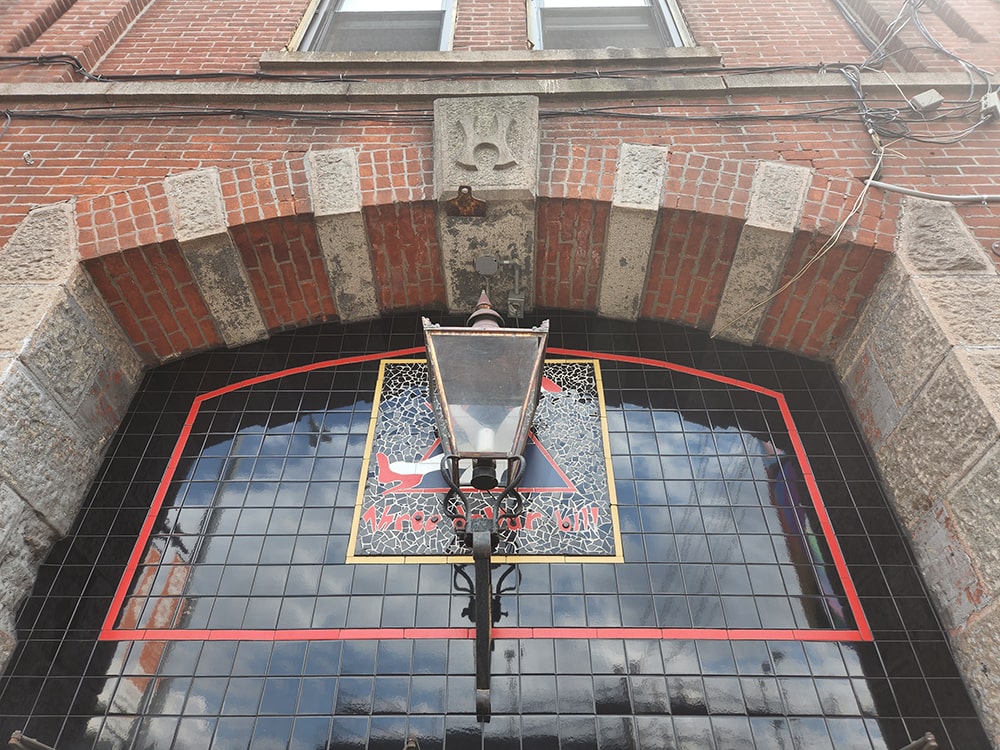
 

Timeless architecture: the entrance to 3 Dollar Bill.

Timeless architecture: the entrance to 3 Dollar Bill.


Kris has spent the last 25 years operating and building light and sound systems for theater, live shows and dance clubs, as well as for bars and restaurants. He’s worked with Big Audio Dynamite, Fishbone, Gibby Haynes of the Butthole Surfers, and numerous drag performers, many of them familiar from appearances on TV shows. Since COVID-19, Kris has been a jack of all trades at 3 Dollar Bill, creating a unique atmosphere and filling nearly every nook and cranny with lights and sound.

Although Kris sent me photos of his showpiece, the two 12-foot, 1,438 lb. speaker stacks, there’s nothing like seeing them in person. Set in a stereo configuration about 15 feet apart and firing onto the dance floor, each GS-WAVE stack is comprised of:

  • One 18-inch subwoofer in a folded-horn cabinet.
  • Two cabinets containing 2 15-inch drivers for the bass and low midrange.
  • Two compression drivers behind an adjustable lens to handle the high-mids and high frequencies.
  • Hanging over the dance floor is an associated super tweeter pod with four ultra-high-frequency drivers.
  • An optional 275-lb. horn extension is included with each speaker stack to increase bass delivery without the need for additional amplification. However, for Kris’s maximum capacity of 350 people, the horn extenders would overwhelm the room.

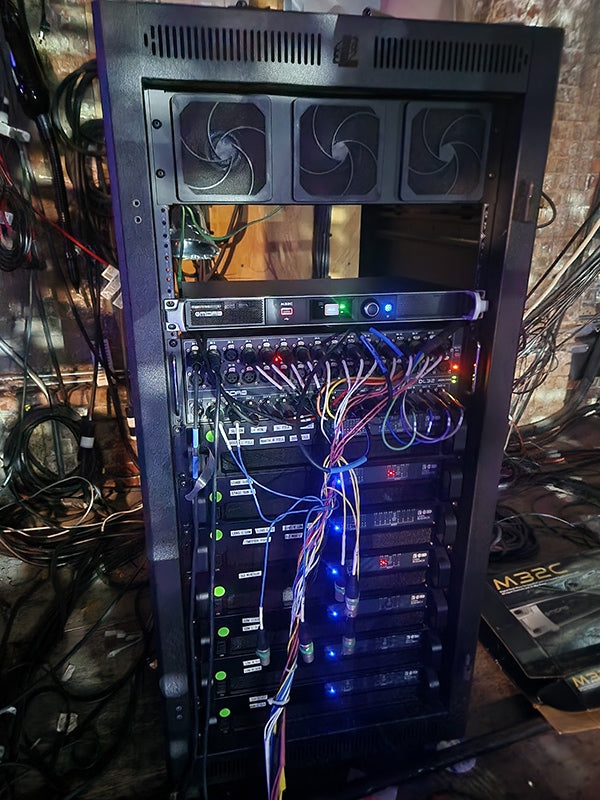
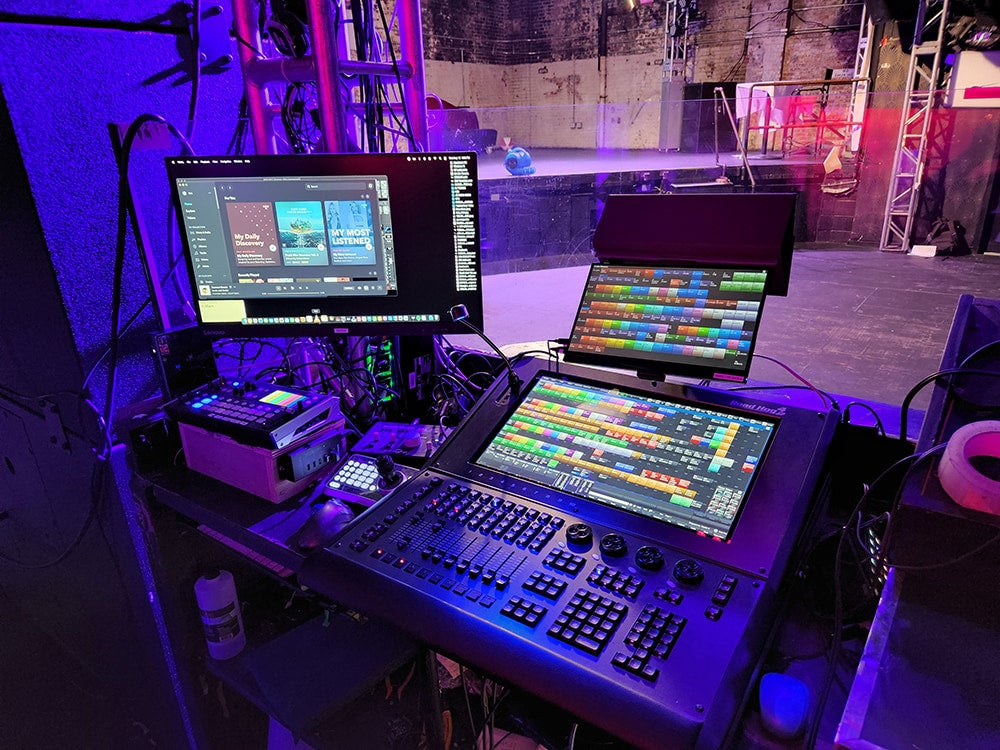
Power comes from two 8-channel and five 4-channel Linea Research amplifiers rated at 1,500 watts per channel at 8 ohms. To keep the system functioning efficiently, each amp has onboard DSPs (digital signal processors) to manage the crossover points, EQ, and power requirements for each driver. All the information is fed through a computer in the DJ booth where adjustments can be made. Kris also installed a complete main stage PA system of Pioneer Pro Audio XY-122 2-way speakers (also designed by Gary Stewart) and active JBL arrays. Additional XY-122 fill speakers and 18-inch subwoofers compensate for dead spots in the room and create a surround-sound effect. Using calibration software by System Engineer and his ears, Kris meticulously tunes 32 speakers to the space. With that many speakers, extreme volume is not required to achieve a gut-punching yet well-balanced musical presentation.
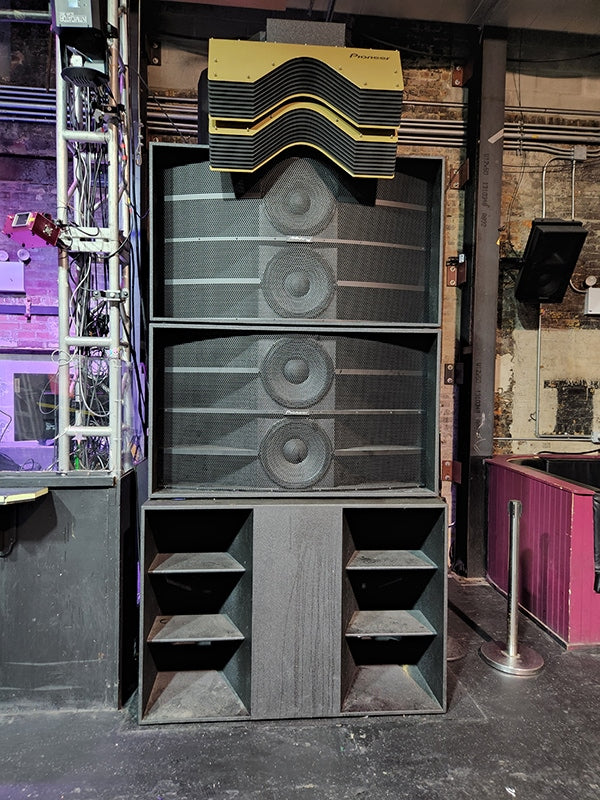
 

Clarity and balance: the GS-WAVE main speaker stacks.
Clarity and balance: the GS-WAVE main speaker stacks.


Behind the scenes: Linea Research amplifiers and associated equipment.

Behind the scenes: Linea Research amplifiers and associated equipment.


I make it seem like Kris did everything by himself, but designing and assembling a system this big requires collaboration. Kris would like to acknowledge Alex Graham and Peter Gotfredsen from audio brokers Purplesound NYC, and David Sullivan from Pioneer Pro Audio. Ron Lorman, a recording engineer with several Miles Davis albums under his belt, lent his expert ears for tuning. But enough tech-talk for now: let’s get back to GS-WAVE.


Sound system designer Kris Anton. Courtesy of Courtney Bradley.

Sound system designer Kris Anton. Courtesy of Courtney Bradley.


Kris played a number of selections, some rock and some dance music, but what would I play if I had the system to myself? So, Kris pulled up “Spirit of Radio” by Rush and sent it through the stacks. They suddenly transformed from “disco speakers” to the ultimate rock and roll speakers of my teenage dreams. For all their size and power, the GS-WAVEs delivered balanced, defined clear sound as good as any high-end home systems I’ve heard.

I had never given much thought to club audio before, dismissing it a necessary evil. Ironically, the bad-sounding systems are more memorable than the good ones. I recall dive bars of the Lower East Side which were so loud that no one could hear themselves talk over the noise. The culprits were usually speakers, too few and badly placed, playing beyond their specs, powered by inadequate amps, and operated by a person who has no experience outside of their basement.

Dance floors are certainly not audio shows and most people are not contemplating the timbre of the drum machine, the analog purity of a cowbell, or that the synthesizer was particularly revelatory on certain tracks. I just assumed the target sound was lots of pounding bass and high volume, but maybe there was something I didn’t know. So, I asked Kris what was the most important aspect of his sound. The one-word answer: transparency. Mega-decibels and bass are great – that’s why we go to clubs and shows, but it’s the nuances of the mid and high frequencies that keep us engaged.
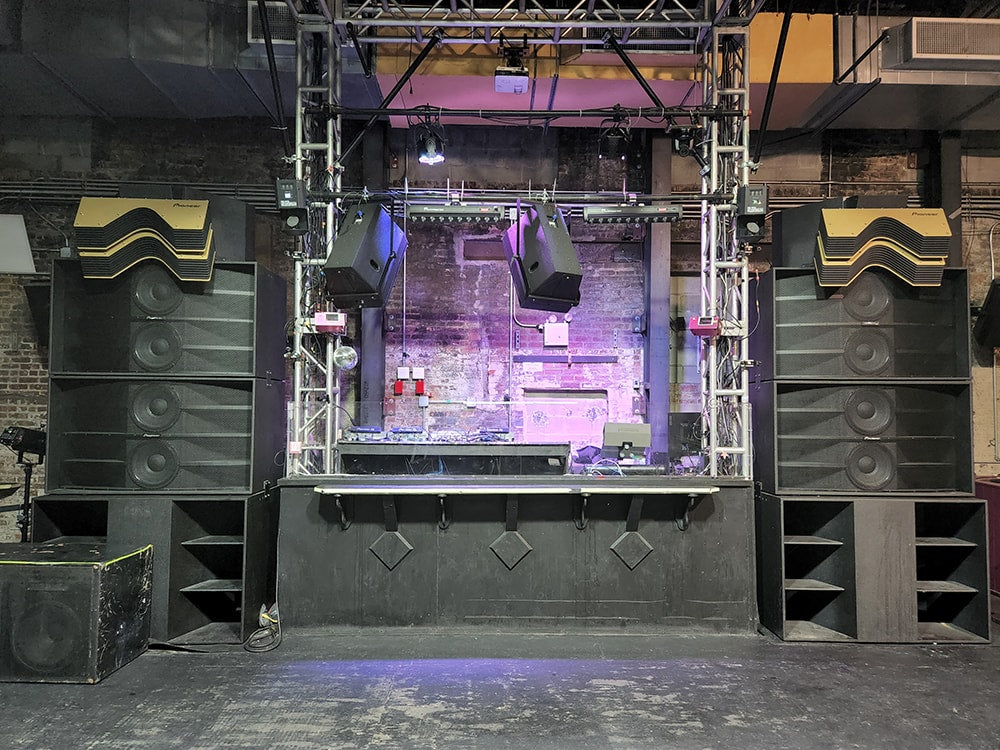
 

The kind of system that dreams are made of.
The kind of system that dreams are made of.


The control center for the club's audio system.

The control center for the club’s audio system.
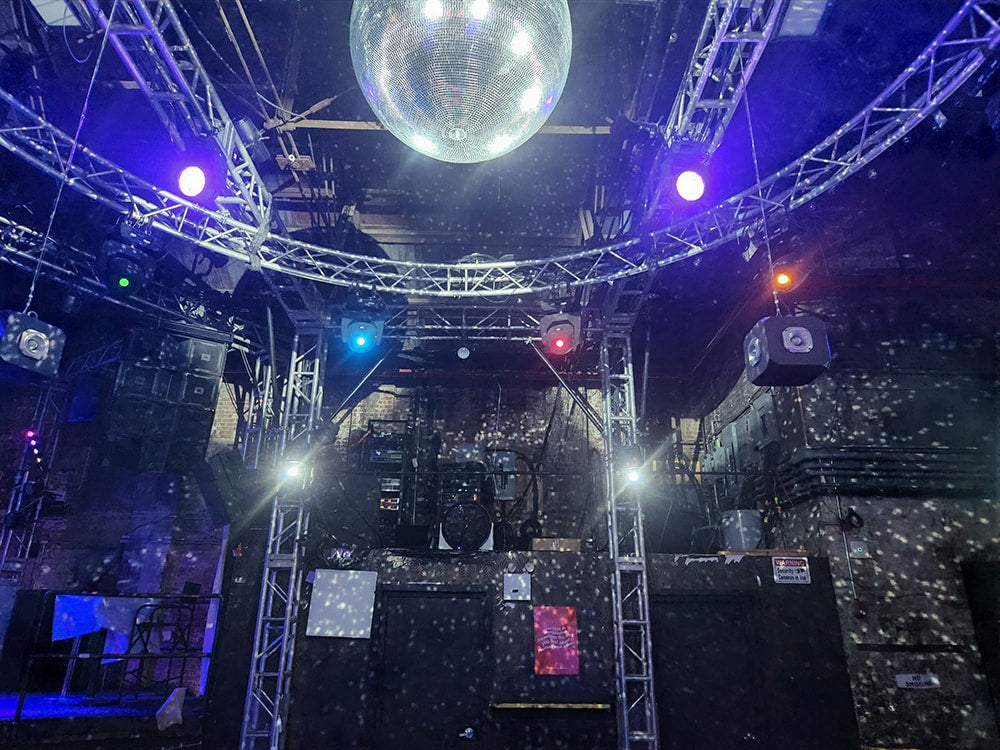
 

The main system is augmented by fill speakers throughout the space.

The main system is augmented by fill speakers throughout the space.


Is a well-designed club system that dissimilar from an audiophile rig at home? Not really. The machinery is different but the objectives are the same. It’s worth noting the Alex Rosner was a hi-fi man back in the 1950s when stereo systems were just beginning to take off. Here is a bit of his philosophy in a nutshell: the purpose of a sound reproduction system is to tell the truth; a loudspeaker can never be too big; and $60-per-foot speaker wire is no better than lamp cord (I apologize to audiophiles about the last part). The sheer artistry of great club sound is making it seamless and unobtrusive while remaining visceral and immersive. Now that I have a new perspective on club systems, I think the greatest downside to even the best home systems is that we don’t have Kris Anton to do all the expert tweaking, tuning, and setup.

No matter your age or musical taste, go see one of Gary Stewart’s last GS-WAVE systems and hear Kris and his guest DJs play CDs, vinyl, and files. You will not be bored. There’s always something entertaining and exciting happening there. Some events even take place early in the day. Come to think of it, Oktoberfest oompah bands and beer tents fit perfectly into my schedule.

3 Dollar Bill is located at 260 Meserole Street, Brooklyn, NY, convenient to the L subway line and just a few blocks from the Montrose Avenue Station.
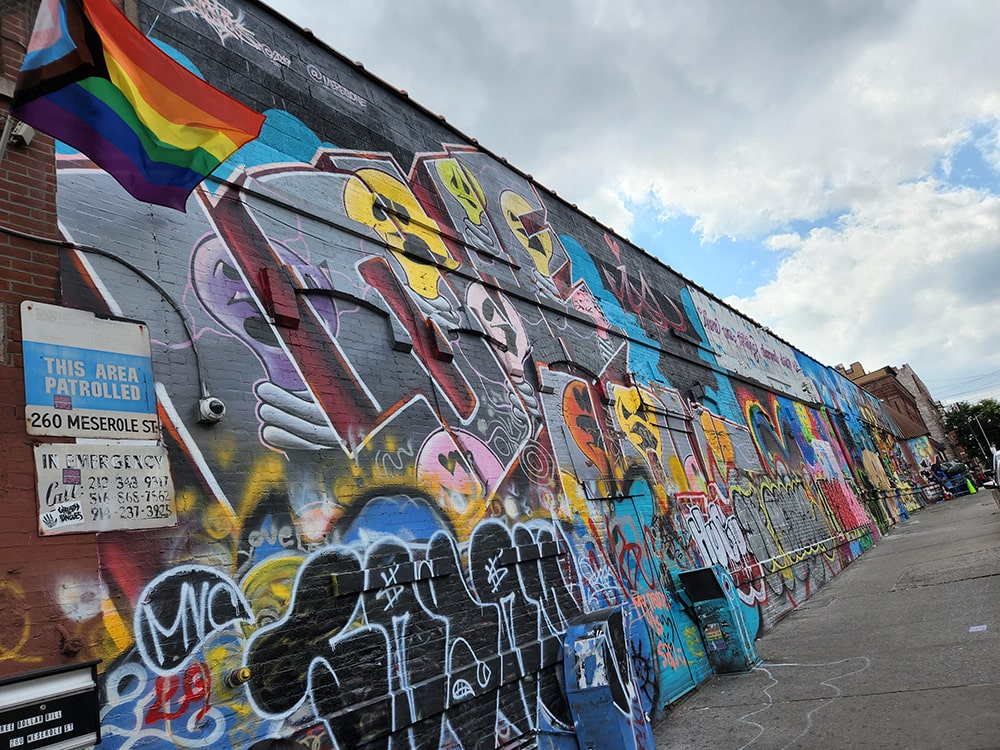
 

A view from 260 Meserole Street.

A view from 260 Meserole Street.


All images courtesy of the author except where noted.

More from Issue 170

View All Articles in Issue 170

Search Copper Magazine

#227 Seth Lewis Gets in the Groove With Take a Look Around: a Tribute to the Meters by Frank Doris Feb 02, 2026 #227 Passport to Sound: May Anwar’s Audio Learning Experience for Young People by Frank Doris Feb 02, 2026 #227 Conjectures on Cosmic Consciousness by B. Jan Montana Feb 02, 2026 #227 The Big Takeover Turns 45 by Wayne Robins Feb 02, 2026 #227 Music and Chocolate: On the Sensory Connection by Joe Caplan Feb 02, 2026 #227 Singer/Songwriter Chris Berardo: Getting Wilder All the Time by Ray Chelstowski Feb 02, 2026 #227 The Earliest Stars of Country Music, Part One by Jeff Weiner Feb 02, 2026 #227 The Vinyl Beat Goes Down to Tijuana (By Way of Los Angeles), Part Two by Rudy Radelic Feb 02, 2026 #227 How to Play in a Rock Band, 20: On the Road With Blood, Sweat & Tears’ Guitarist Gabe Cummins by Frank Doris Feb 02, 2026 #227 From The Audiophile’s Guide: Audio Specs and Measuring by Paul McGowan Feb 02, 2026 #227 Our Brain is Always Listening by Peter Trübner Feb 02, 2026 #227 PS Audio in the News by PS Audio Staff Feb 02, 2026 #227 The Listening Chair: Sleek Style and Sound From the Luxman L3 by Howard Kneller Feb 02, 2026 #227 The Los Angeles and Orange County Audio Society Celebrates Its 32nd Anniversary, Honoring David and Sheryl Lee Wilson and Bernie Grundman by Harris Fogel Feb 02, 2026 #227 Back to My Reel-to-Reel Roots, Part 26: Half Full – Not Half Empty, Redux by Ken Kessler Feb 02, 2026 #227 That's What Puzzles Us... by Frank Doris Feb 02, 2026 #227 Record-Breaking by Peter Xeni Feb 02, 2026 #227 The Long and Winding Road by B. Jan Montana Feb 02, 2026 #226 JJ Murphy’s Sleep Paralysis is a Genre-Bending Musical Journey Through Jazz, Fusion and More by Frank Doris Jan 05, 2026 #226 Stewardship by Consent by B. Jan Montana Jan 05, 2026 #226 Food, Music, and Sensory Experience: An Interview With Professor Jonathan Zearfoss of the Culinary Institute of America by Joe Caplan Jan 05, 2026 #226 Studio Confidential: A Who’s Who of Recording Engineers Tell Their Stories by Frank Doris Jan 05, 2026 #226 Pilot Radio is Reborn, 50 Years Later: Talking With CEO Barak Epstein by Frank Doris Jan 05, 2026 #226 The Vinyl Beat Goes Down to Tijuana (By Way of Los Angeles), Part One by Rudy Radelic Jan 05, 2026 #226 Capital Audiofest 2025: Must-See Stereo, Part Two by Frank Doris Jan 05, 2026 #226 My Morning Jacket’s Carl Broemel and Tyler Ramsey Collaborate on Their Acoustic Guitar Album, Celestun by Ray Chelstowski Jan 05, 2026 #226 The People Who Make Audio Happen: CanJam SoCal 2025, Part Two by Harris Fogel Jan 05, 2026 #226 How to Play in a Rock Band, 19: Touring Can Make You Crazy, Part One by Frank Doris Jan 05, 2026 #226 Linda Ronstadt Goes Bigger by Wayne Robins Jan 05, 2026 #226 From The Audiophile’s Guide: Active Room Correction and Digital Signal Processing by Paul McGowan Jan 05, 2026 #226 PS Audio in the News by Frank Doris Jan 05, 2026 #226 Back to My Reel-to-Reel Roots, Part 25: Half-Full, Not Empty by Ken Kessler Jan 05, 2026 #226 Happy New Year! by Frank Doris Jan 05, 2026 #226 Turn It Down! by Peter Xeni Jan 05, 2026 #226 Ghost Riders by James Schrimpf Jan 05, 2026 #226 A Factory Tour of Audio Manufacturer German Physiks by Markus "Marsu" Manthey Jan 04, 2026 #225 Capital Audiofest 2025: Must-See Stereo, Part One by Frank Doris Dec 01, 2025 #225 Otis Taylor and the Electrics Delivers a Powerful Set of Hypnotic Modern Blues by Frank Doris Dec 01, 2025 #225 A Christmas Miracle by B. Jan Montana Dec 01, 2025 #225 T.H.E. Show New York 2025, Part Two: Plenty to See, Hear, and Enjoy by Frank Doris Dec 01, 2025 #225 Underappreciated Artists, Part One: Martin Briley by Rich Isaacs Dec 01, 2025 #225 Rock and Roll is Here to Stay by Wayne Robins Dec 01, 2025 #225 A Lifetime of Holiday Record (and CD) Listening by Rudy Radelic Dec 01, 2025 #225 Little Feat: Not Saying Goodbye, Not Yet by Ray Chelstowski Dec 01, 2025 #225 How to Play in a Rock Band, Part 18: Dealing With Burnout by Frank Doris Dec 01, 2025 #225 The People Who Make Audio Happen: CanJam SoCal 2025 by Harris Fogel Dec 01, 2025 #225 Chicago’s Sonic Sanctuaries: Four Hi‑Fi Listening Bars Channeling the Jazz‑Kissa Spirit by Olivier Meunier-Plante Dec 01, 2025

High-Quality Audio In Clubland

High-Quality Audio In Clubland

When was the last time you went to a really trendy dance club? How about one that caters to an in-the-know young crowd? What about one of New York City’s premier queer venues that features Alaska Thunderf*ck, winner of RuPaul’s Drag Race All Stars, singing Taylor Swift songs? I ask these loaded questions of myself as I quickly approach senior citizenship and prefer to stay home listening to my own records and gear. The last time I heard a pumping club system was, oh, about 40 years ago at Studio 54. I was interested in audio, even as a teen, and tried my best to peek into the DJ booth. It’s an odd thing to want to do instead participating in Studio 54’s other activities, but I wasn’t the only one who was enamored with the equipment. I could have never imagined that I would someday be auditioning a set of speakers designed by someone influenced by the same system at Studio 54.

Like the renowned designers of two-channel home audio components, clubland has its own luminaries. Some of the most legendary names are Alex Rosner and Richard Long. Rosner designed sound systems at New York’s Limelight, Max’s Kansas City, and 1970’s era Copacabana. Long, who once worked under Rosner, went on to create systems at Bond’s International Casino, Paradise Garage, and, the big daddy of them all, Studio 54. However, there’s another designer, a protégé of Long’s who also contributed to the beloved Paradise Garage, a 10,000-square-foot disco with an open-door policy in SoHo that was open from 1977 to 1987. He was the late Gary Stewart, famous for systems in the Hamptons, Ibiza, London, and Singapore.

Shortly before his death in 2012, Stewart achieved new heights through a collaboration with Pioneer Pro Audio. His pre-fab GS-WAVE speaker stack was a departure from most great-sounding club systems which are built from the ground up with custom cabinets and crossovers, but Stewart made it much easier for smaller venues to capture his signature sound without having to undertake a custom build.

Located in Brooklyn, on the border of Williamsburg and Bushwick, 3 Dollar Bill is housed in an old brewery built in 1858. It’s a cavernous brick structure with accents of original wood, metal, and masonry that are incorporated beautifully into a network of several bars, dance areas, and even an expansive yard big enough for the upcoming Oktoberfest. There are sound systems everywhere, but the main dance floor and performance space is where the GS-WAVE towers over the room. This is where I met with 3 Dollar Bill’s production manager, Kris Anton.


Timeless architecture: the entrance to 3 Dollar Bill.

Timeless architecture: the entrance to 3 Dollar Bill.


Kris has spent the last 25 years operating and building light and sound systems for theater, live shows and dance clubs, as well as for bars and restaurants. He’s worked with Big Audio Dynamite, Fishbone, Gibby Haynes of the Butthole Surfers, and numerous drag performers, many of them familiar from appearances on TV shows. Since COVID-19, Kris has been a jack of all trades at 3 Dollar Bill, creating a unique atmosphere and filling nearly every nook and cranny with lights and sound.

Although Kris sent me photos of his showpiece, the two 12-foot, 1,438 lb. speaker stacks, there’s nothing like seeing them in person. Set in a stereo configuration about 15 feet apart and firing onto the dance floor, each GS-WAVE stack is comprised of:

  • One 18-inch subwoofer in a folded-horn cabinet.
  • Two cabinets containing 2 15-inch drivers for the bass and low midrange.
  • Two compression drivers behind an adjustable lens to handle the high-mids and high frequencies.
  • Hanging over the dance floor is an associated super tweeter pod with four ultra-high-frequency drivers.
  • An optional 275-lb. horn extension is included with each speaker stack to increase bass delivery without the need for additional amplification. However, for Kris’s maximum capacity of 350 people, the horn extenders would overwhelm the room.

Power comes from two 8-channel and five 4-channel Linea Research amplifiers rated at 1,500 watts per channel at 8 ohms. To keep the system functioning efficiently, each amp has onboard DSPs (digital signal processors) to manage the crossover points, EQ, and power requirements for each driver. All the information is fed through a computer in the DJ booth where adjustments can be made. Kris also installed a complete main stage PA system of Pioneer Pro Audio XY-122 2-way speakers (also designed by Gary Stewart) and active JBL arrays. Additional XY-122 fill speakers and 18-inch subwoofers compensate for dead spots in the room and create a surround-sound effect. Using calibration software by System Engineer and his ears, Kris meticulously tunes 32 speakers to the space. With that many speakers, extreme volume is not required to achieve a gut-punching yet well-balanced musical presentation.


Clarity and balance: the GS-WAVE main speaker stacks.

Clarity and balance: the GS-WAVE main speaker stacks.


Behind the scenes: Linea Research amplifiers and associated equipment.

Behind the scenes: Linea Research amplifiers and associated equipment.


I make it seem like Kris did everything by himself, but designing and assembling a system this big requires collaboration. Kris would like to acknowledge Alex Graham and Peter Gotfredsen from audio brokers Purplesound NYC, and David Sullivan from Pioneer Pro Audio. Ron Lorman, a recording engineer with several Miles Davis albums under his belt, lent his expert ears for tuning. But enough tech-talk for now: let’s get back to GS-WAVE.


Sound system designer Kris Anton. Courtesy of Courtney Bradley.

Sound system designer Kris Anton. Courtesy of Courtney Bradley.


Kris played a number of selections, some rock and some dance music, but what would I play if I had the system to myself? So, Kris pulled up “Spirit of Radio” by Rush and sent it through the stacks. They suddenly transformed from “disco speakers” to the ultimate rock and roll speakers of my teenage dreams. For all their size and power, the GS-WAVEs delivered balanced, defined clear sound as good as any high-end home systems I’ve heard.

I had never given much thought to club audio before, dismissing it a necessary evil. Ironically, the bad-sounding systems are more memorable than the good ones. I recall dive bars of the Lower East Side which were so loud that no one could hear themselves talk over the noise. The culprits were usually speakers, too few and badly placed, playing beyond their specs, powered by inadequate amps, and operated by a person who has no experience outside of their basement.

Dance floors are certainly not audio shows and most people are not contemplating the timbre of the drum machine, the analog purity of a cowbell, or that the synthesizer was particularly revelatory on certain tracks. I just assumed the target sound was lots of pounding bass and high volume, but maybe there was something I didn’t know. So, I asked Kris what was the most important aspect of his sound. The one-word answer: transparency. Mega-decibels and bass are great – that’s why we go to clubs and shows, but it’s the nuances of the mid and high frequencies that keep us engaged.


The kind of system that dreams are made of.

The kind of system that dreams are made of.


The control center for the club's audio system.

The control center for the club’s audio system.


The main system is augmented by fill speakers throughout the space.

The main system is augmented by fill speakers throughout the space.


Is a well-designed club system that dissimilar from an audiophile rig at home? Not really. The machinery is different but the objectives are the same. It’s worth noting the Alex Rosner was a hi-fi man back in the 1950s when stereo systems were just beginning to take off. Here is a bit of his philosophy in a nutshell: the purpose of a sound reproduction system is to tell the truth; a loudspeaker can never be too big; and $60-per-foot speaker wire is no better than lamp cord (I apologize to audiophiles about the last part). The sheer artistry of great club sound is making it seamless and unobtrusive while remaining visceral and immersive. Now that I have a new perspective on club systems, I think the greatest downside to even the best home systems is that we don’t have Kris Anton to do all the expert tweaking, tuning, and setup.

No matter your age or musical taste, go see one of Gary Stewart’s last GS-WAVE systems and hear Kris and his guest DJs play CDs, vinyl, and files. You will not be bored. There’s always something entertaining and exciting happening there. Some events even take place early in the day. Come to think of it, Oktoberfest oompah bands and beer tents fit perfectly into my schedule.

3 Dollar Bill is located at 260 Meserole Street, Brooklyn, NY, convenient to the L subway line and just a few blocks from the Montrose Avenue Station.


A view from 260 Meserole Street.

A view from 260 Meserole Street.


All images courtesy of the author except where noted.

0 comments

Leave a comment

0 Comments

Your avatar

Loading comments...

🗑️ Delete Comment

Enter moderator password to delete this comment:

✏️ Edit Comment

Enter your email to verify ownership: