COPPER

A PS Audio Publication

Issue 167 • Free Online Magazine

Issue 167 Idle Chatter

Experimental Musician Billy Yfantis Explores Intergalactic Sounds

Experimental Musician Billy Yfantis Explores Intergalactic Sounds

Recently, I caught up with virtual space traveler, traverser of the celestial world, musician, and author Billy Yfantis. He’s an experimental musician who has released five albums, the latest being The Nebula Voyager, featuring 19 instrumental tracks. Among other things, we touch on Billy’s latest music, the early origins of his career, his ongoing interest in space and science, his other career as an author, and a whole lot more.

Andrew Daly: Billy, with five albums out in the last three years, it seems you’ve been busy.

Billy Yfantis: Thanks for having me; it is such a great pleasure to discuss my music with you. It has been a very productive period for me, especially during the quarantine where I had time to mix older material and record a new one too. Of the five albums that [have been] released, they all have two elements in common: experimentation with hardware and software synthesizers, and a cinematic approach to composing by thinking in terms of moods and sound design.

I suppose that the digital technology and the streaming era [have] led us to a point of thinking about music-generated moods, and not about the associations [that come with the styles [of the] music. If, back in the 1980s and 1990s era, the association of the [musical genres] was with the cultural identity of an artist, then I believe that now, the cultural identity of the artist is summarized by the moods they generate through the music and the [overall] concept (the lyrics, artwork, song titles) of the album.

AD: What can you tell us about the cosmic journey theme of The Nebula Voyager?
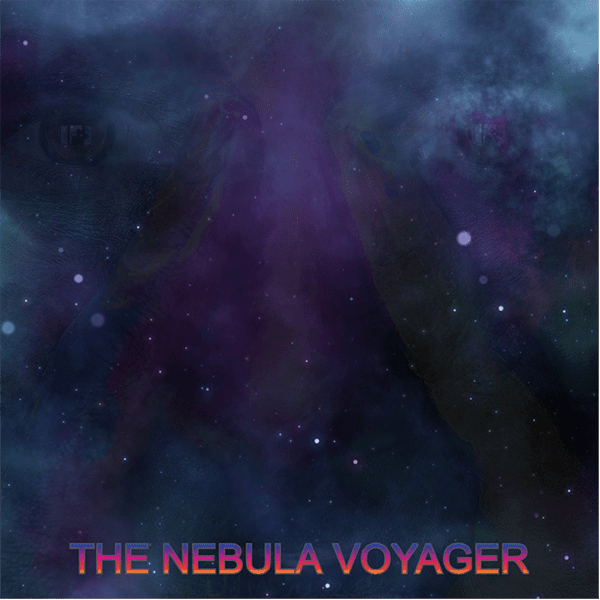
 

Billy Yfantis, The Nebula Voyager, album cover.

Billy Yfantis, The Nebula Voyager, album cover.


BY: The Nebula Voyager is an album where its scope is to explore the science of astronomy beyond the popular science fiction perspective that we watch at the movies. The album explores the concept of interstellar clouds called nebulas, and offers awareness about the most important nebulas located in the universe. Each song title refers to a real nebula that has been recorded in official astronomical catalogs. Your cosmic journey could start by listening to the album while you look on the internet for information about the nebulas mentioned in the song titles.

AD: Your music is experimental. What did you use to get the haunting tones and sounds you created for this album?

BY: The sounds that were generated by a mix of software synthesizers (VSTs) and the hardware [synth] was a Behringer Neutron. While due to my scientific background, I am most familiar with the virtualization of the orchestrations [Yfantis has two masters degrees in information technology and is currently a Ph.D. candidate], by using a hardware synth I realized how warm the sound of a physical instrument is compared with a virtual one. I also did the mixing of the music on my own using an old version of the Adobe Audition DAW (digital audio workstation) which still sounds great even after all these years.


AD: I’ve heard music made from actual cosmic, planetary and celestial noise. Is this something that you have done or will do in the future?

BY: The track “Landing,” from my album Entering the Solar System, [features] the re-editing of sounds recorded by NASA and created by [the] InSight [lander’s] robotic arm as its camera scanned the surface of Mars. I was not sure if I would release it due to the lo-fi sound of the robotic arms, since I did not want to “touch” too much the original space sounds. Fortunately, I worked on it by maintaining the lo-fi elements and by adding atmospheric sounds to improve the musicality of the final output. My decision to release it was a correct one because today it’s my most popular track on Spotify!

Regarding the future, there are more plans to use actual space sounds. The lack of adequate audio material from space and the matter of the complicated licensing system for its usage currently leads me in the direction of looking for companies that build mechanical parts for rockets and spaceships. Unless I find original sounds from space, I intend to use sounds produced by mechanical parts used in space missions. A few years ago, I managed to record the engine sound of an airplane in Greece, so my next goal is to record the engine of a spacecraft somewhere in the US, where I have some contacts.

AD: Speaking of experimental music, you’ve experimented with some unconventional “instruments” like blenders and vacuum cleaners. How do you record and use those sounds in your music?

BY: I really enjoy recording the sounds made [from] objects that are located in houses, [and have] a personal excitement to re-use them as a medium to create music. Music creation as perceived by most creators is actually a “matrix” created by the old school mode of thought. Besides the music-making by using conventional musical instruments like guitars and drums, there is a parallel universe of environmental [sounds]. Regardless [of whether] you use an electric guitar or a chainsaw to produce music, both entities produce specific sounds with features such as pitch, rhythm, and dynamics.

Why should you record music by using an electric guitar when you could retrieve almost the same audio frequencies by using the recording of an electric blender? It might sound crazy but if you go deeper into electronics, there are mechanical and electronic parts that you can use to play music with a strange machine. Remember that synthesizers were designed out of experimentation with electricity, about controlling pitch through voltage. From a music genre point of view, progressive rock was also created by experimentation.

AD: As someone who has been interested in space and astronomy from a young age, what does space mean to you both from a musical standpoint and in general?

BY: In general, I consider space a source of information to trace back the roots of humanity, and [to] look into the future. The actual objects that we watch through the telescopes and the samples we retrieve from space’s “atmosphere” help us summarize information about the past and future role of planet Earth [and] the solar system. From a musical standpoint, I consider space a source of inspiration to create dreamy music, and maybe experiment with specific audio frequencies that I would not choose to experiment with if my inspiration was a down-to-earth subject like a gossip TV stories.

AD: What was life like growing up in Greece, and what initially got you hooked on experimental music?

BY: Growing up in Greece during the 1980s and 1990s era was not so different compared with the situation in other European countries. The only disadvantage was the fact that Greece is located in Southern Europe, which prevented many bands from visiting us for concerts during that period due to the distance from other big cities in Central Europe (like London, Paris, Berlin, and so on) and the associated cost of flights. Under this condition, during the pre-internet days, Greece had less access to important cultural events like big festivals, music conferences, US bands touring Europe, and so on. However, this fact led us to develop a DIY music scene and work harder than other countries to reach a specific point of professionalism in music.

My personal trip into experimental music was initialized after a funny incident during the early 1990s. I remember going for a walk with a friend when suddenly I heard a sound coming from far away. As I was approaching the source of the sound to find out what was all about, I realized that the “sound” was familiar to me. I stopped walking and said to my friend: “Dude, this is thrash metal!” However, when I finally reached the source of the sound, I saw that it was just a man working in a laboratory and using a cutting wheel tool on a metallic object! Then a brilliant idea came to me – if I mistook a cutting wheel tool’s sound for a thrash metal band, then why shouldn’t I create metal music with the use of mechanical tools? Wouldn’t mechanical audio frequencies sound as cool as a track by Slayer or early Metallica?


AD: What was your musical career like at the beginning of the ’90s, when the synthwave, prog, and experimental scenes were booming in Greece?

BY: During the early 1990s, I was experimenting with analog audio equipment and my “mixing tool” was a double cassette deck. I recorded a couple of demos, if I remember well, that included a mash-up recording of videogame effects (recorded directly from an Amiga 500 personal computer) and original Metallica music. I sent the demo to a Greek music magazine, but it was probably [considered] too experimental to “touch” the Metallica sound back then and it did not get very far. 30 years later in 2021, I felt confident about my decision to record that demo because Metallica themselves allowed even hip-hop artists to “touch” their material on the album The Metallica Blacklist.

My later effort to release material in the 1990s came around the late 1990s when I recorded some demos with original dance music, plus some mash-ups with samples from cult Greek movies. This time it was successful and the mash-up demo got a great review from the Greek Metal Hammer magazine and it was voted the best demo of the month! I continued recording material in the 2000s but I guess your question refers only to my activity during the 1990s period.
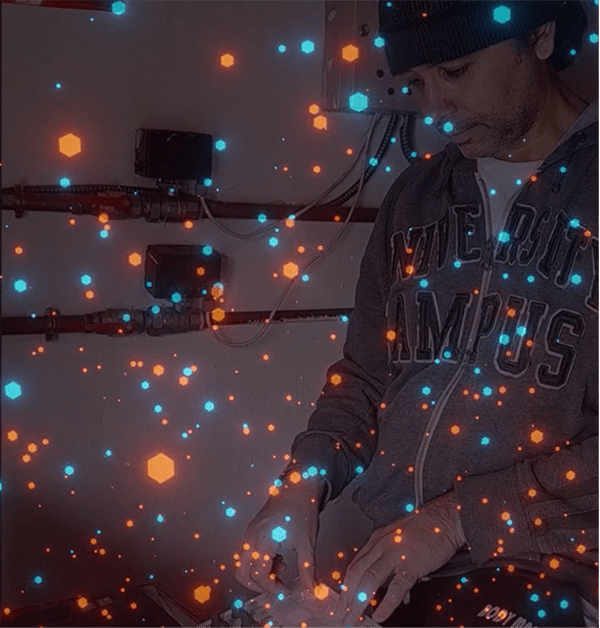
 

Billy Yfantis.

Billy Yfantis.


Prog music has always been very popular in Greece; however, most Greek bands became popular after deciding to leave the country and start a career abroad. Aphrodite’s Child is the most popular progressive rock band from Greece. The band was formed in 1967 by Vangelis Papathanassiou, Demis Roussos, Loukas Sideras, and Silver Koulouris guitar. As Wikipedia notes, 666 (released in 1972), their most influential album, has been included on numerous lists of the best progressive or psychedelic albums of all time. Other important Greek Prog bands that you could check out include Kostas Tournas (the Aperanta Chorafia album), Socrates, Akritas, Apocalypsis, and The 4 Levels Of Existence.

Experimental music in Greece has been active since the 1960s and probably the most popular composer is Iannis Xenakis, through his electroacoustic compositions, and installations in France. Some of his important works include Bohor (1962), La légende d’Eer (1977), and Mycenae-Alpha (1978). The scene reached its peak during the 1990s and early 2000s when the internet became widely available and affordable, and experimental musicians started downloading important software tools for the creation of experimental music.

Synthwave is also a popular music format here, although I am not familiar with the current Greek scene. However, French artists like Perturbator are very successful here and concert promoters are looking for other acts to bring here for live performances as well. A great new Synthwave release is the single “Night Driver” from the Greek guitarist Gus G; check it out.

AD: What were and are your main influences for your music?

BY: During the 1990s, I started composing music by having both music and cinematic influences. I consider my main influences [to be] albums from bands and artists such as Ozric Tentacles, Tangerine Dream, Hawkwind (the Love In Space album), Steve Hillage, and others. Regarding movies, I mostly liked the first The Matrix movie in 1999 and other older science fiction movies like They Live (1988) directed by John Carpenter, and Videodrome (1983) directed by David Cronenberg. Nowadays, my music influences are coming from the cinema and especially the sound design techniques that are being used in movies such as The Arrival (2016).

AD: You’re also an author. Tell us about the books you have written.

BY: I have authored 10 books, mainly discussing musicology and music technology matters, a photo book with photos from all over Europe, and a book of poetry. Punk Goes Science, Metal Goes Science, and Hip-Hop Goes Science (Volume I, and an extended version) are four bibliographic book guides that contain analytical bibliographies about the usage of the music genres of metal, punk, and hip-hop in scientific publications. For instance, Metal Goes Science includes a huge list of real books and papers that were published and discuss bizarre subjects on metal such as the association between black metal and ecology.

So, if you are curious enough, then in these four books you will find a ton of information about such strange subjects. Disadvantaged Populations And Technology In Music is a book discussing the digital divide by interviewing famous rock artists about their relationship with technology. My latest book, Power Ballads And The Stories Behind is a compilation of popular and obscure hard rock artists that discuss the meaning behind power ballads they have composed. You can find all the books at the most popular electronic book stores, including Amazon.

AD: What’s next on your to-do list?

BY: The next plans include the release of my sixth music album, in six months, and a lot of experimentation with new music hardware and software.

It was my pleasure to discuss with you and your cool readers my activities as a musician and author. Thanks a lot for your support. I really appreciate it!


If you would like to learn more about Billy Yfantis, visit his social media links:

Facebook: https://www.facebook.com/billy.yfantis

Twitter: https://twitter.com/billyyfantis

Instagram: https://www.instagram.com/billyyfantis


All images courtesy of Glass Onyon PR.

More from Issue 167

View All Articles in Issue 167

Search Copper Magazine

#227 Seth Lewis Gets in the Groove With Take a Look Around: a Tribute to the Meters by Frank Doris Feb 02, 2026 #227 Passport to Sound: May Anwar’s Audio Learning Experience for Young People by Frank Doris Feb 02, 2026 #227 Conjectures on Cosmic Consciousness by B. Jan Montana Feb 02, 2026 #227 The Big Takeover Turns 45 by Wayne Robins Feb 02, 2026 #227 Music and Chocolate: On the Sensory Connection by Joe Caplan Feb 02, 2026 #227 Singer/Songwriter Chris Berardo: Getting Wilder All the Time by Ray Chelstowski Feb 02, 2026 #227 The Earliest Stars of Country Music, Part One by Jeff Weiner Feb 02, 2026 #227 The Vinyl Beat Goes Down to Tijuana (By Way of Los Angeles), Part Two by Rudy Radelic Feb 02, 2026 #227 How to Play in a Rock Band, 20: On the Road With Blood, Sweat & Tears’ Guitarist Gabe Cummins by Frank Doris Feb 02, 2026 #227 From The Audiophile’s Guide: Audio Specs and Measuring by Paul McGowan Feb 02, 2026 #227 Our Brain is Always Listening by Peter Trübner Feb 02, 2026 #227 PS Audio in the News by PS Audio Staff Feb 02, 2026 #227 The Listening Chair: Sleek Style and Sound From the Luxman L3 by Howard Kneller Feb 02, 2026 #227 The Los Angeles and Orange County Audio Society Celebrates Its 32nd Anniversary, Honoring David and Sheryl Lee Wilson and Bernie Grundman by Harris Fogel Feb 02, 2026 #227 Back to My Reel-to-Reel Roots, Part 26: Half Full – Not Half Empty, Redux by Ken Kessler Feb 02, 2026 #227 That's What Puzzles Us... by Frank Doris Feb 02, 2026 #227 Record-Breaking by Peter Xeni Feb 02, 2026 #227 The Long and Winding Road by B. Jan Montana Feb 02, 2026 #226 JJ Murphy’s Sleep Paralysis is a Genre-Bending Musical Journey Through Jazz, Fusion and More by Frank Doris Jan 05, 2026 #226 Stewardship by Consent by B. Jan Montana Jan 05, 2026 #226 Food, Music, and Sensory Experience: An Interview With Professor Jonathan Zearfoss of the Culinary Institute of America by Joe Caplan Jan 05, 2026 #226 Studio Confidential: A Who’s Who of Recording Engineers Tell Their Stories by Frank Doris Jan 05, 2026 #226 Pilot Radio is Reborn, 50 Years Later: Talking With CEO Barak Epstein by Frank Doris Jan 05, 2026 #226 The Vinyl Beat Goes Down to Tijuana (By Way of Los Angeles), Part One by Rudy Radelic Jan 05, 2026 #226 Capital Audiofest 2025: Must-See Stereo, Part Two by Frank Doris Jan 05, 2026 #226 My Morning Jacket’s Carl Broemel and Tyler Ramsey Collaborate on Their Acoustic Guitar Album, Celestun by Ray Chelstowski Jan 05, 2026 #226 The People Who Make Audio Happen: CanJam SoCal 2025, Part Two by Harris Fogel Jan 05, 2026 #226 How to Play in a Rock Band, 19: Touring Can Make You Crazy, Part One by Frank Doris Jan 05, 2026 #226 Linda Ronstadt Goes Bigger by Wayne Robins Jan 05, 2026 #226 From The Audiophile’s Guide: Active Room Correction and Digital Signal Processing by Paul McGowan Jan 05, 2026 #226 PS Audio in the News by Frank Doris Jan 05, 2026 #226 Back to My Reel-to-Reel Roots, Part 25: Half-Full, Not Empty by Ken Kessler Jan 05, 2026 #226 Happy New Year! by Frank Doris Jan 05, 2026 #226 Turn It Down! by Peter Xeni Jan 05, 2026 #226 Ghost Riders by James Schrimpf Jan 05, 2026 #226 A Factory Tour of Audio Manufacturer German Physiks by Markus "Marsu" Manthey Jan 04, 2026 #225 Capital Audiofest 2025: Must-See Stereo, Part One by Frank Doris Dec 01, 2025 #225 Otis Taylor and the Electrics Delivers a Powerful Set of Hypnotic Modern Blues by Frank Doris Dec 01, 2025 #225 A Christmas Miracle by B. Jan Montana Dec 01, 2025 #225 T.H.E. Show New York 2025, Part Two: Plenty to See, Hear, and Enjoy by Frank Doris Dec 01, 2025 #225 Underappreciated Artists, Part One: Martin Briley by Rich Isaacs Dec 01, 2025 #225 Rock and Roll is Here to Stay by Wayne Robins Dec 01, 2025 #225 A Lifetime of Holiday Record (and CD) Listening by Rudy Radelic Dec 01, 2025 #225 Little Feat: Not Saying Goodbye, Not Yet by Ray Chelstowski Dec 01, 2025 #225 How to Play in a Rock Band, Part 18: Dealing With Burnout by Frank Doris Dec 01, 2025 #225 The People Who Make Audio Happen: CanJam SoCal 2025 by Harris Fogel Dec 01, 2025 #225 Chicago’s Sonic Sanctuaries: Four Hi‑Fi Listening Bars Channeling the Jazz‑Kissa Spirit by Olivier Meunier-Plante Dec 01, 2025

Experimental Musician Billy Yfantis Explores Intergalactic Sounds

Experimental Musician Billy Yfantis Explores Intergalactic Sounds

Recently, I caught up with virtual space traveler, traverser of the celestial world, musician, and author Billy Yfantis. He’s an experimental musician who has released five albums, the latest being The Nebula Voyager, featuring 19 instrumental tracks. Among other things, we touch on Billy’s latest music, the early origins of his career, his ongoing interest in space and science, his other career as an author, and a whole lot more.

Andrew Daly: Billy, with five albums out in the last three years, it seems you’ve been busy.

Billy Yfantis: Thanks for having me; it is such a great pleasure to discuss my music with you. It has been a very productive period for me, especially during the quarantine where I had time to mix older material and record a new one too. Of the five albums that [have been] released, they all have two elements in common: experimentation with hardware and software synthesizers, and a cinematic approach to composing by thinking in terms of moods and sound design.

I suppose that the digital technology and the streaming era [have] led us to a point of thinking about music-generated moods, and not about the associations [that come with the styles [of the] music. If, back in the 1980s and 1990s era, the association of the [musical genres] was with the cultural identity of an artist, then I believe that now, the cultural identity of the artist is summarized by the moods they generate through the music and the [overall] concept (the lyrics, artwork, song titles) of the album.

AD: What can you tell us about the cosmic journey theme of The Nebula Voyager?


Billy Yfantis, The Nebula Voyager, album cover.

Billy Yfantis, The Nebula Voyager, album cover.


BY: The Nebula Voyager is an album where its scope is to explore the science of astronomy beyond the popular science fiction perspective that we watch at the movies. The album explores the concept of interstellar clouds called nebulas, and offers awareness about the most important nebulas located in the universe. Each song title refers to a real nebula that has been recorded in official astronomical catalogs. Your cosmic journey could start by listening to the album while you look on the internet for information about the nebulas mentioned in the song titles.

AD: Your music is experimental. What did you use to get the haunting tones and sounds you created for this album?

BY: The sounds that were generated by a mix of software synthesizers (VSTs) and the hardware [synth] was a Behringer Neutron. While due to my scientific background, I am most familiar with the virtualization of the orchestrations [Yfantis has two masters degrees in information technology and is currently a Ph.D. candidate], by using a hardware synth I realized how warm the sound of a physical instrument is compared with a virtual one. I also did the mixing of the music on my own using an old version of the Adobe Audition DAW (digital audio workstation) which still sounds great even after all these years.


AD: I’ve heard music made from actual cosmic, planetary and celestial noise. Is this something that you have done or will do in the future?

BY: The track “Landing,” from my album Entering the Solar System, [features] the re-editing of sounds recorded by NASA and created by [the] InSight [lander’s] robotic arm as its camera scanned the surface of Mars. I was not sure if I would release it due to the lo-fi sound of the robotic arms, since I did not want to “touch” too much the original space sounds. Fortunately, I worked on it by maintaining the lo-fi elements and by adding atmospheric sounds to improve the musicality of the final output. My decision to release it was a correct one because today it’s my most popular track on Spotify!

Regarding the future, there are more plans to use actual space sounds. The lack of adequate audio material from space and the matter of the complicated licensing system for its usage currently leads me in the direction of looking for companies that build mechanical parts for rockets and spaceships. Unless I find original sounds from space, I intend to use sounds produced by mechanical parts used in space missions. A few years ago, I managed to record the engine sound of an airplane in Greece, so my next goal is to record the engine of a spacecraft somewhere in the US, where I have some contacts.

AD: Speaking of experimental music, you’ve experimented with some unconventional “instruments” like blenders and vacuum cleaners. How do you record and use those sounds in your music?

BY: I really enjoy recording the sounds made [from] objects that are located in houses, [and have] a personal excitement to re-use them as a medium to create music. Music creation as perceived by most creators is actually a “matrix” created by the old school mode of thought. Besides the music-making by using conventional musical instruments like guitars and drums, there is a parallel universe of environmental [sounds]. Regardless [of whether] you use an electric guitar or a chainsaw to produce music, both entities produce specific sounds with features such as pitch, rhythm, and dynamics.

Why should you record music by using an electric guitar when you could retrieve almost the same audio frequencies by using the recording of an electric blender? It might sound crazy but if you go deeper into electronics, there are mechanical and electronic parts that you can use to play music with a strange machine. Remember that synthesizers were designed out of experimentation with electricity, about controlling pitch through voltage. From a music genre point of view, progressive rock was also created by experimentation.

AD: As someone who has been interested in space and astronomy from a young age, what does space mean to you both from a musical standpoint and in general?

BY: In general, I consider space a source of information to trace back the roots of humanity, and [to] look into the future. The actual objects that we watch through the telescopes and the samples we retrieve from space’s “atmosphere” help us summarize information about the past and future role of planet Earth [and] the solar system. From a musical standpoint, I consider space a source of inspiration to create dreamy music, and maybe experiment with specific audio frequencies that I would not choose to experiment with if my inspiration was a down-to-earth subject like a gossip TV stories.

AD: What was life like growing up in Greece, and what initially got you hooked on experimental music?

BY: Growing up in Greece during the 1980s and 1990s era was not so different compared with the situation in other European countries. The only disadvantage was the fact that Greece is located in Southern Europe, which prevented many bands from visiting us for concerts during that period due to the distance from other big cities in Central Europe (like London, Paris, Berlin, and so on) and the associated cost of flights. Under this condition, during the pre-internet days, Greece had less access to important cultural events like big festivals, music conferences, US bands touring Europe, and so on. However, this fact led us to develop a DIY music scene and work harder than other countries to reach a specific point of professionalism in music.

My personal trip into experimental music was initialized after a funny incident during the early 1990s. I remember going for a walk with a friend when suddenly I heard a sound coming from far away. As I was approaching the source of the sound to find out what was all about, I realized that the “sound” was familiar to me. I stopped walking and said to my friend: “Dude, this is thrash metal!” However, when I finally reached the source of the sound, I saw that it was just a man working in a laboratory and using a cutting wheel tool on a metallic object! Then a brilliant idea came to me – if I mistook a cutting wheel tool’s sound for a thrash metal band, then why shouldn’t I create metal music with the use of mechanical tools? Wouldn’t mechanical audio frequencies sound as cool as a track by Slayer or early Metallica?


AD: What was your musical career like at the beginning of the ’90s, when the synthwave, prog, and experimental scenes were booming in Greece?

BY: During the early 1990s, I was experimenting with analog audio equipment and my “mixing tool” was a double cassette deck. I recorded a couple of demos, if I remember well, that included a mash-up recording of videogame effects (recorded directly from an Amiga 500 personal computer) and original Metallica music. I sent the demo to a Greek music magazine, but it was probably [considered] too experimental to “touch” the Metallica sound back then and it did not get very far. 30 years later in 2021, I felt confident about my decision to record that demo because Metallica themselves allowed even hip-hop artists to “touch” their material on the album The Metallica Blacklist.

My later effort to release material in the 1990s came around the late 1990s when I recorded some demos with original dance music, plus some mash-ups with samples from cult Greek movies. This time it was successful and the mash-up demo got a great review from the Greek Metal Hammer magazine and it was voted the best demo of the month! I continued recording material in the 2000s but I guess your question refers only to my activity during the 1990s period.


Billy Yfantis.

Billy Yfantis.


Prog music has always been very popular in Greece; however, most Greek bands became popular after deciding to leave the country and start a career abroad. Aphrodite’s Child is the most popular progressive rock band from Greece. The band was formed in 1967 by Vangelis Papathanassiou, Demis Roussos, Loukas Sideras, and Silver Koulouris guitar. As Wikipedia notes, 666 (released in 1972), their most influential album, has been included on numerous lists of the best progressive or psychedelic albums of all time. Other important Greek Prog bands that you could check out include Kostas Tournas (the Aperanta Chorafia album), Socrates, Akritas, Apocalypsis, and The 4 Levels Of Existence.

Experimental music in Greece has been active since the 1960s and probably the most popular composer is Iannis Xenakis, through his electroacoustic compositions, and installations in France. Some of his important works include Bohor (1962), La légende d’Eer (1977), and Mycenae-Alpha (1978). The scene reached its peak during the 1990s and early 2000s when the internet became widely available and affordable, and experimental musicians started downloading important software tools for the creation of experimental music.

Synthwave is also a popular music format here, although I am not familiar with the current Greek scene. However, French artists like Perturbator are very successful here and concert promoters are looking for other acts to bring here for live performances as well. A great new Synthwave release is the single “Night Driver” from the Greek guitarist Gus G; check it out.

AD: What were and are your main influences for your music?

BY: During the 1990s, I started composing music by having both music and cinematic influences. I consider my main influences [to be] albums from bands and artists such as Ozric Tentacles, Tangerine Dream, Hawkwind (the Love In Space album), Steve Hillage, and others. Regarding movies, I mostly liked the first The Matrix movie in 1999 and other older science fiction movies like They Live (1988) directed by John Carpenter, and Videodrome (1983) directed by David Cronenberg. Nowadays, my music influences are coming from the cinema and especially the sound design techniques that are being used in movies such as The Arrival (2016).

AD: You’re also an author. Tell us about the books you have written.

BY: I have authored 10 books, mainly discussing musicology and music technology matters, a photo book with photos from all over Europe, and a book of poetry. Punk Goes Science, Metal Goes Science, and Hip-Hop Goes Science (Volume I, and an extended version) are four bibliographic book guides that contain analytical bibliographies about the usage of the music genres of metal, punk, and hip-hop in scientific publications. For instance, Metal Goes Science includes a huge list of real books and papers that were published and discuss bizarre subjects on metal such as the association between black metal and ecology.

So, if you are curious enough, then in these four books you will find a ton of information about such strange subjects. Disadvantaged Populations And Technology In Music is a book discussing the digital divide by interviewing famous rock artists about their relationship with technology. My latest book, Power Ballads And The Stories Behind is a compilation of popular and obscure hard rock artists that discuss the meaning behind power ballads they have composed. You can find all the books at the most popular electronic book stores, including Amazon.

AD: What’s next on your to-do list?

BY: The next plans include the release of my sixth music album, in six months, and a lot of experimentation with new music hardware and software.

It was my pleasure to discuss with you and your cool readers my activities as a musician and author. Thanks a lot for your support. I really appreciate it!


If you would like to learn more about Billy Yfantis, visit his social media links:

Facebook: https://www.facebook.com/billy.yfantis

Twitter: https://twitter.com/billyyfantis

Instagram: https://www.instagram.com/billyyfantis


All images courtesy of Glass Onyon PR.

0 comments

Leave a comment

0 Comments

Your avatar

Loading comments...

🗑️ Delete Comment

Enter moderator password to delete this comment:

✏️ Edit Comment

Enter your email to verify ownership: