COPPER

A PS Audio Publication

Issue 172 • Free Online Magazine

Issue 172 Disciples of Sound

David Libert: A Rock and Roll Warrior Tells All In His New Book

David Libert: A Rock and Roll Warrior Tells All In His New Book

When it comes to rock and roll excess, tales from the rock tours of the 1970s rarely disappoint. It was an era defined as much by the music and live shows as it was by the after-parties and what went on in the hotels, planes, buses, and limos. While first-hand accounts by the musicians themselves have been entertaining (or worse), some of the most revealing stories from that period have been shared by those who weren’t the center of attention but whose hands still left marks on the moment. David Libert’s new autobiography gives an inside look.

Rock and Roll Warrior, subtitled, My Misadventures with Alice Cooper, Prince, George Clinton, Living Colour, the Runaways, and More… tells the tale of a 50-plus-year career in music spent as a booking agent and manager for some of modern music’s most notorious characters – and Libert was not immune to the highs and lows that can be encountered in the music business.

Libert began as a performer and founding member of vocal harmony group the Happenings. They scored several hits in the mid-’60s including the now-classic “See You in September,” along with “I Got Rhythm” and “Go Away Little Girl.” But it wasn’t meant to last.


The book devotes most of its pages to the shift Libert’s career took when he went to work tour-managing Alice Cooper. At that point Cooper and his band were already known as a theatrical group. With each tour that followed the production became more and more involved with props, costumes, dancers, special effects, pyro, fake blood, live animals, and the guillotine that beheaded the headliner each and every night. After each show, the onstage circus moved quickly to the hotel, where further acts of boundary-pushing shenanigans by “the Godfather of Shock Rock” would further Cooper’s reputation for excess and outlandishness.
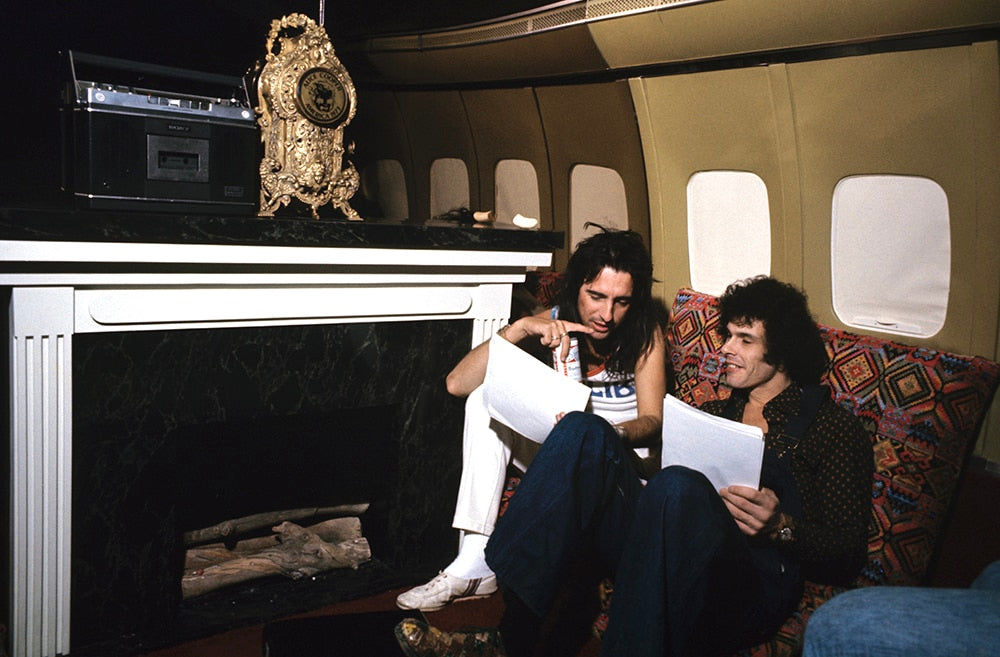
 

Alice Cooper and David Libert. Courtesy of Paul Slade/Getty Images, used by permission.
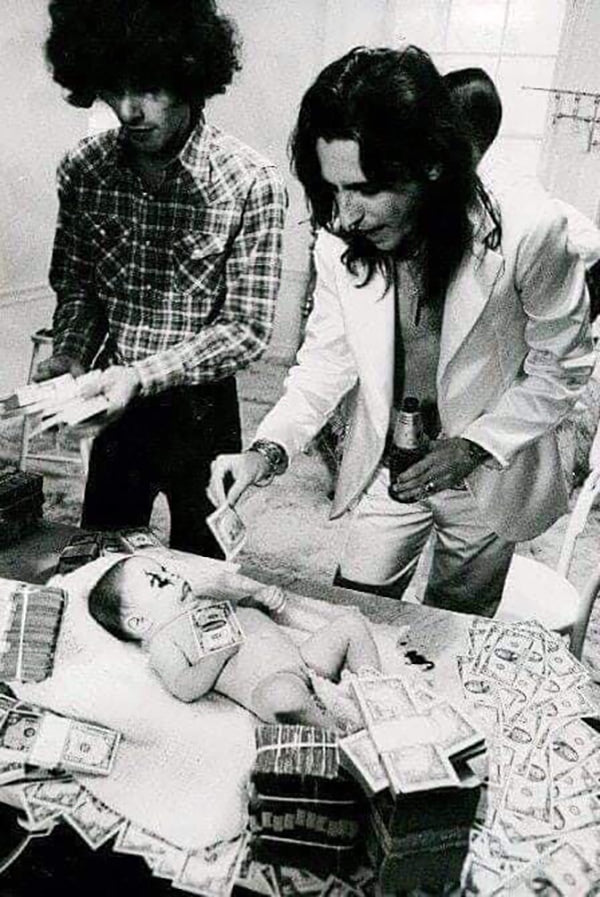
Alice Cooper and David Libert. Courtesy of Paul Slade/Getty Images, used by permission.


David Libert and Alice Cooper. Courtesy of Terry O'Neill.

David Libert and Alice Cooper. Courtesy of Terry O’Neill.


During his tenure with Cooper, Libert famously handled a “messy” onstage moment when DJ Wolfman Jack arrived on stage riding a camel to introduce the band. Libert also devised creative ways to transport band and crew contraband over the Canadian border, and accommodated the generosity of famed groupie Sweet Sweet Connie (namechecked in Grand Funk Railroad’s “We’re An American Band”) for all interested parties when the act rolled into Little Rock, Arkansas. In short, he did it all.

Libert would then move to booking and then managing one of the fathers of funk, George Clinton, his main band Parliament-Funkadelic, and its many offshoot units. He also managed R&B artist Sheila E. and in turn had a front row seat into the “rule with fear” approach that Prince, on whose tour Libert’s client was featured, would take with everyone on the team.
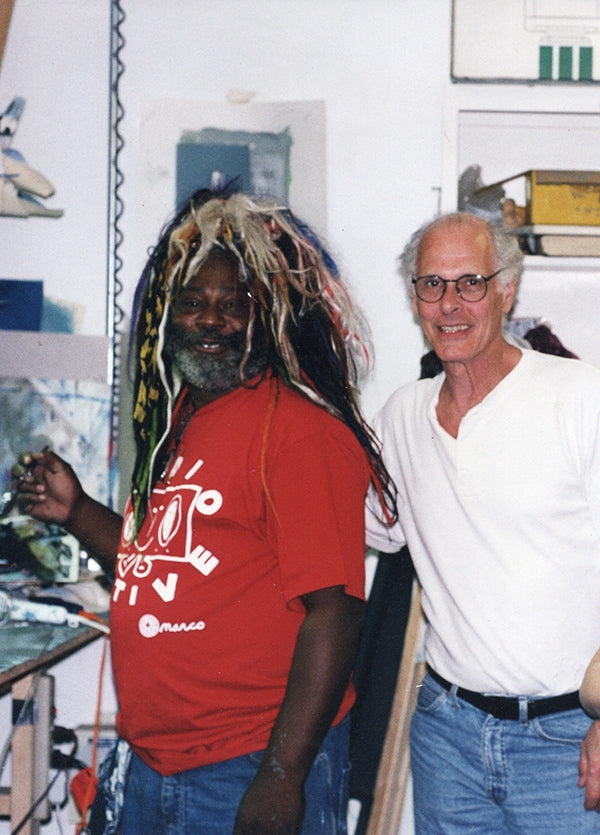
 

George Clinton and David Libert. Courtesy of axiomgrl.

George Clinton and David Libert. Courtesy of axiomgrl.


Libert never found himself on the receiving end of those kind of attacks, and, as he had with other mercurial artists, David found a way to work with Prince that they could both respect, even if he found Prince to be “unusual.”

Like some of his infamous clients, Libert dallied with cocaine, and his ties to drugs would lead him to dealing and ultimately to prison. But just prior to his stint in jail, Libert found himself at a crossroads that would have likely changed his life’s course forever. In the 1980s he was offered the chance to become the manager of an up-and-coming Los Angeles-based hard rock band, but needed $20,000 to prove himself and provide the group with some much-needed equipment. He turned to his brother for a loan. His brother turned Libert down, and with that went an opportunity of a lifetime. The decision also ended their friendship. They would never speak again. That band was Guns N’ Roses.

After serving his time, Libert returned to the world of music, managing acts like Living Colour, and demonstrated that the skills he had learned on the road with some of rock’s biggest acts hadn’t withered in his time away. Libert would once again find demand for his services from both established and emerging acts. It was simply another demonstration of his resiliency and pure talent.

Rock and Roll Warrior is a behind-the-scenes look into the rock and roll access and excess of a bygone era, a fun and fascinating read. Now at the age of 79, David Libert rescues dogs instead of rock stars. But his memory of this remarkable career and its most memorable moments is razor-sharp. Copper caught up with David Libert and learned that in rock and roll, there’s always room for a second act, or if nothing else, an extended encore.

Ray Chelstowski: You open the biography at the beginning of your life, as opposed to a specific moment on the road. That’s rare these days. How did you know that this was the right approach?

David Libert: Well, it actually starts with a prologue about the Woodstock 1999 festival. It was added to give the book a reference point for how I got here. That led to going all of the way back to the beginning where I first became interest in music. Making a deal with my parents about [getting] piano lessons might seem rather insignificant, but it wasn’t. I was taking lessons but I could also play by ear. It made me feel that I could do what I was hearing people do in recorded music. It was what made me start to think that perhaps this could be my future.

RC: There are so many salacious rock stories in your book. How do you know when a story is maybe too racy to be included?

DL: One thing that I learned about writing a book is that you have to make conscious decisions about stories that might be [entertaining] but could also throw someone under the bus. There were a good many stories that weren’t included for that reason. You sort of have to decide whether it meets the criteria of what you are trying to accomplish with the book. Listen, it’s rock and roll so there’s a little bit of that to be found here. But I wanted whatever I included to be part of the general flow of how the book read. There were some personal moments with people that I ultimately decided were too private to include.

RC: The Happenings’ pop-lite sound is so different from the music made by bands you managed. In the end, which do you prefer?

DL: My musical interests were pretty diverse. I did like rock and bands like Led Zeppelin, and I was always crazy about the Rolling Stones. But I was also into the genre that the Happenings fell into that included acts like the Association, the Turtles, and that kind of music. Somehow I never associated that other [heavier] style of music I loved with what we were creating in the Happenings. What I learned is that I really love blues-based music that’s also danceable, and if I had learned that about myself much earlier, the Happenings would have sounded much different than they did and may have lasted [on the charts] a lot longer. But that’s water under the bridge.

RC: The Happenings continue to tour (with original member Bob Miranda). Over the years, have you ever considered joining them on the road?

DL: Never. I wanted to apply what the Happenings did best (which was our [vocal] harmonies) to more contemporary music and themes like Crosby Stills Nash & Young had done. The Happenings wouldn’t have any of it. That’s when I decided that I didn’t want to be in that band any longer. Since I had been managing them for a few years at that point, I realized that my future in music was to be on the business side of things. I always knew that I couldn’t be a Happening forever.
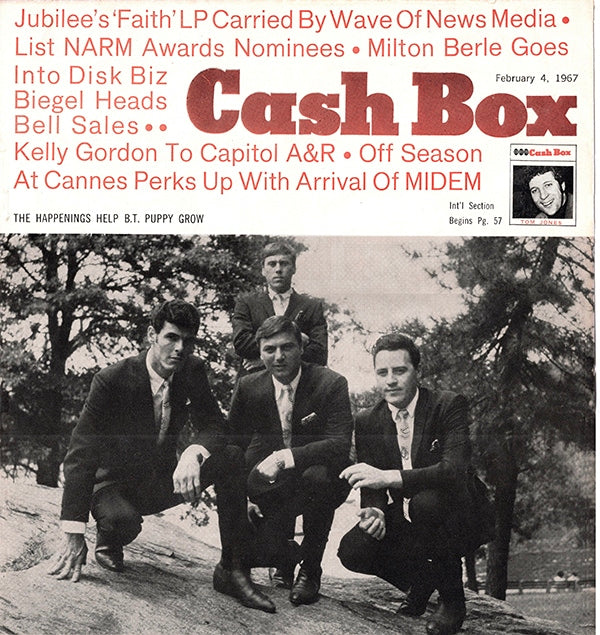
 

The Happenings on the cover of Cash Box magazine, February 4, 1967.

The Happenings on the cover of Cash Box magazine, February 4, 1967.


RC: What path do you think your career would have taken if you hadn’t met Alice Copper?

DL: That was a lucky break. I got a call from Jonny Podell, Alice Cooper’s booking agent. We had become good friends because our girlfriends were close and both had grown up in Rego Park, Queens [New York]. He told me that Alice was looking for a tour manager and that call put me on a certain level, because the band was becoming huge at that time. I was also lucky that Alice was managed by Shep Gordon, who became my mentor, and together they taught me everything that I know about the business.
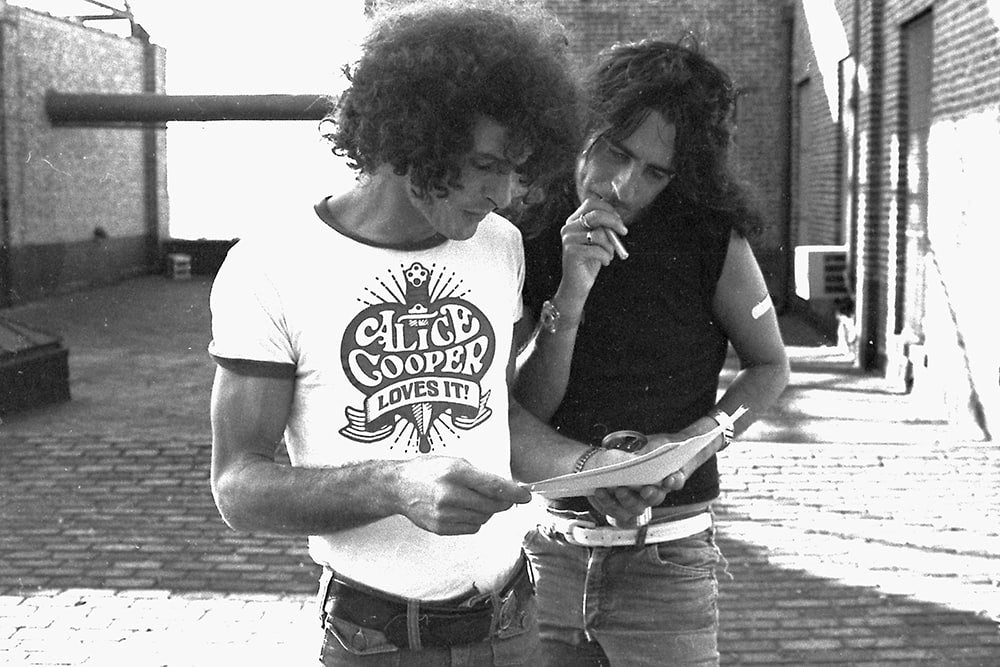
 

David Libert and Alice Cooper. Courtesy of Ellie Holecker.

David Libert and Alice Cooper. Courtesy of Ellie Holecker.


RC: Did you ever mend fences with your brother after he passed on lending you the money you needed to manage Guns N’ Roses?

DL: We never spoke again and several years later he ended up passing away. People often ask me if I’m sorry that I never reconciled with him and I’m frankly ambivalent about it. Life is a series of crossroads. You mention Alice Cooper and that was a crossroad in my life. Can you imagine if my brother had loaned me that $20,000, what a crossroad that would have been?! He didn’t see it and his accountant thought it was a bad investment for an unknown band; even though I was going to give him 20 percent of the entire management company. After he passed on this I fell into drugs and irresponsibility. That hit me hard.

RC: What was it about artists like George Clinton, who it seems continually let you down, that kept you coming back as their manager?

DL: It was his will. Here’s a guy who had this amazing charismatic hold over everyone who worked for him. What made him different from the other members of Parliament is that he is a very bright guy who knew how to read people. He’s as “street” as anyone I’ve ever met. He looked at things so differently than anyone I’d ever known. His perspective was unique and because of that he was able to come up with some really fascinating decisions on what he wanted to do with his career. The downside to all of that is that he also created a lot of chaos. He kind of liked that entropy because it kept everyone off-guard and it put him in control.


RC: Why didn’t the band Living Colour last?

DL: I put the band back together after they had been broken up for many years. They were very intelligent and highly-disciplined, politically astute fellows and just phenomenal musicians. They were drug-free, had families, and were very focused on what they did. I think the problem was that they were very competitive with each other. In the end they just had difficulty getting along. When they’d perform on stage you never really knew what was going to happen because they liked to keep things loose. But that kind of led to a competition-like environment. Musically speaking I kind of got a kick out of it because you never knew where it was going to go. But I think they were [just] strong-willed guys.


RC: At the end of the day, what do you hope to accomplish with this book?

DL: Well, I hope it does sell. But this is going to be the last highlight out of a career filled with many highlights. I never thought that my life was that interesting because I was living it every day. It was my girlfriend who encouraged me to write the book, because it wouldn’t be from a musician’s point of view but instead from someone who’s been a fly on the wall to some of the biggest stars in the world. That would make it unique. I wanted it to have a certain flow to it that was “me,” and I think I accomplished that.

More from Issue 172

View All Articles in Issue 172

Search Copper Magazine

#228 Serita’s Black Rose Duo Shakes Your Soul With a Blend of Funk, Rock, Blues and a Whole Lot More by Frank Doris Mar 02, 2026 #228 Vinyl, A Love Story by Wayne Robins Mar 02, 2026 #228 Thrill Seeker by B. Jan Montana Mar 02, 2026 #228 The Vinyl Beat: Donald Byrd, Bill Evans, Wes Montgomery, Eddie Palmieri and Frank Sinatra by Rudy Radelic Mar 02, 2026 #228 Listening to Prestige: The History of a Vitally Important Jazz Record Label by Frank Doris Mar 02, 2026 #228 How to Play in a Rock Band, 21: Touring With James Lee Stanley by Frank Doris Mar 02, 2026 #228 The NAMM 2026 Show: The Music Industry’s Premier Event by John Volanski Mar 02, 2026 #228 The Earliest Stars of Country Music, Part Two by Jeff Weiner Mar 02, 2026 #228 From The Audiophile's Guide: A Brief History of Stereophonic Sound by Paul McGowan Mar 02, 2026 #228 A Bone to Pick With Streaming Audio by Frank Doris Mar 02, 2026 #228 Blast Off With Bluesman Duke Robillard by Ray Chelstowski Mar 02, 2026 #228 A Visit to the Marten Loudspeaker Factory in Göteborg, Sweden by Ingo Schulz and Sebastian Polcyn Mar 02, 2026 #228 Pure Distortion by Peter Xeni Mar 02, 2026 #228 A Nagra Factory Tour by Markus "Marsu" Manthey Mar 02, 2026 #228 Back to My Reel-to-Reel Roots, Part 27: Noodge and Ye Shall Receive, Part Two by Ken Kessler Mar 02, 2026 #228 PS Audio in the News by PS Audio Staff Mar 02, 2026 #228 90-Degree Stereo by Frank Doris Mar 02, 2026 #228 The Keys to Art by Rich Isaacs Mar 02, 2026 #227 Seth Lewis Gets in the Groove With Take a Look Around: a Tribute to the Meters by Frank Doris Feb 02, 2026 #227 Passport to Sound: May Anwar’s Audio Learning Experience for Young People by Frank Doris Feb 02, 2026 #227 Conjectures on Cosmic Consciousness by B. Jan Montana Feb 02, 2026 #227 The Big Takeover Turns 45 by Wayne Robins Feb 02, 2026 #227 Music and Chocolate: On the Sensory Connection by Joe Caplan Feb 02, 2026 #227 Singer/Songwriter Chris Berardo: Getting Wilder All the Time by Ray Chelstowski Feb 02, 2026 #227 The Earliest Stars of Country Music, Part One by Jeff Weiner Feb 02, 2026 #227 The Vinyl Beat Goes Down to Tijuana (By Way of Los Angeles), Part Two by Rudy Radelic Feb 02, 2026 #227 How to Play in a Rock Band, 20: On the Road With Blood, Sweat & Tears’ Guitarist Gabe Cummins by Frank Doris Feb 02, 2026 #227 From The Audiophile’s Guide: Audio Specs and Measuring by Paul McGowan Feb 02, 2026 #227 Our Brain is Always Listening by Peter Trübner Feb 02, 2026 #227 PS Audio in the News by PS Audio Staff Feb 02, 2026 #227 The Listening Chair: Sleek Style and Sound From the Luxman L3 by Howard Kneller Feb 02, 2026 #227 The Los Angeles and Orange County Audio Society Celebrates Its 32nd Anniversary, Honoring David and Sheryl Lee Wilson and Bernie Grundman by Harris Fogel Feb 02, 2026 #227 Back to My Reel-to-Reel Roots, Part 26: Half Full – Not Half Empty, Redux by Ken Kessler Feb 02, 2026 #227 That's What Puzzles Us... by Frank Doris Feb 02, 2026 #227 Record-Breaking by Peter Xeni Feb 02, 2026 #227 The Long and Winding Road by B. Jan Montana Feb 02, 2026 #226 JJ Murphy’s Sleep Paralysis is a Genre-Bending Musical Journey Through Jazz, Fusion and More by Frank Doris Jan 05, 2026 #226 Stewardship by Consent by B. Jan Montana Jan 05, 2026 #226 Food, Music, and Sensory Experience: An Interview With Professor Jonathan Zearfoss of the Culinary Institute of America by Joe Caplan Jan 05, 2026 #226 Studio Confidential: A Who’s Who of Recording Engineers Tell Their Stories by Frank Doris Jan 05, 2026 #226 Pilot Radio is Reborn, 50 Years Later: Talking With CEO Barak Epstein by Frank Doris Jan 05, 2026 #226 The Vinyl Beat Goes Down to Tijuana (By Way of Los Angeles), Part One by Rudy Radelic Jan 05, 2026 #226 Capital Audiofest 2025: Must-See Stereo, Part Two by Frank Doris Jan 05, 2026 #226 My Morning Jacket’s Carl Broemel and Tyler Ramsey Collaborate on Their Acoustic Guitar Album, Celestun by Ray Chelstowski Jan 05, 2026 #226 The People Who Make Audio Happen: CanJam SoCal 2025, Part Two by Harris Fogel Jan 05, 2026 #226 How to Play in a Rock Band, 19: Touring Can Make You Crazy, Part One by Frank Doris Jan 05, 2026 #226 Linda Ronstadt Goes Bigger by Wayne Robins Jan 05, 2026

David Libert: A Rock and Roll Warrior Tells All In His New Book

David Libert: A Rock and Roll Warrior Tells All In His New Book

When it comes to rock and roll excess, tales from the rock tours of the 1970s rarely disappoint. It was an era defined as much by the music and live shows as it was by the after-parties and what went on in the hotels, planes, buses, and limos. While first-hand accounts by the musicians themselves have been entertaining (or worse), some of the most revealing stories from that period have been shared by those who weren’t the center of attention but whose hands still left marks on the moment. David Libert’s new autobiography gives an inside look.

Rock and Roll Warrior, subtitled, My Misadventures with Alice Cooper, Prince, George Clinton, Living Colour, the Runaways, and More… tells the tale of a 50-plus-year career in music spent as a booking agent and manager for some of modern music’s most notorious characters – and Libert was not immune to the highs and lows that can be encountered in the music business.

Libert began as a performer and founding member of vocal harmony group the Happenings. They scored several hits in the mid-’60s including the now-classic “See You in September,” along with “I Got Rhythm” and “Go Away Little Girl.” But it wasn’t meant to last.


The book devotes most of its pages to the shift Libert’s career took when he went to work tour-managing Alice Cooper. At that point Cooper and his band were already known as a theatrical group. With each tour that followed the production became more and more involved with props, costumes, dancers, special effects, pyro, fake blood, live animals, and the guillotine that beheaded the headliner each and every night. After each show, the onstage circus moved quickly to the hotel, where further acts of boundary-pushing shenanigans by “the Godfather of Shock Rock” would further Cooper’s reputation for excess and outlandishness.


Alice Cooper and David Libert. Courtesy of Paul Slade/Getty Images, used by permission.

Alice Cooper and David Libert. Courtesy of Paul Slade/Getty Images, used by permission.


David Libert and Alice Cooper. Courtesy of Terry O'Neill.

David Libert and Alice Cooper. Courtesy of Terry O’Neill.


During his tenure with Cooper, Libert famously handled a “messy” onstage moment when DJ Wolfman Jack arrived on stage riding a camel to introduce the band. Libert also devised creative ways to transport band and crew contraband over the Canadian border, and accommodated the generosity of famed groupie Sweet Sweet Connie (namechecked in Grand Funk Railroad’s “We’re An American Band”) for all interested parties when the act rolled into Little Rock, Arkansas. In short, he did it all.

Libert would then move to booking and then managing one of the fathers of funk, George Clinton, his main band Parliament-Funkadelic, and its many offshoot units. He also managed R&B artist Sheila E. and in turn had a front row seat into the “rule with fear” approach that Prince, on whose tour Libert’s client was featured, would take with everyone on the team.


George Clinton and David Libert. Courtesy of axiomgrl.

George Clinton and David Libert. Courtesy of axiomgrl.


Libert never found himself on the receiving end of those kind of attacks, and, as he had with other mercurial artists, David found a way to work with Prince that they could both respect, even if he found Prince to be “unusual.”

Like some of his infamous clients, Libert dallied with cocaine, and his ties to drugs would lead him to dealing and ultimately to prison. But just prior to his stint in jail, Libert found himself at a crossroads that would have likely changed his life’s course forever. In the 1980s he was offered the chance to become the manager of an up-and-coming Los Angeles-based hard rock band, but needed $20,000 to prove himself and provide the group with some much-needed equipment. He turned to his brother for a loan. His brother turned Libert down, and with that went an opportunity of a lifetime. The decision also ended their friendship. They would never speak again. That band was Guns N’ Roses.

After serving his time, Libert returned to the world of music, managing acts like Living Colour, and demonstrated that the skills he had learned on the road with some of rock’s biggest acts hadn’t withered in his time away. Libert would once again find demand for his services from both established and emerging acts. It was simply another demonstration of his resiliency and pure talent.

Rock and Roll Warrior is a behind-the-scenes look into the rock and roll access and excess of a bygone era, a fun and fascinating read. Now at the age of 79, David Libert rescues dogs instead of rock stars. But his memory of this remarkable career and its most memorable moments is razor-sharp. Copper caught up with David Libert and learned that in rock and roll, there’s always room for a second act, or if nothing else, an extended encore.

Ray Chelstowski: You open the biography at the beginning of your life, as opposed to a specific moment on the road. That’s rare these days. How did you know that this was the right approach?

David Libert: Well, it actually starts with a prologue about the Woodstock 1999 festival. It was added to give the book a reference point for how I got here. That led to going all of the way back to the beginning where I first became interest in music. Making a deal with my parents about [getting] piano lessons might seem rather insignificant, but it wasn’t. I was taking lessons but I could also play by ear. It made me feel that I could do what I was hearing people do in recorded music. It was what made me start to think that perhaps this could be my future.

RC: There are so many salacious rock stories in your book. How do you know when a story is maybe too racy to be included?

DL: One thing that I learned about writing a book is that you have to make conscious decisions about stories that might be [entertaining] but could also throw someone under the bus. There were a good many stories that weren’t included for that reason. You sort of have to decide whether it meets the criteria of what you are trying to accomplish with the book. Listen, it’s rock and roll so there’s a little bit of that to be found here. But I wanted whatever I included to be part of the general flow of how the book read. There were some personal moments with people that I ultimately decided were too private to include.

RC: The Happenings’ pop-lite sound is so different from the music made by bands you managed. In the end, which do you prefer?

DL: My musical interests were pretty diverse. I did like rock and bands like Led Zeppelin, and I was always crazy about the Rolling Stones. But I was also into the genre that the Happenings fell into that included acts like the Association, the Turtles, and that kind of music. Somehow I never associated that other [heavier] style of music I loved with what we were creating in the Happenings. What I learned is that I really love blues-based music that’s also danceable, and if I had learned that about myself much earlier, the Happenings would have sounded much different than they did and may have lasted [on the charts] a lot longer. But that’s water under the bridge.

RC: The Happenings continue to tour (with original member Bob Miranda). Over the years, have you ever considered joining them on the road?

DL: Never. I wanted to apply what the Happenings did best (which was our [vocal] harmonies) to more contemporary music and themes like Crosby Stills Nash & Young had done. The Happenings wouldn’t have any of it. That’s when I decided that I didn’t want to be in that band any longer. Since I had been managing them for a few years at that point, I realized that my future in music was to be on the business side of things. I always knew that I couldn’t be a Happening forever.


The Happenings on the cover of Cash Box magazine, February 4, 1967.

The Happenings on the cover of Cash Box magazine, February 4, 1967.


RC: What path do you think your career would have taken if you hadn’t met Alice Copper?

DL: That was a lucky break. I got a call from Jonny Podell, Alice Cooper’s booking agent. We had become good friends because our girlfriends were close and both had grown up in Rego Park, Queens [New York]. He told me that Alice was looking for a tour manager and that call put me on a certain level, because the band was becoming huge at that time. I was also lucky that Alice was managed by Shep Gordon, who became my mentor, and together they taught me everything that I know about the business.


David Libert and Alice Cooper. Courtesy of Ellie Holecker.

David Libert and Alice Cooper. Courtesy of Ellie Holecker.


RC: Did you ever mend fences with your brother after he passed on lending you the money you needed to manage Guns N’ Roses?

DL: We never spoke again and several years later he ended up passing away. People often ask me if I’m sorry that I never reconciled with him and I’m frankly ambivalent about it. Life is a series of crossroads. You mention Alice Cooper and that was a crossroad in my life. Can you imagine if my brother had loaned me that $20,000, what a crossroad that would have been?! He didn’t see it and his accountant thought it was a bad investment for an unknown band; even though I was going to give him 20 percent of the entire management company. After he passed on this I fell into drugs and irresponsibility. That hit me hard.

RC: What was it about artists like George Clinton, who it seems continually let you down, that kept you coming back as their manager?

DL: It was his will. Here’s a guy who had this amazing charismatic hold over everyone who worked for him. What made him different from the other members of Parliament is that he is a very bright guy who knew how to read people. He’s as “street” as anyone I’ve ever met. He looked at things so differently than anyone I’d ever known. His perspective was unique and because of that he was able to come up with some really fascinating decisions on what he wanted to do with his career. The downside to all of that is that he also created a lot of chaos. He kind of liked that entropy because it kept everyone off-guard and it put him in control.


RC: Why didn’t the band Living Colour last?

DL: I put the band back together after they had been broken up for many years. They were very intelligent and highly-disciplined, politically astute fellows and just phenomenal musicians. They were drug-free, had families, and were very focused on what they did. I think the problem was that they were very competitive with each other. In the end they just had difficulty getting along. When they’d perform on stage you never really knew what was going to happen because they liked to keep things loose. But that kind of led to a competition-like environment. Musically speaking I kind of got a kick out of it because you never knew where it was going to go. But I think they were [just] strong-willed guys.


RC: At the end of the day, what do you hope to accomplish with this book?

DL: Well, I hope it does sell. But this is going to be the last highlight out of a career filled with many highlights. I never thought that my life was that interesting because I was living it every day. It was my girlfriend who encouraged me to write the book, because it wouldn’t be from a musician’s point of view but instead from someone who’s been a fly on the wall to some of the biggest stars in the world. That would make it unique. I wanted it to have a certain flow to it that was “me,” and I think I accomplished that.

0 comments

Leave a comment

0 Comments

Your avatar

Loading comments...

🗑️ Delete Comment

Enter moderator password to delete this comment:

✏️ Edit Comment

Enter your email to verify ownership: