COPPER

A PS Audio Publication

Issue 105 • Free Online Magazine

Issue 105

The Tice Clock and the Endless Search for the Holy Grail

The Tice Clock and the Endless Search for the Holy Grail
Back in the good old high-end audio days of around 1968 – 1971, things used to be a lot simpler. I would walk into one of my local haunts in Manhattan: Leonard Radio, Liberty Music, Rabson’s and Sam Goody’s to name a few, and look in wonderment at the latest Sony, Sherwood and Marantz receivers (these I could afford), drool over the McIntosh and Marantz separates and dream of owning them, then wander over to the reel to reel machines and finally the speakers. The AR XA turntable worked with everything and was so cheap, so I could afford it as part my first really good audio system. The same could be said for a Shure M91 cartridge because I couldn’t afford a V15. The unattainable Empire 598 turntable looked like it was removed from King Tut’s tomb, so big, so heavy, so…gold! The speaker choices, as far as my budget went, were either Acoustic Research AR-3s or KLH Model 6s. I couldn’t afford the KLH Model 5s, and the big Klipschorns may as well have been made for palaces, that’s how unobtainable they were along with the Marantz and Mac separates.
Acoustic Research AR-3 loudspeakers.
No, this piece isn’t about how one can now spend more money on one power cable today then an entire system…well, on the other hand, maybe it is. It’s not about the insanity of the prices of some high-end gear either; rather; this article is about the examination of absolutely everything involved in the high-end experience and the cost of the minutiae (and importance) of all of it in our quest for great sound. I know that many of you entered into this world when I did. Back in those days, all we really had for knowledge was Stereo Review and if you were like me, we read every article trying to understand what Julian Hirsch was writing about. I am not an engineer but I am an informed consumer and I wanted to understand the difference between peak power versus RMS power and total harmonic distortion (THD) vs intermodulation distortion and everything else. I would read this stuff over and over, then go shop for gear. In those days looking for a stereo system was simple. All it was about was the quality level of the gear and how much you could afford for the basics:
  • Receiver (or an amp and preamp by Dynaco if you could stretch your budget)
  • Turntable
  • Phono cartridge
  • Speakers
  • Tuner
  • Maybe a reel to reel tape recorder by Sony (I couldn’t afford a Tandberg or Revox)
Dynaco PAS-3 preamplifier.
That was about it. If you had money or well-heeled friends whose fathers were usually doctors or lawyers, then you or they could afford Mac or Marantz separates. Life it seemed was that easy. Get the equipment home, plop it on a table and bookshelf, plug everything in, connect the cables that came with the stuff or the speaker cable that the salesman threw in, and you were set. And it sounded good! We didn’t know how much other things affected the sound. We didn’t know about the quality of interconnects, speaker cables, power cords, power strips, power outlet metallurgy, isolation pucks, speaker and equipment stands, grounding boxes, record weights, record cleaning machines, record mats, moving coil, moving magnet or moving iron cartridges, fixed or removable headshells, internal tonearm wire, vacuum record hold-down devices, stray electronic interference absorbers... Hell, most of us didn’t know that the output caps or different brands of tubes were so variable. We just didn’t know – and it didn’t matter because the components and speakers themselves were all we had. It was a simpler time in audio, and the equipment was simpler. I blame Bob Carver and his Phase Linear amps for the beginning of the high-end audio arms race, and the Tech HIfi chain for giving every college-dorm weed dealer in the early ‘70s the opportunity to have this new big stuff plugged into the then-new Ohm F loudspeakers so you could now bathe in the sonic landscape of Pink Floyd and Rotary Connection.
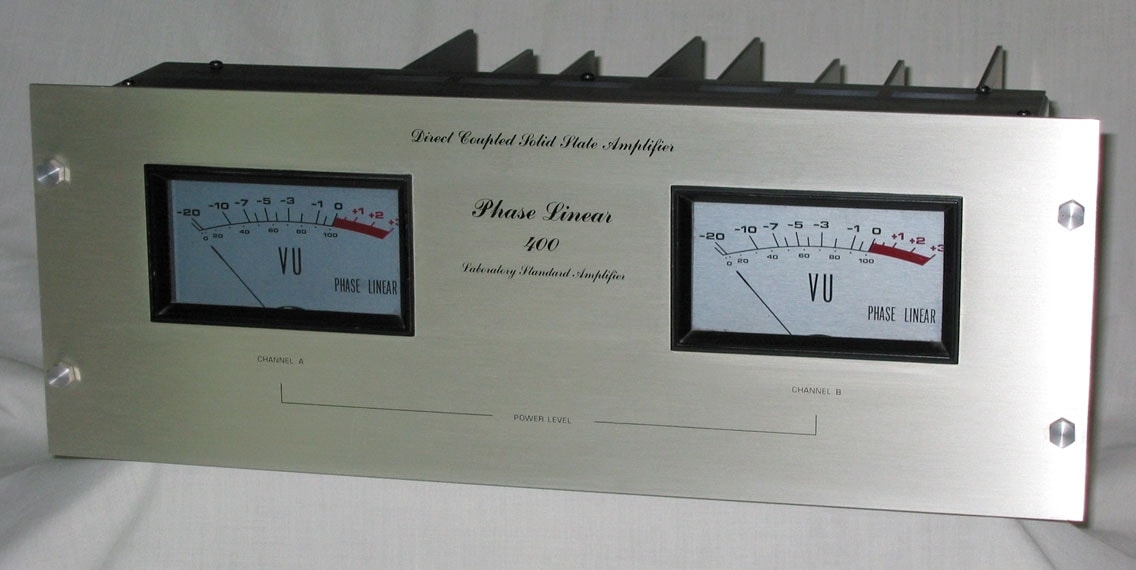
Phase Linear 400 amplifier.
Then came the tweaks. And consider where it’s all gone to. I started to ponder the evolution of the complexity and cost of high-end audio when I had my apartment recently renovated, and the contractor gave me options as to the AC power delivery, number of outlets and the sound absorption materials in my new listening room. This was the first time I could actually start at the very beginning in building a new audio system and room. In addition, by coincidence the building had just replaced all the electrical wiring going into each apartment, meaning that I could have all the power I ever needed with all new wiring and power delivery at my disposal. Wow, I thought. But, like many of you, over the years I have been sucked right along into the ever-evolving morass of the accessory-led refinements and tweaks of high-end audio. I, like so many others, have literally bought into it. All the way down to thinking about the quality of the wire in the wall and the available options in choosing among brands of AC outlets! Even the screw metallurgy used in the various outlets from different manufacturers can be considered…how freakin’ crazy has all of this gotten? Who knew back in the day that most, if not all of the above, could have the potential to get in the way of our enjoyment of this hobby. On the other hand the more transparent and refined the system, the more all this attention to detail does matter. However, not every device that has been marketed to us has really worked. Along the way there have been some real clunkers. Remember the controversy surrounding the Tice Clock? The Tice TPT Clock was a RadioShack clock that was claimed to have been subjected to a proprietary treatment. This treatment would supposedly improve the sound of an audio system. Everyone jumped on board and then, suddenly, jumped off, proving that not every audio accessory was necessarily the Holy Grail.
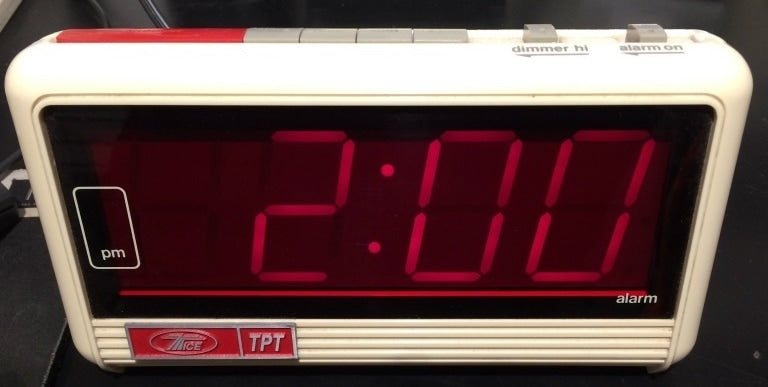
The Tice TPT Clock. Photo courtesy of the Audio Den, Nesconset, NY.
doing something to the clock. I wrote an article about it where I said that the clock did make a sonic difference. I was roundly lambasted for this by a number of people. – Ed.> I blame Harry Pearson (aka HP), The Absolute Sound and Mike Kay at Lyric HiFi for creating the high-end neurosis cycle, but we were all complicit in fueling the development of more complex and costly audio gear and the advent and evolution of ever-more-esoteric audio accessories and system tweaks. There are, however, plenty of real advances that have come out of all of this. These days, for the money I spent in 1968, allowing for inflation, one can buy really good-sounding gear. And for those of us who have traveled down this road and have put together great-sounding systems, if you’ve found the gear and the devices that have worked their magical spell on your systems, please enjoy listening, as I do. Take a moment to reflect and remember the long and winding road that got you to where you are now (and made you happy) and appreciate the tech advances, however big or incremental, that have brought all of us closer to the music, even if there have been stumbling blocks along the way. (And by the way, I fell in love with rock and roll played through a $5 transistor radio in 1963.) But know this: the idea of reproducing “the sound of real instruments in real space,” a mantra that has become the unofficial description of the goal of high-end audio, is a fraud. The closest your system will ever get to what it “should” sound like is to reproduce what the mastering engineer sitting at a mixing/mastering desk in a recording studio hears, and it’s all subjective and manipulated with EQ (equalization) and compressor (volume-leveling) devices, with the audio mostly transmitted through cheap wiring. Sorry HP. Most of us have never experienced even that level of accuracy to the audio source – but the good news is that today’s best home audio technology can bring us just about there, and that is reason to celebrate. And something to strive for. Without the Tice Clock!

More from Issue 105

View All Articles in Issue 105

Search Copper Magazine

#231 Piano Prodigy Jude Kofie Releases His Debut Album On Octave Records by Frank Doris Jun 01, 2026 #231 Underappreciated Artists, Part Two: City Boy by Rich Isaacs Jun 01, 2026 #231 Music and the Art of Creation: Talking With Saxophonist Rob Scheps by Joe Caplan Jun 01, 2026 #231 How to Play in a Rock Band, 24: Further Adventures at the 2026 Montauk Music Festival by Frank Doris Jun 01, 2026 #231 Courtney Barnett: Creature of Habit by Wayne Robins Jun 01, 2026 #231 Angine de Poitrine: Interstellar Guitar Rock Saviors Headed for Late-Night TV Pop Stardom? by Mark Lepage Jun 01, 2026 #231 My Impressions of AXPONA 2026, Part One by Frank Doris Jun 01, 2026 #231 2026 La Jolla Concours d'Elegance: Another Aesthetic Feast by B. Jan Montana Jun 01, 2026 #231 Country Music Icon Jo Dee Messina’s Bridges: A New Beginning by Ray Chelstowski Jun 01, 2026 #231 The Luxury Dispatch Hosts a Video Podcast With Ken Kessler by Ken Kessler Jun 01, 2026 #231 The Vinyl Beat: Tracking in the Motor City by Rudy Radelic Jun 01, 2026 #231 Lots of Fun With DSP: The Ferrum Audio WANDLA DAC and Its Tube Mode by Frank Doris Jun 01, 2026 #231 From The Audiophile's Guide: Digital Source Components and Streaming Audio by Paul McGowan Jun 01, 2026 #231 Onkyo’s Monster M-510 power amplifier by The Staff at Just Audio Jun 01, 2026 #231 PS Audio in the News by PS Audio Staff Jun 01, 2026 #231 Naming Convention by Peter Xeni Jun 01, 2026 #231 Les Invisibles by Frank Doris Jun 01, 2026 #231 Wildlife Scene by James Schrimpf Jun 01, 2026 #230 Camaraderie by B. Jan Montana May 04, 2026 #230 AXPONA 2026: A Family Gathering by Paul McGowan May 04, 2026 #230 Pianist Ryan Benthall Explores Jazz Realms and Far Beyond With Divine Sky by Frank Doris May 04, 2026 #230 The Vinyl Beat in AXPONA-Land by Rudy Radelic May 04, 2026 #230 Teddy Thompson’s Musical Growth Deepens With Never Be the Same by Ray Chelstowski May 04, 2026 #230 More Fun in the Sun: Florida Audio Expo, Part Two by Frank Doris May 04, 2026 #230 CanJam NYC 2026 Show Report: Heady Sound, Part Two by Frank Doris and Harris Fogel May 04, 2026 #230 Sonic Youth On Murray Street by Wayne Robins May 04, 2026 #230 Graffeo Coffee: A Symphony of Sensory Experience by Joe Caplan May 04, 2026 #230 The Saul Authority: The Story of Hi-Fi Pioneer Saul Marantz by Olivier Meunier-Plante May 04, 2026 #230 How to Play in a Rock Band, 23: Encounters With Famous Musicians, Part Two by Frank Doris May 04, 2026 #230 An Outlier in the Rack: A Vintage BIC Beam Box by The Staff at Just Audio May 04, 2026 #230 PS Audio in the News by PS Audio Staff May 04, 2026 #230 A Cautionary Tale by Rich Isaacs May 04, 2026 #230 Reel-to-Reel Roots, Part 33 (Revised): Ken Kessler Reports On the 2026 (British) AudioJumble by Ken Kessler May 04, 2026 #230 Text Messaging by Frank Doris May 04, 2026 #230 The Audiophile Rat Race by Peter Xeni May 04, 2026 #230 On the Rocks by Rich Isaacs May 04, 2026 #229 The Earliest Stars of Country Music, Part Three by Jeff Weiner Apr 06, 2026 #229 The Healing Power of Music and Sound at the Omega Institute by Joe Caplan Apr 06, 2026 #229 CanJam NYC 2026 Show Report: Heady Sound, Part One by Frank Doris Apr 06, 2026 #229 Florida Audio Expo 2026: Warming Up to High-End Audio, Part One by Frank Doris Apr 06, 2026 #229 Quick Takes: Anne Bisson, Sam Morrison, The Velvet Underground, and the Stooges by Frank Doris Apr 06, 2026 #229 The Vinyl Beat: New Arrivals, and Old Audio Show Demo Scores to Settle by Rudy Radelic Apr 06, 2026 #229 Harvard Gets a High-End Audio Education by Frank Doris Apr 06, 2026 #229 No Country for Old Knees by B. Jan Montana Apr 06, 2026 #229 How To Play in A Rock Band, 22: Encounters With Famous Musicians, Part 1 by Frank Doris Apr 06, 2026 #229 The Soulful Grooves of Guinea-Bissau by Steve Kindig Apr 06, 2026 #229 Four-Hand Piano Performance at Its Finest by Stephan Haberthür Apr 06, 2026

The Tice Clock and the Endless Search for the Holy Grail

The Tice Clock and the Endless Search for the Holy Grail
Back in the good old high-end audio days of around 1968 – 1971, things used to be a lot simpler. I would walk into one of my local haunts in Manhattan: Leonard Radio, Liberty Music, Rabson’s and Sam Goody’s to name a few, and look in wonderment at the latest Sony, Sherwood and Marantz receivers (these I could afford), drool over the McIntosh and Marantz separates and dream of owning them, then wander over to the reel to reel machines and finally the speakers. The AR XA turntable worked with everything and was so cheap, so I could afford it as part my first really good audio system. The same could be said for a Shure M91 cartridge because I couldn’t afford a V15. The unattainable Empire 598 turntable looked like it was removed from King Tut’s tomb, so big, so heavy, so…gold! The speaker choices, as far as my budget went, were either Acoustic Research AR-3s or KLH Model 6s. I couldn’t afford the KLH Model 5s, and the big Klipschorns may as well have been made for palaces, that’s how unobtainable they were along with the Marantz and Mac separates.
Acoustic Research AR-3 loudspeakers.
No, this piece isn’t about how one can now spend more money on one power cable today then an entire system…well, on the other hand, maybe it is. It’s not about the insanity of the prices of some high-end gear either; rather; this article is about the examination of absolutely everything involved in the high-end experience and the cost of the minutiae (and importance) of all of it in our quest for great sound. I know that many of you entered into this world when I did. Back in those days, all we really had for knowledge was Stereo Review and if you were like me, we read every article trying to understand what Julian Hirsch was writing about. I am not an engineer but I am an informed consumer and I wanted to understand the difference between peak power versus RMS power and total harmonic distortion (THD) vs intermodulation distortion and everything else. I would read this stuff over and over, then go shop for gear. In those days looking for a stereo system was simple. All it was about was the quality level of the gear and how much you could afford for the basics:
  • Receiver (or an amp and preamp by Dynaco if you could stretch your budget)
  • Turntable
  • Phono cartridge
  • Speakers
  • Tuner
  • Maybe a reel to reel tape recorder by Sony (I couldn’t afford a Tandberg or Revox)
Dynaco PAS-3 preamplifier.
That was about it. If you had money or well-heeled friends whose fathers were usually doctors or lawyers, then you or they could afford Mac or Marantz separates. Life it seemed was that easy. Get the equipment home, plop it on a table and bookshelf, plug everything in, connect the cables that came with the stuff or the speaker cable that the salesman threw in, and you were set. And it sounded good! We didn’t know how much other things affected the sound. We didn’t know about the quality of interconnects, speaker cables, power cords, power strips, power outlet metallurgy, isolation pucks, speaker and equipment stands, grounding boxes, record weights, record cleaning machines, record mats, moving coil, moving magnet or moving iron cartridges, fixed or removable headshells, internal tonearm wire, vacuum record hold-down devices, stray electronic interference absorbers... Hell, most of us didn’t know that the output caps or different brands of tubes were so variable. We just didn’t know – and it didn’t matter because the components and speakers themselves were all we had. It was a simpler time in audio, and the equipment was simpler. I blame Bob Carver and his Phase Linear amps for the beginning of the high-end audio arms race, and the Tech HIfi chain for giving every college-dorm weed dealer in the early ‘70s the opportunity to have this new big stuff plugged into the then-new Ohm F loudspeakers so you could now bathe in the sonic landscape of Pink Floyd and Rotary Connection.
Phase Linear 400 amplifier.
Then came the tweaks. And consider where it’s all gone to. I started to ponder the evolution of the complexity and cost of high-end audio when I had my apartment recently renovated, and the contractor gave me options as to the AC power delivery, number of outlets and the sound absorption materials in my new listening room. This was the first time I could actually start at the very beginning in building a new audio system and room. In addition, by coincidence the building had just replaced all the electrical wiring going into each apartment, meaning that I could have all the power I ever needed with all new wiring and power delivery at my disposal. Wow, I thought. But, like many of you, over the years I have been sucked right along into the ever-evolving morass of the accessory-led refinements and tweaks of high-end audio. I, like so many others, have literally bought into it. All the way down to thinking about the quality of the wire in the wall and the available options in choosing among brands of AC outlets! Even the screw metallurgy used in the various outlets from different manufacturers can be considered…how freakin’ crazy has all of this gotten? Who knew back in the day that most, if not all of the above, could have the potential to get in the way of our enjoyment of this hobby. On the other hand the more transparent and refined the system, the more all this attention to detail does matter. However, not every device that has been marketed to us has really worked. Along the way there have been some real clunkers. Remember the controversy surrounding the Tice Clock? The Tice TPT Clock was a RadioShack clock that was claimed to have been subjected to a proprietary treatment. This treatment would supposedly improve the sound of an audio system. Everyone jumped on board and then, suddenly, jumped off, proving that not every audio accessory was necessarily the Holy Grail.
The Tice TPT Clock. Photo courtesy of the Audio Den, Nesconset, NY.
doing something to the clock. I wrote an article about it where I said that the clock did make a sonic difference. I was roundly lambasted for this by a number of people. – Ed.> I blame Harry Pearson (aka HP), The Absolute Sound and Mike Kay at Lyric HiFi for creating the high-end neurosis cycle, but we were all complicit in fueling the development of more complex and costly audio gear and the advent and evolution of ever-more-esoteric audio accessories and system tweaks. There are, however, plenty of real advances that have come out of all of this. These days, for the money I spent in 1968, allowing for inflation, one can buy really good-sounding gear. And for those of us who have traveled down this road and have put together great-sounding systems, if you’ve found the gear and the devices that have worked their magical spell on your systems, please enjoy listening, as I do. Take a moment to reflect and remember the long and winding road that got you to where you are now (and made you happy) and appreciate the tech advances, however big or incremental, that have brought all of us closer to the music, even if there have been stumbling blocks along the way. (And by the way, I fell in love with rock and roll played through a $5 transistor radio in 1963.) But know this: the idea of reproducing “the sound of real instruments in real space,” a mantra that has become the unofficial description of the goal of high-end audio, is a fraud. The closest your system will ever get to what it “should” sound like is to reproduce what the mastering engineer sitting at a mixing/mastering desk in a recording studio hears, and it’s all subjective and manipulated with EQ (equalization) and compressor (volume-leveling) devices, with the audio mostly transmitted through cheap wiring. Sorry HP. Most of us have never experienced even that level of accuracy to the audio source – but the good news is that today’s best home audio technology can bring us just about there, and that is reason to celebrate. And something to strive for. Without the Tice Clock!

0 comments

Leave a comment

0 Comments

Your avatar

Loading comments...

🗑️ Delete Comment

Enter moderator password to delete this comment:

✏️ Edit Comment

Enter your email to verify ownership: