COPPER

A PS Audio Publication

Issue 105 • Free Online Magazine

Issue 105

The Tice Clock and the Endless Search for the Holy Grail

The Tice Clock and the Endless Search for the Holy Grail
Back in the good old high-end audio days of around 1968 – 1971, things used to be a lot simpler. I would walk into one of my local haunts in Manhattan: Leonard Radio, Liberty Music, Rabson’s and Sam Goody’s to name a few, and look in wonderment at the latest Sony, Sherwood and Marantz receivers (these I could afford), drool over the McIntosh and Marantz separates and dream of owning them, then wander over to the reel to reel machines and finally the speakers. The AR XA turntable worked with everything and was so cheap, so I could afford it as part my first really good audio system. The same could be said for a Shure M91 cartridge because I couldn’t afford a V15. The unattainable Empire 598 turntable looked like it was removed from King Tut’s tomb, so big, so heavy, so…gold! The speaker choices, as far as my budget went, were either Acoustic Research AR-3s or KLH Model 6s. I couldn’t afford the KLH Model 5s, and the big Klipschorns may as well have been made for palaces, that’s how unobtainable they were along with the Marantz and Mac separates.
Acoustic Research AR-3 loudspeakers.
No, this piece isn’t about how one can now spend more money on one power cable today then an entire system…well, on the other hand, maybe it is. It’s not about the insanity of the prices of some high-end gear either; rather; this article is about the examination of absolutely everything involved in the high-end experience and the cost of the minutiae (and importance) of all of it in our quest for great sound. I know that many of you entered into this world when I did. Back in those days, all we really had for knowledge was Stereo Review and if you were like me, we read every article trying to understand what Julian Hirsch was writing about. I am not an engineer but I am an informed consumer and I wanted to understand the difference between peak power versus RMS power and total harmonic distortion (THD) vs intermodulation distortion and everything else. I would read this stuff over and over, then go shop for gear. In those days looking for a stereo system was simple. All it was about was the quality level of the gear and how much you could afford for the basics:
  • Receiver (or an amp and preamp by Dynaco if you could stretch your budget)
  • Turntable
  • Phono cartridge
  • Speakers
  • Tuner
  • Maybe a reel to reel tape recorder by Sony (I couldn’t afford a Tandberg or Revox)
Dynaco PAS-3 preamplifier.
That was about it. If you had money or well-heeled friends whose fathers were usually doctors or lawyers, then you or they could afford Mac or Marantz separates. Life it seemed was that easy. Get the equipment home, plop it on a table and bookshelf, plug everything in, connect the cables that came with the stuff or the speaker cable that the salesman threw in, and you were set. And it sounded good! We didn’t know how much other things affected the sound. We didn’t know about the quality of interconnects, speaker cables, power cords, power strips, power outlet metallurgy, isolation pucks, speaker and equipment stands, grounding boxes, record weights, record cleaning machines, record mats, moving coil, moving magnet or moving iron cartridges, fixed or removable headshells, internal tonearm wire, vacuum record hold-down devices, stray electronic interference absorbers... Hell, most of us didn’t know that the output caps or different brands of tubes were so variable. We just didn’t know – and it didn’t matter because the components and speakers themselves were all we had. It was a simpler time in audio, and the equipment was simpler. I blame Bob Carver and his Phase Linear amps for the beginning of the high-end audio arms race, and the Tech HIfi chain for giving every college-dorm weed dealer in the early ‘70s the opportunity to have this new big stuff plugged into the then-new Ohm F loudspeakers so you could now bathe in the sonic landscape of Pink Floyd and Rotary Connection.
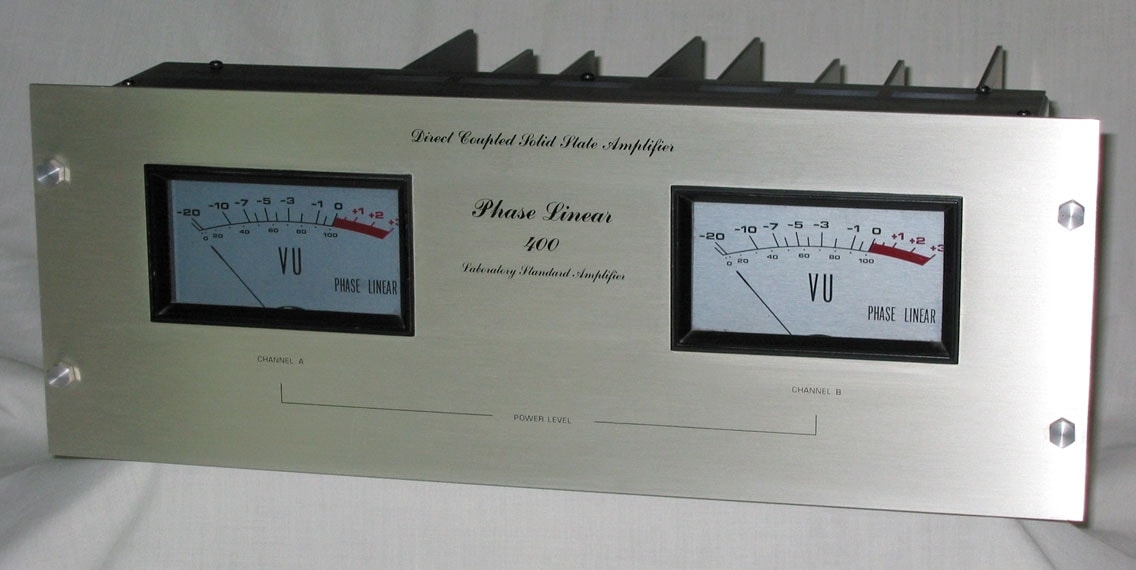
Phase Linear 400 amplifier.
Then came the tweaks. And consider where it’s all gone to. I started to ponder the evolution of the complexity and cost of high-end audio when I had my apartment recently renovated, and the contractor gave me options as to the AC power delivery, number of outlets and the sound absorption materials in my new listening room. This was the first time I could actually start at the very beginning in building a new audio system and room. In addition, by coincidence the building had just replaced all the electrical wiring going into each apartment, meaning that I could have all the power I ever needed with all new wiring and power delivery at my disposal. Wow, I thought. But, like many of you, over the years I have been sucked right along into the ever-evolving morass of the accessory-led refinements and tweaks of high-end audio. I, like so many others, have literally bought into it. All the way down to thinking about the quality of the wire in the wall and the available options in choosing among brands of AC outlets! Even the screw metallurgy used in the various outlets from different manufacturers can be considered…how freakin’ crazy has all of this gotten? Who knew back in the day that most, if not all of the above, could have the potential to get in the way of our enjoyment of this hobby. On the other hand the more transparent and refined the system, the more all this attention to detail does matter. However, not every device that has been marketed to us has really worked. Along the way there have been some real clunkers. Remember the controversy surrounding the Tice Clock? The Tice TPT Clock was a RadioShack clock that was claimed to have been subjected to a proprietary treatment. This treatment would supposedly improve the sound of an audio system. Everyone jumped on board and then, suddenly, jumped off, proving that not every audio accessory was necessarily the Holy Grail.
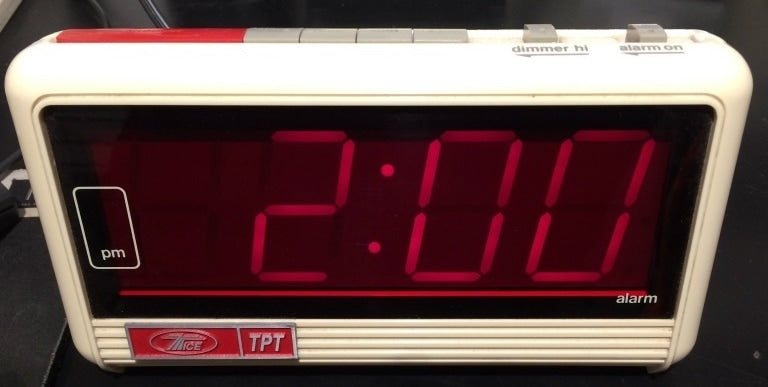
The Tice TPT Clock. Photo courtesy of the Audio Den, Nesconset, NY.
doing something to the clock. I wrote an article about it where I said that the clock did make a sonic difference. I was roundly lambasted for this by a number of people. – Ed.> I blame Harry Pearson (aka HP), The Absolute Sound and Mike Kay at Lyric HiFi for creating the high-end neurosis cycle, but we were all complicit in fueling the development of more complex and costly audio gear and the advent and evolution of ever-more-esoteric audio accessories and system tweaks. There are, however, plenty of real advances that have come out of all of this. These days, for the money I spent in 1968, allowing for inflation, one can buy really good-sounding gear. And for those of us who have traveled down this road and have put together great-sounding systems, if you’ve found the gear and the devices that have worked their magical spell on your systems, please enjoy listening, as I do. Take a moment to reflect and remember the long and winding road that got you to where you are now (and made you happy) and appreciate the tech advances, however big or incremental, that have brought all of us closer to the music, even if there have been stumbling blocks along the way. (And by the way, I fell in love with rock and roll played through a $5 transistor radio in 1963.) But know this: the idea of reproducing “the sound of real instruments in real space,” a mantra that has become the unofficial description of the goal of high-end audio, is a fraud. The closest your system will ever get to what it “should” sound like is to reproduce what the mastering engineer sitting at a mixing/mastering desk in a recording studio hears, and it’s all subjective and manipulated with EQ (equalization) and compressor (volume-leveling) devices, with the audio mostly transmitted through cheap wiring. Sorry HP. Most of us have never experienced even that level of accuracy to the audio source – but the good news is that today’s best home audio technology can bring us just about there, and that is reason to celebrate. And something to strive for. Without the Tice Clock!

More from Issue 105

View All Articles in Issue 105

Search Copper Magazine

#225 Capital Audiofest 2025: Must-See Stereo, Part One by Frank Doris Dec 01, 2025 #225 Otis Taylor and the Electrics Delivers a Powerful Set of Hypnotic Modern Blues by Frank Doris Dec 01, 2025 #225 A Christmas Miracle by B. Jan Montana Dec 01, 2025 #225 T.H.E. Show New York 2025, Part Two: Plenty to See, Hear, and Enjoy by Frank Doris Dec 01, 2025 #225 Underappreciated Artists, Part One: Martin Briley by Rich Isaacs Dec 01, 2025 #225 Rock and Roll is Here to Stay by Wayne Robins Dec 01, 2025 #225 A Lifetime of Holiday Record (and CD) Listening by Rudy Radelic Dec 01, 2025 #225 Little Feat: Not Saying Goodbye, Not Yet by Ray Chelstowski Dec 01, 2025 #225 How to Play in a Rock Band, Part 18: Dealing With Burnout by Frank Doris Dec 01, 2025 #225 The People Who Make Audio Happen: CanJam SoCal 2025 by Harris Fogel Dec 01, 2025 #225 Chicago’s Sonic Sanctuaries: Four Hi‑Fi Listening Bars Channeling the Jazz‑Kissa Spirit by Olivier Meunier-Plante Dec 01, 2025 #225 From The Audiophile’s Guide: Controlling Bass Frequencies Through Membrane Absorbers (and How to Build Your Own) by Paul McGowan Dec 01, 2025 #225 Your Editor’s Tips for Attending Audio Shows by Frank Doris Dec 01, 2025 #225 PS Audio in the News by Frank Doris Dec 01, 2025 #225 Back to My Reel-to-Reel Roots, Part 24 by Ken Kessler Dec 01, 2025 #225 Holiday Music by Frank Doris Dec 01, 2025 #225 Puppy Prognostication by Peter Xeni Dec 01, 2025 #225 How to Post Comments on Copper by Frank Doris Dec 01, 2025 #225 Living Color by Rudy Radelic Dec 01, 2025 #224 T.H.E. Show New York 2025, Part One: A New Beginning by Frank Doris Nov 03, 2025 #224 Fool’s Leap of Faith is the Extraordinary Octave Records Debut from Singer/Songwriter Tyler Burba and Visit by Frank Doris Nov 03, 2025 #224 The Beatles’ “Aeolian Cadences.” What? by Wayne Robins Nov 03, 2025 #224 Persona Non Grata by B. Jan Montana Nov 03, 2025 #224 Talking With Recording Engineer Barry Diament of Soundkeeper Recordings, Part Two by Frank Doris Nov 03, 2025 #224 B Sides, B Movies, and Beware of Zombies by Rudy Radelic Nov 03, 2025 #224 The Burn-In Chronicles: 1,000 Hours to Sonic Salvation by Olivier Meunier-Plante Nov 03, 2025 #224 A Conversation With Mat Weisfeld of VPI Industries by Joe Caplan Nov 03, 2025 #224 Blues-Rocker Kenny Wayne Shepherd Celebrates 30 Years of Ledbetter Heights by Ray Chelstowski Nov 03, 2025 #224 Playing in a Rock Band, 17: When Good Gigs Go Bad, Part Two by Frank Doris Nov 03, 2025 #224 From The Audiophile’s Guide: Dealing with Odd-Shaped Rooms by Paul McGowan Nov 03, 2025 #224 TEAC’s TN-3B-SE Turntable Plays Bob Dylan by Howard Kneller Nov 03, 2025 #224 PS Audio in the News by Frank Doris Nov 03, 2025 #224 Lost in Translation by Peter Xeni Nov 03, 2025 #224 Reel-to-Reel Roots, Part 23: Better Than Rice Krispies by Ken Kessler Nov 03, 2025 #224 I Bring Joy! by Frank Doris Nov 03, 2025 #224 Screen Test by Rich Isaacs Nov 03, 2025 #224 How to Post Comments on Copper by Frank Doris Nov 03, 2025 #132 Dr. Patrick Gleeson: The Interview, Part Two by Rich Isaacs Oct 07, 2025 #223 World Fusion Meets Flamenco in Gratitude from Steve Mullins and Rim of the Well by Frank Doris Oct 06, 2025 #223 Judging Albums by Their Covers by Rich Isaacs Oct 06, 2025 #223 Recent Arrivals and 12-inch Royalty by Rudy Radelic Oct 06, 2025 #223 Summer of Creem, Part Two by Wayne Robins Oct 06, 2025 #223 Recording Engineer Barry Diament of Soundkeeper Recordings: Striving for Natural Sound by Frank Doris Oct 06, 2025 #223 Tea on the Terrace by B. Jan Montana Oct 06, 2025 #223 How Good Can Car Audio Get? by Joe Caplan Oct 06, 2025 #223 The Advantages of a Dedicated Listening Room by Paul McGowan Oct 06, 2025 #223 1! 2! 3! 4! Surrounded by the Ramones in Dolby Atmos! by Frank Doris Oct 06, 2025

The Tice Clock and the Endless Search for the Holy Grail

The Tice Clock and the Endless Search for the Holy Grail
Back in the good old high-end audio days of around 1968 – 1971, things used to be a lot simpler. I would walk into one of my local haunts in Manhattan: Leonard Radio, Liberty Music, Rabson’s and Sam Goody’s to name a few, and look in wonderment at the latest Sony, Sherwood and Marantz receivers (these I could afford), drool over the McIntosh and Marantz separates and dream of owning them, then wander over to the reel to reel machines and finally the speakers. The AR XA turntable worked with everything and was so cheap, so I could afford it as part my first really good audio system. The same could be said for a Shure M91 cartridge because I couldn’t afford a V15. The unattainable Empire 598 turntable looked like it was removed from King Tut’s tomb, so big, so heavy, so…gold! The speaker choices, as far as my budget went, were either Acoustic Research AR-3s or KLH Model 6s. I couldn’t afford the KLH Model 5s, and the big Klipschorns may as well have been made for palaces, that’s how unobtainable they were along with the Marantz and Mac separates.
Acoustic Research AR-3 loudspeakers.
No, this piece isn’t about how one can now spend more money on one power cable today then an entire system…well, on the other hand, maybe it is. It’s not about the insanity of the prices of some high-end gear either; rather; this article is about the examination of absolutely everything involved in the high-end experience and the cost of the minutiae (and importance) of all of it in our quest for great sound. I know that many of you entered into this world when I did. Back in those days, all we really had for knowledge was Stereo Review and if you were like me, we read every article trying to understand what Julian Hirsch was writing about. I am not an engineer but I am an informed consumer and I wanted to understand the difference between peak power versus RMS power and total harmonic distortion (THD) vs intermodulation distortion and everything else. I would read this stuff over and over, then go shop for gear. In those days looking for a stereo system was simple. All it was about was the quality level of the gear and how much you could afford for the basics:
  • Receiver (or an amp and preamp by Dynaco if you could stretch your budget)
  • Turntable
  • Phono cartridge
  • Speakers
  • Tuner
  • Maybe a reel to reel tape recorder by Sony (I couldn’t afford a Tandberg or Revox)
Dynaco PAS-3 preamplifier.
That was about it. If you had money or well-heeled friends whose fathers were usually doctors or lawyers, then you or they could afford Mac or Marantz separates. Life it seemed was that easy. Get the equipment home, plop it on a table and bookshelf, plug everything in, connect the cables that came with the stuff or the speaker cable that the salesman threw in, and you were set. And it sounded good! We didn’t know how much other things affected the sound. We didn’t know about the quality of interconnects, speaker cables, power cords, power strips, power outlet metallurgy, isolation pucks, speaker and equipment stands, grounding boxes, record weights, record cleaning machines, record mats, moving coil, moving magnet or moving iron cartridges, fixed or removable headshells, internal tonearm wire, vacuum record hold-down devices, stray electronic interference absorbers... Hell, most of us didn’t know that the output caps or different brands of tubes were so variable. We just didn’t know – and it didn’t matter because the components and speakers themselves were all we had. It was a simpler time in audio, and the equipment was simpler. I blame Bob Carver and his Phase Linear amps for the beginning of the high-end audio arms race, and the Tech HIfi chain for giving every college-dorm weed dealer in the early ‘70s the opportunity to have this new big stuff plugged into the then-new Ohm F loudspeakers so you could now bathe in the sonic landscape of Pink Floyd and Rotary Connection.
Phase Linear 400 amplifier.
Then came the tweaks. And consider where it’s all gone to. I started to ponder the evolution of the complexity and cost of high-end audio when I had my apartment recently renovated, and the contractor gave me options as to the AC power delivery, number of outlets and the sound absorption materials in my new listening room. This was the first time I could actually start at the very beginning in building a new audio system and room. In addition, by coincidence the building had just replaced all the electrical wiring going into each apartment, meaning that I could have all the power I ever needed with all new wiring and power delivery at my disposal. Wow, I thought. But, like many of you, over the years I have been sucked right along into the ever-evolving morass of the accessory-led refinements and tweaks of high-end audio. I, like so many others, have literally bought into it. All the way down to thinking about the quality of the wire in the wall and the available options in choosing among brands of AC outlets! Even the screw metallurgy used in the various outlets from different manufacturers can be considered…how freakin’ crazy has all of this gotten? Who knew back in the day that most, if not all of the above, could have the potential to get in the way of our enjoyment of this hobby. On the other hand the more transparent and refined the system, the more all this attention to detail does matter. However, not every device that has been marketed to us has really worked. Along the way there have been some real clunkers. Remember the controversy surrounding the Tice Clock? The Tice TPT Clock was a RadioShack clock that was claimed to have been subjected to a proprietary treatment. This treatment would supposedly improve the sound of an audio system. Everyone jumped on board and then, suddenly, jumped off, proving that not every audio accessory was necessarily the Holy Grail.
The Tice TPT Clock. Photo courtesy of the Audio Den, Nesconset, NY.
doing something to the clock. I wrote an article about it where I said that the clock did make a sonic difference. I was roundly lambasted for this by a number of people. – Ed.> I blame Harry Pearson (aka HP), The Absolute Sound and Mike Kay at Lyric HiFi for creating the high-end neurosis cycle, but we were all complicit in fueling the development of more complex and costly audio gear and the advent and evolution of ever-more-esoteric audio accessories and system tweaks. There are, however, plenty of real advances that have come out of all of this. These days, for the money I spent in 1968, allowing for inflation, one can buy really good-sounding gear. And for those of us who have traveled down this road and have put together great-sounding systems, if you’ve found the gear and the devices that have worked their magical spell on your systems, please enjoy listening, as I do. Take a moment to reflect and remember the long and winding road that got you to where you are now (and made you happy) and appreciate the tech advances, however big or incremental, that have brought all of us closer to the music, even if there have been stumbling blocks along the way. (And by the way, I fell in love with rock and roll played through a $5 transistor radio in 1963.) But know this: the idea of reproducing “the sound of real instruments in real space,” a mantra that has become the unofficial description of the goal of high-end audio, is a fraud. The closest your system will ever get to what it “should” sound like is to reproduce what the mastering engineer sitting at a mixing/mastering desk in a recording studio hears, and it’s all subjective and manipulated with EQ (equalization) and compressor (volume-leveling) devices, with the audio mostly transmitted through cheap wiring. Sorry HP. Most of us have never experienced even that level of accuracy to the audio source – but the good news is that today’s best home audio technology can bring us just about there, and that is reason to celebrate. And something to strive for. Without the Tice Clock!

0 comments

Leave a comment

0 Comments

Your avatar

Loading comments...

🗑️ Delete Comment

Enter moderator password to delete this comment: