COPPER

A PS Audio Publication

Issue 156 • Free Online Magazine

Issue 156 To Be Determined

The Importance of Keeping Your Audio Connections Clean

The Importance of Keeping Your Audio Connections Clean

Back around 1980 was when I first started having some awareness of the importance of good audio connectivity. Of course, any of the mid-fi-ish equipment I typically had bought prior to then came with the usual garden-variety, thrown in, cheaply-made stock interconnects, and most everything had a captive AC power cord attached. We hadn’t yet reached the era of ungodly expensive cabling back then – I don’t even think it had really even become a huge thing yet, but I was at least beginning to read and hear about the value of upgrading to more substantial interconnects and speaker cables. I started buying cables via mail order from Vampire Wire, where I could at least get 10-gauge speaker cables terminated with heavy spade lugs, and they were significantly more robust than the zip cord I’d mostly been using all my life. I also picked up early-production interconnects from Monster Cable, which also seemed to be more well-made than the cheap and cheesy manufacturer-supplied crap cables. Of course, I wasn’t at all thinking about how the improved cabling might affect the sound of my system, I was mainly concentrating on just getting good signal transfer between components and loudspeakers. And I was, at the time, perfectly happy with that.
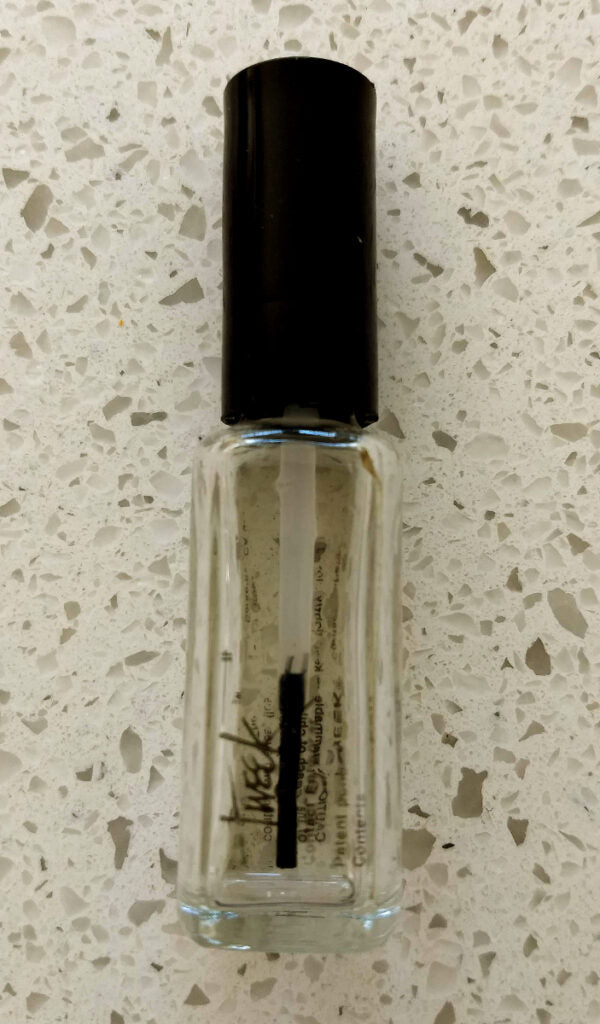
 

I still have an old bottle of Tweek sitting around!


Around that time I also first became aware of using contact enhancements from my local stereo shop, which sold a small bottle of a clear liquid called Tweek. It had a brush-on applicator inside the cap, and was intended to be applied to RCA plugs and jacks on both the cables and on the connected equipment, where it purportedly improved metal-to-metal conductivity. Tweek was pretty inexpensive, and a little went a long way, and back in those days, most cables and equipment termination jacks were made of similar metals. And some manufacturers were beginning to gold-plate connections, especially on higher-end gear. Tweek provided – at least, inside my brain’s thought process – better sound through enhanced conductivity. And you only had to apply it when you changed components, perhaps once a year to maintain good system conductivity. Unfortunately, there was a problem with Tweek that soon started rearing its ugly head: the problematic issue of dissimilar metals. If you’re unfamiliar with the term, it mainly deals with the concept that when dissimilar metals – metals that are unlike each other – come into contact with each other, they begin to slowly corrode. This can seriously degrade an audio connection. Tweek was causing a chemical reaction that was accelerating that degradation, and it was eventually pulled from the market following a barrage of consumer complaints. As boutique cable manufacturers began to appear with increasing frequency, many started using a variety of metals for terminations that didn’t always agree with whatever equipment they were connected to. Unfortunately, Tweek only made what could be an already bad situation much, much worse.
Caig DeoxIT and DeoxIT GOLD G-Series are available in a variety of useful configurations.

Fortunately, other contact enhancers like Caig DeoxIT and DeoxIT GOLD G-Series (formerly known as Pro Gold) soon appeared to help assuage the anguish of those seeking perfect audio connections. And I was reading the other day on SoundStage Network’s website about another contact enhancer that’s infused with microscopic gold and silver flakes (depending on what type of termination your cables use) to provide better metal-to-metal contact. That particular manufacturer seems to have gone out of business since then (the link was dated 2003), but there are other, similar products that abound on the internet and that are still available; just do a Google search. I grew up in the farm country of northeast Georgia, and not unlike many of the young men in that 1970s demographic, somewhat fancied myself a bit of a cowboy. This required all the necessary accoutrements, including cowboy boots, a hat, and garish brass and silver belt buckles. The belt buckles were great, but I soon discovered that they required frequent polishing, which was a bit of a sticky wicket, to say the least. With time, I found the perfect polishing cloths – one for brass, a different one for silver – and also discovered that after polishing a buckle, washing it with soap and water and then drying and buffing it to a brilliant shine helped keep them glistening for much longer intervals. That was my first experience with keeping tarnishable metals pristine, and also with using products specific to each type of metal. I had no idea at the time that decades later, this would play heavily into my audio connectivity routine!

Fast Forward to the (Current) Future

A few years back, my system got completely upgraded with new interconnect, loudspeaker, AC power, and HDMI (for I²S connection) cables from AudioQuest (AQ). I also installed a pair of AQ NRG Edison AC wall outlets to the two dedicated AC lines running into my room, and added AQ Niagara 1200 and Niagara 3000 power conditioners. The new cabling and power conditioning have easily made the biggest overall differences in my system’s sound quality, with blacker, quieter backgrounds, and lending greater clarity to both analog and digital sources. If you’ve never used a power conditioner (AudioQuest actually describes the Niagara units as Lo-Z Power/Noise-Dissipation Systems), I highly recommend the AudioQuest units – the difference has been nothing short of dramatic.

The AudioQuest Niagara 3000 is the real deal.


I’ve installed countless AC outlets, switches, and the like over a period of decades, but the installation of the AQ NRG Edison AC outlets was without a doubt the most labor-intensive outlet installation I’ve ever undertaken. Each Edison unit is constructed of heavyweight beryllium copper and weighs over a half pound; compare that to a weight of about an ounce for a typical construction-grade outlet. They’re wider and deeper than construction-grade outlets, but they do fit in conventional, new-construction outlet boxes – well, just barely! In my case, the difficulty was compounded by the nearly unyielding 10-gauge Romex dedicated lines I’d had the electrician install in those locations at the time my new home was built, and it was darn-near impossible to maneuver the wiring from the connections to the Edison outlets to get them to fit inside the boxes. I can usually do an outlet install in less than ten minutes, but it easily took an hour each to get the Edisons connected and installed! Yeah, I know – bring out the flamethrowers – the $189 (each) Edisons arrived weeks before the Niagara units, but the improvement in my overall sound was shockingly good with just those in place. The difference wasn’t subtle, and bass transients, especially from my dual subwoofers, were deeper and had much better definition, and both subs seemed to integrate much more effortlessly with my Magneplanars.
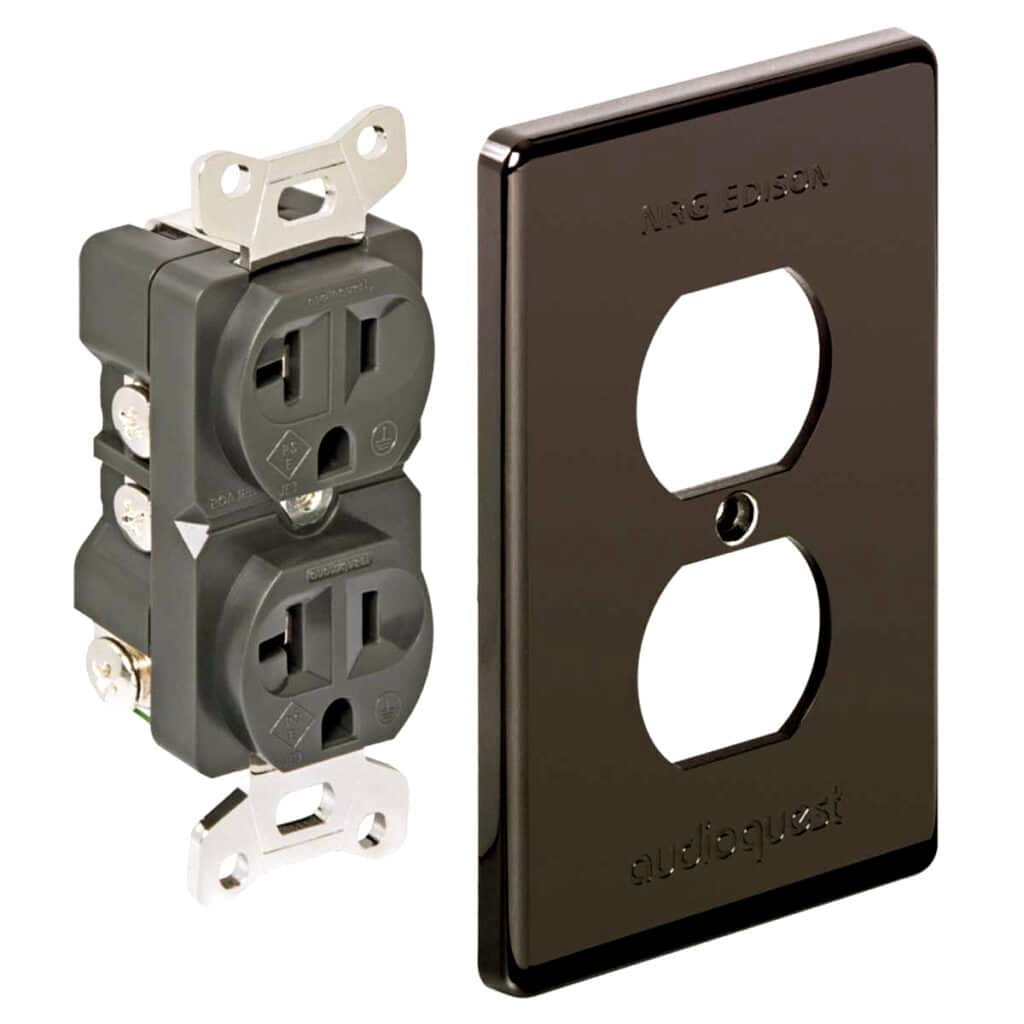
The NRG Edison Outlets are really robust, especially compared to cheaply-made builder grade.

AC power cords and connections aren’t really a big area of concern when it comes to maintaining conductivity. All my AudioQuest AC power cords – which range from their NRG X, Y, and Z series to their Blizzard with DBS cords – employ direct-plated gold connectors. And of course, gold doesn’t tarnish. But all the interconnects (AQ Yukon), loudspeaker cables (AQ Type 9), and HDMI cables (AQ Cobalt) employ heavily-plated silver connectors. I noticed that when I unboxed all the cables, each box included two types of polishing cloths, one for silver connectors and one for everything else. At that time, all those silver connections absolutely glittered – based on appearance alone, they’re a 10/10. But I’m also a firm believer in silver as a superior conduction medium in audio, and I’ve owned quite a few cables over the years that utilized either silver-clad or solid silver conductors. There are two trains of thought on silver cables: they’re either harsh and overly bright, or they add a significant level of clarity to the signal. I definitely fall into the latter camp. And needless to say, after getting everything connected, I put the polishing cloths out of sight, and out of mind.

Houston, We Have a Problem!

When my daughter had her new baby in December, we stayed at their house for five straight days, watching after my three-year-old grandson Henry, their two dogs, and a pair of guinea pigs. Prior to heading over there, I turned off the audio system and disconnected it from my home network, just in case there were any lightning events while I was gone (I didn’t yet have the fiber media conversion setup in place yet that would have protected the network-connected equipment from that possibility). The morning after we returned, I went back downstairs and reconnected and rebooted everything to get some music playing, and immediately noticed a problem. The right channel continuously fuzzed in and out, as if there was some kind of short. I went immediately over to the equipment stack, started futzing with the interconnects between my preamp and amplifiers, and when I jiggled the AudiQuest Yukon balanced cable in the right channel amp input, that exacerbated the situation. Holy crap, these cables were less than two years old – had one of them developed a short already?

The AudioQuest Yukon balanced interconnects are exceptionally well-made.


I have a huge box of cables in the storage area of my basement, and pulled out the Blue Jeans balanced cables that the AQ Yukons replaced. That totally solved the signal problem. The sound was now restored to a perfect level of connection, but it also sounded flat and lifeless. I reached for the Yukons to reconnect and take another listen, and at that point, I noticed that the silver input connector of the balanced cable was almost completely black with tarnish! I’d handled these cables countless times over the last couple of years, especially with the almost constant flow of review equipment in and out of my system, but had never previously noticed anything in their appearance that drew my attention – they'd always looked perfectly pristine. It was almost as though the tarnish appeared out of nowhere; the process could possibly have gotten accelerated when my system was completely down for months while my preamplifier was away for repairs. Regardless, this caught me completely off guard!

The "silver" polishing cloth (on the left) was actually silver in color before removing all the tarnish from the connectors.

I scrambled, located one of the silver polishing cloths, and proceeded to thoroughly polish, rinse and clean the connectors on all my silver-clad cables. And they all showed some level of tarnish and blackness, though none of them were anywhere near the level of the right-side balanced Yukon cable. By the time I finished cleaning multiple sets of interconnects, loudspeaker cables, and HDMIs, the formerly light-silver colored polishing cloth was now a very dark gray with the tarnish it had removed! After everything was reconnected and rebooted, the sound was restored to its previous state of audio glory. I was astonished, if perhaps a bit embarrassed by my negligence. I happened to think afterwards, that during the period from early August until November, when my PS Audio Gain Cell DAC/Preamp was off for repairs, that all the interconnect cables were just lying about the room, unconnected. Maybe this had accelerated the tarnishing process? The room is climate-controlled, so there are no temperature or humidity issues, so who really knows. But I’ve definitely learned my lesson: unless you’re using anything other than gold-plated connectors, you need to check them for cleanliness periodically. Probably once a year would be sufficient, and I definitely would still recommend getting an appropriate contact enhancer to assist with the inner pins of balanced and single-ended connectors and the like. Believe me, this stuff really does make a difference!

All images courtesy of AudioQuest, Caig, and the author.

More from Issue 156

View All Articles in Issue 156

Search Copper Magazine

#231 Piano Prodigy Jude Kofie Releases His Debut Album On Octave Records by Frank Doris Jun 01, 2026 #231 Underappreciated Artists, Part Two: City Boy by Rich Isaacs Jun 01, 2026 #231 Music and the Art of Creation: Talking With Saxophonist Rob Scheps by Joe Caplan Jun 01, 2026 #231 How to Play in a Rock Band, 24: Further Adventures at the 2026 Montauk Music Festival by Frank Doris Jun 01, 2026 #231 Courtney Barnett: Creature of Habit by Wayne Robins Jun 01, 2026 #231 Angine de Poitrine: Interstellar Guitar Rock Saviors Headed for Late-Night TV Pop Stardom? by Mark Lepage Jun 01, 2026 #231 My Impressions of AXPONA 2026, Part One by Frank Doris Jun 01, 2026 #231 2026 La Jolla Concours d'Elegance: Another Aesthetic Feast by B. Jan Montana Jun 01, 2026 #231 Country Music Icon Jo Dee Messina’s Bridges: A New Beginning by Ray Chelstowski Jun 01, 2026 #231 The Luxury Dispatch Hosts a Video Podcast With Ken Kessler by Ken Kessler Jun 01, 2026 #231 The Vinyl Beat: Tracking in the Motor City by Rudy Radelic Jun 01, 2026 #231 Lots of Fun With DSP: The Ferrum Audio WANDLA DAC and Its Tube Mode by Frank Doris Jun 01, 2026 #231 From The Audiophile's Guide: Digital Source Components and Streaming Audio by Paul McGowan Jun 01, 2026 #231 Onkyo’s Monster M-510 power amplifier by The Staff at Just Audio Jun 01, 2026 #231 PS Audio in the News by PS Audio Staff Jun 01, 2026 #231 Naming Convention by Peter Xeni Jun 01, 2026 #231 Les Invisibles by Frank Doris Jun 01, 2026 #231 Wildlife Scene by James Schrimpf Jun 01, 2026 #230 Camaraderie by B. Jan Montana May 04, 2026 #230 AXPONA 2026: A Family Gathering by Paul McGowan May 04, 2026 #230 Pianist Ryan Benthall Explores Jazz Realms and Far Beyond With Divine Sky by Frank Doris May 04, 2026 #230 The Vinyl Beat in AXPONA-Land by Rudy Radelic May 04, 2026 #230 Teddy Thompson’s Musical Growth Deepens With Never Be the Same by Ray Chelstowski May 04, 2026 #230 More Fun in the Sun: Florida Audio Expo, Part Two by Frank Doris May 04, 2026 #230 CanJam NYC 2026 Show Report: Heady Sound, Part Two by Frank Doris and Harris Fogel May 04, 2026 #230 Sonic Youth On Murray Street by Wayne Robins May 04, 2026 #230 Graffeo Coffee: A Symphony of Sensory Experience by Joe Caplan May 04, 2026 #230 The Saul Authority: The Story of Hi-Fi Pioneer Saul Marantz by Olivier Meunier-Plante May 04, 2026 #230 How to Play in a Rock Band, 23: Encounters With Famous Musicians, Part Two by Frank Doris May 04, 2026 #230 An Outlier in the Rack: A Vintage BIC Beam Box by The Staff at Just Audio May 04, 2026 #230 PS Audio in the News by PS Audio Staff May 04, 2026 #230 A Cautionary Tale by Rich Isaacs May 04, 2026 #230 Reel-to-Reel Roots, Part 33 (Revised): Ken Kessler Reports On the 2026 (British) AudioJumble by Ken Kessler May 04, 2026 #230 Text Messaging by Frank Doris May 04, 2026 #230 The Audiophile Rat Race by Peter Xeni May 04, 2026 #230 On the Rocks by Rich Isaacs May 04, 2026 #229 The Earliest Stars of Country Music, Part Three by Jeff Weiner Apr 06, 2026 #229 The Healing Power of Music and Sound at the Omega Institute by Joe Caplan Apr 06, 2026 #229 CanJam NYC 2026 Show Report: Heady Sound, Part One by Frank Doris Apr 06, 2026 #229 Florida Audio Expo 2026: Warming Up to High-End Audio, Part One by Frank Doris Apr 06, 2026 #229 Quick Takes: Anne Bisson, Sam Morrison, The Velvet Underground, and the Stooges by Frank Doris Apr 06, 2026 #229 The Vinyl Beat: New Arrivals, and Old Audio Show Demo Scores to Settle by Rudy Radelic Apr 06, 2026 #229 Harvard Gets a High-End Audio Education by Frank Doris Apr 06, 2026 #229 No Country for Old Knees by B. Jan Montana Apr 06, 2026 #229 How To Play in A Rock Band, 22: Encounters With Famous Musicians, Part 1 by Frank Doris Apr 06, 2026 #229 The Soulful Grooves of Guinea-Bissau by Steve Kindig Apr 06, 2026 #229 Four-Hand Piano Performance at Its Finest by Stephan Haberthür Apr 06, 2026

The Importance of Keeping Your Audio Connections Clean

The Importance of Keeping Your Audio Connections Clean

Back around 1980 was when I first started having some awareness of the importance of good audio connectivity. Of course, any of the mid-fi-ish equipment I typically had bought prior to then came with the usual garden-variety, thrown in, cheaply-made stock interconnects, and most everything had a captive AC power cord attached. We hadn’t yet reached the era of ungodly expensive cabling back then – I don’t even think it had really even become a huge thing yet, but I was at least beginning to read and hear about the value of upgrading to more substantial interconnects and speaker cables. I started buying cables via mail order from Vampire Wire, where I could at least get 10-gauge speaker cables terminated with heavy spade lugs, and they were significantly more robust than the zip cord I’d mostly been using all my life. I also picked up early-production interconnects from Monster Cable, which also seemed to be more well-made than the cheap and cheesy manufacturer-supplied crap cables. Of course, I wasn’t at all thinking about how the improved cabling might affect the sound of my system, I was mainly concentrating on just getting good signal transfer between components and loudspeakers. And I was, at the time, perfectly happy with that.


I still have an old bottle of Tweek sitting around!


Around that time I also first became aware of using contact enhancements from my local stereo shop, which sold a small bottle of a clear liquid called Tweek. It had a brush-on applicator inside the cap, and was intended to be applied to RCA plugs and jacks on both the cables and on the connected equipment, where it purportedly improved metal-to-metal conductivity. Tweek was pretty inexpensive, and a little went a long way, and back in those days, most cables and equipment termination jacks were made of similar metals. And some manufacturers were beginning to gold-plate connections, especially on higher-end gear. Tweek provided – at least, inside my brain’s thought process – better sound through enhanced conductivity. And you only had to apply it when you changed components, perhaps once a year to maintain good system conductivity. Unfortunately, there was a problem with Tweek that soon started rearing its ugly head: the problematic issue of dissimilar metals. If you’re unfamiliar with the term, it mainly deals with the concept that when dissimilar metals – metals that are unlike each other – come into contact with each other, they begin to slowly corrode. This can seriously degrade an audio connection. Tweek was causing a chemical reaction that was accelerating that degradation, and it was eventually pulled from the market following a barrage of consumer complaints. As boutique cable manufacturers began to appear with increasing frequency, many started using a variety of metals for terminations that didn’t always agree with whatever equipment they were connected to. Unfortunately, Tweek only made what could be an already bad situation much, much worse.
Caig DeoxIT and DeoxIT GOLD G-Series are available in a variety of useful configurations.

Fortunately, other contact enhancers like Caig DeoxIT and DeoxIT GOLD G-Series (formerly known as Pro Gold) soon appeared to help assuage the anguish of those seeking perfect audio connections. And I was reading the other day on SoundStage Network’s website about another contact enhancer that’s infused with microscopic gold and silver flakes (depending on what type of termination your cables use) to provide better metal-to-metal contact. That particular manufacturer seems to have gone out of business since then (the link was dated 2003), but there are other, similar products that abound on the internet and that are still available; just do a Google search. I grew up in the farm country of northeast Georgia, and not unlike many of the young men in that 1970s demographic, somewhat fancied myself a bit of a cowboy. This required all the necessary accoutrements, including cowboy boots, a hat, and garish brass and silver belt buckles. The belt buckles were great, but I soon discovered that they required frequent polishing, which was a bit of a sticky wicket, to say the least. With time, I found the perfect polishing cloths – one for brass, a different one for silver – and also discovered that after polishing a buckle, washing it with soap and water and then drying and buffing it to a brilliant shine helped keep them glistening for much longer intervals. That was my first experience with keeping tarnishable metals pristine, and also with using products specific to each type of metal. I had no idea at the time that decades later, this would play heavily into my audio connectivity routine!

Fast Forward to the (Current) Future

A few years back, my system got completely upgraded with new interconnect, loudspeaker, AC power, and HDMI (for I²S connection) cables from AudioQuest (AQ). I also installed a pair of AQ NRG Edison AC wall outlets to the two dedicated AC lines running into my room, and added AQ Niagara 1200 and Niagara 3000 power conditioners. The new cabling and power conditioning have easily made the biggest overall differences in my system’s sound quality, with blacker, quieter backgrounds, and lending greater clarity to both analog and digital sources. If you’ve never used a power conditioner (AudioQuest actually describes the Niagara units as Lo-Z Power/Noise-Dissipation Systems), I highly recommend the AudioQuest units – the difference has been nothing short of dramatic.

The AudioQuest Niagara 3000 is the real deal.


I’ve installed countless AC outlets, switches, and the like over a period of decades, but the installation of the AQ NRG Edison AC outlets was without a doubt the most labor-intensive outlet installation I’ve ever undertaken. Each Edison unit is constructed of heavyweight beryllium copper and weighs over a half pound; compare that to a weight of about an ounce for a typical construction-grade outlet. They’re wider and deeper than construction-grade outlets, but they do fit in conventional, new-construction outlet boxes – well, just barely! In my case, the difficulty was compounded by the nearly unyielding 10-gauge Romex dedicated lines I’d had the electrician install in those locations at the time my new home was built, and it was darn-near impossible to maneuver the wiring from the connections to the Edison outlets to get them to fit inside the boxes. I can usually do an outlet install in less than ten minutes, but it easily took an hour each to get the Edisons connected and installed! Yeah, I know – bring out the flamethrowers – the $189 (each) Edisons arrived weeks before the Niagara units, but the improvement in my overall sound was shockingly good with just those in place. The difference wasn’t subtle, and bass transients, especially from my dual subwoofers, were deeper and had much better definition, and both subs seemed to integrate much more effortlessly with my Magneplanars.
The NRG Edison Outlets are really robust, especially compared to cheaply-made builder grade.

AC power cords and connections aren’t really a big area of concern when it comes to maintaining conductivity. All my AudioQuest AC power cords – which range from their NRG X, Y, and Z series to their Blizzard with DBS cords – employ direct-plated gold connectors. And of course, gold doesn’t tarnish. But all the interconnects (AQ Yukon), loudspeaker cables (AQ Type 9), and HDMI cables (AQ Cobalt) employ heavily-plated silver connectors. I noticed that when I unboxed all the cables, each box included two types of polishing cloths, one for silver connectors and one for everything else. At that time, all those silver connections absolutely glittered – based on appearance alone, they’re a 10/10. But I’m also a firm believer in silver as a superior conduction medium in audio, and I’ve owned quite a few cables over the years that utilized either silver-clad or solid silver conductors. There are two trains of thought on silver cables: they’re either harsh and overly bright, or they add a significant level of clarity to the signal. I definitely fall into the latter camp. And needless to say, after getting everything connected, I put the polishing cloths out of sight, and out of mind.

Houston, We Have a Problem!

When my daughter had her new baby in December, we stayed at their house for five straight days, watching after my three-year-old grandson Henry, their two dogs, and a pair of guinea pigs. Prior to heading over there, I turned off the audio system and disconnected it from my home network, just in case there were any lightning events while I was gone (I didn’t yet have the fiber media conversion setup in place yet that would have protected the network-connected equipment from that possibility). The morning after we returned, I went back downstairs and reconnected and rebooted everything to get some music playing, and immediately noticed a problem. The right channel continuously fuzzed in and out, as if there was some kind of short. I went immediately over to the equipment stack, started futzing with the interconnects between my preamp and amplifiers, and when I jiggled the AudiQuest Yukon balanced cable in the right channel amp input, that exacerbated the situation. Holy crap, these cables were less than two years old – had one of them developed a short already?

The AudioQuest Yukon balanced interconnects are exceptionally well-made.


I have a huge box of cables in the storage area of my basement, and pulled out the Blue Jeans balanced cables that the AQ Yukons replaced. That totally solved the signal problem. The sound was now restored to a perfect level of connection, but it also sounded flat and lifeless. I reached for the Yukons to reconnect and take another listen, and at that point, I noticed that the silver input connector of the balanced cable was almost completely black with tarnish! I’d handled these cables countless times over the last couple of years, especially with the almost constant flow of review equipment in and out of my system, but had never previously noticed anything in their appearance that drew my attention – they'd always looked perfectly pristine. It was almost as though the tarnish appeared out of nowhere; the process could possibly have gotten accelerated when my system was completely down for months while my preamplifier was away for repairs. Regardless, this caught me completely off guard!

The "silver" polishing cloth (on the left) was actually silver in color before removing all the tarnish from the connectors.

I scrambled, located one of the silver polishing cloths, and proceeded to thoroughly polish, rinse and clean the connectors on all my silver-clad cables. And they all showed some level of tarnish and blackness, though none of them were anywhere near the level of the right-side balanced Yukon cable. By the time I finished cleaning multiple sets of interconnects, loudspeaker cables, and HDMIs, the formerly light-silver colored polishing cloth was now a very dark gray with the tarnish it had removed! After everything was reconnected and rebooted, the sound was restored to its previous state of audio glory. I was astonished, if perhaps a bit embarrassed by my negligence. I happened to think afterwards, that during the period from early August until November, when my PS Audio Gain Cell DAC/Preamp was off for repairs, that all the interconnect cables were just lying about the room, unconnected. Maybe this had accelerated the tarnishing process? The room is climate-controlled, so there are no temperature or humidity issues, so who really knows. But I’ve definitely learned my lesson: unless you’re using anything other than gold-plated connectors, you need to check them for cleanliness periodically. Probably once a year would be sufficient, and I definitely would still recommend getting an appropriate contact enhancer to assist with the inner pins of balanced and single-ended connectors and the like. Believe me, this stuff really does make a difference!

All images courtesy of AudioQuest, Caig, and the author.

0 comments

Leave a comment

0 Comments

Your avatar

Loading comments...

🗑️ Delete Comment

Enter moderator password to delete this comment:

✏️ Edit Comment

Enter your email to verify ownership: