COPPER

A PS Audio Publication

Issue 174 • Free Online Magazine

Issue 174 Featured

The Golden Decade for Popular Music…The 1950s?

The Golden Decade for Popular Music…The 1950s?

I belong to a music-listening group consisting of five people who get together once a month. Everyone gets a turn to be the host who provides the playlist, wine, and food. When it’s my turn, I like to develop themes for my playlists. I had been listening to the ‘50s channel on SiriusXM quite a bit and decided on “Stars of the 1950s” as a theme. My scheme was to only include artists who had more than a couple of hits during the decade. After doing quite a bit of research, I was surprised at the wide variety of music represented. There is no other decade that comes close.

Rock and Roll. While elements of rock and roll appeared earlier, the first major stars emerged in the mid-1950s. Let’s start with Elvis Presley. His list of 1950s hits is extensive. “Hound Dog,” “Heartbreak Hotel,” “Love Me Tender,” and “All Shook Up” are but a few. Chuck Berry was a legendary figure who has been called “the father of rock and roll.” “Maybelline,” “Sweet Little Sixteen,” and “Johnny B. Goode” were all major hits.


Little Richard was a gospel singer who became a major star with songs like “Tutti Frutti,” “Lucille,” “Good Golly Miss Molly” and others. Jerry Lee Lewis was a rockabilly pioneer. “Whole Lotta Shakin’ Goin’ On,” “Great Balls of Fire,” “and Breathless” were all hits. Buddy Holly died tragically in 1959 but had many hits including “Peggy Sue,” “That’ll Be The Day,” and “Not Fade Away.”
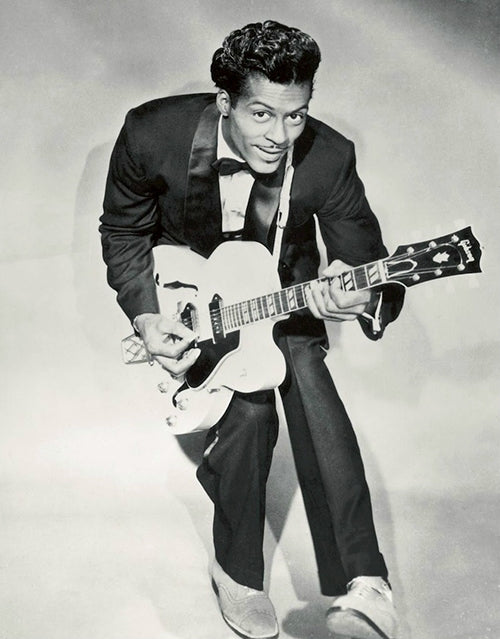
 

Chuck Berry promotional photo. Courtesy of Pickwick Records/Wikimedia Commons/public domain.

Chuck Berry promotional photo. Courtesy of Pickwick Records/Wikimedia Commons/public domain.


Traditional Vocalists. There were quite a few “old school” vocalists who were still cranking out hits in the 1950s. Frank Sinatra’s career spanned many decades. In the ‘50s, “I Get A Kick Out Of You,” “You Make Me Feel So Young” and “Witchcraft” were among his major pop music hits. Frank’s friend, Dean Martin, was also doing very well with songs such as the iconic “That’s Amore” and “Memories Are Made Of This.”


Doris Day began as a big band singer and became a major actress while pursuing her singing career. She had a huge hit with “Que Sera, Sera” and also charted with songs like “Secret Love.” Nat King Cole evolved from his jazz trio to become a featured vocalist. Two of his 1950s classics were “Mona Lisa” and “Unforgettable.” Perry Como hosted television’s top 10-rated The Perry Como Show from 1956 to 1959. He had hits with “Hot Diggity (Dog Ziggity Boom)” and “Don’t Let The Stars Get In Your Eyes.” Eddie Fisher had an operatic voice and scored with “Oh! My Papa” and “Any Time.” His career took a jolt when he divorced Debbie Reynolds to marry Elizabeth Taylor.
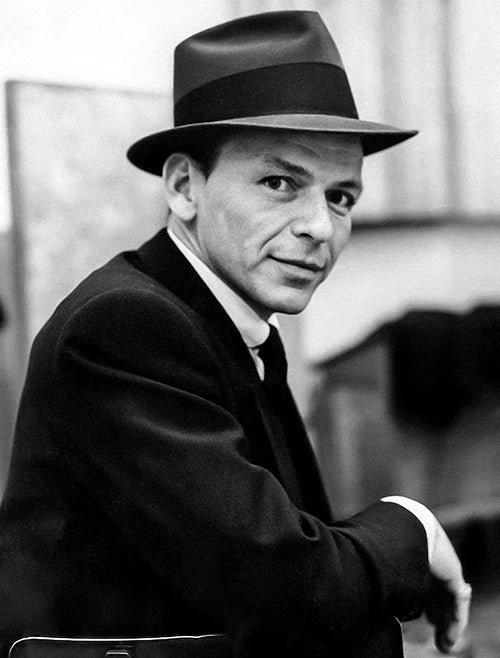
 

Frank SInatra, promotional photo. Courtesy of Capitol Records/Wikimedia Commons/public domain.

Frank SInatra, promotional photo. Courtesy of Capitol Records/Wikimedia Commons/public domain.


Country Music. Country artists were also topping the popular music charts in the 1950s. Johnny Cash emerged during that decade by signing with Sam Phillips at Sun Records where he produced hits such as “I Walk The Line” and “Folsom Prison Blues.” Hank Williams was one of the first three people inducted into the Country Music Hall of Fame. Among his many hits were “Your Cheatin’ Heart” and “Hey Good Lookin’.” Marty Robbins had a lot of success in the decade with hits such as “El Paso’ and “A White Sport Coat and a Pink Carnation.” Many people don’t think of the Everly Brothers as country music artists, but their first major recording contract was with Acuff-Rose in Nashville, the same people who handled Hank Williams. Their first hit was “Bye, Bye Love” and others included “Wake Up Little Susie” and “All I Have to Do Is Dream.”


Nouveau Vocalists. While many traditional vocalists were still producing hits during the 1950s, a new breed of singer was also emerging. These were mostly white performers often covering songs originally sung by Black artists. Pat Boone was second only to Elvis in terms of top 40 hits during the decade. “Love Letters In The Sand” and “April Love” reached Number 1 on the charts. Paul Anka came on the scene with “Diana” and became an important songwriter. He had other hits such as “Put Your Head On My Shoulder” and “Lonely Boy.” Ricky Nelson began his career as the 12-year-old son on The Ozzie and Harriet Show and later emerged as a major vocalist and film actor. Hit songs included “Poor Little Fool” and “Lonesome Town.”


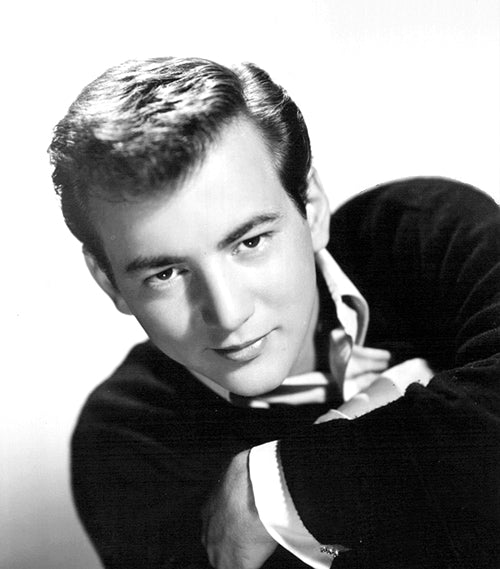
Bobby Darin’s career was launched with “Splish Splash” and he had other major hits with “Dream Lover” and “Mack The Knife.” Johnny Mathis has two songs, “Chances Are” and “Misty,” in the Grammy Hall of Fame. Other Mathis chart toppers included “Wonderful! Wonderful!” and “It’s Not For Me To Say.”


Pre-Motown. Motown Records came into being in 1960, but there were major stars in the 1950s who were forerunners to the Motown sound. The Platters were a hit machine with three Number 1 singles during the decade: “Twilight Time,” “Smoke Gets In Your Eyes,” and “My Prayer.” Sam Cooke has been called “the man who invented soul.” He came on the scene in 1957 with “You Send Me.” Other hits during the 1950s included “Everybody Likes To Cha Cha Cha” and “Only Sixteen.”


Rock and roll, traditional vocalists, country music, nouveau vocalists, pre-Motown: what an interesting olio of music we were listening to in the 1950s! Who could ask for more? But wait, there is more! How about a little New Orleans music? Fats Domino was a major force during the decade with many Number 1 songs. “Blueberry Hill” and “Ain’t That A Shame” are in the Grammy Hall of Fame. Jazz greats Ella Fitzgerald, Louis Armstrong, and Billie Holiday were also making the popular music charts. I doubt that there will ever be a more eclectic decade for popular music than the 1950s.
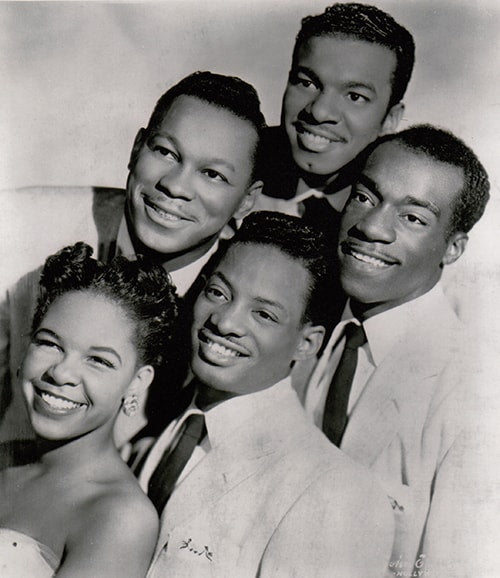
 

The Platters, promotional photo. Courtesy of Wikimedia Commons/Martha Robi.

The Platters, promotional photo. Courtesy of Wikimedia Commons/Martha Robi.


Header image: Hank Williams promotional photo, courtesy of WSM Radio/Wikimedia Commons/public domain.

More from Issue 174

View All Articles in Issue 174

Search Copper Magazine

#231 Piano Prodigy Jude Kofie Releases His Debut Album On Octave Records by Frank Doris Jun 01, 2026 #231 Underappreciated Artists, Part Two: City Boy by Rich Isaacs Jun 01, 2026 #231 Music and the Art of Creation: Talking With Saxophonist Rob Scheps by Joe Caplan Jun 01, 2026 #231 How to Play in a Rock Band, 24: Further Adventures at the 2026 Montauk Music Festival by Frank Doris Jun 01, 2026 #231 Courtney Barnett: Creature of Habit by Wayne Robins Jun 01, 2026 #231 Angine de Poitrine: Interstellar Guitar Rock Saviors Headed for Late-Night TV Pop Stardom? by Mark Lepage Jun 01, 2026 #231 My Impressions of AXPONA 2026, Part One by Frank Doris Jun 01, 2026 #231 2026 La Jolla Concours d'Elegance: Another Aesthetic Feast by B. Jan Montana Jun 01, 2026 #231 Country Music Icon Jo Dee Messina’s Bridges: A New Beginning by Ray Chelstowski Jun 01, 2026 #231 The Luxury Dispatch Hosts a Video Podcast With Ken Kessler by Ken Kessler Jun 01, 2026 #231 The Vinyl Beat: Tracking in the Motor City by Rudy Radelic Jun 01, 2026 #231 Lots of Fun With DSP: The Ferrum Audio WANDLA DAC and Its Tube Mode by Frank Doris Jun 01, 2026 #231 From The Audiophile's Guide: Digital Source Components and Streaming Audio by Paul McGowan Jun 01, 2026 #231 Onkyo’s Monster M-510 power amplifier by The Staff at Just Audio Jun 01, 2026 #231 PS Audio in the News by PS Audio Staff Jun 01, 2026 #231 Naming Convention by Peter Xeni Jun 01, 2026 #231 Les Invisibles by Frank Doris Jun 01, 2026 #231 Wildlife Scene by James Schrimpf Jun 01, 2026 #230 Camaraderie by B. Jan Montana May 04, 2026 #230 AXPONA 2026: A Family Gathering by Paul McGowan May 04, 2026 #230 Pianist Ryan Benthall Explores Jazz Realms and Far Beyond With Divine Sky by Frank Doris May 04, 2026 #230 The Vinyl Beat in AXPONA-Land by Rudy Radelic May 04, 2026 #230 Teddy Thompson’s Musical Growth Deepens With Never Be the Same by Ray Chelstowski May 04, 2026 #230 More Fun in the Sun: Florida Audio Expo, Part Two by Frank Doris May 04, 2026 #230 CanJam NYC 2026 Show Report: Heady Sound, Part Two by Frank Doris and Harris Fogel May 04, 2026 #230 Sonic Youth On Murray Street by Wayne Robins May 04, 2026 #230 Graffeo Coffee: A Symphony of Sensory Experience by Joe Caplan May 04, 2026 #230 The Saul Authority: The Story of Hi-Fi Pioneer Saul Marantz by Olivier Meunier-Plante May 04, 2026 #230 How to Play in a Rock Band, 23: Encounters With Famous Musicians, Part Two by Frank Doris May 04, 2026 #230 An Outlier in the Rack: A Vintage BIC Beam Box by The Staff at Just Audio May 04, 2026 #230 PS Audio in the News by PS Audio Staff May 04, 2026 #230 A Cautionary Tale by Rich Isaacs May 04, 2026 #230 Reel-to-Reel Roots, Part 33 (Revised): Ken Kessler Reports On the 2026 (British) AudioJumble by Ken Kessler May 04, 2026 #230 Text Messaging by Frank Doris May 04, 2026 #230 The Audiophile Rat Race by Peter Xeni May 04, 2026 #230 On the Rocks by Rich Isaacs May 04, 2026 #229 The Earliest Stars of Country Music, Part Three by Jeff Weiner Apr 06, 2026 #229 The Healing Power of Music and Sound at the Omega Institute by Joe Caplan Apr 06, 2026 #229 CanJam NYC 2026 Show Report: Heady Sound, Part One by Frank Doris Apr 06, 2026 #229 Florida Audio Expo 2026: Warming Up to High-End Audio, Part One by Frank Doris Apr 06, 2026 #229 Quick Takes: Anne Bisson, Sam Morrison, The Velvet Underground, and the Stooges by Frank Doris Apr 06, 2026 #229 The Vinyl Beat: New Arrivals, and Old Audio Show Demo Scores to Settle by Rudy Radelic Apr 06, 2026 #229 Harvard Gets a High-End Audio Education by Frank Doris Apr 06, 2026 #229 No Country for Old Knees by B. Jan Montana Apr 06, 2026 #229 How To Play in A Rock Band, 22: Encounters With Famous Musicians, Part 1 by Frank Doris Apr 06, 2026 #229 The Soulful Grooves of Guinea-Bissau by Steve Kindig Apr 06, 2026 #229 Four-Hand Piano Performance at Its Finest by Stephan Haberthür Apr 06, 2026

The Golden Decade for Popular Music…The 1950s?

The Golden Decade for Popular Music…The 1950s?

I belong to a music-listening group consisting of five people who get together once a month. Everyone gets a turn to be the host who provides the playlist, wine, and food. When it’s my turn, I like to develop themes for my playlists. I had been listening to the ‘50s channel on SiriusXM quite a bit and decided on “Stars of the 1950s” as a theme. My scheme was to only include artists who had more than a couple of hits during the decade. After doing quite a bit of research, I was surprised at the wide variety of music represented. There is no other decade that comes close.

Rock and Roll. While elements of rock and roll appeared earlier, the first major stars emerged in the mid-1950s. Let’s start with Elvis Presley. His list of 1950s hits is extensive. “Hound Dog,” “Heartbreak Hotel,” “Love Me Tender,” and “All Shook Up” are but a few. Chuck Berry was a legendary figure who has been called “the father of rock and roll.” “Maybelline,” “Sweet Little Sixteen,” and “Johnny B. Goode” were all major hits.


Little Richard was a gospel singer who became a major star with songs like “Tutti Frutti,” “Lucille,” “Good Golly Miss Molly” and others. Jerry Lee Lewis was a rockabilly pioneer. “Whole Lotta Shakin’ Goin’ On,” “Great Balls of Fire,” “and Breathless” were all hits. Buddy Holly died tragically in 1959 but had many hits including “Peggy Sue,” “That’ll Be The Day,” and “Not Fade Away.”


Chuck Berry promotional photo. Courtesy of Pickwick Records/Wikimedia Commons/public domain.

Chuck Berry promotional photo. Courtesy of Pickwick Records/Wikimedia Commons/public domain.


Traditional Vocalists. There were quite a few “old school” vocalists who were still cranking out hits in the 1950s. Frank Sinatra’s career spanned many decades. In the ‘50s, “I Get A Kick Out Of You,” “You Make Me Feel So Young” and “Witchcraft” were among his major pop music hits. Frank’s friend, Dean Martin, was also doing very well with songs such as the iconic “That’s Amore” and “Memories Are Made Of This.”


Doris Day began as a big band singer and became a major actress while pursuing her singing career. She had a huge hit with “Que Sera, Sera” and also charted with songs like “Secret Love.” Nat King Cole evolved from his jazz trio to become a featured vocalist. Two of his 1950s classics were “Mona Lisa” and “Unforgettable.” Perry Como hosted television’s top 10-rated The Perry Como Show from 1956 to 1959. He had hits with “Hot Diggity (Dog Ziggity Boom)” and “Don’t Let The Stars Get In Your Eyes.” Eddie Fisher had an operatic voice and scored with “Oh! My Papa” and “Any Time.” His career took a jolt when he divorced Debbie Reynolds to marry Elizabeth Taylor.


Frank SInatra, promotional photo. Courtesy of Capitol Records/Wikimedia Commons/public domain.

Frank SInatra, promotional photo. Courtesy of Capitol Records/Wikimedia Commons/public domain.


Country Music. Country artists were also topping the popular music charts in the 1950s. Johnny Cash emerged during that decade by signing with Sam Phillips at Sun Records where he produced hits such as “I Walk The Line” and “Folsom Prison Blues.” Hank Williams was one of the first three people inducted into the Country Music Hall of Fame. Among his many hits were “Your Cheatin’ Heart” and “Hey Good Lookin’.” Marty Robbins had a lot of success in the decade with hits such as “El Paso’ and “A White Sport Coat and a Pink Carnation.” Many people don’t think of the Everly Brothers as country music artists, but their first major recording contract was with Acuff-Rose in Nashville, the same people who handled Hank Williams. Their first hit was “Bye, Bye Love” and others included “Wake Up Little Susie” and “All I Have to Do Is Dream.”


Nouveau Vocalists. While many traditional vocalists were still producing hits during the 1950s, a new breed of singer was also emerging. These were mostly white performers often covering songs originally sung by Black artists. Pat Boone was second only to Elvis in terms of top 40 hits during the decade. “Love Letters In The Sand” and “April Love” reached Number 1 on the charts. Paul Anka came on the scene with “Diana” and became an important songwriter. He had other hits such as “Put Your Head On My Shoulder” and “Lonely Boy.” Ricky Nelson began his career as the 12-year-old son on The Ozzie and Harriet Show and later emerged as a major vocalist and film actor. Hit songs included “Poor Little Fool” and “Lonesome Town.”


Bobby Darin’s career was launched with “Splish Splash” and he had other major hits with “Dream Lover” and “Mack The Knife.” Johnny Mathis has two songs, “Chances Are” and “Misty,” in the Grammy Hall of Fame. Other Mathis chart toppers included “Wonderful! Wonderful!” and “It’s Not For Me To Say.”


Pre-Motown. Motown Records came into being in 1960, but there were major stars in the 1950s who were forerunners to the Motown sound. The Platters were a hit machine with three Number 1 singles during the decade: “Twilight Time,” “Smoke Gets In Your Eyes,” and “My Prayer.” Sam Cooke has been called “the man who invented soul.” He came on the scene in 1957 with “You Send Me.” Other hits during the 1950s included “Everybody Likes To Cha Cha Cha” and “Only Sixteen.”


Rock and roll, traditional vocalists, country music, nouveau vocalists, pre-Motown: what an interesting olio of music we were listening to in the 1950s! Who could ask for more? But wait, there is more! How about a little New Orleans music? Fats Domino was a major force during the decade with many Number 1 songs. “Blueberry Hill” and “Ain’t That A Shame” are in the Grammy Hall of Fame. Jazz greats Ella Fitzgerald, Louis Armstrong, and Billie Holiday were also making the popular music charts. I doubt that there will ever be a more eclectic decade for popular music than the 1950s.


The Platters, promotional photo. Courtesy of Wikimedia Commons/Martha Robi.

The Platters, promotional photo. Courtesy of Wikimedia Commons/Martha Robi.


Header image: Hank Williams promotional photo, courtesy of WSM Radio/Wikimedia Commons/public domain.

0 comments

Leave a comment

0 Comments

Your avatar

Loading comments...

🗑️ Delete Comment

Enter moderator password to delete this comment:

✏️ Edit Comment

Enter your email to verify ownership: