COPPER

A PS Audio Publication

Issue 89 • Free Online Magazine

Issue 89 TRADING EIGHTS

Stéphane Grappelli: Eight Great Tracks

Stéphane Grappelli: Eight Great Tracks

Nobody would dispute that Stéphane Grappelli is one of the top jazz violinists in history. So it says a lot about jazz history that, during much of the 1940s and early ’50s, he had trouble getting work and made only a handful of albums. That’s no reflection on his musicianship or level of ambition. It’s a big reflection on how the big-band jazz era couldn’t wrap its head around the concept of jazz violin, and also how Grappelli couldn’t be bothered with be-bop.

Fortunately for Grappelli, the options of jazz started to change and widen, allowing him to find a niche or two that really worked for him. He even got the chance to stretch outside of jazz proper (whatever that means). He collaborated very successfully with musicians in the new “fusion” genre and made some important crossover recordings with classical stars.

Born in 1908 in Paris, he survived poverty in a Dickensian-level orphanage until his Italian father was able to reclaim him after World War I. He then studied classical violin at the renowned Paris Conservatory, but was far more intrigued by the violin players he heard on the streets and in the Métro stations. His first plunge into jazz happened at the piano, not on violin, and he started getting regular piano jazz gigs. One night in 1929, a friend challenged him to play “Dinah” on his violin, and he was hooked.

The biggest impact on his early career came from guitarist Django Reinhardt, a Belgian living in Paris. He and Grappelli founded Le Quintette du Hot Club de France in 1934, introducing the Paris scene to the concept of guitar and violin as solo jazz instruments. Grappelli went on to a long career as the father of European violin jazz and was musically active until his death at age 89 in 1997.

So rosin up your bow and enjoy these eight great tracks by Stéphane Grappelli.

  1. “Dinah”
Stéphane Grappelli and Django Reinhardt: I Got Rhythm!
1934
Past Perfect (re-release)

It seems appropriate to start with the first tune Grappelli ever played on jazz violin, here as a duet with his long-time colleague Reinhardt. You can learn a lot more about Reinhardt from Woody Woodward’s 3-part series featured in Copper issues 86, 87, and here—but this track should be enough to intrigue those who aren’t already familiar with his buoyant style.

But we’re here to talk about Grappelli, who comes in at 1:52. His entry note alone shows several typical characteristics of his playing: 1) a gently humorous slide to the main pitch; 2) a lift, or sense of air under his bow, as if he’s breathing like a singer; 3) an elegant, ever simply functional, sound.


  1. “A Nightingale Sang in Berkeley Square”
Improvisations
1956
Mercury

Speaking of elegance, Grappelli had a breathtaking way with the standard “A Nightingale Sang in Berkeley Square,” which he recorded many times over the years. Besides the sophisticated brush strokes of his phrasing, the most obvious Grappelli touch is the ornamentation that lets you hear that nightingale sing.

In this recording, he’s with a trio consisting of Maurice Vander on piano, Pierre Michelot on bass, and “Mac Kac” Reiles on drums.


  1. “Memorial Jam for Stuff Smith”
Ponty-Grappelli
1973
Polygram

Grappelli was one of those musicians who wasn’t afraid to learn from the young. And this particular track shows him nodding to his own generation at the same time. The piece is dedicated to American jazz-violin pioneer Stuff Smith, who recorded with Grappelli on a few occasions.

French violinist Jean-Luc Ponty was only 30 when he and Grappelli started collaborating. But it wasn’t so much Ponty’s age as his approach to jazz that might have scared off another musician. Ponty played jazz fusion, which integrated electronica into jazz. That meant both a different style and a different type of instrument: an electronic violin hooked up to wah-wah and distortion pedals.

Grappelli himself did not change his style or instrument, but was happy to play alongside the newer ideas. Grappelli’s solo on acoustic violin starts (1:20), followed by a virtuosic piano solo by Maurice Vander acts as a palate-cleanser (2:24) before Ponty does his thing on electric violin at 3:17.


  1. “Moonlight in Vermont”

Stéphane Grappelli and Earl Hines: The Giants
1977
Black Lion

Earl “Fatha” Hines (1903-1983) was one of the great jazz pianists of the mid-20th century. He was known for the usual way he accentuated his rhythms. That’s what makes this pairing with Grappelli so intriguing. Hines’ subtle but effective syncopations form a unique structure for the violin to slither around in this fillagreed take on “Moonlight in Vermont”:


  1. “Tea for Two”

Stéphane Grappelli and Yehudi Menuhin: Tea for Two
1978
EMI

Given his classical training, it’s no surprise that Grappelli befriended Yehudi Menuhin, an American violinist and conductor with an insatiable curiosity about all of the world’s music. The two made several albums together, mainly focused on music that was considered old-fashioned for the time. Unlike his collaborations with Ponty – or, even more oddly, with bluegrass fiddler Vassar Clements – here Grappelli’s style matches his mate’s, rather than standing in contrast to it.

The ease and charm of this “Tea for Two” hides some top-notch technical playing.


  1. “Medley -- a) Tzigani; b) Fisztorza; c) Fulginti”

Stéphane Grappelli and Dave Grisman Live
1981
Warner Bros.

Grappelli live and Grappelli in collaboration with another great musician: you just can’t go wrong. But add to that Grappelli playing gypsy-style violin, one of his signature sounds, and you end up with a true gem. Mandolin master Grisman shares solos with Grappelli in this energetic and sexy set: “Medley — a) Tzigani; b) Fisztorza; c) Fulginti.”


  1. “Ol’ Man River”

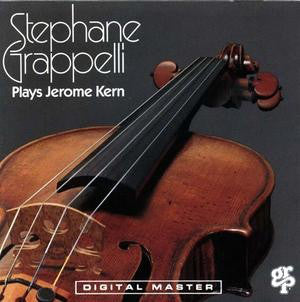
Grappelli Plays Jerome Kern
1987
GRP

It’s always a special treat to listen to one of Grappelli’s “songbook” albums – collections of standards by specific composers. This is the only one that focuses on music of Jerome Kern, who worked with Oscar Hammerstein II to create the score of Show Boat. Grappelli’s take on “Ol’ Man River” is made almost too sweet by Jorge Calandrelli’s string orchestra arrangement. But Grappelli’s playing is so thoughtful and wistful that the melody is turned into an exquisite sculpture. And at 1:44, he doubles the tempo, so hang on!


  1. “St. Louis Blues”
Stéphane Grappelli/McCoy Tyner: One on One
1990
Fantasy

Grappelli first recorded this standard in 1935 with Django Reinhardt. Here, in his last recording of it, he is paired with one of the finest of jazz pianists, McCoy Tyner. This recording represents yet another side of Grappelli: He didn’t play a lot of blues, but when he did, he gave it a bittersweet twist. And, of course, elegance.

More from Issue 89

View All Articles in Issue 89

Search Copper Magazine

#228 Serita’s Black Rose Duo Shakes Your Soul With a Blend of Funk, Rock, Blues and a Whole Lot More by Frank Doris Mar 02, 2026 #228 Vinyl, A Love Story by Wayne Robins Mar 02, 2026 #228 Thrill Seeker by B. Jan Montana Mar 02, 2026 #228 The Vinyl Beat: Donald Byrd, Bill Evans, Wes Montgomery, Eddie Palmieri and Frank Sinatra by Rudy Radelic Mar 02, 2026 #228 Listening to Prestige: The History of a Vitally Important Jazz Record Label by Frank Doris Mar 02, 2026 #228 How to Play in a Rock Band, 21: Touring With James Lee Stanley by Frank Doris Mar 02, 2026 #228 The NAMM 2026 Show: The Music Industry’s Premier Event by John Volanski Mar 02, 2026 #228 The Earliest Stars of Country Music, Part Two by Jeff Weiner Mar 02, 2026 #228 From The Audiophile's Guide: A Brief History of Stereophonic Sound by Paul McGowan Mar 02, 2026 #228 A Bone to Pick With Streaming Audio by Frank Doris Mar 02, 2026 #228 Blast Off With Bluesman Duke Robillard by Ray Chelstowski Mar 02, 2026 #228 A Visit to the Marten Loudspeaker Factory in Göteborg, Sweden by Ingo Schulz and Sebastian Polcyn Mar 02, 2026 #228 Pure Distortion by Peter Xeni Mar 02, 2026 #228 A Nagra Factory Tour by Markus "Marsu" Manthey Mar 02, 2026 #228 Back to My Reel-to-Reel Roots, Part 27: Noodge and Ye Shall Receive, Part Two by Ken Kessler Mar 02, 2026 #228 PS Audio in the News by PS Audio Staff Mar 02, 2026 #228 90-Degree Stereo by Frank Doris Mar 02, 2026 #228 The Keys to Art by Rich Isaacs Mar 02, 2026 #227 Seth Lewis Gets in the Groove With Take a Look Around: a Tribute to the Meters by Frank Doris Feb 02, 2026 #227 Passport to Sound: May Anwar’s Audio Learning Experience for Young People by Frank Doris Feb 02, 2026 #227 Conjectures on Cosmic Consciousness by B. Jan Montana Feb 02, 2026 #227 The Big Takeover Turns 45 by Wayne Robins Feb 02, 2026 #227 Music and Chocolate: On the Sensory Connection by Joe Caplan Feb 02, 2026 #227 Singer/Songwriter Chris Berardo: Getting Wilder All the Time by Ray Chelstowski Feb 02, 2026 #227 The Earliest Stars of Country Music, Part One by Jeff Weiner Feb 02, 2026 #227 The Vinyl Beat Goes Down to Tijuana (By Way of Los Angeles), Part Two by Rudy Radelic Feb 02, 2026 #227 How to Play in a Rock Band, 20: On the Road With Blood, Sweat & Tears’ Guitarist Gabe Cummins by Frank Doris Feb 02, 2026 #227 From The Audiophile’s Guide: Audio Specs and Measuring by Paul McGowan Feb 02, 2026 #227 Our Brain is Always Listening by Peter Trübner Feb 02, 2026 #227 PS Audio in the News by PS Audio Staff Feb 02, 2026 #227 The Listening Chair: Sleek Style and Sound From the Luxman L3 by Howard Kneller Feb 02, 2026 #227 The Los Angeles and Orange County Audio Society Celebrates Its 32nd Anniversary, Honoring David and Sheryl Lee Wilson and Bernie Grundman by Harris Fogel Feb 02, 2026 #227 Back to My Reel-to-Reel Roots, Part 26: Half Full – Not Half Empty, Redux by Ken Kessler Feb 02, 2026 #227 That's What Puzzles Us... by Frank Doris Feb 02, 2026 #227 Record-Breaking by Peter Xeni Feb 02, 2026 #227 The Long and Winding Road by B. Jan Montana Feb 02, 2026 #226 JJ Murphy’s Sleep Paralysis is a Genre-Bending Musical Journey Through Jazz, Fusion and More by Frank Doris Jan 05, 2026 #226 Stewardship by Consent by B. Jan Montana Jan 05, 2026 #226 Food, Music, and Sensory Experience: An Interview With Professor Jonathan Zearfoss of the Culinary Institute of America by Joe Caplan Jan 05, 2026 #226 Studio Confidential: A Who’s Who of Recording Engineers Tell Their Stories by Frank Doris Jan 05, 2026 #226 Pilot Radio is Reborn, 50 Years Later: Talking With CEO Barak Epstein by Frank Doris Jan 05, 2026 #226 The Vinyl Beat Goes Down to Tijuana (By Way of Los Angeles), Part One by Rudy Radelic Jan 05, 2026 #226 Capital Audiofest 2025: Must-See Stereo, Part Two by Frank Doris Jan 05, 2026 #226 My Morning Jacket’s Carl Broemel and Tyler Ramsey Collaborate on Their Acoustic Guitar Album, Celestun by Ray Chelstowski Jan 05, 2026 #226 The People Who Make Audio Happen: CanJam SoCal 2025, Part Two by Harris Fogel Jan 05, 2026 #226 How to Play in a Rock Band, 19: Touring Can Make You Crazy, Part One by Frank Doris Jan 05, 2026 #226 Linda Ronstadt Goes Bigger by Wayne Robins Jan 05, 2026

Stéphane Grappelli: Eight Great Tracks

Stéphane Grappelli: Eight Great Tracks

Nobody would dispute that Stéphane Grappelli is one of the top jazz violinists in history. So it says a lot about jazz history that, during much of the 1940s and early ’50s, he had trouble getting work and made only a handful of albums. That’s no reflection on his musicianship or level of ambition. It’s a big reflection on how the big-band jazz era couldn’t wrap its head around the concept of jazz violin, and also how Grappelli couldn’t be bothered with be-bop.

Fortunately for Grappelli, the options of jazz started to change and widen, allowing him to find a niche or two that really worked for him. He even got the chance to stretch outside of jazz proper (whatever that means). He collaborated very successfully with musicians in the new “fusion” genre and made some important crossover recordings with classical stars.

Born in 1908 in Paris, he survived poverty in a Dickensian-level orphanage until his Italian father was able to reclaim him after World War I. He then studied classical violin at the renowned Paris Conservatory, but was far more intrigued by the violin players he heard on the streets and in the Métro stations. His first plunge into jazz happened at the piano, not on violin, and he started getting regular piano jazz gigs. One night in 1929, a friend challenged him to play “Dinah” on his violin, and he was hooked.

The biggest impact on his early career came from guitarist Django Reinhardt, a Belgian living in Paris. He and Grappelli founded Le Quintette du Hot Club de France in 1934, introducing the Paris scene to the concept of guitar and violin as solo jazz instruments. Grappelli went on to a long career as the father of European violin jazz and was musically active until his death at age 89 in 1997.

So rosin up your bow and enjoy these eight great tracks by Stéphane Grappelli.

  1. “Dinah”
Stéphane Grappelli and Django Reinhardt: I Got Rhythm!
1934
Past Perfect (re-release)

It seems appropriate to start with the first tune Grappelli ever played on jazz violin, here as a duet with his long-time colleague Reinhardt. You can learn a lot more about Reinhardt from Woody Woodward’s 3-part series featured in Copper issues 86, 87, and here—but this track should be enough to intrigue those who aren’t already familiar with his buoyant style.

But we’re here to talk about Grappelli, who comes in at 1:52. His entry note alone shows several typical characteristics of his playing: 1) a gently humorous slide to the main pitch; 2) a lift, or sense of air under his bow, as if he’s breathing like a singer; 3) an elegant, ever simply functional, sound.


  1. “A Nightingale Sang in Berkeley Square”
Improvisations
1956
Mercury

Speaking of elegance, Grappelli had a breathtaking way with the standard “A Nightingale Sang in Berkeley Square,” which he recorded many times over the years. Besides the sophisticated brush strokes of his phrasing, the most obvious Grappelli touch is the ornamentation that lets you hear that nightingale sing.

In this recording, he’s with a trio consisting of Maurice Vander on piano, Pierre Michelot on bass, and “Mac Kac” Reiles on drums.


  1. “Memorial Jam for Stuff Smith”
Ponty-Grappelli
1973
Polygram

Grappelli was one of those musicians who wasn’t afraid to learn from the young. And this particular track shows him nodding to his own generation at the same time. The piece is dedicated to American jazz-violin pioneer Stuff Smith, who recorded with Grappelli on a few occasions.

French violinist Jean-Luc Ponty was only 30 when he and Grappelli started collaborating. But it wasn’t so much Ponty’s age as his approach to jazz that might have scared off another musician. Ponty played jazz fusion, which integrated electronica into jazz. That meant both a different style and a different type of instrument: an electronic violin hooked up to wah-wah and distortion pedals.

Grappelli himself did not change his style or instrument, but was happy to play alongside the newer ideas. Grappelli’s solo on acoustic violin starts (1:20), followed by a virtuosic piano solo by Maurice Vander acts as a palate-cleanser (2:24) before Ponty does his thing on electric violin at 3:17.


  1. “Moonlight in Vermont”

Stéphane Grappelli and Earl Hines: The Giants
1977
Black Lion

Earl “Fatha” Hines (1903-1983) was one of the great jazz pianists of the mid-20th century. He was known for the usual way he accentuated his rhythms. That’s what makes this pairing with Grappelli so intriguing. Hines’ subtle but effective syncopations form a unique structure for the violin to slither around in this fillagreed take on “Moonlight in Vermont”:


  1. “Tea for Two”

Stéphane Grappelli and Yehudi Menuhin: Tea for Two
1978
EMI

Given his classical training, it’s no surprise that Grappelli befriended Yehudi Menuhin, an American violinist and conductor with an insatiable curiosity about all of the world’s music. The two made several albums together, mainly focused on music that was considered old-fashioned for the time. Unlike his collaborations with Ponty – or, even more oddly, with bluegrass fiddler Vassar Clements – here Grappelli’s style matches his mate’s, rather than standing in contrast to it.

The ease and charm of this “Tea for Two” hides some top-notch technical playing.


  1. “Medley -- a) Tzigani; b) Fisztorza; c) Fulginti”

Stéphane Grappelli and Dave Grisman Live
1981
Warner Bros.

Grappelli live and Grappelli in collaboration with another great musician: you just can’t go wrong. But add to that Grappelli playing gypsy-style violin, one of his signature sounds, and you end up with a true gem. Mandolin master Grisman shares solos with Grappelli in this energetic and sexy set: “Medley — a) Tzigani; b) Fisztorza; c) Fulginti.”


  1. “Ol’ Man River”

Grappelli Plays Jerome Kern
1987
GRP

It’s always a special treat to listen to one of Grappelli’s “songbook” albums – collections of standards by specific composers. This is the only one that focuses on music of Jerome Kern, who worked with Oscar Hammerstein II to create the score of Show Boat. Grappelli’s take on “Ol’ Man River” is made almost too sweet by Jorge Calandrelli’s string orchestra arrangement. But Grappelli’s playing is so thoughtful and wistful that the melody is turned into an exquisite sculpture. And at 1:44, he doubles the tempo, so hang on!


  1. “St. Louis Blues”
Stéphane Grappelli/McCoy Tyner: One on One
1990
Fantasy

Grappelli first recorded this standard in 1935 with Django Reinhardt. Here, in his last recording of it, he is paired with one of the finest of jazz pianists, McCoy Tyner. This recording represents yet another side of Grappelli: He didn’t play a lot of blues, but when he did, he gave it a bittersweet twist. And, of course, elegance.

0 comments

Leave a comment

0 Comments

Your avatar

Loading comments...

🗑️ Delete Comment

Enter moderator password to delete this comment:

✏️ Edit Comment

Enter your email to verify ownership: