COPPER

A PS Audio Publication

Issue 174 • Free Online Magazine

Issue 174 The Copper Interview

Piper Payne – A Mastering Engineer For Next Generation Music, Part Three

Piper Payne – A Mastering Engineer For Next Generation Music, Part Three

After establishing her reputation as a mastering engineer in Oakland, California for artists like Third Eye Blind, The Go-Go’s, and LeAnn Rimes, Piper Payne merged her company with Infrasonic Mastering in Nashville, and has since expanded her audio industry involvement to become founder of Physical Music Products, a vinyl record pressing plant. In Part One of this interview (Issue 172) she discussed her mastering work protocols, her love of analog tape and equipment, and how she started Physical Music Products. Part Two continued with Piper telling us about her first exposure to mastering and studio work, how she approaches mastering different music genres and mastering for different formats, and her opinions on the DIY movement. This final installment continues on those topics and her experiences in handling the “loudness wars,” her home hi-fi system preferences, her involvement with education, and news about new artists and projects.

John Seetoo: What new artists do you like? They don’t necessarily have to be signed to a label.

Piper Payne: When you say “new,” like someone who’s brand new, or someone who’s [been] a younger pop artist in the last five years?

JS: Artists of any genre you’ve heard over the last five years who weren’t around before then.

PP: Okay, great example, this guy, Andy Shauf. S-H-A-U-F. He wrote, played, recorded, mixed, and I think he’s mastered all of his records so far. And that’s just because he couldn’t find someone who could collaborate with him in the right way. But I think that his records are some of the best sounding records and the most compelling songs I’ve ever heard.

Lizzo: you know, her records don’t sound all that great, but the amount of energy that she puts into them – I mean, it’s amazing, absolutely amazing. Anything that [producer/songwriter] Max Martin’s involved in…I’m going to automatically log one of my favorite artists in the whole world, who is one that I work with all the time: Madame Gandhi. She’s making music with real instruments. And it sounds electronic and it sounds like pop and it carries this amazing message, but she’s an actual real skilled drummer who plays all real drums on her stuff. Some of it is programs, but the root of it is all real instruments.

JS: Discerning listeners have been complaining about the “loudness wars” in music for decades. (“Loudness wars” refers to the trend over the past few decades to increase audio levels on recordings, often using extreme dynamic range compression.) Do you see that continuing? Or have you seen a leveling off?

PP: I feel like it’s pretty much leveled off, and I think a lot has leveled off [as a result] of everybody going, “All right. Pretty loud is good enough.” It’s not what the powers that be would like it to be. Not every record that I do is -14 LUFS [Loudness Units Full Scale; -14 is considered best for streaming audio – Ed]. Not every record I do is even -10 LUFS or -9 LUFS. I mean, a lot of them are a lot louder than that [the lower the number, the louder the recording]. But there are some moments when the artist [says],” Yeah, that’s loud enough, that’s good enough.” That gives me hope that the loudness wars are pretty much over.

However, with spatial audio mixes] – if you go over -18 LUFS, you’re done. You can’t make it louder than that. Period. So, in some ways, with spatial I think the loudness wars are over. But with digital [recordings], I think we’ve all kind of given [each other] an “agree to disagree.” I think everybody’s over it.

JS: So…you’re not getting continual requests to compress the hell out of the sound?

PP: I have one client right now; we’re loud. I submitted a live master to begin with. He’s like, “Turn it up, turn it up, turn it up, turn it up!” And I’m like, “This is not going to sound good. It’s not going to sound good.” He [responds], “I know, I just want to be loud.”

But the problem is that they don’t understand that if it’s super loud and hits a streaming platform, they’re going to turn it down; therefore, it’s going to feel quieter and farther away. And they’re just not getting it. So, I just…the customer’s always right, I’m just gonna give [them] what [they] asked for.

And then they’ll release the single, and they’ll come back to me and say, “You’re right.” and I’ll say, “Yes, I know, I was right.” And then they’ll have me create [another] master that’s not quite as loud. Put that on the streaming service and they love it and everything sounds good. And then the next song comes in, and they go,, “Turn it up, turn it up, turn it up!” They don’t learn their lesson. We just repeat that same process over and over again. Maybe going on a couple years working with them.

JS: Slow, slow learners. Okay. Some engineers work in specific music genres, and they have established reputations for themselves as “go-to” specialists. For example, former AES president Jim Anderson is well known for big-band jazz. Steve Hoffman is best-known for restoration and remastering of classic rock and R&B records. You’re fairly eclectic in your work. Are there any artists or music genres you think would be a challenge for you to master for, and if so, why?

PP: I just got a throat singer record that came in today.

JS: A Tuvan throat singer?

PP: Yeah. I’m not really sure what to do with it, to be honest. At this point, I’m trying to figure it out. This one is going to be really challenging because I’ve never cut a throat singer record before. But I would say you could throw anything else my way and I probably would be okay with it.

I feel pretty confident for the most part. I am, like you said, eclectic; I’ve been very equal opportunity in the masters that I’ve done over the years. I’ve tried to really learn everything I can in the moment, so that I can apply it in the future. There are things about mastering for the classical genre that I apply to trip and hip-hop every day. There are things about pop vocals from pop music that I apply to classical masters.

So, there’s something to learn about every genre and at this point, if you’re a mastering engineer, [if] you’ve been doing this for more than a year and you’ve been accepting money for it, you should be able to master pretty much anything that’s thrown at you because [mastering] is really not genre-dependent. It’s more [about optimizing] bass, treble, loudness, spatial information, and delivery specs, more than [about any specific] genre. But to be really good at it, you do have to know the genre.

JS: Leslie Ann Jones, Sylvia Massy, June Millington and Ulrike Schwarz are a few female engineer/producers I’ve interviewed in the past, and all are well-respected for their work. One thing they have in common is that all of them are also involved to some degree with education, something in which you share. In the case of June Millington, for example (interviewed in Copper Issues 79, 80 and 81), she actually created The Institute for the Musical Arts to break stereotypes about women’s inability to play and produce music from the technical side. What led you to get involved in education, and what was your motivation? What are your long-term goals?

PP: I’m just thinking to myself; I’ve had a long career as an educator [considering] how young I am. I remember starting up a drum lessons business when I was about 14 years old. Going back to my entrepreneurship. By the time I was about 16, I had the corner on all the young drummers in my town. I was teaching about 24 lessons a week, which is quite a lot. And I took that all the way through college.

So, I’ve been teaching for a long time, not just in audio, but when I was in San Francisco, after having been there for a few years, I got asked to become a college professor at a really wonderful audio program in the East Bay. Those times when I’m teaching and educating – those are some of my very favorite parts of being an audio engineer. It’s because you can have these really profound experiences with students who are learning and coming from all different backgrounds who just want to know about music and about how things get recorded. But at the same time, there are only so many things you can teach them about the basics. Once they learn those, they have to apply those basics to be able to make their own techniques.

And that’s kind of my favorite part about having been an audio educator: it’s that I now have students who are becoming audio engineers in their own right, and are applying the techniques that I taught them, but then will come back to me and say, “But yeah, I also know how to do this and this and this…” and I’m like, “Holy sh*t, who taught you that?” They learn it themselves. It’s really a part of my career that I kind of miss at this point. I wish I were teaching a little bit more right now. But the most I can do is in seminars here and there and guest lecturing at conferences and things like that.

The folks that you mentioned that you’ve interviewed before, those are some of my mentors, and some of the women who taught me what I know. So it’s kind of neat to hear you say their names.
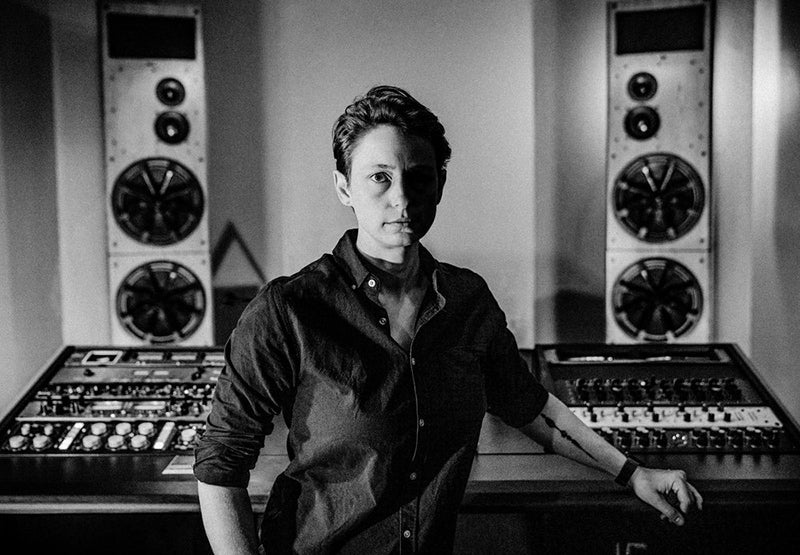
 

Piper Payne. From the piperpayne.com website.

Piper Payne. From the piperpayne.com website.


JS: When Piper Payne listens to music for her personal enjoyment, what kind of system does she use and how does it differ from what she uses in the studio and why?

PP: That’s a great question. I have a whole system in the house here. My wife and I built a room in the back of the house’s backyard; we call it the back house. It’s a room for all of her LPs. She took my system up there, darn it. My Joseph Audio RM25XL [speakers] and my VTL tube [integrated] amp and my turntable are still down in the main house. She’s got a Thorens [turntable] up there. And then we have a set of Tannoy Little Gold Monitors and an old Marantz tube amp with my T+A G 10 turntable. That’s what I usually listen to records on when I’m in the back house. So we have a couple of systems.

And then I have a studio downstairs that I cut masters on or do revisions on when I’m not at the studio downtown. And we have some – Catherine is an ATC [speakers] lover and I’m a PMC [monitors] lover. So, of course, we have the ATC at the house, (laughs) the ATC 45 (SCM45APro) which is an active three-way speaker. I have my PMCs – my big PMCs are still in the crates from the move. We’ll set them up in a studio here in Nashville sometime. My usual go-to listening are the Little Golds at the moment.

JS: The equipment that you work with for mastering is supposed to be relatively flat compared to listening for pleasure, though, right? I would imagine you don’t want speakers for mastering that have excess coloration.

PP: You don’t want too much of it. But I would venture to say that the Little Golds are a little hyped. They’re a little honky, I guess would be the best way to put it, [with] a little bit of a 1kHz bump. But the systems that we have are relatively flat. The home systems we like are not too hyped. They’re pretty true to what we would hear in the studio.

JS: Is that your personal preference? Or is it just probably a little bit of both?

PP: Probably a little bit of both. If I were to make any adjustments to either system, I would put a sub in, which would be hyped too, by adding a little low end. Just because I like it. (laughs)

JS: Are you working on anything now that might be interesting to tell Copper readers?.

PP: Yeah, the new Madam Gandhi record is in production right now. We just released the first single off the record, “Crystals and Congress,” and it’s been mastered for all formats. I think we’ll probably put out some vinyl at some point too for this one. And I’m blown away and super-happy at how the [Dolby] Atmos master came out.

We are always working on really cool things at Physical Music Products that we probably can’t talk about for a while. If this article comes out late enough, there’s a couple of cool projects that we’ve got on the presses right now that I’ll be able to share with you.

JS: Well, thank you so much. This has been fascinating. It was a joy to speak with you.


Header image courtesy of Piper Payne.

More from Issue 174

View All Articles in Issue 174

Search Copper Magazine

#228 Serita’s Black Rose Duo Shakes Your Soul With a Blend of Funk, Rock, Blues and a Whole Lot More by Frank Doris Mar 02, 2026 #228 Vinyl, A Love Story by Wayne Robins Mar 02, 2026 #228 Thrill Seeker by B. Jan Montana Mar 02, 2026 #228 The Vinyl Beat: Donald Byrd, Bill Evans, Wes Montgomery, Eddie Palmieri and Frank Sinatra by Rudy Radelic Mar 02, 2026 #228 Listening to Prestige: The History of a Vitally Important Jazz Record Label by Frank Doris Mar 02, 2026 #228 How to Play in a Rock Band, 21: Touring With James Lee Stanley by Frank Doris Mar 02, 2026 #228 The NAMM 2026 Show: The Music Industry’s Premier Event by John Volanski Mar 02, 2026 #228 The Earliest Stars of Country Music, Part Two by Jeff Weiner Mar 02, 2026 #228 From The Audiophile's Guide: A Brief History of Stereophonic Sound by Paul McGowan Mar 02, 2026 #228 A Bone to Pick With Streaming Audio by Frank Doris Mar 02, 2026 #228 Blast Off With Bluesman Duke Robillard by Ray Chelstowski Mar 02, 2026 #228 A Visit to the Marten Loudspeaker Factory in Göteborg, Sweden by Ingo Schulz and Sebastian Polcyn Mar 02, 2026 #228 Pure Distortion by Peter Xeni Mar 02, 2026 #228 A Nagra Factory Tour by Markus "Marsu" Manthey Mar 02, 2026 #228 Back to My Reel-to-Reel Roots, Part 27: Noodge and Ye Shall Receive, Part Two by Ken Kessler Mar 02, 2026 #228 PS Audio in the News by PS Audio Staff Mar 02, 2026 #228 90-Degree Stereo by Frank Doris Mar 02, 2026 #228 The Keys to Art by Rich Isaacs Mar 02, 2026 #227 Seth Lewis Gets in the Groove With Take a Look Around: a Tribute to the Meters by Frank Doris Feb 02, 2026 #227 Passport to Sound: May Anwar’s Audio Learning Experience for Young People by Frank Doris Feb 02, 2026 #227 Conjectures on Cosmic Consciousness by B. Jan Montana Feb 02, 2026 #227 The Big Takeover Turns 45 by Wayne Robins Feb 02, 2026 #227 Music and Chocolate: On the Sensory Connection by Joe Caplan Feb 02, 2026 #227 Singer/Songwriter Chris Berardo: Getting Wilder All the Time by Ray Chelstowski Feb 02, 2026 #227 The Earliest Stars of Country Music, Part One by Jeff Weiner Feb 02, 2026 #227 The Vinyl Beat Goes Down to Tijuana (By Way of Los Angeles), Part Two by Rudy Radelic Feb 02, 2026 #227 How to Play in a Rock Band, 20: On the Road With Blood, Sweat & Tears’ Guitarist Gabe Cummins by Frank Doris Feb 02, 2026 #227 From The Audiophile’s Guide: Audio Specs and Measuring by Paul McGowan Feb 02, 2026 #227 Our Brain is Always Listening by Peter Trübner Feb 02, 2026 #227 PS Audio in the News by PS Audio Staff Feb 02, 2026 #227 The Listening Chair: Sleek Style and Sound From the Luxman L3 by Howard Kneller Feb 02, 2026 #227 The Los Angeles and Orange County Audio Society Celebrates Its 32nd Anniversary, Honoring David and Sheryl Lee Wilson and Bernie Grundman by Harris Fogel Feb 02, 2026 #227 Back to My Reel-to-Reel Roots, Part 26: Half Full – Not Half Empty, Redux by Ken Kessler Feb 02, 2026 #227 That's What Puzzles Us... by Frank Doris Feb 02, 2026 #227 Record-Breaking by Peter Xeni Feb 02, 2026 #227 The Long and Winding Road by B. Jan Montana Feb 02, 2026 #226 JJ Murphy’s Sleep Paralysis is a Genre-Bending Musical Journey Through Jazz, Fusion and More by Frank Doris Jan 05, 2026 #226 Stewardship by Consent by B. Jan Montana Jan 05, 2026 #226 Food, Music, and Sensory Experience: An Interview With Professor Jonathan Zearfoss of the Culinary Institute of America by Joe Caplan Jan 05, 2026 #226 Studio Confidential: A Who’s Who of Recording Engineers Tell Their Stories by Frank Doris Jan 05, 2026 #226 Pilot Radio is Reborn, 50 Years Later: Talking With CEO Barak Epstein by Frank Doris Jan 05, 2026 #226 The Vinyl Beat Goes Down to Tijuana (By Way of Los Angeles), Part One by Rudy Radelic Jan 05, 2026 #226 Capital Audiofest 2025: Must-See Stereo, Part Two by Frank Doris Jan 05, 2026 #226 My Morning Jacket’s Carl Broemel and Tyler Ramsey Collaborate on Their Acoustic Guitar Album, Celestun by Ray Chelstowski Jan 05, 2026 #226 The People Who Make Audio Happen: CanJam SoCal 2025, Part Two by Harris Fogel Jan 05, 2026 #226 How to Play in a Rock Band, 19: Touring Can Make You Crazy, Part One by Frank Doris Jan 05, 2026 #226 Linda Ronstadt Goes Bigger by Wayne Robins Jan 05, 2026

Piper Payne – A Mastering Engineer For Next Generation Music, Part Three

Piper Payne – A Mastering Engineer For Next Generation Music, Part Three

After establishing her reputation as a mastering engineer in Oakland, California for artists like Third Eye Blind, The Go-Go’s, and LeAnn Rimes, Piper Payne merged her company with Infrasonic Mastering in Nashville, and has since expanded her audio industry involvement to become founder of Physical Music Products, a vinyl record pressing plant. In Part One of this interview (Issue 172) she discussed her mastering work protocols, her love of analog tape and equipment, and how she started Physical Music Products. Part Two continued with Piper telling us about her first exposure to mastering and studio work, how she approaches mastering different music genres and mastering for different formats, and her opinions on the DIY movement. This final installment continues on those topics and her experiences in handling the “loudness wars,” her home hi-fi system preferences, her involvement with education, and news about new artists and projects.

John Seetoo: What new artists do you like? They don’t necessarily have to be signed to a label.

Piper Payne: When you say “new,” like someone who’s brand new, or someone who’s [been] a younger pop artist in the last five years?

JS: Artists of any genre you’ve heard over the last five years who weren’t around before then.

PP: Okay, great example, this guy, Andy Shauf. S-H-A-U-F. He wrote, played, recorded, mixed, and I think he’s mastered all of his records so far. And that’s just because he couldn’t find someone who could collaborate with him in the right way. But I think that his records are some of the best sounding records and the most compelling songs I’ve ever heard.

Lizzo: you know, her records don’t sound all that great, but the amount of energy that she puts into them – I mean, it’s amazing, absolutely amazing. Anything that [producer/songwriter] Max Martin’s involved in…I’m going to automatically log one of my favorite artists in the whole world, who is one that I work with all the time: Madame Gandhi. She’s making music with real instruments. And it sounds electronic and it sounds like pop and it carries this amazing message, but she’s an actual real skilled drummer who plays all real drums on her stuff. Some of it is programs, but the root of it is all real instruments.

JS: Discerning listeners have been complaining about the “loudness wars” in music for decades. (“Loudness wars” refers to the trend over the past few decades to increase audio levels on recordings, often using extreme dynamic range compression.) Do you see that continuing? Or have you seen a leveling off?

PP: I feel like it’s pretty much leveled off, and I think a lot has leveled off [as a result] of everybody going, “All right. Pretty loud is good enough.” It’s not what the powers that be would like it to be. Not every record that I do is -14 LUFS [Loudness Units Full Scale; -14 is considered best for streaming audio – Ed]. Not every record I do is even -10 LUFS or -9 LUFS. I mean, a lot of them are a lot louder than that [the lower the number, the louder the recording]. But there are some moments when the artist [says],” Yeah, that’s loud enough, that’s good enough.” That gives me hope that the loudness wars are pretty much over.

However, with spatial audio mixes] – if you go over -18 LUFS, you’re done. You can’t make it louder than that. Period. So, in some ways, with spatial I think the loudness wars are over. But with digital [recordings], I think we’ve all kind of given [each other] an “agree to disagree.” I think everybody’s over it.

JS: So…you’re not getting continual requests to compress the hell out of the sound?

PP: I have one client right now; we’re loud. I submitted a live master to begin with. He’s like, “Turn it up, turn it up, turn it up, turn it up!” And I’m like, “This is not going to sound good. It’s not going to sound good.” He [responds], “I know, I just want to be loud.”

But the problem is that they don’t understand that if it’s super loud and hits a streaming platform, they’re going to turn it down; therefore, it’s going to feel quieter and farther away. And they’re just not getting it. So, I just…the customer’s always right, I’m just gonna give [them] what [they] asked for.

And then they’ll release the single, and they’ll come back to me and say, “You’re right.” and I’ll say, “Yes, I know, I was right.” And then they’ll have me create [another] master that’s not quite as loud. Put that on the streaming service and they love it and everything sounds good. And then the next song comes in, and they go,, “Turn it up, turn it up, turn it up!” They don’t learn their lesson. We just repeat that same process over and over again. Maybe going on a couple years working with them.

JS: Slow, slow learners. Okay. Some engineers work in specific music genres, and they have established reputations for themselves as “go-to” specialists. For example, former AES president Jim Anderson is well known for big-band jazz. Steve Hoffman is best-known for restoration and remastering of classic rock and R&B records. You’re fairly eclectic in your work. Are there any artists or music genres you think would be a challenge for you to master for, and if so, why?

PP: I just got a throat singer record that came in today.

JS: A Tuvan throat singer?

PP: Yeah. I’m not really sure what to do with it, to be honest. At this point, I’m trying to figure it out. This one is going to be really challenging because I’ve never cut a throat singer record before. But I would say you could throw anything else my way and I probably would be okay with it.

I feel pretty confident for the most part. I am, like you said, eclectic; I’ve been very equal opportunity in the masters that I’ve done over the years. I’ve tried to really learn everything I can in the moment, so that I can apply it in the future. There are things about mastering for the classical genre that I apply to trip and hip-hop every day. There are things about pop vocals from pop music that I apply to classical masters.

So, there’s something to learn about every genre and at this point, if you’re a mastering engineer, [if] you’ve been doing this for more than a year and you’ve been accepting money for it, you should be able to master pretty much anything that’s thrown at you because [mastering] is really not genre-dependent. It’s more [about optimizing] bass, treble, loudness, spatial information, and delivery specs, more than [about any specific] genre. But to be really good at it, you do have to know the genre.

JS: Leslie Ann Jones, Sylvia Massy, June Millington and Ulrike Schwarz are a few female engineer/producers I’ve interviewed in the past, and all are well-respected for their work. One thing they have in common is that all of them are also involved to some degree with education, something in which you share. In the case of June Millington, for example (interviewed in Copper Issues 79, 80 and 81), she actually created The Institute for the Musical Arts to break stereotypes about women’s inability to play and produce music from the technical side. What led you to get involved in education, and what was your motivation? What are your long-term goals?

PP: I’m just thinking to myself; I’ve had a long career as an educator [considering] how young I am. I remember starting up a drum lessons business when I was about 14 years old. Going back to my entrepreneurship. By the time I was about 16, I had the corner on all the young drummers in my town. I was teaching about 24 lessons a week, which is quite a lot. And I took that all the way through college.

So, I’ve been teaching for a long time, not just in audio, but when I was in San Francisco, after having been there for a few years, I got asked to become a college professor at a really wonderful audio program in the East Bay. Those times when I’m teaching and educating – those are some of my very favorite parts of being an audio engineer. It’s because you can have these really profound experiences with students who are learning and coming from all different backgrounds who just want to know about music and about how things get recorded. But at the same time, there are only so many things you can teach them about the basics. Once they learn those, they have to apply those basics to be able to make their own techniques.

And that’s kind of my favorite part about having been an audio educator: it’s that I now have students who are becoming audio engineers in their own right, and are applying the techniques that I taught them, but then will come back to me and say, “But yeah, I also know how to do this and this and this…” and I’m like, “Holy sh*t, who taught you that?” They learn it themselves. It’s really a part of my career that I kind of miss at this point. I wish I were teaching a little bit more right now. But the most I can do is in seminars here and there and guest lecturing at conferences and things like that.

The folks that you mentioned that you’ve interviewed before, those are some of my mentors, and some of the women who taught me what I know. So it’s kind of neat to hear you say their names.


Piper Payne. From the piperpayne.com website.

Piper Payne. From the piperpayne.com website.


JS: When Piper Payne listens to music for her personal enjoyment, what kind of system does she use and how does it differ from what she uses in the studio and why?

PP: That’s a great question. I have a whole system in the house here. My wife and I built a room in the back of the house’s backyard; we call it the back house. It’s a room for all of her LPs. She took my system up there, darn it. My Joseph Audio RM25XL [speakers] and my VTL tube [integrated] amp and my turntable are still down in the main house. She’s got a Thorens [turntable] up there. And then we have a set of Tannoy Little Gold Monitors and an old Marantz tube amp with my T+A G 10 turntable. That’s what I usually listen to records on when I’m in the back house. So we have a couple of systems.

And then I have a studio downstairs that I cut masters on or do revisions on when I’m not at the studio downtown. And we have some – Catherine is an ATC [speakers] lover and I’m a PMC [monitors] lover. So, of course, we have the ATC at the house, (laughs) the ATC 45 (SCM45APro) which is an active three-way speaker. I have my PMCs – my big PMCs are still in the crates from the move. We’ll set them up in a studio here in Nashville sometime. My usual go-to listening are the Little Golds at the moment.

JS: The equipment that you work with for mastering is supposed to be relatively flat compared to listening for pleasure, though, right? I would imagine you don’t want speakers for mastering that have excess coloration.

PP: You don’t want too much of it. But I would venture to say that the Little Golds are a little hyped. They’re a little honky, I guess would be the best way to put it, [with] a little bit of a 1kHz bump. But the systems that we have are relatively flat. The home systems we like are not too hyped. They’re pretty true to what we would hear in the studio.

JS: Is that your personal preference? Or is it just probably a little bit of both?

PP: Probably a little bit of both. If I were to make any adjustments to either system, I would put a sub in, which would be hyped too, by adding a little low end. Just because I like it. (laughs)

JS: Are you working on anything now that might be interesting to tell Copper readers?.

PP: Yeah, the new Madam Gandhi record is in production right now. We just released the first single off the record, “Crystals and Congress,” and it’s been mastered for all formats. I think we’ll probably put out some vinyl at some point too for this one. And I’m blown away and super-happy at how the [Dolby] Atmos master came out.

We are always working on really cool things at Physical Music Products that we probably can’t talk about for a while. If this article comes out late enough, there’s a couple of cool projects that we’ve got on the presses right now that I’ll be able to share with you.

JS: Well, thank you so much. This has been fascinating. It was a joy to speak with you.


Header image courtesy of Piper Payne.

0 comments

Leave a comment

0 Comments

Your avatar

Loading comments...

🗑️ Delete Comment

Enter moderator password to delete this comment:

✏️ Edit Comment

Enter your email to verify ownership: