COPPER

A PS Audio Publication

Issue 81 • Free Online Magazine

Issue 81 TRADING EIGHTS

Lee Morgan: Eight Great Tracks

[FYI: from Columbia University’s Jazz Glossary—yes, there is such a thing: “Also ‘trading fours,’ etc. Soloists taking turns at improvising, playing for eight (or four, etc.) bars at a time.” I’d somehow never heard the term before—so thanks to Anne for educating me, yet again—Ed.]

In the wee hours of a snowy February morning in 1972, Helen Morgan entered Stub’s Saloon in New York City’s East Village and shot her husband dead. She couldn’t take any more of his drug use and infidelity. Sadly for American music, she’d silenced a spectacularly unique jazz mind. Trumpeter Lee Morgan was only 33 years old.

His main legacy in jazz history is as one of the inventors of hard bop. That was a 1950s reaction to cool jazz; hard bop players thought jazz was getting too classical, so they tried to bring the blues, gospel, and other Afro-centric genres back into their music.

Morgan got off to an impressive start. The Philadelphia native was only 17 when Dizzy Gillespie hired him for his bebop big band. At 19, he was invited by John Coltrane to play on the album Blues Train, a gem among Coltrane’s breathtaking output. At 20, Morgan was tapped to join Art Blakey’s Jazz Messengers, arguably the nest where hard bop hatched.

Like any truly great jazz music, Morgan’s playing is impossible to put into words. Those who try end up with accidental poetry: Trumpeter Dominick Farinacci has said that Morgan played “in waves over the grooves.” Fair enough.

Here are eight glorious cuts featuring the trumpet of Lee Morgan.

  1. “Along Came Betty”

    Moanin’
    Blue Note
    1958

    Existing in one form or another under various names since the late 1940’s, the Jazz Messengers were founded by drummer Art Blakey. Their personnel changed frequently, and the ensemble that Morgan was asked to join included saxophonist Benny Golson, pianist Bobby Timmons, and bassist Jymie Merritt. Morgan stayed with the group until 1961.

    Moanin’ was the Messengers’ first release with Blue Note, which would be Morgan’s label for life. Most of the tunes are by Golson, including “Along Came Betty.” From the opening phrase, Morgan establishes himself as a superb ensemble player, working an octave above Golson like they’re part of the same musical being. Morgan’s first solo, at 1:14, has a rhythmic casualness about it that hides its complexity — one of his trademarks.


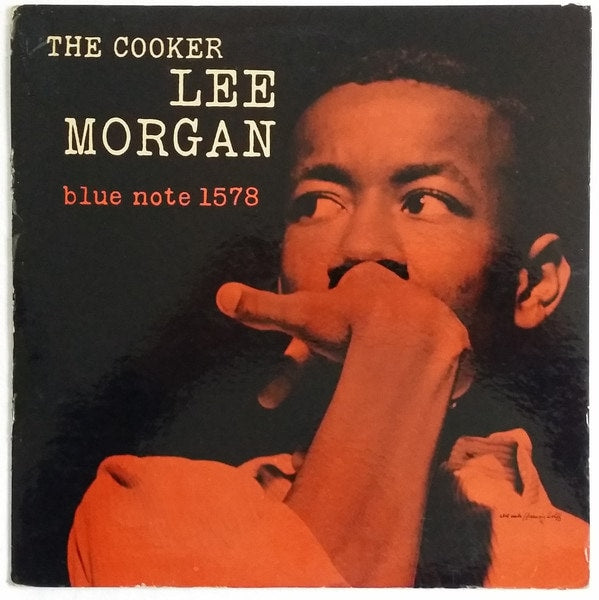
    1. “Heavy Dipper”

      The Cooker
      Blue Note
      1957

      Morgan’s solo album The Cooker was released in 1958. It’s the first record containing tunes by Morgan, who wrote some 200 pieces during his short life.

      “Heavy Dipper” is a Morgan composition that looks both forward and back. The jaunty main theme, especially in the way Philly Joe Jones supports it with hi-hat cymbal, gives the tune an old-fashioned swing flavor. But the seesawing between major and minor and the freedom of the improv tells you it’s bebop. By the time Morgan’s second solo comes around at 5:08, the simple melodic structure has shattered like a champagne bottle against a ship. Jones’ brush patiently strokes that cymbal through the wildness.


      1. “Running Brook”

        Here’s Lee Morgan
        Blue Note
        1960

        It’s no surprise that a Wayne Shorter composition found its way onto a Lee Morgan album. In 1959, after Gorson left the Jazz Messengers, Morgan recommended saxophonist Shorter to take Gorson’s place. It was the start of a deep friendship. For a heartbreaking sense of how close Shorter and Morgan were, watch Kasper Collin’s 2017 documentary I Called Him Morgan.

        Shorter does not appear on this album, however. Clifford Jordan plays tenor sax, with Art Blakey himself at the drums. “Running Brook” lets Morgan spin out longer melodic phrases than you often hear in his own compositions. Even in the trumpet solo (2:25), for all its jumping around, Morgan maintains a kind of peace and orderliness that shows another side of him.


        1. “Gary’s Notebook”

          The Sidewinder
          Blue Note
          1964

          With his song, “The Sidewinder,” Morgan simultaneously put money in the coffers of struggling Blue Note Records (the single version hit No. 100 on the pop charts!) and established “soul jazz” as a viable subgenre.

          The whole album was written by Morgan, and “Gary’s Notebook” is right up there in quality with the more famous title track. It also has a similarly meandering melodic and harmonic style. As usual Morgan’s ensemble blend, especially with tenor sax player Joe Henderson, is sensitive and expressive. The rest of the band is Barry Harris (piano), Bob Cranshaw (bass), and Billy Higgins (drums).


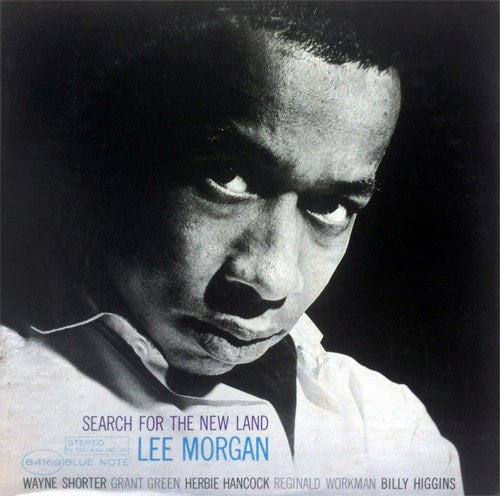
          1. “Melancholee”

            Search for the New Land
            Blue Note
            1964

            The aching “Melancholee” gives us a glimpse into the darkness and sorrow that seems to have haunted Morgan. Blue Note delayed releasing this album until 1966, although it was recorded before The Sidewinder. This was not the stuff of pop charts, but an unapologetic delving into life’s pain. Wayne Shorter plays sax, and that’s Herbie Hancock on wistful piano and Grant Green on guitar (an instrument Morgan didn’t often play with).


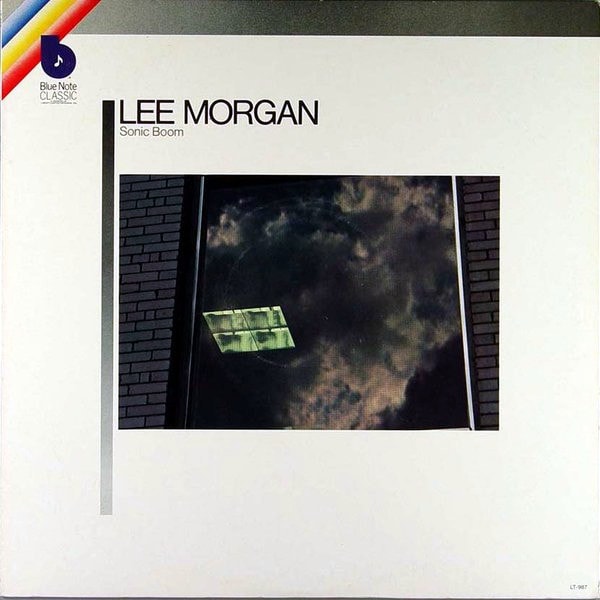
            1. “Sonic Boom”

              Sonic Boom
              Blue Note
              1967

              It took Blue Note until 1979 to release these tunes, but it was worth the wait. The title track, a Morgan composition, opens atmospherically, propelled by Ron Carter’s bass. Billy Higgins creates an unusual texture with his reverberant bass drum.

              Anyone who still isn’t sure about Morgan’s technical sophistication on the trumpet should listen to the intricate solo starting at 0:57, notable for the way Morgan restricts himself to a low pitch range.


              1. “Ill Wind”

                Cornbread
                Blue Note
                1967

                American popular song wasn’t really Morgan’s thing, but he made an exception for “Ill Wind” by Harold Arlen (best known for composing The Wizard of Oz). The song had bona fides among African-American jazz musicians: Arlen originally wrote it for a 1934 Cotton Club show, and Sarah Vaughan had recorded it in 1961 (lyrics by Ted Koehler).

                On piano, Herbie Hancock – aided by Jackie McLean’s alto sax and Hank Mobley’s tenor – lays down an off-handed, shuffling mood. Morgan slides right in, proving he can “sing” with the best of them.


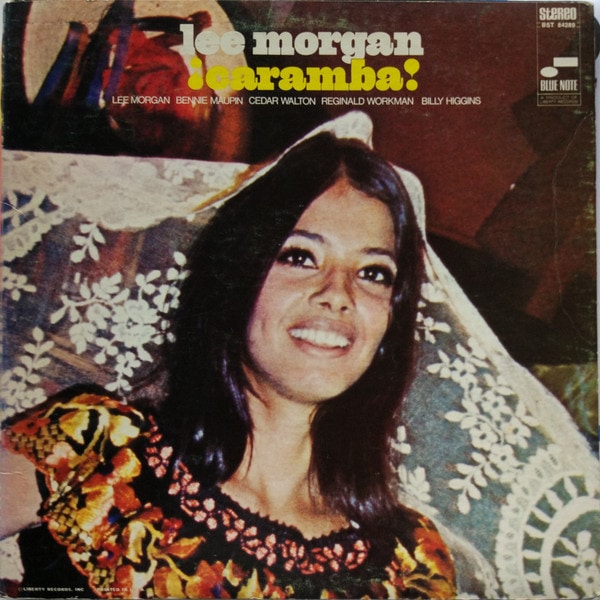
                1. “Soulita”

                  ¡Caramba!
                  Blue Note
                  1968

                  The pop side of soul music meets bebop in this up-tempo number composed by Morgan. While it doesn’t have the sexy mystery of “The Sidewinder,” one could argue that it’s even more accessible.

                  But that populist style didn’t mean Morgan delivered lesser goods. The interplay of his devilish triplet patterns against Cedar Walton’s laid-back piano chords (starting around 1:30) is enough to warrant our attention. Another interesting element – and evidence of Cal Massey’s skills as an arranger – happens when Walton himself takes a solo, and Morgan and tenor sax player Bennie Maupin offer scattered moments of backup.

                  More from Issue 81

                  View All Articles in Issue 81

                  Search Copper Magazine

                  #228 Serita’s Black Rose Duo Shakes Your Soul With a Blend of Funk, Rock, Blues and a Whole Lot More by Frank Doris Mar 02, 2026 #228 Vinyl, A Love Story by Wayne Robins Mar 02, 2026 #228 Thrill Seeker by B. Jan Montana Mar 02, 2026 #228 The Vinyl Beat: Donald Byrd, Bill Evans, Wes Montgomery, Eddie Palmieri and Frank Sinatra by Rudy Radelic Mar 02, 2026 #228 Listening to Prestige: The History of a Vitally Important Jazz Record Label by Frank Doris Mar 02, 2026 #228 How to Play in a Rock Band, 21: Touring With James Lee Stanley by Frank Doris Mar 02, 2026 #228 The NAMM 2026 Show: The Music Industry’s Premier Event by John Volanski Mar 02, 2026 #228 The Earliest Stars of Country Music, Part Two by Jeff Weiner Mar 02, 2026 #228 From The Audiophile's Guide: A Brief History of Stereophonic Sound by Paul McGowan Mar 02, 2026 #228 A Bone to Pick With Streaming Audio by Frank Doris Mar 02, 2026 #228 Blast Off With Bluesman Duke Robillard by Ray Chelstowski Mar 02, 2026 #228 A Visit to the Marten Loudspeaker Factory in Göteborg, Sweden by Ingo Schulz and Sebastian Polcyn Mar 02, 2026 #228 Pure Distortion by Peter Xeni Mar 02, 2026 #228 A Nagra Factory Tour by Markus "Marsu" Manthey Mar 02, 2026 #228 Back to My Reel-to-Reel Roots, Part 27: Noodge and Ye Shall Receive, Part Two by Ken Kessler Mar 02, 2026 #228 PS Audio in the News by PS Audio Staff Mar 02, 2026 #228 90-Degree Stereo by Frank Doris Mar 02, 2026 #228 The Keys to Art by Rich Isaacs Mar 02, 2026 #227 Seth Lewis Gets in the Groove With Take a Look Around: a Tribute to the Meters by Frank Doris Feb 02, 2026 #227 Passport to Sound: May Anwar’s Audio Learning Experience for Young People by Frank Doris Feb 02, 2026 #227 Conjectures on Cosmic Consciousness by B. Jan Montana Feb 02, 2026 #227 The Big Takeover Turns 45 by Wayne Robins Feb 02, 2026 #227 Music and Chocolate: On the Sensory Connection by Joe Caplan Feb 02, 2026 #227 Singer/Songwriter Chris Berardo: Getting Wilder All the Time by Ray Chelstowski Feb 02, 2026 #227 The Earliest Stars of Country Music, Part One by Jeff Weiner Feb 02, 2026 #227 The Vinyl Beat Goes Down to Tijuana (By Way of Los Angeles), Part Two by Rudy Radelic Feb 02, 2026 #227 How to Play in a Rock Band, 20: On the Road With Blood, Sweat & Tears’ Guitarist Gabe Cummins by Frank Doris Feb 02, 2026 #227 From The Audiophile’s Guide: Audio Specs and Measuring by Paul McGowan Feb 02, 2026 #227 Our Brain is Always Listening by Peter Trübner Feb 02, 2026 #227 PS Audio in the News by PS Audio Staff Feb 02, 2026 #227 The Listening Chair: Sleek Style and Sound From the Luxman L3 by Howard Kneller Feb 02, 2026 #227 The Los Angeles and Orange County Audio Society Celebrates Its 32nd Anniversary, Honoring David and Sheryl Lee Wilson and Bernie Grundman by Harris Fogel Feb 02, 2026 #227 Back to My Reel-to-Reel Roots, Part 26: Half Full – Not Half Empty, Redux by Ken Kessler Feb 02, 2026 #227 That's What Puzzles Us... by Frank Doris Feb 02, 2026 #227 Record-Breaking by Peter Xeni Feb 02, 2026 #227 The Long and Winding Road by B. Jan Montana Feb 02, 2026 #226 JJ Murphy’s Sleep Paralysis is a Genre-Bending Musical Journey Through Jazz, Fusion and More by Frank Doris Jan 05, 2026 #226 Stewardship by Consent by B. Jan Montana Jan 05, 2026 #226 Food, Music, and Sensory Experience: An Interview With Professor Jonathan Zearfoss of the Culinary Institute of America by Joe Caplan Jan 05, 2026 #226 Studio Confidential: A Who’s Who of Recording Engineers Tell Their Stories by Frank Doris Jan 05, 2026 #226 Pilot Radio is Reborn, 50 Years Later: Talking With CEO Barak Epstein by Frank Doris Jan 05, 2026 #226 The Vinyl Beat Goes Down to Tijuana (By Way of Los Angeles), Part One by Rudy Radelic Jan 05, 2026 #226 Capital Audiofest 2025: Must-See Stereo, Part Two by Frank Doris Jan 05, 2026 #226 My Morning Jacket’s Carl Broemel and Tyler Ramsey Collaborate on Their Acoustic Guitar Album, Celestun by Ray Chelstowski Jan 05, 2026 #226 The People Who Make Audio Happen: CanJam SoCal 2025, Part Two by Harris Fogel Jan 05, 2026 #226 How to Play in a Rock Band, 19: Touring Can Make You Crazy, Part One by Frank Doris Jan 05, 2026 #226 Linda Ronstadt Goes Bigger by Wayne Robins Jan 05, 2026

                  Lee Morgan: Eight Great Tracks

                  [FYI: from Columbia University’s Jazz Glossary—yes, there is such a thing: “Also ‘trading fours,’ etc. Soloists taking turns at improvising, playing for eight (or four, etc.) bars at a time.” I’d somehow never heard the term before—so thanks to Anne for educating me, yet again—Ed.]

                  In the wee hours of a snowy February morning in 1972, Helen Morgan entered Stub’s Saloon in New York City’s East Village and shot her husband dead. She couldn’t take any more of his drug use and infidelity. Sadly for American music, she’d silenced a spectacularly unique jazz mind. Trumpeter Lee Morgan was only 33 years old.

                  His main legacy in jazz history is as one of the inventors of hard bop. That was a 1950s reaction to cool jazz; hard bop players thought jazz was getting too classical, so they tried to bring the blues, gospel, and other Afro-centric genres back into their music.

                  Morgan got off to an impressive start. The Philadelphia native was only 17 when Dizzy Gillespie hired him for his bebop big band. At 19, he was invited by John Coltrane to play on the album Blues Train, a gem among Coltrane’s breathtaking output. At 20, Morgan was tapped to join Art Blakey’s Jazz Messengers, arguably the nest where hard bop hatched.

                  Like any truly great jazz music, Morgan’s playing is impossible to put into words. Those who try end up with accidental poetry: Trumpeter Dominick Farinacci has said that Morgan played “in waves over the grooves.” Fair enough.

                  Here are eight glorious cuts featuring the trumpet of Lee Morgan.

                  1. “Along Came Betty”

                    Moanin’
                    Blue Note
                    1958

                    Existing in one form or another under various names since the late 1940’s, the Jazz Messengers were founded by drummer Art Blakey. Their personnel changed frequently, and the ensemble that Morgan was asked to join included saxophonist Benny Golson, pianist Bobby Timmons, and bassist Jymie Merritt. Morgan stayed with the group until 1961.

                    Moanin’ was the Messengers’ first release with Blue Note, which would be Morgan’s label for life. Most of the tunes are by Golson, including “Along Came Betty.” From the opening phrase, Morgan establishes himself as a superb ensemble player, working an octave above Golson like they’re part of the same musical being. Morgan’s first solo, at 1:14, has a rhythmic casualness about it that hides its complexity — one of his trademarks.


                    1. “Heavy Dipper”

                      The Cooker
                      Blue Note
                      1957

                      Morgan’s solo album The Cooker was released in 1958. It’s the first record containing tunes by Morgan, who wrote some 200 pieces during his short life.

                      “Heavy Dipper” is a Morgan composition that looks both forward and back. The jaunty main theme, especially in the way Philly Joe Jones supports it with hi-hat cymbal, gives the tune an old-fashioned swing flavor. But the seesawing between major and minor and the freedom of the improv tells you it’s bebop. By the time Morgan’s second solo comes around at 5:08, the simple melodic structure has shattered like a champagne bottle against a ship. Jones’ brush patiently strokes that cymbal through the wildness.


                      1. “Running Brook”

                        Here’s Lee Morgan
                        Blue Note
                        1960

                        It’s no surprise that a Wayne Shorter composition found its way onto a Lee Morgan album. In 1959, after Gorson left the Jazz Messengers, Morgan recommended saxophonist Shorter to take Gorson’s place. It was the start of a deep friendship. For a heartbreaking sense of how close Shorter and Morgan were, watch Kasper Collin’s 2017 documentary I Called Him Morgan.

                        Shorter does not appear on this album, however. Clifford Jordan plays tenor sax, with Art Blakey himself at the drums. “Running Brook” lets Morgan spin out longer melodic phrases than you often hear in his own compositions. Even in the trumpet solo (2:25), for all its jumping around, Morgan maintains a kind of peace and orderliness that shows another side of him.


                        1. “Gary’s Notebook”

                          The Sidewinder
                          Blue Note
                          1964

                          With his song, “The Sidewinder,” Morgan simultaneously put money in the coffers of struggling Blue Note Records (the single version hit No. 100 on the pop charts!) and established “soul jazz” as a viable subgenre.

                          The whole album was written by Morgan, and “Gary’s Notebook” is right up there in quality with the more famous title track. It also has a similarly meandering melodic and harmonic style. As usual Morgan’s ensemble blend, especially with tenor sax player Joe Henderson, is sensitive and expressive. The rest of the band is Barry Harris (piano), Bob Cranshaw (bass), and Billy Higgins (drums).


                          1. “Melancholee”

                            Search for the New Land
                            Blue Note
                            1964

                            The aching “Melancholee” gives us a glimpse into the darkness and sorrow that seems to have haunted Morgan. Blue Note delayed releasing this album until 1966, although it was recorded before The Sidewinder. This was not the stuff of pop charts, but an unapologetic delving into life’s pain. Wayne Shorter plays sax, and that’s Herbie Hancock on wistful piano and Grant Green on guitar (an instrument Morgan didn’t often play with).


                            1. “Sonic Boom”

                              Sonic Boom
                              Blue Note
                              1967

                              It took Blue Note until 1979 to release these tunes, but it was worth the wait. The title track, a Morgan composition, opens atmospherically, propelled by Ron Carter’s bass. Billy Higgins creates an unusual texture with his reverberant bass drum.

                              Anyone who still isn’t sure about Morgan’s technical sophistication on the trumpet should listen to the intricate solo starting at 0:57, notable for the way Morgan restricts himself to a low pitch range.


                              1. “Ill Wind”

                                Cornbread
                                Blue Note
                                1967

                                American popular song wasn’t really Morgan’s thing, but he made an exception for “Ill Wind” by Harold Arlen (best known for composing The Wizard of Oz). The song had bona fides among African-American jazz musicians: Arlen originally wrote it for a 1934 Cotton Club show, and Sarah Vaughan had recorded it in 1961 (lyrics by Ted Koehler).

                                On piano, Herbie Hancock – aided by Jackie McLean’s alto sax and Hank Mobley’s tenor – lays down an off-handed, shuffling mood. Morgan slides right in, proving he can “sing” with the best of them.


                                1. “Soulita”

                                  ¡Caramba!
                                  Blue Note
                                  1968

                                  The pop side of soul music meets bebop in this up-tempo number composed by Morgan. While it doesn’t have the sexy mystery of “The Sidewinder,” one could argue that it’s even more accessible.

                                  But that populist style didn’t mean Morgan delivered lesser goods. The interplay of his devilish triplet patterns against Cedar Walton’s laid-back piano chords (starting around 1:30) is enough to warrant our attention. Another interesting element – and evidence of Cal Massey’s skills as an arranger – happens when Walton himself takes a solo, and Morgan and tenor sax player Bennie Maupin offer scattered moments of backup.

                                  0 comments

                                  Leave a comment

                                  0 Comments

                                  Your avatar

                                  Loading comments...

                                  🗑️ Delete Comment

                                  Enter moderator password to delete this comment:

                                  ✏️ Edit Comment

                                  Enter your email to verify ownership: