COPPER

A PS Audio Publication

Issue 107 • Free Online Magazine

Issue 107

Audio Minus 80

Audio Minus 80
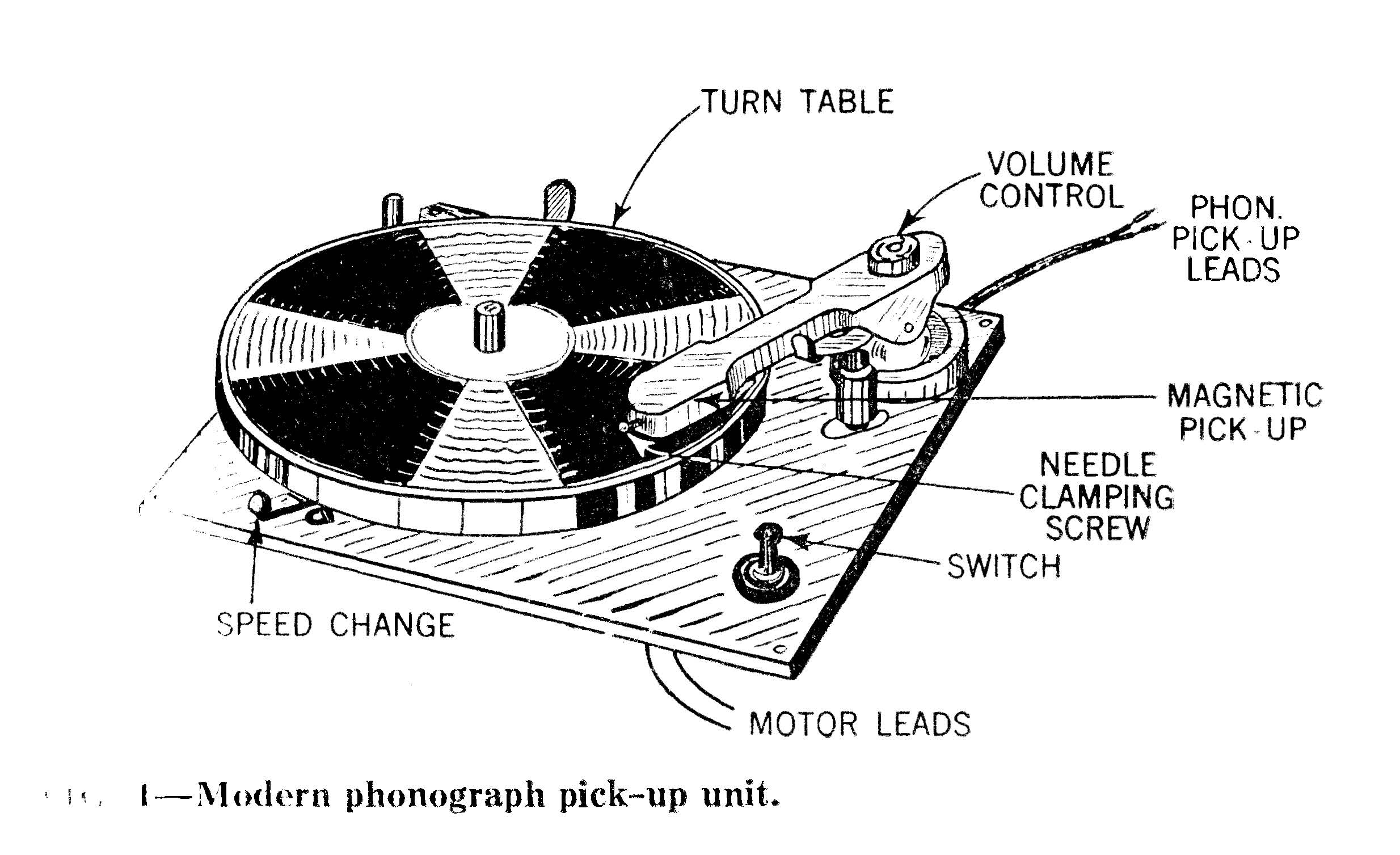
Books on audio weren’t plentiful 80 years ago, but the 1940 edition of Audels New Radioman’s Guide gives a glimpse of everyday audio back then. As the title suggests, the book is basically devoted to the theory, construction, and servicing of radios, including aircraft and marine radio, and even television. Many of its 34 chapters cover such fundamentals as power supplies, vacuum tubes, coil calculations, test instruments, and batteries. Only four directly concern audio: Physics of Sound, Loud Speakers, Phonograph Pick-Ups, and Public Address Systems. Skimming the radio chapters, I see no mention of FM except for one FM radio schematic in the chapter of radio schematic diagrams. (FM broadcasting had already begun, but FM radios weren’t very common.) It’s an interesting look into the state of audio back then, parts of it surprisingly modern and other parts emphatically not. Here are some highlights: Speakers: I was surprised to discover that the book covered electrostatic as well as magnetic speakers—and even more surprised that it covered five other types little known today. Most common of those was the electrodynamic type, basically the same as the magnetic, but using electromagnets rather than permanent magnets. Balanced-armature construction (now found on many earbuds), said author E.P. Anderson, completely eliminated “chattering on loud signals, usually encountered in the magnetic type.” However, making it sensitive required such small air gaps between the voice coil and magnet that the coil might strike the magnet on loud bass notes, “emitting a rattling sound.” This is probably not a problem for earbuds, due to the much lower signal levels they handle. Piezoelectric speakers used crystals that expanded and contracted with the signal’s fluctuations. They were “often used in connection with high-frequency reproduction.” “Metal strip” speakers (presumably what we’d call “ribbon” speakers now) and “induction” speakers were merely described. The book explains why baffles are needed and how to calculate their size, but doesn’t discuss anything but flat-plane and backless baffles – no sealed or ported enclosures. Phonographs: This being a “radioman’s” handbook, it considers a phonograph as a device converting needle vibrations into audio “for reproduction through a radio receiver.” The “modern phonograph pick-up unit” illustrated looks clunky by today’s standards, but not much more so than the Webcor changer my Dad bought in the early ‘50s. Of the four pickup cartridge types mentioned (condenser, carbon resistance, magnetic, and crystal), I’d expected piezoelectric crystal pickups to be emphasized. Crystal and, later, ceramic piezo cartridges predominated on simple phonographs for decades (our 1956 Webcor had one) because they were inexpensive and produced reasonably musical results without equalization. However, moving-coil magnetic pickups were covered in more depth; I guess moving-magnet types had to await stronger magnetic materials than were then available. Styli were straight needles, held in by a set-screw for easy replacement. They must have needed replacement often: needles weren’t diamond-tipped, back then, and records were “made of hard materials, and . . . possess abrasive qualities sufficient to grind the needle point at the beginning of its travel in order to reduce the pressure of the needle.” More expensive radio-phonographs also had scratch filters.
Most records were 78 rpm, with 10-inch discs playing for 2-1/2 minutes and 12-inch discs playing 4 minutes. But some turntables also played at 33-1/3 rpm for 16-inch discs (“employed in sound picture work,”) that played for about 14 minutes. Fidelity? What’s that? Nowhere did I see any mention of distortion—even push-pull amplifiers are touted as producing higher power, not cleaner sound. The lone frequency-response graph, for “a typical radio receiver,” shows audio response down about 15 dB at 5 kHz for the upper reaches of the AM radio band, and -25 dB at a station frequency of 600 kHz. (Not that “kHz” wasn’t in use, yet—they said “kilocycles per second,” back then.) But though the Guide doesn’t mention it, progress toward higher fidelity had been going on for years. Stromberg-Carlson, for example, offered console radios with acoustical labyrinth speaker enclosures, essentially bass-reflex designs partitioned to form a long, folded tube that delayed the rear-wave from the speaker to prevent low-frequency cancellation. The U.S. Radio model 10-C was “equipped with 2 dynamic speakers (one tuned for bass—one for treble)”; both speakers were the same size, though, which would have restricted off-axis treble propagation. E.H. Scott Radio Laboratories (no relation to H.H. Scott) boasted “high-fidelity reproduction,” adding “you will hear tones you did not realize were there . . . . music . . . can now be heard with a faithfulness that will thrill every fibre of your being.” Companies such as E.H. Scott and Capehart were predecessors of today’s audio high-end, with exacting attention paid to audio, radio performance and (in Capehart’s case) exquisite cabinets. Interest in improved home audio didn’t become widespread until after World War II, when thousands of people educated in electronics by the military came home, and war-surplus electronics were on sale all over. Soon, there was a hi-fi industry, based on specialized components rather than console systems. By the 1950s, the term was so well-known that Max Factor brought out a “Hi-Fi Lipstick.”
She wore her new Max Factor!

More from Issue 107

View All Articles in Issue 107

Search Copper Magazine

#228 Serita’s Black Rose Duo Shakes Your Soul With a Blend of Funk, Rock, Blues and a Whole Lot More by Frank Doris Mar 02, 2026 #228 Vinyl, A Love Story by Wayne Robins Mar 02, 2026 #228 Thrill Seeker by B. Jan Montana Mar 02, 2026 #228 The Vinyl Beat: Donald Byrd, Bill Evans, Wes Montgomery, Eddie Palmieri and Frank Sinatra by Rudy Radelic Mar 02, 2026 #228 Listening to Prestige: The History of a Vitally Important Jazz Record Label by Frank Doris Mar 02, 2026 #228 How to Play in a Rock Band, 21: Touring With James Lee Stanley by Frank Doris Mar 02, 2026 #228 The NAMM 2026 Show: The Music Industry’s Premier Event by John Volanski Mar 02, 2026 #228 The Earliest Stars of Country Music, Part Two by Jeff Weiner Mar 02, 2026 #228 From The Audiophile's Guide: A Brief History of Stereophonic Sound by Paul McGowan Mar 02, 2026 #228 A Bone to Pick With Streaming Audio by Frank Doris Mar 02, 2026 #228 Blast Off With Bluesman Duke Robillard by Ray Chelstowski Mar 02, 2026 #228 A Visit to the Marten Loudspeaker Factory in Göteborg, Sweden by Ingo Schulz and Sebastian Polcyn Mar 02, 2026 #228 Pure Distortion by Peter Xeni Mar 02, 2026 #228 A Nagra Factory Tour by Markus "Marsu" Manthey Mar 02, 2026 #228 Back to My Reel-to-Reel Roots, Part 27: Noodge and Ye Shall Receive, Part Two by Ken Kessler Mar 02, 2026 #228 PS Audio in the News by PS Audio Staff Mar 02, 2026 #228 90-Degree Stereo by Frank Doris Mar 02, 2026 #228 The Keys to Art by Rich Isaacs Mar 02, 2026 #227 Seth Lewis Gets in the Groove With Take a Look Around: a Tribute to the Meters by Frank Doris Feb 02, 2026 #227 Passport to Sound: May Anwar’s Audio Learning Experience for Young People by Frank Doris Feb 02, 2026 #227 Conjectures on Cosmic Consciousness by B. Jan Montana Feb 02, 2026 #227 The Big Takeover Turns 45 by Wayne Robins Feb 02, 2026 #227 Music and Chocolate: On the Sensory Connection by Joe Caplan Feb 02, 2026 #227 Singer/Songwriter Chris Berardo: Getting Wilder All the Time by Ray Chelstowski Feb 02, 2026 #227 The Earliest Stars of Country Music, Part One by Jeff Weiner Feb 02, 2026 #227 The Vinyl Beat Goes Down to Tijuana (By Way of Los Angeles), Part Two by Rudy Radelic Feb 02, 2026 #227 How to Play in a Rock Band, 20: On the Road With Blood, Sweat & Tears’ Guitarist Gabe Cummins by Frank Doris Feb 02, 2026 #227 From The Audiophile’s Guide: Audio Specs and Measuring by Paul McGowan Feb 02, 2026 #227 Our Brain is Always Listening by Peter Trübner Feb 02, 2026 #227 PS Audio in the News by PS Audio Staff Feb 02, 2026 #227 The Listening Chair: Sleek Style and Sound From the Luxman L3 by Howard Kneller Feb 02, 2026 #227 The Los Angeles and Orange County Audio Society Celebrates Its 32nd Anniversary, Honoring David and Sheryl Lee Wilson and Bernie Grundman by Harris Fogel Feb 02, 2026 #227 Back to My Reel-to-Reel Roots, Part 26: Half Full – Not Half Empty, Redux by Ken Kessler Feb 02, 2026 #227 That's What Puzzles Us... by Frank Doris Feb 02, 2026 #227 Record-Breaking by Peter Xeni Feb 02, 2026 #227 The Long and Winding Road by B. Jan Montana Feb 02, 2026 #226 JJ Murphy’s Sleep Paralysis is a Genre-Bending Musical Journey Through Jazz, Fusion and More by Frank Doris Jan 05, 2026 #226 Stewardship by Consent by B. Jan Montana Jan 05, 2026 #226 Food, Music, and Sensory Experience: An Interview With Professor Jonathan Zearfoss of the Culinary Institute of America by Joe Caplan Jan 05, 2026 #226 Studio Confidential: A Who’s Who of Recording Engineers Tell Their Stories by Frank Doris Jan 05, 2026 #226 Pilot Radio is Reborn, 50 Years Later: Talking With CEO Barak Epstein by Frank Doris Jan 05, 2026 #226 The Vinyl Beat Goes Down to Tijuana (By Way of Los Angeles), Part One by Rudy Radelic Jan 05, 2026 #226 Capital Audiofest 2025: Must-See Stereo, Part Two by Frank Doris Jan 05, 2026 #226 My Morning Jacket’s Carl Broemel and Tyler Ramsey Collaborate on Their Acoustic Guitar Album, Celestun by Ray Chelstowski Jan 05, 2026 #226 The People Who Make Audio Happen: CanJam SoCal 2025, Part Two by Harris Fogel Jan 05, 2026 #226 How to Play in a Rock Band, 19: Touring Can Make You Crazy, Part One by Frank Doris Jan 05, 2026 #226 Linda Ronstadt Goes Bigger by Wayne Robins Jan 05, 2026

Audio Minus 80

Audio Minus 80
Books on audio weren’t plentiful 80 years ago, but the 1940 edition of Audels New Radioman’s Guide gives a glimpse of everyday audio back then. As the title suggests, the book is basically devoted to the theory, construction, and servicing of radios, including aircraft and marine radio, and even television. Many of its 34 chapters cover such fundamentals as power supplies, vacuum tubes, coil calculations, test instruments, and batteries. Only four directly concern audio: Physics of Sound, Loud Speakers, Phonograph Pick-Ups, and Public Address Systems. Skimming the radio chapters, I see no mention of FM except for one FM radio schematic in the chapter of radio schematic diagrams. (FM broadcasting had already begun, but FM radios weren’t very common.) It’s an interesting look into the state of audio back then, parts of it surprisingly modern and other parts emphatically not. Here are some highlights: Speakers: I was surprised to discover that the book covered electrostatic as well as magnetic speakers—and even more surprised that it covered five other types little known today. Most common of those was the electrodynamic type, basically the same as the magnetic, but using electromagnets rather than permanent magnets. Balanced-armature construction (now found on many earbuds), said author E.P. Anderson, completely eliminated “chattering on loud signals, usually encountered in the magnetic type.” However, making it sensitive required such small air gaps between the voice coil and magnet that the coil might strike the magnet on loud bass notes, “emitting a rattling sound.” This is probably not a problem for earbuds, due to the much lower signal levels they handle. Piezoelectric speakers used crystals that expanded and contracted with the signal’s fluctuations. They were “often used in connection with high-frequency reproduction.” “Metal strip” speakers (presumably what we’d call “ribbon” speakers now) and “induction” speakers were merely described. The book explains why baffles are needed and how to calculate their size, but doesn’t discuss anything but flat-plane and backless baffles – no sealed or ported enclosures. Phonographs: This being a “radioman’s” handbook, it considers a phonograph as a device converting needle vibrations into audio “for reproduction through a radio receiver.” The “modern phonograph pick-up unit” illustrated looks clunky by today’s standards, but not much more so than the Webcor changer my Dad bought in the early ‘50s. Of the four pickup cartridge types mentioned (condenser, carbon resistance, magnetic, and crystal), I’d expected piezoelectric crystal pickups to be emphasized. Crystal and, later, ceramic piezo cartridges predominated on simple phonographs for decades (our 1956 Webcor had one) because they were inexpensive and produced reasonably musical results without equalization. However, moving-coil magnetic pickups were covered in more depth; I guess moving-magnet types had to await stronger magnetic materials than were then available. Styli were straight needles, held in by a set-screw for easy replacement. They must have needed replacement often: needles weren’t diamond-tipped, back then, and records were “made of hard materials, and . . . possess abrasive qualities sufficient to grind the needle point at the beginning of its travel in order to reduce the pressure of the needle.” More expensive radio-phonographs also had scratch filters.
Most records were 78 rpm, with 10-inch discs playing for 2-1/2 minutes and 12-inch discs playing 4 minutes. But some turntables also played at 33-1/3 rpm for 16-inch discs (“employed in sound picture work,”) that played for about 14 minutes. Fidelity? What’s that? Nowhere did I see any mention of distortion—even push-pull amplifiers are touted as producing higher power, not cleaner sound. The lone frequency-response graph, for “a typical radio receiver,” shows audio response down about 15 dB at 5 kHz for the upper reaches of the AM radio band, and -25 dB at a station frequency of 600 kHz. (Not that “kHz” wasn’t in use, yet—they said “kilocycles per second,” back then.) But though the Guide doesn’t mention it, progress toward higher fidelity had been going on for years. Stromberg-Carlson, for example, offered console radios with acoustical labyrinth speaker enclosures, essentially bass-reflex designs partitioned to form a long, folded tube that delayed the rear-wave from the speaker to prevent low-frequency cancellation. The U.S. Radio model 10-C was “equipped with 2 dynamic speakers (one tuned for bass—one for treble)”; both speakers were the same size, though, which would have restricted off-axis treble propagation. E.H. Scott Radio Laboratories (no relation to H.H. Scott) boasted “high-fidelity reproduction,” adding “you will hear tones you did not realize were there . . . . music . . . can now be heard with a faithfulness that will thrill every fibre of your being.” Companies such as E.H. Scott and Capehart were predecessors of today’s audio high-end, with exacting attention paid to audio, radio performance and (in Capehart’s case) exquisite cabinets. Interest in improved home audio didn’t become widespread until after World War II, when thousands of people educated in electronics by the military came home, and war-surplus electronics were on sale all over. Soon, there was a hi-fi industry, based on specialized components rather than console systems. By the 1950s, the term was so well-known that Max Factor brought out a “Hi-Fi Lipstick.”
She wore her new Max Factor!

0 comments

Leave a comment

0 Comments

Your avatar

Loading comments...

🗑️ Delete Comment

Enter moderator password to delete this comment:

✏️ Edit Comment

Enter your email to verify ownership: